ABBA: The Life Story Behind the Dancing Queen Band
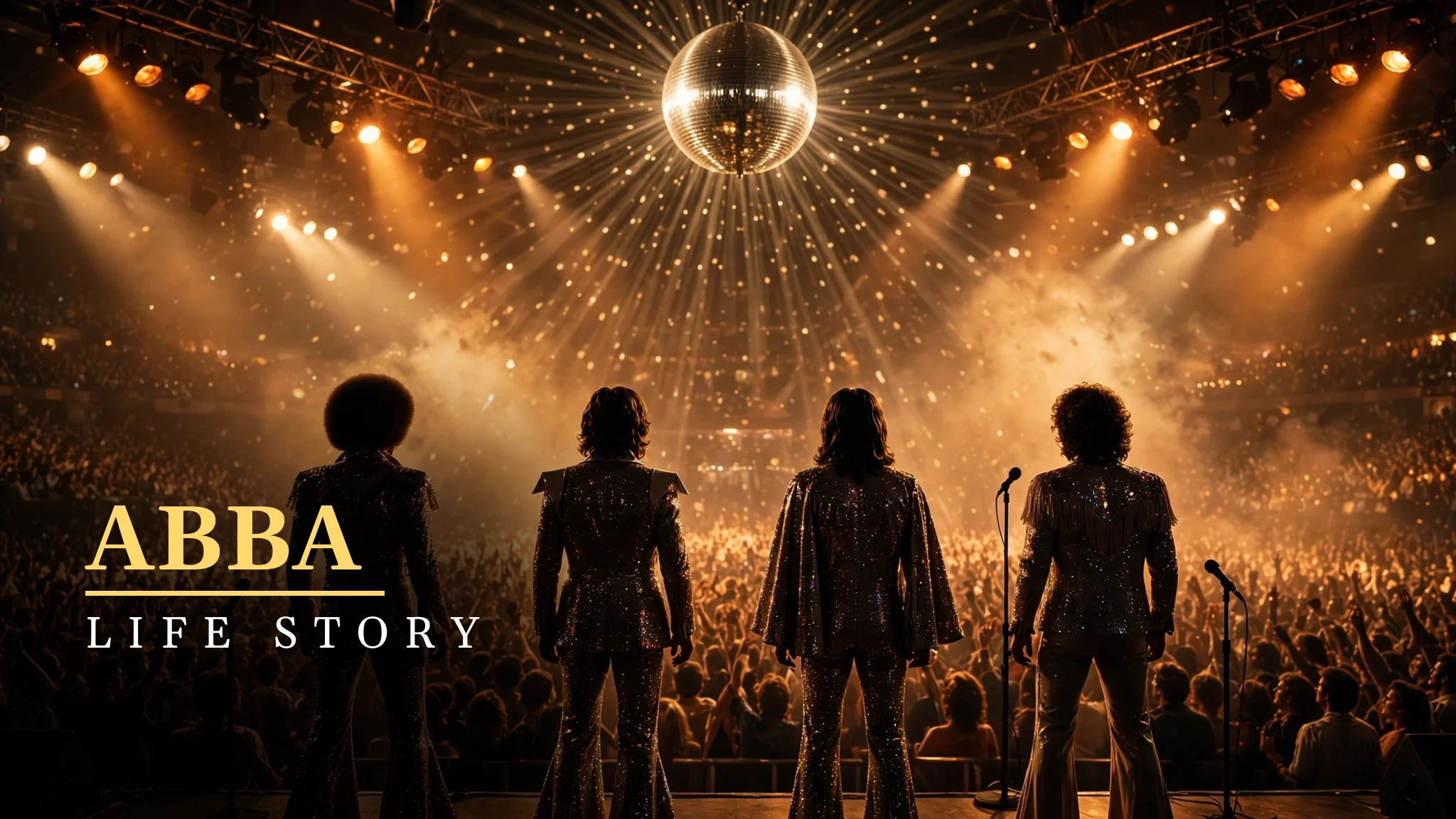
In this post
- Four Musicians Meet in Stockholm
- Waterloo and Winning Eurovision
- Dancing Queen, Mamma Mia, and the Peak Years
- Break-up, Divorce, and the End of ABBA
- Voyage, ABBA Voyage, and a Return After Forty Years
- The Songwriters Behind the Hits
- Mamma Mia! and a Second Life for the Songs
- A Band Loved by Parents and Children Alike
- My Take:
ABBA is one of the most successful pop bands in the history of music, and their songs are still played, sung, and danced to all over the world, more than fifty years after they first became famous. When people hear Dancing Queen, Mamma Mia, Waterloo, or Take a Chance on Me, they smile, they sing along, and they remember good times. Their music is bright, catchy, and full of joy, and it has been loved by parents, by children, and by grandchildren, by people in Sweden and in every other country. Few bands have ever been loved by so many generations, and ABBA is one of them.
The band was formed in Stockholm, Sweden, in 1972, by four people who were already musicians: Agnetha Fältskog, Björn Ulvaeus, Benny Andersson, and Anni-Frid Lyngstad. Their names gave the band its name, ABBA, from the first letters of their first names. They were two couples, Agnetha and Björn, and Anni-Frid and Benny, and they made music together that was both personal and universal. They wrote songs about love, about dancing, about heartbreak, and about hope, and they sang them with harmonies that were beautiful and unforgettable.
What makes their story worth telling is not only their success but also their sadness, their break-up, and their return. They became famous in 1974 when they won the Eurovision Song Contest with Waterloo, they became one of the biggest bands in the world in the 1970s, and then they broke up in 1982, when their marriages ended and they were tired. For almost forty years, they did not make new music together, but their songs never went away. Then, in 2021, they returned with a new album, Voyage, and a new show in London with digital versions of themselves. This is the story of how four Swedes became one of the greatest pop bands of all time.
Four Musicians Meet in Stockholm
ABBA began with four people who were already working in music in Sweden in the late 1960s and early 1970s. Benny Andersson was a member of the Hep Stars, a popular Swedish band, and Björn Ulvaeus was a member of the Hootenanny Singers, a folk group. Agnetha Fältskog was a solo singer who had already had hits in Sweden, and Anni-Frid Lyngstad, who was born in Norway and grew up in Sweden, was also a solo singer. They met, they sang together, and they discovered that their voices worked beautifully together.
In 1972, they began to work as a group, and they recorded their first songs together. They were not yet called ABBA. They were known by their long names, but people began to call them ABBA, from the first letters of Agnetha, Björn, Benny, and Anni-Frid. It was a simple name, and it was easy to remember, and it became one of the most famous names in pop music. They were two couples, and they were also four friends who loved to make music together.
Their early songs were in Swedish and in English, and they were pop songs with catchy melodies and beautiful harmonies. They worked hard in the studio, and Benny and Björn wrote the songs, while Agnetha and Anni-Frid sang them with feeling. They were learning how to work together, how to write a hit, and how to make a record that people would love. They were not yet famous outside Sweden, but they were building a sound that would soon be heard all over the world.
By 1973, they had made their first album, Ring Ring, and they had begun to think about Eurovision, the song contest that could make them famous in Europe. They tried to represent Sweden in 1973, but they did not win the Swedish selection. They tried again in 1974, and this time they won, and they went to Eurovision in Brighton, England, with a song that would change their lives forever.
Waterloo and Winning Eurovision
In 1974, ABBA represented Sweden at the Eurovision Song Contest in Brighton with the song Waterloo, a fast and catchy pop song about love and surrender, with a bright melody and a strong beat. They performed it in colourful costumes, with energy and confidence, and they won the contest. It was the first time Sweden had ever won Eurovision, and it made ABBA famous all over Europe. Waterloo became a huge hit, and it was played on the radio in many countries. People who had never heard of ABBA now knew their name.
Winning Eurovision was a turning point for the band, because it gave them a chance to be heard outside Sweden. Before Waterloo, they were a Swedish band. After Waterloo, they were a European band, and soon they would be a world band. Their songs were in English, which helped them to reach audiences in many countries, and their melodies were so catchy that people could sing them even if they did not understand all the words. Waterloo was the beginning of their international career, and it was a very happy beginning.
After Eurovision, they released more albums, and their fame grew. They made the album ABBA in 1975, with hits like SOS and Mamma Mia, and they made the album Arrival in 1976, with Dancing Queen, one of their most famous songs. Dancing Queen became a number one hit in many countries, and it is still one of the most loved pop songs ever written. It is a song about dancing, about being young, and about feeling free, and people still dance to it at weddings and at parties today.
By the late 1970s, ABBA was one of the biggest bands in the world. They sold millions of records, they gave concerts in Europe, in Australia, in America, and in Japan, and their faces were on magazine covers everywhere. They were not only a band. They were a phenomenon, a group whose songs were part of everyday life for millions of people. They had come a long way from Stockholm, and they were at the top of the world.
Dancing Queen, Mamma Mia, and the Peak Years
The years from 1976 to 1979 were the peak years for ABBA, when they made some of their best and most famous songs. Dancing Queen, which was released in 1976, became their biggest hit, and it is still played today. It is a song about a young woman who loves to dance, and it has a melody that is both joyful and a little sad, because it is about a moment in life that will not last forever. People love it because it captures the feeling of being young and free, and because it is impossible not to dance to it.
They also made songs like Mamma Mia, SOS, Take a Chance on Me, Knowing Me, Knowing You, and The Name of the Game, and each of them became a hit in many countries. Their albums sold in huge numbers, and their concerts filled large halls and stadiums. They were one of the few bands who could sing in English and still sound Swedish, with a sound that was both pop and a little bit folk, both modern and timeless. Their harmonies, sung by Agnetha and Anni-Frid, were beautiful, and their melodies, written by Benny and Björn, were unforgettable.
Their concerts in these years were big events, with colourful costumes, bright lights, and a lot of energy. They sang, they danced, and they talked to the crowd, and their fans loved them. They toured in Australia, where they were especially popular, and they were welcomed like royalty. They also made a film, ABBA: The Movie, in 1977, which showed their tour in Australia and their life on the road. It was a happy time, but it was also a tiring time, because they were working very hard and travelling a great deal.
During these peak years, they were also living personal lives that were becoming difficult. Agnetha and Björn were married, and Anni-Frid and Benny were married, but their marriages were under strain from the pressure of fame, from travelling, and from working together all the time. They were making beautiful music, but their personal lives were becoming sad, and that sadness would later appear in their songs, especially in The Winner Takes It All, one of their most emotional works.
Break-up, Divorce, and the End of ABBA
In the early 1980s, ABBA began to break up, and it was a sad time for the band and for their fans. Agnetha and Björn divorced in 1980, and Anni-Frid and Benny divorced in 1981, and the four of them found it hard to work together after their marriages ended. They made their last album, The Visitors, in 1981, which was a darker and more serious album than their earlier work, and then they stopped recording together. In 1982, they announced that they were taking a break, and that break became a break-up that lasted for almost forty years.
Their break-up was not caused by one thing. It was caused by divorce, by tiredness, by the pressure of fame, and by the fact that they wanted to do different things. Benny and Björn wanted to write musicals, Agnetha wanted to make solo albums and to live a quieter life, and Anni-Frid also wanted to make solo music. They were no longer a band, but they were still friends, and they still respected each other. They did not have a big fight. They simply stopped, and they went their separate ways.
For many years, their fans hoped that they would get back together, but they did not. Their songs, however, never went away. They were played on the radio, in films, and in the musical Mamma Mia!, which opened in London in 1999 and became a huge success all over the world. The musical used ABBA’s songs to tell a story about a mother and daughter on a Greek island, and it introduced their music to a new generation. Then, in 2008, a film version of Mamma Mia! was released, starring Meryl Streep, and it became one of the most successful musical films ever made. ABBA’s music was alive again, even though the band was not together.
Their legacy during the years apart was enormous. Their songs were still loved, their albums still sold, and their music was still danced to at weddings and parties. They had become a band that was loved by parents and by children, by people who had been young in the 1970s and by people who were young in the 2000s. That is a rare thing, and it shows how timeless their music is.
Voyage, ABBA Voyage, and a Return After Forty Years
In 2021, after almost forty years apart, ABBA returned with a new album called Voyage, and it was a moment of great joy for their fans. The album had ten new songs, including I Still Have Faith in You and Don’t Shut Me Down, and it was a success in many countries. It was not a young band’s album. It was an album by four people in their seventies who had lived a great deal, and who were singing about love, loss, and hope with a wisdom that only comes from a long life. Fans loved it, because it was ABBA again, with the same harmonies and the same melodies, but with new stories to tell.
They also created ABBA Voyage, a show in London in which digital versions of themselves, called ABBAtars, perform on stage with a live band. The show uses technology to make the four members look as they did in the 1970s, and it allows audiences to see ABBA perform again, even though the real members do not tour. It was a new and creative idea, and it became very popular. People came from all over the world to see it, and they sang along to Dancing Queen, Mamma Mia, and Waterloo, just as they had done in the 1970s.
Their return showed that their music had never gone away, and that their fans had never forgotten them. They were no longer young, but their songs were still young, and their voices were still beautiful. They had come back not to be a band of the past, but to be a band of the present, with new music and a new show. It was a happy ending to a long story, and it gave their fans a gift that they had waited almost forty years for.
Today, ABBA is seen as one of the greatest pop bands of all time, and their songs are still played every day. They have sold hundreds of millions of records, they have won many awards, and their music is part of the sound of the twentieth and twenty-first centuries. They started as four musicians in Stockholm, they became world stars, they broke up, and they came back. That is a long and remarkable story, and it is why people still love them.
The Songwriters Behind the Hits
ABBA’s songs were written mainly by Benny Andersson and Björn Ulvaeus, and their partnership as songwriters is one of the most successful in the history of pop music. Benny wrote the melodies, with their catchy tunes and beautiful harmonies, and Björn wrote the lyrics, with their stories about love, dancing, and heartbreak. Together, they made songs that were both simple and clever, both happy and sad, and that is why their music has lasted for so long. They worked in the studio for many hours, trying different melodies, different words, and different arrangements, until a song felt right.
Their songwriting was special because they understood pop music very well. They knew how to write a chorus that people would remember, how to write a verse that told a story, and how to make a song that was both danceable and emotional. They were influenced by many kinds of music, from Swedish folk to American pop, from classical music to rock, and they mixed those influences into a sound that was their own. They were not copying other bands. They were creating something new, and that is why their songs sound fresh even today.
Agnetha and Anni-Frid were also an important part of the songwriting, because they sang the songs and gave them feeling. Their harmonies were beautiful, and their voices blended in a way that made the songs even more memorable. They did not only sing the notes. They gave the songs emotion, and they made the audience feel the story behind the words. Without their voices, ABBA’s songs would not have been the same, and that is why all four members are remembered as ABBA, not only Benny and Björn.
That songwriting partnership has influenced many other songwriters, in Sweden and in other countries, because it showed that pop music could be both popular and well made. Benny and Björn later wrote musicals, including Chess and Mamma Mia!, and they showed that their talent was not only for pop songs. They were serious songwriters, and their work will keep being studied and loved by musicians for many years.
Mamma Mia! and a Second Life for the Songs
ABBA’s songs found a second life in the musical Mamma Mia!, which opened in London in 1999 and became one of the most successful musicals in the world. The musical uses ABBA’s songs to tell a story about a mother and daughter on a Greek island, about love, about family, and about the past coming back to the present. It was written by Catherine Johnson, with music by Benny and Björn, and it became a hit in London, in New York, and in many other cities. People who had never seen ABBA live could now hear their songs in a theatre, sung by actors, danced by a cast, and enjoyed by a new generation.
The success of Mamma Mia! was enormous, and it introduced ABBA’s music to young people who were not born in the 1970s. Children who went to see the musical with their parents fell in love with Dancing Queen, Mamma Mia, and Waterloo, and they began to listen to ABBA’s albums. The musical also made ABBA’s songs part of popular culture again, in a way that radio alone could not. It was a new and creative way to keep their music alive, and it worked beautifully.
In 2008, a film version of Mamma Mia! was released, starring Meryl Streep, Pierce Brosnan, and Amanda Seyfried, and it became one of the most successful musical films ever made. It was followed by a sequel, Mamma Mia! Here We Go Again, in 2018, which also used ABBA’s songs and which was also a success. Those films brought ABBA’s music to even more people, in cinemas all over the world, and they made their songs part of the lives of a new generation. ABBA’s music had found a second life, and it was a life that would keep growing.
A Band Loved by Parents and Children Alike
ABBA is one of the few bands in history whose music is loved by parents, by children, and by grandchildren at the same time, and that is a very special achievement. Parents who danced to Dancing Queen in the 1970s now dance to it with their children, and children who learn ABBA’s songs from the musical Mamma Mia! now teach them to their own friends. Their music has crossed generations in a way that few bands have managed, because their songs are simple, joyful, and full of feeling, and because they speak of love, dancing, and heartbreak in a way that people of all ages understand.
That cross-generational love is why ABBA’s music is still played at weddings, at birthday parties, and at school dances, and why their albums still sell in large numbers. Their songs are not only for one decade. They are for every decade, and they will keep being loved by new generations who discover them for the first time. That is a timeless legacy, and it is one that ABBA earned by writing songs that are both popular and well made, both happy and honest, and both Swedish and universal.
Their music also shows that a band can be both very Swedish and very international at the same time, and that a song written in Stockholm can be loved in London, in Sydney, and in New York. ABBA’s melodies carry a Swedish feeling, a clarity and a warmth that comes from their home, but they also carry a universal feeling that people everywhere understand. That mix is part of why their songs have lasted, and why they will keep being sung by new generations in many countries.
My Take:
When I think about ABBA, I think about joy, and I think that is the first thing that comes to mind. Their songs are bright, they are catchy, and they make people want to dance and sing along. When I hear Dancing Queen, I smile, and I think of weddings, of parties, and of people who are happy. That is a wonderful thing for a band to give. Life is hard for many people, and a song that makes them happy is not a small thing. It is a real gift, and ABBA has given it to the world for more than fifty years.
I also think about how they started, as four musicians in Stockholm, two couples who loved to make music together. That is a beautiful image, four friends in a studio, writing songs, singing harmonies, and trying to make something that people would love. They did not know that they would become one of the biggest bands in the world. They just wanted to make good music, and they did. That is a good lesson for anyone who wants to create something. You do not have to aim for fame. You have to aim for good work, and fame may follow.
What I like most about their story is the way their music has lasted. Many bands from the 1970s are forgotten today, but ABBA is not forgotten. Their songs are still played, their musical Mamma Mia! is still performed, and their new album Voyage was a success in 2021. That tells me that their music is timeless, that it speaks to people of all ages, and that it will keep being loved for many years. That is a rare achievement, and it is one that few bands can claim.
I also think about their break-up, and I feel sad for them. They were two couples, and both marriages ended, and it must have been very hard to work together after that. They made beautiful music, but their personal lives were sad, and that sadness appears in songs like The Winner Takes It All, which is one of the most emotional songs they ever made. I think that song is special because it is honest, because it talks about losing in love, and because Agnetha sings it with a feeling that makes you believe every word. That is a powerful thing, and it shows that even a happy band can sing about sadness.
There is something I admire about their return in 2021, after almost forty years apart. They could have stayed apart, and their fans would still have loved their old songs, but they chose to come back, to make new music, and to create a new show. That takes courage, because it is scary to return after so long, and it could have failed. They did it, and it was a success. That shows me that it is never too late to try again, and that a long break does not have to be the end.
I also think about the musical Mamma Mia!, and about how it introduced ABBA’s music to a new generation. Young people who were not born in the 1970s learned their songs from the musical and from the film, and they fell in love with them. That is a beautiful thing, because it means that ABBA’s music is not only for people who were young in the 1970s. It is for everyone, for parents and for children, for grandparents and for grandchildren. That is a legacy that few bands have.
When I think about their harmonies, I think they are special. Agnetha and Anni-Frid sang together in a way that was beautiful and perfect, and their voices blended in a way that is hard to describe. It is a sound that is instantly recognisable, and it is a sound that makes people feel happy. I think that is one of the reasons their music has lasted, because their harmonies are so beautiful that people never get tired of hearing them.
If I have a criticism, it is not really a criticism of them. It is a sadness that they broke up, and that they lost almost forty years of making music together. I wish they had been able to stay together, or to come back sooner, because their music is so good, and the world would have loved more of it. But I also understand that their marriages ended, and that it was hard for them to work together. I respect their decision, and I am happy that they came back in 2021.
For a young reader, I think the lesson from ABBA is simple. Make music that is honest, work with people you trust, and do not be afraid to come back. They made songs about love, about dancing, and about heartbreak, and they sang them with feeling. They worked together, they broke up, and they came back. That is a long story, and it is a story that shows that success does not have to be forever, and that a return is possible even after a very long time.
In the end, I think ABBA teaches us that joy is a serious thing. Their music is happy, but it is not silly. It is made with care, it is sung with beautiful harmonies, and it brings people together. They have spent more than fifty years making people dance, and they have done it with energy, with honesty, and with love for their fans. I would rather be remembered like that, for the joy I gave, than for a single famous moment, and I believe they would say the same.
I also think about Benny and Björn as songwriters, and about how good they were. They wrote melodies that are impossible to forget, and lyrics that tell stories about love, dancing, and heartbreak. That is a rare talent, and it is one that few songwriters have. They worked hard in the studio, they tried many ideas, and they did not accept a song until it felt right. That care shows in their music, because their songs sound finished, polished, and full of feeling, not hurried or careless. I respect that, because it shows that pop music can be art, not only entertainment.
I think about Agnetha and Anni-Frid again, and about their harmonies. Their voices blended in a way that was beautiful and perfect, and it is a sound that is instantly recognisable. When I hear them sing together, I feel happy, because their harmonies are so warm and so clear. That is a gift, and it is a gift that made ABBA’s songs special. Without their voices, the songs would not have been the same, and that is why all four members matter, not only the songwriters.
Another thing I notice is how their music has been used in musicals and films, especially Mamma Mia!, and how that introduced their songs to new generations. Young people who were not born in the 1970s learned their songs from the musical, and they fell in love with them. That is a beautiful thing, because it means that ABBA’s music is not only for one generation. It is for everyone, for parents and for children, for grandparents and for grandchildren. That is a legacy that few bands have, and it is one that ABBA earned by writing great songs.
I also think about the future, and about what ABBA’s music will mean in fifty more years. I believe people will still be singing Dancing Queen at weddings, still dancing to Mamma Mia, and still listening to The Winner Takes It All when they are sad. Their songs are timeless, and they will keep being loved, because they speak of things that people always feel: love, joy, loss, and hope. That is a wonderful legacy, and it is one that will last long after the band is gone.
In the end, I keep coming back to joy. Their music is joyful, but it is also honest, because it talks about sadness as well as happiness. That balance is what makes their songs so loved, and it is what makes ABBA one of the greatest pop bands of all time. I would rather be remembered like that, for the joy I gave and the truth I shared, than for a single famous moment, and I believe they would say the same.
I also think about Mamma Mia!, and about how it gave ABBA’s songs a second life. The musical opened in 1999, and it introduced their music to young people who were not born in the 1970s. Children who went to see it with their parents fell in love with Dancing Queen and Mamma Mia, and they began to listen to ABBA’s albums. That is a beautiful thing, because it means that great songs can find new audiences, even many years after they were written. I think that is a lesson for musicians: write good songs, and they will find new listeners, in new ways, for many years.
I think about the films, too, and about how they brought ABBA’s music to cinemas all over the world. Meryl Streep singing Mamma Mia, Amanda Seyfried singing Dancing Queen, and the whole cast dancing on a Greek island – those are joyful images, and they made people smile. The films were not only about ABBA. They were about mothers and daughters, about love, and about family, and ABBA’s songs fitted those stories perfectly. That shows how universal their music is, and how it can tell many different stories.
Another thing I notice is how ABBA’s music has become part of weddings, parties, and celebrations all over the world. People dance to Dancing Queen at weddings, they sing Mamma Mia at parties, and they play Waterloo at summer gatherings. That is a special kind of success, because it means that their songs are not only on the radio. They are part of people’s lives, part of their happiest moments. That is a legacy that few bands can claim, and it is one that ABBA earned by writing songs that are joyful, catchy, and full of feeling.
I also think about the future, and about what ABBA’s music will mean in fifty more years. I believe people will still be singing their songs, still dancing to them, and still loving them, because they are timeless. Their melodies are beautiful, their harmonies are perfect, and their stories are universal. That is a wonderful legacy, and it is one that will last long after the band is gone. I hope young songwriters learn from Benny and Björn, and that they write songs that are both popular and well made, just as ABBA did.
In the end, I keep coming back to joy and to family. Their music is joyful, but it is also about family, about mothers and daughters, about love and loss. Mamma Mia! is a story about a mother and daughter, and ABBA’s songs fit that story perfectly. That shows that their music is not only about dancing. It is about life, about the people we love, and about the moments that matter. I would rather be remembered like that, for the joy I gave and the family stories I helped to tell, than for a single famous moment, and I believe they would say the same.
I also think about how ABBA’s music is loved by parents and children alike, and I find that beautiful. A parent who danced to Dancing Queen in the 1970s can now dance to it with their child, and that child can teach it to a friend. That is a rare thing, and it shows that their songs are timeless, that they speak to people of all ages, and that they will keep being loved for many years. I think that is the best kind of legacy for a band, to bring generations together through music.
I think about weddings, too, and about how often Dancing Queen is played at them. It is a song about dancing, about being young, and about feeling free, and it is perfect for a celebration. People smile when they hear it, they get up and dance, and they forget their worries for a few minutes. That is a wonderful gift, and ABBA has given it to millions of people at their happiest moments. I would rather be remembered for that, for the joy I gave at weddings and parties, than for a single famous moment.
Frequently Asked Questions
Who were the members of ABBA?
ABBA were Agnetha Fältskog, Björn Ulvaeus, Benny Andersson, and Anni-Frid Lyngstad, four Swedish musicians whose first names gave the band its name.
When did ABBA win Eurovision?
They won the Eurovision Song Contest in 1974 in Brighton, England, with the song Waterloo, giving Sweden its first ever Eurovision win.
What are ABBA’s most famous songs?
Their most famous songs include Dancing Queen, Mamma Mia, Waterloo, SOS, Take a Chance on Me, and The Winner Takes It All.
Why did ABBA break up?
They stopped working together in 1982 after both couples in the band divorced, and they were tired after years of fame and touring, and they wanted to do different solo projects.
What is ABBA Voyage?
ABBA Voyage is a show in London, opened in 2022, in which digital versions of the band perform on stage with a live band, allowing audiences to see ABBA perform again.
Did ABBA make new music after their return?
Yes, they released the album Voyage in 2021, their first new album in almost forty years, with songs including I Still Have Faith in You and Don’t Shut Me Down.


