Adèle Exarchopoulos: The Life Story Behind the Fearless Young Star
In this post
- A Paris Girl on Film Sets
- Blue Is the Warmest Colour: A Film That Changed Everything
- After the Palme d’Or: Choosing Brave Roles
- Passages, Les Cinq Diables, and a Career in Full Flight
- A Fearless Star Who Stays True
- Rien à foutre: A Woman Searching for Freedom
- Passages and the International Stage
- Les Anarchistes and the Young Rebel
- Orpheline and the Search for Identity
- Le Fidèle and Love in a Dangerous World
- My Take:
Adèle Exarchopoulos is one of the bravest young actresses in the world. She was nineteen years old when she starred in Blue Is the Warmest Colour, a film about first love between two young women, and she gave a performance so honest, so raw, and so fearless that it changed her life. The film won the Palme d’Or at Cannes, the highest prize in world cinema, and Adèle became famous around the world. She did not hide from the fame, and she did not try to be safe. She kept choosing roles that were difficult, honest, and real, and she built a career on courage.
She began as a child actress in Paris, and she grew up on film sets. She learned to act by doing it, and she learned to be brave by taking on roles that other actors might refuse. She has played lovers, mothers, rebels, and women on the edge, and she has played them all with a truth that makes audiences believe her. She is a young woman who has lived her whole life in front of a camera, and who has never lost herself in it.
Her story is about growing up in public, about finding your voice, and about refusing to be put in a box. It is a story about a Paris girl who became a world star, and who stayed true to herself.
A Paris Girl on Film Sets
Adèle Exarchopoulos was born on 19 November 1993 in Paris. She grew up in the French capital, in a family that loved art and culture. Her father was a guitar teacher, and her mother was a nurse, so she grew up in a home that valued both music and care for others. She was a lively, curious child, and she loved to perform. She took acting classes as a child, and she began to appear in films while she was still young, learning her craft on set, in front of real cameras, with real actors.
Her first film roles came when she was a child and a teenager, and she learned quickly. She appeared in Boxes in 2007, and in La Rafle in 2010, a film about the roundup of Jewish families in Paris during the Second World War. She was a young actress, but she was already serious about her work. She listened, she watched, and she learned from the older actors around her. She did not try to be a star. She tried to be an actress, and that made all the difference.
She was not a child who was pushed into acting by her parents. She chose it, and she loved it. She liked the feeling of being on a set, of becoming another person, and of telling a story. She was a natural performer, with a face that the camera loved, and a gift for being honest on screen. She was building a career, film by film, and she was doing it while she was still growing up. That is a hard thing to do, and it takes a strong young person to do it well.
By her late teens, she was already a respected young actress in France. She had worked with good directors, she had learned from her roles, and she was ready for a bigger challenge. She did not know it yet, but that challenge was coming, and it would change her life forever. She was about to take on a role that would make her famous around the world, and that would ask more of her than any role she had played before.
Blue Is the Warmest Colour: A Film That Changed Everything
In 2013, Exarchopoulos starred in La Vie d’Adèle, known in English as Blue Is the Warmest Colour, directed by Abdellatif Kechiche. She played Adèle, a teenage girl in Lille who falls in love for the first time, with a young woman named Emma, played by Léa Seydoux. The film followed their love, their life together, and their painful breakup, over several years. It was a long, intimate, and deeply honest film, and Exarchopoulos gave a performance that was raw, brave, and unforgettable.
The film won the Palme d’Or at the Cannes Film Festival in 2013, the highest prize in world cinema. In a historic decision, the jury gave the Palme d’Or not only to the director, but also to the two actresses, Exarchopoulos and Seydoux. It was a moment of triumph, and it made Exarchopoulos famous around the world. She was nineteen years old, and she had won the greatest prize in cinema. She also won the César Award for Most Promising Actress, and she was praised by critics everywhere.
The film was also controversial, because of its long and explicit scenes of love, and because of stories about the difficult conditions on set. Exarchopoulos spoke honestly about the experience, about how hard it was, and about how proud she was of the film. She did not hide from the controversy, and she did not let it define her. She stood by her work, and she stood by her performance, and that courage earned her respect. She had given everything to a role, and she had made a film that would be talked about for years.
Blue Is the Warmest Colour remains the film that defines her, but it does not limit her. It showed the world what she could do, and it opened doors for her in France and abroad. She had proved that she was not afraid of difficult roles, and that she could carry a major film with honesty and with heart. She was a young star, and she was ready for whatever came next.
After the Palme d’Or: Choosing Brave Roles
After Blue Is the Warmest Colour, Exarchopoulos chose her roles carefully. She did not want to play the same character again and again, and she did not want to become a star who only played safe roles. She took on films that challenged her, and she worked with directors who trusted her to be brave. She starred in Les Anarchistes in 2015, a film about a young woman who joins a group of anarchists, and she played the role with a quiet, determined strength.
She also starred in Le Fidèle in 2017, a film about a woman who falls in love with a gangster, and in Orpheline in 2016, a film about a young woman searching for her identity. Each role was different, and each one showed a new side of her talent. She played women who were strong, lost, angry, and loving, and she played them all with the same honesty she had shown in Blue Is the Warmest Colour. She was building a career on truth, not on fame.
She also worked in comedies, showing that she was not only a dramatic actress. She starred in Mandibules in 2020, a wild comedy directed by Quentin Dupieux, about two friends who find a giant fly. The film was funny, strange, and full of energy, and Exarchopoulos played her role with a lightness that surprised audiences. She was not afraid to be silly, and she was not afraid to laugh at herself. That willingness to try new things is part of what makes her a great actress.
In 2021, she starred in Rien à foutre, a film about a flight attendant who is lost in her own life, and who tries to find a way forward. The film was praised at Cannes, and Exarchopoulos gave a performance that was both funny and sad, showing a woman who is trying to be free in a world that wants her to stay in place. She was growing as an actress, film by film, and she was becoming one of the most respected young stars in France.
Passages, Les Cinq Diables, and a Career in Full Flight
In the 2020s, Exarchopoulos continued to take on bold and interesting roles. She starred in Les Cinq Diables in 2022, a film about a young mother with a strange gift, who can bring back the past through smell. The film was magical, mysterious, and deeply emotional, and Exarchopoulos played the mother with a quiet, haunted intensity. It was a role that asked for subtlety and for depth, and she gave both. The film was praised by critics, and it showed that she was still growing as an artist.
She also starred in Passages in 2023, directed by Ira Sachs, a film about a love triangle in Paris, in which she played a woman caught between two men. The film was about desire, about jealousy, and about the pain of loving someone who cannot choose. Exarchopoulos played the role with honesty and with grace, and she showed that she could hold her own in an international film, alongside actors from many countries. She was no longer only a French star. She was a world star, and she was working in films that were seen everywhere.
She has also appeared in films such as Le Règne animal, and in television, and she has continued to work steadily, choosing roles that interest her, and directors who inspire her. She is a young actress who has already had a long career, and who is still in her early thirties. She has time to grow, to learn, and to take on new challenges, and she shows no sign of slowing down.
Her personal life has been kept mostly private, but she became a mother in 2017, when her son was born, and she has spoken about balancing work and motherhood. She is a woman who has built a life that includes acting, family, and a deep love of her craft, and she has done it on her own terms. She is not a star who lives for gossip. She is a working actress, a mother, and a woman who has stayed true to herself.
A Fearless Star Who Stays True
Adèle Exarchopoulos is still young, and her story is still being written. She has already won the Palme d’Or, the César, and the respect of the film world, and she has already given some of the most honest performances of her generation. She is a star who is not afraid to be vulnerable, not afraid to be brave, and not afraid to take risks. That fearlessness is her greatest gift, and it is why audiences trust her.
She has also shown that a young actress can grow up in public and stay herself. She was a child on film sets, a teenager in a famous film, and a young woman in the spotlight, and she has kept her head, her heart, and her humour. She is a Paris girl who became a world star, and who never forgot where she came from. She is a reminder that talent, courage, and honesty can take a person far, and that the best performances come from the heart.
Today, she is one of the most loved and most respected young actresses in France, and her films are watched around the world. She is a fearless star, a brave artist, and a woman who is still growing. French cinema is lucky to have her, and the world is lucky to watch her.
Rien à foutre: A Woman Searching for Freedom
In 2021, Exarchopoulos starred in Rien à foutre, a film about Cassandra, a flight attendant who lives a life of parties, of travel, and of freedom, but who is lost inside. The film followed her as she flew from city to city, never staying in one place, and never facing her own pain. Exarchopoulos played Cassandra with a lightness and a sadness that made the audience care about a woman who might seem careless. She showed that freedom without a home can be lonely, and that a life of movement can hide a deep sadness. The film was praised at Cannes, and it showed Exarchopoulos as a mature actress, capable of playing a complex, modern woman.
The role was a brave one, because Cassandra is not a heroine in the usual sense. She is a woman who drinks, who parties, and who avoids her feelings, and Exarchopoulos played her without judging her. She showed the fun of Cassandra’s life, and the emptiness behind it, and she made the audience understand both. That honesty is rare, and it is a sign of an actress who is not afraid to play a flawed woman. She does not need her characters to be perfect. She needs them to be real, and Cassandra is real, in all her beauty and all her pain.
The film also showed Exarchopoulos’s growth as an actress. She was no longer the teenager of Blue Is the Warmest Colour. She was a woman in her late twenties, playing a woman who is trying to find herself, and she brought all of her experience to the role. She had grown up, and her acting had grown with her. Rien à foutre is a film about a young woman who is lost, and Exarchopoulos plays that lost feeling with a truth that many young people will recognise. It is a film that matters, because it tells the truth about being young, about being free, and about being alone.
Passages and the International Stage
In 2023, Exarchopoulos starred in Passages, directed by Ira Sachs, a film about a love triangle in Paris, in which she played Agathe, a woman caught between two men. The film was about desire, about jealousy, and about the pain of loving someone who cannot choose. Exarchopoulos played Agathe with honesty and with grace, and she showed that she could hold her own in an international film, alongside actors from many countries. She was no longer only a French star. She was a world star, and she was working in films that were seen everywhere.
Passages was a film about adults, about love, and about the difficulty of being honest with the people you love. Exarchopoulos played a woman who is strong, who is in love, and who is hurt, and she did it with a quiet strength that made the audience believe her. She did not overact. She listened, she watched, and she let her face show what her character felt. That is a mature performance, and it showed how far she had come since Blue Is the Warmest Colour. She was a young woman then. She is a mature actress now, and her work shows it.
She has also appeared in other international films, and she has worked with directors from many countries. She is an actress who can work in French and in English, who can play a lover, a mother, and a rebel, and who can make any role her own. She is a star who has crossed borders, and who has done it by being herself: brave, honest, and true. Her career is still growing, and her best roles may still be ahead of her.
Les Anarchistes and the Young Rebel
In 2015, Exarchopoulos starred in Les Anarchistes, a film about a young woman in the 1890s who joins a group of anarchists in Paris. She played Judith, a woman who is drawn to the group, who falls in love, and who has to choose between her beliefs and her safety. The film was about politics, about love, and about the courage to stand up for what you believe, and Exarchopoulos played Judith with a quiet, determined strength. She showed a young woman who is not afraid to be different, who is not afraid to fight, and who is willing to risk everything for her ideals. It was a role that suited her, because she is an actress who is not afraid to be brave.
The film was set in the past, but it spoke to the present, about young people who want to change the world, and who are willing to take risks to do it. Exarchopoulos played Judith as a woman of her time, and as a woman of all times, a young person who believes in something bigger than herself. She did it with honesty, and she made the audience care about a character from more than a hundred years ago. That is a sign of a great actress: she can make the past feel alive, and she can make a historical character feel like someone you know today.
Les Anarchistes also showed her range. She had played a teenager in love, and now she was playing a rebel in the 1890s, and she did both with the same truth. She was not an actress who played one kind of woman. She was an actress who could play any woman, in any time, and make her feel real. That range is part of what makes her one of the most interesting young actresses in France, and it is why directors keep offering her difficult, interesting roles.
Orpheline and the Search for Identity
In 2016, Exarchopoulos starred in Orpheline, a film about a young woman searching for her identity, told through four different ages of the same character. She played the oldest version, a woman in her twenties who is trying to understand who she is, and who is haunted by her past. The film was complex, emotional, and beautifully made, and Exarchopoulos gave a performance that was both strong and vulnerable. She showed a woman who is lost, who is angry, and who is trying to find her way, and she made the audience care about her journey. It was a role that asked for depth, and she gave it.
Orpheline was a film about identity, about the different people we are at different ages, and about the search for a self that feels true. Exarchopoulos played the final chapter of that search, and she brought all of her experience to the role. She was a young actress playing a young woman who is growing up, and she did it with honesty. The film was praised by critics, and it showed that she was an actress who could take on difficult, complex stories, and who could make them feel real. It is one of her most interesting films, and it is a reminder that she has always chosen roles that challenge her.
Le Fidèle and Love in a Dangerous World
In 2017, Exarchopoulos starred in Le Fidèle, a film about a woman who falls in love with a gangster, and who has to choose between love and safety. She played Bibi, a woman who is strong, who is in love, and who is willing to risk everything for the man she loves. The film was a romance and a crime story, and Exarchopoulos played her role with a passion and an honesty that made audiences believe in her love. She showed a woman who is not afraid to love deeply, even when love is dangerous, and that courage is at the heart of her performance. The film was praised, and it showed once again that she is an actress who is not afraid of difficult roles.
My Take:
When I think about Adèle Exarchopoulos, I think about bravery. She was nineteen when she made Blue Is the Warmest Colour, and she gave a performance that asked for everything: her body, her heart, her honesty, and her courage. That is a lot to ask of a nineteen-year-old, and she gave it. I admire that, because so many young actors play safe roles, and they wait until they are older to take risks. Exarchopoulos did not wait. She took the risk when she was young, and she made a film that changed cinema. That is a brave way to start a career, and it is a brave way to live.
I admire her honesty, because she has spoken openly about how hard the film was to make, about the long days, the difficult scenes, and the pressure. She did not pretend that it was easy, and she did not pretend that she was not hurt by it. She told the truth, and that truth made people respect her more, not less. I think about the young people who feel pressure to pretend that everything is fine, when it is not fine. Exarchopoulos shows that it is okay to say that something was hard, and that honesty is a strength, not a weakness. She was honest, and she was proud of her work, and both things can be true at the same time.
What moves me most is the love story in Blue Is the Warmest Colour, because it is a story about first love, and first love is one of the most powerful things in life. Adèle falls in love, she is happy, she is hurt, and she grows up. Exarchopoulos plays that journey with a truth that makes the audience feel it too. I think about my own first love, and about the joy and the pain of it, and I see it on screen in her performance. She does not act first love. She remembers it, and she lets us remember it too. That is a gift, and it is why the film has stayed with so many people.
I think about her choices after the Palme d’Or, and I respect them deeply. She could have become a Hollywood star, taken big roles in big films, and made a lot of money. She did not. She stayed in France, she chose small films, she chose difficult roles, and she built a career on truth. That is a brave choice, because fame is tempting, and money is tempting. Exarchopoulos chose art over fame, and she chose honesty over safety. I think about the pressures that young stars face, and about how easy it is to lose yourself in fame. She did not lose herself. She stayed herself, and that is a kind of strength that I admire.
There is something I respect about the way she has grown up in public. She was a child on film sets, a teenager in a famous film, and a young woman in the spotlight, and she has kept her head. She became a mother, she kept working, and she kept her private life private. That is not easy, when the whole world is watching you. She has done it with grace, and she has shown that a young woman can be a star, a mother, and an artist, all at the same time, without losing herself. I think that is a powerful example for young women everywhere.
I also think about her role in Rien à foutre, about a flight attendant who is lost, and who tries to find freedom. It is a film about a woman who does not fit in, who is tired of her life, and who wants something more. Exarchopoulos plays her with a sadness and a humour that feel real, and she makes the audience care about a woman who might seem ordinary. I think that is her gift: she makes ordinary women feel extraordinary, because she shows their inner life, their dreams, and their pain. She does not play heroines. She plays real women, and that is why we believe her.
For a young reader, I think the lesson of Exarchopoulos’s life is to be brave, and to be honest. Do not be afraid to take a difficult role, to tell a difficult story, or to say that something was hard. Be brave in your work, be honest about your feelings, and do not let fame decide who you are. Exarchopoulos was brave at nineteen, and she is still brave in her thirties. She shows that bravery is not a one-time thing. It is a habit, a choice you make again and again, in every film, in every role, and in every part of your life.
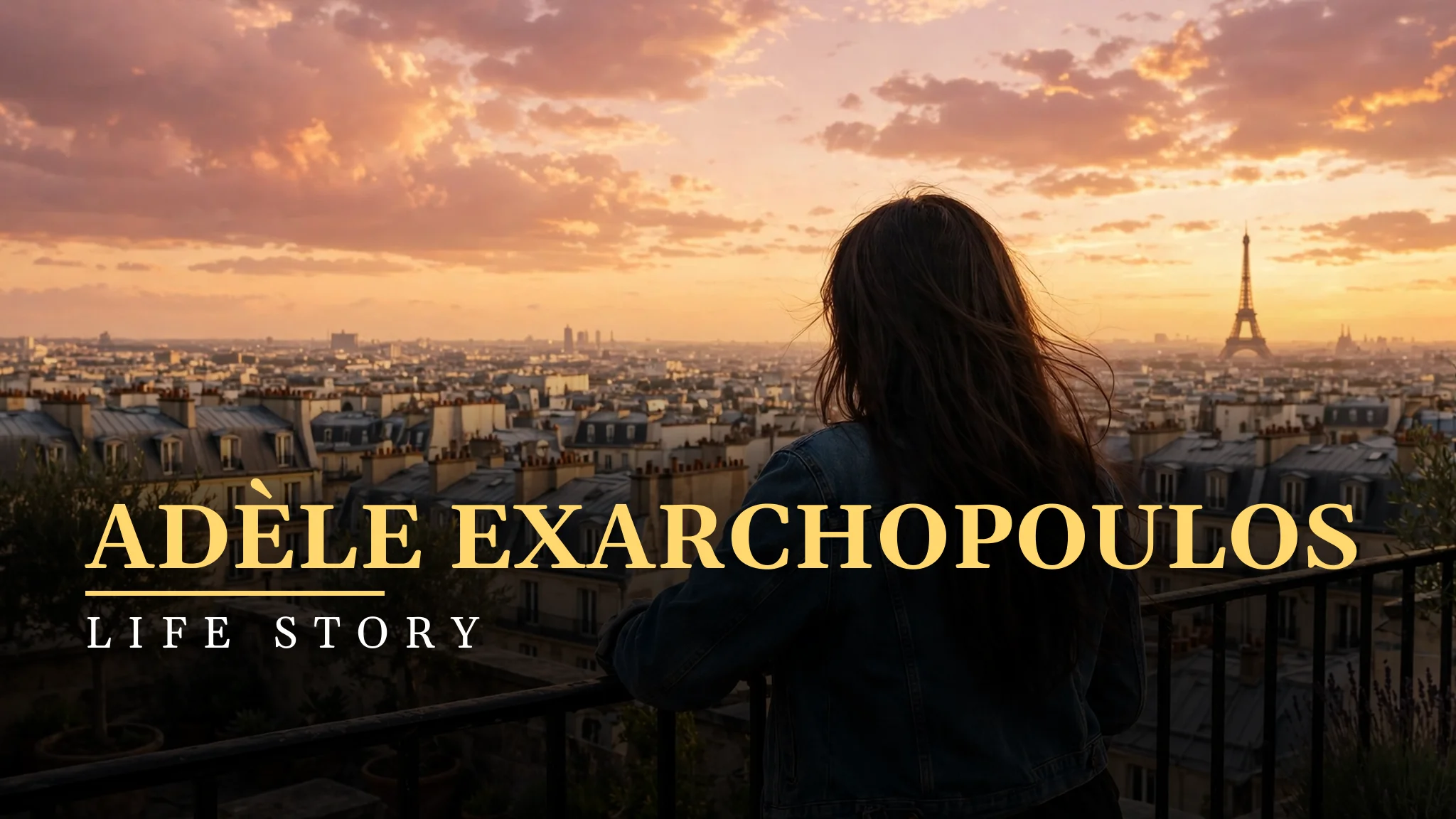
I keep thinking about the rooftop at sunset, the young woman in a denim jacket looking over Paris, the Eiffel Tower in the distance, and the pink sky. It is a picture of a young woman looking at her city, at her future, and at the world. That is Exarchopoulos for me: a young woman on a rooftop, looking out, brave and hopeful, ready for whatever comes next. She is not afraid of the view. She is ready to live it. In the end, I think that is her gift: she looks at life with open eyes, and she invites us to look with her.
I also think about her role in Les Cinq Diables, and about the mother who can bring back the past through smell. It is a strange, magical film, and Exarchopoulos plays the mother with a quiet, haunted intensity. She shows a woman who is trying to protect her family, who is carrying a secret, and who is afraid of what the past might bring. I think about the mothers who carry secrets, who try to protect their children, and who live with the weight of the past. Exarchopoulos plays that weight with honesty, and she makes the audience feel it. She does not play a perfect mother. She plays a real one, with fear, with love, and with a past that will not stay buried. That is a brave performance, and it is one that stays with me.
I think about her choices after the Palme d’Or, and I respect them deeply. She could have become a Hollywood star, taken big roles in big films, and made a lot of money. She did not. She stayed in France, she chose small films, she chose difficult roles, and she built a career on truth. That is a brave choice, because fame is tempting, and money is tempting. Exarchopoulos chose art over fame, and she chose honesty over safety. I think about the pressures that young stars face, and about how easy it is to lose yourself in fame. She did not lose herself. She stayed herself, and that is a kind of strength that I admire more than any award.
There is something I respect about the way she has grown up in public. She was a child on film sets, a teenager in a famous film, and a young woman in the spotlight, and she has kept her head. She became a mother, she kept working, and she kept her private life private. That is not easy, when the whole world is watching you. She has done it with grace, and she has shown that a young woman can be a star, a mother, and an artist, all at the same time, without losing herself. I think that is a powerful example for young women everywhere, and it is one that I want to remember.
I also think about Mandibules, and about the wild comedy with a giant fly. It is a funny, strange film, and Exarchopoulos plays her role with a lightness that surprised audiences. She was not afraid to be silly, and she was not afraid to laugh at herself. That willingness to try new things, to play in a comedy after playing in serious dramas, is part of what makes her a great actress. She does not stay in one box. She tries everything, and she does it with joy. I think about the actors who only play one kind of role, and who become boring. Exarchopoulos is never boring, because she is always trying something new, and that curiosity keeps her work fresh.
Finally, I think about the rooftop at sunset, the young woman in a denim jacket looking over Paris, the Eiffel Tower in the distance, and the pink sky. She is not afraid of the view. She is ready to live it. She looks at life with open eyes, and she invites us to look with her, and that is a gift that will last as long as people watch her films.
I also think about Les Anarchistes, and about the young woman who joins a group of rebels in the 1890s. Exarchopoulos plays Judith with a quiet strength, a woman who believes in something bigger than herself, and who is willing to risk everything for it. I think about the young people today who want to change the world, who believe in justice, and who are willing to stand up. Judith is one of them, even though she lived more than a hundred years ago. Exarchopoulos makes her feel alive, and she makes the audience care about her. That is a gift: to make the past feel present, and to make a historical character feel like someone you know.
I think about her bravery, and about how it has stayed with her from nineteen to thirty. She was brave in Blue Is the Warmest Colour, she was brave in Rien à foutre, and she is brave in every film she makes. Bravery is not a one-time thing. It is a habit, a choice you make again and again, in every role, and in every part of your life. Exarchopoulos makes that choice, film after film, and she shows that bravery is not about being fearless. It is about being afraid, and doing it anyway. That is a lesson for all of us, and it is one that I want to remember.
Finally, I think about the rooftop at sunset, the young woman in a denim jacket looking over Paris, the Eiffel Tower in the distance, and the pink sky. She is not afraid of the view. She is ready to live it, and she invites us to look with her, with open eyes and an open heart.
I also think about Orpheline, and about the search for identity that it shows. Exarchopoulos plays a young woman who is trying to understand who she is, and who is haunted by her past. I think about the young people who are searching for themselves, who feel lost, and who do not know who they are yet. That search is one of the hardest parts of growing up, and Exarchopoulos plays it with honesty. She does not pretend that the search is easy. She shows that it is painful, confusing, and necessary, and that finding yourself takes time. That is a truthful performance, and it is one that many young people will recognise in their own lives.
I also think about Le Fidèle, and about the woman who falls in love with a gangster, and who risks everything for love. Exarchopoulos plays Bibi with a passion that makes the audience believe in her, even when her choices are dangerous. I think about love, and about the risks we take for the people we love, and I see them in Bibi. She is not a perfect woman, but she is a brave one, and she loves with her whole heart. That is a powerful performance, and it is one that shows Exarchopoulos’s courage as an actress, again and again.
I also think about her courage as a young actress, and about how it has never left her. She was brave at nineteen, she was brave in her twenties, and she is brave now, in her thirties, taking on roles that challenge her and that ask for honesty. Bravery is not a moment. It is a habit, and Exarchopoulos has made it a habit, film after film. She shows young actors that it is possible to be brave, to be honest, and to stay true to yourself, even when the whole world is watching.
Frequently Asked Questions
When and where was Adèle Exarchopoulos born?
Adèle Exarchopoulos was born on 19 November 1993 in Paris, France. Her father was a guitar teacher and her mother was a nurse, and she grew up in a home that valued music and care for others.
How did Adèle Exarchopoulos start acting?
She began acting as a child, taking classes and appearing in small film roles while still young. Her early films included Boxes in 2007 and La Rafle in 2010, and she learned her craft on film sets, working with older actors and directors.
What is Blue Is the Warmest Colour about?
Blue Is the Warmest Colour, released in 2013 and directed by Abdellatif Kechiche, is a film about Adèle, a teenage girl who falls in love for the first time with a young woman named Emma. Exarchopoulos played Adèle, and the film won the Palme d’Or at Cannes.
What awards did Adèle Exarchopoulos win for Blue Is the Warmest Colour?
The film won the Palme d’Or at the Cannes Film Festival in 2013, shared in a historic decision between the director and the two leading actresses, Exarchopoulos and Léa Seydoux. Exarchopoulos also won the César Award for Most Promising Actress for her performance.
What other films has Adèle Exarchopoulos starred in?
Her other films include Les Anarchistes, Le Fidèle, Mandibules, Rien à foutre, Les Cinq Diables, and Passages. She has played a wide range of roles, from lovers and mothers to rebels and women searching for freedom.
Is Adèle Exarchopoulos a mother?
Yes, she became a mother in 2017, when her son was born, and she has spoken about balancing her work as an actress with her family life. She keeps her private life mostly out of the public eye, focusing on her films and her craft.


