Aitana Ocaña: The Life Story Behind Spain's Young Pop Star
In this post
- A Small Town Girl With a Big Voice
- Operación Triunfo 2017 and Lo Malo
- Teléfono, Spoiler, and the First Album
- 11 Razones, Alpha, and a Modern Pop Star
- Stadiums, Fans, and a Life in the Public Eye
- A Young Star With a Long Road Ahead
- Collaborations and a Global Sound
- Social Media, Style, and a Modern Star
- Awards, Records, and a Place in Pop History
- My Take:
Aitana Ocaña is one of the brightest young stars in Spanish pop, and her rise was one of the fastest in the history of Spanish television. She was eighteen years old when she walked into the “Operación Triunfo” house in 2017, a shy girl from a small town near Barcelona with a clear voice and a quiet confidence. A few months later, she was one of the most talked-about young singers in Spain, and her first songs were being played everywhere. Her journey from that television house to stadiums full of fans took only a few years, and it happened because her voice, her work, and her choices were all her own.
What makes her story stand out is how carefully she has built her career. She did not rush to copy other pop stars, and she did not let the fame of the show decide what kind of singer she would be. She tried different sounds, she worked with songwriters from many countries, and she moved from sweet pop to a more modern, electronic style that fitted her personality. She also became an actress, starring in a television series, and she built a large following on social media, where she shares her life with millions of fans.
She was born in Sant Climent de Llobregat, a small town near Barcelona, and she grew up in a family that supported her love of music. She studied, she sang, and she dreamed of a career in music, but she never imagined that a television show would change her life so quickly. This is the story of a young woman who entered a contest, found her voice, and became one of the most successful pop stars of her generation in Spain.
A Small Town Girl With a Big Voice
Aitana Ocaña Morales was born on 27 June 1999 in Barcelona, and she grew up in Sant Climent de Llobregat, a small town near the city. Her family was close and supportive, and music was a normal part of her childhood. She sang at home, she sang at school, and she loved the pop songs she heard on the radio. She was a good student, and she planned to study at university, but music was always the thing that made her happiest.
As a teenager, she began to take singing more seriously. She took lessons, she practised, and she performed at local events. She was not a child star, and she did not grow up on television. She was a normal girl from a small town who loved to sing, and her voice was clear, sweet, and strong. People who heard her began to say that she had real talent, and her family encouraged her to keep going.
She also studied at school and thought about her future. She was interested in design, and she considered studying at university, but music kept pulling her back. She entered singing competitions, she performed for friends, and she dreamed of a career in music, even though she did not know how to start one. She was eighteen years old, and she was at the point in life when a young person has to choose a path. She chose music, and that choice changed everything.
Her home town stayed important to her, and she often speaks about it with love. She is proud of where she came from, and she has not forgotten the small-town life that shaped her. She is a reminder that a pop star does not have to come from a big city. She can come from a quiet town near Barcelona, and she can still reach the whole world.
Operación Triunfo 2017 and Lo Malo
In 2017, Aitana entered the new series of “Operación Triunfo”, the Spanish talent show that had launched David Bisbal and many other stars. The show was back on television after a break, and it became a national event again, watched by millions of people. Aitana was one of the youngest contestants, and she quickly became a favourite. Her voice was clear and beautiful, her performances were confident, and her personality was warm and honest. Viewers liked her, and they voted for her week after week.
She finished as the runner-up, behind Amaia Romero, but the result did not matter. She had become a star, and her name was known across Spain. During the show, she recorded a duet with another contestant, Ana Guerra, called “Lo malo”. The song became a huge hit, one of the biggest Spanish songs of the year. It was a fast, modern pop song about a woman who refuses to accept a bad relationship, and it was sung by two young women who were both becoming stars. The song was played on the radio, in clubs, and at parties, and it made Aitana famous even before the show had ended.
After the show, she signed a record deal and began to work on her first music. She was only eighteen, and she was suddenly famous, with millions of followers on social media and a public that wanted to hear more from her. It was an exciting time, but it was also a difficult one, because she had to learn how to handle fame, how to work in a studio, and how to build a career that would last longer than a television show.
She handled it with care. She did not rush to release an album, and she took time to find her sound. She worked with good songwriters, she chose songs that fitted her voice, and she built her career step by step. That patience was important, and it showed a maturity that was unusual for someone so young.
Teléfono, Spoiler, and the First Album
Aitana’s first single after the show was “Teléfono”, released in 2018. The song was a modern pop hit, with a catchy melody and a video that showed her style: young, fresh, and confident. It became a big success in Spain and Latin America, and it proved that she was not just a television star. She was a real pop artist, with songs that could stand on their own. She followed it with more singles, and each one showed a singer who was growing and finding her own sound.
In 2019, she released her first album, “Spoiler”. The album was a mix of pop, Latin rhythms, and electronic sounds, and it included hits like “Vas a quedarte” and “Nada sale mal”. The album went to number one in Spain, and it was a success across Latin America. She toured with the album, performing in large venues, and her concerts were full of young fans who sang every word with her. She was twenty years old, and she had already built a career that many singers spend a lifetime trying to achieve.
Her style was changing, too. She was no longer the shy girl from the television house. She was a confident young woman with a clear image, a modern sound, and a strong presence on stage. Her videos were stylish, her clothes were fashionable, and her music was fresh. She was a pop star for a new generation, and her fans, many of whom were her own age, felt that she understood them.
She also began to work with artists from other countries, recording duets and collaborations that introduced her to new audiences. She sang with Latin American stars, with Spanish artists, and with international pop singers, and each collaboration showed a different side of her voice. She was not afraid to try new things, and her willingness to experiment helped her to grow as an artist.
11 Razones, Alpha, and a Modern Pop Star
In 2020, Aitana released her second album, “11 Razones”, which means “11 Reasons”. The album was a big success, and it showed a more mature singer. The songs were about love, about break-ups, and about the feelings of a young woman in her early twenties. The title song became a hit, and the album went to number one in Spain. She toured with it, and her concerts grew bigger. She was no longer a new star. She was a leading figure in Spanish pop.
In 2023, she released “Alpha”, an album that marked a new stage in her career. The sound was more electronic, more modern, and more danceable, and the album showed that she was willing to take risks. She worked with producers from different countries, and she created a sound that was international, not just Spanish. The album was a success, and it proved that she could change her style without losing her audience. Her fans followed her, because they trusted her taste and her voice.
She also became an actress during these years. In 2022, she starred in “La última”, a drama series on Disney+, in which she played a young singer trying to make it in the music business. The role was close to her own life, and she performed it with honesty and warmth. The series was a success, and it showed that she was not only a singer. She was also a talented actress, and she had a future on screen as well as on stage.
Her career had become a mix of music, television, and social media, and she handled it all with care. She was one of the most followed Spanish artists on Instagram, and she used her platform to share her music, her work, and her life with her fans. She was a modern pop star, in every sense of the word.
Stadiums, Fans, and a Life in the Public Eye
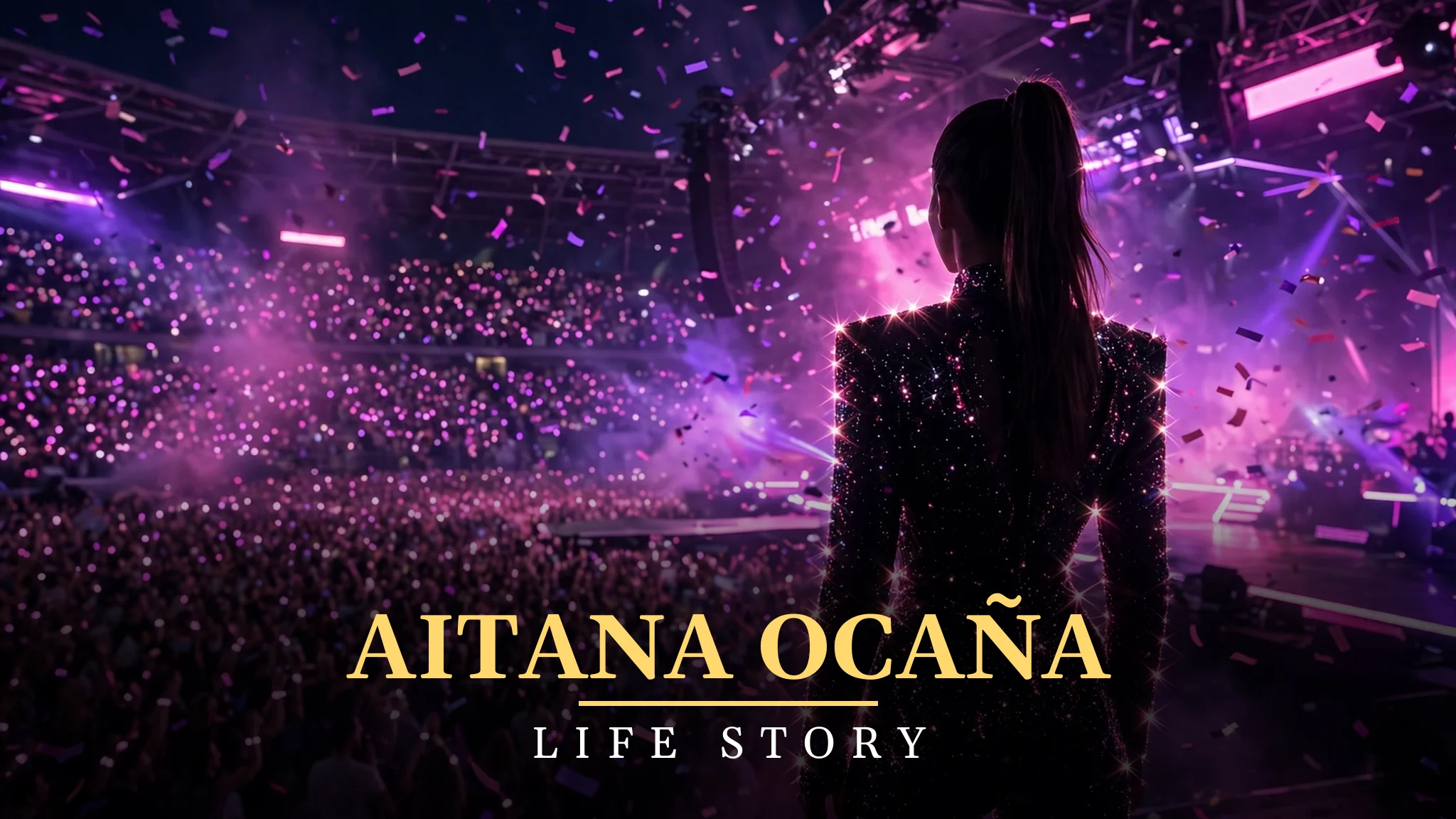
Aitana’s concerts have grown from small venues to large arenas and stadiums. She has performed in front of tens of thousands of fans, and her shows are known for their energy, their lights, and their modern staging. She sings, she dances, and she talks to her audience, creating a feeling of closeness even in a huge venue. Her fans, many of whom have followed her since 2017, sing every word with her, and the concerts feel like a celebration of a shared journey.
Her relationship with her fans is close and personal. She shares her life on social media, she talks about her feelings, and she thanks her fans for their support. She has spoken about the pressure of fame, about the need to take care of her mental health, and about the importance of being honest with herself. Her openness has made her fans love her even more, because they feel that she is real, not just a pop star on a stage.
Her private life has also been in the public eye, and she has handled it with grace. She has been in relationships that were reported in the press, and she has spoken about them with honesty. She has not hidden her life, but she has also tried to protect her privacy. That balance is hard for a young star, and she has managed it well, keeping her focus on her music and her work.
She has also used her fame to support causes she believes in, and she has spoken about issues that matter to young people. She is a role model for many young women in Spain, not only because of her music, but because of the way she carries herself: confident, hard-working, and honest. She shows that a young woman can be successful, can be herself, and can stay true to her values.
A Young Star With a Long Road Ahead
Aitana Ocaña is still very young, and her career is still growing. She has already achieved more than most singers achieve in a lifetime, but she is not slowing down. She continues to record new music, to perform in large venues, and to explore new projects, including acting. Her voice has matured, her songwriting has deepened, and her stage presence has grown stronger. She is a pop star who is still learning, still changing, and still surprising her audience.
Her legacy is still being written, but it is already clear that she has changed Spanish pop. She showed that a young singer could come from a television show and build a real, lasting career, and she showed that a modern pop star could be both successful and honest. Her songs are played on the radio, at parties, and on streaming services, and her concerts are events that her fans look forward to for months.
She has also opened doors for other young singers, showing that it is possible to start on television and to become a serious artist. Her success has inspired a new generation of Spanish pop singers, and her influence is clear in the music that is being made today. She is not just a singer. She is a symbol of a new generation of Spanish music, young, modern, and confident.
Today, Aitana is one of the most popular singers in Spain, and her story is still unfolding. She came from a small town near Barcelona, she sang on a television show, and she became a star. The rest of her story is still to be written, and her fans are waiting to see what she does next.
Collaborations and a Global Sound
Aitana has always been open to working with other artists, and her collaborations have been an important part of her growth. She has recorded duets with singers from Spain, from Latin America, and from other countries, and each one has shown a different side of her voice. She sang with the Colombian star Sebastián Yatra, with the Spanish singer David Bisbal, and with many other artists, and her voice fitted well alongside theirs. These collaborations were not just about reaching new audiences. They were about learning, about trying new sounds, and about growing as an artist.
Her work with Latin American artists was particularly important, because it introduced her to audiences in Mexico, in Colombia, and in Argentina, where her music became popular. She sang in a style that suited those audiences, and she learned from the songwriters and producers she worked with. Her sound became more international, not just Spanish, and her albums took in influences from Latin pop, from electronic music, and from reggaeton. That openness made her music richer, and it kept her sound fresh.
She also worked with producers from different countries, and her album “Alpha” showed the result of those partnerships. The sound was more electronic, more modern, and more danceable, and it proved that she could change her style without losing her audience. Her fans followed her, because they trusted her taste, and because they knew that her voice would still be there, at the centre of the music, no matter how the sound changed around it.
Her collaborations also show her character. She is a singer who enjoys working with others, who is not jealous of the spotlight, and who is happy to share it. That generosity has made her popular with her fellow artists, and it has helped her to build a long career. In a business that can be selfish, a generous singer is a rare thing, and Aitana is one of them.
Social Media, Style, and a Modern Star
Aitana is a modern pop star in every sense, and social media is a central part of her career. She has millions of followers on Instagram, on TikTok, and on other platforms, and she uses them to share her music, her work, and her life with her fans. She posts photos, videos, and messages, and she talks to her fans directly, without the filter of a magazine or a television show. That direct connection is important to her, and it is one of the reasons her fans feel close to her.
Her style is also a part of her identity. She is known for her fashion, for her hair, and for her stage outfits, and her fans copy her looks. She works with stylists, she appears in fashion magazines, and she has become a style icon for young women in Spain. Her image is modern, fresh, and confident, and it fits her music. She is not trying to be someone else. She is being herself, and her fans love her for it.
But social media also brings pressure, and Aitana has spoken about it openly. To be watched by millions of people, every day, is hard, especially when you are young. She has talked about the need to take care of her mental health, about the importance of rest, and about the value of being honest with herself. Her openness about those pressures has helped her fans, many of whom face similar pressures in their own lives. When a pop star says, I am struggling too, it makes the fans feel less alone.
Her modern stardom is a mix of music, television, social media, and fashion, and she handles it all with care. She is a singer, an actress, a style icon, and a voice for her generation, and she does it all while staying true to herself. That is a remarkable achievement for someone so young, and it is a sign that her career will last for many years to come.
Awards, Records, and a Place in Pop History
Aitana has already won many awards in her short career, and they are a recognition of how quickly she has risen. She has won awards in Spain for her albums, for her songs, and for her work as a young artist, and she has been nominated for Latin Grammy Awards, one of the highest honours in Latin music. Those nominations show that her work is recognised not only in Spain, but across the Spanish-speaking world, and that she is regarded as one of the leading young pop artists of her generation.
Her records have also set new marks. Her albums have gone to number one in Spain, her singles have been streamed hundreds of millions of times, and her concerts have filled stadiums. Those numbers are impressive, but they are not the most important part of her story. The most important part is the music itself, and the connection she has built with her fans. Awards are given by judges, but loyalty is given by fans, and Aitana has earned both.
Her place in Spanish pop history is already secure, even though she is still very young. She showed that a singer could come from a television show and build a real, lasting career, and she showed that a modern pop star could be both successful and honest. Her songs are played on the radio, at parties, and on streaming services, and her concerts are events that her fans look forward to for months. She is not a passing fashion. She is a central figure in Spanish pop.
Her success has also opened doors for other young singers, showing that it is possible to start on television and to become a serious artist. Her influence is clear in the music that is being made today, and many young singers say that her career inspired them to start. She is not just a singer. She is a symbol of a new generation of Spanish music, young, modern, and confident, and her place in pop history is only going to grow.
My Take:
When I think about Aitana, the first thing that strikes me is how young she was when her life changed. She was eighteen, and she walked into a television house, and a few months later, millions of people knew her name. I try to imagine what that feels like, to go from a small town near Barcelona to a national stage in a few weeks, and I think it must be both wonderful and frightening. Most of us at eighteen are still trying to decide what to study, what to do, and who to be. She had to decide all of that in front of a camera, with the whole country watching. I admire the way she handled it, because she did not panic, she did not become arrogant, and she did not lose herself. She stayed calm, she worked hard, and she built a career step by step.
I also think about “Lo malo”, and how important that song was. It was a song about a woman who refuses to accept a bad relationship, and it was sung by two young women who were both becoming stars. The song was catchy, it was fun, and it was also a message. It said that a young woman does not have to accept less than she deserves, and that she can walk away from a bad situation. I think that message mattered, especially for the young girls who listened to the song. They heard two young women singing about strength, and they felt stronger themselves. That is a good thing for a pop song to do, and I think Aitana understood that, even at eighteen.
What I admire most about her is the care she has taken with her career. She did not rush to release an album, she did not copy other pop stars, and she did not let the fame of the show decide her sound. She took time, she tried different styles, and she moved from sweet pop to a more modern, electronic sound when she was ready. That patience is rare in a young star, because the music business pushes young artists to release music quickly, to stay in the news, and to never stop. She resisted that pressure, and she made music that she believed in. I think that is why her albums have been successful. They are not rushed. They are thoughtful, and they sound like her.
I also respect the way she has spoken about the pressure of fame and about her mental health. It is not easy for a young star to say that fame is hard, because people think that fame is a gift, and that a famous person should be grateful and happy all the time. But fame is hard, especially when you are young, and it can be lonely. Aitana has been honest about that, and her honesty has helped her fans, many of whom are young and who face their own pressures. When a pop star says, I am struggling too, it makes the fans feel less alone. That is a brave and generous thing to do, and I think she deserves credit for it.
Her acting work in “La última” is another part of her story that I find interesting. She played a young singer trying to make it, which was close to her own life, and she did it well. I think that shows that she is not just a voice. She is a performer, and she has a future on screen as well as on stage. Many singers try to act and fail, because acting is a different skill, and it requires a different kind of honesty. She succeeded, and I think that is because she brought her own experience to the role. She knew what it felt like to be a young singer with a dream, because she had lived it.
I have to be honest about one thing, and that is that her music is not always easy for older listeners to enjoy. Her sound is modern, electronic, and made for a young audience, and some people find it too polished or too simple. I understand that, and I do not think it is a fair criticism to say that pop music should be complicated in order to be good. Pop music is meant to be catchy, to be fun, and to be sung along to, and Aitana’s music does all of that. Her songs are not trying to be deep in the way a folk song is deep. They are trying to be honest about the feelings of a young woman, and they succeed at that. That is enough, and it is a real achievement.
I also think about her fans, and how loyal they are. They have followed her since 2017, they have grown up with her, and they sing every word at her concerts. That loyalty is not an accident. It is the result of a singer who treats her fans with respect, who talks to them, who thanks them, and who shares her life with them. She does not act as if she is above her fans. She acts as if she is one of them, and that is why they love her. A pop star who remembers her fans is a pop star who will last, and I think Aitana will last for a long time.
What I learn from her story is that youth is not a weakness. It is a strength, if you use it well. She was young when she started, and she used her youth to connect with a young audience, to try new sounds, and to build a career that is modern and fresh. She did not try to be older than she was, and she did not pretend to be something she was not. She was herself, and that was enough. That is a lesson for anyone who feels too young to start something. You are not too young. You are exactly the right age to begin, if you are willing to work and to learn.
In the end, I think Aitana matters because she represents a new generation of Spanish pop. She is young, she is modern, she is honest, and she is talented. Her songs are the soundtrack of a generation, and her concerts are celebrations of youth, of music, and of the joy of singing together. She is still at the beginning of her career, and I am excited to see what she does next. Her story is not finished, and that is the best part. The best chapters are still to come.
I also think about her home town, Sant Climent de Llobregat, and how it shaped her. It is a small town, not a big city, and growing up there gave her a sense of community, of knowing your neighbours, and of being part of something small and warm. I think that small-town feeling is still with her, even now that she performs in stadiums. She is a star, but she is also a girl from a small town, and that combination is part of what makes her special. She has not forgotten where she came from, and her fans in her home town are proud of her, because she is one of theirs.
I think about her family, too, and the support they gave her. When she entered “Operación Triunfo”, she was only eighteen, and she was leaving home for the first time, to live in a house with strangers, under the eyes of millions of people. That must have been frightening, for her and for her family. But her family supported her, they encouraged her, and they trusted her. That trust matters, because a young person who knows that her family believes in her is braver than one who does not. I think Aitana’s family gave her that bravery, and she has used it well.
I also think about the song “Teléfono”, and how it marked her first step as a solo artist. It was a modern pop song, with a catchy melody, and it showed that she could stand on her own, without the show, without a duet partner, and without the safety of a group. That first step is always the hardest, because it is the moment when you find out if people will listen to you for yourself, and not just because you were on television. People did listen, and the song was a hit, and that must have been a wonderful feeling. It was proof that she was not just a television star. She was a real artist.
I want to say something about her voice, because it is a voice that has grown a great deal since 2017. In the show, her voice was clear and sweet, but it was also young, and it had not yet found its full strength. Since then, she has worked hard, she has taken lessons, and she has performed night after night, and her voice has become stronger, richer, and more confident. That growth is the result of work, not luck, and it is a reminder that talent is only the beginning. The rest is practice, and Aitana has done the practice.
I also think about her album “11 Razones”, and how it showed a more mature singer. The songs were about love, about break-ups, and about the feelings of a young woman in her early twenties. Those are not easy subjects to write about, because they are personal, and because they require honesty. She wrote about them with courage, and her fans, many of whom were going through the same feelings, recognised themselves in her songs. That is the power of a good pop album: it tells you that you are not alone, and that someone else feels what you feel.
I think about her acting in “La última”, and how it showed a different side of her. She played a young singer trying to make it, which was close to her own life, and she did it with honesty. I think that role was brave, because it asked her to be vulnerable, to show the struggle behind the success, and to let the audience see the hard parts of a singer’s life. Many pop stars would not take that risk, because they want to protect their image. She took it, and she did it well, and I respect her for it.
I also think about the pressure of being a role model. She is a role model for many young women in Spain, not only because of her music, but because of the way she carries herself. That is a heavy responsibility for someone so young, because it means that every choice she makes is watched, and every mistake is noticed. She has handled that responsibility with grace, by being honest, by working hard, and by staying true to herself. I think that is a remarkable achievement, and it is one that deserves more credit than it usually gets.
I think about her future, and about what is next. She is still very young, and her career is still growing. She has already achieved more than most singers achieve in a lifetime, but she is not slowing down. She continues to record, to perform, and to explore new projects, including acting. Her voice has matured, her songwriting has deepened, and her stage presence has grown stronger. I am excited to see what she does next, because I think her best work may still be ahead of her.
I also think about the generation she represents. She is part of a new generation of Spanish pop stars, young, modern, and confident, who grew up with the internet, with social media, and with a world that is more connected than ever before. Her music reflects that world, and her fans, who are part of the same generation, feel that she understands them. That connection is powerful, and it is the reason her concerts feel like celebrations, not just shows. She is singing for her generation, and her generation is singing back.
In the end, I come back to the simple idea that she was eighteen, she walked into a television house, and she changed her life. That is a story of courage, of talent, and of hard work, and it is a story that will inspire other young people to follow their dreams. She did not wait for permission. She entered a contest, she sang, and she built a career. I hope other young singers hear her story and think, if she can do it, maybe I can too. That hope is a gift, and it is one of the best things a pop star can give.
Frequently Asked Questions
How old was Aitana when she joined Operación Triunfo?
Aitana was eighteen years old when she entered “Operación Triunfo” in 2017. She was one of the youngest contestants on the show, and she finished as the runner-up, behind Amaia Romero.
What is Aitana’s most famous song from Operación Triunfo?
Her most famous song from the show is “Lo malo”, a duet with Ana Guerra that became one of the biggest Spanish songs of 2017. The song is about a woman who refuses to accept a bad relationship, and it was a huge hit on the radio and in clubs.
What was Aitana’s first album?
Her first album was “Spoiler”, released in 2019. The album went to number one in Spain and included hits like “Vas a quedarte” and “Nada sale mal”, and it confirmed her place as a leading pop star.
Has Aitana acted in a television series?
Yes, she starred in “La última”, a drama series on Disney+ released in 2022, in which she played a young singer trying to make it in the music business. The series was a success and showed her talent as an actress.
What is Aitana’s latest album?
Her album “Alpha”, released in 2023, marked a new stage in her career, with a more electronic and modern sound. It was a success in Spain and showed that she was willing to take risks and change her style.
Where is Aitana Ocaña from?
She was born in Barcelona on 27 June 1999 and grew up in Sant Climent de Llobregat, a small town near Barcelona. She often speaks with pride about her home town and the small-town life that shaped her.


