Alba Rohrwacher: The Life Story Behind Italy's Quiet Star
In this post
Alba Rohrwacher is one of the most quietly powerful actresses in Italian cinema, and her work is known for its honesty, its stillness, and its depth. She does not act loudly. She does not seek attention. She plays women who are often overlooked, women who live in small towns, who work hard, who love deeply, and who carry a quiet strength that the camera can see if it looks closely. That is why directors trust her, why critics praise her, and why audiences remember her long after a film ends.
She was born in Florence, and she grew up in a family close to art and to film. Her sister, Alice Rohrwacher, became a director, and the two sisters have worked together on films that are now counted among the best in modern Italian cinema. Alba’s career has taken her from small Italian films to major festivals, from Venice to Cannes, and she has won awards for performances that are both subtle and strong. She has played a mother, a wife, a worker, and a woman in search of herself, and she has made each one feel real.
Her story is a story of a woman who chose a quiet path in a loud world, and who proved that quiet can be powerful. She is not a star who chases fame. She is an actress who chases truth, and that is why her work matters. This is the story of a girl from Florence who became one of Italy’s most respected actresses, by listening, by watching, and by telling the truth in a soft voice.
A Childhood in Florence and Tuscany
Alba Rohrwacher was born on 27 February 1979 in Florence, Italy, a city known for its art, its history, and its beauty. Florence is a city where the past is always present, in its churches, its palaces, and its streets, and a child growing up there learns to see the world with an eye for detail. Rohrwacher grew up in that world, and it gave her a sensitivity to light, to place, and to the small moments of daily life that later showed in her acting.
Her family was close to the arts, and her father was a teacher, while her mother was also a teacher. She grew up with her sister Alice, who would later become a film director, and the two sisters shared a love of stories, of films, and of the countryside of Tuscany. They spent time in the hills outside Florence, in a world of fields, of old houses, and of people who lived close to the land. That world of rural Italy would later appear in the films they made together, and it is a central part of Alba’s work.
As a girl, she was quiet and watchful, and she liked to observe people rather than to be the centre of attention. That watchfulness became a gift for an actress, because it taught her to see how people really behave, how they move, how they speak, and how they hide their feelings. She was not a child who performed for applause. She was a child who listened, and that listening is still at the heart of her acting today.
When she finished school, she decided to study acting, and she moved to Rome to train at the Centro Sperimentale di Cinematografia, one of the most respected film schools in Italy. That move was a big step, from Florence to the capital, from a quiet life to a world of film, but she took it with the same calm and steady attitude that has marked her whole career. She was ready to learn, and she was ready to work.
The Tuscan countryside gave Alba and her sister Alice a world that later became the heart of their films, a world of fields, of old houses, of beekeepers, and of people who live close to the land. As children, they spent time in that world, and they learned to see its beauty and its sadness, its slow pace and its hard work. That childhood is not only a memory. It is the material of their films, and Alba carries it with her in every role she plays. When she plays a rural woman, she is not acting a part she has only read about. She is playing a life she has seen, and that is why it feels so true.
Studying in Rome and the First Films
At the Centro Sperimentale in Rome, Rohrwacher learned the craft of acting in a serious and disciplined way. She studied voice, movement, and the history of film, and she worked with teachers who demanded honesty and hard work. She was not a student who wanted to be famous at once. She wanted to learn how to be a good actress, and she took her time. That patience is rare, and it is one of the reasons her work is so strong.
Her first film roles came in the early 2000s, in small Italian films where she played young women in everyday life. She was not given big glamorous parts. She was given roles that asked her to be real, to be a person that the audience could recognise from their own life. She played those roles with a quiet truth that critics noticed, and she began to build a reputation as an actress who could be trusted with a serious part.
In the early 2000s she appeared in small Italian films that gave her a chance to grow. She worked with directors who valued her stillness, her ability to listen on screen, and her gift for showing a feeling with a small change in her face. She was learning, film by film, and she was becoming a better actress with each new job.
By the late 2000s, she was no longer a new face. She was a working actress with a growing list of credits, and she was being offered larger roles in better films. She had learned her craft well, and she was ready for the roles that would make her famous. Those roles were coming, and they would show the world what a quiet actress could do.
The Centro Sperimentale in Rome is a school that demands discipline, and Rohrwacher took that discipline seriously. She studied voice, movement, and the history of film, and she worked with teachers who wanted honesty above all else. She was not a student who wanted to be famous at once. She wanted to learn how to be a good actress, and she took her time. That patience is rare, and it is one of the reasons her work is so strong. A person who learns slowly and carefully will build a foundation that lasts, and Rohrwacher built a foundation that has lasted for more than twenty years.
The Solitude of Prime Numbers and Hungry Hearts
In 2010, Rohrwacher starred in The Solitude of Prime Numbers, a film based on the novel by Paolo Giordano, about two people who are damaged by their childhoods and who struggle to connect. She played Alice, a woman who carries the pain of her past, and her performance was praised for its honesty and its depth. The film was a success, and it showed that she could carry a difficult and emotional story as the lead.
In 2014, she starred in Hungry Hearts, directed by Saverio Costanzo, a film about a young couple in New York whose love is tested by the birth of their child and by the mother’s growing fear about food and health. Rohrwacher played Mina, a woman who becomes obsessed with protecting her child, and her performance won her the Best Actress award at the Venice Film Festival. It was a major achievement, and it marked her as one of the best actresses in Italy.
Hungry Hearts was a hard film to watch, because it showed a woman in trouble, a woman who loves her child but who is losing her way. Rohrwacher played Mina with a truth that was both moving and frightening, and she did not try to make the character easy to like. She let the audience see the fear, the love, and the confusion, all at once. That is a brave performance, and it is one that deserves to be remembered.
The Venice award gave her a new level of recognition, and it opened doors to more work in Italy and abroad. She was no longer only a quiet actress in small films. She was an award-winning actress, and she was taken seriously by directors around the world. But she did not change her way of working. She stayed quiet, she stayed honest, and she kept choosing roles that mattered to her.
The Solitude of Prime Numbers is a film about two people who are damaged by their childhoods, and Rohrwacher played Alice with a quiet pain that made the audience feel her loneliness. She did not play the role loudly. She played it with a stillness that let the audience see the hurt underneath, and that stillness is her gift. Many actresses would try to show pain with tears and shouting, but Rohrwacher shows it with a look, with a pause, and with a silence that says more than words. That is a rare and powerful way to act, and it is why critics praised her performance in that film.
Working With Her Sister Alice
One of the most important parts of Rohrwacher’s career is her work with her sister, Alice Rohrwacher, a director whose films have won awards at Cannes and at other festivals. The two sisters have a close bond, and they share a love of rural Italy, of the past, and of stories about people who live on the edge of modern life. Alba has appeared in Alice’s films, including The Wonders in 2014 and Happy as Lazzaro in 2018, and those films are among the best in modern Italian cinema.
The Wonders told the story of a family of beekeepers in Tuscany, and Alba played a small but important role in it. The film won the Grand Prix at Cannes, and it showed the world the sisters’ shared vision of Italy, a vision that is both beautiful and sad, about a way of life that is disappearing. Happy as Lazzaro told the story of a young man who is exploited by a rich family, and Alba played a role that was quiet and strong, as she always does. The film won the Best Screenplay award at Cannes, and it confirmed Alice as a major director.
Working with her sister is a special thing, because it is a collaboration built on trust and on a shared childhood. Alba understands Alice’s world, because she grew up in it, and Alice understands Alba’s way of acting, because she has watched it since they were girls. That understanding makes their work together feel natural and true, and it is one of the reasons their films are so loved.
Their work together also shows a different side of Italian cinema, one that is not about glamour or about big cities, but about the countryside, about small communities, and about the past. Alba’s acting fits that world perfectly, because she is an actress who can play a rural woman, a mother, or a worker, with a truth that comes from her own life and her own family. She is not acting a part. She is living it, and that is why it works.
The Wonders is a film about a family of beekeepers in Tuscany, and it shows the sisters’ shared vision of Italy, a vision that is both beautiful and sad, about a way of life that is disappearing. Alba’s role in the film is small, but it is important, because she brings a quiet strength to a family that is struggling to survive. She does not need a large role to make an impact. She makes an impact with a look, with a gesture, and with a presence that feels real. That is the mark of a great supporting actress, and it is one of the reasons directors trust her with any role, large or small.
La chimera, Maria and International Work
In recent years, Rohrwacher has continued to work in major films, both in Italy and abroad. In 2023, she appeared in La chimera, directed by her sister Alice, a film about a man who steals ancient artefacts from tombs in Tuscany. She played a role in the film, and her presence added a quiet strength to a story that is both funny and sad. The film was shown at Cannes, and it was praised for its beauty and its originality.
She has also appeared in international films, including work in English-language productions, and she has shown that her quiet style works in any language. She does not need to speak loudly to be heard. She speaks with her face, with her eyes, and with her body, and that is a language that anyone can understand. That is why directors from other countries want to work with her, and why her career has grown beyond Italy.
In 2024, she appeared in Maria, a film about the opera singer Maria Callas, directed by Pablo Larraín and starring Angelina Jolie. Rohrwacher played a supporting role, and her work in the film was praised for its warmth and its truth. It was a chance to work on a large international film, with a major star, and she handled it with the same calm and professional attitude that she brings to every job.
Her international work shows that she is not only an Italian actress. She is a world actress, and her talent is recognised in many countries. But she has not left Italy behind. She still works in Italian films, she still works with her sister, and she still tells Italian stories. That balance, between Italy and the world, is a large part of her strength.
La chimera is a film about a man who steals ancient artefacts from tombs, and it is both funny and sad, a story about a Italy that is losing its past. Rohrwacher’s role in the film adds a quiet strength to a story that is full of strange and beautiful moments, and her presence reminds the audience that the film is about real people, not only about treasure. She has a gift for grounding a strange story in real life, and that gift is valuable for a director like her sister Alice, who makes films that are both magical and real at the same time.
A Quiet Star and a Lasting Career
Rohrwacher is known as a quiet star, a person who does not seek fame, who does not like the spotlight, and who prefers to let her work speak for itself. She is not often in the gossip pages, she does not post about her private life, and she does not chase attention. She is a private person, and she has kept her life private, which is a rare thing for a famous actress. That privacy is part of who she is, and it is part of why her work feels so honest.
Her career has lasted for more than twenty years, and she has worked in over fifty films, which is a remarkable achievement for an actress who chooses her roles so carefully. She has won awards at Venice, she has worked at Cannes, and she has been praised by critics around the world. But she has not let those awards change her. She still works in the same quiet way, still chooses roles that matter to her, and still gives performances that are true.
She is also a person who cares about the future of Italian cinema, and about the work of young directors and actors. She has worked with new filmmakers, she has supported her sister’s work, and she has been a part of a community of artists who are trying to make honest films in a difficult time. That community matters to her, and she is a valued member of it.
In the end, her story is a story of a woman who chose a quiet path, and who proved that quiet can be strong. She did not become famous by shouting. She became famous by listening, by watching, and by telling the truth in a soft voice. That is a lesson for any person, not only for an actress. You do not need to be loud to be heard. You need to be true, and Alba Rohrwacher is true.
Her work in international films shows that her quiet style works in any language, because she does not need to speak loudly to be heard. She speaks with her face, with her eyes, and with her body, and that is a language that anyone can understand. That is why directors from other countries want to work with her, and why her career has grown beyond Italy. She has not left Italy behind, but she has shown the world that an Italian actress can be loved everywhere, if her work is honest and true. That is a valuable thing, and it is one that deserves to be celebrated.
What Alba Rohrwacher Means Today
Today, Alba Rohrwacher is seen as one of the finest actresses in Italy, and as a symbol of a modern Italian cinema that values honesty over glamour. Her films, from Hungry Hearts to Happy as Lazzaro to La chimera, are still watched and praised, and they show a range that is both deep and wide. She has played mothers, wives, workers, and women in search of themselves, and she has made each one feel real.
She is also remembered as part of a family of artists, with her sister Alice, and their work together is a large part of modern Italian film. Their films tell stories about rural Italy, about the past, and about people who are often ignored, and they do it with a beauty and a sadness that is rare. Alba’s acting is at the centre of that work, and it is one of the reasons it lasts.
Her story matters because it shows that a person can succeed without being loud, without seeking fame, and without compromising. She has succeeded by being herself, by working hard, and by telling the truth. That is a good story, and it is one that will inspire young actors for a long time. Her work is still here, her films are still here, and her quiet voice is still being heard.
Her films are still watched in film schools, in festivals, and on television, and they are still a source of joy for viewers who discover them. A young person watching Hungry Hearts today can feel the power of a quiet performance, and can learn that acting does not need to be loud to be strong. That is a lesson that will last, and it is one that Rohrwacher teaches better than almost anyone. Her work is a gift to Italian cinema, and to anyone who watches it with an open mind, and I am glad it is still here for us to see.
My Take:
When I think about Alba Rohrwacher, I think about stillness, because stillness is the quality that makes her work so powerful. She does not act with big gestures or loud speeches. She acts with a look, with a pause, with a small change in her face, and that stillness draws the viewer in. I have watched many actresses who try to be noticed by being loud, and I have found that their work often feels forced. Rohrwacher does the opposite. She is quiet, and because she is quiet, I listen more closely, and I feel more. That is a rare gift, and it is one that I admire deeply.
I think her performance in Hungry Hearts is the best example of that gift. She plays Mina, a mother who is afraid for her child, and who becomes obsessed with protecting him. It is a hard role, because the character is not easy to like, and she does things that are frightening. Rohrwacher does not try to make Mina likeable. She plays her as a real woman, with real fear and real love, and she lets the audience see the confusion in her. That is brave, because many actresses would try to soften the character, to make her more sympathetic. She does not soften her. She lets her be true, and that truth is what makes the film so powerful.
What I like most about her work with her sister Alice is the trust between them. They grew up together, they share a love of the Tuscan countryside, and they share a vision of Italy that is both beautiful and sad. When Alba acts in Alice’s films, she does not need to be told what the world of the film is, because she already knows it. She lived in it as a girl, and she carries it with her. That shared history makes their work together feel natural, and it is one of the reasons their films are so loved. I think that kind of trust is rare in cinema, and it is a gift for both sisters.
I also think about her childhood in Florence, because I believe that where a person grows up shapes how they see the world. Florence is a city of art, of beauty, and of history, and a child growing up there learns to look closely, to notice light, to notice a face, to notice a small moment. Rohrwacher carries that way of seeing into her acting. She notices the small things, and she lets the camera notice them too. That is why her performances feel so detailed, so real, and so full of life, even when she is doing very little on screen.
There is something sad in her story too, and it is the fact that quiet actors are often overlooked. The world gives more attention to loud stars, to people who post, who shout, and who seek fame, and it gives less attention to people like Rohrwacher, who work quietly and let their films speak. I think that is unfair, because her work is as good as any loud star’s work, and it deserves to be seen by more people. I hope that more viewers discover her films, because they will be glad they did, and they will see a kind of acting that is rare and valuable.
I admire her privacy, because it is hard to be private in a world that wants to know everything. She does not share her life on social media, she does not talk about her family in public, and she does not chase attention. She lets her work speak, and that is a brave choice in a time when many actors feel they must be visible all the time. I respect that choice, because it shows that she values her work more than her fame, and that is a lesson for any person, not only for an actress.
If I have a criticism, it is only that I wish she would work in even more kinds of films, and that I wish more directors would give her leading roles. She has played many supporting roles, and she has made them memorable, but she deserves more chances to carry a film on her own, as she did in Hungry Hearts. She has the talent for it, and I think the audience would follow her. The danger for a quiet actress is that she is used as a supporting player, and I hope she keeps getting the leading roles that she deserves.
I think young actors can learn a lot from her. The lesson is to listen, to watch, and to be patient. Acting is not only about speaking. It is also about listening, about watching the other actor, and about letting a feeling grow in silence. Rohrwacher does that better than almost anyone, and she shows that a quiet performance can be more powerful than a loud one. That is a lesson for any kind of work, not only acting. Listen first, and then speak, and when you speak, make it count.
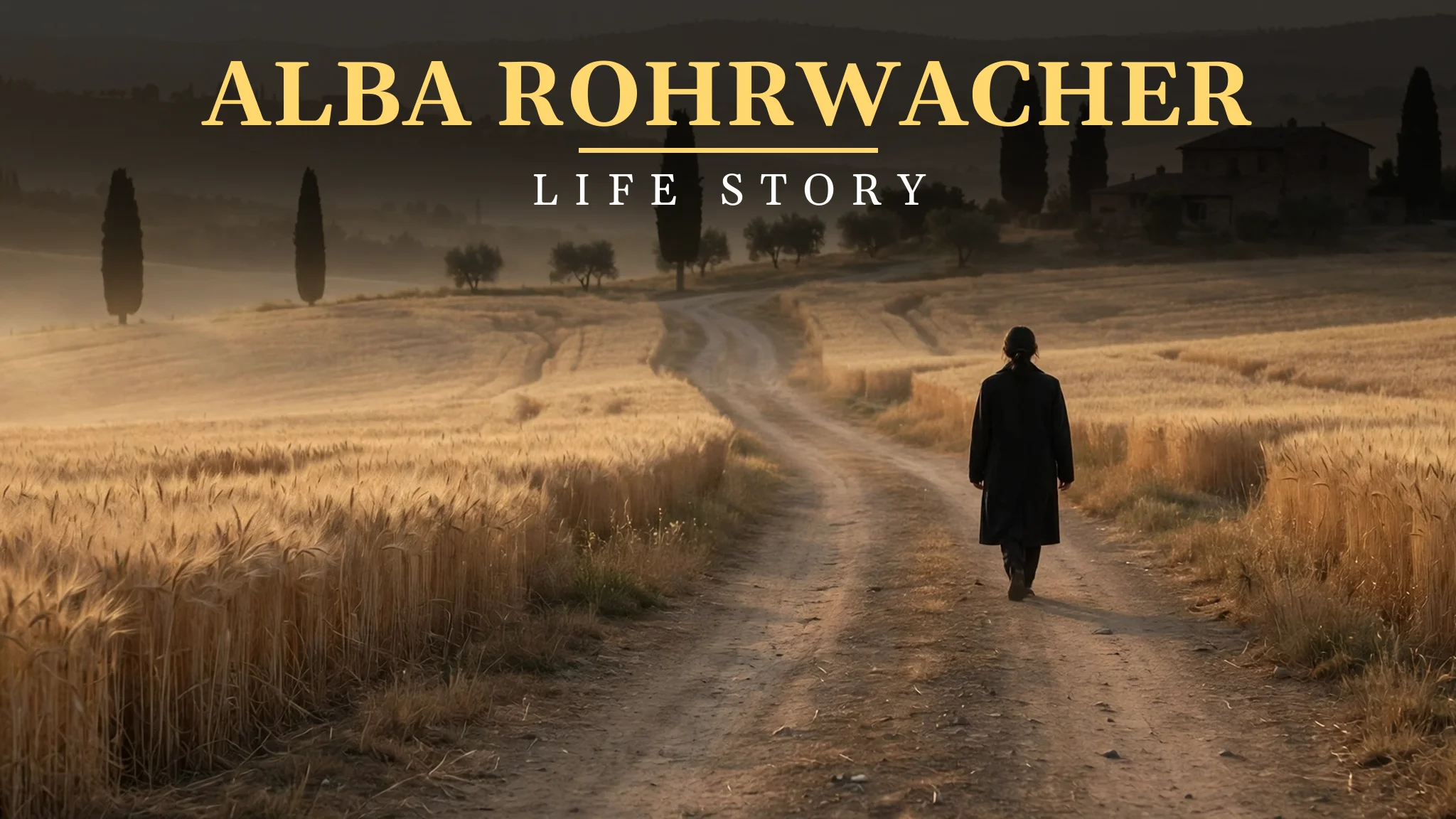
I keep thinking about the image of her walking through a wheat field in Tuscany, because it feels like a picture of her career. She is walking alone, quietly, through a beautiful landscape, and she is not in a hurry. She is taking her time, and she is looking at the world around her. That is how she acts, and that is how she lives. She does not rush, she does not shout, and she does not need to be the centre of attention. She just walks, and she sees, and she tells the truth. I find that beautiful, and I find it moving.
In the end, I think Alba Rohrwacher teaches us that quiet is not weak. Quiet can be strong, quiet can be brave, and quiet can be powerful, if it is honest. She has built a career on quiet honesty, and she has won awards, she has worked at Cannes and at Venice, and she has earned the respect of directors around the world. That is a remarkable achievement, and it is one that deserves to be celebrated. Her films are still here, her work is still here, and her quiet voice is still being heard, and I am glad it is.
One more thought stays with me, and it is about her sister Alice. The two sisters have made films together that are among the best in modern Italian cinema, and their bond is a large part of why those films work. I think that is a beautiful thing, two sisters, working together, telling stories about the Italy they grew up in, and doing it with honesty and with love. I hope they keep working together, because the world needs more films like theirs, films that are quiet, beautiful, and true.
I also think about the way Rohrwacher listens on screen, because listening is a skill that many actors forget. She watches the other actor, she reacts with her face, and she lets a feeling grow in silence. That is a rare gift, and it is one that I admire deeply. Acting is not only about speaking. It is also about listening, and Rohrwacher does that better than almost anyone. When I watch her, I feel as if I am watching a real person, not a performance, and that is the highest praise I can give an actress. Another thing I admire is her choice of roles, because she does not choose glamorous parts. She chooses roles about mothers, workers, and women in small towns, people who are often overlooked in films. That choice shows a respect for ordinary life, and a belief that an ordinary woman’s story is worth telling. I think that is a valuable belief, and it is one that makes her work feel close to the audience. A viewer can see their own mother, their own neighbour, or themselves in her characters, and that is a powerful thing. I think about her sister Alice, and about how rare it is for two sisters to work together so well. They grew up together, they share a love of Tuscany, and they share a vision of Italy that is both beautiful and sad. When Alba acts in Alice’s films, she does not need to be told what the world of the film is, because she already knows it. She lived in it as a girl, and she carries it with her. That shared history makes their work together feel natural, and it is one of the reasons their films are so loved. There is a lesson in her career for young actors, and it is the lesson of patience. She did not become famous at once. She studied, she took small roles, and she built her career slowly, film by film, until she won at Venice in 2014. That is a long time to wait, but the wait was worth it, because when the award came, she was ready for it. I think that is worth remembering for any kind of work. Do not rush. Learn, work, and be patient, and the recognition will come when you are ready for it. I also think about the sadness of being overlooked, because quiet actors are often overlooked in a world that gives more attention to loud stars. Rohrwacher is quiet, she does not seek fame, and she does not post about her life, and that means that many people have never heard her name. I think that is unfair, because her work is as good as any loud star’s work, and it deserves to be seen by more people. I hope that more viewers discover her films, because they will be glad they did. I keep returning to the image of her walking through a wheat field in Tuscany, because it feels like a picture of her career. She is walking alone, quietly, through a beautiful landscape, and she is not in a hurry. She is taking her time, and she is looking at the world around her. That is how she acts, and that is how she lives. She does not rush, she does not shout, and she does not need to be the centre of attention. She just walks, and she sees, and she tells the truth. I find that beautiful, and I find it moving. One more thought stays with me, and it is about her work in Maria, the film about Maria Callas. She played a supporting role, and her work was praised for its warmth and its truth. It was a chance to work on a large international film, with a major star, and she handled it with the same calm and professional attitude that she brings to every job. That is a sign of a great actress, that she can be part of a large film without losing her quiet style, and that she can make a small role feel essential. Finally, I think about what her career means for Italian cinema. She is a symbol of a modern Italian cinema that values honesty over glamour, and that tells stories about real people in real life. Her films are Italian in their setting, but they are universal in their themes, about family, about loss, and about the need to keep going. That is why they travel, and why they are loved outside Italy as well as inside it. Her work is still here, her films are still here, and her quiet voice is still being heard.
I also think about the way she chooses her roles, because she does not choose glamorous parts. She chooses roles about mothers, workers, and women in small towns, people who are often overlooked in films. That choice shows a respect for ordinary life, and a belief that an ordinary woman’s story is worth telling. I think that is a valuable belief, and it is one that makes her work feel close to the audience. A viewer can see their own mother, their own neighbour, or themselves in her characters, and that is a powerful thing. Finally, I want to say that quiet is not weak. Quiet can be strong, quiet can be brave, and quiet can be powerful, if it is honest. Rohrwacher has built a career on quiet honesty, and she has won awards, she has worked at Cannes and at Venice, and she has earned the respect of directors around the world. That is a remarkable achievement, and it is one that deserves to be celebrated. Her films are still here, her work is still here, and her quiet voice is still being heard, and I am glad it is.
Frequently Asked Questions
When and where was Alba Rohrwacher born?
She was born on 27 February 1979 in Florence, Italy. She grew up in Florence and in the Tuscan countryside, in a family close to the arts, with her sister Alice, who later became a film director.
What film won Alba Rohrwacher the Best Actress award at Venice?
She won the Best Actress award at the Venice Film Festival in 2014 for Hungry Hearts, directed by Saverio Costanzo, in which she played Mina, a mother whose fear for her child grows into an obsession.
Has Alba Rohrwacher worked with her sister Alice Rohrwacher?
Yes, she has appeared in her sister’s films, including The Wonders in 2014 and Happy as Lazzaro in 2018, and La chimera in 2023. The sisters share a love of rural Italy, and their work together is highly praised.
What is The Solitude of Prime Numbers, and what did Rohrwacher play in it?
The Solitude of Prime Numbers, released in 2010, is a film based on the novel by Paolo Giordano, and Rohrwacher played Alice, a woman carrying the pain of her childhood. Her performance was praised for its honesty and depth.
Did Alba Rohrwacher appear in Maria, the film about Maria Callas?
Yes, she appeared in Maria in 2024, a film about the opera singer Maria Callas, directed by Pablo Larraín and starring Angelina Jolie. She played a supporting role, praised for its warmth and truth.
Where did Alba Rohrwacher study acting?
She studied at the Centro Sperimentale di Cinematografia in Rome, one of Italy’s most respected film schools. Her training there gave her a strong base in voice, movement, and the craft of acting.
Is Alba Rohrwacher still acting now?
Yes, she is still working in Italian and international films, with recent work including La chimera in 2023 and Maria in 2024. She is one of Italy’s most respected actresses, known for her quiet and powerful style.


