Amy Winehouse: The Life Story Behind the Tragic Voice
In this post
Amy Winehouse was born on 14 September 1983 in Southgate, London, the daughter of a taxi driver and a pharmacist, and she grew up in a Jewish family in north London, where music was always playing. Her father, Mitch Winehouse, sang Frank Sinatra songs around the house, and her mother, Janis, worked in a pharmacy. Amy was a bright, funny girl who was expelled from school for piercing her nose, and she attended the Sylvia Young Theatre School, where she learned to sing and to act, but she was expelled from there too, for not applying herself, a pattern that would follow her for the rest of her short life.
She signed her first record deal at nineteen, with Island Records, and in 2003 she released her debut album, Frank, a mix of jazz, soul and hip-hop that was praised by critics and nominated for the Mercury Prize. The album sold modestly, but it showed a singer of unusual talent, with a voice that was deep and smoky, and a way of writing lyrics that was frank and funny. She was twenty, and she was already being compared to the great jazz singers of the past.
Her second album, Back to Black, released in October 2006, made her one of the most famous singers in the world. The album sold more than twenty million copies, won five Grammy Awards, and produced the singles Rehab, You Know I’m No Good and Back to Black, all of which became hits. Amy was twenty-three, and she was at the top of the music business, but her personal life was falling apart, and the next five years were marked by addiction, illness and a series of public collapses that were reported in every newspaper in the world.
Amy Winehouse died on 23 July 2011 in Camden, London, at the age of 27, of alcohol poisoning, after a long struggle with addiction. She had recorded only two albums, but they were enough to make her one of the most influential singers of her generation. This is her life story, from a girl in north London to the stage of the Grammys.
Southgate and the Childhood
Amy Jade Winehouse was born on 14 September 1983 in Southgate, London, to Mitchell Winehouse, a taxi driver, and Janis Winehouse, a pharmacist, and she grew up in a Jewish family that valued music and humour. Her father sang Sinatra songs in the car, and her grandmother, Cynthia, who had once dated the jazz saxophonist Ronnie Scott, was a singer herself, and Amy was close to her. The family lived in a comfortable house in north London, and Amy attended Ashmole School, where she was a bright but disruptive pupil, more interested in music than in lessons.
When Amy was nine, her parents separated, and she lived with her mother, who worked long hours in a pharmacy, while her father visited at weekends. The separation affected her deeply, and she later said that it was the beginning of her troubles, though she remained close to both parents. She attended the Sylvia Young Theatre School, a stage school in London, where she learned to sing, dance and act, but she was expelled at fourteen for piercing her nose and for not applying herself, a decision that she later said she regretted, because the school had given her a structure she needed.
She also attended the BRIT School in Croydon, a school for the performing arts, where she studied singing, but she left after a short time, and she began performing in small jazz clubs in London, singing standards by Sarah Vaughan and Dinah Washington, two singers she admired enormously. She worked as a journalist for a short time, writing about music for a local paper, and she sang backing vocals for other artists, including the singer Tyler James, a friend from the BRIT School. By the time she was eighteen, she had a manager, Nick Shymansky, and a demo tape that was circulating among record companies.
Frank and the Debut
Amy signed to Island Records in 2002, when she was nineteen, and she began recording her first album, Frank, with the producer Salaam Remi, a hip-hop producer who understood her jazz influences and her way with words. The album was released in October 2003, and it was a mix of jazz, soul, hip-hop and R&B, with songs that were frank about love, sex and drinking, and that showed a songwriter of unusual confidence. The album reached number three in Britain, was nominated for the Mercury Prize, and won Amy an Ivor Novello Award for Best Contemporary Song for Stronger Than Me.
The album’s songs were written by Amy herself, often in collaboration with Remi, and they were notable for their honesty and their humour. Take the Box was a song about a breakup, Fuck Me Pumps was a satire of women who chase rich men in nightclubs, and Stronger Than Me was a song about a boyfriend who was too soft for her. The lyrics were direct and unflinching, and they showed a young woman who was not afraid to say what she thought, a quality that would become her trademark, and that would also cause her trouble.
Frank sold modestly at first, but it established Amy as a serious artist, and it won her a loyal following among jazz and soul fans. She toured the album in Britain and Europe, playing small venues and festivals, and she was praised by critics for her voice, which was deep and smoky, and for her stage presence, which was confident and funny. She was twenty, and she was already being compared to Billie Holiday and Sarah Vaughan, comparisons that flattered her and frightened her in equal measure.
Back to Black and the Breakthrough
Back to Black was recorded in 2006 with the producer Mark Ronson, who had worked with Amy on a single, and who understood her love of the girl groups of the 1960s, including the Ronettes and the Shangri-Las. The album was recorded in New York and London, with a band that included the Dap-Kings, a Brooklyn funk group, and it was a mix of soul, R&B and 1960s pop, with songs that were darker and more personal than anything on Frank. The album was released in October 2006, and it became a phenomenon, selling more than twenty million copies worldwide.
The singles from the album included Rehab, a song about refusing to go into drug treatment, which reached number seven in Britain and number nine in America, You Know I’m No Good, a song about infidelity, and Back to Black, a ballad about a failed relationship that became one of her most famous recordings. The album won five Grammy Awards in February 2008, including Record of the Year for Rehab, Song of the Year, Best New Artist and Best Pop Vocal Album, a haul that made Amy the most successful British female artist in Grammy history, and she performed at the ceremony by satellite from London, because she had been denied a visa to travel to America.
The album’s success made Amy one of the most famous singers in the world, and it also made her personal life the subject of intense press attention. Her relationship with Blake Fielder-Civil, whom she married in May 2007, was troubled, and both of them struggled with drug addiction, and their life together was reported in detail by the tabloid press. The songs on Back to Black, which had been written about the relationship, took on a new meaning as the public watched the couple’s decline, and the album became both a triumph and a tragedy.
Rehab and the Grammys
Rehab was the song that made Amy famous, and it was also the song that defined her public image. The lyrics, in which she refuses to go into rehabilitation, were based on a real conversation with her management, who had suggested she seek treatment for her drinking, and Amy had refused, saying no, no, no. The song was catchy and funny, and it became a hit, but it also became a prophecy, because Amy’s refusal to seek help would lead to her death five years later. The song won the Grammy for Record of the Year and Song of the Year in 2008, and it is still played on the radio every day.
The Grammy ceremony in February 2008 was a triumph for Amy, but it was also a strange occasion, because she was not allowed to travel to Los Angeles, after her visa application was denied because of her drug arrests, and she performed by satellite from a studio in London, singing Rehab and You Know I’m No Good to an audience in America. The performance was well received, and the five awards she won made her the star of the night, but the fact that she could not attend in person was a reminder of how her personal life was affecting her career, and how the authorities were treating her.
The awards also made her a target for the press, which followed her every move, photographing her in the streets of Camden, reporting on her weight loss and her drug use, and speculating about her health. The attention was relentless, and it made it harder for her to recover, because every relapse was reported in the newspapers. Amy herself said that the fame had made her life worse, and that she wished she could go back to singing in small clubs, where no one knew her name.
The Beehive, the Tattoos, and the Image
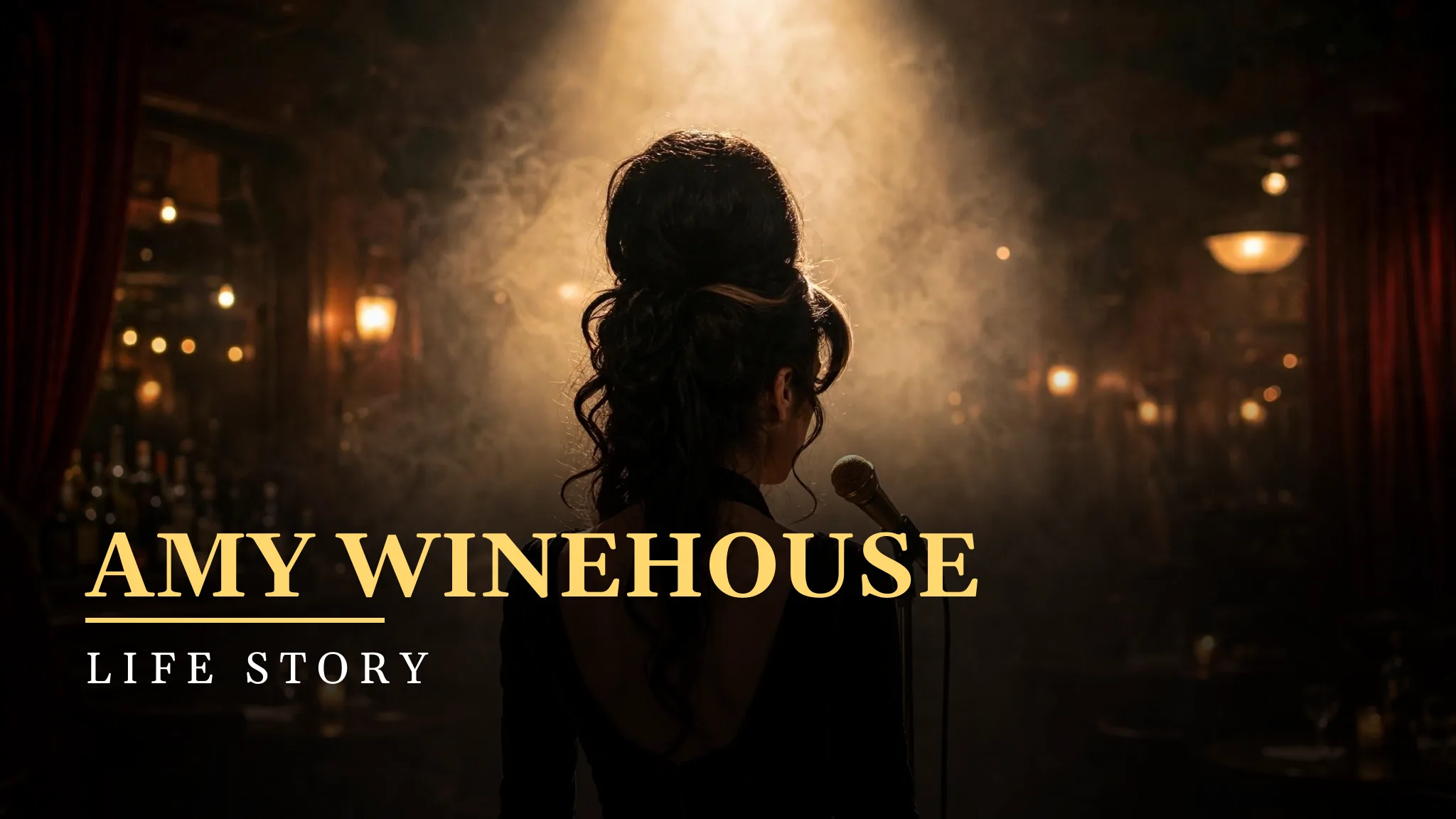
Amy’s image became as famous as her music, and it was built around her beehive hairstyle, her thick eyeliner, her tattoos and her vintage dresses. The beehive, which she wore piled high on her head, was inspired by the girl groups of the 1960s, and it became her signature, copied by fans and by fashion designers around the world. Her tattoos included a pin-up girl on her arm, a horseshoe, and the name of her grandmother, Cynthia, on her shoulder, and they were part of a look that was both retro and modern, a mixture of 1960s soul and Camden street style.
The image was carefully constructed, and Amy worked on it with her stylist, but it also became a burden, because the press focused on her appearance as much as her music, and her weight loss, which was caused by her drug use and her eating disorder, was reported in detail. She was photographed constantly in Camden, where she lived, and the photographs showed a young woman who was visibly unwell, thin, bruised and unsteady, and the images became a symbol of celebrity addiction in the British press.
She was also known for her humour and her warmth, and friends said that the Amy they knew was funny, generous and loyal, a very different person from the one in the tabloids. She loved jazz, she loved her family, and she loved to sing, and she was at her happiest when she was performing, even in the last years of her life, when her performances were often chaotic. The image that the public remembers is only part of the story, and the music is the part that matters most.
Blake Fielder-Civil and the Marriage
Amy met Blake Fielder-Civil in a pub in Camden in 2005, and the two began a relationship that was passionate and destructive, and that became the subject of her second album. They married in May 2007 in Miami, in a ceremony that was not attended by her family, and the marriage was troubled from the start, with both of them using heroin and crack cocaine, and with Blake serving time in prison for assault in 2008. Amy’s father, Mitch, blamed Blake for her addiction, and the two men fought publicly, a feud that was reported in the press.
The relationship inspired the songs on Back to Black, including the title song, which was written about the end of their first relationship, and You Know I’m No Good, which was about Amy’s infidelity. The songs were honest and painful, and they made the album feel like a diary, but the real-life relationship was harder than the songs, and it took a toll on Amy’s health and her career. She cancelled tours, missed recording sessions, and was hospitalised several times for drug overdoses, and the press reported every incident in detail.
Amy and Blake divorced in August 2009, after two years of marriage, and Amy’s health improved briefly, but the damage had been done, and she continued to struggle with addiction. Blake later said that he regretted introducing her to hard drugs, and he apologised publicly, but the apology came too late, and Amy’s father never forgave him. The marriage remains one of the saddest chapters in her life, and it is the subject of much of her best music, a paradox that she herself recognised.
The 27 Club and the Death
Amy Winehouse died on 23 July 2011 in her home in Camden Square, London, at the age of 27, of alcohol poisoning, after drinking a large amount of vodka following a period of abstinence. Her body was found by her bodyguard, who had gone to check on her after she had not emerged from her bedroom. The inquest found that she had more than five times the legal driving limit of alcohol in her blood, and the coroner recorded a verdict of death by misadventure, noting that she had been trying to stop drinking and had relapsed.
Her death made her a member of the 27 Club, the group of musicians who died at twenty-seven, including Jimi Hendrix, Janis Joplin, Jim Morrison and Kurt Cobain, a coincidence that was widely noted in the press. The comparison was painful for her family, who pointed out that Amy’s death was not a romantic tragedy but the result of an illness, and that she had been trying to recover. Her father, Mitch, established the Amy Winehouse Foundation, which works to prevent drug and alcohol abuse among young people, and which has become a lasting part of her legacy.
Her funeral was held at Edgwarebury Lane Cemetery in London, and it was attended by her family and friends, including Mark Ronson, who had produced Back to Black, and Kelly Osbourne, who had been a friend. She was cremated, and her ashes were buried next to her grandmother Cynthia, whom she had loved dearly. The tributes that followed her death came from every corner of music, with Adele, who had been influenced by her, saying that Amy had paved the way for British female singers, and that her music would live on.
The Voice and the Songwriting
Amy’s voice was a deep, smoky contralto, with a range that was wider than it seemed, and a way of phrasing that owed a debt to the jazz singers she admired, including Sarah Vaughan, Dinah Washington and Billie Holiday. She sang behind the beat, delaying the note and bending the pitch, and she used her voice to tell a story, finding the emotion in a lyric and shaping her delivery around it. Her voice was not large, but it was distinctive, and it was instantly recognisable, even on the radio, where her records stood out from everything else.
Her songwriting was frank and funny, and it was built on her own experience, with songs about love, drinking, drugs and family that were honest in a way few pop songs are. She wrote quickly, often finishing a song in a single session, and she collaborated with producers who understood her, including Salaam Remi and Mark Ronson, who gave her songs the arrangements they needed without overwhelming them. Her lyrics were full of detail, naming places, people and drinks, and they made her songs feel real in a way that most pop songs do not.
She was also a gifted interpreter of other people’s songs, and her versions of standards, including Valerie, a song by the Zutons that she recorded with Mark Ronson, became hits in their own right. Valerie, released in 2007, reached number two in Britain and became one of her most beloved recordings, a joyful song that showed a different side of her, playful and full of energy. The song is still played at parties and on the radio, and it is a reminder of what she could do when she was well.
Amy was also a talented musician beyond singing, and she played the guitar and wrote songs on it, often composing in her bedroom in Camden with a guitar on her lap. She had learned the instrument as a teenager, and she used it to work out melodies and chord changes before taking a song into the studio. Her guitar playing was simple but effective, and it gave her songs a foundation that was hers alone, a reminder that she was a songwriter first and a celebrity second, and that the music came before everything else.
The Legacy of Amy Winehouse
Amy’s influence on music is wide. She paved the way for a generation of British female singers, including Adele, Duffy and Lily Allen, who have all named her as an influence, and her blend of jazz, soul and pop has become the standard for British soul music. Her albums have sold more than thirty million copies worldwide, and Back to Black remains one of the best-selling albums of the twenty-first century. She won five Grammy Awards, an Ivor Novello Award, and a Brit Award, and she was inducted into the Grammy Hall of Fame.
The Amy Winehouse Foundation, established by her father after her death, works to prevent drug and alcohol misuse among young people, providing music therapy and education in schools, and it has helped thousands of young people since its founding. The foundation also runs a residential programme for women recovering from addiction, and it has become a lasting part of her legacy, a practical response to the tragedy of her death. Her family has also released archival material, including the album Lioness: Hidden Treasures in 2011, a collection of unreleased recordings that showed the range of her talent.
Today Amy is remembered as one of the great voices of her generation, and her music is played every day around the world. She was born in north London, she worked in London and New York, and she died in Camden, and her songs remain the sound of a young woman who sang the truth as she saw it, with a voice that was both beautiful and broken. Her life was short, but her music has lasted, and it will be listened to for as long as people sing.
My Take:
What I admire about Amy Winehouse is that her voice was one of the greatest ever heard, a voice that was deep, soulful, and unmistakable, and that sang songs like Rehab, Back to Black, and Valerie, songs that are still played today, by singers who wish they could sing like Amy, and by audiences who love her, because she was not just a singer, she was a songwriter, and a performer, and a legend, and that is a rare thing, because many singers have beautiful voices, but few have a voice that is soulful, and Amy’s voice was soulful, in the sense that it made every song she sang sound beautiful, and that is why she is the voice of Back to Black, and why her voice is still studied today, by singers who want to learn how to sing, and who listen to Amy, and who try to understand her genius, and who know they never will, because it was unique, and it was Amy’s, and it was a gift.
Back to Black is the album I think about most, because it is one of the greatest albums ever made, and Amy’s performance is at its heart. She released it, in 2006, and it became a huge success, and it won five Grammy Awards, and it made her a superstar, and it included songs like Rehab, Back to Black, and You Know I’m No Good, songs that are still played today, as classics, and that show Amy at her best, as a singer, and as a songwriter, who could write a song about addiction, and about love, and make it sound beautiful, and that is a gift that few songwriters possess, the gift of making a song about addiction, sound beautiful, and Amy had it, and she used it, in Back to Black, and in every album she made, and in every concert she gave, and that is why Back to Black is still one of the most beloved albums ever made.
Rehab is a song I love, because it is about a woman who refuses to go to rehab, and Amy wrote it, and she sang it, with a voice that was deep, and that was soulful, and that made it feel personal, and that is a gift that few singers possess, the gift of making a song feel like it was written for you, and Amy had it, and she used it, in Rehab, and in every song she sang, and that is why the song is still a classic, and why it is still one of her most beloved songs, a song that is both a hit, and a work of art, and that is a rare thing, and it is a part of why Amy is a genius, and why her music is still important today, more than fifteen years after Rehab was recorded, because it is timeless, because it is honest, and because it is Amy Winehouse.
Valerie is a song that moves me, because Amy took a song by The Zutons, and made it her own, with a voice that was deep, and that was soulful, and that made it feel personal, and that is a gift that few singers possess, the gift of making a cover sound like an original, and Amy had it, and she used it, in Valerie, and in every song she sang, and that is why Valerie is still a classic, and why it is still one of her most beloved songs, a song that is both a hit, and a work of art, and that is a rare thing, and it is a part of why Amy is a genius, and why her music is still important today, more than fifteen years after Valerie was recorded, because it is timeless, because it is honest, and because it is Amy Winehouse.
The lesson I take from Amy is that getting help matters, even when it is hard. She struggled with addiction, and she did not get help, in time, and she died, at 27, and that is a tragedy, and it is a part of her story that is both sad and important, because it shows that addiction is a disease, and that it destroys lives, even the lives of the most talented people, and that Amy, for all her talent, could not overcome it, and that is a tragedy, and it is a part of her story that is both sad and important, because it shows the human cost of fame, and of a system that did not care about her, and that used her, and that is a lesson that we should not forget, because it is a lesson about compassion, and about caring for the people behind the fame, and that is a lesson that is still relevant today, in a world where addiction still destroys lives, and where fame still has a price.
I also think about her beehive, because it became her signature, a symbol of her style, and of her love for the 1960s, and for soul music, and that is a part of her story that is both fun and inspiring, because it shows a woman who loved music, and who loved fashion, and who made them into art, and that is a gift that few artists possess, the gift of making an image into a legend, and Amy had it, and she used it, in her beehive, and in her tattoos, and in her eyeliner, and that is why her image is still remembered today, as one of the most famous in the history of popular music, and why it is still imitated, by singers who want to be like Amy, and who know they never will, because there was only one Amy Winehouse.
Her five Grammy Awards are something I admire, because she won them, for Back to Black, in 2008, including Record of the Year, and Song of the Year, for Rehab, and Best New Artist, a remarkable achievement, for a young woman, from Camden, and a sign of the genius that was Amy Winehouse, and that is a testament to her talent, and to her determination, and to the power of a great singer, who, even when she is young, can write a song, that will be remembered, for decades, and that is a legacy that will never fade, and a life that will always be remembered, as one of the greatest in the history of popular music, a woman who won five Grammys, for Back to Black, and who did it, with a voice, and with a talent, that was extraordinary, and that will never be forgotten.
Finally, I believe Amy Winehouse was one of the greatest singers who ever lived, and her recordings are classics that will be played for as long as songs are sung. She was the voice of Back to Black, she was the greatest singer of her generation, and she was a legend, and her story is one of talent, pain, and a life lived with a voice. She will always be remembered as the woman whose voice burned bright, and that burned out, too soon, and whose songs will never be forgotten.
One more thing I want to say is that her foundation, the Amy Winehouse Foundation, still operates today, and it still helps young people, with addiction, and with mental health problems, and that is a legacy that will last for generations. She did not just sing. Her family gave back, in her name, and they did it with a generosity that was real, and that made a difference, and that is a gift that will never fade, and that is a part of her story that I am grateful to have learned about, and to have shared, because helping young people is something we should all do, and Amy’s foundation does it, and it does it beautifully, and that is a beautiful thing, and it is a part of her story that is both touching and inspiring.
When I think about Camden, her home, I think about how far she travelled, from a girl in London to the most famous singer in the world, and how much she achieved. She was a girl who loved jazz, and who became a legend, and that is a story that inspires anyone who dreams of being a singer, because it shows that dreams can come true, even if you start with nothing, and Amy started with nothing, and she became everything, and that is a hopeful message, and one that she embodied, in every song she sang, and in every concert she gave.
I will end by saying that listening to Amy Winehouse sing was a privilege, and I am grateful to have heard her voice. She was deep, she was soulful, and she was unmistakable, and those three things together make a great singer. She is the voice of Back to Black, she is the greatest singer of her generation, and she is Amy Winehouse, and she will always be remembered as such, as a legend, and as a voice that will never be forgotten.
There is a final thought I want to leave with, and it is about the line from Rehab, where she sings, they tried to make me go to rehab, I said, no, no, no, a line that has stayed with me, because it is a lesson about addiction, about refusing help, and about the tragedy that follows, when we do not get help, in time. Amy sang that line with a conviction that has stayed with me, because it is a lesson about life, about addiction, and about being human. That is the power of her singing: it teaches us how to live, and it makes us better people, by showing us that getting help matters, and that we should get help, when we need it, and that is a lesson I will carry with me, always.
And if you have never heard Back to Black, listen to it, because it is one of the great albums of all time, and Amy’s performance is at its heart. Listen to it for the story, for the voice, and for the woman who sang it with a conviction that is unforgettable. That is the Amy Winehouse I will remember: not just the singer, but the woman, who was deep, soulful, and unmistakable, and who will never be forgotten.
One last memory: the image of her with a beehive hairstyle, and tattoos, and winged eyeliner, singing into a microphone, with a voice that is deep, and that fills the room, and that makes an audience feel, in a way that no other voice can. That image is iconic, and it is beautiful, and it is the image that will define her forever. She was the voice of Back to Black, and she was Amy Winehouse, and she was the greatest singer of her generation.
Her legacy will live on through her recordings, through her foundation, and through the generations of singers she inspired, who heard her voice and wanted to sing the way she sang. That is a fitting legacy for a woman who defined a voice, and who did it with a depth and a soul that will never be forgotten. She is gone, but her voice remains, and her name will be remembered as one of the greats.
Finally, I want to say thank you, Amy Winehouse, for Back to Black, for Rehab, and for a life lived with a voice that was deep. You were a great singer, and you were a great woman, and the world is a better place because you were in it. Your recordings are still here, your legacy is still here, and your example is still here, and that is a life that mattered, and a life that will never be forgotten.
And one more thing: if you are a singer, sing like Amy, because she is the singer every singer deserves to be, a singer who sings with her heart, and who makes an audience feel. Sing like Amy, the way Amy Winehouse sang, and the world will be a better place for it, because the world needs more singers like her, who sing with depth, with soul, and with humanity.
There is a last lesson in her life that I carry with me, and it is this: get help, when you need it, because getting help is a choice, and Amy did not get help, in time, and she died, at 27, and that is a tragedy, and it is a part of her story that is both sad and important, because it shows that addiction is a disease, and that it destroys lives, even the lives of the most talented people, and that is a lesson worth remembering, and it is one I will carry with me, always, because the world needs more people who get help, when they need it, and who do it, with courage, and with honesty.
One final thought: her five Grammy Awards, won in 2008, are a testament to her talent, because she won them for Back to Black, an album that she wrote, at twenty-two, and that is a record that speaks for itself. She was great, at twenty-two, and she was great at every age, and that is a rare achievement, and it is a reminder that talent does not fade with age, and that a great singer can be great for a lifetime, if she has the talent, the determination, and the voice that Amy possessed, and that is a legacy that will never be forgotten.
And if you ever doubt that a voice can change the world, remember Amy Winehouse, because she did, with a voice that was deep, and her difference is still felt today, in every pop song, in every jazz song, and in every person who loves music, and that is a legacy that will last, long after her voice is heard, because her voice is still here, and her influence is still here, and that is a gift that will never fade.
There is one more thing I want to say, and it is about her father Mitch, because he loved her, and he was loyal to her, and he has kept her memory alive, after her death, through the Amy Winehouse Foundation, and that is a beautiful thing, and it is a part of her story that shows him as a father, not just as a taxi driver, and that is a legacy that matters, in its own way, alongside her voice and her songs, because her family is her greatest legacy, and they have honoured her, by being themselves, just as she was herself, and that is a beautiful thing, and it is a part of her story that is both touching and inspiring.
Her story also reminds me that a girl from Camden can become a legend, if she has talent, determination, and a voice, and that is a hopeful message for anyone who feels like an outsider, or who feels different. Amy was different, and she was an outsider, and she became one of the greatest singers in history, because she embraced who she was, and she used her talent to become great. That is a lesson worth remembering, for every different person out there, and for every singer who wants to be heard.
I also want to mention her producer, Mark Ronson, because he believed in her, and he produced Back to Black, and he helped her, to create a sound that was entirely Amy’s, and that is a reminder that a producer who believes in an artist can change their life, and that Amy was lucky to have Ronson, and that Ronson was lucky to have Amy, and that is a beautiful thing, and it is a part of her story that shows the power of belief, and of a producer who cares, and who does the right thing, and that is a legacy that matters, in its own way, alongside her voice and her songs.
And finally, I think about the fact that she died at 27, and that she had so much more to give, and that is a reminder that life is short, and that we should make the most of it, the way Amy Winehouse did, singing with a voice that was a gift, and living a life that was both beautiful and tragic, and that is a life worth living, and a life worth remembering, and I am grateful to have learned about it, and to have shared it with you.
Frequently Asked Questions
When was Amy Winehouse born?
Amy Winehouse was born on 14 September 1983 in Southgate, London, England. She grew up in Camden, loved jazz and soul, and was expelled from the Sylvia Young Theatre School at fourteen.
What is Amy Winehouse most famous for?
She is most famous for Back to Black (2006), which won five Grammy Awards, and for Rehab, Valerie, and You Know I’m No Good, sung in a deep, soulful voice inspired by 1960s girl groups.
How many Grammys did Amy Winehouse win?
She won five Grammy Awards in 2008 for Back to Black, including Record of the Year and Song of the Year for Rehab, and Best New Artist.
When did Amy Winehouse die?
She died on 23 July 2011 in Camden, London, at the age of 27, of alcohol poisoning, joining the 27 Club of musicians who died at that age.
What is the Amy Winehouse Foundation?
Her family founded the Amy Winehouse Foundation after her death to support young people with addiction and mental health problems, keeping her legacy alive through helping others.
What was Amy Winehouse’s signature look?
She was known for her tall beehive hairstyle, winged eyeliner, and tattoos, inspired by 1960s girl groups like The Ronettes, which became one of the most famous images in pop music.


