Anaemia Signs Explained: Causes, Symptoms and What to Do
In this post
- What Anaemia Is and How Oxygen Falls Short
- Tiredness, Weakness and Brain Fog
- Pale Skin, Dizziness and Breathlessness
- Iron Deficiency: The Most Common Cause
- B12, Folate and Other Types of Anaemia
- Who Is Most at Risk
- How Anaemia Is Diagnosed
- Treatment, Food and Recovery
- Anaemia in Children and Pregnancy
- My Take:
Anaemia means the blood carries fewer healthy red blood cells, or less haemoglobin, than it should, so the body’s tissues receive less oxygen. The result is a kind of tiredness that sleep does not fix, and it is one of the most common health problems in the world. This article is general information only, not individual medical advice, and it explains the signs that point to anaemia, the main causes, and the steps that lead to a proper diagnosis.
The reason anaemia deserves attention is that it is usually a sign of something else: low iron, low vitamin B12 or folate, blood loss, or a long-term illness. Treating the tiredness without finding the cause is like refilling a leaking tank. The sections below cover the symptoms, the different types, who is most at risk, how it is tested, and what treatment and food can do.
What Anaemia Is and How Oxygen Falls Short
Red blood cells are the body’s delivery vans, carrying oxygen from the lungs to every tissue and bringing carbon dioxide back. Haemoglobin, the iron-rich protein inside them, is what actually holds the oxygen. In anaemia there are either too few red blood cells or too little haemoglobin inside them, so deliveries run short. Muscles, the brain, and the heart all notice the shortage, which is why the symptoms are so wide-ranging.
The body tries to compensate by making the heart beat faster and by breathing more quickly, which is why people with anaemia may feel their heart racing during mild activity. Over time, if the shortage is severe, the heart itself can be strained. The bone marrow, where red blood cells are made, works harder to keep up, but it cannot do so without enough iron, vitamin B12, and folate, the raw materials of blood production.
Anaemia develops gradually in most cases, which is why people adapt to it without realising how unwell they have become. They slow down, avoid stairs, and accept tiredness as normal, and it is often a partner, a colleague, or a routine blood test that reveals the problem. That slow onset is also why the symptoms can seem vague: there is rarely a single dramatic moment, just a steady decline in energy.
Tiredness, Weakness and Brain Fog
Tiredness is the most common symptom, and it has a particular quality: it is not the tiredness of a late night but a heavy, persistent exhaustion that remains after a full night’s sleep. People describe feeling as though they are moving through water, or as though their limbs are weighted. Everyday tasks such as climbing a flight of stairs, carrying shopping, or concentrating on a conversation become effortful.
Weakness often accompanies the tiredness. Arms feel heavy, legs feel unsteady, and the person may need to sit down after activity that once felt easy. Brain fog is another frequent complaint: difficulty concentrating, forgetting words, and a sense of mental slowness. These cognitive symptoms are easy to blame on stress or poor sleep, yet they are a direct result of the brain receiving less oxygen than it needs.
It is worth distinguishing this from ordinary tiredness. If rest, a good night’s sleep, and a few days of lighter activity do not restore energy, or if the tiredness has been building for weeks, the pattern points away from a busy week and towards a medical cause. A simple blood test can settle the question quickly, which is why persistent tiredness is worth mentioning to a clinician rather than pushing through it.
Pale Skin, Dizziness and Breathlessness
Pale skin is a classic sign, most noticeable in the face, the inside of the lower eyelids, the lips, and the nail beds. In people with darker skin, paleness may be easier to see in the palms, the inside of the mouth, or the lining of the eyelids. The change is gradual, so it is often a family member or a photograph that reveals it rather than the person themselves.
Dizziness and light-headedness are common, especially on standing up quickly, because the brain briefly receives even less oxygen. Some people feel faint or actually faint, and headaches are frequent. Breathlessness appears during activity that once felt easy: walking up a hill, hurrying for a bus, or climbing stairs. In more severe anaemia, breathlessness can appear even at rest, and the heartbeat may feel fast, fluttery, or irregular.
Other visible signs include brittle nails that break easily or develop a spoon shape, a sore or smooth tongue, cracks at the corners of the mouth, and hair that sheds more than usual. These signs are not specific to anaemia on their own, but together with tiredness and paleness they form a pattern that clinicians recognise. Noticing them early means treatment can start before the anaemia becomes severe.
Iron Deficiency: The Most Common Cause
Iron deficiency is the most common cause of anaemia worldwide. Iron is needed to make haemoglobin, and the body loses iron through blood loss, while gaining it only through food. When losses exceed intake for long enough, the iron stores run down and red blood cell production falters. The most common source of blood loss in adults is the digestive tract, through ulcers, inflammation, polyps, or, less commonly, cancer, which is why unexplained iron deficiency in an adult is always investigated.
In women of childbearing age, heavy menstrual periods are a frequent cause, and pregnancy increases iron needs substantially because the body is making extra blood for the baby. Children and teenagers need extra iron during growth spurts, and people who eat little or no meat need to pay attention to plant sources of iron. Certain medicines, such as long-term use of some painkillers, can irritate the stomach lining and contribute to slow blood loss.
Diet matters too, though it is rarely the only cause in adults. Iron from meat is absorbed more easily than iron from plants, and vitamin C helps the body absorb plant iron, while tea and coffee drunk with meals can reduce absorption. A diet low in iron combined with any source of blood loss is a common route into deficiency, and it explains why dietary advice alone is not enough when there is an underlying bleed to find.
B12, Folate and Other Types of Anaemia
Vitamin B12 and folate are both needed to make healthy red blood cells, and a shortage of either produces larger, less effective cells. B12 is found almost only in animal foods, so people who eat a vegan diet without supplements or fortified foods are at risk, as are older adults whose stomachs absorb B12 less well. A condition called pernicious anaemia, where the stomach cannot absorb B12 properly, is another cause, and it needs lifelong treatment.
Folate deficiency can result from a diet low in green vegetables and beans, from heavy alcohol use, or from certain medicines. Pregnancy increases folate needs, which is why folate supplements are recommended before and during early pregnancy. Unlike iron deficiency, B12 deficiency can also cause nerve symptoms such as tingling in the hands and feet, a sore tongue, and, if untreated for a long time, difficulty with balance and memory, which makes early detection especially important.
Other types of anaemia have different causes. Long-term illnesses such as kidney disease, rheumatoid arthritis, and some cancers can suppress red blood cell production. Inherited conditions such as sickle cell disease and thalassaemia affect the shape or production of haemoglobin, and they need specialist care. Aplastic anaemia, where the bone marrow itself fails, is rare but serious. Because the causes differ so much, the type of anaemia must be identified before treatment begins.
Who Is Most at Risk
Women of childbearing age are at higher risk because of menstrual blood loss and the increased demands of pregnancy. Young children and teenagers are vulnerable during rapid growth, and older adults are at risk because of poorer diet, medicines that affect the stomach, and undiagnosed digestive conditions. People who donate blood frequently also need to watch their iron levels.
Vegetarians and vegans need to plan their iron and B12 intake carefully, since the most easily absorbed forms of both come from animal foods. People with digestive conditions such as coeliac disease, Crohn’s disease, or a history of stomach surgery absorb nutrients less well and may need monitoring. Heavy alcohol use raises the risk through poor diet and direct effects on the marrow.
Athletes, particularly endurance runners, can develop anaemia through a combination of foot-strike damage to red cells, sweating, and increased iron needs. The risk is not a reason to avoid exercise, but it is a reason for athletes who feel unusually tired to have their blood checked rather than assuming they need to train harder. In every group, the common thread is a mismatch between what the body needs and what it receives or retains.
How Anaemia Is Diagnosed
Diagnosis starts with a blood test called a full blood count, which measures haemoglobin, the number and size of red blood cells, and other markers. The result shows whether anaemia is present and how severe it is, and the size of the red cells gives a clue to the cause: small cells point towards iron deficiency, while large cells point towards B12 or folate deficiency. Ferritin, a measure of iron stores, is often checked alongside.
If iron deficiency is found, the clinician will look for the source of blood loss. That may involve questions about periods, medicines, and digestive symptoms, and tests such as a stool test for hidden blood, or a camera examination of the stomach or bowel. This investigation can feel disproportionate for a tired patient, but it is important, because finding the cause early can prevent a more serious problem later.
B12 and folate levels are checked with separate blood tests when the red cells are large or when nerve symptoms are present. Kidney function and thyroid tests may also be done, since both can contribute. The key point is that anaemia is rarely diagnosed by symptoms alone; the blood tests confirm it and, just as importantly, point to the right treatment.
Treatment, Food and Recovery
Treatment depends on the cause. Iron deficiency is usually treated with iron tablets, taken for several months to rebuild the stores, not just to raise the haemoglobin. The tablets can cause constipation, dark stools, and stomach upset, and taking them with orange juice or a vitamin C-rich food helps absorption, while tea, coffee, and antacids taken at the same time can reduce it. If tablets are not tolerated or not absorbed, iron can be given by infusion.
B12 deficiency caused by poor absorption is treated with injections, usually for life, while dietary deficiency can be treated with high-dose tablets or supplements. Folate deficiency is treated with folate tablets and dietary changes. Anaemia caused by another illness improves when that illness is treated, and severe anaemia may need a blood transfusion, though this is reserved for serious cases.
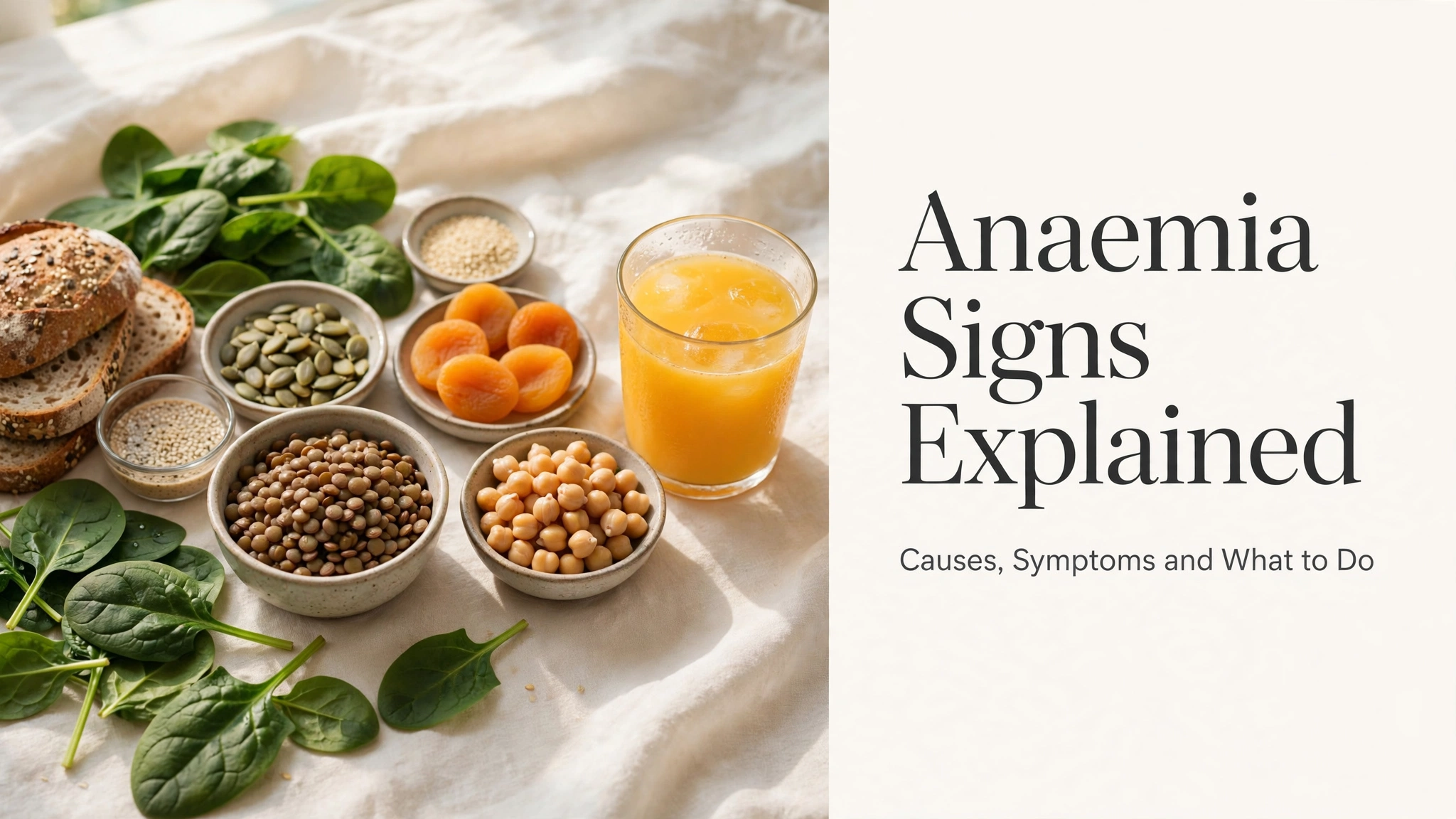
Food supports recovery but rarely replaces treatment on its own. Good iron sources include red meat, liver, beans, lentils, tofu, dark leafy greens, dried fruit, and fortified cereals. Eating vitamin C-rich foods such as citrus, peppers, and broccoli with plant iron improves absorption. Recovery takes time: haemoglobin usually rises within a few weeks, but rebuilding iron stores takes months, so finishing the full course of treatment matters even when energy returns.
Anaemia in Children and Pregnancy
Children are particularly vulnerable to anaemia because they are growing quickly and their iron needs are high relative to their size. A toddler who drinks large amounts of cow’s milk and eats little iron-rich food is a classic case, because milk fills the stomach without providing iron and can reduce the absorption of iron from other foods. Signs in children include pale skin, tiredness, poor appetite, slower growth, and difficulty concentrating at school. A blood test is simple, and treatment with iron, together with dietary changes, usually brings a clear improvement.
Pregnancy increases iron needs substantially, because the body is making extra blood for the baby and the placenta. Many health systems recommend iron supplements during pregnancy, and blood tests are done routinely to check haemoglobin. Anaemia in pregnancy is linked with tiredness, a higher risk of complications, and low birth weight, so it is taken seriously and treated promptly. Women who are planning a pregnancy and have heavy periods should consider having their iron checked before conceiving.
Teenagers, especially girls who have started menstruating and boys going through a growth spurt, are another group at risk. A diet that is low in iron, combined with rapid growth or menstrual loss, can lead to anaemia that affects school performance and energy. Parents and teenagers should know that persistent tiredness in a young person is not always laziness or late nights; it is sometimes a blood count that needs checking.
My Take:
My honest view is that anaemia is the most underrated explanation for feeling tired all the time, and it is underrated because tiredness is treated as a lifestyle problem rather than a medical clue. People are told to sleep more, stress less, or drink less coffee, and those things may help, but they do not fix a blood count that is low. I think the first question for anyone who has felt exhausted for weeks should be a blood test, not a new mattress or a motivational quote. A full blood count is cheap, quick, and decisive, and it can turn months of guesswork into a clear answer. The fact that so many people push through for months before asking is, to me, a failure of how we talk about tiredness.
I also believe the food advice around anaemia needs to be honest about its limits. Eating more spinach and lentils is good advice, and I support it, but it is not a treatment for a bleeding ulcer or a B12 absorption problem. I worry when people with real symptoms spend months adjusting their diet while the actual cause goes uninvestigated, because the diet feels like action while the investigation feels like a bother. My view is that food and treatment should run together: eat well, take the tablets as prescribed, and let the clinician find the cause. The two approaches are partners, not alternatives, and presenting them as alternatives does people a disservice.
Another point I keep returning to is how much anaemia is a women’s health issue that gets normalised. Heavy periods are treated as something to endure, and the tiredness that follows is treated as something to endure too. I think that is wrong. Periods that soak through protection every hour, or that leave a woman exhausted for days, are not simply a fact of life; they are a medical issue with treatments available. The same applies in pregnancy, where iron needs rise sharply and tiredness is often dismissed as expected. I believe women should be encouraged to describe their symptoms plainly and to expect a blood test, not a shrug.
I would also say that B12 deficiency deserves more attention, especially as plant-based eating becomes more common and the population ages. The nerve symptoms of B12 deficiency, tingling hands, a sore tongue, balance problems, can become permanent if they are left too long, and that is a high price for a deficiency that is cheap to detect and treat. My view is that anyone eating a vegan diet should treat B12 supplementation as a basic part of the diet, not an optional extra, and that older adults with unexplained tiredness or tingling should have their B12 checked as a matter of routine. Prevention here is almost embarrassingly simple, which makes the cases that are missed all the more frustrating.
Finally, I believe the lesson of anaemia is about listening to the body when it whispers rather than waiting for it to shout. Tiredness, pale skin, a racing heart on the stairs, these are quiet signals, and they are easy to explain away one by one. Taken together, though, they tell a coherent story, and the story has a test and a treatment. If this article persuades one person who has been tired for months to ask for a blood test, it will have done its job. Energy is not a luxury or a sign of virtue; it is the basic fuel of a normal life, and nobody should accept living without it when the cause may be a single missing nutrient or a treatable bleed.
I also think children deserve more attention in the anaemia conversation, because a tired, pale child is often labelled as lazy or difficult when the real problem is a missing nutrient. I believe teachers and parents should know the signs: pale skin, poor concentration, a child who falls asleep in class or who cannot keep up in sport. A blood test is simple, the treatment is straightforward, and the difference it makes to a child’s learning and energy is enormous. Missing it because the symptoms were attributed to behaviour is a failure that is easy to avoid.
Another angle I keep coming back to is the way heavy periods are normalised. I have heard women describe periods that soak through protection every hour as though that were an ordinary experience, and I have heard the tiredness that follows described as ordinary too. I think that normalisation is harmful, because heavy menstrual bleeding is a medical issue with treatments available, and the anaemia it causes is preventable. Women should be encouraged to describe their periods plainly and to expect a blood test, not a shrug.
I would also say that the investigation of iron deficiency in adults is a step that should not be skipped. It is tempting to take iron tablets and feel better, and to never ask why the iron was low in the first place, but the cause matters. A slow bleed from the gut, an ulcer, or a polyp needs to be found, and finding it early can prevent a far more serious problem. I believe clinicians should explain this clearly, because a patient who understands why the camera test is being offered is far more likely to agree to it.
I also believe the diet advice should be practical rather than preachy. Telling someone to eat more red meat is not helpful if they are vegetarian, cannot afford it, or do not like it. The useful advice is specific: lentils and beans with vitamin C, fortified cereals, and avoiding tea with meals. I think the advice should meet people where they are, with foods they actually eat and can afford, rather than with an ideal diet that nobody follows. Practical advice is the only kind that changes behaviour.
Finally, I want to stress that tiredness is a symptom, not a personality trait. A person who has been tired for months is not lazy, unmotivated, or weak; they are unwell, and the cause may be a single missing nutrient or a treatable bleed. I hope this article persuades someone who has accepted tiredness as normal to ask for a blood test this week. The test is quick, the answer is clear, and the treatment can restore the energy that makes a normal life possible. That is a small step with a large return.
Frequently Asked Questions
What are the main signs of anaemia?
The main signs are persistent tiredness, weakness, pale skin, dizziness, breathlessness on mild exertion, a fast heartbeat, headaches, and brittle nails or hair loss. The tiredness of anaemia typically does not improve with rest and builds over weeks.
What causes anaemia most often?
Iron deficiency is the most common cause worldwide, often from blood loss such as heavy periods or digestive bleeding, or from low dietary iron. Vitamin B12 or folate deficiency, long-term illness, kidney disease, and inherited conditions such as thalassaemia are other causes.
Can anaemia be diagnosed with a blood test?
Yes. A full blood count measures haemoglobin and red blood cell size and number, and further tests such as ferritin for iron stores and B12 and folate levels help identify the cause. The blood test confirms anaemia and points to the right treatment.
What foods help with iron deficiency?
Red meat, liver, beans, lentils, tofu, dark leafy greens, dried fruit and fortified cereals are good iron sources. Eating vitamin C-rich foods such as citrus, peppers or broccoli with plant iron improves absorption, while tea and coffee with meals can reduce it.
How long does it take to recover from anaemia?
Haemoglobin often rises within a few weeks of treatment, but rebuilding iron stores usually takes several months, so iron tablets are normally taken for months even after energy returns. B12 and folate deficiency also improve over weeks with the right treatment.
When should I see a doctor about tiredness?
See a clinician if tiredness has lasted weeks and does not improve with rest, if you notice pale skin, breathlessness, dizziness, a fast heartbeat, or heavy periods, or if you have unexplained weight loss or digestive bleeding. A blood test is the quickest way to check for anaemia.