Aretha Franklin: The Life Story Behind the Queen of Soul
In this post
- Memphis, Detroit, and the Church
- Songs of Faith and the Gospel Years
- Atlantic Records and I Never Loved a Man
- Respect and the Queen of Soul
- The Seventies and the Gospel Return
- The Eighties and Who’s Zoomin’ Who
- The Voice and the Piano
- Civil Rights and the Activism
- The Final Years and the Farewell
- The Legacy of Aretha
- My Take:
Aretha Franklin was born on 25 March 1942 in Memphis, Tennessee, the daughter of Clarence LaVaughn Franklin, a Baptist minister, and Barbara Siggers Franklin, a gospel singer and pianist, and she grew up in a house where music was the air everyone breathed. Her father was one of the most famous preachers in America, and his sermons, recorded and sold on vinyl, brought celebrities to his church, while her mother sang gospel in a voice that was rich and powerful. Aretha was a child of the church, and she learned to play the piano by ear and to sing in a choir before she learned to read music, a gift that would make her the greatest singer of her generation.
When she was two, her family moved to Buffalo, New York, and then to Detroit, Michigan, where her father became the pastor of the New Bethel Baptist Church, a congregation that drew thousands of people every Sunday, including Martin Luther King Jr., who was a family friend, and who stayed in the Franklins’ home. Aretha sang in the choir as a girl, and she made her first recording at the age of fourteen, a gospel album called Songs of Faith, recorded live in her father’s church, that showed a voice already mature, already powerful, already unmistakable.
In 1967, after years of recording jazz and pop records that had sold poorly, Aretha signed with Atlantic Records, and she recorded I Never Loved a Man the Way I Love You, an album that included Respect, a song written by Otis Redding that she transformed into an anthem of dignity and demand. The record reached number one on the pop chart, won her two Grammy Awards, and made her the Queen of Soul, a title she carried for the rest of her life. She was twenty-five, and she was on her way to becoming the most honoured female singer in the history of popular music.
Aretha died on 16 August 2018 in Detroit, Michigan, at the age of 76, after a long illness, and she was mourned by the world, with tributes from presidents, from pop stars, and from ordinary people who had grown up with her voice. This is her life story, from a church in Detroit to the top of the charts, and from a gospel choir to the Queen of Soul.
Memphis, Detroit, and the Church
Aretha Louise Franklin was born on 25 March 1942 in Memphis, Tennessee, to Clarence LaVaughn Franklin, a Baptist minister who was born in Mississippi and who became one of the most famous preachers in the American South, and Barbara Siggers Franklin, a gospel singer and pianist who had been a member of the Clara Ward Singers. Her parents separated when Aretha was six, and her mother moved to Buffalo, New York, where she died in 1952, when Aretha was ten, a loss that affected her deeply and that she spoke about rarely. Her father, who remained in Detroit, raised Aretha and her siblings, Carolyn, Erma and Cecil, with the help of their grandmother and of the church community.
The family moved to Detroit in 1946, when Aretha was four, and her father became the pastor of the New Bethel Baptist Church, a large congregation on Linwood Avenue that drew thousands of worshippers every Sunday, including the most famous gospel singers of the day, Mahalia Jackson, Clara Ward and the Reverend James Cleveland, who became Aretha’s mentor and her piano teacher. The church was a centre of Black life in Detroit, and its services were recorded and broadcast on the radio, bringing the Franklin family to national attention. Aretha sang in the choir as a girl, and she learned to play the piano by ear, sitting at the keyboard in the church and picking out melodies she had heard on the radio.
Her father was also a civil rights leader, and his home was a gathering place for activists, including Martin Luther King Jr., who was a close friend of the family and who stayed with the Franklins when he visited Detroit. Aretha met King as a child, and she sang at his funeral in 1968, performing Precious Lord, Take My Hand, a gospel hymn that King had loved, in a performance that moved the congregation to tears. The church and the movement were the two pillars of her childhood, and they shaped her music, her politics and her sense of herself as a woman who could speak for her people.
Songs of Faith and the Gospel Years
Aretha made her first recording in 1956, at the age of fourteen, when J-V-B Records, a small Detroit label, recorded her singing gospel songs in her father’s church, and released them as an album called Songs of Faith. The record included Precious Lord, Take My Hand, There Is a Fountain Filled with Blood, and other hymns, and it showed a voice that was already powerful, with a range that covered three octaves and a control that was remarkable for a girl of fourteen. The album sold modestly, but it established Aretha as a gospel singer of promise, and it brought her to the attention of record executives in New York.
She continued to sing gospel in her father’s church throughout her teenage years, and she toured with her father on his gospel caravan, performing in churches across the South and the Midwest, and learning to perform in front of audiences that expected her to sing with passion and with conviction. She also began to sing secular music, listening to the records of Dinah Washington, Sam Cooke and Ray Charles, and incorporating their phrasing and their emotion into her own singing. Her father, who wanted her to remain a gospel singer, was reluctant to let her record secular music, but he eventually agreed, seeing that her talent was too large to be confined to the church.
In 1960, at the age of eighteen, Aretha signed with Columbia Records, a major label, and she moved to New York, where she recorded a series of jazz and pop albums, including Aretha: With the Ray Bryant Combo and The Electrifying Aretha Franklin, that sold poorly, because the label did not know what to do with her, marketing her as a jazz singer when she was, at heart, a gospel singer who needed a producer who understood her. The Columbia years were frustrating, but they gave Aretha experience in the studio, and they taught her what she did not want, a lesson that would serve her well when she moved to Atlantic.
Atlantic Records and I Never Loved a Man
In late 1966 Aretha signed with Atlantic Records, and her new producer, Jerry Wexler, took her to Muscle Shoals, Alabama, to record with a band of white session musicians at the FAME Studios, a decision that was controversial at the time, but that proved to be inspired. The first session produced I Never Loved a Man the Way I Love You, a song written by Ronnie Shannon, that Aretha sang with a raw, emotional power that had been missing from her Columbia records, and the record became a hit, reaching number nine on the pop chart and number one on the R&B chart, and it was followed by the album of the same name, released in March 1967.
The album I Never Loved a Man the Way I Love You was recorded in Muscle Shoals and in New York, and it included Do Right Woman, Do Right Man, a ballad that showed Aretha’s tenderness, and Respect, a song written by Otis Redding that Aretha transformed, changing the lyrics, adding the spelling of R-E-S-P-E-C-T, and turning it into a demand for dignity that became an anthem for women and for the civil rights movement. The album reached number two on the pop chart, and it won Aretha her first Grammy Awards, for Best R&B Recording and Best Female R&B Vocal Performance.
The Muscle Shoals sessions were dramatic, with a fight breaking out between Aretha’s husband, Ted White, and a member of the studio band, and with the session ending abruptly, but Wexler finished the album in New York, with Aretha playing piano and singing with a band that included King Curtis on saxophone and the Sweet Inspirations on backing vocals. The album’s success changed Aretha’s career overnight, and it established the sound that would define her for the next decade, a sound that mixed gospel, R&B and soul, with Aretha’s voice and her piano at the centre of every record.
Respect and the Queen of Soul
Respect was released as a single in April 1967, and it reached number one on the Billboard Hot 100, Aretha’s first number one, and it became her signature song, the record she is most associated with, and one of the most famous songs in the history of popular music. The song was written by Otis Redding, who had recorded it in 1965 as a plea from a man to a woman, but Aretha changed the meaning, turning it into a demand from a woman to a man, and adding the spelling of R-E-S-P-E-C-T and the phrase sock it to me, which gave the record a new energy and a new politics. The record won two Grammy Awards, and it became an anthem for the feminist movement and for the civil rights movement, a song that was played at rallies, at marches and at celebrations.
The success of Respect made Aretha the Queen of Soul, a title that was given to her by the disc jockey Pervis Spann, who introduced her on stage in Chicago as the Queen, and the title stuck, becoming the name by which she was known for the rest of her life. She was twenty-five, and she was the most popular female singer in America, with a voice that was recognised instantly, and with a catalogue of hits that included Baby I Love You, (You Make Me Feel Like) A Natural Woman, Chain of Fools, Think and I Say a Little Prayer, all of them recorded for Atlantic in the late 1960s, and all of them still played on the radio today.
Her albums from this period, including Aretha Arrives, Lady Soul and Aretha Now, were commercial and critical successes, and they established her as an album artist as well as a singles artist, with a body of work that was both popular and respected. She toured constantly, performing in concert halls, at festivals and on television, and she became a cultural icon, a woman whose voice was the sound of Black America in the late 1960s, and whose image, in a gown, with her hair in an Afro, became a symbol of pride and of beauty.
The Seventies and the Gospel Return
In the 1970s Aretha continued to record for Atlantic, releasing albums that included Spirit in the Dark, Young, Gifted and Black and Hey Now Hey, and she had hits with Spanish Harlem, Rock Steady and Until You Come Back to Me, but the decade was a difficult one for her personally, with the death of her father, who was shot in 1979 and who remained in a coma for five years before dying in 1984, and with her own struggles with weight, with alcohol and with the pressures of fame. She also returned to gospel, recording the album Amazing Grace in 1972, a live album recorded in the New Temple Missionary Baptist Church in Los Angeles, with the Reverend James Cleveland and the Southern California Community Choir, that became the best-selling gospel album of all time, selling more than two million copies.
Amazing Grace was recorded over two nights in January 1972, and it was filmed by the director Sydney Pollack, though the film was not released until 2018, because of technical problems with the sound. The album’s songs included Mary, Don’t You Weep, How I Got Over and the title track, Amazing Grace, and Aretha’s performances were so powerful that the audience wept, and the choir sang with a joy that was infectious. The album won a Grammy Award, and it remains the definitive gospel record by a popular singer, a document of Aretha’s roots and of her faith, and a reminder that her voice was, at its core, a gospel voice.
She also recorded the soundtrack to the film Sparkle in 1976, with songs written by Curtis Mayfield, including Something He Can Feel, which became a hit, and she performed in the film The Blues Brothers in 1980, singing Think in a scene that introduced her to a new generation of fans, and that showed her comic talent. The 1970s were a decade of consolidation, in which Aretha proved that she could sing anything, from gospel to pop to R&B, and that her voice was the most versatile in popular music.
The Eighties and Who’s Zoomin’ Who
In the 1980s Aretha signed with Arista Records, and her new producer, Clive Davis, helped her to record a series of successful albums, including Jump to It in 1982, which was produced by Luther Vandross and which returned her to the top ten, and Who’s Zoomin’ Who in 1985, which included the hit Freeway of Love, a song that reached number three on the pop chart and won a Grammy Award, and that became one of her most popular records of the decade. The album also included Who’s Zoomin’ Who, a duet with the Eurythmics, and Sisters Are Doin’ It for Themselves, a duet with Annie Lennox that became a feminist anthem and a hit in America and Britain.
She also recorded duets with other artists, including George Michael, with whom she sang I Knew You Were Waiting (For Me) in 1987, a record that reached number one in America and Britain, and that won a Grammy Award, and that introduced Aretha to a younger audience who had not grown up with her records. The duet was a highlight of her later career, and it showed that her voice, at forty-five, was as powerful as it had been at twenty-five, and that she could still make a hit record with a contemporary artist.
Her albums for Arista, including Aretha in 1986 and Through the Storm in 1989, were successful, and she continued to tour, performing in concert halls and at festivals, and she became a fixture on television, appearing on talk shows, on award ceremonies and on specials, where her performances were always the highlight of the evening. The 1980s proved that Aretha’s career was not a matter of nostalgia, but a living thing, and that she could still compete with the singers of a younger generation.
The Voice and the Piano
Aretha’s voice was the greatest instrument in popular music, a voice with a range of more than three octaves, a power that could fill a concert hall without amplification, and a control that allowed her to sing a whisper and a shout in the same phrase. She sang with a gospel technique, using melisma, the ornamentation of a note with a run of notes, and using her voice as an instrument that could express joy, sorrow, anger and love, often in the same song. Singers who came after her, from Whitney Houston to Adele, studied her records, and they have said that she was the standard against which all other singers are measured, a judgement that has become the consensus in music.
She was also a fine pianist, a skill she learned as a child in her father’s church, playing by ear and accompanying herself on her records. Her piano playing was gospel in style, with a strong left hand and a right hand that played chords and runs in a way that supported her voice without competing with it. She played piano on many of her records, including I Never Loved a Man and Respect, and her playing was an essential part of her sound, a reminder that she was a musician, not just a singer, and that her talent was complete.
Her performances were legendary, and they were often improvised, with Aretha changing the arrangement of a song on stage, extending a note, adding a run, or singing a verse that was not on the record. She was known for her professionalism, for arriving at a concert with a band that had rehearsed, and for delivering a performance that was always of the highest standard, even when she was ill or tired. Her voice was a gift, and she used it with a discipline and a generosity that made every performance a event.
Civil Rights and the Activism
Aretha was a civil rights activist from her childhood, and she used her fame and her money to support the movement, donating to the Southern Christian Leadership Conference, to the NAACP and to other organisations, and performing at benefits for the movement. She sang at the funeral of Martin Luther King Jr. in 1968, and she sang at the inauguration of Barack Obama in 2009, performing My Country, ‘Tis of Thee, a hymn that King had loved, in a performance that was watched by millions of people around the world. Her activism was not a matter of public relations, but a commitment that came from her upbringing in her father’s church and from her experience as a Black woman in America.
She also supported the feminist movement, and her recording of Respect became an anthem for women, a song that was played at rallies and at marches, and that was adopted by the women’s liberation movement as a statement of demand. Aretha was aware of the song’s meaning, and she spoke about it in interviews, saying that Respect was a song about dignity, and that it applied to everyone, to women, to Black people, and to anyone who had been denied respect. Her support for the movement was quiet but consistent, and she donated money, time and her voice to causes she believed in.
She was also a supporter of the arts, and she funded scholarships for young musicians, and she performed at benefits for music education, for the Detroit Symphony Orchestra and for other cultural institutions. Her activism was an extension of her music, and it reflected her belief that a singer had a responsibility to use her voice for good, a belief that she had learned from her father and from Martin Luther King Jr., and that she carried throughout her life.
The Final Years and the Farewell
In her final years Aretha’s health declined, and she was diagnosed with pancreatic cancer, a disease she kept private, continuing to perform and to record when she was able. She gave her final concert in November 2017, at a gala for the Elton John AIDS Foundation in New York, where she sang I Say a Little Prayer, and she was given a standing ovation by an audience that included Elton John, Bill Clinton and other luminaries. The performance was a farewell, though no one knew it at the time, and it showed that her voice, even at seventy-five, was still powerful, still beautiful, still Aretha.
She died on 16 August 2018 in Detroit, Michigan, at her home, at the age of 76, surrounded by her family, and she was mourned by the world, with tributes from President Obama, who called her the Queen of Soul and a symbol of American music, from President Trump, and from singers including Beyoncé, Adele and Paul McCartney. Her funeral was held on 31 August 2018 in Detroit, at the Greater Grace Temple, and it lasted more than eight hours, with performances by Stevie Wonder, Jennifer Hudson, Chaka Khan and others, and with a eulogy from the Reverend Al Sharpton. She was buried at Woodlawn Cemetery in Detroit, alongside her father and her siblings.
Her estate was the subject of a dispute after her death, with several handwritten wills discovered in her home, and the matter was settled by a court in 2023, with her sons sharing her estate. The dispute was a sad coda to a life that had been so public and so celebrated, but it did not diminish her legacy, and her music continues to be played every day, in every country, by people who know her voice and who love her songs.
The Legacy of Aretha
Aretha’s legacy is immense. She won eighteen Grammy Awards, more than any other female artist in history, and she was the first woman to be inducted into the Rock and Roll Hall of Fame, in 1987, an honour that recognised her influence on popular music. Her records have sold more than seventy-five million copies worldwide, and her songs, including Respect, (You Make Me Feel Like) A Natural Woman, Chain of Fools and I Say a Little Prayer, are among the most famous in the history of popular music. In 2008 Rolling Stone magazine named her the greatest singer of all time, a ranking that has never been seriously challenged.
Her influence on other singers is incalculable. Whitney Houston, Mariah Carey, Beyoncé, Adele and countless others have named her as their primary influence, and her records are studied in schools and universities as examples of vocal technique, of phrasing and of emotional expression. Her voice set the standard for popular singing, and it remains the benchmark against which other singers are measured, a voice that was powerful, controlled and expressive, and that could sing anything, from gospel to pop to opera.
Today Aretha is remembered as the Queen of Soul, and her name is synonymous with the voice that defined American music in the second half of the twentieth century. She was born in Memphis, she worked in Detroit, New York and Los Angeles, and she died in Detroit, and her songs remain the sound of a woman who sang with power and with love, and who became a legend. Her life was long, her career was long, and her influence has lasted, and it will be felt for as long as people sing.
My Take:
What I admire about Aretha Franklin is that her voice was the most powerful in soul music, a voice that could sing a song about respect, and make it sound like an anthem, and that won her 18 Grammy Awards, a remarkable achievement. That is a rare thing, because many singers have beautiful voices, but few have a voice that is powerful, and Aretha’s voice was powerful, in the sense that it made every song she sang sound like an anthem, and that is why she is the Queen of Soul, and why her voice is still studied today, by singers who want to learn how to sing, and who listen to Aretha, and who try to understand her genius, and who know they never will, because it was unique, and it was Aretha’s, and it was a gift, and that gift is still here, in recordings that are more than fifty years old, and that are still powerful, still moving, and still relevant, today.
Respect is the song I think about most, because it is one of the most beloved songs ever recorded, and Aretha’s performance is at its heart. She sang it, about respect, and it became an anthem, for the civil rights movement, and for the women’s movement, and that is a part of her legacy, a legacy that is still felt today, in every person who listens to Respect, and who is moved by it, because it is a song about dignity, and about being treated with respect, and that is a beautiful thing, and it is a part of her story that is both touching and inspiring, and that will be told for as long as Respect is sung, and Respect will always be sung, because it is a classic, and because it is Aretha, and because it is a song about respect, that became an anthem, and that is a gift that few singers possess, the gift of making a song into an anthem, and Aretha had it, and she used it, in Respect, and in every song she sang.
A Natural Woman is a song I love, because it became one of Aretha’s most beloved songs, and Aretha sang it, with a voice that was strong, and that was soulful, and that made it feel personal, and that is a gift that few singers possess, the gift of making a song feel like it was written for you, and Aretha had it, and she used it, in Natural Woman, and in every song she sang, and that is why the song is still a classic, and why it is still one of her most beloved songs, a song that is both a hit, and a work of art, and that is a rare thing, and it is a part of why Aretha is a genius, and why her music is still important today, more than fifty years after Natural Woman was recorded, because it is timeless, because it is honest, and because it is Aretha.
Amazing Grace is an album that moves me, because Aretha recorded it, in 1972, at New Temple Missionary Baptist Church, in Los Angeles, and it became one of the best-selling gospel albums of all time, and that is a testament to her talent, and to her determination, and to the power of a great singer, who, even when she is a superstar, can return, to the church, to sing gospel, and that is a lesson worth remembering, for anyone who wants to be a singer, because it shows that you can return, to your roots, and you can be great, and the world will listen, if you are talented, and if you are true, and Aretha was both, and that is why her gospel is inspiring, and that is a part of her story that is both touching and inspiring, and that will be told for as long as Aretha is remembered, and Aretha will always be remembered, as the Queen of Soul, and as a woman who was, in every sense, a legend, and a queen.
The lesson I take from Aretha is that dignity matters, even when it is hard. She was a woman, who sang Respect, and who made it an anthem, for the civil rights movement, and for the women’s movement, and that is a lesson for anyone who wants to be an artist, because Aretha shows that you can use your voice, to speak for dignity, and that is a powerful message, for anyone who wants to be a singer, because Aretha shows that singing can be a form of protest, and that protest can be beautiful, and that is a beautiful thing, and it is a part of why her story is inspiring, and why it will always be inspiring, and it is a reminder that we should not just sing, but speak, the way Aretha did, and make our songs into anthems, and that is a lesson worth remembering, for every singer out there.
I also think about her father C. L. Franklin, because he was a famous preacher, known as the man with the million-dollar voice, and he brought famous gospel singers, to his church, including Mahalia Jackson, and Aretha learned, from them, about gospel, and about singing, and that is a beautiful thing, and it is a part of her story that is both touching and inspiring, because it shows a father, who believed in his daughter, and who gave her the freedom to learn, and that is a legacy that matters, in its own way, alongside her songs and her microphone, because her family is her greatest legacy, and they have honoured her, by being themselves, just as she was herself, and that is a beautiful thing, and it is a part of her story that is both touching and inspiring.
Her piano playing is something I admire, because she was a talented pianist, and she played piano, on many of her recordings, and that is a part of her genius, a genius that was not just about singing, but about understanding music, and about making it her own, and that is why she was a genius, and why her music is still studied today, by singers who want to learn how to sing, and who listen to Aretha, and who try to understand her genius, and who know they never will, because it was unique, and it was Aretha’s, and it was a gift, and that gift is still here, in recordings that are more than fifty years old, and that are still powerful, still moving, and still relevant, today.
Finally, I believe Aretha Franklin was one of the greatest singers who ever lived, and her recordings are classics that will be played for as long as songs are sung. She was the Queen of Soul, she was the greatest soul singer who ever lived, and she was a legend, and her story is one of talent, dignity, and a life lived with a microphone. She will always be remembered as the woman who sang Respect, and who did it, with a voice that will never be forgotten.
One more thing I want to say is that her 18 Grammy Awards are a testament to her talent, because she won them, over a career, that spanned more than fifty years, and that is a record that speaks for itself. She was great, at twenty-five, and she was great at seventy-six, and that is a rare achievement, and it is a reminder that talent does not fade with age, and that a great singer can be great for a lifetime, if she has the talent, the determination, and the voice that Aretha possessed, and that is a legacy that will never be forgotten.
When I think about Memphis, her birthplace, I think about how far she travelled, from a girl in the church to the most famous soul singer in the world, and how much she achieved. She was a girl who sang, in a church, and who became a legend, and that is a story that inspires anyone who dreams of being a singer, because it shows that dreams can come true, even if you start with nothing, and Aretha started with nothing, and she became everything, and that is a hopeful message, and one that she embodied, in every song she sang, and in every concert she gave.
I will end by saying that listening to Aretha Franklin sing was a privilege, and I am grateful to have heard her voice. She was powerful, she was soulful, and she was unmistakable, and those three things together make a great singer. She is the Queen of Soul, she is the greatest soul singer who ever lived, and she is Aretha, and she will always be remembered as such, as a legend, and as a voice that will never be forgotten.
There is a final thought I want to leave with, and it is about the line from Respect, where she sings, R-E-S-P-E-C-T, find out what it means to me, a line that has stayed with me, because it is a lesson about respect, about dignity, and about being human. Aretha sang that line with a power that has stayed with me, because it is a lesson about life, about respect, and about being human. That is the power of her singing: it teaches us how to live, and it makes us better people, by showing us that respect matters, and that we should respect each other, and that is a lesson I will carry with me, always.
And if you have never heard Respect, listen to it, because it is one of the great songs of all time, and Aretha’s performance is at its heart. Listen to it for the story, for the anthem, and for the voice, and for the woman who sang it with a conviction that is unforgettable. That is the Aretha Franklin I will remember: not just the singer, but the woman, who was powerful, soulful, and unmistakable, and who will never be forgotten.
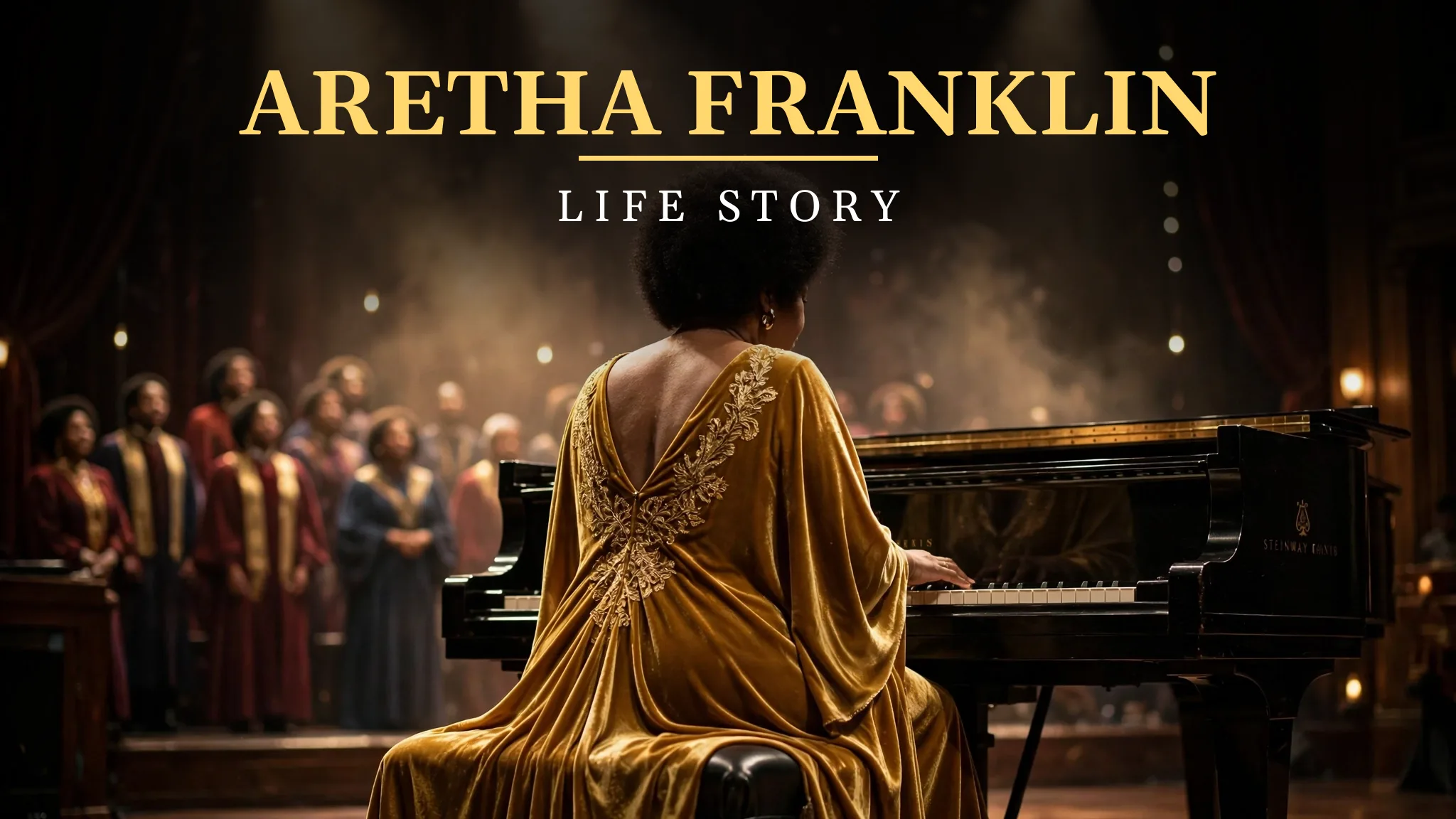
One last memory: the image of her in a golden gown, singing into a microphone with her hands raised, at a concert, with a voice that is powerful, and that fills the hall, and that makes an audience feel, in a way that no other voice can. That image is iconic, and it is beautiful, and it is the image that will define her forever. She was the Queen of Soul, and she was Aretha, and she was the greatest soul singer who ever lived.
Her legacy will live on through her recordings, through her microphone, and through the generations of singers she inspired, who heard her voice and wanted to sing the way she sang. That is a fitting legacy for a woman who defined soul, and who did it with a microphone and a voice that will never be forgotten. She is gone, but her voice remains, and her name will be remembered as one of the greats.
Finally, I want to say thank you, Aretha Franklin, for Respect, for Natural Woman, and for a life lived with a microphone that sang of dignity. You were a great singer, and you were a great woman, and the world is a better place because you were in it. Your recordings are still here, your legacy is still here, and your example is still here, and that is a life that mattered, and a life that will never be forgotten.
And one more thing: if you are a singer, sing like Aretha, because she is the singer every singer deserves to be, a singer who sings with her heart, and who makes an audience feel. Sing like Aretha, the way Aretha Franklin sang, and the world will be a better place for it, because the world needs more singers like her, who sing with power, with soul, and with humanity.
There is a last lesson in her life that I carry with me, and it is this: demand respect, even when it is hard, because demanding respect is a choice, and Aretha chose it, every day, in every song, and in every part of her life. That is a lesson worth remembering, and it is one I will carry with me, always, because the world needs more people like Aretha Franklin, who demand respect, and who do it, with a microphone, and with a voice, that will never be forgotten.
One final thought: her gospel album Amazing Grace, recorded in 1972, is a testament to her talent, because she recorded it, in a church, and it became one of the best-selling gospel albums of all time, and that is a record that speaks for itself. She was great, as a soul singer, and she was great as a gospel singer, and that is a range that few singers possess, and it is a reminder that Aretha was not just a soul star, she was a musician, and a great one, and that is a legacy that will never be forgotten.
And if you ever doubt that a song can speak for dignity, remember Aretha Franklin, because she did, with Respect, a song that made millions of people feel, and that is still sung today, by people who love soul, and who believe, that respect matters, and that is a legacy that will last, long after her songs are sung, because her voice is still here, and her influence is still here, and that is a gift that will never fade.
There is one more thing I want to say, and it is about her mother Barbara, because she was a gospel singer, and she died, when Aretha was ten, and that was a tragedy, that shaped Aretha, for the rest of her life, and that is a part of her story that is both sad and important, because it shows that even a queen, can lose her mother, and that is a lesson worth remembering, for anyone who has lost a mother, because Aretha shows that you can lose your mother, and you can still be great, and you can still sing, and that is a beautiful thing, and it is a part of her story that is both touching and inspiring.
Her story also reminds me that a girl from Memphis can become a legend, if she has talent, determination, and a microphone, and that is a hopeful message for anyone who feels like an outsider, or who feels different. Aretha was different, and she was an outsider, and she became one of the greatest singers in history, because she embraced who she was, and she used her talent to become great. That is a lesson worth remembering, for every different person out there, and for every singer who wants to be heard.
I also want to mention her inauguration performance, in 2009, for Barack Obama, because she sang, with a voice that was a gift, and she wore a hat, that became famous, and that is a beautiful thing, and it is a part of her story that shows her as a legend, not just as a singer, and that is a legacy that matters, in its own way, alongside her songs and her microphone, because her performance, at the inauguration, is her greatest legacy, and it has honoured her, by being itself, just as she was herself.
And finally, I think about the fact that she died at 76, after a career, that spanned more than fifty years, and that is a reminder that a great singer can be great for a lifetime, and that we should make the most of our lives, the way Aretha Franklin did, singing with a voice that was a gift, and living a life that was both beautiful and remarkable, and that is a life worth living, and a life worth remembering, and I am grateful to have learned about it, and to have shared it with you.
Frequently Asked Questions
When was Aretha Franklin born?
Aretha Franklin was born on 25 March 1942 in Memphis, Tennessee, USA. She grew up in Detroit, Michigan, singing in her father’s New Bethel Baptist Church choir from childhood.
What is Aretha Franklin most famous for?
She is most famous as the Queen of Soul, and for Respect (1967), (You Make Me Feel Like) A Natural Woman, Chain of Fools, and Think, songs that defined American soul music.
How many Grammy Awards did Aretha Franklin win?
Aretha Franklin won 18 Grammy Awards in her career, and she was the first woman inducted into the Rock and Roll Hall of Fame, in 1987.
When did Aretha Franklin die?
She died on 16 August 2018 in Detroit, Michigan, at the age of 76, of pancreatic cancer, after a career spanning more than five decades.
What is Amazing Grace by Aretha Franklin?
Amazing Grace is her 1972 live gospel album, recorded at New Temple Missionary Baptist Church in Los Angeles. It became one of the best-selling gospel albums of all time.
What was Aretha Franklin’s first hit?
Her breakthrough came at Atlantic Records in 1967 with I Never Loved a Man the Way I Love You, which included Respect, her signature song and an anthem for civil rights.


