Ayrton Senna: The Life Story Behind F1's Greatest Racer
In this post
- São Paulo and the Childhood
- Formula Ford and Formula Three
- Toleman and the Monaco Grand Prix
- Lotus and the First Wins
- McLaren and the World Championships
- The Rivalry with Alain Prost
- Donington 1993 and the Rain Master
- Williams and the Final Season
- The Death at Imola and the Funeral
- The Legacy of Ayrton Senna
- My Take:
Ayrton Senna was born Ayrton Senna da Silva on 21 March 1960 in São Paulo, Brazil, the son of Milton Guirado da Silva, a landowner and factory owner, and Neide Johanna Senna, a homemaker, and he grew up in a comfortable home in the Morumbi district, with a family that supported his love of racing. He was a shy, serious boy, with a deep religious faith, and he began to race go-karts at the age of thirteen, in a kart his father built for him, and he won his first race, a victory that set him on a path that would make him the greatest racing driver of his generation.
By the time he was twenty, Senna had won the British Formula Ford 1600 championship and the British Formula Three championship, and he had moved to Europe, where he was racing in the junior categories, and where he was attracting the attention of Formula One teams, who recognised in him a talent that was extraordinary, a driver who was fast in the rain, who was fearless in qualifying, and who was determined to win. He made his Formula One debut in 1984, with the Toleman team, a small, underfunded team, and he finished second in the Monaco Grand Prix, in the rain, a performance that announced his arrival to the world.
He won three Formula One World Championships, in 1988, 1990 and 1991, all of them with McLaren, and he won forty-one Grands Prix, a record at the time, and he took sixty-five pole positions, a record that stood for more than a decade. He was a driver of extraordinary skill, a man who could drive a car faster than anyone else, in the rain, in the dry, in qualifying and in a race, and who was regarded by his peers as the best driver of his generation, a judgement that has become the consensus in motor racing.
Senna died on 1 May 1994 at the San Marino Grand Prix, at Imola, Italy, at the age of 34, when his car crashed into a concrete wall at the Tamburello corner, at a speed of more than two hundred kilometres per hour, a death that shocked the world, and that led to major changes in the safety of Formula One. This is his life story, from a boy in São Paulo to the greatest racing driver of his generation, and from a go-kart to a World Championship, a career that lasted ten years and that ended in tragedy.
São Paulo and the Childhood
Ayrton Senna da Silva was born on 21 March 1960 in São Paulo, Brazil, at the Hospital São Luiz, to Milton Guirado da Silva, who owned land and a factory that made car parts, and Neide Johanna Senna, who was of Italian descent, and who worked as a homemaker. He was the middle child, with an elder sister, Viviane, and a younger brother, Leonardo, and the family lived in a comfortable home in the Morumbi district, a wealthy suburb of São Paulo, where Senna attended school and where he developed a love of cars and of racing, watching his father drive and listening to the sound of engines.
He was a shy, serious child, with a deep Catholic faith that he carried throughout his life, and that he spoke about in interviews, saying that he believed God had given him a talent for racing, and that he raced for God, a conviction that made him fearless on the track, because he believed that his life was in God’s hands. He was also a talented athlete, playing football and tennis, but his passion was for motorsport, and at the age of thirteen, in 1973, his father built him a go-kart, using a lawnmower engine, and Senna began to race, winning his first race at Interlagos, the circuit in São Paulo that would later host the Brazilian Grand Prix.
He raced go-karts throughout his teenage years, winning the South American Kart Championship in 1977, at the age of seventeen, and the Brazilian Kart Championship in 1978 and 1979, and he also raced in the World Karting Championship in Europe, where he finished second in 1979 and 1980, a result that showed his talent and that brought him to the attention of European teams. He was a karting star, but he was also a young man who knew that karting was only the beginning, and that his ambition was to race in Formula One, the highest level of motorsport, a dream that seemed distant, but that he never gave up.
Formula Ford and Formula Three
In 1981, at the age of twenty-one, Senna moved to England, to race in Formula Ford 1600, a junior category for single-seater cars, with the Van Diemen team, and he won the championship in his first year, winning twelve of the twenty races, a record that showed his talent and that made him a star in the junior categories. He was a driver who was fast in the wet, who was precise in his braking, and who was aggressive in his overtaking, a combination that made him unbeatable in Formula Ford, and that attracted the attention of teams in Formula Three, the next step on the ladder to Formula One.
In 1982 he raced in British and European Formula Ford 2000, winning both championships, with a record that included twenty-two wins, a dominance that was unprecedented, and that confirmed his status as the most promising young driver in Europe. He was a driver who worked hard, who studied the data, who talked to his engineers, and who was determined to learn everything he could about the car, about the tyres and about the circuit, a professionalism that was unusual for a driver of his age, and that impressed everyone who worked with him.
In 1983 he raced in British Formula Three, with the West Surrey Racing team, and he won the championship, winning twelve of the twenty races, and beating Martin Brundle, a British driver who would later become his rival in Formula One, in a season that was close and competitive, and that showed Senna’s ability to win under pressure. The Formula Three championship was the final step before Formula One, and Senna’s victory in it made him a candidate for a Formula One seat, a seat that came in 1984, with the Toleman team, a small team that gave him his chance, and that he repaid with a performance that announced his arrival to the world.
Toleman and the Monaco Grand Prix
Senna made his Formula One debut in March 1984, at the Brazilian Grand Prix, with the Toleman team, a small British team that had a limited budget and a car that was uncompetitive, but that gave Senna a seat, and that allowed him to show his talent. His first race ended in retirement, with a turbo failure, but his second race, at the South African Grand Prix, saw him finish sixth, scoring his first World Championship point, a result that was remarkable for a driver in a small team, and that showed his ability to get the most out of an uncompetitive car.
His breakthrough came at the Monaco Grand Prix in June 1984, a race run in heavy rain, in which Senna, starting thirteenth, drove through the field, passing driver after driver, and catching the leader, Alain Prost, who was driving a McLaren, a car that was far superior to the Toleman. Senna was closing on Prost at a rate of several seconds per lap, and he was about to take the lead when the race was stopped, after thirty-one laps, because of the rain, and Prost was declared the winner, with Senna second, a result that was controversial, because many believed that Senna would have won if the race had continued, and that the decision to stop it had favoured Prost, who was leading the championship.
The Monaco performance made Senna a star, and it brought him to the attention of the top teams, including Lotus, who signed him for 1985, and McLaren, who would sign him in 1988. The race also established Senna’s reputation as a rain master, a driver who was faster than anyone else in the wet, a reputation that he would confirm throughout his career, with victories in the rain at Portugal in 1985, at Donington in 1993, and at other circuits, where his skill in the wet was unmatched.
Lotus and the First Wins
In 1985 Senna joined Lotus, a team that had a competitive car, and he won his first Grand Prix, at the Portuguese Grand Prix at Estoril, in April 1985, in heavy rain, a race in which he lapped the entire field except for second-placed Michele Alboreto, a performance that was dominant, and that showed his mastery of the wet. The win was his first in Formula One, and it was followed by a second win, at the Belgian Grand Prix at Spa-Francorchamps, later in the year, and Senna finished fourth in the World Championship, a result that was impressive for a driver in his second season, and that confirmed his status as a future champion.
He stayed with Lotus for three seasons, from 1985 to 1987, winning six Grands Prix, and taking sixteen pole positions, a record that showed his speed in qualifying, where he was the fastest driver on the grid, a talent that he would develop throughout his career, with sixty-five pole positions in total, a record that stood until Michael Schumacher broke it in 2006. His time at Lotus was also marked by frustration, because the team did not have the resources to challenge McLaren and Williams for the championship, and Senna, who was ambitious, wanted to win, and he left Lotus at the end of 1987, to join McLaren, a team that had the best car and the best engine, and that offered him the chance to become World Champion.
His victories with Lotus included the Spanish Grand Prix in 1986, in which he beat Nigel Mansell by fourteen thousandths of a second, one of the closest finishes in Formula One history, a race that showed Senna’s determination and his ability to win a close battle, and the Detroit Grand Prix in 1986 and 1987, where he won on a street circuit that demanded precision and concentration. The Lotus years were a apprenticeship, in which Senna learned to win, to qualify and to lead a team, lessons that would serve him well at McLaren, where he would become a World Champion.
McLaren and the World Championships
In 1988 Senna joined McLaren, a team that had the Honda engine, the best in Formula One, and a car, the MP4/4, that was the most dominant in the history of the sport, winning fifteen of the sixteen races in the season. Senna’s teammate was Alain Prost, a French driver who was already a two-time World Champion, and who was regarded as the best driver in Formula One, and the rivalry between Senna and Prost became the defining story of Formula One in the late 1980s, a rivalry that was intense, personal and political, and that divided the sport into two camps, those who supported Senna, and those who supported Prost.
Senna won the World Championship in 1988, his first, winning eight Grands Prix, including the Japanese Grand Prix at Suzuka, where he clinched the title, in a race in which he stalled on the grid, dropped to fourteenth, and fought back to win, a performance that is regarded as one of the greatest drives in Formula One history. The championship was decided by a single point, with Senna beating Prost by three points, under a system that counted only the best eleven results, a system that favoured Senna, who had won more races, and that Prost felt was unfair, a grievance that fuelled their rivalry in the years that followed.
Senna won his second World Championship in 1990, and his third in 1991, both with McLaren, in seasons that were marked by controversy, including collisions with Prost at Suzuka in 1989 and 1990, incidents that decided the championship and that remain controversial to this day. In 1989 Prost won the title after colliding with Senna at Suzuka, a collision that Prost was blamed for by Senna’s supporters, and in 1990 Senna won the title after colliding with Prost at the first corner at Suzuka, a collision that Senna admitted was deliberate, in retaliation for the previous year, a admission that shocked the sport, and that showed the intensity of their rivalry.
The Rivalry with Alain Prost
The rivalry between Senna and Prost was the most famous in the history of Formula One, a rivalry between two drivers who were both brilliant, but who were different in every way, Senna passionate, emotional and fearless, Prost calculating, precise and political, a rivalry that was played out on the track, in the press and in the politics of the sport. Prost was a four-time World Champion, a driver who was known as the Professor, for his analytical approach, while Senna was known as a driver who raced on instinct, on faith and on a belief that he was the fastest, a belief that was often justified by his performances in qualifying and in the rain.
The rivalry reached its peak at Suzuka, in Japan, in 1989 and 1990, in races that decided the World Championship, and that ended in collisions between the two drivers, incidents that were investigated by the sport’s governing body, the FIA, and that led to fines, to disqualifications and to a bitterness that lasted for years. In 1989 Prost collided with Senna at the chicane, and Senna was disqualified, giving Prost the title, a decision that Senna felt was political, and that he blamed on Jean-Marie Balestre, the president of the FIA, who was French, like Prost, a charge that Balestre denied, but that Senna believed for the rest of his life.
In 1990 Senna collided with Prost at the first corner, a deliberate act, as Senna later admitted, in retaliation for 1989, and the collision gave Senna the title, a victory that was tainted by the controversy, but that Senna defended, saying that he had been wronged in 1989, and that he was righting a wrong. The rivalry ended in 1993, when Prost retired, and the two men reconciled, with Senna calling Prost on the eve of his final race, and with Prost attending Senna’s funeral, a reconciliation that showed that the rivalry, for all its bitterness, had been between two men who respected each other, and who had pushed each other to be better.
Donington 1993 and the Rain Master
On 11 April 1993 Senna drove what is regarded as the greatest lap in the history of Formula One, at the European Grand Prix at Donington Park, in England, in a race run in changing conditions, with rain and dry patches, in which Senna, starting fourth, passed four cars on the first lap, including Prost, Damon Hill, Michael Schumacher and Karl Wendlinger, in a series of overtakes that were breathtaking, and that took him from fourth to first in less than a minute, a lap that is still shown on television, and that is regarded as the finest opening lap ever driven.
The race was won by Senna, in a McLaren that was inferior to the Williams of Prost and Hill, a victory that was a triumph of skill over machinery, and that showed Senna’s mastery of the wet, his ability to read the conditions, to choose the right line and to brake later than anyone else. The Donington race was Senna’s final victory for McLaren, and it was a fitting farewell to a team with which he had won three World Championships, and it remains the race most associated with his genius, a lap that is studied by drivers and by fans, and that is still the benchmark for a great drive in the rain.
The Donington performance also showed Senna’s character, a driver who never gave up, who fought for every position, and who believed that he could win in any car, in any conditions, a belief that was justified by his record, with forty-one wins, sixty-five poles and three World Championships, a record that was remarkable, and that placed him among the greatest drivers in history, a driver whose talent was not just in his speed, but in his determination, his intelligence and his faith.
Williams and the Final Season
In 1994 Senna joined Williams, a team that had the best car in Formula One, and that offered him the chance to win a fourth World Championship, a move that was seen as the final step in his career, a chance to win with a third team, after Lotus and McLaren, and to cement his legacy as the greatest driver of his generation. The Williams FW16, however, was a difficult car to drive, with a new electronic system that had been banned, and with handling that was unpredictable, and Senna struggled to adapt to it, retiring from the first two races of the season, in Brazil and in the Pacific, with spins and with a collision, results that were disappointing, and that put pressure on him to win at Imola, the third race of the season.
The San Marino Grand Prix at Imola, on 1 May 1994, was a weekend marked by tragedy, with the Austrian driver Roland Ratzenberger killed in qualifying on 30 April, after crashing at the Villeneuve corner, a death that shocked Senna, who visited the scene of the accident, and who spoke about safety, and who was visibly upset, and who considered withdrawing from the race, a decision that he ultimately did not take, because he felt a responsibility to race, and because he believed that the show must go on, a decision that he would regret, and that would cost him his life.
On the seventh lap of the race, Senna’s car left the track at the Tamburello corner, a fast left-hander, at a speed of more than two hundred kilometres per hour, and it hit a concrete wall, with the right front wheel and suspension penetrating the cockpit, and striking Senna on the head, causing fatal injuries. He was extracted from the car, and he was taken by helicopter to the Maggiore Hospital in Bologna, where he was pronounced dead at 6:37 p.m., at the age of 34, a death that shocked the world, and that led to a day of mourning in Brazil, where three days of national mourning were declared, and where his funeral was attended by millions of people.
The Death at Imola and the Funeral
Senna’s funeral was held on 5 May 1994 in São Paulo, Brazil, and it was attended by more than three million people, who lined the streets to pay their respects, and by drivers, team principals and officials from Formula One, including Alain Prost, who was a pallbearer, and who wept openly, and Damon Hill, Nigel Mansell and other drivers, who had come to honour a colleague and a rival. The funeral was a state occasion, with the Brazilian government declaring three days of national mourning, and with the coffin, draped in the Brazilian flag, carried through the streets of São Paulo, in a procession that was watched by millions on television, in Brazil and around the world.
The investigation into Senna’s death found that the car’s steering column had failed, causing the car to go straight on at Tamburello, and that the impact had been fatal, a finding that led to charges against members of the Williams team, including Frank Williams, Patrick Head and Adrian Newey, who were tried in Italy, and who were eventually acquitted, after a long legal process that lasted more than a decade. The death also led to major changes in the safety of Formula One, with the introduction of new regulations, including a reduction in speed, a redesign of circuits, and improvements to the cars, changes that have saved lives, and that are Senna’s lasting legacy to the sport.
His death also led to the creation of the Instituto Ayrton Senna, a charity founded by his sister Viviane, which works to improve education for children in Brazil, and which has helped millions of young people, a legacy that reflects Senna’s belief in education, and his desire to give back to his country, a charity that continues to operate today, and that is a fitting memorial to a man who was not just a driver, but a humanitarian.
The Legacy of Ayrton Senna
Senna’s legacy is immense. He won three Formula One World Championships, forty-one Grands Prix and sixty-five pole positions, records that placed him among the greatest drivers in history, and his performances, in the rain, in qualifying and in races, are still studied by drivers and by fans, and are still regarded as the benchmark for a great drive. He was voted the greatest Formula One driver of all time in a poll of drivers, team principals and journalists, a ranking that reflects his talent, his determination and his influence on the sport, and that has never been seriously challenged.
His influence on other drivers is incalculable. Lewis Hamilton, who has won seven World Championships, has said that Senna was his hero, and that he grew up watching Senna’s races, and that he modelled his driving on Senna’s, and other drivers, from Michael Schumacher to Fernando Alonso to Max Verstappen, have said the same, that Senna was the standard against which all other drivers are measured, a driver whose speed, whose skill and whose passion set an example for everyone who followed him.
Today Senna is remembered as a legend, and his name is synonymous with Formula One, with Brazil, and with the pursuit of excellence, a man who raced with passion, with faith and with a determination that was unmatched. He was born in São Paulo, he worked in England, in Italy and around the world, and he died at Imola, and his story remains the sound of a young man who dreamed of racing and who became the greatest driver of his generation. His life was short, his career was short, and his influence has lasted, and it will be felt for as long as people race cars.
My Take:
What I admire about Ayrton Senna is that his driving was the fastest in Formula 1, a driving that could drive a car, in the rain, and make it look effortless, and that won him three World Championships, in 1988, 1990, and 1991. That is a rare thing, because many drivers have fast cars, but few have a driving that is fast, and Ayrton’s driving was fast, in the sense that it made every race he drove feel alive, and that is why he is the greatest driver ever, and why his driving is still studied today, by drivers who want to learn how to drive, and who watch Ayrton, and who try to understand his genius, and who know they never will, because it was unique, and it was Ayrton’s, and it was a gift, and that gift is still here, in races that are more than thirty years old, and that are still powerful, still moving, and still relevant, today.
Monaco 1984 is the race I think about most, because it is one of the most beloved races ever driven, and Ayrton’s performance is at its heart. He drove, in the rain, in a Toleman, and he finished, second, behind Alain Prost, and he was catching him, at a rate, of several seconds, per lap, and that is a part of his legacy, a legacy that is still felt today, in every race, where Ayrton’s Monaco drive is remembered, and that is a beautiful thing, and it is a part of his story that is both touching and inspiring, and that will be told for as long as Monaco 1984 is watched, and Monaco 1984 will always be watched, because it is a classic, and because it is Ayrton, and because it is a race about rain, that became a legend, and that is a gift that few drivers possess, the gift of making a race, into a legend, and Ayrton had it, and he used it, in Monaco, in 1984, and in every race he drove.
Donington 1993 is a race I love, because it became one of Ayrton’s most beloved races, and Ayrton drove, from fifth, to first, in one lap, in the rain, and that made it feel personal, and that is a gift that few drivers possess, the gift of making a race feel personal, and Ayrton had it, and he used it, in Donington, in 1993, and in every race he drove, and that is why the race is still a classic, and why it is still one of his most beloved races, a race that is both a win, and a work of art, and that is a rare thing, and it is a part of why Ayrton is a genius, and why his driving is still important today, more than thirty years after Donington 1993, because it is timeless, because it is honest, and because it is Ayrton.
His three championships are a record that moves me, because Ayrton won them, in 1988, 1990, and 1991, at McLaren, and that is a testament to his talent, and to his determination, and to the power of a great driver, who, even when he is young, can win a championship, that will be remembered, for decades, and that is a lesson worth remembering, for anyone who wants to be a driver, because it shows that you can win a championship, at twenty-eight, and you can be great, and the world will listen, if you are talented, and if you are true, and Ayrton was both, and that is why his championships are inspiring, and that is a part of his story that is both touching and inspiring, and that will be told for as long as Ayrton is remembered, and Ayrton will always be remembered, as the greatest driver ever, and as a man who was, in every sense, a legend, and a champion.
The lesson I take from Ayrton is that speed matters, even when it is hard. He was a driver, who drove a car, in the rain, with a speed, and a bravery, that was unforgettable, and that is a lesson for anyone who wants to be a driver, because Ayrton shows that you can use your speed, to make a race, into a legend, and that is a powerful message, for anyone who wants to be a driver, because Ayrton shows that driving can be art, and that art can be fast, and that is a beautiful thing, and it is a part of why his story is inspiring, and why it will always be inspiring, and it is a reminder that we should not just drive, but be fast, the way Ayrton was fast, and make our driving into art, and that is a lesson worth remembering, for every driver out there.
I also think about his childhood in São Paulo, because he was a boy, who raced, go-karts, from the time he was four years old, and who dreamed of becoming a racing driver, and that is a beautiful thing, and it is a part of his story that is both touching and inspiring, because it shows a boy, who had everything, and who became a legend, and that is a legacy that matters, in its own way, alongside his races and his kart, because his family is his greatest legacy, and they have honoured him, by being themselves, just as he was himself, and that is a beautiful thing, and it is a part of his story that is both touching and inspiring, and that will be told for as long as Ayrton is remembered, and Ayrton will always be remembered, as the greatest driver ever.
His rivalry with Alain Prost is something I admire, because it was one of the greatest rivalries, in the history of Formula 1, and Ayrton raced, against Prost, with a speed, and a bravery, that was unforgettable, and that is a part of his genius, a genius that was not just about driving, but about competing, and about making an audience feel, and Ayrton had it, and he used it, in his rivalry, with Prost, and in every race he drove, and that is why his rivalry is still one of his most beloved stories, and why it is still watched today, by people who love Ayrton, and who are moved by him, because he was a genius, and because his driving was a gift, and that gift is still here, in races that are more than thirty years old, and that are still powerful, still moving, and still relevant, today.
Finally, I believe Ayrton Senna was one of the greatest athletes who ever lived, and his races are classics that will be watched for as long as races are watched. He was the greatest driver ever, he was the greatest athlete of his generation, and he was a legend, and his story is one of talent, speed, and a life lived with a kart. He will always be remembered as the man who won three Formula 1 titles, and who did it, with a speed that will never be forgotten.
One more thing I want to say is that his 41 Grand Prix wins, and 65 pole positions, are a testament to his talent, because he won them, in just ten years, in Formula 1, and that is a record that speaks for itself. He was great, at twenty-eight, and he was great at thirty-four, and that is a rare achievement, and it is a reminder that talent does not fade with age, and that a great driver can be great for a lifetime, if he has the talent, the determination, and the speed that Ayrton possessed, and that is a legacy that will never be forgotten.
When I think about São Paulo, his birthplace, I think about how far he travelled, from a boy with a go-kart to the most famous driver in the world, and how much he achieved. He was a boy who raced, go-karts, and who became a legend, and that is a story that inspires anyone who dreams of being a driver, because it shows that dreams can come true, even if you start with nothing, and Ayrton started with a go-kart, and he became everything, and that is a hopeful message, and one that he embodied, in every race he drove, and in every championship he won.
I will end by saying that watching Ayrton Senna drive was a privilege, and I am grateful to have seen his races. He was fast, he was brave, and he was unmistakable, and those three things together make a great driver. He is the greatest driver ever, he is the greatest athlete of his generation, and he is Ayrton, and he will always be remembered as such, as a legend, and as a speed that will never be forgotten.
There is a final thought I want to leave with, and it is about the line from his life, where he said, if you no longer go for a gap, you are no longer a racing driver, a line that has stayed with me, because it is a lesson about bravery, about going for a gap, and about being human. Ayrton drove that line with a bravery that has stayed with me, because it is a lesson about life, about bravery, and about being human. That is the power of his driving: it teaches us how to live, and it makes us better people, by showing us that bravery matters, and that we should be brave, and that is a lesson I will carry with me, always.
And if you have never seen Donington 1993, watch it, because it is one of the great races of all time, and Ayrton’s performance is at its heart. Watch it for the story, for the rain, and for the speed, and for the man who drove it with a conviction that is unforgettable. That is the Ayrton Senna I will remember: not just the driver, but the man, who was fast, brave, and unmistakable, and who will never be forgotten.
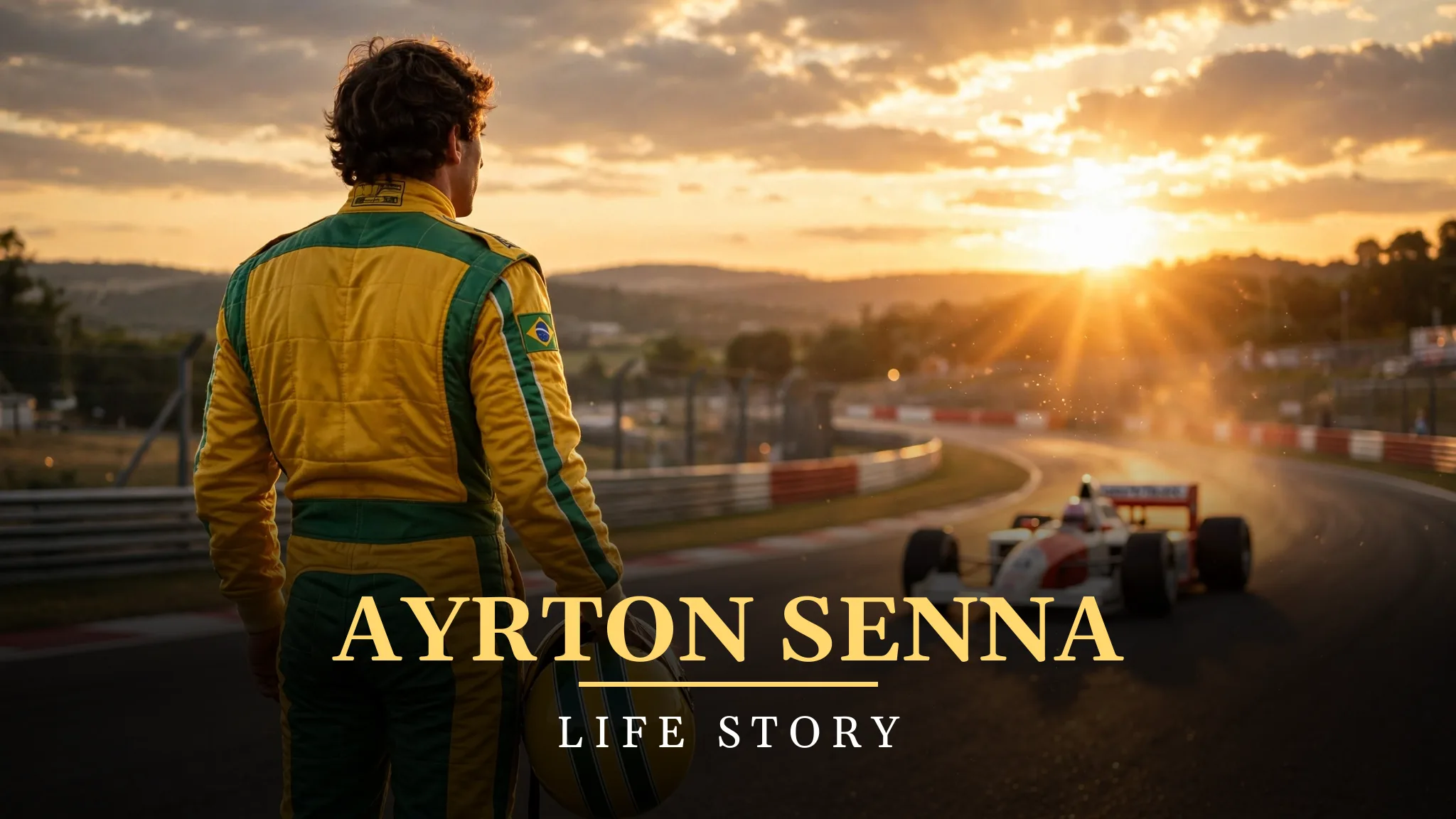
One last memory: the image of him in a yellow helmet and red racing suit, standing beside a Formula 1 car, with a smile that is both fast and warm, and that is unforgettable. That image is iconic, and it is beautiful, and it is the image that will define him forever. He was the greatest driver ever, and he was Ayrton, and he was the greatest athlete of his generation.
His legacy will live on through his races, through his kart, and through the generations of drivers he inspired, who watched his driving and wanted to drive the way he drove. That is a fitting legacy for a man who defined driving, and who did it with a kart and a speed that will never be forgotten. He is gone, but his driving remains, and his name will be remembered as one of the greats.
Finally, I want to say thank you, Ayrton Senna, for Monaco 1984, for Donington 1993, and for a life lived with a kart that spoke for speed. You were a great driver, and you were a great man, and the world is a better place because you were in it. Your races are still here, your legacy is still here, and your example is still here, and that is a life that mattered, and a life that will never be forgotten.
And one more thing: if you are a driver, drive like Ayrton, because he is the driver every driver deserves to be, a driver who drives with his heart, and who makes an audience feel. Drive like Ayrton, the way Ayrton Senna drove, and the world will be a better place for it, because the world needs more drivers like him, who drive with fastness, with bravery, and with humanity.
There is a last lesson in his life that I carry with me, and it is this: be brave, even when it is hard, because being brave is a choice, and Ayrton chose it, every day, in every race, and in every part of his life. That is a lesson worth remembering, and it is one I will carry with me, always, because the world needs more people like Ayrton Senna, who are brave, and who do it, with a kart, and with a speed, that will never be forgotten.
One final thought: his Ayrton Senna Institute, founded, by his sister Viviane, in 1994, to help children, in Brazil, with education, is a testament to his talent, because it has helped, millions of children, and that is a record that speaks for itself. He was great, as a driver, and he was great as a humanitarian, and that is a range that few drivers possess, and it is a reminder that Ayrton was not just a driver, he was a man, and a great one, and that is a legacy that will never be forgotten.
And if you ever doubt that a kart can speak for speed, remember Ayrton Senna, because he did, with Donington 1993, a race that made millions of people feel, and that is still watched today, by people who love racing, and who believe, that speed matters, and that is a legacy that will last, long after his races are watched, because his speed is still here, and his influence is still here, and that is a gift that will never fade.
There is one more thing I want to say, and it is about his sister Viviane, because she founded, the Ayrton Senna Institute, and she has kept Ayrton’s memory alive, after his death, through education, and that is a beautiful thing, and it is a part of his story that shows him as a brother, not just as a driver, and that is a legacy that matters, in its own way, alongside his races and his kart, because his family is his greatest legacy, and they have honoured him, by being themselves, just as he was himself.
His story also reminds me that a boy from São Paulo can become a legend, if he has talent, determination, and a kart, and that is a hopeful message for anyone who feels like an outsider, or who feels different. Ayrton was different, and he was an outsider, and he became one of the greatest drivers in history, because he embraced who he was, and he used his talent to become great. That is a lesson worth remembering, for every different person out there, and for every driver who wants to be heard.
I also want to mention his faith, because he was a devout Christian, and he said, that God, was with him, in every race, and that is a beautiful thing, and it is a part of his story that shows him as a man, who believed, in God, and who did it, with a speed, and with a talent, that was extraordinary, and that is a legacy that matters, in its own way, alongside his races and his kart, because his faith is his greatest legacy, and it has honoured him, by being itself, just as he was himself.
And finally, I think about the fact that he died at 34, and that he had so much more to give, and that is a reminder that life is short, and that we should make the most of it, the way Ayrton Senna did, driving with a speed that was a gift, and living a life that was both beautiful and tragic, and that is a life worth living, and a life worth remembering, and I am grateful to have learned about it, and to have shared it with you.
Frequently Asked Questions
When was Ayrton Senna born?
Ayrton Senna was born on 21 March 1960 in São Paulo, Brazil, as Ayrton Senna da Silva. He began racing go-karts at age four, with a kart his father built from a lawnmower engine.
What is Ayrton Senna most famous for?
He is most famous as the greatest Formula 1 driver ever, winning three World Championships in 1988, 1990, and 1991 with McLaren, and for his legendary rain driving at Monaco 1984 and Donington 1993.
What was Ayrton Senna’s Donington 1993 drive?
On 11 April 1993 at Donington Park in the rain, he went from fifth to first in a single opening lap, a drive still regarded as one of the greatest laps in Formula 1 history.
When did Ayrton Senna die?
He died on 1 May 1994 at Imola, Italy, at the age of 34, in a crash at Tamburello corner during the San Marino Grand Prix, a day after Roland Ratzenberger was also killed.
How many Formula 1 races did Ayrton Senna win?
He won 41 Grand Prix races and took 65 pole positions in ten seasons in Formula 1, with Toleman, Lotus, McLaren, and Williams.
What is the Ayrton Senna Institute?
The Ayrton Senna Institute was founded by his sister Viviane in 1994 to help children in Brazil with education, and it has helped millions of children since his death.


