Baltasar Kormákur: The Life Story Behind Iceland's Everest Director
In this post
Some directors make films about small rooms and quiet conversations, and some make films about mountains that can kill you. Baltasar Kormákur has made both, and he has made them well. He is a director from Iceland, a country of volcanoes, glaciers, and storms, and his films carry the feeling of that land inside them. Whether he is filming a street in Reykjavík or a slope on Mount Everest, his camera looks at people who are tested by the world around them, and who must decide who they are when the test comes.
Baltasar began his career as an actor, standing on the stage of the National Theatre of Iceland, and he learned how actors think, how they move, and how they feel. That learning stayed with him when he became a director, and it is one reason his films feel so human. He does not only show big events. He shows the faces of the people inside those events, and he lets the audience see their fear, their hope, and their strength. That care for people is the heart of his work.
This is the story of Baltasar Kormákur, from a young actor in Reykjavík to one of the best known directors in the world. It is a story about a boy who grew up between two cultures, about a first film that surprised Iceland, about a television series that travelled the world, and about a Hollywood film on the highest mountain on earth. It is also a story about Iceland, and about how a small country can produce films that speak to everyone.
What makes Baltasar special is his range. He has made comedies, crime stories, survival dramas, and big Hollywood films, and each one feels true to him. He does not stay in one kind of film, because he is curious, and he wants to try new things. That curiosity has taken him from the streets of Reykjavík to the top of the world, and it is still taking him to new places today.
There is also something hopeful in the story of Baltasar, because it shows that a director from a small country can reach the biggest stages in film. Iceland has a small population, but it has a large heart for stories, and Baltasar carried that heart to Hollywood. He did not change who he was to fit Hollywood. He brought Iceland with him, and Hollywood listened. That is a lesson worth remembering.
A Boy Between Two Worlds
Baltasar Kormákur was born on 27 February 1966 in Reykjavík, Iceland, and he grew up between two cultures. His father was Baltasar Samper, a painter from Spain, and his mother was Icelandic, and the young Baltasar lived with the sounds and colours of both countries. That mix gave him a wide view of the world from an early age, and it taught him that a person can belong to more than one place at the same time. That lesson would stay with him throughout his life, and it would shape his films.
As a boy, Baltasar loved stories, and he loved the theatre. He watched plays, he listened to music, and he began to dream of a life in the arts. Iceland is a country where stories matter deeply, with a long tradition of sagas told on long winter nights, and Baltasar grew up inside that tradition. He learned that a good story can carry a person through a hard winter, and that a story told well can change the way people see the world. That belief became the foundation of his work.
He began his career as an actor, and he joined the National Theatre of Iceland, where he played many roles on stage. Acting taught him how to understand a character from the inside, how to feel what the character feels, and how to show that feeling to an audience. A director who has been an actor knows what it is like to stand on a stage and to be watched, and that knowledge makes him kinder to his actors. Baltasar carried that kindness with him when he moved behind the camera.
During his years as an actor, Baltasar also began to think about directing, because he wanted to tell stories in his own way. He watched directors at work, he learned how a film is made, and he began to imagine the films he would make himself. He did not rush. He took his time, and he waited until he had a story that felt true to him. That patience would become a habit, and it would serve him well for the rest of his career.
The years as an actor also taught Baltasar about Iceland itself, because the theatre in Iceland tells stories about Icelandic people, in the Icelandic language, for an Icelandic audience. He learned that a story does not need to be large to matter, and that a small story, told with honesty, can touch people deeply. That lesson is in all of his films, from his first small comedy to his largest Hollywood drama.
101 Reykjavík and the First Film
Baltasar directed his first feature film, 101 Reykjavík, in 2000, and it became a success in Iceland and beyond. The film was a comedy about a young man in Reykjavík, and it showed the city as it really was, with its bars, its streets, and its young people trying to find their way. The film was funny, it was honest, and it felt like Iceland, not like a copy of an American film. Audiences in Iceland loved it, because they saw themselves on the screen for the first time in a long while.
The film also travelled outside Iceland, and it was shown at festivals in many countries. People who had never been to Iceland saw the film and felt as if they had visited Reykjavík, because the film captured the feeling of the city so well. That success gave Baltasar his first real audience outside his home country, and it showed him that Icelandic stories could reach the world. A small film about a young man in Reykjavík had spoken to people in many places, and that was a hopeful sign.
101 Reykjavík also showed Baltasar’s skill as a director of actors, because the performances in the film were natural and warm. He knew how to talk to actors, because he had been one himself, and he knew how to give them room to play. The actors trusted him, and that trust showed on the screen. The film did not feel forced. It felt like life, and that is the highest praise a film can receive.
After the success of his first film, Baltasar could have stayed with comedies, but he wanted to try other kinds of stories. He was curious, and he believed that a director should grow, not stand still. His next films would be darker, more serious, and more ambitious, and each one would teach him something new about his craft. The first film had opened a door, and Baltasar walked through it with confidence.
By the end of 2000, Baltasar Kormákur was known in Iceland as a director to watch, and his name was beginning to be known outside the country as well. He had made one film, and it had been a success, but he knew that one film was not enough. He had more stories to tell, and he set out to tell them, one film at a time, with the same honesty and care that had made his first film work.
The Sea, Jar City, and Icelandic Stories
Baltasar’s second feature film, The Sea, was released in 2002, and it was a family drama set in Iceland, about a family that runs a fishing business and faces hard times. The film was darker than 101 Reykjavík, and it showed Baltasar’s range as a director. He could make a comedy, and he could also make a serious drama about a family falling apart. The film was praised in Iceland, and it showed that Baltasar was not a one-film director. He was a storyteller with many stories to tell.
In 2006, Baltasar directed Jar City, based on a novel by Arnaldur Indriðason, one of Iceland’s best known crime writers. The film was a crime story about a detective investigating a murder, and it was set in Reykjavík, with the cold and grey city as a part of the story. The film was a success, and it showed that Baltasar could make a crime film that was both exciting and thoughtful. The film travelled to festivals around the world, and it brought Icelandic crime fiction to a larger audience.
Jar City also showed Baltasar’s love of Iceland itself, because the film used the Icelandic landscape as more than a background. The cold, the rain, and the grey light were part of the story, and they gave the film a feeling that could not have been made anywhere else. Baltasar understood that a place can be a character in a film, and he used Iceland as a character in many of his works. That understanding is one of the things that makes his films special.
During these years, Baltasar also made other films, including A Little Trip to Heaven in 2005, an English-language film with international actors, and White Night Wedding in 2008. Each film was different, and each one taught him something new. He was building a career one film at a time, and he was learning how to work with larger budgets, with actors from other countries, and with stories that reached beyond Iceland. The learning was slow, but it was steady, and it prepared him for the bigger films that were to come.
By the end of the 2000s, Baltasar was one of the best known directors in Iceland, and his films were known in many countries. He had made comedies, dramas, and crime stories, and he had shown that he could handle many kinds of film. But his biggest work was still ahead of him, and it would take him to the highest mountain in the world, and to the largest audience he had ever reached.
The Deep and a True Story of Survival
In 2012, Baltasar directed The Deep, a film based on the true story of Guðlaugur Friðþórsson, an Icelandic fisherman who survived for hours in freezing cold sea water after his boat sank. The story was well known in Iceland, because Guðlaugur’s survival seemed almost impossible, and scientists had studied it for years. Baltasar wanted to tell the story with honesty and with respect, and he made a film that was both exciting and deeply human.
The Deep was a success in Iceland, and it was chosen as Iceland’s entry for the Academy Awards. The film showed Baltasar’s skill at making a survival story, because he did not only show the cold and the danger. He showed the man inside the story, his fear, his strength, and his will to live. The film was quiet in places, and loud in others, and it kept the audience close to the fisherman throughout. That closeness is what made the film work.
Making The Deep was hard, because filming in cold water is dangerous and difficult, and the actors had to work in real cold. Baltasar insisted on filming in a way that felt real, because he believed that the audience would feel the cold if the actors felt it. That choice made the film more powerful, and it showed Baltasar’s commitment to honesty in his work. He did not want to fake the cold. He wanted the audience to feel it.
The film also showed Baltasar’s love of true stories, because he believed that real life often holds the best dramas. A fisherman surviving in freezing water is a story that no writer could invent, and Baltasar knew that the truth of it would touch people. The film was a tribute to Guðlaugur, and to all the fishermen of Iceland who face the sea every day. It was a film about Iceland, and about the people who live with the sea.
After The Deep, Baltasar’s name was known more widely, and Hollywood began to take notice. A director who could make a survival film this well, with a small budget and a true story, was a director who could be trusted with a larger film. The next step would be the largest of his career, and it would take him to Mount Everest.
Everest and Hollywood
In 2015, Baltasar directed Everest, a Hollywood film about the 1996 disaster on Mount Everest, in which several climbers died in a storm. The film starred Jason Clarke, Josh Brolin, Jake Gyllenhaal, and other well known actors, and it was made with a large budget. It was a very different kind of film from anything Baltasar had made before, and it tested everything he had learned. He had to work with a large crew, with famous actors, and with a story that was known around the world.
Everest was a success, and it earned more than two hundred million dollars around the world. The film was praised for its realism, because Baltasar filmed in real mountains, in real cold, and with real climbers, and the audience could feel the height, the wind, and the danger. The film did not only show the mountain. It showed the people on the mountain, their hopes, their fears, and their choices, and that human focus is what made the film more than a spectacle.
Making Everest was one of the hardest things Baltasar had ever done, because filming at high altitude is dangerous, and the weather can change in minutes. The crew worked in Nepal and in the Alps, and they faced cold, wind, and thin air. Baltasar led the crew with the same calm and care that he had shown in his smaller films, and he kept the focus on the actors and on the story. That steadiness is one reason the film worked, because a chaotic set would have made a chaotic film.
The success of Everest changed Baltasar’s career, because it showed Hollywood that a director from Iceland could make a large and successful film. He was offered more work in Hollywood, and he directed Adrift in 2018, a survival film about a sailor, played by Shailene Woodley, who is lost at sea after a storm. Adrift was also a success, and it showed that Baltasar had a gift for survival stories, for films about people tested by nature.
Everest also meant a great deal for Iceland, because it showed the world that an Icelandic director could stand at the top of Hollywood. Young Icelandic filmmakers saw that a director from their own country could make a film with the biggest stars in the world, and they believed a little more in their own chances. Baltasar had carried Iceland to Hollywood, and Hollywood had listened.
Trapped and Television
While he was working in Hollywood, Baltasar also created a television series in Iceland called Trapped, which began in 2015. The series was a crime drama set in a small Icelandic town, cut off by a snowstorm, and it became a success in Iceland and around the world. The series was shown in many countries, and it introduced millions of viewers to Icelandic television. Trapped was dark, it was beautiful, and it was full of the cold and quiet of Iceland.
Trapped ran for several seasons, and Baltasar directed and produced it through his company, RVK Studios, which he founded to make films and television in Iceland. The series gave work to many Icelandic actors and crew members, and it helped to build a film industry in a small country. Baltasar did not only make films for himself. He built a place where other Icelandic filmmakers could work, and that generosity has helped Icelandic film to grow.
The series also showed Baltasar’s skill at long-form storytelling, because a television series has more time than a film, and it can follow characters over many hours. Trapped used that time well, building a story that was slow, careful, and full of suspense. The audience learned to know the characters, and they cared about them, and that care made the story more powerful. The series was a new kind of work for Baltasar, and he did it well.
In the years that followed, Baltasar continued to work in both film and television, directing the film Touch in 2024, a love story that moved between Iceland and Japan, and working on new projects for RVK Studios. Touch showed a softer side of Baltasar, because it was a romantic drama, not a survival film, and it proved once again that he could make many kinds of film. The film was praised, and it showed that Baltasar was still growing as a director.
Today, Baltasar Kormákur is one of the most important figures in Icelandic film, and his work is known around the world. He has made films in Iceland and in Hollywood, he has created television that travelled the world, and he has built a studio that gives work to other filmmakers. His story is still being written, and the next film is yet to come.
What Baltasar Built for Iceland
Baltasar Kormákur built more than a career. He built a film industry in Iceland, through RVK Studios, through Trapped, and through the many films he has made at home. Before Baltasar, Icelandic film was small, and few people outside Iceland knew it. After Baltasar, Icelandic film is known around the world, and young filmmakers in Iceland have a path to follow. That is a large gift, and it is one that will last long after his own films are made.
He also built a bridge between Iceland and Hollywood, because he showed that a director from a small country could work in the largest film industry in the world without losing himself. He brought Icelandic stories to Hollywood, and he brought Hollywood skills back to Iceland, and both sides were better for it. That bridge is important, because it shows that a small country does not need to stay small. It can reach the world, and it can bring the world home.
Baltasar’s films also carry the feeling of Iceland to the world, with the cold, the sea, the mountains, and the quiet strength of its people. A viewer who watches his films learns something about Iceland, even if they have never been there. They learn that Iceland is a place of beauty and of danger, and that its people are strong and honest. That lesson is a gift, and it is one that Baltasar has given to millions of viewers.
His career also shows the value of starting small and growing slowly. He began as an actor, he made a small comedy, and he built his career one film at a time, learning with each one. He did not rush to Hollywood, and he did not try to make a large film before he was ready. When Everest came, he was ready, because he had spent fifteen years learning his craft. That patience is a lesson for any young filmmaker.
Today, Baltasar’s work is still seen in cinemas and on television around the world, and new viewers still discover his films for the first time. A person who watches Everest today feels the same cold and the same fear that audiences felt in 2015, and a person who watches Trapped feels the same suspense. That is the mark of films that last, and it is the mark of a director who made something true.
My Take:
When I think about Baltasar Kormákur, the first thing that comes to my mind is his range, because he has made comedies, crime stories, survival dramas, and big Hollywood films, and each one feels honest. Many directors find one kind of film and stay with it forever, because it is safe. Baltasar did not stay safe. He tried new things, and he trusted himself to learn. I admire that curiosity, because it takes courage to leave a comfortable place and to try something hard. Baltasar did it again and again, and his films are better for it.
I think about his years as an actor, and I believe they are the secret of his films. A director who has been an actor knows what it feels like to stand in front of a camera and to be watched, and he treats his actors with kindness because of it. You can see that kindness in his films, because the actors look comfortable, they look natural, and they give honest performances. A director who shouts at actors gets fear, but a director who listens gets truth, and Baltasar listens. That is why his films feel so human.
What I love most about Baltasar is that he never forgot Iceland. He could have moved to Hollywood and stayed there, making large films and forgetting his home, but he did not. He built RVK Studios in Iceland, he made Trapped in Iceland, and he gave work to Icelandic actors and crew. That loyalty is rare, and it is brave, because the world often tells artists to leave home if they want to succeed. Baltasar succeeded from home, and he brought the world to Iceland, not the other way around. I respect that deeply.
I think about Everest, and I feel both awe and sadness, because the film tells a true story about people who died on a mountain. Baltasar did not make the film into a simple adventure. He showed the climbers as real people, with families, with hopes, and with fears, and he let the audience feel the weight of their choices. That honesty is important, because a true story deserves respect, and Baltasar gave it respect. I also admire the way he filmed in real mountains, in real cold, because the audience could feel that the danger was real, and not made in a studio.
I feel sad when I think about how hard it must be to make a film like Everest, because the crew worked in cold, in wind, and in thin air, and they risked their health to tell the story. Baltasar led them with calm, and he kept them safe, and he brought the film home. That leadership is a part of his story that people do not often talk about, but it matters. A director is not only an artist. He is a leader, and the people who follow him trust him with their safety. Baltasar earned that trust, and he kept it.
I also think about Trapped, and I love it, because it shows Iceland in a way that no other series has. The snow, the small town, the quiet streets, and the feeling of being cut off from the world are all part of the story, and the series makes the viewer feel that cold. I think Trapped did more for Icelandic television than any single film, because it showed the world that Iceland could make television as good as any country. That is a large achievement, and it belongs to Baltasar and to the many people who worked with him.
There is a lesson here for young filmmakers, and it is a simple one. Start small, learn your craft, and grow one film at a time. Baltasar did not begin with Everest. He began with a small comedy in Reykjavík, and he learned from every film he made. When the large film came, he was ready, because he had spent fifteen years getting ready. That patience is rare, and it is one reason his career has lasted. A filmmaker who rushes will fall, but a filmmaker who walks will reach the top.
I think about the fishermen in The Deep, and about the climbers in Everest, and about the sailors in Adrift, and I see a pattern. Baltasar is drawn to stories about people tested by nature, about ordinary people who face the sea, the mountain, and the storm. I think he is drawn to those stories because he comes from Iceland, where nature is strong and where people live close to it. He understands that nature is beautiful and dangerous at the same time, and his films show both sides. That understanding is deep, and it is honest.
I also admire the way Baltasar works with actors from many countries. He has directed actors from Iceland, from America, from Britain, and from Japan, and he has made each of them feel at home in his films. That is a skill, because actors from different places have different ways of working, and a director has to listen to each one. Baltasar listens, and the performances in his films show it. The actors trust him, and the audience trusts the actors, and that chain of trust is what makes a film work.
If I have one small criticism, it is that some of his Hollywood films are not as personal as his Icelandic films. Everest and Adrift are strong films, but they do not carry the same intimate feeling as 101 Reykjavík or The Sea, because they are larger and they have to please a larger audience. That is not Baltasar’s fault. It is the nature of Hollywood, where a film must reach millions of people. But I hope he keeps making Icelandic films as well, because those films are where his heart is most clearly seen.
For a reader who has never seen his films, I would say this. Start with 101 Reykjavík, and see the city as it really is, with its humour and its warmth. Then watch The Deep, and feel the cold of the sea. Then watch Everest, and feel the height of the mountain. If those films speak to you, then watch Trapped, and spend time in a small Icelandic town in the snow. You will find a director who loves people, who loves Iceland, and who tells stories with honesty and care.
In the end, I think Baltasar Kormákur teaches us that a small place can have a large voice. Iceland is a small country, but it has produced a director who has stood on the largest stages in film, and who has brought his home with him wherever he has gone. That is a hopeful story, and it is one that belongs to every young person in a small town who dreams of making films. Your home is not a limit. It is a starting point, and it can carry you to the top of the world.
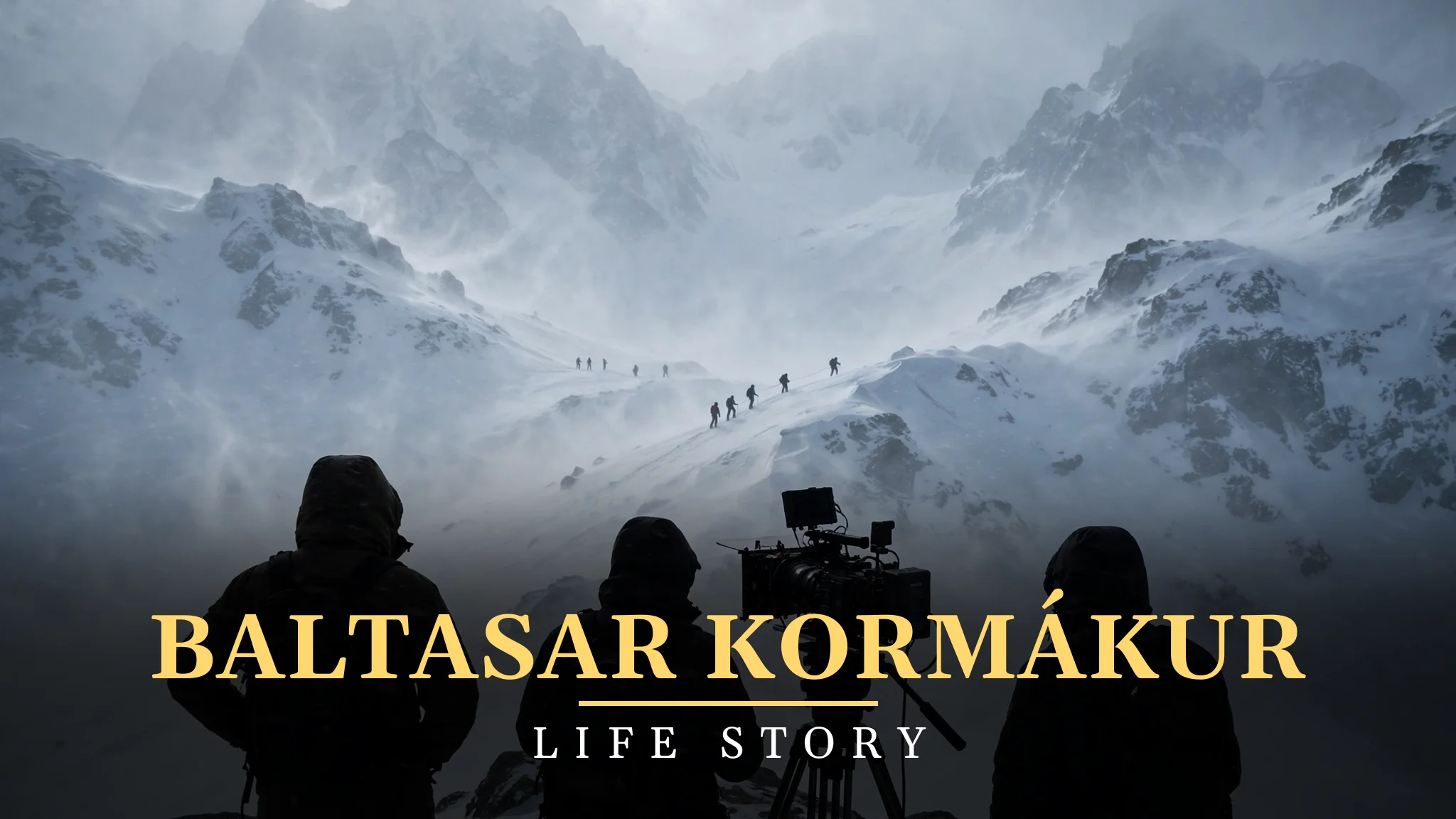
I keep thinking about the film crew on the snowy mountain, watching climbers cross a ridge in a storm, and I think it is a good picture for this director. He stands in the cold, he watches people test themselves against nature, and he films it with care. That image is Baltasar in one scene. He is not afraid of the cold, he is not afraid of hard work, and he is not afraid of a story that is difficult to tell. That courage is the heart of his career.
One more thought stays with me, and it is about RVK Studios. A director who builds a studio is building something larger than his own career. He is building a home for other filmmakers, a place where young people can learn, where actors can work, and where Icelandic stories can be told. That generosity will last longer than any single film, because it gives the next generation a chance. I admire that generosity, and I think it is one of the best things Baltasar has done.
I also want to say that I respect Baltasar for making Touch, a love story, after so many films about survival and danger. A director who can make a film about love, after making films about mountains and storms, is a director who understands that the quiet stories matter as much as the loud ones. Love is also a test, and it also takes courage, and Baltasar told that story with the same care he gave to Everest. That range is rare, and it is beautiful.
I think about the future of Baltasar’s work, and I feel hopeful. He is still making films, he is still building his studio, and he is still telling stories from Iceland and from the world. The next film may be a comedy, or a drama, or a survival story, and I will be glad to see it, whatever it is. A director who is still curious after thirty years is a director who will keep surprising us, and I look forward to those surprises.
Finally, I want to say that this story makes me think about my own home, and about the stories that come from it. Every place has stories, and every person has a story, and a good director can find those stories and share them with the world. Baltasar found the stories of Iceland, and he shared them, and the world listened. That is a hopeful thought, because it means that no place is too small to matter, and no story is too quiet to be heard. I am glad Baltasar exists, and I am glad his films are still being made.
I will end with a simple wish. I hope Baltasar keeps making films in Iceland, I hope he keeps building his studio, and I hope young filmmakers in Iceland keep learning from him. The world needs more directors who love their home, who treat their actors with kindness, and who tell stories with honesty. Baltasar is one of those directors, and I am grateful for his work. His films are a gift to Iceland, and they are a gift to the world.
When I finish thinking about Baltasar, I feel inspired, and I feel grateful, and I feel proud, even though I am not from Iceland. Inspired, because his story shows that hard work and patience can carry a person to the top. Grateful, because his films have given me hours of honest and beautiful storytelling. Proud, because a small country can produce such a large artist, and that gives hope to every small place in the world. That is a lot for one director to give, and I will remember it.
I also think his story has a message for people who feel caught between two cultures. Baltasar grew up with a Spanish father and an Icelandic mother, and he could have felt torn between the two. Instead, he used both, and his films carry the warmth of Spain and the cold of Iceland at the same time. That is a beautiful way to live, because it means that a person does not have to choose one home. They can carry two homes inside them, and both can make their work richer. I think that message matters, and I hope it reaches the people who need it.
I want to say one more thing about the way Baltasar films nature, because nature is not only a background in his work. In The Deep, the sea is a character, cold and powerful, and in Everest, the mountain is a character, high and dangerous. Baltasar does not use nature as a pretty picture behind the actors. He lets nature test the people in the story, and he lets the audience feel that test. That is a deep understanding of how the world works, and it comes from growing up in Iceland, where nature is never far away.
There is also something I admire about his patience with a story. He does not rush to the exciting part. He lets the audience meet the people first, learn their names, and care about them, and only then does he put them in danger. That patience makes the danger matter more, because the audience cares about the people in it. Many directors rush to the action, but Baltasar waits, and the waiting makes his films stronger. I wish more directors would learn that lesson.
Frequently Asked Questions
When was Baltasar Kormákur born and where is he from?
Baltasar Kormákur was born on 27 February 1966 in Reykjavík, Iceland. His father was the Spanish painter Baltasar Samper, and his mother was Icelandic, and he began his career as an actor at the National Theatre of Iceland before becoming a director.
What was Baltasar Kormákur’s first film?
His first feature film was 101 Reykjavík, released in 2000, a comedy about a young man in Reykjavík that became a success in Iceland and was shown at festivals in many countries. It showed his skill as a director of actors and his love of telling Icelandic stories.
What is Baltasar Kormákur’s most famous film?
Everest, released in 2015, is his most famous film, a Hollywood drama about the 1996 disaster on Mount Everest, starring Jason Clarke, Josh Brolin, and Jake Gyllenhaal. The film earned more than two hundred million dollars around the world and was praised for its realism.
What is the television series Trapped?
Trapped is a crime drama series created by Baltasar Kormákur that began in Iceland in 2015, set in a small town cut off by a snowstorm. The series became a success in Iceland and in many other countries, and it was made through his company RVK Studios.
What other films has Baltasar Kormákur directed?
His other films include The Sea from 2002, Jar City from 2006, The Deep from 2012, Adrift from 2018, and Touch from 2024. Each film is different, from family drama to crime story to survival film to love story, and together they show his wide range as a director.
Is Baltasar Kormákur still making films?
Yes, Baltasar Kormákur is still active, directing films and television through RVK Studios in Iceland, including the film Touch in 2024. He continues to work in both Iceland and Hollywood, and he remains one of the most important figures in Icelandic film.


