Barry White: The Life Story Behind the Walrus of Love
In this post
Barry White had the deepest, warmest voice in popular music, a voice so low and so smooth that people called him the Walrus of Love. When he spoke, it sounded like velvet, and when he sang, it sounded like a promise. His records in the 1970s, including I’m Gonna Love You Just a Little More Baby, Can’t Get Enough of Your Love, Babe, and You’re the First, the Last, My Everything, made him one of the biggest stars in the world, and they are still played at weddings and on quiet nights today. He was not just a singer. He was a songwriter, a producer, and a bandleader who built a whole sound around love.
He was born in Galveston, Texas, in 1944, and raised in Los Angeles, where he grew up in a tough neighbourhood and got into trouble as a teenager. He spent time in prison as a young man, and that experience changed him. He decided to turn his life around, and he began to work in music, first as a songwriter and producer for other artists, and then as a singer in his own right. He discovered the girl group Love Unlimited, he formed the Love Unlimited Orchestra, and he created a lush, orchestral sound that was perfect for romance.
His fame came in the 1970s, when his deep voice and his romantic songs made him a star around the world. He sold millions of records, he won Grammy Awards, and he became a symbol of love and romance in music. His later years brought health problems and a comeback in the 1990s, when a new generation discovered his music. He died in 2003, at the age of fifty-eight, but his voice is still one of the most recognisable in popular music, and his songs still make people smile and dance. His story is one of change, of talent, and of a voice that could melt a room.
A Texas Birth and a Tough Los Angeles Childhood
Barry Eugene Carter was born on 12 September 1944 in Galveston, Texas. His mother, Melvin White, raised him largely on her own, and the family moved to Los Angeles, California, when Barry was still a young boy. He grew up in the Watts neighbourhood of Los Angeles, a poor area where gangs were a part of daily life. As a child, he sang in the church choir, and he listened to the music that played on the radio, from gospel to rhythm and blues. His mother gave him piano lessons, and he learned to play, but he was also drawn to the streets, and to the trouble that came with them.
As a teenager, Barry joined a gang, and he got into serious trouble. At the age of seventeen, he was sent to prison for stealing tyres, and he spent time in jail. It was a turning point in his life. While he was in prison, he listened to a song by Elvis Presley, It’s Now or Never, on the radio, and he decided that he wanted to change his life. He realised that he had a gift for music, and that he could use it to make a better life for himself and for his family. When he was released, he was determined to stay out of trouble and to work in music.
After prison, he worked hard to build a career. He sang in groups, he wrote songs, and he learned how the music business worked. He changed his last name to White, taking his mother’s maiden name, and he began to make a name for himself as a songwriter and producer. He was a big man, with a deep voice and a warm manner, and people in the business began to notice him. He was not an overnight star. He worked for years behind the scenes, learning his craft and waiting for his chance. That patience would serve him well, because when his chance came, he was ready.
Los Angeles gave him his roots, his toughness, and his love of music. He grew up in a hard neighbourhood, he made mistakes, and he learned from them. He was a man who had seen the worst of life and who had decided to make something better of himself. That story of change is at the centre of his life, and it is one of the reasons his music feels so honest. He sang about love, but he knew about hardship too, and that knowledge gave his songs a depth that other love songs did not have.
Learning the Business Behind the Scenes
In the 1960s, White worked as a songwriter, producer, and arranger for other artists in Los Angeles. He worked for small record labels, and he learned how to write a song, how to arrange the instruments, and how to produce a record that sounded good on the radio. He was a talented musician, and he had a good ear for what made a song work. He wrote songs for other singers, and he produced records that did well, but he was still not famous in his own right. He was a man behind the scenes, and he was happy to be there for a time, because he was learning.
One of his early successes was as a producer for the girl group Love Unlimited, a trio of singers he discovered and worked with in the late 1960s. He wrote and produced their hit Walking in the Rain with the One I Love in 1972, a gentle, romantic song that became a top hit. The record showed his gift for creating a lush, orchestral sound, with strings, horns, and a rhythm section that made the song feel like a warm embrace. It was the sound that would become his trademark, and it was the sound that would make him famous.
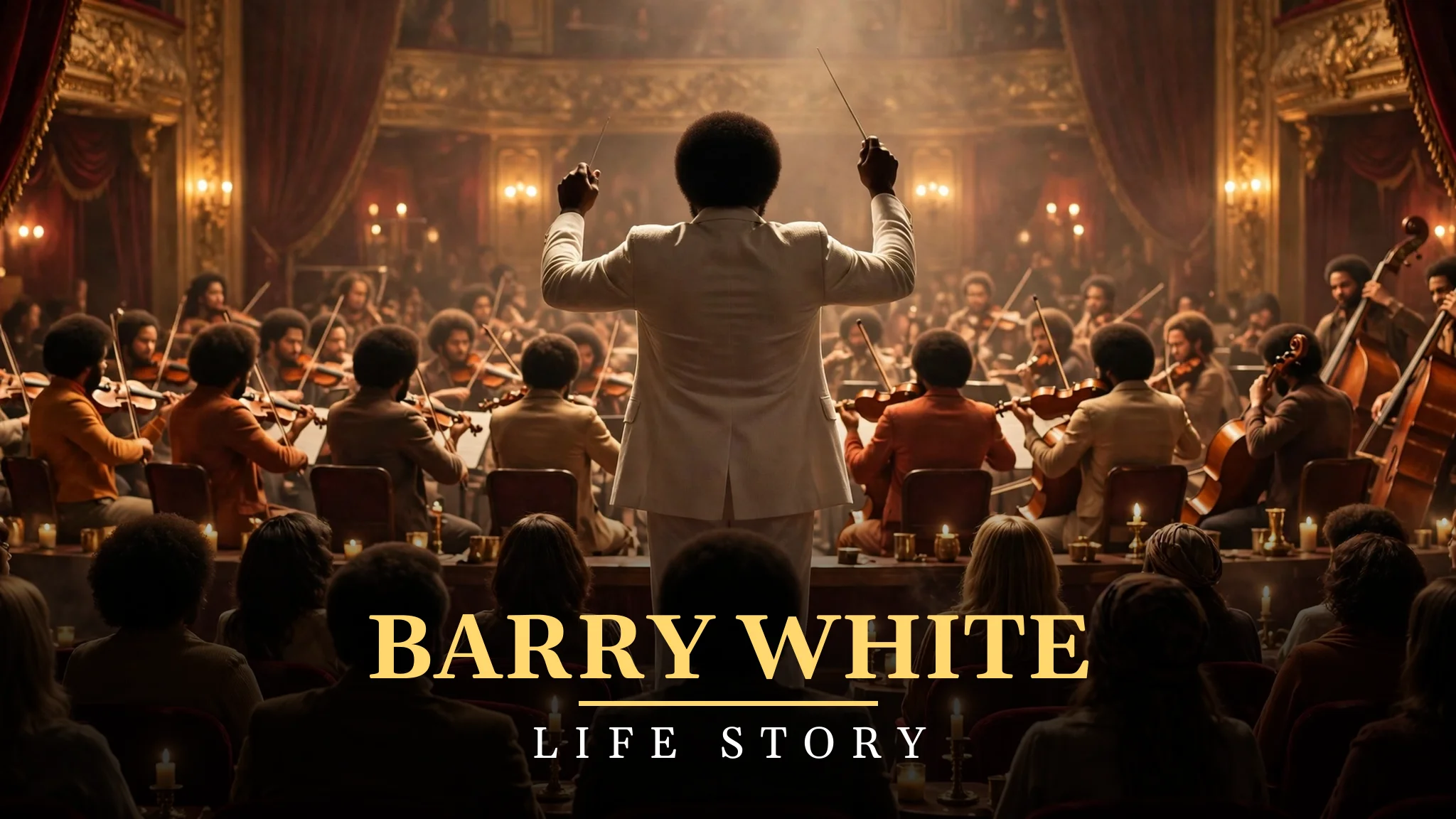
White also formed the Love Unlimited Orchestra, a large group of musicians who played the instrumental music for his records and for his live shows. The orchestra gave his music a grand, sweeping feeling, like a film score for a love story. He was not just making pop records. He was making music that sounded big, romantic, and luxurious, and audiences loved it. He was building a world of sound, and he was the man at the centre of it, writing the songs, producing the records, and shaping every detail.
During these years, White was also learning how to be a businessman. He started his own record label, and he learned how to manage his career and his money. He was a smart man, and he understood that a singer needed to control his own work if he wanted to succeed. He was patient, he was hard-working, and he was ready for the moment when he would step out from behind the scenes and become a star himself. That moment was coming, and it would change his life forever.
The Deep Voice Steps Forward
In 1973, White decided to record as a singer himself. He had always had a deep speaking voice, and people had told him that he should sing, but he had been shy about it. He recorded I’ve Got So Much to Give, an album that included I’m Gonna Love You Just a Little More Baby, a song that became a huge hit. The record was a success, and it showed that his voice, low and warm and intimate, was perfect for romantic songs. He sang close to the microphone, in a style that was part singing and part speaking, and listeners felt as if he was talking directly to them. It was a new sound, and it was immediately popular.
He followed that success with the album Stone Gon’ in 1973, which included Never, Never Gonna Give Ya Up, another hit, and then with Can’t Get Enough in 1974, which included Can’t Get Enough of Your Love, Babe, his biggest hit and a number one record in America. The song is a joyful, exuberant celebration of love, with a driving rhythm and a chorus that everyone can sing along to. It became one of the most famous love songs of the 1970s, and it is still played at parties and weddings today. White had found his sound, and the world had found him.
In 1974, he also recorded You’re the First, the Last, My Everything, a song that became another huge hit and one of his signature records. The song is a declaration of love, sung with a confidence and a warmth that made it feel real. White’s records sold in the millions, and he became one of the biggest stars in the world. He toured, he appeared on television, and he was known everywhere for his deep voice, his big smile, and his romantic songs. He was the Walrus of Love, and he wore the name with pride.
His success was not just about his voice. It was about the whole sound he had built, with the Love Unlimited Orchestra, with lush strings, and with songs that were well written and well produced. He was a perfectionist, and he worked hard to make every record sound right. He was also a showman, and his live shows were full of romance, with candles, with soft lights, and with an orchestra that made the room feel like a dream. He had created a world of love, and audiences wanted to live in it.
Fame, Family, and the Height of Romance
By the mid-1970s, Barry White was at the height of his fame. He was selling millions of records, he was winning awards, and he was a household name around the world. He had a family, he had money, and he had the respect of the music business. He was a big man in every sense, with a big voice, a big heart, and a big presence on stage. He loved to perform, and he loved to make people happy with his music. His concerts were celebrations of love, and his fans came to hear him sing about romance and to feel the warmth of his voice.
He was married to Glodean James, a member of Love Unlimited, and they had children together. He had been married before, and he had children from his earlier marriage as well. Family was important to him, and he worked hard to provide for his children and to give them a better life than he had had. He was a generous man, and he shared his success with those around him. He was also a man who enjoyed life, who liked good food, good music, and good company, and who was not afraid to show it.
During the late 1970s, musical tastes began to change, and disco became popular. White’s music adapted to disco, and he had hits like Let the Music Play in 1976, but the disco era was short-lived, and by the early 1980s his commercial success had faded. He continued to record and to tour, but he was no longer at the top of the charts. He did not give up. He kept working, he kept writing, and he kept performing for his fans, who remained loyal. He believed in his music, and he believed that love songs would always have an audience.
In the 1990s, a new generation discovered his music. His songs were used in films and television, and young listeners heard his deep voice for the first time and fell in love with it. He recorded new albums, including The Icon Is Love in 1994, which included Practice What You Preach, a hit that brought him back to the charts. He appeared on television shows, he worked with younger artists, and he became a beloved figure again. His comeback showed that great music does not go out of fashion, and that a great voice can find a new audience at any age.
Health, Comeback, and a Lasting Voice
In his later years, White’s health began to fail. He had struggled with his weight for much of his life, and he developed high blood pressure and kidney problems. In 2002, he was forced to retire from performing because of his health, and he began dialysis treatment. He was a big man, and his body had carried a heavy load for many years. He tried to stay positive, he spent time with his family, and he hoped to return to music, but his health continued to worsen. He died on 4 July 2003 in Los Angeles, at the age of fifty-eight, from kidney failure. The news saddened fans around the world, who had loved his voice and his music for thirty years.
His funeral was attended by family, friends, and fellow musicians, and tributes poured in from around the world. People remembered him as a man with a voice like velvet, a songwriter of romantic songs, and a performer who made people feel loved. He was inducted into the Dance Music Hall of Fame, and his music has been honoured many times since. His songs are still played on the radio, still used in films, and still sung at weddings. His deep voice is still one of the most recognisable in popular music, and his nickname, the Walrus of Love, is still used with affection.
White left behind a catalogue of records that is full of love, warmth, and joy. He sold more than 100 million records around the world, a remarkable achievement for a man who started as a songwriter behind the scenes. He proved that a deep voice, a good song, and a lush orchestra could make people feel something real, and that love songs, well sung, never go out of style. His story is one of change, from a troubled teenager in Los Angeles to a world-famous star, and it is a story that still inspires people who hear it.
His influence can be heard in the work of many younger singers, who have tried to copy his smooth, romantic style. But no one has quite matched his voice, because it was not just low. It was warm, it was confident, and it was full of feeling. Barry White sang about love, and he sang about it with all his heart. That is why his music still matters, and why his story is still worth telling.
The Love Unlimited Sound and the Orchestra
White’s sound was built on the Love Unlimited Orchestra, a large group of musicians who played the lush, orchestral music for his records. The orchestra included strings, horns, and a rhythm section, and it gave his music a grand, sweeping feeling, like a film score for a love story. White was the conductor, in a sense, writing the songs, arranging the instruments, and shaping every detail. He wanted his records to sound luxurious, romantic, and warm, and the orchestra made that possible. When you hear Can’t Get Enough of Your Love, Babe, you hear the orchestra building behind his voice, and you feel the excitement of the song. That sound was his trademark, and it made his records stand out from other soul records of the time.
The orchestra also included the girl group Love Unlimited, three singers who White discovered and produced, and who sang backing vocals on his records. Their voices, soft and sweet, contrasted with White’s deep voice, and the combination was beautiful. He wrote Walking in the Rain with the One I Love for them in 1972, a hit that showed his gift for creating a romantic sound. He later married Glodean James, one of the members of Love Unlimited, and the group became part of his family, both in music and in life. That closeness is part of why his records sound so warm: they were made by people who knew each other, who trusted each other, and who loved the music they were making.
White was a perfectionist in the studio. He worked long hours, he listened to every take, and he did not release a record until he was happy with it. He understood that a love song needs to sound perfect, because the listener is listening for feeling, and any flaw can break the spell. He was also a showman, and his live shows were full of romance, with candles, soft lights, and an orchestra that made the room feel like a dream. He had created a world of love, and audiences wanted to live in it, even for one evening. That world is still alive in his records, and it is why they are still played today.
The 1990s Comeback and a New Generation
By the early 1990s, White’s commercial success had faded, and many people thought his career was over. Then, a new generation discovered his music. His songs were used in films, including in the comedy The Big Lebowski, and on television, and young listeners heard his deep voice for the first time and fell in love with it. He recorded The Icon Is Love in 1994, an album that included Practice What You Preach, a hit that brought him back to the charts and won him a Grammy nomination. The album was a success, and it showed that his music had not gone out of fashion. Love songs, well sung, never go out of style, and White’s voice was still as warm and as deep as ever.
The comeback was not just about records. White appeared on television shows, he worked with younger artists, and he became a beloved figure again, not just as a singer from the 1970s, but as a living legend. He was a big man with a big smile, and he enjoyed the attention, but he also took his work seriously. He toured, he performed, and he gave his audience the same romantic show he had given in the 1970s, with the orchestra, the candles, and the deep voice that made people feel loved. He was happy again, and his fans were happy to have him back.
The comeback also showed that great music can find a new audience at any age. White was in his fifties, he had been famous for twenty years, and he was finding new fans who had not been born when he first became famous. That is a remarkable thing, and it is a testament to the quality of his music. His songs were not tied to one decade. They were about love, and love is timeless. The 1990s comeback gave him a second career, and it gave his music a second life, and both are still celebrated today.
My Take:
I think Barry White is one of those singers who makes me smile just by hearing his voice. It is so deep, so warm, and so confident that it feels like a hug. When I hear Can’t Get Enough of Your Love, Babe, I feel happy, and I want to dance. When I hear You’re the First, the Last, My Everything, I feel romantic, and I think about love in a simple, joyful way. I do not think that is a small thing. In a world that is often hard and cynical, White’s music is a reminder that love can be joyful, and that a song can make people feel good. I admire that, because it takes a special kind of talent to make people happy with music.
What I admire most is his story of change. He was a teenager in a gang, he went to prison, and he could have stayed on that path for the rest of his life. Instead, he listened to a song on the radio in prison, and he decided to change. That decision took courage, and it took hard work. He did not become a star overnight. He worked behind the scenes for years, learning how to write, produce, and arrange, and when his chance came, he was ready. I think that is a powerful lesson: it is never too late to change, and it is never too late to use your gift to make a better life. White did that, and he did it with a voice that the whole world came to love.
I also admire his sound. He did not just sing. He built a whole world around his voice, with the Love Unlimited Orchestra, with strings, with horns, and with songs that sounded like a film score for a love story. That was a bold idea, and it worked because he understood what his audience wanted: music that felt luxurious, romantic, and warm. He was a perfectionist, and he worked hard to make every record sound right. I think that attention to detail is why his records still sound good today. They were made with care, and care lasts.
The sad part of his story, for me, is his health. He was a big man, and he struggled with his weight and with high blood pressure for many years. In the end, his kidneys failed, and he died at fifty-eight, which is young for a man who had so much more to give. I wish he had lived longer, and I wish he had been able to enjoy his comeback in the 1990s for more years. He had found a new audience, and he was happy again, and then his health took him away. That feels unfair, and it makes me think about how important it is to take care of our health, even when we are busy and successful. White’s voice was strong, but his body was not, and that is a sad truth.
I also think about his nickname, the Walrus of Love. It is a funny name, but it is also a loving one, because it captures his size, his warmth, and his romantic nature. He wore the name with pride, and he lived up to it. He was a man who loved love, and who sang about it with all his heart. I think that is a good thing to be known for. In a world where many singers sing about anger or about sadness, White sang about love, and he did it with joy. That joy is still in his records, and it still makes people feel good.
If I have a criticism, it is that White is sometimes seen as a joke, or as a caricature of a romantic singer, because his voice is so deep and his songs are so smooth. I think that is unfair. His music is well made, his songs are well written, and his voice is a real gift. He was not a joke. He was a serious musician, a producer, and a songwriter who built a sound that changed popular music. I would like more people to listen to his records closely, and to hear how much skill is in them. He was not just a voice. He was a craftsman, and his work deserves respect.
For a young reader, I think the lesson of White’s life is to change when you need to change, and to use your talent to make something good. He changed from a troubled teenager to a successful musician, and he did it by working hard and by believing in himself. He also teaches that love is worth singing about, and that a song about love can be both simple and profound. His songs are not complicated, but they are true, and they have lasted because they speak to a feeling that everyone knows. That is a good lesson: you do not need to be complicated to be great. You need to be honest, and you need to sing with your heart.
In the end, I come back to his voice. It is still here, on records and in films, and it still sounds warm and deep and full of life. When I hear it, I feel happy, and I think about love in a simple, joyful way. That is a gift, and it is a gift that White gave to the world. He lived a full life, he made great music, and he left behind songs that still make people smile. I am grateful for his music, and I am sad that he died young, and both of those feelings are true. He was the Walrus of Love, and his voice will always be loved.
I also think about the Love Unlimited Orchestra, and about how important a good band is to a great singer. White did not make his records alone. He made them with an orchestra, with singers, and with musicians who understood his sound, and those people gave his voice a home. That is a lesson for anyone who works in a team: the best work is done together, with people who trust each other and who serve the song. White understood that, and he was generous with his musicians, giving them credit and sharing his success. That generosity is part of why his records sound so warm, because they were made by people who liked each other and who worked well together.
There is another thought that stays with me, and that is about his comeback in the 1990s. He had been famous, he had faded, and then a new generation found him. That is a rare thing, and it shows that great music does not expire. His songs were about love, and love is timeless, so young people in the 1990s heard his voice and felt the same thing that people in the 1970s had felt. I think that is a hopeful message for any artist: if you make something true, it will find its audience, even if it takes twenty years. White’s music found a second audience, and it is still finding new listeners today, in films, on television, and on the radio.
I also wonder what White would have done if he had lived longer and stayed healthy. He was fifty-eight when he died, and he had just enjoyed a comeback. He could have made more records, toured more, and shared his music with even more people. His health took him away too soon, and that feels unfair. But I also think that what he left is enough. His records are still here, his voice is still here, and his songs still make people happy. That is a legacy that few singers can match, and it is one that will last for generations.
In the end, I come back to his voice, because it is the heart of his story. It is deep, warm, and full of feeling, and it makes me feel happy and romantic. When I hear Can’t Get Enough of Your Love, Babe, I feel joy. When I hear You’re the First, the Last, My Everything, I feel love. When I hear I’m Gonna Love You Just a Little More Baby, I feel tenderness. Those are three different feelings, and White gives all of them with the same voice. That is a gift, and it is a gift that he shared for thirty years. He lived a full life, he made great music, and he left behind songs that still make people smile. I am grateful for his music, and I am sad that he died young, and both of those feelings are true.
I also think about his family, and about how hard he worked to provide for them. He had children from two marriages, and he wanted to give them a better life than he had had in Watts. He bought a big house, he paid for their education, and he shared his success with them. That is a generous thing for a father to do, and it shows that he understood what mattered. Fame is not just about yourself. It is about the people you love, and about giving them a chance to live well. White did that, and his family remembers him for it, not just as a star, but as a father who cared.
Another thought that stays with me is about the way his music has been used in films and on television, and how new generations keep discovering him. His songs have been in comedies, in dramas, and in advertisements, and each time a young listener hears his deep voice for the first time, they smile. That is a remarkable legacy for a man who died in 2003, and it shows that great music does not die with the artist. It lives on, in the people who hear it and who are moved by it. White’s music still makes people happy, and it will keep making people happy for as long as it is played.
Finally, I think about the simple fact that he was a joyful singer, and that joy is enough to remember him by. His voice was deep, warm, and full of feeling, and it could make a simple love song sound like a celebration. When I hear him sing, I feel happy, and I feel that love is a good thing, worth singing about and worth celebrating. That is a gift, and it is a gift that he gave to all of us, even though his own life was not always easy. I am grateful for that gift, and I will keep listening to his music, and I will keep smiling when I hear that deep, warm voice.
One more thing I want to say about White is how his songs have travelled beyond America. Can’t Get Enough of Your Love, Babe has been played at parties in many countries, by people who have never been to Los Angeles, and his deep voice is recognised by listeners around the world. That is the mark of a truly great singer: his work belongs to the world, not just to one city or one decade. He sang about love, about joy, and about romance, and those feelings are the same everywhere. I think that is why his songs will last for another fifty years, and why new listeners will keep finding them and loving them, just as I have. His voice crossed borders in his lifetime, and it is still crossing them today, making people smile wherever it is heard.
I want to end my thoughts on White by saying that his joy was not naive either. He knew how hard life could be, he had grown up in a tough neighbourhood, he had been in prison, and he had faced health problems, yet he kept singing about love with a smile. That is not the joy of a man who does not understand the world. It is the joy of a man who understands it very well, and who chooses to celebrate love anyway. That choice is powerful, and it is one I want to carry with me. When I feel tired or discouraged, I will think of his deep voice singing about love, and I will remember to smile, and to keep going.
Frequently Asked Questions
Why was Barry White called the Walrus of Love?
Barry White was called the Walrus of Love because of his large size, his deep, warm voice, and his romantic songs about love. The nickname was affectionate, and White wore it with pride. It captured his presence on stage and the warm, luxurious sound of his records with the Love Unlimited Orchestra.
How did prison change Barry White’s life?
At seventeen, White was sent to prison for stealing tyres, and while there he heard Elvis Presley’s It’s Now or Never on the radio and decided to change his life. He realised he had a gift for music and could use it to make a better life. After his release, he worked in music as a songwriter and producer, staying out of trouble.
What was the Love Unlimited Orchestra?
The Love Unlimited Orchestra was a large group of musicians White formed to play the lush, orchestral music for his records and live shows. With strings, horns, and a strong rhythm section, the orchestra gave his music a grand, romantic feeling. The sound became his trademark and helped make his love songs so distinctive.
Which Barry White songs should a new listener hear first?
A new listener should start with I’m Gonna Love You Just a Little More Baby, Can’t Get Enough of Your Love, Babe, and You’re the First, the Last, My Everything. Those three songs show his deep voice, his romantic style, and the orchestral sound that made him famous. Never, Never Gonna Give Ya Up is also a good place to start.
Did Barry White have a comeback in the 1990s?
Yes, in the 1990s a new generation discovered his music through films and television, and he recorded The Icon Is Love in 1994, which included the hit Practice What You Preach. He appeared on television, worked with younger artists, and became a beloved figure again. The comeback showed that his music had not gone out of fashion.
How did Barry White die?
Barry White died on 4 July 2003 in Los Angeles at the age of fifty-eight, from kidney failure. He had struggled with high blood pressure and kidney problems, and he had retired from performing in 2002 to begin dialysis treatment. His health had been affected by his weight and by years of hard work, and his death saddened fans around the world.


