Best Budget Furniture Ideas for a Small Home
In this post
- Measure First, Buy Second: The Rule That Saves Money
- Multifunctional Furniture: One Piece, Several Jobs
- Second-Hand, Upcycled, and DIY: Quality for Less
- Layout, Light, and Colour: Making Small Rooms Feel Larger
- Room-by-Room Budget Ideas: Living, Bedroom, Kitchen, and Work
- Buying Smart: Quality Checks, Delivery, Assembly, and Care
- Budget Planning, Priorities, and Avoiding Furniture Regret
- Furniture for Work, Study, and Guests in Small Homes
- Decorating on a Budget: Colour, Textiles, and Personal Touches
- Repair, Reuse, and Passing Furniture On
- My Take:
Furnishing a small home on a budget is not about buying the cheapest version of everything. It is about choosing fewer, smarter pieces that do more than one job, fit the rooms you actually have, and leave space to move. A small home furnished with oversized, single-purpose furniture feels cramped even when it looks stylish in a shop. The same home furnished with a storage bed, a foldable table, stackable seating, and vertical shelving feels open, flexible, and comfortable. This guide focuses on practical, affordable ideas, second-hand buying, layout, and maintenance, with prices left as examples only where noted, because local prices vary widely.
Measure First, Buy Second: The Rule That Saves Money
Every budget furniture mistake starts with skipping measurements. Before buying anything, measure room length and width, ceiling height, doorways, stairways, lift size, and the route furniture must travel. Measure the exact spot where the piece will live, including space for doors to open, drawers to pull out, chairs to push back, and people to walk past. A sofa that fits a wall but blocks a radiator or a walkway creates daily frustration. Use painter’s tape on the floor to outline a sofa, table, or bed footprint, then live with the outline for a day. That free test reveals whether a piece truly fits your life, not just your floor plan.
Make a simple list before shopping: what must the piece do, who will use it, how often, and what storage must it provide. A dining table for a single person who works from home needs different features from a table for a family that hosts weekly meals. Note existing items you already own, because a new purchase should complement them, not duplicate them. Check weight limits for wall shelving, delivery costs, assembly time, and return policies, because a cheap piece with expensive delivery or impossible assembly is not cheap. Measuring and listing first prevents impulse buys, returns, and the costly cycle of buying, regretting, and replacing.
Multifunctional Furniture: One Piece, Several Jobs
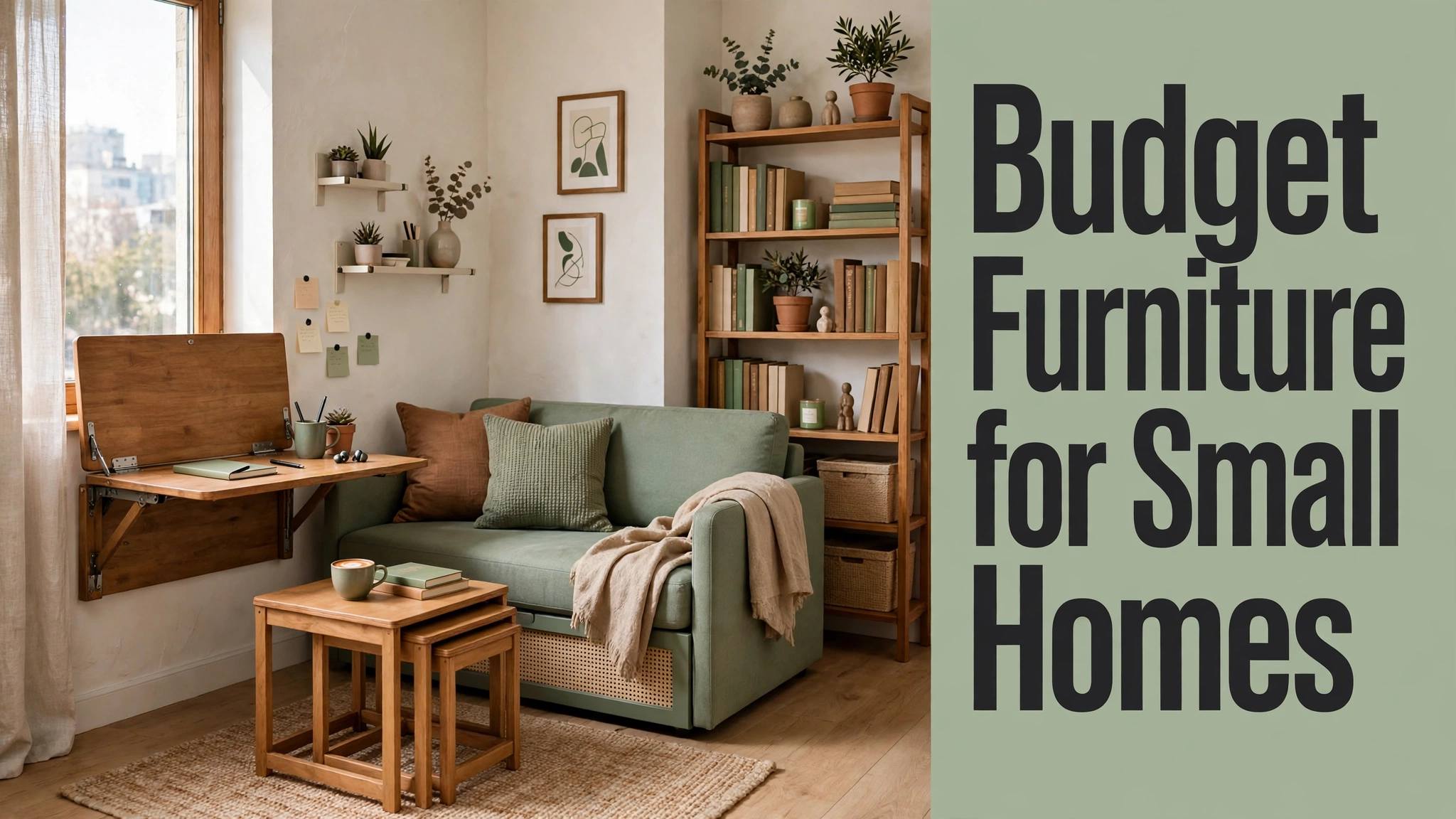
Multifunctional furniture is the heart of small-home furnishing. A sofa bed or daybed serves as seating by day and a guest bed at night, removing the need for a spare room. A storage ottoman serves as a footrest, a coffee table, and a box for blankets or toys. A bed with drawers or a lift-up base stores bedding, seasonal clothes, or suitcases that would otherwise need a separate wardrobe. A foldable or extendable dining table seats two daily and expands for guests, while wall-mounted drop-leaf tables fold away entirely when not in use.
Nesting tables, stackable stools, and benches with storage offer flexibility without permanent bulk. A bench at a dining table seats more people than chairs in the same length and stores items underneath. A rolling trolley moves between kitchen, living room, and bedroom as a side table, plant stand, or work surface. A wardrobe with a mirror door saves wall space for a separate mirror. When choosing multifunctional pieces, test the transformation: can one person fold, lift, or extend it easily, or does it require two people and tools? Furniture that is hard to transform rarely gets transformed, and then its second function is wasted. Choose mechanisms you will actually use daily or weekly.
Second-Hand, Upcycled, and DIY: Quality for Less
Second-hand furniture often offers better quality for less money than new budget furniture, because solid wood pieces from earlier decades were built to last. Check charity shops, online marketplaces, local selling groups, and community reuse centres, but inspect carefully. Check joints for wobble, drawers for smooth movement, upholstery for smell, stains, and pests, and wood for warping or woodworm signs. Sit on chairs, lie on beds where appropriate, and open every drawer before paying. Ask about the item’s history, measurements, and reason for selling, and arrange transport that protects both item and home.
Upcycling can transform a plain second-hand piece with paint, new handles, or a recovered cushion, but keep projects simple and safe. Sand and paint in ventilated areas, use suitable paint for the material, and avoid upcycling items with structural damage or safety recalls. DIY furniture, such as pallet shelves or crate storage, can work, but check weight, stability, and splinters, and avoid using treated wood indoors unless advised as safe. For electrical items such as lamps, check wiring and plugs, and seek professional help if damaged. Second-hand buying saves money and resources, but only when inspection is thorough and safety comes before bargain excitement.
Layout, Light, and Colour: Making Small Rooms Feel Larger
Layout affects how large a small home feels more than furniture price does. Place large pieces against walls, keep pathways clear, and avoid blocking windows with tall furniture where possible. Use rugs to define zones in open-plan rooms: a rug under a sofa and coffee table creates a living zone, while a different rug or no rug under a dining table creates a separate eating zone. Keep coffee tables light and movable, because a heavy table in a small room blocks movement and cleaning. Use vertical space with tall, narrow shelving rather than wide, low units that consume floor area.
Light colours, mirrors, and consistent flooring make rooms feel larger, but they should suit your taste and lifestyle. Light walls, light furniture, and a large mirror opposite a window reflect light and depth, while dark, heavy pieces can make a room feel enclosed. That does not mean every small home must be white; a single accent wall or colourful cushions can add warmth without shrinking the room visually. Keep window treatments light and high, hanging curtains near the ceiling to draw the eye upward. Declutter surfaces, because a room with clear surfaces and a few chosen objects feels larger than a room filled with small decorations, however cheap they were.
Room-by-Room Budget Ideas: Living, Bedroom, Kitchen, and Work
In the living room, prioritise comfortable seating, good lighting, and storage that hides clutter. A compact two-seater sofa often suits a small home better than a large corner sofa that dominates the room. Add a floor lamp or table lamps for warm evening light, because overhead light alone can feel harsh. Use a storage coffee table or ottoman, wall shelves for books and plants, and a TV stand with closed storage for cables and devices. Choose a rug that fits under front sofa legs, not a tiny rug that floats in the middle and makes the room look smaller.
In the bedroom, a storage bed, a small bedside table with a drawer, and a tall wardrobe use vertical space efficiently. If a wardrobe does not fit, use a clothing rail with shelves below and boxes above, kept tidy with matching boxes. In the kitchen, a foldable table, stackable stools, wall rails, and a rolling trolley add function without renovation. For a work corner, a wall-mounted desk, a foldable desk, or a desk that doubles as a dressing table saves space, with a comfortable chair that can tuck under the desk. Each room needs one hero piece that earns its footprint daily, plus small supporting pieces that can move or fold away.
Buying Smart: Quality Checks, Delivery, Assembly, and Care
Budget does not mean poor quality, but it does mean checking quality carefully. For sofas and chairs, check frame stability, cushion density, fabric durability, and removable covers for washing. For tables, check leg joints, surface finish, and resistance to heat and water marks. For beds, check slat spacing, frame strength, and noise when moving. For storage units, check drawer runners, door hinges, and back panels, because weak backs and hinges fail first. Read reviews for assembly difficulty and durability, not only for appearance, and check warranty terms for frames and mechanisms.
Delivery and assembly are hidden costs. Measure doorways and lifts again, check whether delivery includes room placement or only kerbside drop-off, and arrange help for heavy items. Keep assembly tools, follow instructions in order, and tighten joints after a week of use, because new furniture settles. Protect furniture with felt pads under legs, coasters under hot items, and regular cleaning according to material. A budget piece cared for well lasts far longer than an expensive piece neglected, and care costs almost nothing. Keep receipts, warranties, and spare parts in one place for future repairs, because a missing bolt should not end a piece’s life.
Budget Planning, Priorities, and Avoiding Furniture Regret
Furnish in priority order, not all at once. Start with sleep, seating, and a table for eating and working, because those affect daily life most. Add storage next, then lighting and decoration, then nice-to-have items. Buying everything at once often leads to mismatched pieces and debt, while buying slowly lets you learn how you actually live in the home. Set a total budget, allocate amounts per room, and keep a small reserve for delivery, assembly, or repairs. If a piece exceeds its allocation, ask whether it replaces two other pieces or merely looks appealing in a shop.
Avoid common regret triggers: buying a trendy colour that clashes with existing items, buying a large piece for a future larger home, or buying matching sets that leave no flexibility. Choose neutral large pieces and add colour through cushions, throws, and art that are cheap to change. Wait twenty-four hours before buying non-essential furniture, and check measurements once more. If you move frequently, favour lightweight, flat-pack, or second-hand pieces that travel well over heavy, expensive items that are costly to move. Thoughtful, slow furnishing builds a home that feels personal and practical, not a showroom that is hard to live in.
Furniture for Work, Study, and Guests in Small Homes
Work and study corners in small homes need furniture that disappears when work ends. A wall-mounted fold-down desk, a narrow console desk, or a laptop table that slides under a sofa can create a workspace without a dedicated room. Choose a chair that supports posture for long sitting, even if it is second-hand, because a cheap, uncomfortable chair costs health and productivity over time. Keep work supplies in one box or drawer so the corner can return to living space quickly after work. Good lighting, a small lamp, and cable management prevent a work corner from looking like clutter, even in a living room.
Guest furniture should be flexible rather than permanent. A sofa bed, daybed, or foldable mattress stored in a cupboard hosts guests without a spare bedroom. Keep guest bedding in a labelled box, with towels and a small lamp ready, so hosting does not require rearranging the whole home. A foldable table and stackable stools allow larger gatherings without permanent dining furniture. When guests leave, furniture returns to daily use, and the home regains its normal rhythm. Small homes host well when furniture adapts, not when furniture is bought for rare occasions and then blocks daily life for months.
Decorating on a Budget: Colour, Textiles, and Personal Touches
Decoration on a budget works best through textiles, art, and plants rather than new large furniture. Cushions, throws, curtains, and rugs change a room’s colour and warmth cheaply and can be swapped seasonally. Hang art, photographs, or children’s drawings at eye level, using frames that match in colour if not in size, to create a personal gallery without expensive pieces. Plants, including low-cost cuttings, add life and colour, but choose plants that suit your light and care routine. A few well-chosen decorations that mean something to you make a home feel personal, while many cheap decorations bought impulsively can make a small room feel cluttered.
Lighting is decoration too, and it affects mood more than most objects. Use warm lamps in the evening, a bright task light for work, and candles or fairy lights safely where appropriate, never unattended. Avoid harsh overhead light as the only source, because it flattens a room and highlights flaws. Keep decoration to surfaces that can be cleaned easily, and rotate items seasonally rather than adding more. A small home decorated slowly, with textiles, light, and personal items, feels warm and lived-in, not like a shop display. Budget decoration succeeds when it reflects the people who live there, not trends that change yearly.
Repair, Reuse, and Passing Furniture On
Budget furniture lasts longer when repair is treated as normal, not as failure. Tighten loose joints, replace worn glides, touch up paint, and re-cover cushions where practical, rather than discarding a piece at the first wobble. Keep spare screws, hinges, and fabric offcuts where possible, and learn one simple repair, such as tightening a chair joint or replacing a drawer runner, from a reliable guide. When a piece no longer fits your home, pass it on through charity, selling, or giving to friends, cleaned and honestly described, rather than sending usable furniture to waste. Passing furniture on extends its life, helps another household on a budget, and frees space for a piece that truly fits. A small home stays affordable and sustainable when furniture is repaired, reused, and shared, not replaced at the first sign of wear.
My Take:
I once furnished a small flat by buying everything quickly, because an empty home felt uncomfortable and I wanted it to look finished. Within months I regretted several pieces: a sofa too large for the room, a coffee table that blocked walking space, and a wardrobe that left no room for a desk. The lesson was clear: speed creates regret, while patience creates a home. Now I furnish slowly, live with tape outlines, and buy only pieces that solve a real daily problem. An empty corner for a month is better than a wrong piece for years, because emptiness invites thought while a wrong piece forces daily compromise.
Multifunctional furniture changed my small home more than any decoration. A storage bed removed two boxes from a hallway, a foldable table let me host friends without a permanent dining room, and a storage ottoman hid blankets that once lived on chairs. Each piece earned its place by doing two jobs well, not by looking impressive alone. I learned to test transformations honestly: if a sofa bed was hard to open, I would never open it for guests, so I chose a simpler daybed instead. Function you actually use matters more than function listed on a label, and that test saves money and frustration.
Second-hand buying taught me to value quality over newness. A solid wood table bought second-hand, with a few marks that told its history, outlasted a new budget table whose surface peeled within a year. Marks and wear, when honest and safe, do not bother me now; they show a piece has lived and can live again. I inspect carefully, clean thoroughly, and upcycle simply, usually with new handles or a fresh coat of paint. That process feels creative and sustainable, and it keeps good furniture out of waste. It also teaches patience, because the right second-hand piece may take weeks to appear, but waiting for quality beats buying poor quality instantly.
Layout taught me that feeling spacious is partly psychological. Clear pathways, light colours, a mirror opposite a window, and surfaces kept clear made my small home feel larger without any structural change. Guests often commented on how open the flat felt, even though its floor area had not changed. That feedback showed me that furnishing is not only about objects, but about movement, light, and visual calm. I now remove one item before adding another, a habit that keeps rooms breathing. A small home does not need to feel small, but it does need discipline about what earns floor space.
Finally, I think budget furnishing deserves respect, not embarrassment. A home furnished slowly, second-hand, and multifunctionally can be warm, personal, and comfortable, often more so than a home furnished expensively all at once. My home reflects choices made over time: a table that expands for friends, a bed that stores winter clothes, a chair that is comfortable enough for long evenings. Those choices tell a story of living, not shopping. If you are furnishing a small home on a budget, measure carefully, prioritise sleep and seating, choose pieces that do more than one job, and let the home grow with you. That slow, thoughtful approach builds a place that feels like yours, not like a catalogue.
I also learned that furniture shopping is easier with a waiting rule and a measurement card. I keep a small card in my phone with room measurements, doorway sizes, and a list of pieces I actually need, and I wait a day before buying anything non-essential. That card prevents impulse buys in shops where a sofa looks smaller than it will at home, and the waiting day reveals whether I truly need the piece or merely liked it in a display. Many items I wanted in a shop lost their appeal by the next morning, while items I still wanted after a day usually earned their place. That simple discipline saved more money than any sale.
Another lesson concerns moving and longevity. I move occasionally, so heavy, fragile, or highly specific furniture becomes a burden during moves, costing transport money and risking damage. Lightweight, modular, or second-hand pieces travel better and can adapt to a new layout, while a large, expensive piece built for one room may not fit the next home at all. I now favour furniture that can be taken apart, carried by two people, and used in different rooms. That flexibility feels less glamorous than a statement piece, but it protects both money and peace of mind across moves and life changes.
Finally, I think a small home furnished on a budget can teach contentment in a practical way. When every piece must earn its space, you learn what you truly use and value, and you let go of what merely looks good in a shop. My home now contains fewer pieces, but each one is used daily, cared for, and chosen for a reason. That clarity feels richer than abundance, and it makes the home easier to clean, move through, and enjoy. If you are furnishing on a budget, start with what you need, measure honestly, buy slowly, and let your home grow around your real life rather than an imagined ideal.
One more habit I now value is a yearly furniture review, where I walk through each room and ask whether every large piece still earns its space. I check for wobble, wear, damage, and daily use, and I note pieces that could be repaired, moved, or passed on. That review prevents slow accumulation, because furniture, like clutter, grows quietly when no one questions it. It also helps me plan future purchases calmly, rather than buying in a rush when something breaks. A home reviewed yearly stays intentional, comfortable, and affordable, because decisions are made with time and information rather than under pressure in a shop.
That steady, small-scale approach is what I would recommend to anyone starting out: pick one clear habit, repeat it until it feels ordinary, and only then add the next one. Grand overhauls rarely survive busy weeks, but ordinary habits do, and ordinary habits repeated for months create a home that feels genuinely easier to live in.
Frequently Asked Questions
What is the best budget furniture for a small home?
Multifunctional pieces work best: storage beds, sofa beds or daybeds, foldable or extendable tables, storage ottomans, nesting tables, and tall narrow shelving that uses vertical space.
Should I buy new or second-hand furniture on a budget?
Second-hand solid wood often offers better quality for less money, but inspect joints, drawers, upholstery, and stability carefully. New budget furniture suits items where hygiene, warranty, or safety matters most, such as mattresses.
How do I make a small room look larger with furniture?
Keep pathways clear, place large pieces against walls, use light colours and mirrors, hang curtains high, use rugs to define zones, and keep surfaces clear of excess decoration.
What furniture should I buy first for a small home?
Prioritise sleep, seating, and a table for eating and working first, then storage, lighting, and decoration. Buying slowly prevents mismatched pieces and debt.
How can I check second-hand furniture before buying?
Check joints for wobble, drawers for smooth movement, upholstery for smell and pests, wood for warping, sit on seating, open every drawer, and confirm measurements and transport before paying.
Is multifunctional furniture worth it in a small home?
Yes, when the transformation is easy enough to use regularly. Test folding, lifting, or extending before buying, because a second function you never use does not save space.