Best Foldable Phones in 2027
In this post
- Book-Style vs Flip: Two Very Different Phones
- Durability, Hinges and the Crease Question
- Cameras, Battery and Everyday Performance
- Software, Updates and Long-Term Value
- Who Should Buy a Foldable, and Who Should Wait
- Accessories, Cases and Protecting a Foldable
- Foldables for Reading, Work and Travel
- My Take:
Book-Style vs Flip: Two Very Different Phones
Foldable phones in 2027 fall into two main shapes, and choosing between them matters more than choosing a brand. Book-style foldables open like a book to reveal a large, tablet-sized inner screen, while also offering a smaller outer screen for quick tasks when closed. Flip foldables fold in half vertically, like a classic clamshell phone, opening to reveal a normal-sized screen and folding down to a compact square that fits easily in a pocket or small bag.
Book-style models suit people who want a phone and a small tablet in one device. Reading, multitasking with two apps side by side, editing documents, watching video on a larger screen, and drawing or annotating are all more comfortable on the inner display. The trade-off is size and weight when folded: these phones are thicker and heavier than regular phones, and they cost significantly more. A buyer who mainly makes calls, messages and takes photos may not need the large inner screen enough to justify that bulk and price.
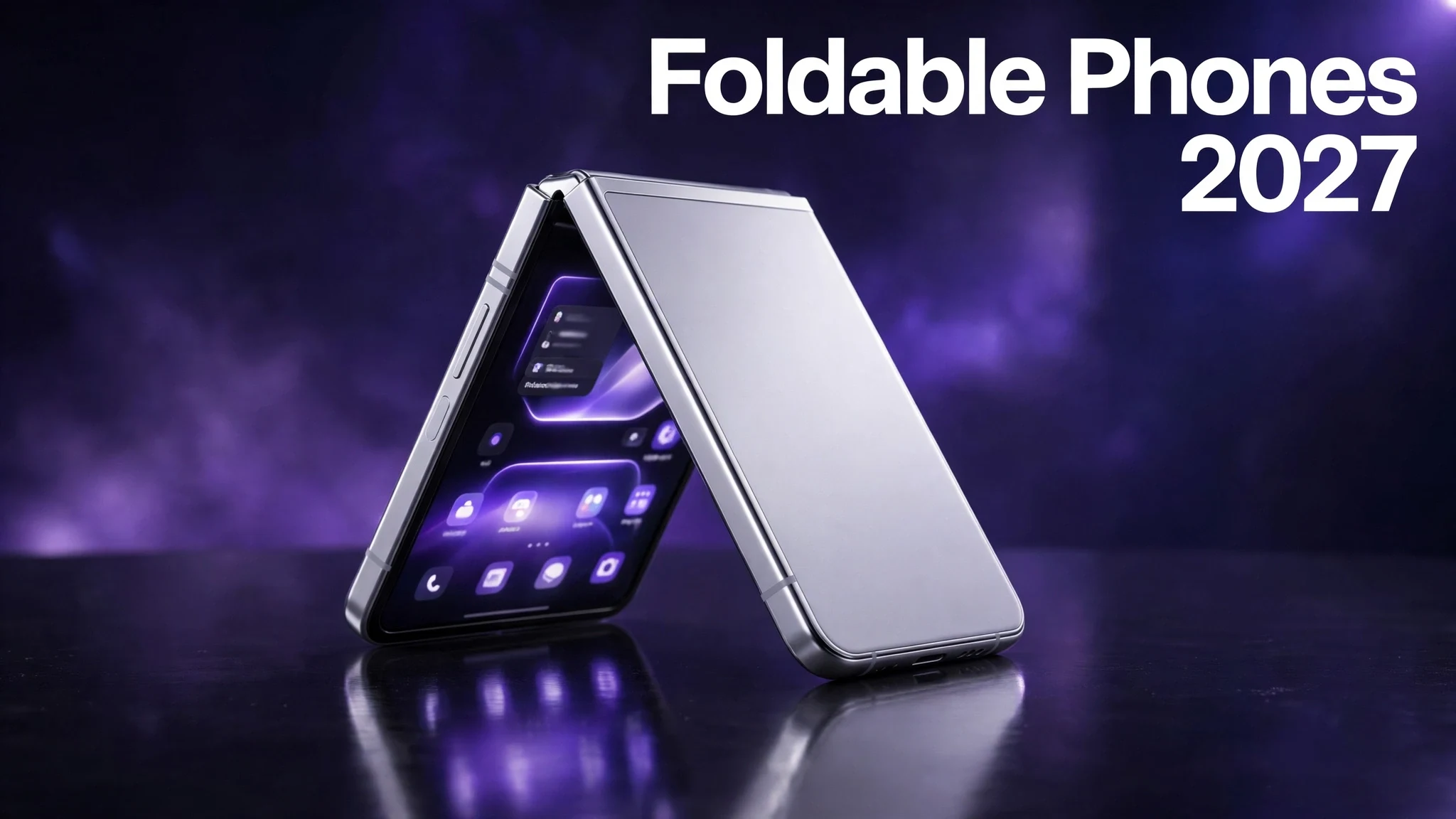
Flip models suit people who value compactness and style. When folded, they are small and easy to carry, and when open, they behave like a regular smartphone. Many include a useful outer screen for notifications, quick replies, music control and selfies without opening the phone. They are generally cheaper than book-style models, though still more expensive than comparable non-folding phones. The trade-off is that they do not offer a tablet-sized screen, so multitasking and large-screen reading gains are modest. The right choice depends on daily use, not on which shape looks more impressive in an advertisement.
Durability, Hinges and the Crease Question
Durability was the biggest early concern for foldables, and it remains the most important question for buyers in 2027. The hinge must survive tens of thousands of folds, the flexible screen must resist scratches and pressure, and the device must cope with dust, water and everyday drops. Manufacturers have improved hinge design, screen materials and water resistance over successive generations, and many models now carry official water resistance ratings. However, foldables remain more delicate than traditional slab phones, and repairs can be more expensive, especially for inner screen damage.
The crease — the slight line or dip where the screen folds — is another consideration. On modern models, the crease is less noticeable than on early foldables, especially when viewing content straight on, but it can still be felt when swiping across the centre of the inner screen, and it may be visible at certain angles or under bright light. Some buyers notice it for a few days and then forget it; others find it distracting, particularly for reading or drawing. Trying a foldable in a shop, opening and closing it, and swiping across the fold is the best way to judge personal tolerance, because descriptions and photographs cannot convey the feel.
Buyers should also check warranty and repair terms carefully before purchasing. How long is the warranty? Does it cover hinge or inner screen issues? What does a screen replacement cost outside warranty, and how long does repair take? Is there a nearby authorised service centre? These practical questions matter more for a foldable than for a regular phone, because the folding mechanism is a moving part with a finite lifespan. A generous warranty, clear repair pricing, and a protective case designed for the folding shape are worth factoring into the total cost.
Cameras, Battery and Everyday Performance
Foldable cameras have improved considerably, but they still involve trade-offs. Book-style foldables must fit cameras into a thin, folding body, and some models use under-display selfie cameras on the inner screen that are convenient but produce softer photos than a regular front camera. Rear cameras on premium foldables are now strong for everyday photography, including low light, but they may not match the very best camera phones at the same price, which can dedicate more space and budget to camera hardware. Buyers who prioritise photography above all else should compare camera samples, not only specifications.
Battery life depends heavily on how the large inner screen is used. A book-style foldable with a big inner display consumes more power when that screen is active for reading, video or multitasking, so heavy inner-screen use can drain the battery faster than a regular phone. Many models compensate with larger batteries and efficient processors, and most will last a full day with mixed use, but power users who keep the inner screen open for hours should expect to charge more often or carry a charger. Flip models, with normal-sized screens, generally have battery life closer to regular phones, though their smaller bodies limit battery size.
Performance for everyday tasks is rarely a problem on premium foldables, which use flagship processors and ample memory. Multitasking is where book-style models shine: running two apps side by side, dragging content between them, or using a floating window can genuinely improve productivity for some users. Software quality matters here as much as hardware. A foldable with well-optimised apps that adapt smoothly between outer and inner screens will feel far better than a powerful foldable with apps that stretch, crash or restart when unfolded. Checking whether favourite apps support large-screen layouts is a practical pre-purchase step.
Software, Updates and Long-Term Value
Software support has become a key buying factor, because foldables are expensive and buyers expect them to last. Manufacturers differ in how many years of operating system updates and security updates they promise, and in how quickly those updates arrive. A foldable bought in 2027 should ideally receive several years of updates, so it remains secure and compatible with new apps. Buyers should check the manufacturer’s stated update policy for the exact model, not just the brand in general, because policies can vary by model and region.
Large-screen software is a separate consideration. Book-style foldables benefit most when apps offer tablet-style layouts, with sidebars, multi-column views and drag-and-drop support. Some popular apps now do this well, while others simply stretch a phone layout, wasting the larger screen. Flip models benefit from outer-screen software: can the outer screen run useful widgets, reply to messages, control music, and take photos without opening the phone? A flip phone with a limited outer screen may feel less convenient than one with a flexible, customisable cover display.
Long-term value also depends on resale and repair. Foldables depreciate, like all phones, but models with strong durability reputations, long update support and popular brands tend to hold value better. Buyers who change phones frequently should consider resale, while buyers who keep phones for four or five years should prioritise update length and repair availability over launch-day features. In both cases, buying a foldable is a longer-term commitment than buying a regular phone, because the price is higher and the technology is still maturing.
Who Should Buy a Foldable, and Who Should Wait
Foldables suit certain users very well. A reader who wants a larger screen without carrying a tablet, a professional who multitasks on the go, a traveller who values a compact phone that opens to a big screen, or a style-conscious buyer who loves the flip form factor may all find a foldable genuinely useful. For these users, the foldable is not a novelty; it solves a real daily problem, such as reading documents comfortably, working with two apps at once, or carrying less while doing more.
Other users should wait or choose a regular phone. If budget is tight, a regular flagship phone offers better cameras, battery and durability for less money. If a phone is used mainly for calls, messaging, social media and photos, a foldable adds cost and bulk without a clear benefit. If a user is rough with phones, works in dusty or wet environments, or cannot afford an expensive screen repair, a traditional phone with strong water and drop resistance is a safer choice. Children and teenagers, who may be harder on devices, may also be better served by a durable regular phone until foldables become cheaper and tougher.
A practical decision test is to list the three things done most on a phone each day, and ask whether a larger inner screen or a smaller folded size would improve those three tasks enough to justify the price and durability trade-offs. If the answer is clearly yes for at least two tasks, a foldable is worth serious consideration. If the answer is vague — “it would be nice sometimes” — then a regular phone, or waiting another generation for prices to fall and durability to improve, is likely the wiser choice. Foldables are no longer experiments, but they are still premium products for specific needs.
Accessories, Cases and Protecting a Foldable
Protecting a foldable requires more thought than protecting a regular phone, because the hinge and flexible screen need specific care. Cases designed for foldables must allow the phone to open and close smoothly without putting pressure on the hinge, and they should protect both halves without adding excessive bulk. A poorly fitting case can actually cause damage by pressing on the fold or trapping grit near the hinge, so buyers should choose cases made specifically for their exact model, preferably from the manufacturer or a reputable accessory maker, and should check reviews from long-term users.
Screen protectors are another consideration. Many foldables come with a factory-fitted protector on the inner screen that should not be removed, because removing it can damage the flexible display. Owners should check manufacturer guidance before applying or replacing any protector, and should use only approved protectors for the inner screen. Outer screens can usually use standard protectors, but inner screens are different, and a mistake here can be expensive. Keeping the phone away from sand, sharp objects and pressure — for example, not sitting on it in a back pocket, and not placing heavy items on top of it in a bag — also extends its life.
Cleaning a foldable should be gentle: a soft, dry cloth for screens, no harsh chemicals, and no attempt to clean inside the hinge with sharp tools. If dust or grit enters the hinge, owners should follow manufacturer guidance rather than forcing the hinge open or closed. Regular, gentle care will not make a foldable indestructible, but it will reduce the most common causes of damage, which are often everyday accidents rather than manufacturing faults. For an expensive device, that care is part of the total cost of ownership, in time if not in money.
Foldables for Reading, Work and Travel
Reading is one of the clearest strengths of book-style foldables. A larger inner screen makes e-books, articles, PDFs and comics more comfortable to read, with less scrolling and larger text, and it allows two pages or a document and notes to be viewed side by side. For students, researchers and professionals who read documents on the go, that larger screen can reduce the need to carry a tablet, which is a genuine convenience. For casual readers who mainly read short social posts, the benefit is smaller, and a regular phone screen is usually sufficient.
Work use follows a similar pattern. Editing a document while referring to an email, joining a video call while viewing notes, or reviewing a spreadsheet on a larger screen are all easier on a book-style foldable than on a regular phone, though still less comfortable than on a laptop. Foldables therefore suit mobile professionals who need to do light work between meetings, on trains, or while travelling, but they do not replace a laptop for sustained work. Buyers should test their actual work apps on a foldable before committing, because some apps adapt well to large screens while others do not, and that difference determines whether the larger screen is truly productive or merely larger.
Travel is another area where foldables shine, particularly flip models. A flip phone folds to a compact size that fits easily in a small bag or jacket pocket, yet opens to a full phone for maps, photos, translation and messaging. Book-style models, by contrast, offer a larger screen for entertainment on long journeys — films, reading and games — without carrying a separate tablet. In both cases, battery life, durability and the availability of repair services while travelling deserve consideration, because a damaged foldable abroad can be harder to repair than a regular phone. Travel insurance that covers the device, where available, is worth checking for an expensive foldable.
My Take:
My view is that foldables in 2027 have moved from curiosity to credible choice, but they have not become the obvious choice for everyone, and that distinction matters. A book-style foldable that replaces both a phone and a small tablet can be genuinely liberating for the right user, and a flip phone that folds to half size can be delightful in daily use. But for a buyer who simply wants a reliable, durable, great-camera phone at a sensible price, a regular phone still wins on value. The industry’s enthusiasm for folding screens should not override a buyer’s actual daily needs.
I am also cautious about durability claims. Improvements are real, hinges are stronger, and water resistance is better than it was, but a folding screen remains a more vulnerable component than a fixed glass screen, and repair costs remain high. Buyers should go in with eyes open: use a case, avoid pressing hard on the fold, keep the phone away from sand and grit, and understand the warranty. A foldable treated like a regular slab phone may not last as long as expected, and that is a user-education issue as much as a manufacturing one.
Another point I want to stress is software. Hardware headlines focus on thinness and hinge design, but daily satisfaction depends on whether apps adapt well, whether multitasking feels smooth, and whether updates continue for years. A foldable with mediocre software will feel frustrating despite excellent hardware, while a foldable with thoughtful software will feel like a genuinely new kind of device. Buyers should therefore test software in a shop, check their favourite apps, and read long-term reviews, not only launch reviews that focus on first impressions.
Finally, I believe prices will continue to fall and durability will continue to improve, which means waiting is a reasonable strategy for many buyers. Early adopters pay a premium and accept more risk; later buyers get a more mature product at a lower price. There is no shame in waiting, and there is no need to buy a foldable to prove one is up to date. The right time to buy is when a foldable clearly improves your daily tasks, fits your budget including repair risk, and comes from a manufacturer with a strong update and service record. Until then, a good regular phone remains an excellent choice.
I would also advise buyers to think about total cost, not only launch price. A foldable’s total cost includes a case, possibly a screen protector, potential repair costs, and replacement parts over its life, as well as the cost of keeping it insured if that option is chosen. A model that seems affordable at launch but has very expensive screen repairs may cost more over three years than a pricier model with affordable repairs and a longer warranty. Checking repair prices before purchase, rather than after damage, is a simple habit that prevents unpleasant surprises.
Another point concerns second-hand foldables. Buying a used foldable can save money, but it carries extra risk, because hinge wear, screen condition and remaining warranty are harder to assess than with a regular phone. A buyer considering a used foldable should inspect the hinge action, check the crease under bright light, test both screens, ask about repair history, and verify remaining update support and warranty transfer. If those checks cannot be done, buying new, or buying refurbished from a reputable seller with a warranty, is safer. The savings on a used foldable are only real if the device lasts.
Finally, I believe foldables are a reminder that innovation in phones is not only about faster processors or better cameras, but about form itself: how a device fits in a pocket, opens in a hand, and adapts to different tasks. That form innovation is exciting, even when the first generations involve trade-offs. Buyers who understand those trade-offs, choose by daily use rather than by novelty, and protect their device well, will enjoy foldables most. Buyers who wait for prices to fall and durability to improve further are also making a wise choice. In technology, as in many purchases, the best decision is rarely the newest one; it is the one that fits your life, your budget, and your tolerance for risk.
Another practical point is to check network and carrier compatibility before buying, especially for imported models. A foldable bought from another region may lack certain frequency bands, warranty coverage, or software features in the buyer’s country, and repair services may be limited. Checking the exact model number, supported bands, and local warranty terms prevents a costly mistake. Buying from an authorised local seller, even at a slightly higher price, often provides better support, faster repairs, and clearer return options than importing a cheaper variant.
I also think buyers should consider how a foldable fits with other devices they own. A book-style foldable may reduce the need for a tablet, which saves money and bag space, while a flip phone pairs well with a tablet or laptop for larger-screen work. Ecosystem features — such as seamless sharing between phone, tablet and computer from the same manufacturer — can add convenience, but they should not lock a buyer into an ecosystem that does not suit their other needs. Choosing a foldable for its own strengths, rather than for ecosystem pressure, usually leads to better long-term satisfaction.
A further consideration is environmental impact. Foldables contain complex components, flexible screens and hinge mechanisms that can be harder to recycle than regular phones, and their higher price may encourage longer use, which is positive, or earlier replacement if durability disappoints, which is not. Buyers who keep a foldable for four or five years, repair it when possible, and recycle it responsibly at end of life reduce its impact significantly. Manufacturers should also be judged on repairability, spare parts availability, and recycling programmes, because a premium device should be designed for longevity, not only for launch-day thinness.
Finally, I believe foldables will become more mainstream as prices fall, durability improves, and software matures, but that mainstream future does not require everyone to buy one today. The right buyer today is someone whose daily tasks clearly benefit from a larger inner screen or a compact folded size, who understands the durability trade-offs, and who can afford the total cost including protection and potential repairs. For everyone else, a regular phone remains excellent, and waiting is wise. Technology choices should follow life, not fashion, and a foldable bought for the right reasons will feel like a tool, not a trophy.
Frequently Asked Questions
Are foldable phones durable in 2027? Durability has improved, with stronger hinges and water resistance on many models, but foldables remain more delicate than regular phones and inner screen repairs can be expensive.
What is the difference between book-style and flip foldables? Book-style foldables open to a tablet-sized inner screen for multitasking and reading, while flip foldables fold in half to a compact size and open to a normal smartphone screen.
Is the crease on a foldable screen noticeable? It is less noticeable on modern models, especially when viewing straight on, but it can still be felt when swiping across the fold and may be visible at certain angles.
Do foldable phones have good cameras? Premium foldables take strong everyday photos, but they may not match the very best camera phones at the same price, and inner selfie cameras can be softer than regular front cameras.
How long will a foldable phone receive updates? It varies by manufacturer and model, so buyers should check the stated years of operating system and security updates for the exact model before buying.
Should I buy a foldable phone or a regular phone? Choose a foldable if a larger inner screen or compact folded size clearly improves your most frequent daily tasks and fits your budget including repair risk; otherwise a regular phone usually offers better value.