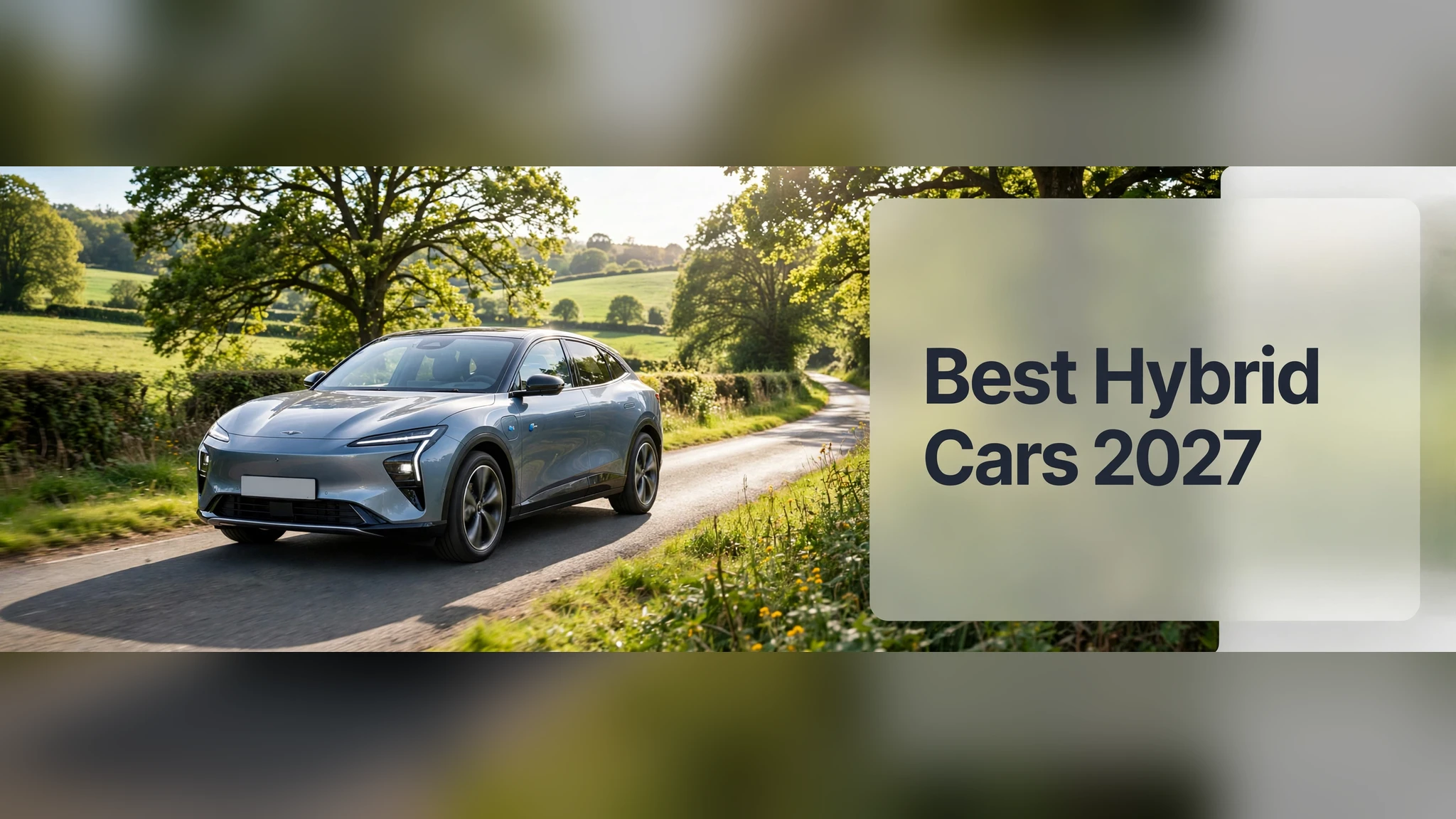
Best Hybrid Cars in 2027
In this post
- What a Hybrid Car Actually Is
- The Main Types: Mild, Full and Plug-In Hybrids
- Fuel Savings: Where Hybrids Help Most and Least
- Choosing the Right Size: City Cars, Family Cars and SUVs
- Reliability, Batteries and Servicing
- Plug-In Hybrids: When They Make Sense and When They Do Not
- Cost Comparison: Hybrid, Petrol and Electric
- Hybrid Driving Techniques and Real-World Efficiency
- Hybrid Safety, Towing and Everyday Practicality
- My Take:
Hybrid cars are often described as a halfway step between petrol cars and fully electric cars, but that description undersells them. In 2027, a good hybrid is a complete, practical choice in its own right, especially for drivers who want lower fuel use and smoother city driving without changing how they refuel or planning every journey around chargers. The best hybrid for you depends on which kind of hybrid it is, how you drive, and how much electric-only driving you actually want.
This guide explains the main hybrid types in plain language, compares their strengths and limits, and helps you choose without getting lost in technical claims.
What a Hybrid Car Actually Is
A hybrid car uses two power sources: a petrol engine and an electric motor, supported by a battery. The electric motor can assist the engine, drive the car alone at low speeds, recover energy when braking, and restart the engine smoothly after stopping. The result is usually lower fuel use in traffic, quieter low-speed driving and less strain on the engine during stop-start journeys.
The key difference from a fully electric car is that a hybrid still uses petrol as its main energy source, except for plug-in hybrids, which can also be charged from the mains. A conventional hybrid charges its small battery from the engine and regenerative braking, so you never plug it in. That simplicity is a major reason many buyers choose hybrids: you refuel at a normal petrol station, yet you use less fuel in daily driving.
Regenerative braking deserves a clear explanation. When you slow down, the electric motor acts as a generator, turning some of the car’s movement energy back into electricity for the battery. In city traffic, where you brake often, this recovery makes a real difference. On steady motorway journeys, where you brake rarely, the benefit is smaller, which is why hybrids shine most in urban and mixed driving.
The Main Types: Mild, Full and Plug-In Hybrids
Mild hybrids use a small electric motor to assist the engine, mainly during starting, accelerating and stop-start traffic. They cannot drive on electricity alone for any meaningful distance, and their fuel savings are modest, although still useful. Mild hybrid systems are often fitted to ordinary petrol cars, so the buyer gets a small efficiency gain without a large price increase or a change in driving experience.
Full hybrids, sometimes called self-charging hybrids, have a larger battery and motor, and can drive short distances on electricity alone, especially at low speeds. They switch between engine, electric motor and both, automatically, to save fuel. In city traffic, a full hybrid can spend a surprising amount of time in quiet electric mode, which also reduces local exhaust emissions during those moments. Full hybrids are a strong choice for drivers who want real fuel savings without plugging in.
Plug-in hybrids have a much larger battery that can be charged from a home charger or public charger, and they can often drive a useful distance, commonly enough for a daily commute, on electricity alone. Once the battery is depleted, the petrol engine takes over, so long journeys remain possible without charging stops. Plug-in hybrids suit drivers who can charge regularly at home or work and want electric daily driving plus petrol flexibility for longer trips. If you rarely charge a plug-in hybrid, however, you carry a heavy battery without using its benefit, and fuel savings fall sharply.
Fuel Savings: Where Hybrids Help Most and Least
Hybrids save the most fuel in city and stop-start driving, where the electric motor handles low-speed movement, the engine switches off at stops, and braking energy is recovered. A driver who spends hours in traffic, does school runs, or makes many short urban trips can see a meaningful reduction in fuel use compared with a similar petrol car. The exact saving depends on the model, driving style and traffic, so treat manufacturer figures as a guide and look for independent real-world tests.
On motorways, the advantage narrows. At steady high speeds, the petrol engine does most of the work, and the hybrid system has fewer chances to recover energy. A hybrid may still be slightly more efficient than a comparable petrol car, thanks to a more efficient engine and aerodynamic design, but the gap is smaller. Drivers who mainly travel long motorway distances should compare hybrids with efficient diesel or petrol cars, and with fully electric cars if charging is practical, rather than assuming a hybrid always wins.
Driving style also matters. Gentle acceleration, anticipating traffic, keeping tyres at the correct pressure and avoiding unnecessary weight all improve hybrid efficiency. Aggressive acceleration and high speeds reduce savings in any car, hybrid or not. A hybrid rewards smooth driving, and many models show an energy display that helps drivers learn how to use electric mode more often.
Choosing the Right Size: City Cars, Family Cars and SUVs
Small hybrid hatchbacks are excellent for city drivers. They are affordable, easy to park, light and efficient, and their electric mode covers much of urban driving. Their limits are space, motorway comfort and load capacity, so they suit singles, couples and small families better than large families with heavy luggage needs.
Compact and mid-size hybrid crossovers are the most popular choice in many markets, because they combine raised seating, flexible boot space and reasonable fuel use. They suit families, commuters and drivers who want one car for many jobs. Check rear seat space, boot size with the rear seats up, and whether the hybrid battery reduces boot space compared with the petrol version, because packaging differs by model.
Large hybrid SUVs and people carriers offer the most space and comfort, but they cost more and use more fuel than smaller hybrids, even though they are more efficient than equivalent petrol SUVs. They make sense for large families, frequent long trips with luggage, or drivers who need towing ability, but buyers should weigh whether the extra size is used often enough to justify the cost and fuel use.
Reliability, Batteries and Servicing
Hybrid reliability is generally good, because the technology has been used for many years and many manufacturers have refined their systems. The petrol engine often works less hard in city driving, and regenerative braking reduces wear on conventional brakes, which can lower some maintenance costs. However, hybrids have two power systems, so servicing should be done by technicians trained for hybrid vehicles, especially for battery and high-voltage work.
Hybrid batteries are designed to last the life of the car in normal use, and many manufacturers offer long hybrid battery warranties, although terms and lengths differ by country and model. Small hybrid batteries are usually cheaper to replace than large electric car batteries, but replacement is still a significant cost if it is ever needed outside warranty. When buying a used hybrid, ask for service history, check for warning lights, test electric mode at low speed, and confirm warranty transfer rules.
Servicing costs for hybrids are often similar to petrol cars, with some savings on brakes offset by specialist checks. Insurance costs depend on model, repair network and local market, so get quotes before buying. As with any car, a full service history and a pre-purchase inspection are wise for used models.
Plug-In Hybrids: When They Make Sense and When They Do Not
A plug-in hybrid makes most sense when your daily driving fits within its electric range and you can charge easily at home or work. In that pattern, most daily trips use electricity, fuel costs fall sharply, and the petrol engine remains for weekends and holidays. Some drivers in this pattern use very little petrol for months, which is a strong argument for the plug-in choice.
The same car makes less sense if you cannot charge regularly, drive mostly long distances, or need maximum boot space, because the larger battery adds weight, cost and sometimes reduces luggage room. Company car drivers should also check local tax rules, because plug-in hybrids often receive tax advantages that depend on official electric range and emissions figures, and those rules change by country and year. Private buyers should focus on real use, not tax headlines alone.
Charging a plug-in hybrid is simpler than charging a fully electric car, because the battery is smaller and a home charger or even a standard outlet, where allowed and safe, can charge it overnight. Always follow manufacturer and local electrical guidance, use proper charging equipment, and do not rely on unsafe extension leads. A dedicated home charger is the safest and most convenient option where installation is possible.
Cost Comparison: Hybrid, Petrol and Electric
Purchase prices for hybrids usually sit between equivalent petrol cars and fully electric cars. Full hybrids often cost a little more than petrol versions of the same model, but the extra cost can be recovered through fuel savings, especially for high-mileage city drivers. Plug-in hybrids cost more again, because of their larger batteries, so their value depends heavily on how often you charge and drive electrically.
Total cost of ownership should include purchase price, fuel or electricity, insurance, servicing, tyres, loan interest and expected resale value. For a driver who does mainly city miles, a full hybrid often offers the best balance of low running costs and low hassle. For a driver with home charging and a short commute, a fully electric car or plug-in hybrid may save more. For a low-mileage driver, a simple petrol car may still be cheapest overall, because fuel savings cannot repay a large price premium if the car is rarely driven.
Resale values for hybrids have generally been strong, because many buyers want efficiency without charging worries. That can change as electric cars become cheaper and charging improves, so treat resale as a helpful factor, not a guarantee. Keeping the car well serviced, with a full history, helps resale for any type.
Hybrid Driving Techniques and Real-World Efficiency
Getting the best from a hybrid is partly about driving technique, and small habits make a measurable difference over a year. Smooth, gradual acceleration lets the electric motor do more work at low speeds, while harsh acceleration forces the petrol engine to work harder and sooner. Anticipating traffic, lifting off the accelerator early when approaching a red light or a queue, and braking gently allows regenerative braking to recover more energy, rather than wasting it as heat in the brakes. Many hybrids display energy flow on the dashboard, showing when the car is using electric power, petrol power, both, or charging, and watching that display for a few weeks teaches most drivers how to stay in electric mode longer in town.
Tyre pressure, weight and roof loads also affect hybrid efficiency more than many owners expect. Under-inflated tyres increase rolling resistance and fuel use in any car, but in a hybrid the effect is especially noticeable in city driving, where the electric motor is already working hard. Removing unnecessary weight from the boot, removing a roof box when it is not needed, and keeping the car serviced on schedule all protect fuel savings. Air conditioning and heating also use energy, so using heated seats for a short journey, pre-cooling or pre-heating while connected where possible for plug-in models, and avoiding maximum climate settings can help, although comfort should never be sacrificed to an extreme degree for a small saving.
Cold weather affects hybrids too, although differently from fully electric cars. A hybrid engine may run more often in winter to provide cabin heat and to keep the battery at a suitable temperature, which reduces electric-only driving and raises fuel use. Short winter trips are the least efficient for any petrol-based car, because the engine spends a larger share of the journey warming up. Combining short errands into one trip, parking in a garage where possible, and allowing the car to warm sensibly rather than idling for a long time all help. These habits do not require technical knowledge, only a little planning, and they reward hybrid owners with steadier fuel savings across seasons.
It is also worth understanding hybrid warranties and servicing in detail before purchase. Hybrid system warranties, battery warranties and general vehicle warranties may have different lengths, mileage limits and conditions, and they may require servicing at authorised dealers or with specified parts to remain valid. Read the warranty booklet for the exact model and country, ask what is covered if a warning light appears, and keep all service receipts. For used hybrids, a dealer diagnostic check can reveal stored fault codes and battery condition that a visual inspection cannot, and that check is worth its cost for any hybrid above a modest price.
Hybrid Safety, Towing and Everyday Practicality
Safety systems in hybrids work like those in other modern cars, but buyers should check a few hybrid-specific points. Regenerative braking changes brake pedal feel, especially at low speeds when the car switches between regenerative and friction braking, and that feel varies by model. Test it in traffic and on a hill during a test drive, because a pedal that feels inconsistent can be distracting, even if stopping distances are good. Also check visibility, parking assistance and rear camera quality, because many hybrid crossovers have thick rear pillars and high boot lines that limit rear vision, making cameras and sensors genuinely useful rather than optional extras.
Towing with a hybrid depends on the model and powertrain. Some full hybrids tow light trailers well, using electric torque for smooth starts, while others have low towing limits or are not rated for towing at all, especially smaller models. Plug-in hybrids, with their heavier batteries, may have different limits from petrol versions of the same car, so always check the exact model’s braked towing limit, nose weight limit and any conditions about battery charge or driving mode while towing. If towing is a regular need, a diesel, a larger hybrid SUV, or a fully electric car with a proper towing rating may suit better than a small hybrid chosen only for city fuel savings.
Everyday practicality also includes boot space, because hybrid batteries sometimes reduce boot floor height or remove a spare wheel well compared with petrol versions. Check whether the hybrid version you are buying has the same boot, the same spare wheel provision, and the same rear seat folding as the petrol version, because those differences affect family use, holidays and emergencies. A hybrid that saves fuel but cannot carry your pram, luggage or spare wheel may be a poor trade, however efficient it is on paper.
My Take:
My honest opinion is that hybrids are the most underrated cars of 2027. They do not attract the same attention as electric cars, yet for millions of drivers they are the easiest way to cut fuel use without changing daily habits. You do not need to learn charging apps, plan routes around chargers, or worry about a long trip. You simply drive, refuel as before, and use less petrol, especially in traffic.
I think the most important choice is between full and plug-in hybrids, and it should be made on charging access, not on marketing. If you can charge at home and your commute fits the electric range, a plug-in hybrid is a genuinely smart bridge to electric driving. If you cannot charge regularly, a full hybrid is the better, simpler choice, and buying a plug-in hybrid you never plug in is a waste of money and weight.
I also believe buyers should be sceptical of fuel figures that sound too good. A hybrid’s real fuel use depends on your roads, your traffic and your driving style. Read independent tests, talk to owners with similar driving patterns, and test drive in traffic, not only on an open road. A car that feels smooth and quiet in stop-start driving, with a clear energy display, will probably save you more in real life than a car with a slightly better laboratory figure but a clumsy system.
Finally, I would say this: do not buy a hybrid only because it sounds modern or responsible. Buy it because it fits your life. A small full hybrid for city driving, a family crossover hybrid for mixed use, or a plug-in hybrid for a chargeable commute each make sense in different lives. The right hybrid is the one you barely notice, because it simply works, saves fuel quietly, and leaves you free to focus on the journey, not the technology.
I also want to talk about the environmental case for hybrids honestly, because it is often oversimplified in both directions. Supporters sometimes present hybrids as fully green, while critics sometimes dismiss them as just petrol cars with a badge. The truth sits between those extremes. A full hybrid used mainly in a city can cut fuel use and local exhaust emissions noticeably compared with a similar petrol car, which matters for air quality in traffic. A plug-in hybrid charged regularly can cut petrol use far more, approaching electric driving for daily trips. But a large, heavy plug-in hybrid rarely charged, driven mainly on motorways, may save little, and its larger battery carries its own manufacturing impact. The environmental benefit therefore depends on size, use and charging, not on the word hybrid alone.
Another thought is about who hybrids serve best in society. For drivers without home charging, for rural drivers far from fast chargers, for people who tow or drive long distances unpredictably, and for buyers who cannot afford a new electric car, hybrids offer a practical path to lower fuel use now, rather than waiting for perfect charging infrastructure. That practical path matters, because emissions fall when ordinary drivers can actually adopt a cleaner car, not only when wealthy early adopters buy the newest technology. Policy that supports affordable hybrids alongside electric cars, rather than treating hybrids as an enemy of progress, may cut emissions faster in the real world.
I also think car buyers should pay more attention to weight and size in the hybrid debate. A small hybrid hatchback is a very different environmental and financial proposition from a huge hybrid SUV, even though both carry the hybrid label. Choosing the smallest car that genuinely meets your needs, whether hybrid, electric or petrol, is often the most effective decision of all, because a lighter car uses less energy, wears tyres more slowly, costs less to buy and insure, and is easier to park. Hybrid technology helps, but it does not cancel out the cost of unnecessary size.
Finally, I would encourage a calm, long-term view. Hybrid technology will keep improving, batteries will get cheaper, and electric charging will keep expanding, so the best choice in 2027 may not be the best choice in 2032. That does not mean you should wait forever. A car is needed now, for work, family and life, and a well-chosen hybrid bought in 2027 can serve reliably for a decade, saving fuel every week. Choose for the life you have now, keep the car maintained, drive it smoothly, and revisit the electric question when you next change cars, with better infrastructure and better models waiting. That patient, practical approach beats both hype and fear.
Another practical point is how hybrids behave in different climates and terrains, because a hybrid that excels in a flat, mild city may perform differently in mountains, deserts or very cold regions. In hilly areas, regenerative braking on long descents can recharge the battery usefully, but steep climbs demand sustained engine power, which reduces the electric advantage. In very hot climates, air conditioning loads increase fuel use, and battery cooling systems work harder, although modern hybrids manage this well if serviced properly. In very cold climates, short trips suffer most, as discussed, but longer trips allow the engine and battery to reach efficient operating temperatures. Before buying, seek owner reports from a climate similar to yours, rather than relying only on national averages, because climate shapes real fuel use more than many buyers realise.
I also think about the second-hand hybrid market, which is growing rapidly as early hybrids age. A used hybrid can be excellent value, especially a well-known model with a reputation for battery durability and a large parts network, but it requires the checks already described: service history, diagnostic battery data, warning lights and warranty transfer. Be particularly careful with very cheap hybrids whose batteries may be near the end of their useful life, because a bargain purchase price can be erased by a battery replacement. Conversely, a slightly dearer used hybrid with a recent battery health report, a full dealer history and a remaining warranty is often the safer, cheaper choice over two years, even though its sticker price is higher. Price alone is a poor guide in the used hybrid market.
Finally, I would say that hybrid ownership rewards a mindset of steady care. Keep tyres inflated, service on time, drive smoothly, charge a plug-in regularly if you own one, and pay attention to warning lights early rather than ignoring them. Those habits cost little, yet they protect fuel savings, battery health and resale value simultaneously. A hybrid is not a car that saves fuel by magic. It is a car that saves fuel when its two power sources are allowed to work as designed, in a car that is maintained and driven thoughtfully. Treat it that way, and it will repay you quietly, tank after tank, year after year.
Frequently Asked Questions
What is the difference between a full hybrid and a plug-in hybrid?
A full hybrid charges its battery from the engine and braking and is never plugged in, while a plug-in hybrid has a larger battery that can be charged from the mains and can drive farther on electricity alone before the petrol engine takes over.
Do hybrid cars need to be plugged in?
Full and mild hybrids do not need plugging in. Only plug-in hybrids benefit from regular charging, although they can still run on petrol if you do not charge them, with lower fuel savings.
Are hybrid cars good for motorway driving?
Hybrids work well on motorways, but their fuel advantage is smaller there than in city traffic, because the petrol engine does most of the work at steady high speeds and braking energy recovery is less frequent.
How long do hybrid batteries last?
Hybrid batteries are designed to last many years in normal use, and manufacturers often offer long warranties. Lifespan depends on model, use and climate, so check the warranty terms for the exact car you are considering.
Is a hybrid cheaper to run than a petrol car?
Usually yes for city and mixed driving, because fuel use falls, especially in traffic. The saving depends on mileage, fuel prices, purchase price difference and servicing costs, so compare total ownership costs for your driving pattern.
Should I choose a hybrid or a fully electric car?
Choose a hybrid if you want lower fuel use without charging planning, especially without home charging. Choose a fully electric car if you can charge easily and want the lowest running costs and local emissions for your daily driving.