Best Indoor Herbs to Grow in Your Kitchen in 2027
In this post
There is a small, daily pleasure in snipping fresh basil from a pot on your windowsill, and adding it to a meal you are about to eat. It takes seconds, it costs almost nothing, and it makes the food taste better, in a way that dried herbs from a jar cannot match. A kitchen herb garden is one of the simplest, and most rewarding, things you can grow indoors, because it is useful every day, it is beautiful to look at, and it connects you to your cooking, in a way that buying herbs never will.
This guide explains the best indoor herbs to grow in your kitchen in 2027, from basil and mint to rosemary and thyme, and how to keep them alive, and productive, all year. It covers light, water, pots, and harvesting, and it explains how to dry, freeze, and preserve your herbs, so that nothing is wasted, and you have flavour all year, from a few pots on a windowsill.
Why a Kitchen Herb Garden Works
A kitchen herb garden works because it is close to where you cook, and because it is small enough to manage, even if you have never grown anything before. A pot of basil on a windowsill is not a garden. It is a habit, and it is a habit that pays for itself, because fresh herbs are expensive in shops, and they often go to waste, while a plant gives you a few leaves, whenever you need them, for months, or years. That convenience is the main reason herb gardens are so popular, and it is a good reason: the best garden is the one you actually use, every day.
It also works because herbs are forgiving. Most kitchen herbs will tolerate a missed watering, a cloudy week, or a small pot, and they will recover, if you give them light, and a little care. They are not demanding, and they do not need a great deal of space, or equipment. A sunny windowsill, a few pots, and a little attention are enough, and the reward, fresh flavour, in every meal, is out of proportion to the effort. That is why a kitchen herb garden is often the first garden a person grows, and why it is often the one they keep, long after they have tried other things.
Basil: The Friendly Favourite
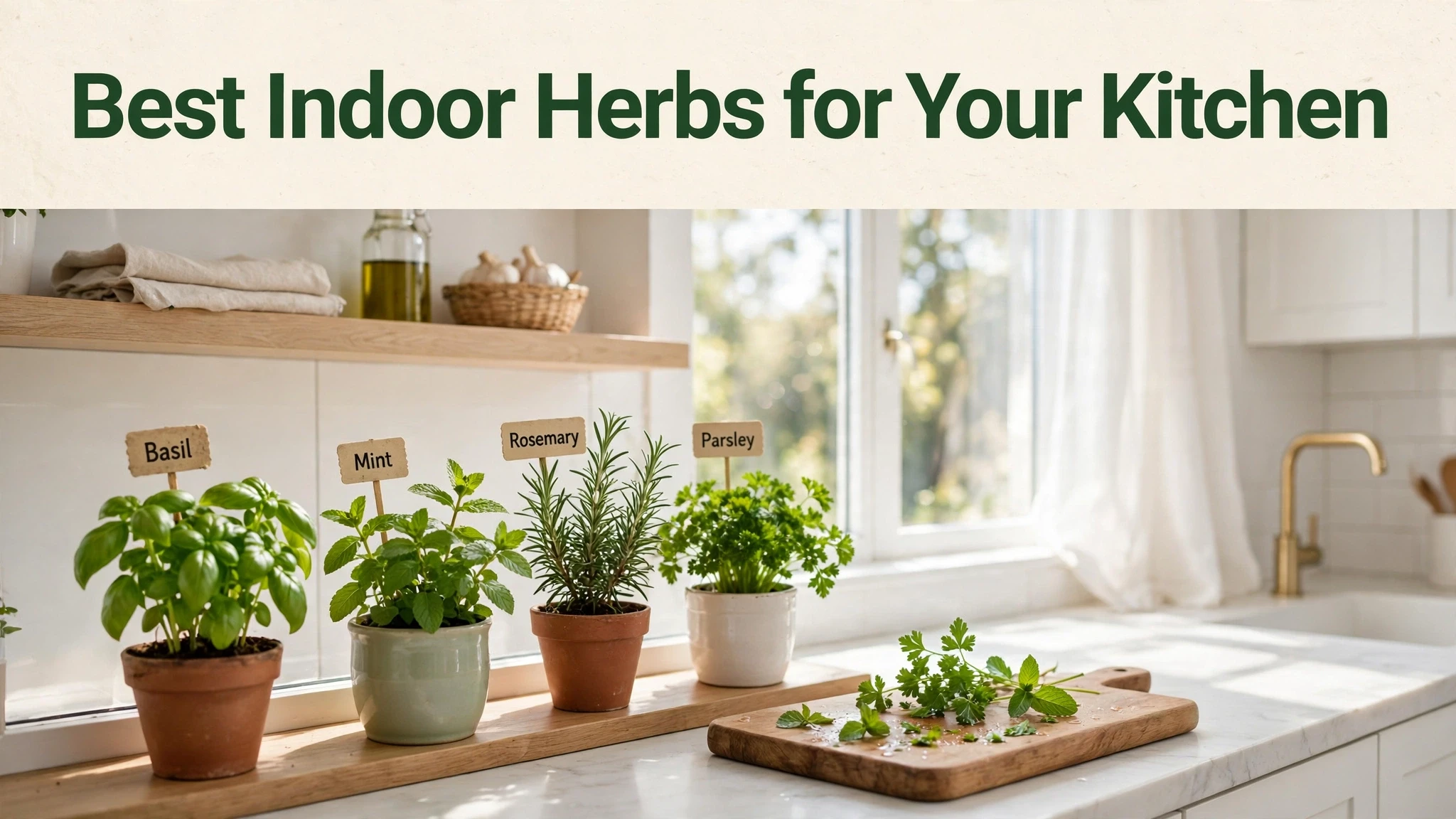
Basil is the herb most people start with, and for good reason: it grows fast, it smells wonderful, and it is used in a great many dishes, from pasta, to salads, to soups. It needs warmth, and light, and it is happiest on a sunny windowsill, where it gets at least six hours of sun a day. Water it when the top of the soil feels dry, and do not let it sit in water, because basil dislikes wet roots, and it will wilt, and rot, if it is overwatered. A pot with drainage holes is essential, and a saucer underneath, emptied after watering, will keep it healthy.
The secret to a bushy basil plant is pinching: when the plant has a few sets of leaves, pinch off the top pair, just above a leaf joint, and the plant will branch out, producing two stems where there was one. Do that regularly, and your basil will become full, and productive, rather than tall, and leggy. Use the leaves you pinch off in cooking, so that nothing is wasted. And if your basil starts to flower, pinch the flowers off, because flowering makes the leaves bitter, and the plant will put its energy into seeds, rather than leaves. A well-pinched basil plant can provide leaves all summer, from a single pot, and it is one of the most satisfying herbs to grow.
Mint, Parsley and Everyday Herbs
Mint is one of the easiest herbs to grow, and one of the most vigorous, which is why it should always have its own pot. Planted in the ground, or in a shared pot, mint will spread, and take over, crowding out everything else. In its own pot, it is a joy: it grows fast, it smells wonderful, and it is useful in drinks, desserts, and savoury dishes. It likes moist soil, and partial shade, and it will tolerate less sun than basil, which makes it a good choice for a less sunny windowsill. Harvest it regularly, and it will keep growing, all season.
Parsley is another everyday herb, and it is more patient than basil, or mint. It grows slowly, but it is hardy, and it will produce leaves for months, if you harvest the outer leaves first, and let the centre keep growing. It needs a deep pot, because it has a long taproot, and it likes consistent moisture. Chives are similar: they are easy, they are perennial, and they will return year after year, if you let them. They are excellent in eggs, potatoes, and salads, and their purple flowers, in spring, are edible, and beautiful. These everyday herbs are the workhorses of a kitchen garden, and they are worth growing, because you will use them constantly.
Rosemary, Thyme and Woody Herbs
Rosemary, thyme, and oregano are woody herbs, from the Mediterranean, and they are different from basil, and mint, because they like sun, and dry soil, and they dislike being overwatered. They are also perennial, which means they will live for years, if they are looked after, and they will become small shrubs, with woody stems, and a strong scent. Rosemary is the most dramatic: it can grow large, and it is excellent with roast meats, potatoes, and bread. It needs a large pot, good drainage, and a sunny spot, and it should be watered sparingly, only when the soil is dry.
Thyme is smaller, and more delicate, but it is just as useful, in soups, stews, and roasts, and it is one of the most forgiving herbs, tolerating drought, and poor soil, better than almost any other. Oregano is similar, and it is essential for Italian cooking, especially pizza, and pasta sauces. These woody herbs are best grown in terracotta pots, which dry out faster than plastic, and which suit their preference for dry roots. They are also the best herbs for drying, because they keep their flavour well, and a jar of dried rosemary, or thyme, will last for months, and will remind you of summer, in the middle of winter.
Light, Water and the Windowsill
Light is the most important factor for indoor herbs, and it is the one that is most often underestimated. Most herbs need four to six hours of bright light a day, ideally on a south, or west, facing windowsill, where the sun is strongest. A north-facing windowsill, with little direct sun, will suit only the most shade-tolerant herbs, such as mint, and parsley, and even they will grow slowly. If your kitchen is dark, a small grow light, on a timer, can make a real difference, and it is a worthwhile investment, if you want herbs all year.
Watering is the second most important factor, and the rule is simple: water when the top centimetre of soil feels dry, and always let the excess drain away. Most indoor herbs die from overwatering, not from underwatering, because wet roots rot, and the plant cannot recover. Check the soil with your finger, before you water, rather than following a fixed schedule, because the need for water changes with the season, the temperature, and the size of the pot. And turn your pots regularly, so that the plants grow evenly, instead of leaning towards the window, and so that all sides get light. Light, water, and a little attention are all that herbs need, and they will reward you, every day.
Cutting Herbs So They Keep Growing
Harvesting herbs correctly is what keeps them productive, and it is a skill worth learning. The rule is to cut little, and often, rather than a great deal, rarely, because regular cutting encourages the plant to branch, and to produce new leaves, while a large, infrequent cut can shock it. For basil, pinch the top leaves, just above a joint, and the plant will branch. For parsley, and chives, cut the outer leaves first, and let the centre keep growing. For rosemary, and thyme, snip the tips of the stems, and the plant will become bushier.
It also helps to harvest in the morning, when the leaves are cool, and their flavour is strongest, and to use them fresh, as soon as possible, because their flavour fades quickly once cut. Do not strip a plant bare, and do not take more than a third of its leaves at once, because it needs leaves to photosynthesise, and to recover. A plant that is harvested gently, and regularly, will produce more, over a longer period, than a plant that is left alone, and then cut hard. Harvesting is not taking from the plant. It is a part of caring for it, and it is what keeps a herb garden productive, all year.
Cooking With What You Grow
The best part of a kitchen herb garden is cooking with what you grow, because fresh herbs transform a meal, in a way that dried herbs cannot. A few leaves of basil, torn over a tomato salad, or a handful of parsley, chopped into a soup, or a sprig of rosemary, laid on roast potatoes, will make a simple dish taste like something special. The flavour of a fresh herb is brighter, more complex, and more alive than a dried one, and it is worth growing for that reason alone.
It helps to learn which herbs suit which dishes, and to experiment. Basil is for tomatoes, pasta, and salads. Mint is for drinks, desserts, and lamb. Parsley is for almost everything, as a garnish, and as an ingredient. Rosemary is for roast meats, and potatoes. Thyme is for soups, and stews. Chives are for eggs, and potatoes. Those are starting points, not rules, and the best way to learn is to try, and to taste, and to notice what works. A kitchen herb garden is not only a garden. It is a part of your cooking, and it will make you a better cook, because it gives you fresh flavour, whenever you need it, and it invites you to experiment, and to enjoy the food you make.
Drying, Freezing, and Preserving Your Herbs
A healthy herb plant will produce more than you can use fresh, especially in summer, and preserving the surplus is a practical skill that ensures nothing is wasted, and that you have herbs all year. The simplest method is drying, which works well for woody herbs such as rosemary, thyme, and oregano. To dry them, cut healthy stems, tie them in small bunches, and hang them upside down in a warm, dry, well-ventilated place, out of direct sunlight. They will dry in one to two weeks, and when they are crisp, strip the leaves from the stems, and store them in an airtight jar, in a cool, dark place. Dried herbs are more concentrated than fresh, so use about a third of the amount, and they will keep for six months to a year, if stored properly.
Freezing works better for soft herbs such as basil, parsley, and coriander, which lose their flavour when dried. To freeze them, chop the leaves, place them in an ice cube tray, cover with water or olive oil, and freeze. Once frozen, transfer the cubes to a bag, and store them in the freezer. A cube can be added directly to a soup, a stew, or a sauce, and it will provide fresh flavour in the middle of winter. Basil frozen in olive oil is particularly good, because the oil protects the flavour, and the cubes are convenient to use. Freezing is quick, it preserves the flavour well, and it is the best method for herbs that you use in cooking, rather than as a garnish.
Another method is to make herb butter, herb oil, or pesto, which can be stored in the fridge or freezer, and used over weeks or months. Herb butter is made by mixing softened butter with chopped herbs, garlic, and a little lemon, and it can be rolled into a log, wrapped, and frozen, then sliced as needed. It is excellent on bread, on vegetables, or on grilled food. Pesto, made from basil, garlic, pine nuts, parmesan, and olive oil, can be frozen in small portions, and it will keep for months. These preparations are a good way to use a large harvest, and they make excellent gifts, because they are homemade, useful, and delicious.
It also helps to know which herbs preserve well, and which do not. Rosemary, thyme, oregano, and sage dry well, and keep their flavour. Basil, parsley, coriander, and chives are better frozen, or used fresh, because they lose flavour when dried. Mint dries reasonably well, but it is also good frozen, or made into tea. Experiment with your own herbs, and find the methods that work for you, because the best method is the one you will actually use. And label everything, with the herb name and the date, because a jar of unlabelled dried leaves is useless, and a freezer full of mystery cubes is frustrating. A little organisation goes a long way.
Finally, remember that preserving herbs is not only practical. It is a way of extending the pleasure of your herb garden through the year, and of enjoying the flavours of summer in winter. A jar of dried rosemary, a cube of frozen basil, or a log of herb butter is a reminder of the garden, and of the care you put into it, and it makes winter cooking more interesting. It is also a way of reducing waste, of saving money, and of being self-sufficient, even in a small way. Grow your herbs, use them fresh, and preserve the rest, and you will have flavour all year, from a few pots on a windowsill. That is a small, satisfying achievement, and it is available to anyone.
My Take:
Preserving is the part I would add, because it turns a herb garden from a summer pleasure into a year-round resource, and it is a skill that is both practical and satisfying. A plant that produces more than you can use is not a problem. It is an opportunity, and the opportunity is to preserve the surplus, so that nothing is wasted, and so that you have flavour in winter, when fresh herbs are scarce. I would encourage any herb gardener to learn to dry, to freeze, and to make herb butter or pesto, because those skills are simple, they are useful, and they will save you money, and reduce waste. A little effort in summer gives you flavour all year.
I also think we should be honest about the fact that dried herbs are different from fresh, and that they should be used differently. A dried herb is more concentrated, and it needs time to release its flavour, so it is best added early in cooking, in soups, stews, and sauces, rather than sprinkled on at the end. A fresh herb is best added at the end, as a garnish, or in a salad, where its brightness can shine. Understanding that difference will make you a better cook, and it will help you use your preserved herbs well. Do not expect a dried herb to taste like a fresh one. Expect it to taste like a dried herb, and use it accordingly, and you will not be disappointed.
Another point I would make is about the pleasure of giving, because preserved herbs make wonderful gifts. A jar of dried rosemary, a bottle of herb oil, or a tub of pesto, made from herbs you grew yourself, is a thoughtful, useful gift, and it is one that people appreciate, because it is personal, and homemade. It is also a way of sharing your garden with others, and of spreading the pleasure of growing. If you have more herbs than you can use, share them, fresh or preserved, with friends, family, or neighbours, and you will find that the gift is returned, in gratitude, in conversation, and in the shared pleasure of good food. That sharing is part of gardening, and it is one of its greatest joys.
And the final thing I would say is to enjoy the cycle, from seed to harvest to preservation, because it is a complete process, and it is satisfying in a way that buying herbs can never be. You plant, you care, you harvest, you preserve, and you use, and then you begin again, next year, with a little more knowledge, and a little more skill. That cycle is the heart of gardening, and it is available to anyone with a windowsill, a pot, and a little patience. Grow your herbs, preserve the surplus, and enjoy the flavour all year. That is a small, real achievement, and it is worth celebrating.
Herbs change with the seasons, even indoors, and it is worth learning that rhythm. In spring, your herbs will grow fast, and you can harvest generously, and use them fresh, every day. In summer, they will be at their best, and you will have more than you need, which is the time to dry, and to freeze, and to make pesto, or herb butter, for later. In autumn, growth slows, and you should harvest less, and let the plants rest. In winter, they will grow slowly, or not at all, and a sunny windowsill, and a little patience, will keep them alive until spring returns.
It is also worth growing a few herbs for tea, because they are a simple pleasure, and they are easy to make. Mint tea, made with fresh leaves, and hot water, is refreshing, and calming, and it needs nothing else. Chamomile, if you have the space, can be grown in a pot, and its flowers make a gentle tea for the evening. And a jar of dried herbs, given as a gift, is a thoughtful present, because it is personal, and it was made by you, from plants you grew yourself. A herb garden is not only for cooking. It is for the whole year, and for the whole home, and it rewards the gardener who pays attention to its seasons.
Frequently Asked Questions
What are the best herbs to grow indoors?
Basil, mint, parsley, chives, and rosemary are the best starters. Basil and mint grow fast and are used often in cooking, parsley and chives suit everyday dishes, and rosemary is tough and forgiving. Start with two or three and add more as you gain confidence.
Which herbs grow best in a kitchen?
The best kitchen herbs are the ones you cook with most: basil for pasta and salads, parsley for garnishing, mint for drinks and desserts, and chives for eggs and potatoes. Grow what you actually use, and you will never waste a harvest.
How much light do indoor herbs need?
Most herbs need four to six hours of bright light a day, ideally on a sunny windowsill. If your kitchen is dark, a small grow light works well. Turn pots regularly so plants grow evenly instead of leaning towards the window.
How often should I water indoor herbs?
Water when the top centimetre of soil feels dry, usually every few days, and always let excess water drain away. Most indoor herbs die from overwatering, not underwatering, so check the soil before watering rather than following a fixed schedule.
Why is my basil dying indoors?
The most common causes are overwatering, too little light, or cold draughts. Basil needs warmth, bright light, and soil that dries slightly between waterings. Move it to your sunniest spot, water less often, and pinch off the top leaves to encourage bushy growth.