Best Winter Foods to Keep Your Body Warm
In this post
- Why Winter Food Feels Different
- Soups and Stews: The Core Winter Meal
- Root Vegetables: Slow, Steady Winter Fuel
- Whole Grains and Porridge: Morning Warmth That Lasts
- Protein: Why It Matters More in Cold Weather
- Warming Spices, Herbs, and Hot Drinks
- Winter Fruits, Greens, and Vitamin C
- Nuts, Seeds, and Healthy Fats
- A Simple Winter Day of Warming Meals
- My Take:
Why Winter Food Feels Different
Winter food is not just summer food served hot. The body in cold weather spends energy maintaining core temperature, and meals that are warm, substantial, and slow to digest tend to feel more satisfying and warming than cold, light meals. That feeling has a basis: digestion itself produces some heat, protein and fibre-rich foods take more work to break down, and hot food and drink warm the hands, mouth, and stomach directly. No single food can raise core temperature by itself in a meaningful way, and anyone who promises that a spice or tea will “heat the body” on its own is overstating the effect. Warmth comes from a pattern — warm meals, adequate energy, protein, fibre, fluids, and clothing — not from one ingredient.
Stamford Health’s winter-food guidance makes a useful starting point: the body needs more calories to support staying warm in cold conditions, but that does not mean abandoning nutrition for heavy, fatty food. Its list centres on Mediterranean-style staples available in winter — leafy greens, root vegetables, citrus, salmon, beans, whole grains, berries, yogurt, nuts, and olive oil — because those foods provide nutrients as well as energy. The winter goal is therefore twofold: enough fuel, and fuel that also supports immunity, digestion, and steady energy, rather than a short sugar rush followed by a crash.
This post is general information only, not medical or dietary advice for any individual. People with diabetes, kidney disease, allergies, digestive conditions, or medications affected by diet should adapt these ideas with a clinician or dietitian. Portions and specific foods that suit one person may not suit another.
Soups and Stews: The Core Winter Meal
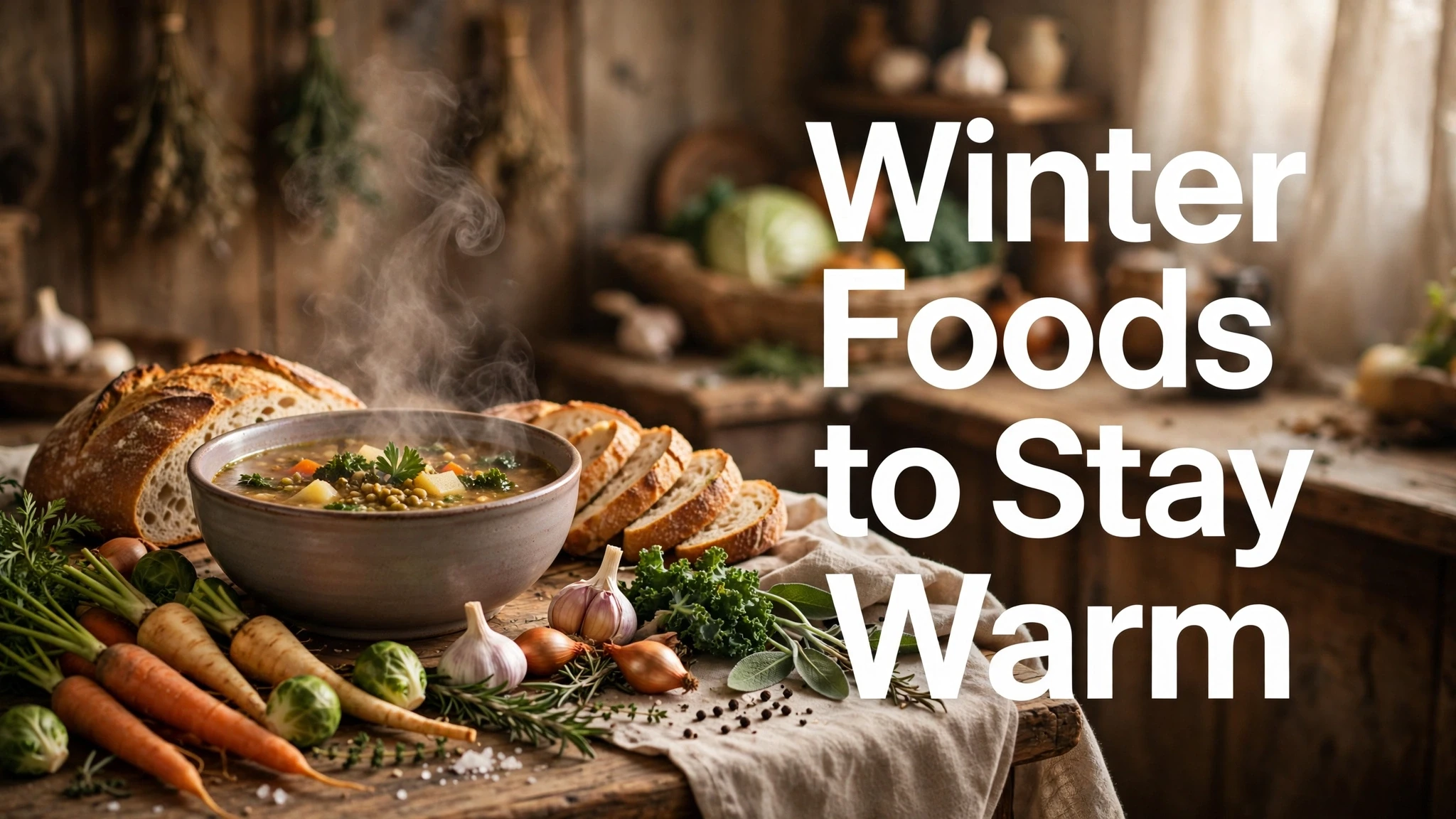
Soup is the most reliable winter food because it combines heat, fluid, vegetables, protein, and slow carbohydrates in one bowl. Stamford Health notes that soup is a perfect winter food when it is homemade or low in sodium, with low-sodium defined there as 140 milligrams or less per serving, and warns against recipes heavy in cream, beef, and salt. A broth-based soup with chicken or vegetable stock, plenty of vegetables, and beans or lentils for protein and fibre fits that pattern. It hydrates, which matters because people drink less in winter and heated indoor air is dry, and it delivers nutrients without the heaviness of a cream-based soup.
Stews extend the same idea with longer cooking and denser ingredients. Root vegetables, beans, lentils, and a protein source cooked slowly together produce a meal that stays hot, reheats well, and can be batch-cooked for several days. Batch cooking is a practical winter advantage: a large pot on Sunday can provide warm lunches through a cold week, reducing reliance on takeaway or skipped meals. Freezing portions in single servings makes that advantage usable for people living alone or working long hours.
The common mistake with soups is assuming any hot liquid counts. A thin, salty instant soup with little vegetable or protein content provides warmth for minutes but little sustained energy or nutrition. A better test is simple: does the bowl contain vegetables, a protein source, and a fibre source, and is the salt level reasonable? If yes, it is a winter meal. If it is mainly salt, fat, and refined starch, it is a warm snack, not a warming meal.
Root Vegetables: Slow, Steady Winter Fuel
Root vegetables — carrots, sweet potatoes, beets, turnips, parsnips, potatoes, onions, and leeks — are classic winter staples for a concrete reason: they are rich in complex carbohydrates and fibre, so they digest slowly and release energy over time. Apollo 247’s winter-food material notes that root vegetables digest slowly, keeping a person full and warm for longer, and are rich in fibre, vitamins, and minerals. Roasting caramelises their natural sugars, which improves flavour without adding much fat, and adding them to soups and stews lets their starch thicken the meal naturally.
Sweet potatoes deserve a specific mention because they provide beta-carotene, which the body converts to vitamin A, supporting vision and skin health, along with fibre and slow energy. Beets provide colour, fibre, and a distinctive earthy flavour that works roasted, in soup, or grated raw into salads for people who want variety. Carrots and parsnips roast well together and can replace part of the potato in mash for more fibre and flavour. Turnips, often overlooked, add a peppery note to stews and are inexpensive in winter markets in many regions.
Storage is another winter advantage. Root vegetables keep well in a cool place, which made them historically important before refrigeration and still makes them practical now. Buying them in season, when they are plentiful and often cheaper, supports both budget and freshness. That seasonal logic — eat what stores well and grows in cold months — is more useful than chasing imported summer produce in winter.
Whole Grains and Porridge: Morning Warmth That Lasts
Oats are the standout winter breakfast because they combine soluble fibre, slow energy, and warmth in a form that can be adapted endlessly. Stamford Health notes that oatmeal is high in zinc, which the immune system needs, and soluble fibre, and that quinoa and other whole grains such as farro, bulgur, and buckwheat provide protein and fibre. A bowl of porridge with milk or a fortified alternative, topped with fruit and nuts, provides a warm start that sustains longer than a cold, sugary cereal.
Other grains play different roles. Barley thickens soups and adds a chewy texture that makes a vegetable soup feel like a meal. Brown rice pairs with stews and curries and provides more fibre than white rice. Quinoa cooks quickly, provides complete protein for a grain, and works hot as a side or cold in a salad for lunch. Millet varieties such as pearl millet and sorghum, highlighted in some winter-food traditions, provide sustained energy and fibre and suit porridge or flatbreads. The principle across all of them is the same: choose a grain that digests slowly, serve it hot, and pair it with protein or fat so the meal does not leave hunger an hour later.
Portion and topping choices decide whether porridge is a warming meal or a sugar bowl. A base of oats with fruit, nuts, or seeds and a protein source such as milk, yogurt, or nut butter sustains energy. A base of oats drowned in sugar, syrup, and cream provides quick energy and a faster crash. The grain is not the problem; the topping pattern is.
Protein: Why It Matters More in Cold Weather
Protein has a higher thermic effect than fat or refined carbohydrate, meaning the body uses more energy to digest it, which contributes slightly to feeling warm after eating. More importantly, protein supports muscle maintenance, satiety, and immune function, all of which matter when activity may drop and illness risk rises in winter. Eggs, chicken, turkey, fish, beans, lentils, yogurt, and tofu can all serve, and the best choice depends on budget, culture, and dietary pattern rather than a single “best” protein.
Fish deserves attention in winter because oily fish such as salmon provides vitamin D, which is harder to obtain from sunlight in dark months, along with omega-3 fats and protein. Stamford Health lists salmon as a great source of vitamin D, alongside egg yolks, fortified cereals, milk, red meat, and shiitake mushrooms. That does not mean everyone must eat salmon; fortified foods, eggs, and dairy can contribute vitamin D in other dietary patterns. The point is to include a vitamin D source deliberately in winter, rather than assuming summer sunlight levels continue.
Beans and lentils are the budget winter protein. Stamford Health notes that chickpeas are full of protein and contain nearly all essential amino acids, and that adding beans or lentils to soup provides fat-free protein and fibre that slows digestion and helps control hunger. Lentil soup, bean stew, chickpea curry, and hummus with warm bread all turn a simple protein into a warming meal. For people who eat meat, lean cuts in stews, rather than fatty fried meat, provide protein without excessive saturated fat.
Warming Spices, Herbs, and Hot Drinks
Ginger, garlic, cinnamon, cloves, black pepper, and turmeric are repeatedly listed as warming spices, and Apollo 247 notes that they naturally increase body heat in traditional winter-food descriptions. The honest framing is narrower: spices add flavour, aroma, and a sensation of warmth, especially ginger and chilli, which can increase perceived warmth and sweating, but they do not replace adequate food, clothing, or heating. Their real winter value is that they make simple, healthy foods taste appealing, which helps people actually eat them through a long season.
Ginger tea, made from fresh ginger steeped in hot water, is a useful example: it is hot, aromatic, and low in calories, and it can soothe a sore throat sensation, though it does not cure a cold. Cinnamon in porridge or baked apples adds sweetness perception without sugar. Turmeric in lentil soup or curry adds colour and earthy flavour, and pairing it with black pepper and fat is a traditional way to improve its absorption, though the health claims for turmeric beyond flavour should not be overstated. Garlic in soups and roasted vegetables adds depth and is a staple of winter cooking across cultures.
Hot drinks in general deserve a balanced view. Tea, herbal infusions, hot water with lemon, and broth provide warmth and fluid without calories. Hot chocolate and sweetened coffees provide warmth plus sugar and fat, which can be enjoyable occasionally but should not be the main winter hydration strategy. Alcohol, despite feeling warming, actually increases heat loss from the skin and impairs judgement in cold, so it should not be used as a warming strategy outdoors.
Winter Fruits, Greens, and Vitamin C
Citrus fruits — oranges, grapefruit, lemons — are winter-seasonal in many regions and provide vitamin C, which supports immune function and mood in general nutrition, though vitamin C does not prevent colds for most people when taken as a supplement. Stamford Health lists citrus as a traditional vitamin C source, alongside strawberries, mangoes, and kiwis, and adds broccoli, cauliflower, and bell peppers as vitamin-C-rich vegetables to add to dishes. The practical point is to eat vitamin C from food across the day, not to rely on a single large dose.
Leafy greens in winter are often frozen, and Stamford Health notes that frozen spinach and kale are as good as fresh, providing vitamin C, vitamin K, and vitamin A. That is a useful correction to the idea that only fresh produce counts. Frozen greens can be added to soups, stews, curries, and egg dishes without waste, and they retain nutrients well. Dark greens also add iron and folate, which matter for energy and blood health, especially for people who eat little meat.
Apples, pears, and pomegranates provide fibre, flavour, and variety when summer berries are out of season. Baked apples with cinnamon, pear slices in porridge, or pomegranate seeds over yogurt or salads add winter colour and texture without heavy processing. The goal is not to chase a single “immune superfood,” but to build a varied plate where colour, fibre, and protein appear together most days.
Nuts, Seeds, and Healthy Fats
Nuts and seeds — almonds, walnuts, sesame, flaxseed, pumpkin seeds — provide healthy fats, protein, fibre, and minerals in a compact form, and Apollo 247 lists them as great winter snacks because their fats help regulate body temperature perception and provide sustained energy. A small handful is a useful snack; a large bowl is a large calorie load, so portion awareness matters. Adding nuts to porridge, salads, or roasted vegetables distributes their benefit across meals rather than concentrating it in snacking.
Olive oil, used for roasting vegetables or dressing grains and salads, provides monounsaturated fat and helps absorb fat-soluble vitamins from vegetables. Ghee and butter are traditional winter fats in some cuisines and can be used in small amounts for flavour, but they are high in saturated fat and should not be the main fat source for most people. The winter principle is to include some fat with vegetables and grains — because fat slows digestion, adds satiety, and aids vitamin absorption — while keeping the total amount moderate.
Seeds add specific nutrients: flaxseed provides fibre and plant omega-3 fats, sesame provides calcium and flavour in tahini or sprinkled over dishes, and pumpkin seeds provide zinc and magnesium. None of these is a warming miracle on its own. Their value is cumulative: a diet that includes a variety of nuts, seeds, and oils is more likely to meet micronutrient needs in winter than a diet based only on refined starch.
A Simple Winter Day of Warming Meals
A practical winter day might look like this: porridge with milk, fruit, and nuts for breakfast; a broth-based lentil and root-vegetable soup with whole-grain bread for lunch; a handful of nuts or yogurt as an afternoon snack; and a stew with chicken or beans, barley or brown rice, and roasted vegetables for dinner, with herbal tea in the evening. That pattern is not a prescription, but it illustrates the principles — warm, fibre-rich, protein-containing, varied, and not excessively salty or sugary — in a form most kitchens can adapt.
For busy weeks, three habits help more than any single recipe: keep a pot of soup or stew in the fridge or freezer, keep oats and root vegetables in stock, and keep a spice and herb base ready so a simple meal tastes appealing. Those habits reduce the chance of skipping meals, which is a real winter risk when days are short and energy is low. A missed meal does not just mean hunger; it means less fuel for warmth, less protein for maintenance, and a greater likelihood of overeating later in the evening.
Budget is part of warmth too. The cheapest warming meals are often the healthiest: lentils, beans, oats, potatoes, carrots, onions, and frozen greens cost less per meal than processed ready meals or takeaway, and they store well. Buying seasonal produce, cooking in batches, and using leftovers as soup bases stretches both money and energy through winter, which matters for households where heating and food costs rise together.
My Take:
I think winter food advice fails when it becomes a list of miracle ingredients. No spice, tea, or superfood will keep you warm if you are underfed, dehydrated, cold at home, or wearing too little outdoors. Warmth is a system: food provides fuel, clothing traps heat, heating maintains air temperature, and activity generates heat. Food is one part of that system, and its job is specific — provide steady energy, protein, fibre, and nutrients, served hot, in meals you will actually eat. Once you see food that way, the advice becomes simpler and harder to market, which is probably why miracle lists are more popular.
My second judgement is that soup deserves its reputation, but only when it is built properly. A salty instant soup is not a winter meal, however hot it feels for five minutes. A broth soup with vegetables, beans or lentils, and a grain is a meal because it contains the three things winter meals need: fluid, fibre, and protein. I would judge any winter soup by that test, not by its marketing. If it fails the test, add the missing part — beans for protein, barley for fibre, vegetables for volume — rather than adding cream or salt to fake richness.
I am also sceptical of the idea that winter requires heavy, fatty food. The body does use more energy in cold, but most people in heated homes and offices are not expending the extra energy of outdoor labourers in extreme cold. For most readers, the winter need is not a large calorie increase, but a shift toward warmer, slower, more satisfying meals that prevent snacking on sugar and fat later. A heavy winter diet that adds weight, raises blood pressure through salt, and disturbs sleep is not warming in any useful sense; it is a burden carried into spring.
The spice question illustrates my approach to honesty. Ginger feels warming, chilli makes you sweat, cinnamon makes porridge taste like comfort. Those sensations are real and valuable, because they make healthy food enjoyable. But sensation is not the same as core temperature change, and I would not want a reader to rely on ginger tea while ignoring a proper meal, warm clothing, or a cold home. Spices are seasoning for a good winter pattern, not a substitute for it. The same applies to vitamin C, vitamin D, and zinc: they support normal function, they do not create immunity on demand, and megadoses can harm.
Finally, I think the most valuable winter food habit is not a recipe but a routine: a warm breakfast, a real lunch, and a stew or soup that can be reheated. That routine protects against the winter pattern of skipping meals, snacking late, and drinking alcohol to feel warm, which together undermine sleep, mood, and energy. If you can keep that routine most days, with seasonal vegetables, a protein source, and a whole grain, you have done more for winter warmth than any single “warming food” list can offer. Warmth, in the end, is less about exotic ingredients and more about regular, substantial, hot meals eaten in a warm room, with people when possible. That is unglamorous advice, but it is the kind that actually works through a long winter.
There is also a cultural point that winter food lists often flatten. Warming foods are not the same in every cuisine, and they do not need to be. A lentil soup in one household, a bean stew in another, a millet porridge in a third, and a fish soup in a fourth all satisfy the same principles — warm, fibre-rich, protein-containing, varied — through completely different ingredients. Imposing a single “winter superfood” list ignores that diversity and makes healthy winter eating feel foreign. The better test is whether a familiar family meal already contains vegetables, protein, and a slow grain, and whether it can be served hot and regularly. If it can, it is already a warming meal, without importing exotic ingredients.
Budget and time deserve the same respect as nutrition. A winter meal plan that requires daily fresh shopping, expensive fish, and an hour of cooking will fail for a labourer, a shift worker, or a parent with limited time, even if it is nutritionally ideal. Batch cooking, frozen vegetables, tinned beans, and oats succeed precisely because they are cheap, storable, and quick. I would judge a winter food guide by whether it works on a low budget and a tired evening, not by whether it looks impressive on a page. The meals that actually keep people warm are the ones they can repeat in February, not the ones they admire in November.
Finally, I think winter eating should be judged by how it affects the whole day, not just the meal. A heavy, salty, sugary evening meal may feel comforting at the table and then disturb sleep, raise morning grogginess, and increase next-day cravings. A lighter, earlier, protein-and-fibre evening meal may feel less indulgent but supports sleep, morning energy, and steadier appetite the next day. That next-day test — how do I feel tomorrow morning? — is more useful than the immediate comfort test. Winter food, like winter sleep and winter mood, is a system across days, not a single satisfying moment.
Food safety in winter also deserves a brief, practical note, because batch cooking only helps if leftovers are handled well. Cooked soups and stews should be cooled reasonably quickly, stored in clean covered containers, refrigerated promptly, and reheated until steaming hot throughout, with leftovers used within a few days or frozen for longer storage. That discipline prevents a warming, economical habit from becoming a food-poisoning risk, especially for older adults, pregnant people, and people with weakened immunity. A large pot is a winter asset only when its storage matches its size; otherwise, cook smaller pots more often.
A final budget test is cost per warming meal, not cost per ingredient. Lentils, beans, oats, potatoes, and frozen greens look plain on a shelf, yet each provides protein, fibre, or slow energy for a fraction of the price of a ready meal or takeaway. Dividing a batch-cooked stew by its servings usually shows the cheapest meal is also among the most warming and nutritious, which removes the false choice between saving money and eating well in winter.
Frequently Asked Questions
What are the best winter foods to keep my body warm on a normal cold day?
Broth-based soups and stews with root vegetables, beans or lentils, and a whole grain are among the best winter foods, because they combine heat, fluid, slow energy, fibre, and protein. Warm porridge, roasted root vegetables, and a protein source at each meal complete the pattern.
Do warming spices like ginger and turmeric really keep the body warm in winter?
Ginger, chilli, and other spices can increase the sensation of warmth and make healthy meals more appealing, but they do not by themselves raise core temperature meaningfully. They work best as flavour for substantial warm meals, not as a substitute for food, clothing, or heating.
Why are root vegetables good winter foods for body warmth?
Root vegetables such as carrots, sweet potatoes, beets, and turnips are rich in complex carbohydrates and fibre, so they digest slowly and provide steady energy and fullness. Roasting or adding them to soups and stews makes them a practical, seasonal winter staple.
Is soup actually a healthy winter food, or just hot water?
Soup is healthy when it contains vegetables, a protein source such as beans, lentils, or chicken, and a fibre source, with reasonable salt. Thin, very salty instant soups with little vegetable or protein provide brief warmth but little sustained nutrition.
What should I eat for a warming winter breakfast that lasts until lunch?
Warm porridge made from oats, served with milk or a fortified alternative and topped with fruit and nuts, provides slow energy, fibre, and warmth. Adding a protein source such as milk, yogurt, or nut butter helps the meal sustain longer than a sugary cold cereal.
Can winter foods alone keep me warm if my home is cold?
No, food alone cannot compensate for a cold home, inadequate clothing, or prolonged outdoor exposure. Warm meals support energy and comfort, but clothing, heating, shelter, and limiting cold exposure are also necessary for safety in severe cold.