Billy Joel: The Life Story Behind the Piano Man
In this post
- The Bronx, Hicksville and a Piano at Four
- The Hassles, Attila and Cold Spring Harbor
- Piano Man, The Stranger and the Breakthrough
- 52nd Street, Glass Houses and the Top of the Charts
- We Didn’t Start the Fire, River of Dreams and the Last Pop Album
- Madison Square Garden, the Residency and the Live Legend
- The Songwriting, the Piano and the Influence
- Where He Stands Now
- My Take:
The Bronx, Hicksville and a Piano at Four
William Martin Joel was born on 9 May 1949 in the Bronx, New York, the son of Howard Joel, a classically trained pianist who had fled Nazi Germany, and Rosalind Nyman Joel, who was born in England, and the household he grew up in was musical, complicated, and shaped by a father’s history that he would only fully understand as an adult. His father had been a concert pianist in Europe before the war, and the piano, which stood in the family home, was not a piece of furniture but a presence, and Billy began playing it at the age of four, taking lessons, practising scales, and absorbing the classical music his father played. The family moved to Hicksville, Long Island, a suburb east of New York City, when he was a child, and the move gave him a hometown, a place he would write about, sing about, and return to for the rest of his life. His parents divorced when he was eight, and his father returned to Europe, and the absence, which left a mark on the boy, became one of the themes of his songs: the father who leaves, the family that breaks, the home that is never quite whole.
School in Hicksville gave him the second part of his education, and it was not in a classroom. He was a good student, but he was also a teenager who loved music, and he began playing in bands, first in a group called The Echoes, then in a band called The Hassles, a Long Island rock band that released two albums in the late 1960s, and the bands taught him how to perform, how to write a song, and how to live on the road. He also took up boxing as a teenager, fighting in amateur bouts on Long Island, and the boxing, which he has said taught him discipline and toughness, gave him a physical confidence that the piano never could. He left high school without graduating, choosing music over a diploma, a decision that would have worried most parents, but his mother, who supported his music, understood that the piano was not a hobby, it was a calling, and the calling was louder than a classroom.
The Long Island of his youth is present in everything he has made since. It is a place of suburbs and highways, of bars and diners, of working-class families and Friday nights, and the songs he wrote about it, from Piano Man to Movin’ Out to Allentown, are portraits of a place and a people, drawn with a songwriter’s eye for detail and a pianist’s ear for melody. He has spoken about the influence of the Beatles, of Ray Charles, of the classical music his father played, and about the way those influences mixed in his head, into a sound that was both pop and classical, both rock and Broadway, both Long Island and everywhere. The piano, which he began playing at four, never left him, and it is still the centre of his music, still the instrument he sits behind, night after night, in arenas around the world.
The Hassles, Attila and Cold Spring Harbor
The Hassles, the band he joined as a teenager, released two albums, The Hassles in 1967 and Hour of the Wolf in 1969, and the records, which were psychedelic rock with a pop sensibility, gave him his first experience of a recording studio, of making an album, and of the music business. The band was not a success, and it broke up, but the experience taught him how to write, how to record, and how to work with other musicians, and the lessons stayed with him. He then formed a duo called Attila with the Hassles’ drummer, Jon Small, and the duo released a self-titled album in 1970, a loud, heavy record that was a commercial failure, and the failure, which was total, taught him something important: a gimmick is not a career, and a loud record without a song is just noise. Attila broke up, and Joel, who was twenty-one, found himself alone, with no band, no money, and a decision to make about what kind of musician he wanted to be.
The decision was to be a solo artist, a singer-songwriter at a piano, and the first step was a solo album, Cold Spring Harbor, named for a village on Long Island, released in November 1971. The album, which featured the songs She’s Got a Way and Everybody Loves You Now, was a quiet, melodic record, and it was ruined by a mastering error that sped up the tape, making his voice sound higher than it was, and the error, which the label refused to fix, made the album a disappointment, and Joel, who had poured his heart into it, was devastated. He left the label, he moved to Los Angeles, and he took a job playing piano in a bar, under the name Bill Martin, in a piano lounge called the Executive Room, and the job, which paid little and demanded that he play other people’s songs for drunk customers, became the material for the song that would make him famous.
The Executive Room years, from 1972 to 1973, were the foundation of Piano Man, and the song, which he wrote about the bar, about the regulars, about the waitress, about the businessman, and about the piano player himself, was a portrait of a room, drawn with a songwriter’s eye, and it was the song that would define his career. The bar job taught him something that no studio could: how to read a room, how to play for people who are not listening, and how to write a song about ordinary people, and the lesson, which he learned in a Los Angeles piano bar, became the centre of his art. The piano bar was not a detour, it was an education, and the education produced a song that is still sung in bars around the world, every night, by piano players who have never met Billy Joel, but who know exactly what he was singing about.
Piano Man, The Stranger and the Breakthrough
Piano Man, his second album, was released in November 1973, and its title track, a six-minute ballad about a piano player in a bar, became his signature song, reaching the top thirty on the Hot 100 and becoming a fixture on the radio, in bars, and in the culture. The song’s success was slow, and it was built on the road, on touring, on playing the song night after night, until the audience knew the words and sang along, and the slow build, which is the way a career used to be made, gave him a foundation that a quick hit never could. The album also featured the songs Captain Jack and The Ballad of Billy the Kid, and it established him as a songwriter who could tell a story, who could draw a character, and who could make a piano do the work of a whole band. The album reached the top thirty of the Billboard 200, and it was the beginning of a career that would last for fifty years.
His third and fourth albums, Streetlife Serenade in 1974 and Turnstiles in 1976, were modest successes, and Turnstiles, which featured the songs Say Goodbye to Hollywood and New York State of Mind, the latter a love letter to his home city, showed a songwriter who was growing in confidence, who was writing about the places he knew, and who was finding his voice. But the breakthrough, the album that made him a star, was The Stranger, released in September 1977, produced by Phil Ramone, and it was a masterpiece: a collection of songs that included Just the Way You Are, which won the Grammy Awards for Record of the Year and Song of the Year, Movin’ Out (Anthony’s Song), Only the Good Die Young, She’s Always a Woman, and the title track, The Stranger. The album reached number two on the Billboard 200, it sold more than ten million copies in the United States, and it made Billy Joel one of the biggest stars in America.
The Stranger’s success was built on a sound that was both pop and rock, both melodic and muscular, with a band that played with precision and a piano that led every song, and the production, by Ramone, was clean, warm, and perfectly suited to Joel’s voice, which was strong, clear, and full of a Long Island directness. The album’s songs became standards: Just the Way You Are is played at weddings, Movin’ Out is played on the radio, Only the Good Die Young is played at parties, and She’s Always a Woman is played late at night, when the room is quiet. The Stranger is not just an album, it is a portrait of a city, a suburb, and a generation, and it is the record that proved a piano player from Hicksville could be a rock star.
52nd Street, Glass Houses and the Top of the Charts
52nd Street, released in October 1978, was his first number-one album, and it won the Grammy Award for Album of the Year, and it featured the singles My Life, Big Shot and Honesty, three songs that became standards, each one a different side of his talent: My Life, a declaration of independence, Big Shot, a rock song about a party, and Honesty, a ballad about truth in love. The album’s title referred to the street in Manhattan that was once the centre of jazz, and the record, which mixed pop, rock and jazz, showed a songwriter who was confident enough to look backwards, to honour the past, and to make it his own. The album’s success, which followed The Stranger, proved that the breakthrough was not a fluke, and that Billy Joel was now one of the biggest stars in the world.
Glass Houses, released in March 1980, was a deliberate change of direction, a rock album, louder and harder than its predecessors, with the single It’s Still Rock and Roll to Me, which became his first number-one single on the Hot 100, and the songs You May Be Right, Don’t Ask Me Why and Sometimes a Fantasy. The album’s title and cover, which showed Joel about to throw a stone through a glass house, was a joke about critics who said he was too soft, and the record, which was a response to the punk and new wave movements, proved that a piano player could rock as hard as a guitarist. The album won the Grammy for Best Rock Vocal Performance, Male, and it sold millions of copies, and it gave him a new audience, a rock audience, to go with the pop audience he already had.
The Nylon Curtain, released in September 1982, was a more serious, more political record, with the songs Allentown, about the decline of American manufacturing, and Pressure, about the anxieties of modern life, and the album, which was praised by critics for its ambition, showed a songwriter who was willing to write about the world, about work, about the America he lived in. An Innocent Man, released in August 1983, was a tribute to the music of his youth, doo-wop, soul and R&B, with the singles Uptown Girl, which was inspired by his then-girlfriend, the model Christie Brinkley, Tell Her About It, which became his second number-one single, and The Longest Time, a doo-wop ballad that became a favourite. The album’s success, which was built on nostalgia, proved that a songwriter who honours the past can still make a record that sounds like the present.
We Didn’t Start the Fire, River of Dreams and the Last Pop Album
The Bridge, released in July 1986, featured the singles A Matter of Trust and This Is the Time, and it was a solid record, but the album that defined the late 1980s for him was Storm Front, released in October 1989, which featured the single We Didn’t Start the Fire, a song that listed forty years of historical events, from Harry Truman to the present, in a rapid-fire lyric that became a cultural phenomenon, and which reached number one on the Hot 100, his third and final chart-topper. The song’s success was built on its audacity: a list, set to music, that somehow became a hit, and the list, which was a history lesson, a party trick, and a pop song all at once, showed a songwriter who was willing to try anything, and who could make anything work. The album also featured the singles I Go to Extremes and The Downeaster ‘Alexa’, about a Long Island fisherman, and it debuted at number one on the Billboard 200.
River of Dreams, released in August 1993, was his last studio album of pop songs, and it featured the title track, River of Dreams, which became a hit, and the songs All About Soul and No Man’s Land, and the album, which was praised by critics for its ambition, showed a songwriter who was still growing, still writing, and still capable of a great song. But the album was also a farewell, of sorts, because after River of Dreams, Joel stopped making pop albums, and he turned to classical music, releasing Fantasies & Delusions, an album of classical piano pieces, in 2001, and focusing on touring, on performing, and on living a life that was not defined by the need to make a new record every two years. The decision to stop was not a retirement, it was a choice, and the choice was to play the songs he had already written, for audiences who still wanted to hear them, night after night, year after year.
He has continued to tour, to perform, and to record occasionally, releasing singles and live albums, but the pop albums stopped, and the stopping is part of his story: a songwriter who wrote some of the greatest pop songs of the twentieth century, and who decided, at forty-four, that he had said what he needed to say, and that the rest of his career would be about playing those songs, for the people who loved them. The decision is rare in pop music, where the pressure to keep releasing is constant, and the rarity is the point: a songwriter who knows when to stop is a songwriter who understands his own art.
Madison Square Garden, the Residency and the Live Legend
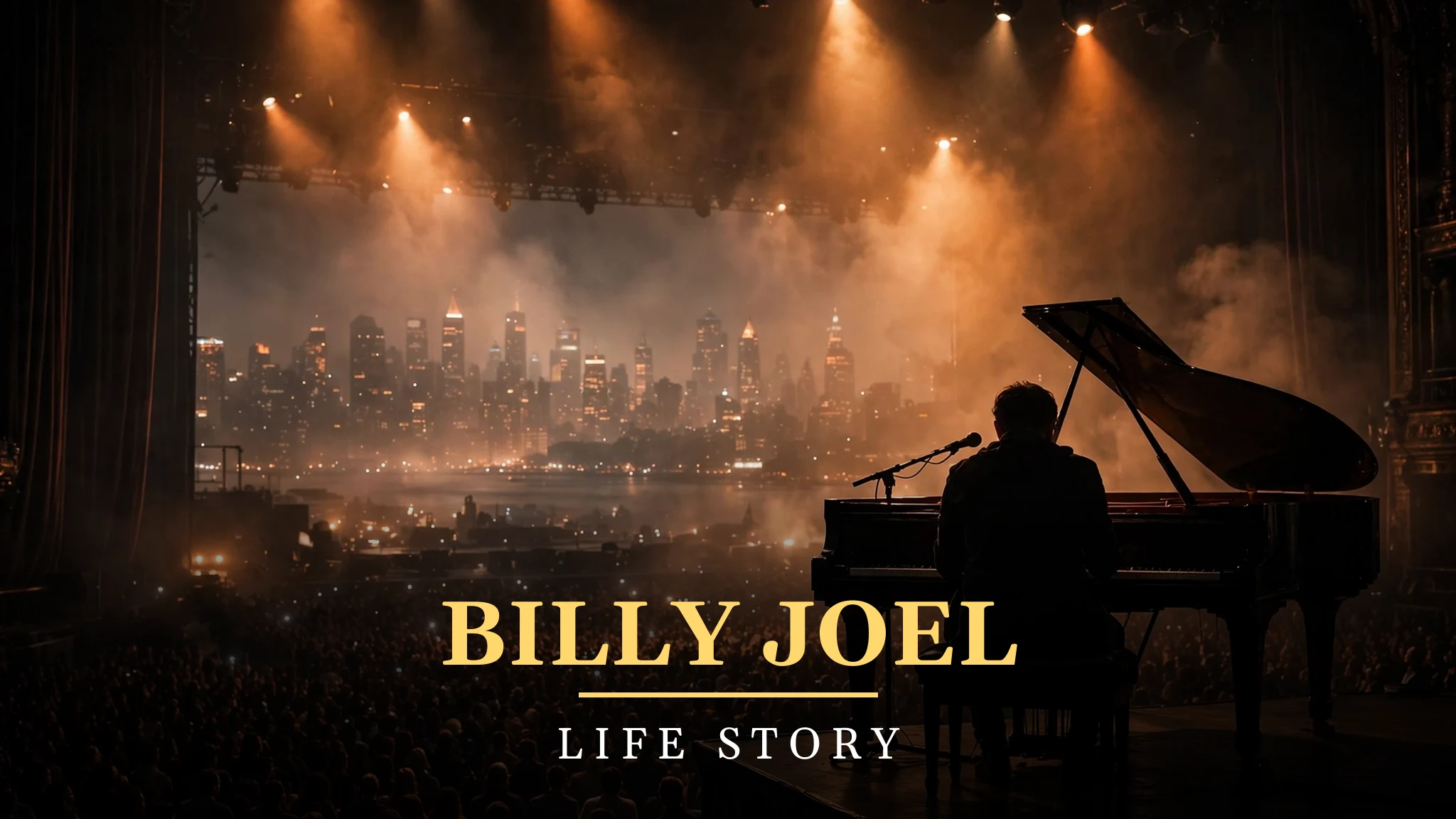
In January 2014, Billy Joel began a residency at Madison Square Garden in New York City, playing one show a month, every month, and the residency, which was supposed to last for a few months, became one of the longest-running residencies in history, with more than one hundred shows, and it made him the first artist to play the Garden every month, indefinitely. The shows, which are built around his greatest hits, from Piano Man to Uptown Girl to We Didn’t Start the Fire, are a celebration, a party, and a history lesson, all at once, and the audience, which includes people who have seen him a dozen times and people who are seeing him for the first time, sings along to every word, because the songs are part of their lives, part of the culture, part of the air. The residency is not just a concert series, it is an institution, and it is the centre of his later career.
The live shows are legendary for their length, their energy, and their joy. A Billy Joel concert can last three hours, with Joel at the piano, telling stories, taking requests, and inviting the audience to sing along, and the shows, which are famous for their lack of pretension, feel like a party rather than a performance. He has played to stadiums, to arenas, to clubs, and the energy is the same, because the joy is the same: a musician who loves to play, playing for people who love to listen. The residency, which has made him a fixture of New York City, is a fitting home for a songwriter who wrote New York State of Mind, a song that is, in many ways, the anthem of the city.
In May 2025, he announced that he had been diagnosed with normal pressure hydrocephalus, a brain condition, and that he was cancelling his upcoming concerts on medical advice, and the announcement, which was met with an outpouring of support from fans and fellow musicians, was a reminder that even a legend is human, and that health, which is often taken for granted, is the foundation of a career. The residency, which had run for more than a decade, was paused, and the future of the shows, which depends on his health, is uncertain, but the songs, which have lasted for fifty years, will last, whatever happens, because a great song does not need a stage, it needs a listener, and the listeners are still there, in the millions.
The Songwriting, the Piano and the Influence
Billy Joel’s songwriting is the most literary in pop music, in a different way from Frank Ocean’s, because Joel writes about places, about people, about work, about the America he grew up in, and he writes about them with a specificity that makes the songs feel like short stories. Piano Man is a portrait of a bar, Allentown is a portrait of a town, The Downeaster ‘Alexa’ is a portrait of a fisherman, and the portraits, which are drawn with a songwriter’s eye for detail, accumulate into a picture of a country, a time, and a people. The writing is also full of references, to history, to music, to literature, and the references are not decoration, they are the material: a song that lists forty years of history, as We Didn’t Start the Fire does, is a song about history and about the person who lived through it.
His piano playing is the other half of his art. He began playing at four, he was trained classically, and the piano, which he sits behind at every show, is not an accompaniment, it is a voice, and the voice of the piano, in his hands, is as expressive as the voice that sings over it. The piano parts on his records, from the rolling intro of Piano Man to the driving riff of Movin’ Out to the delicate melody of She’s Always a Woman, are as memorable as the lyrics, and the combination, a piano and a voice, is the sound of his music. Songs like Just the Way You Are, Honesty and The Longest Time show the range, from a ballad to a confession to a doo-wop tribute, and the thread between them is the piano, which never leaves, never falters, and never asks the listener to admire effort instead of feeling the song.
His influence on the songwriters who came after him is enormous. The piano-based pop-rock that dominates the charts in the 2020s, from the singer-songwriters who sit at a piano and tell a story, descends directly from Billy Joel, and the idea that a pop song can be a portrait, that a verse can be a short story, is now standard, but it was radical when he did it. He did not invent the piano ballad, but he made it the language of American pop, and the language is still spoken, by artists who were children when The Stranger came out, and who learned to write by listening to it. He was inducted into the Rock and Roll Hall of Fame in 1999, and he received the Kennedy Center Honors in 2013, and the honours are deserved, because a songwriter who wrote Piano Man, The Stranger and We Didn’t Start the Fire has earned a place among the greats.
Where He Stands Now
As of 2026, Billy Joel is one of the most successful and most beloved songwriters in American history, with more than one hundred and fifty million records sold worldwide, six Grammy Awards, and a catalogue that runs from Cold Spring Harbor to River of Dreams, from a piano bar in Los Angeles to Madison Square Garden in New York. He has written some of the greatest pop songs of the twentieth century, he has played them for fifty years, and he has become, in the words of many, the voice of Long Island, the voice of New York, and the voice of a generation. The boy from Hicksville who began playing piano at four is now a legend, and the legend is not just for the songs, but for the life behind them: the boxing, the bars, the bands, the failures, and the triumphs, all of it adding up to a career that is still, even now, a work in progress.
He continues to be a presence in music, through his songs, through his residency, and through the musicians he has influenced, and the next chapter of his career, which depends on his health, will be watched by an audience that has grown up with him, from the teenagers who bought Piano Man to the adults who sing along at Madison Square Garden. The lesson of his career is not that talent is enough, he has been honest about how hard the road was, but that a song, properly written, can last a lifetime, and that a songwriter who tells the truth about ordinary people will always find an audience willing to listen. Billy Joel, the Piano Man from Hicksville, is still here, still playing, and still the voice of a generation.
My Take:
Billy Joel is the songwriter I admire most in American pop, and the reason is the portraits. Piano Man is a portrait of a bar, Allentown is a portrait of a town, The Downeaster ‘Alexa’ is a portrait of a fisherman, and the portraits, which are drawn with a songwriter’s eye for detail, accumulate into a picture of a country, a time, and a people. I have listened to his records for years, and I still hear new things in them, a line I missed, an image I had not noticed, a detail that only makes sense the tenth time you hear it, and that is the test of great writing: it rewards the listener who pays attention, and the attention is repaid, line by line, image by image.
Piano Man is the song that will define his career, and I understand why, because it is perfect. A six-minute ballad about a piano player in a bar, about the regulars, about the waitress, about the businessman, and about the piano player himself, and the song, which he wrote about a real bar, the Executive Room in Los Angeles, where he played under the name Bill Martin, is a portrait that is also a confession. I love Piano Man because it is honest, and honesty in pop music is rare, and the honesty is what makes the song last, year after year, in bars around the world, sung by piano players who have never met Billy Joel, but who know exactly what he was singing about.
The Stranger is the album that made him a star, and it is the album I return to most when I want to remember what a great pop album sounds like. Just the Way You Are, which won Record and Song of the Year, Movin’ Out, Only the Good Die Young, She’s Always a Woman, the title track: every song is a standard, every song is a portrait, and the album as a whole is a picture of a city, a suburb, and a generation. The album sold more than ten million copies, and it deserved to, because it is a record that works on every level: the songs are great, the production is great, the playing is great, and the whole thing holds together as an album rather than a collection of singles. I have played it from start to finish more times than I can count, and it still sounds fresh.
We Didn’t Start the Fire is the song that shows his audacity most clearly, because it is a list, set to music, that somehow became a number-one hit. Forty years of history, from Harry Truman to the present, in a rapid-fire lyric, and the song, which was a history lesson, a party trick, and a pop song all at once, proved that a songwriter who is willing to try anything can make anything work. I love the song because it is brave, and bravery in pop music is rare, and the bravery is rewarded, because the song is still played, still quoted, still taught in schools, and still a part of the culture, thirty-five years after it was released.
The Madison Square Garden residency is the chapter that I find most impressive, because it is a record that may never be broken. One show a month, every month, for more than a decade, more than one hundred shows, and the residency made him the first artist to play the Garden every month, indefinitely. The shows are a celebration, a party, and a history lesson, all at once, and the audience, which sings along to every word, is a testament to the songs: a catalogue that is so strong, so loved, so much a part of people’s lives, that it can fill an arena, month after month, year after year. I have not seen the residency, but I have watched footage, and the joy in the room is visible, and the joy is the point.
His piano playing is the part of his talent that is most often overlooked, and I want to celebrate it, because he began playing at four, he was trained classically by his father, and the piano is his first language. Listen to the intro of Piano Man, listen to the riff of Movin’ Out, listen to the melody of She’s Always a Woman, and you hear a pianist who understands that the piano is not an accompaniment, it is a voice, and the voice of the piano, in his hands, is as expressive as the voice that sings over it. The piano is the foundation of his music, and the foundation is solid, because it was built by a boy who practised scales in Hicksville, and who never stopped playing.
Uptown Girl is the song that I play when I want to be happy, because it is pure joy. A doo-wop tribute, inspired by Christie Brinkley, with a video that showed him as a mechanic, dancing with models, and the song, which became a hit, is a celebration, a party, and a love song all at once. I love Uptown Girl because it is unapologetic, and unapologetic pop music is the best kind, because it does not ask for permission, it takes the stage, and the stage, in this case, is a garage, a dance floor, and a radio, all at once. The song is a reminder that a great songwriter can write about joy as well as about sorrow, and that joy, properly written, lasts as long as sorrow.
The decision to stop making pop albums after River of Dreams is the choice I admire most, because it is rare, and it is honest. At forty-four, after writing some of the greatest pop songs of the twentieth century, he decided that he had said what he needed to say, and that the rest of his career would be about playing those songs, for audiences who still wanted to hear them. The decision is not a retirement, it is a recognition, and the recognition is that a songwriter who knows when to stop is a songwriter who understands his own art. I respect the choice, because it is easy to keep releasing records, and hard to stop, and the stopping is what makes the catalogue perfect: no weak albums, no filler, just the songs, played, night after night, for the people who love them.
His influence on other songwriters is enormous, and it is one of the most important parts of his story. The piano-based pop-rock that dominates the charts, the singer-songwriters who sit at a piano and tell a story, descend directly from Billy Joel, and the idea that a pop song can be a portrait is now standard, but it was radical when he did it. I think about the young songwriters who learned to write by listening to The Stranger, and about the songs they wrote as a result, and I am grateful, because the influence is not a trend, it is a technique, passed from one writer to the next, and the technique is still being passed, today, in bedrooms and bars around the world.
The health announcement in 2025 is the chapter that made me think about mortality, and about the fragility of even a legend. He announced that he had normal pressure hydrocephalus, a brain condition, and that he was cancelling his concerts, and the announcement was met with an outpouring of support, from fans and fellow musicians, because a career that has lasted fifty years, through bars and bands and failures and triumphs, deserves to be honoured, and the honour is in the support. I do not know what the future holds for his residency, and neither does anyone else, but I know that the songs will last, whatever happens, because a great song does not need a stage, it needs a listener, and the listeners are still there, in the millions.
New York State of Mind is the song that I associate with the city itself, because it is a love letter to New York, written by a Long Island boy who left and came back, and the song, which is played in the city every day, is an anthem. I love the song because it is specific, and specificity is the mark of great writing: a songwriter who writes about a place he knows, in detail, in truth, makes a song that belongs to that place, and to everyone who has ever lived there, or loved it, or left it. The song is a reminder that a great songwriter writes about home, and that home, properly written, becomes universal.
If I were introducing someone to Billy Joel, I would start with Piano Man, then The Stranger, then 52nd Street, then An Innocent Man, because that sequence shows the arc: the bar, the breakthrough, the peak, the tribute. And I would tell them to listen with headphones, because the piano parts, the lyrics, the details, are the real art, and they are easy to miss on a small speaker, and to see him live, if they ever get the chance, because the live show is where the joy is most visible. Billy Joel is a songwriter, a pianist, and a storyteller, and the stories are still being told, one song at a time.
There is a final thing I want to say, and it is about the Long Island of his songs. Hicksville, the suburbs, the bars, the diners, the working-class families: that world, which he wrote about for fifty years, is a world that is disappearing, and the songs are a record of it, a history, a portrait, a love letter. I think about the people in those songs, the piano man, the fisherman, the factory worker in Allentown, and I am grateful that someone wrote them down, in songs, because the songs preserve a world that would otherwise be forgotten, and the preservation is a gift.
The boxing is the detail I love most, because it shows a different side of him. A teenager who fought in amateur bouts on Long Island, who learned discipline and toughness in a ring, and who carried that toughness into a career in music, where the fights are different but the discipline is the same. The boxing is not a footnote, it is a clue: a songwriter who has been in a ring understands what it means to take a hit, to get up, and to keep fighting, and Billy Joel has taken hits, in his career and in his life, and he has always got up, and the getting up is the story.
And one more thought, about the father. Howard Joel, a classical pianist who fled Nazi Germany, who played piano in the family home, who left when Billy was eight, is a presence in his songs, in the classical training, in the piano, in the absence, and in the son who became a pianist because his father was one. I think about the father, and about the son, and about the music that connects them, across a war, across an ocean, across a divorce, and I am moved, because the music is the bridge, and the bridge is still standing, fifty years later, in every song he plays.
One last thing, and it is about the Kennedy Center Honors and the Hall of Fame. He was inducted into the Rock and Roll Hall of Fame in 1999, and he received the Kennedy Center Honors in 2013, and the honours are deserved, because a songwriter who wrote Piano Man, The Stranger and We Didn’t Start the Fire has earned a place among the greats. The honours are not the point, the songs are, but the honours are a recognition, and the recognition is deserved, because a boy from Hicksville who began playing piano at four became a legend, and the legend is still playing, still singing, and still the Piano Man.
One more thought, about the fans. I have watched footage of his concerts, and I am struck by the audience: people of every age, singing every word, from Piano Man to We Didn’t Start the Fire, and the singing is not a performance, it is a memory, a shared history, a life lived with these songs as a soundtrack. The fans are the reason the residency lasted, the reason the songs last, and the reason Billy Joel is still the Piano Man, after fifty years, in a room full of people who know every word, and who sing them like they mean it, because they do.
Frequently Asked Questions
Where was Billy Joel born?
Billy Joel was born William Martin Joel on 9 May 1949 in the Bronx, New York, and grew up in Hicksville, Long Island. His father Howard was a classically trained pianist who had fled Nazi Germany, and Billy began playing piano at the age of four.
What is Billy Joel’s most famous song?
His signature song is Piano Man, the title track of his 1973 album, written about his time playing piano in a Los Angeles bar called the Executive Room under the name Bill Martin. Other famous songs include Just the Way You Are, Uptown Girl, We Didn’t Start the Fire and New York State of Mind.
How many number-one singles does Billy Joel have?
He has three number-one singles on the Billboard Hot 100: It’s Still Rock and Roll to Me (1980), Tell Her About It (1983) and We Didn’t Start the Fire (1989). His album 52nd Street (1978) won the Grammy for Album of the Year.
What is The Stranger by Billy Joel?
The Stranger is his fifth studio album, released in September 1977 and produced by Phil Ramone. It includes Just the Way You Are, Movin’ Out, Only the Good Die Young and She’s Always a Woman, sold more than ten million copies in the US, and made him a star.
What is Billy Joel’s Madison Square Garden residency?
In January 2014 he began playing one show a month at Madison Square Garden in New York City. The residency ran for more than a decade, with over one hundred shows, making him the first artist to play the Garden monthly on an ongoing basis.
Why did Billy Joel stop making pop albums?
His last studio album of pop songs was River of Dreams in 1993. He then released a classical piano album, Fantasies & Delusions, in 2001, and focused on touring and performing his existing catalogue rather than recording new pop records.
What happened to Billy Joel’s health in 2025?
In May 2025 he announced he had been diagnosed with normal pressure hydrocephalus, a brain condition, and cancelled his upcoming concerts on medical advice. Fans and fellow musicians sent an outpouring of support, and the future of his Garden residency depends on his health.


