Billy T James: The Life Story Behind the Comedy Legend of New Zealand
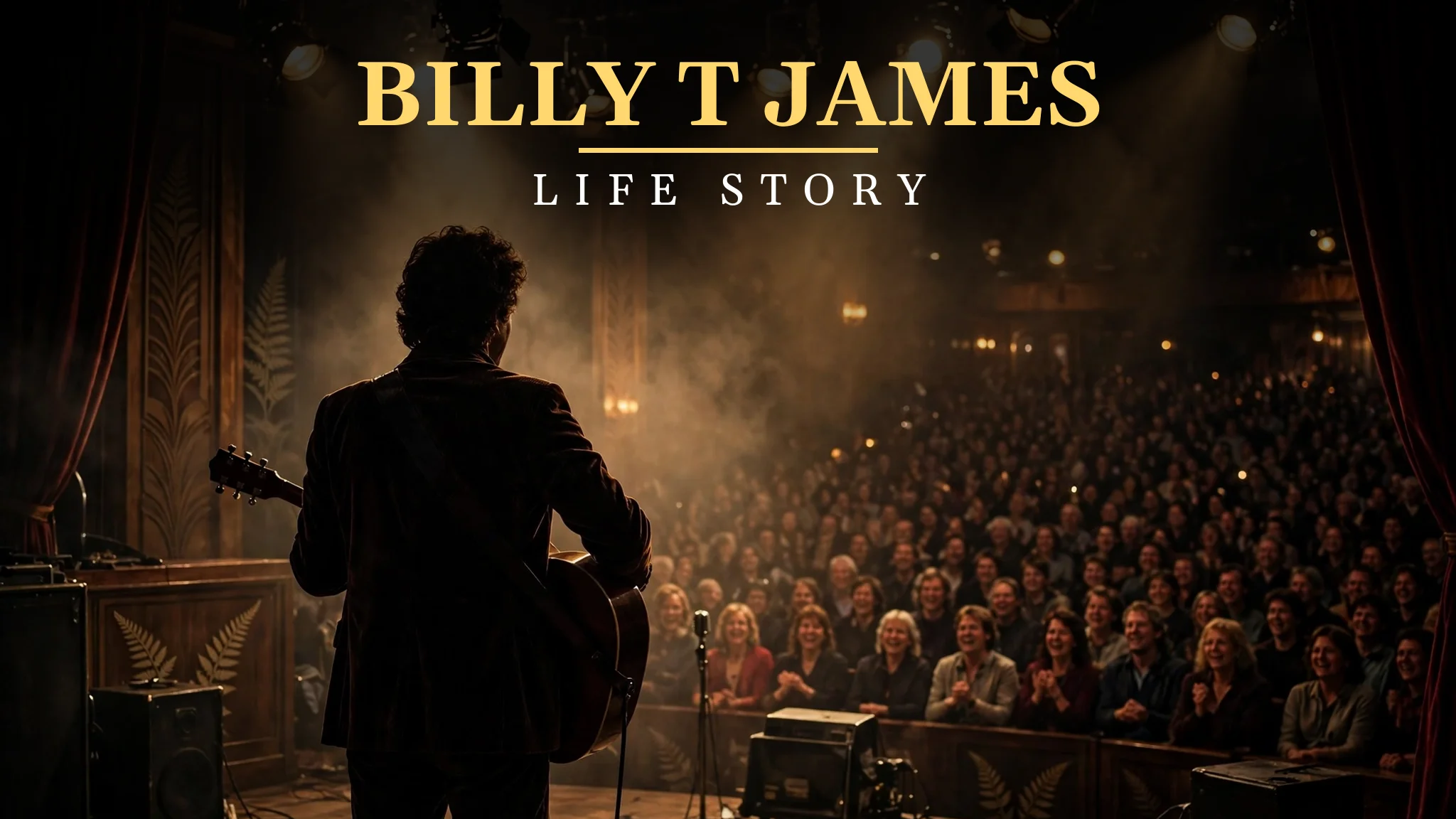
In this post
Billy T James was the funniest man in New Zealand, and many people still say that no one has ever made the country laugh quite like he did. He was a Māori comedian, a musician, and an actor, and he had a gift for making people laugh that was unlike anyone else. He could play the guitar, he could sing, he could do impressions, and he could make an audience laugh until they cried, all in the same show. He was a star of television in the 1980s, and his show, The Billy T James Show, became one of the most loved programmes in New Zealand history.
He was born in Te Kūiti, a small town in the central North Island, and he grew up in a Māori community where music, humour, and storytelling were part of everyday life. He learned to play the guitar as a boy, and he learned to make people laugh by watching the funny people around him. He took that gift to the stage, to radio, and to television, and he became a household name across the country. He was not just a comedian. He was a folk hero, and he is still loved today, more than thirty years after his death.
He died young, at the age of 42, and his death was a shock to the whole country. People mourned him as if they had lost a member of their own family, because in many ways they had. He had been in their homes on television, he had made them laugh through good times and bad, and he had shown them that a Māori man from a small town could become the biggest star in the country. His story is a story of laughter, of music, and of a man who gave everything he had to make people happy.
A Boy From Te Kuiti
Billy T James was born on 17 January 1949 in Te Kūiti, New Zealand. Te Kūiti is a small town in the Waikato region, in the central North Island, and it is a place with a strong Māori community. Billy grew up there in the 1950s, in a world where music and laughter were part of everyday life. He was a lively and funny boy, and he loved to perform from an early age, making his family and his friends laugh with jokes, songs, and impressions.
He was Māori, and his heritage was a big part of who he was. He grew up with the stories, the songs, and the humour of his people, and those things shaped the way he saw the world. He learned to play the guitar as a boy, and he learned to sing, and he discovered that he had a natural gift for making people laugh. That gift would carry him through his whole life, and it would make him one of the most loved entertainers in New Zealand history.
He went to school in Te Kūiti, and he was known as a bright and funny student who could make his classmates laugh. He was not a quiet boy. He was full of energy, and he loved to be the centre of attention. He took part in school concerts, he played music, and he made people laugh wherever he went. He was a natural performer, and everyone who knew him could see that he was destined for the stage.
As a young man, he began to think about a career in entertainment. He knew it would not be easy, because there were few Māori entertainers on television in those years, and the road was hard. But he also knew that he had a gift, and that he was willing to work for it. He left Te Kūiti and began to perform in clubs, in bands, and on radio, learning his craft one small step at a time. He was building the skills that would make him a star, and he was doing it the hard way.
He also learned that a performer has to be brave, because standing on a stage in front of strangers is not easy. Billy was brave, and he was not afraid to fail. He tried new jokes, he tried new songs, and he learned from what worked and what did not. That willingness to take risks is part of what made him great, because comedy is about trying things and seeing what makes people laugh. Billy tried everything, and he learned fast.
His family supported him, and they were proud of what he was doing, even when the road was hard. He knew that he had people behind him, and that gave him the strength to keep going. He was not alone, and he never forgot that. He carried his family and his community with him wherever he went, and he made them proud every time he stepped onto a stage.
Music, Bands, and the Road to the Stage
Billy began his career as a musician, playing guitar and singing in bands. He was a talented guitarist, and he loved music as much as he loved comedy. He performed in clubs and in pubs, and he learned how to hold an audience, how to read a room, and how to make people laugh and sing along. Music was his first love, and it stayed with him throughout his career. He often played the guitar on his television show, and his musical skill was a big part of what made him special.
He worked in bands in the 1960s and 1970s, travelling around New Zealand and performing in front of audiences who loved his energy and his humour. He was not just a musician. He was an entertainer, and he made every show feel like a party. He told jokes between songs, he did impressions, and he made the audience feel as if they were part of the show. That ability to connect with an audience is rare, and Billy had it in abundance.
He also began to appear on radio and on television, taking on small roles and learning how the industry worked. He was funny, he was warm, and he was easy to work with, and people who worked with him remembered him. He was building a reputation as a performer who could do anything, and who would give his best to every job. That reputation mattered, because it brought him more work, and it brought him to the attention of the people who made television in New Zealand.
He also learned how to read an audience, because a good entertainer has to know when to be loud and when to be quiet, when to tell a joke and when to play a song. Billy learned that skill by performing night after night in front of real people, and it made him one of the best live performers in the country. He could feel a room, and he knew how to make it laugh. That is a gift that cannot be taught in a class. It has to be learned on stage, and Billy learned it well.
He also began to write his own material, because he knew that the best comedy comes from real life. He wrote about his own experiences, about being Māori, about growing up in Te Kūiti, and about the funny side of everyday life. That honesty made his comedy feel real, and it made audiences love him. He was not telling jokes that anyone could tell. He was telling his own jokes, and that made all the difference.
The road to fame was long, and it was not easy. Billy faced prejudice, because he was Māori, and because the entertainment world in those years was not always welcoming to Māori performers. He faced it with humour, and he turned it into comedy that made people think as well as laugh. He did not let it stop him. He kept working, he kept learning, and he kept making people laugh. That determination is one of the most impressive parts of his story.
Radio Times and Breaking Through
In the late 1970s, Billy began to appear on radio and on television in roles that showed his talent to a wider audience. He was part of a radio show called Radio Times, and he became known for his quick wit, his musical skill, and his ability to make people laugh. He was funny, he was warm, and he was unlike anyone else on New Zealand radio. Audiences loved him, and they wanted more.
He also began to appear on television, in variety shows and in comedy programmes that were popular at the time. He was a natural on camera, and he had a way of looking at the audience that made them feel as if he was talking directly to them. He was not acting. He was being himself, and that self was funny, warm, and full of life. That honesty is what made audiences love him, and it is what made him a star.
His breakthrough came when he was given his own television show, and when audiences across New Zealand finally saw what he could do. He was no longer just a musician or a radio performer. He was a television star, and he was one of the biggest stars in the country. He had worked for many years to get there, and he had earned every bit of it. He was a man who had come from a small town, and who had become a household name through hard work and through a gift for making people laugh.
Radio Times also showed that Billy could work in a team, because radio is a job that needs many people working together. He learned to listen to his fellow performers, to take their cues, and to make the show better for everyone. That generosity is part of who he was, and it is one of the reasons people loved working with him. He was not interested in being the star. He was interested in making the show as good as it could be, and that attitude made him a great colleague.
He also became known for his impressions, because he could copy the voices of famous people with a skill that made audiences laugh. He did it with love, not with cruelty, and the people he imitated often laughed along with everyone else. That is a sign of a great impressionist, and it is one that Billy had in abundance. He could make people laugh at themselves, and that is a rare and wonderful gift.
He also became a role model for young Māori performers, showing them that it was possible to succeed in entertainment and to do it with pride in who you are. He did not hide his heritage. He celebrated it, and he brought Māori humour and Māori music to a national audience. That was a brave thing to do in those years, and it opened doors for many young Māori entertainers who followed him.
The Billy T James Show
In the 1980s, Billy T James became the star of The Billy T James Show, a television variety show that became one of the most popular programmes in New Zealand history. The show featured Billy doing comedy sketches, playing the guitar, singing, and doing impressions, and it was loved by audiences across the country. It ran for several seasons, and it made Billy one of the most famous people in New Zealand.
The show worked because Billy was at the heart of it, and because he was funny in a way that was warm and kind. He made jokes about everyday life, about being Māori, about politics, and about the funny side of being a New Zealander, and he did it with a smile that made everyone feel included. He did not mock people. He invited them to laugh with him, and they did, week after week. The show was a celebration of New Zealand humour, and Billy was its king.
He played many characters on the show, and he did impressions of famous people that made audiences laugh until they cried. He was a master of timing, and he knew exactly when to pause, when to look at the camera, and when to deliver the punchline. That skill comes from years of performing live, and Billy had it in abundance. He was not just funny. He was a craftsman, and he took his comedy seriously, even when it looked easy.
The show also showed his musical talent, because he often played the guitar and sang, and he did it with a skill that surprised people who only knew him as a comedian. He was a real musician, and he loved music as much as he loved comedy. The combination of music and laughter made the show special, and it is one of the reasons people still remember it today. It was a show that brought the whole country together, and Billy was the man who made it happen.
The show also became a place where New Zealanders could see themselves, because Billy talked about the things that mattered to them. He talked about rugby, about the weather, about family, and about the funny side of being a Kiwi. He made the whole country feel like one big family, sitting together in front of the television and laughing at the same jokes. That is a powerful thing, and it is one of the reasons the show is still loved today.
He also worked with a team of writers and performers who helped him make the show as good as it could be. He was not a solo act. He was part of a team, and he trusted them. That trust showed in the work, because the show felt like a group of friends having fun together, not like a star showing off. Billy was the heart of that team, and he made everyone around him better.
Came a Hot Friday and the Big Screen
In 1985, Billy appeared in the film Came a Hot Friday, a New Zealand comedy about two conmen who arrive in a small town and cause chaos. Billy played a central role in the film, and he brought his humour and his warmth to the big screen. The film was a success in New Zealand, and it showed that Billy could act as well as perform comedy. He was not just a television star. He was a film actor, and he was a good one.
The film was based on a novel by Ronald Hugh Morrieson, and it was a funny and warm look at life in a small New Zealand town. Billy played his part with a natural ease, and he made the audience laugh and care about his character at the same time. It was a different kind of work from his television show, because film is slower and more careful, but Billy adapted to it quickly. He showed that he could do more than just make people laugh on stage. He could tell a story on film, and he could do it with honesty and with heart.
He also appeared in other films and in television dramas, showing that he was more than just a comedian. He was an actor who could play serious roles as well as funny ones, and he was respected by his fellow actors for his skill and his professionalism. He was a man of many talents, and he used them all. He was a musician, a comedian, and an actor, and he was good at all three.
Came a Hot Friday also showed that Billy could work with a director and a cast to tell a story, not just to make people laugh. Film is a slower and more careful job than television, and Billy adapted to it with skill. He listened to his director, he learned his lines, and he gave a performance that was both funny and honest. That adaptability is a sign of a great actor, and it is one that Billy had in abundance.
He also showed that a comedian can be a serious actor, if he is willing to work hard and to take the role seriously. Billy did that, and he earned the respect of his fellow actors. They knew that he was not just a funny man. He was a real actor, and he could play a character with depth and with heart. That is a rare gift, and it is one that few comedians ever have.
Came a Hot Friday is still remembered as one of the great New Zealand films, and Billy’s performance in it is a big part of why. He brought his warmth and his humour to the film, and he made it feel real. It was a reminder that he was not just a television star. He was a true entertainer, and he could do anything he set his mind to. That is a rare gift, and it is one that few performers ever have.
A Life Cut Short
Billy T James died on 7 August 1991 in Auckland, at the age of 42. He had suffered from heart problems in his later years, and his death was caused by heart failure. It was a shock to the whole country, because he had seemed full of life, and because he was still working, still performing, and still making people laugh. The news was shared across New Zealand, and people mourned him as if they had lost a member of their own family.
Tributes came from across the country, from politicians, from comedians, from musicians, and from ordinary people who had loved his work. They spoke of his humour, his warmth, and his generosity, and they said that he was one of the greatest entertainers New Zealand had ever produced. He was buried in a ceremony that was attended by many people, and his family asked for privacy, but his work lives on in the memories of everyone who watched him.
His death was a reminder of how fragile life is, and of how important it is to appreciate the people who make us laugh while they are here. Billy had spent his life making people happy, and he had done it with a grace and a kindness that few entertainers can match. He was not just a funny man. He was a good man, and he is missed by everyone who knew him and by everyone who loved his work.
The tributes that came after his death showed how much he meant to people across the country. Māori leaders spoke of him with pride, comedians spoke of him with love, and ordinary people wrote about how his work had made them laugh through hard times. That is a legacy that few people achieve, and it is one that Billy earned through a lifetime of honest and kind work. He was not just a star. He was a part of New Zealand itself.
He was also a family man, and his family spoke of him as a loving husband and father who was funny at home as well as on stage. That is a beautiful thing, because it means that his humour was not an act. It was who he was, and it was part of his life every day. He made his family laugh, just as he made the whole country laugh, and that is a gift that goes beyond any television show.
He left behind a body of work that is still loved today. People still watch his television show, still listen to his music, and still laugh at his jokes. He is remembered as a legend of New Zealand comedy, and his name is still spoken with love and with laughter. He is gone, but his humour remains, and it will keep making people laugh for many years to come.
My Take:
I think Billy T James was the funniest man New Zealand has ever produced, and I say that because he did something that no one else has ever done. He made a whole country laugh, week after week, and he did it with a warmth and a kindness that made everyone feel included. When I watch his old shows, I laugh, and then I think about how hard it must have been to be that funny, that warm, and that generous, night after night. He was not just telling jokes. He was giving people joy, and that is a gift that few people have.
What I admire most about him is his warmth. He was a comedian, and comedy can be a cruel art, but Billy was never cruel. He made jokes about being Māori, about everyday life, and about the funny side of being a New Zealander, and he did it with a smile that made everyone feel welcome. He did not mock people. He invited them to laugh with him, and they did. That is a sign of a good person, and it is one of the reasons people loved him so much.
I also think about his music, and how much it meant to him. He was a real musician, and he loved to play the guitar and to sing. He brought that love into his comedy, and it made his shows special. He was not just a man telling jokes. He was an entertainer, and he gave his audiences everything he had, music, laughter, and heart. That is a rare thing, and it is one that I admire deeply. He did not hold back. He gave it all, every time.
I think about Te Kūiti, and how far he came from that small town. He was a boy from a Māori community, and he became the biggest star in the country. That is a remarkable journey, and it shows what is possible when a person has talent, works hard, and never gives up. He faced prejudice, because he was Māori, and because the entertainment world was not always kind to Māori performers. He faced it with humour, and he turned it into comedy that made people think as well as laugh. That takes courage, and I respect him for it.
I also think about the young Māori performers who followed him, and how much he meant to them. He showed them that it was possible to succeed, and to do it with pride in who you are. He did not hide his heritage. He celebrated it, and he brought Māori humour and Māori music to a national audience. That opened doors for many young people, and it changed New Zealand entertainment for the better. I think that is one of his greatest achievements, and it is one that will last long after his jokes are forgotten.
I think about his death, and how sad it was. He was only 42 years old, and he was still at the height of his powers. He had so much more to give, and the world lost him too soon. It is a reminder that life is fragile, and that we should appreciate the people who make us laugh while they are here. Billy made us laugh for many years, and he did it with a grace and a kindness that few entertainers can match. I miss him, even though I never met him, because his work was part of my life.
If I were a young comedian starting out, I would look at Billy T James and learn from him. I would learn to be warm, to be kind, and to invite the audience to laugh with me, not at someone else. I would learn to play music, to tell stories, and to give everything I have to every performance. I would learn that humour can be a force for good, and that a comedian who loves his audience will always be loved back. Those are lessons that Billy lived, and they are lessons that any young comedian can learn from.
I also think about what he might have done next, if he had lived longer. He would have kept performing, kept making people laugh, and kept showing the world what New Zealand humour could be. He would have become even greater, and he would have kept opening doors for young Māori performers. I wish he had more time, because the world needs more people like him, people who can make us laugh and make us feel included at the same time. I will miss him, and I will keep watching his work, because it still makes me laugh, and it still makes me feel happy.
In the end, I admire Billy T James because he reminds me that laughter is a gift, and that the people who give it to us are precious. He gave New Zealand laughter for many years, and he did it with a warmth and a kindness that few people can match. I hope his work is remembered for a long time, and I hope the next generation of comedians learns from him, because the world needs more people like Billy T James.
I think the lesson of his story is simple and hopeful. You do not need to be cruel to be funny. You need to be warm, kind, and true, and you need to invite people to laugh with you. Billy T James did that for his whole life, and the result is a legacy of laughter that will last for many years. I am glad he was here, and I am glad New Zealand had him. He was one of the great entertainers of his time, and I will keep watching his work with admiration and with thanks.
I think about the way he played the guitar, and I think it was one of the most beautiful parts of his show. He did not just play for laughs. He played because he loved music, and that love came through in every note. He was a real musician, and he gave his audiences music as well as laughter. That is a rare combination, and it is one that made his show special. He was not just a comedian. He was an entertainer in the fullest sense of the word, and he gave his audiences everything he had.
I also think about the prejudice he faced, and how he turned it into comedy. He was Māori, and the entertainment world in those years was not always kind to Māori performers. Billy did not let that stop him. He made jokes about it, he made people think about it, and he made them laugh at the same time. That takes courage, and it takes a kind of wisdom that few people have. He did not fight prejudice with anger. He fought it with laughter, and that laughter changed minds.
I think about the young Māori comedians who followed him, and how much he meant to them. He showed them that it was possible to be funny, to be proud, and to be loved, all at the same time. He opened doors that had been closed, and he did it with a smile. That is a legacy that will last long after his jokes are forgotten, because it changed the face of New Zealand entertainment. I am grateful for it, and I think many young performers are too.
I also think about his family, and how they must have felt watching him become a star. He was a boy from Te Kūiti, and he became the biggest name in the country. That must have been a proud moment for his family, and it must have been a happy one too. He never forgot where he came from, and he carried his family with him wherever he went. That is a beautiful thing, and it is one that I admire deeply.
I think about the laughter he gave us, and I think about how much we need laughter in hard times. Billy made people laugh when times were tough, and he did it with a warmth that made everyone feel better. That is a gift, and it is one that few people have. He was not just a comedian. He was a healer, in his own way, and he used laughter to make the world a little bit brighter. I am grateful for that, and I think many people are too.
I also think about what he might have done next, if he had lived longer. He would have kept performing, kept making people laugh, and kept showing the world what New Zealand humour could be. He would have become even greater, and he would have kept opening doors for young Māori performers. I wish he had more time, because the world needs more people like him, people who can make us laugh and make us feel included at the same time. I will miss him, and I will keep watching his work, because it still makes me laugh, and it still makes me feel happy.
I will finish by saying that I am grateful for Billy T James and for the work he did. He made New Zealand laugh, he made us proud, and he showed us that a boy from a small town could become a legend. I will keep watching his shows, I will keep listening to his music, and I will keep laughing at his jokes, because his humour is still alive, and it still makes the world a better place. He is gone, but he is not forgotten, and he never will be.
I think the lesson of his story is simple and hopeful. You do not need to be cruel to be funny. You need to be warm, kind, and true, and you need to invite people to laugh with you. Billy T James did that for his whole life, and the result is a legacy of laughter that will last for many years. I am glad he was here, and I am glad New Zealand had him. He was one of the great entertainers of his time, and I will keep watching his work with admiration and with thanks.
He reminds me that laughter is one of the greatest gifts we can give each other, and that the people who give it to us are precious. Billy gave us laughter, and he gave it with a full heart. I will keep his work close to my heart, and I will keep hoping that the world produces more people like him, because we need them now more than ever.
I think about Te Kūiti, and I think about the boy who left that small town with a guitar and a dream. He became a legend, and he did it by being himself, by working hard, and by making people laugh. That is a story that will stay with me, and it is one that I will tell to others, because it shows what is possible when a person has talent, courage, and a heart full of laughter.
His laughter still rings in the ears of everyone who watched him, and I am glad it does, because the world is a brighter place when we can laugh together at the truth of who we are.
I will keep laughing at his jokes, and I will keep telling his story, because a man who made a whole country laugh deserves to be remembered for as long as laughter itself lasts.
He was a legend, and he always will be, because true legends are not made by fame alone. They are made by love, and Billy T James was loved by a whole country.
That love will keep his name alive for many years to come, and I am glad it will, because he earned every bit of it with his warmth, his music, his kindness, his courage, his honesty, and his laughter.
Frequently Asked Questions
What is Billy T James best known for?
Billy T James is best known for The Billy T James Show, his television variety show in the 1980s, where he did comedy sketches, played guitar, sang, and did impressions. He also starred in the film Came a Hot Friday in 1985.
Where was Billy T James born?
Billy T James was born on 17 January 1949 in Te Kūiti, a small town in the Waikato region of New Zealand’s North Island. He grew up in a Māori community where music and humour were part of everyday life.
How did Billy T James become famous?
He began as a musician playing guitar in bands, then worked in radio and television, including Radio Times, before getting his own television show. His warmth, musical skill, and gift for comedy made him a household name across New Zealand.
What film did Billy T James appear in?
He appeared in Came a Hot Friday in 1985, a New Zealand comedy about two conmen in a small town. The film was a success and showed that he could act on the big screen as well as perform on television.
How did Billy T James die?
He died on 7 August 1991 in Auckland, aged 42, from heart failure after suffering heart problems in his later years. His death was mourned across New Zealand, where he was loved as one of the country’s greatest entertainers.
Why is Billy T James still remembered today?
He is remembered as one of the greatest comedians in New Zealand history, a Māori entertainer who made the whole country laugh and who opened doors for young Māori performers. His television show, his music, and his film work are still loved today.


