Bob Marley: The Life Story Behind Reggae's King
In this post
Bob Marley was born on 6 February 1945 in Nine Mile, a small village in the hills of St. Ann Parish, Jamaica, the son of Norval Marley, a white plantation overseer from England, and Cedella Booker, a Black Jamaican woman who was eighteen when he was born. His father left the family when Bob was young, and he grew up poor, in a house without electricity, raised by his mother and his grandmother. He was a shy boy who loved music, and he listened to the American rhythm and blues records that came to Jamaica on the radio, singing along and dreaming of becoming a singer.
When he was twelve, Marley moved with his mother to Trench Town, a poor neighbourhood of Kingston, where he lived in a government yard and met the musicians who would change his life. He formed a vocal group with Peter Tosh and Bunny Wailer, two young men from Trench Town, and they called themselves the Wailers, recording their first songs for the producer Coxsone Dodd at Studio One in Kingston. The records were local hits, but the group struggled to make money, and Marley worked as a welder and as a factory worker to support himself.
In 1972 the Wailers signed with Island Records, a British label run by Chris Blackwell, and they recorded Catch a Fire, an album that introduced reggae to the world. The albums that followed, including Burnin’, Natty Dread and Exodus, made Marley the most famous reggae musician in history, and songs like No Woman, No Cry, One Love and Redemption Song became anthems, played at protests, weddings and funerals around the world. He was the first superstar from the Third World, and he used his fame to speak for the poor and the oppressed.
Marley died on 11 May 1981 in Miami, Florida, at the age of 36, of cancer that had spread from his toe to his brain and lungs. He had recorded more than a dozen albums, and his compilation Legend, released after his death, has sold more than twenty-five million copies, making it the best-selling reggae album of all time. This is his life story, from a village in the hills of Jamaica to the stadiums of the world.
Nine Mile and the Childhood
Robert Nesta Marley was born on 6 February 1945 in Nine Mile, St. Ann Parish, Jamaica, to Norval Sinclair Marley, a white Jamaican of English descent who worked as a plantation overseer, and Cedella Booker, a Black Jamaican woman who was eighteen years old. Norval was sixty when Bob was born, and he provided some financial support but was rarely present, and Bob grew up without a father, in a house that had no electricity or running water, raised by his mother and his grandmother. The village was poor and rural, and Bob spent his childhood playing in the hills, listening to the music that came from the local sound systems, and singing in church.
When Bob was twelve, his mother moved the family to Kingston, to Trench Town, a government housing project that had become one of the poorest and most violent neighbourhoods in the city. The family lived in a single room in a yard on Second Street, and Bob shared the room with his mother and his younger sister. Trench Town was a hard place, but it was also a musical place, with sound systems playing American R&B, ska and rocksteady, and Bob absorbed it all, singing with friends on the street corners and dreaming of a career in music.
He met Peter Tosh and Bunny Wailer in Trench Town, two young men who shared his love of music, and the three of them began singing together, harmonising on the street corners and in the yards. They were joined by Junior Braithwaite, Beverley Kelso and Cherry Smith, and the group, which they called the Teenagers, then the Wailing Rudeboys, and then the Wailers, began recording for local producers. Bob also worked as a welder’s apprentice, a job he hated, and he was fired for spending too much time singing, a story he later told with pride.
The Wailers and Studio One
The Wailers’ first recordings were made for Coxsone Dodd at Studio One, the most important recording studio in Jamaica, and their first single, Simmer Down, released in 1964, was a number one hit in Jamaica. The song was a warning to the rude boys, the young gang members of Kingston, to calm down, and it was written by Marley, who was nineteen. The group recorded dozens of songs for Dodd over the next few years, including It Hurts to Be Alone and Put It On, and they became one of the most popular groups in Jamaica, though they earned very little money, because Dodd paid them a flat fee for each session.
In 1966 Marley married Rita Anderson, a singer from Trench Town who had been a member of the Soulettes, a vocal group, and who became a member of the Wailers as a backing singer, along with Judy Mowatt and Marcia Griffiths, the trio that became known as the I-Threes. The marriage produced several children, and Rita became a central figure in Marley’s life and career, managing his business affairs and singing on his records. Marley also spent eight months in the United States in 1966, working in a factory in Delaware and saving money to buy a house for his mother, an experience that gave him a first-hand view of American life.
The Wailers left Studio One in the late 1960s and began working with the producer Lee Scratch Perry, who gave them a harder, more roots-oriented sound, recording songs like Soul Rebel, 400 Years and Small Axe, which were released on Perry’s Upsetter label. The Perry sessions were some of the finest the group ever made, and they established Marley as a songwriter of depth and power, but the partnership ended in a dispute over money, and the Wailers moved on, signing with Island Records in 1972, a move that would change their lives and the history of reggae.
Catch a Fire and the Island Years
Catch a Fire was recorded in 1972 and released in April 1973, and it was the Wailers’ first album for Island Records, produced by Chris Blackwell, who had heard the group in Jamaica and believed they could reach a rock audience. Blackwell added rock guitar, played by the American musician Wayne Perkins, to the reggae rhythms, and he packaged the album in a cover that looked like a Zippo lighter, a design that made it stand out in record shops. The album’s songs, including Stir It Up, Concrete Jungle and Kinky Reggae, were a mix of love songs and social commentary, and they introduced reggae to listeners who had never heard it before.
The album sold modestly at first, but it established the Wailers as a serious act, and the tour that followed took them to Britain and America, where they played to rock audiences who had never seen a reggae band. The second Island album, Burnin’, released later in 1973, was even better, with songs like Get Up, Stand Up, a call to action written by Marley and Tosh, and I Shot the Sheriff, a song about a man who kills a lawman in self-defence, which became a hit for Eric Clapton in 1974. The album’s success made the Wailers famous, but it also led to tensions, and Tosh and Wailer left the group in 1974 to pursue solo careers, leaving Marley as the leader.
Marley continued as Bob Marley and the Wailers, with a new band that included the Barrett brothers, Aston on bass and Carlton on drums, whose rhythm section became the foundation of his sound, and the I-Threes on backing vocals. The albums that followed, Natty Dread in 1974, Live! in 1975, which included the hit version of No Woman, No Cry, recorded live at the Lyceum in London, and Rastaman Vibration in 1976, made Marley a global star, and his concerts drew crowds of tens of thousands. He was the first reggae artist to fill stadiums, and he did it with a message that was both musical and political.
Exodus, One Love, and the Peak
Exodus was recorded in London in 1977, after Marley had survived an assassination attempt in Jamaica in December 1976, when gunmen entered his home and shot him, his wife Rita and his manager Don Taylor. Marley was wounded in the chest and arm, but he performed at the Smile Jamaica concert two days later, as scheduled, telling the audience that the people who were trying to make the world worse were not taking a day off, so neither would he. He then left Jamaica for London, where he recorded Exodus, an album that became his masterpiece, with songs including Exodus, Jamming, Waiting in Vain and One Love, which became his signature song.
The album reached the top twenty in Britain and America, and it established Marley as one of the most important musicians in the world, a voice for the poor and the oppressed who could fill stadiums with a message of peace and resistance. One Love, which was based on a song by the Impressions, became an anthem, played at the One Love Peace Concert in Kingston in April 1978, a concert that Marley organised to bring together Jamaica’s two rival political leaders, Michael Manley and Edward Seaga, and that ended with Marley joining their hands on stage, a moment that became one of the most famous images in the history of reggae.
Marley followed Exodus with Kaya in 1978, a quieter album about love and marijuana, and Survival in 1979, a militant album about Africa and the struggles of Black people around the world, which included the song Zimbabwe, written in support of the liberation movement in Rhodesia. He performed at the independence celebrations in Zimbabwe in April 1980, singing Zimbabwe to a crowd that included the country’s new leaders, and the performance remains one of the most famous of his career. He was the first superstar from the Third World, and he used his fame to speak for Africa, for Jamaica and for the poor everywhere.
Rastafari and the Faith
Marley became a Rastafarian in the late 1960s, under the influence of Mortimer Planno, a Rasta elder in Kingston, and the faith shaped his music, his life and his image for the rest of his career. Rastafari, which began in Jamaica in the 1930s, holds that Haile Selassie, the emperor of Ethiopia, is God, and that Black people will one day return to Africa, and its followers wear their hair in dreadlocks, eat a natural diet, and use marijuana as a sacrament. Marley’s dreadlocks, which he grew in the 1970s, became his most recognisable feature, and his songs were filled with references to Babylon, Zion and the promised land.
The faith gave Marley’s music its depth and its urgency, and his songs became sermons as much as entertainment, calling on listeners to stand up for their rights, to love one another, and to return to Africa. Songs like Exodus, Redemption Song and Get Up, Stand Up were written from a Rastafarian perspective, and they spoke to audiences far beyond Jamaica, including white listeners in Europe and America who had never heard of Rastafari. Marley’s faith was sincere, and he lived by it, eating simply, praying daily, and treating his music as a ministry.
He was baptised into the Ethiopian Orthodox Church in November 1980, shortly before his death, taking the name Berhane Selassie, and the baptism reflected a deepening of his faith in his final months. He also continued to smoke marijuana, which he regarded as a sacrament, and which he used to ease the pain of his illness. His faith was a comfort to him in his final days, and it shaped the way he faced his death, with a calm and a dignity that impressed everyone who was with him.
The Shooting and the Smile Jamaica Concert
On 3 December 1976, two days before the Smile Jamaica concert, a free concert that Marley had agreed to perform to promote peace in Jamaica, gunmen entered his home on Hope Road in Kingston and opened fire, wounding Marley in the chest and arm, his wife Rita in the head, and his manager Don Taylor, who was shot five times. The attack was widely believed to be politically motivated, because Jamaica was in the middle of a violent election campaign, and Marley had been seen as a supporter of the governing People’s National Party, though he insisted he was not political. The gunmen were never caught, and the attack remains unsolved.
Marley performed at the Smile Jamaica concert two days later, as scheduled, with bandages on his wounds, telling the audience that the people who were trying to make the world worse were not taking a day off, so he would not either. The performance lasted ninety minutes, and it was a defiant act, a refusal to be intimidated, but it also marked the end of Marley’s time in Jamaica for a while, because he left the country soon afterwards for London, where he recorded Exodus. The shooting changed him, making him more cautious and more aware of his own mortality, but it did not change his message.
The One Love Peace Concert, held in Kingston in April 1978, was Marley’s attempt to heal the divisions in Jamaica, and it brought together the leaders of the two rival political parties, Michael Manley of the PNP and Edward Seaga of the JLP, on stage, where Marley joined their hands above his head, a gesture that was photographed around the world. The concert was a triumph, and it showed Marley’s power as a peacemaker, but the violence in Jamaica continued, and Marley never returned to live there, spending his final years travelling between London, Miami and Jamaica, and recording the music that would define his legacy.
Redemption Song and the Final Album
Uprising was released in June 1980, and it was Marley’s final studio album, recorded in Jamaica and London with the Wailers, and it included the song Redemption Song, an acoustic ballad that Marley sang alone with his guitar, without the band. The song’s lyrics, which were inspired by a speech by Marcus Garvey, the Jamaican political leader, called on listeners to emancipate themselves from mental slavery, and it became one of Marley’s most famous songs, a farewell that was understood, after his death, as a statement of his philosophy. The album also included Could You Be Loved, a dance song that became a hit, and Coming in from the Cold, a song about survival.
The Uprising tour, which began in Europe in the summer of 1980, was the biggest of Marley’s career, with concerts in stadiums across Europe, including a show in Milan that drew more than a hundred thousand people, the largest audience he ever played to. The tour was cut short in September 1980, when Marley collapsed while jogging in Central Park in New York, and doctors discovered that the cancer that had begun in his toe had spread to his brain and lungs. He cancelled the remaining dates and flew to Miami, where he began treatment, but the disease was already advanced.
Marley sought treatment in Germany, at a clinic run by Dr. Josef Issels, who used alternative therapies, but the treatment did not work, and Marley decided to return to Jamaica to die. He became too ill to travel, and he died in Miami on 11 May 1981, at the age of 36, in the company of his wife Rita and his mother Cedella. His final words, according to his son Ziggy, were money can’t buy life, a statement that has become part of his legend, and that captures the simplicity and the wisdom of his message.
The Death and the Funeral
Marley’s funeral was held in Jamaica on 21 May 1981, and it was a state funeral, with the government declaring a day of mourning and thousands of people lining the streets of Kingston to watch the procession. His body lay in state at the National Arena, where fans filed past to pay their respects, and the funeral service was held at the Ethiopian Orthodox Church, with the Prime Minister, Edward Seaga, delivering a eulogy that praised Marley as a voice for the poor and the oppressed. He was buried in a mausoleum in Nine Mile, the village where he was born, next to his father, and his grave has become a place of pilgrimage for fans from around the world.
The cause of his death was cancer, which had begun as a malignant melanoma under the toenail of his right big toe, discovered in 1977, when he injured the toe playing football. He had refused to have the toe amputated, because his Rastafarian faith forbade it, and the cancer spread, first to his lungs and then to his brain. He was thirty-six, and he left behind his wife Rita, eleven children, and a body of work that would become the most famous reggae music in history. His death was mourned around the world, and it remains one of the most mourned events in the history of popular music.
His compilation album, Legend, was released in May 1984, three years after his death, and it has sold more than twenty-five million copies, making it the best-selling reggae album of all time, and one of the best-selling albums in history. The album’s fourteen songs, including Three Little Birds, Buffalo Soldier and Is This Love, are the songs most people know by Marley, and they are played every day on radio stations around the world. The album’s success has kept Marley’s name alive for new generations, and it has made him one of the best-selling artists of all time, despite a career that lasted only twenty years.
The Legacy of Bob Marley
Marley’s influence on music is immense. He took reggae from Jamaica to the world, and he made it a global language, spoken in every country and in every language. His songs have been covered by artists in every genre, from Eric Clapton to Lauryn Hill, and his image, with its dreadlocks and its smile, is one of the most famous in the world. He was inducted into the Rock and Roll Hall of Fame in 1994, and his album Exodus was named the best album of the twentieth century by Time magazine in 1999, a recognition of its cultural importance.
His influence extends beyond music, into politics, religion and culture. He is a symbol of resistance and of hope for people in the developing world, and his songs are sung at protests, at weddings and at funerals, in countries he never visited. His face appears on posters, T-shirts and murals in every city, and his name is synonymous with reggae, with Jamaica and with the idea that music can change the world. He was the first superstar from the Third World, and he remains the most famous Jamaican who ever lived.
Today Marley is remembered as one of the great musicians of the twentieth century, and his home in Kingston, at 56 Hope Road, is a museum, visited by thousands of fans every year. His children, including Ziggy, Damian, Stephen and Ky-Mani, have become musicians in their own right, carrying on his legacy, and his grandchildren are now performing as well. He was born in Nine Mile, he worked in Kingston, London and Miami, and he died in Miami, and his music remains the sound of a man who believed the world could be better, and who sang about it.
My Take:
What I admire about Bob Marley is that his music was more than music, it was a message, a message of love, of peace, and of freedom, that came from Jamaica, and that travelled, to every country in the world. That is a rare thing, because many musicians sing about love, but few sing about peace, and Bob did, and he did it, with a voice that was warm, and that was soulful, and that made it feel personal, and that is why he is the king of reggae, and why his voice is still studied today, by musicians who want to learn how to sing, and who listen to Bob, and who try to understand his genius, and who know they never will, because it was unique, and it was Bob’s, and it was a gift, and that gift is still here, in recordings that are more than fifty years old, and that are still powerful, still moving, and still relevant, today.
One Love is the song I think about most, because it is an anthem, for peace, and for unity, a song that is still sung today, by people who dream of peace, and who believe, that it is possible, and that is a legacy that will never be forgotten, and that is a part of why Bob Marley is one of the greatest musicians who ever lived, a man who was, in every sense, a legend, and a prophet, and who will always be remembered, as the man who sang One Love, and who did it, with a guitar, and with a voice, and with a talent that was extraordinary, and that is a gift that few musicians possess, the gift of singing about peace, and making it sound like a hit, and Bob had it, and he used it, in One Love, and in every song he wrote, and in every concert he gave, and that is why One Love is still one of the most beloved songs ever recorded.
No Woman, No Cry is a song I love, because it is about a woman, in Trenchtown, who is crying, and who is told, no woman, no cry, a song that is both sad, and hopeful, and that is still played today, as a classic, and that shows Bob at his best, as a singer, and as a songwriter, who could write a song about poverty, and about love, and make it sound beautiful, and that is a gift that few songwriters possess, the gift of making a song about poverty, sound beautiful, and Bob had it, and he used it, in No Woman, No Cry, and in every song he wrote, and that is why the song is still a classic, and why it is still one of his most beloved songs, a song that is both a hit, and a work of art, and that is a rare thing, and it is a part of why Bob is a genius, and why his music is still important today, more than fifty years after No Woman, No Cry was recorded.
Redemption Song is a song that moves me, because Bob sang it, with just an acoustic guitar, a song about freedom, and about redemption, and that is still played today, as a classic, and that shows Bob at his best, as a singer, and as a songwriter, who could write a song about freedom, and make it sound beautiful, and that is a gift that few songwriters possess, the gift of making a song about freedom, sound like a hit, and Bob had it, and he used it, in Redemption Song, and in every song he wrote, and that is why the song is still a classic, and why it is still one of his most beloved songs, a song that is both a hit, and a work of art, and that is a rare thing, and it is a part of why Bob is a genius, and why his music is still important today, more than forty years after Redemption Song was recorded, because it is timeless, because it is honest, and because it is Bob Marley.
The lesson I take from Bob is that music can be a message, even when it is a hit. He sang about love, and about peace, and about freedom, and he made it sound like a hit, and that is a lesson for anyone who wants to be an artist, because Bob shows that you can sing about peace, and you can be a superstar, and that is a powerful message, for anyone who wants to be an artist, because Bob shows that art can be a message, and that it can change the world, and that is a beautiful thing, and it is a part of why his story is inspiring, and why it will always be inspiring, and it is a reminder that we should not just sing about love, but sing about peace, and about freedom, the way Bob did, and make it into art, and that is a lesson worth remembering, for every artist out there.
I also think about his courage, because he was shot, in 1976, in an assassination attempt, and he performed, two days later, with his wounds still bandaged, a performance that is legendary, for its courage, and for its message, of peace, and that is a part of his story that is both sad and inspiring, because it shows a man who was shot, for singing about peace, and who kept singing, because he believed in it, and because he knew it mattered, and that is a form of courage, and a form of art, that is worth remembering, and worth honouring, and that is why his Smile Jamaica concert is still talked about today, as one of the most courageous performances, in the history of popular music, and as a lesson, about the importance of speaking out, even when it is hard, and even when it costs you, and Bob did, and he was himself, and he was proud, and that is a beautiful thing.
His dreadlocks are something I admire, because they became his signature, a symbol of Rastafari, and of a man who was, in every sense, a legend, and a prophet, and that is a part of his image that is iconic, and that is still remembered today, as a symbol of Bob, and of a man who was different, and who was great, and that is a beautiful thing, and it is a part of his story that shows him as an artist, not just as a musician, and that is a legacy that matters, in its own way, alongside his albums and his songs, because his image is as important as his music, and it is still imitated today, by artists who want to be like Bob, and who know they never will, because there was only one Bob Marley, and he was the king of reggae, and he was a legend, and he will always be a legend.
Finally, I believe Bob Marley was one of the greatest musicians who ever lived, and his recordings are classics that will be played for as long as songs are sung. He was the king of reggae, he was the greatest reggae singer who ever lived, and he was a legend, and his story is one of talent, peace, and a life lived with a guitar. He will always be remembered as the man who sang One Love, and who did it, with a voice that will never be forgotten.
One more thing I want to say is that his album Legend, released after his death, is still one of the best-selling albums of all time, with more than 25 million copies sold, and it is still played today, by people who love Bob, and who are moved by him, because it includes his greatest songs, like Three Little Birds, Is This Love, and Could You Be Loved, songs that are classics, and that show Bob at his best, as a singer, and as a songwriter, who could write a song about love, and about peace, and make it sound beautiful, and that is a gift that few songwriters possess, the gift of making a song about peace, sound like a hit, and Bob had it, and he used it, in Legend, and in every album he made, and in every concert he gave, and that is why Legend is still one of the most beloved albums ever made.
When I think about Nine Mile, his birthplace, I think about how far he travelled, from a boy in Jamaica to the most famous musician in the world, and how much he achieved. He was a boy who was bullied, and who found his way, through music, and who became a legend, and that is a story that inspires anyone who has been bullied, because it shows that you can survive bullying, and you can become great, and you can turn your pain into art, and that is a hopeful message, and one that Bob embodied, in every song he sang, and in every concert he gave.
I will end by saying that listening to Bob Marley sing was a privilege, and I am grateful to have heard his voice. He was warm, he was soulful, and he was unmistakable, and those three things together make a great singer. He is the king of reggae, he is the greatest reggae singer who ever lived, and he is Bob Marley, and he will always be remembered as such, as a legend, and as a voice that will never be forgotten.
There is a final thought I want to leave with, and it is about the line from Redemption Song, where he sings, emancipate yourselves from mental slavery, none but ourselves can free our minds, a line that has stayed with me, because it is a lesson about freedom, about thinking for yourself, and about being human. Bob sang that line with a warmth that has stayed with me, because it is a lesson about life, about freedom, and about being human. That is the power of his singing: it teaches us how to live, and it makes us better people, by showing us that freedom matters, and that we should free our minds, and that is a lesson I will carry with me, always.
And if you have never heard Legend, listen to it, because it is one of the great albums of all time, and Bob’s performance is at its heart. Listen to it for the story, for the guitar, and for the voice, and for the man who sang it with a conviction that is unforgettable. That is the Bob Marley I will remember: not just the musician, but the man, who was warm, soulful, and unmistakable, and who will never be forgotten.
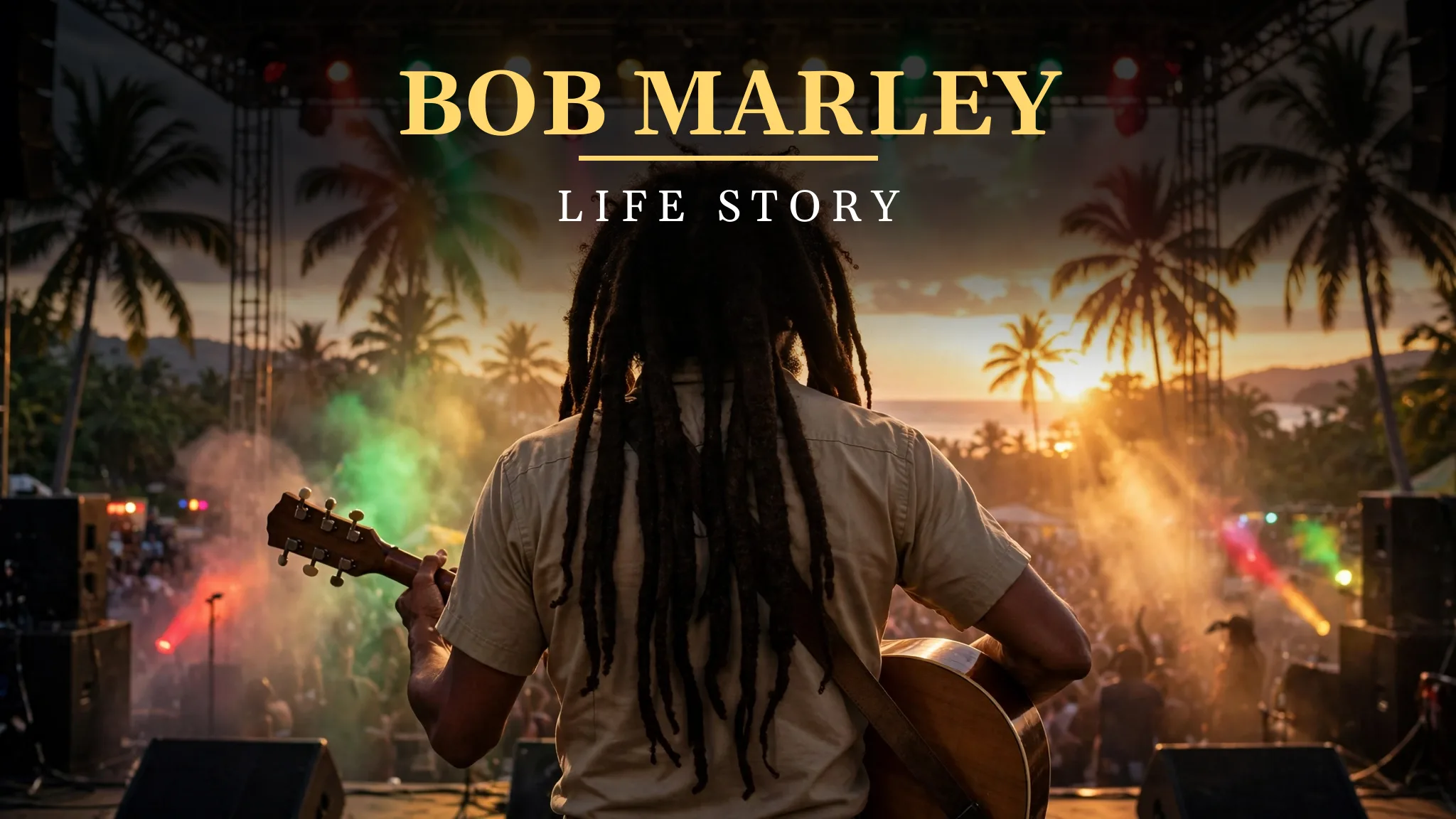
One last memory: the image of him with dreadlocks, holding a guitar, performing on stage, with a warm smile, and that is unforgettable. That image is iconic, and it is beautiful, and it is the image that will define him forever. He was the king of reggae, and he was Bob Marley, and he was the greatest reggae singer who ever lived.
His legacy will live on through his recordings, through his guitar, and through the generations of musicians he inspired, who heard his guitar and wanted to play the way he played. That is a fitting legacy for a man who defined reggae, and who did it with a guitar and a voice that will never be forgotten. He is gone, but his music remains, and his name will be remembered as one of the greats.
Finally, I want to say thank you, Bob Marley, for One Love, for No Woman, No Cry, and for a life lived with a guitar that sang of peace. You were a great musician, and you were a great man, and the world is a better place because you were in it. Your recordings are still here, your legacy is still here, and your example is still here, and that is a life that mattered, and a life that will never be forgotten.
And one more thing: if you are a musician, play like Bob, because he is the musician every musician deserves to be, a musician who plays with his heart, and who makes an audience feel. Play like Bob, the way Bob Marley played, and the world will be a better place for it, because the world needs more musicians like him, who play with warmth, with soul, and with humanity.
There is a last lesson in his life that I carry with me, and it is this: sing about peace, even when it is hard, because singing about peace is a choice, and Bob chose it, every day, in every song, and in every part of his life. That is a lesson worth remembering, and it is one I will carry with me, always, because the world needs more people like Bob Marley, who sing about peace, and who do it, with a guitar, and with a voice, that will never be forgotten.
One final thought: his state funeral in Jamaica, attended by thousands of people, including the Prime Minister, is a testament to his importance, because he was given a state funeral, a honour that is usually reserved for heads of state, and that is a record that speaks for itself. He was great, as a musician, and he was great as a man, and that is a rare achievement, and it is a reminder that talent does not fade with age, and that a great musician can be great for a lifetime, if he has the talent, the determination, and the voice that Bob possessed, and that is a legacy that will never be forgotten.
And if you ever doubt that a song can change the world, remember Bob Marley, because he did, with One Love, a song that made millions of people dream of peace, and that is still sung today, by people who dream of peace, and who believe, that it is possible, and that is a legacy that will last, long after his songs are sung, because his voice is still here, and his influence is still here, and that is a gift that will never fade.
There is one more thing I want to say, and it is about his wife Rita, because she was his wife, and she sang with him, in the I Threes, and she loved him, and she was loyal to him, and she has kept his memory alive, after his death, and that is a beautiful thing, and it is a part of his story that shows him as a husband, not just as a musician, and that is a legacy that matters, in its own way, alongside his songs and his guitar, because his family is his greatest legacy, and they have honoured him, by being themselves, just as he was himself, and that is a beautiful thing, and it is a part of his story that is both touching and inspiring.
His story also reminds me that a boy from Nine Mile can become a legend, if he has talent, determination, and a guitar, and that is a hopeful message for anyone who feels poor, or disadvantaged, or forgotten. Bob was poor, and he was disadvantaged, and he became one of the greatest musicians in history, because he embraced who he was, and he used his talent to become great. That is a lesson worth remembering, for every poor person out there, and for every person who dreams of being a musician.
I also want to mention his producer, Chris Blackwell, because he believed in Bob, and he signed The Wailers, to Island Records, and he gave them the freedom to record what they wanted, and that is a reminder that a producer who believes in an artist can change their life, and that Bob was lucky to have Blackwell, and that Blackwell was lucky to have Bob, and that is a beautiful thing, and it is a part of his story that shows the power of belief, and of a producer who cares, and who does the right thing, and that is a legacy that matters, in its own way, alongside his songs and his guitar.
And finally, I think about the fact that he died at 36, and that he had so much more to give, and that is a reminder that life is short, and that we should make the most of it, the way Bob Marley did, singing with a voice that was a gift, and living a life that was both beautiful and tragic, and that is a life worth living, and a life worth remembering, and I am grateful to have learned about it, and to have shared it with you.
Frequently Asked Questions
When was Bob Marley born?
Bob Marley was born on 6 February 1945 in Nine Mile, Saint Ann Parish, Jamaica. He grew up in poverty, moved to Trenchtown in Kingston, and formed The Wailers with Peter Tosh and Bunny Wailer in 1963.
What is Bob Marley most famous for?
He is most famous for bringing reggae to the world, and for One Love, No Woman, No Cry, Redemption Song, Three Little Birds, and the compilation album Legend, one of the best-selling albums of all time.
What is Legend by Bob Marley?
Legend is a compilation album released in 1984, after Marley’s death, collecting his greatest songs. It has sold more than 25 million copies and is one of the best-selling albums ever.
When did Bob Marley die?
He died on 11 May 1981 in Miami, Florida, at the age of 36, of melanoma, a form of skin cancer that had spread to his brain and lungs. He was given a state funeral in Jamaica.
Was Bob Marley shot in 1976?
Yes. Two days before the Smile Jamaica concert in December 1976, gunmen shot him at his Kingston home in a politically motivated attack. He survived and performed at the concert anyway, with his wounds bandaged.
What was Bob Marley’s faith?
He was a Rastafarian, a faith that shaped his music, his dreadlocks, and his message of love, peace, and freedom, and that believes in Haile Selassie and in Africa as the promised land.


