Broken Social Scene: The Life Story Behind the Indie Collective
In this post
- Two Friends and a Toronto Scene
- You Forgot It in People and the Breakthrough
- The Self-Titled Album and the Big Years
- Forgiveness Rock Record and the Long Pause
- Hug of Thunder and the Return
- The Collective, the Community, and the Legacy
- The Live Shows and the Joy of the Crowd
- The Collective’s Influence on Indie Rock
- Broken Social Scene Today
- My Take:
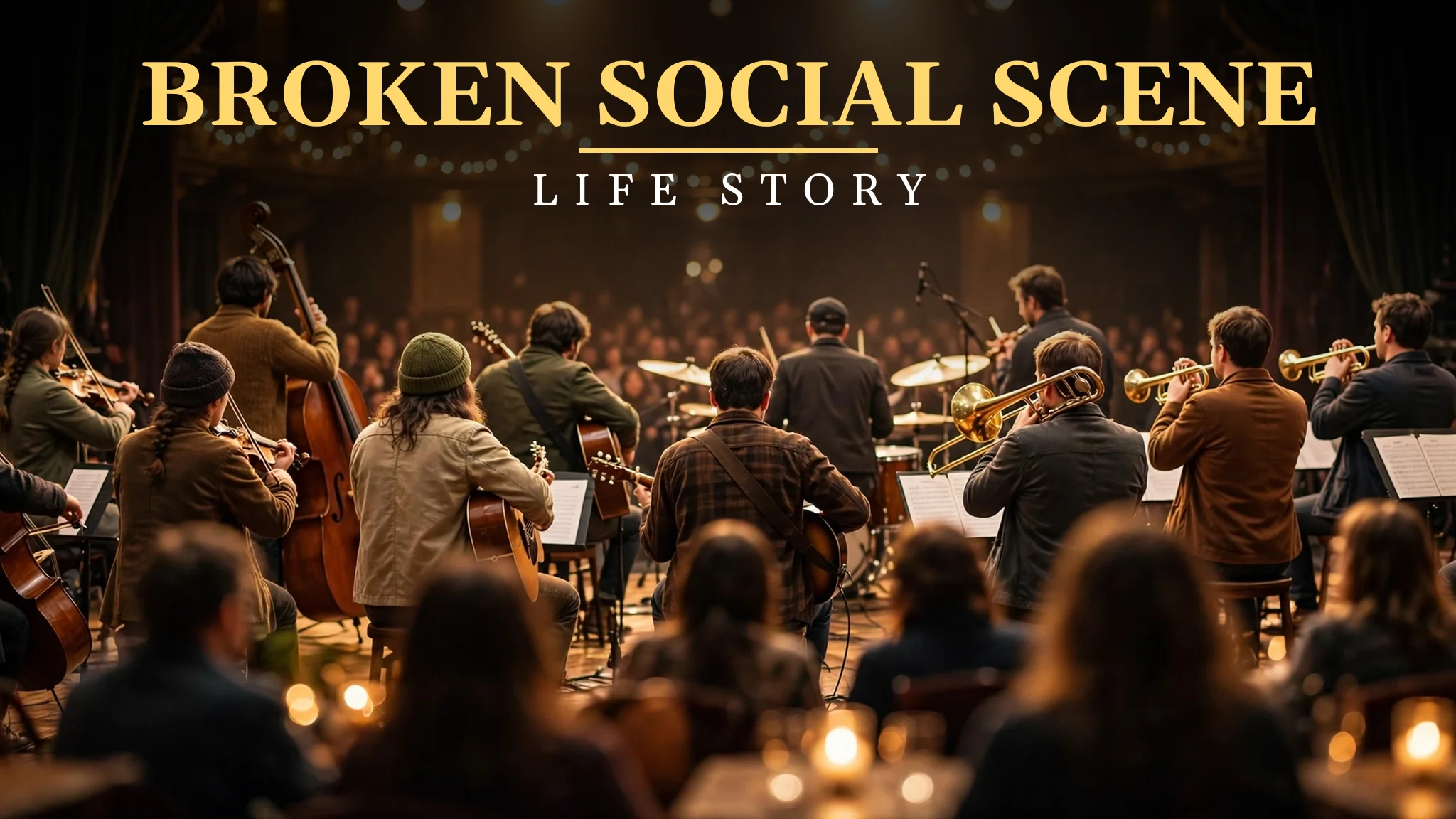
Broken Social Scene is not a band in the usual sense. It is a group of friends, a collective, a family of musicians who come together, make music, drift apart, and come back again. At its heart are two men from Toronto, Kevin Drew and Brendan Canning, but around them there have been dozens of musicians over the years, including some of the most talented singers and players in Canada. When they play together, the stage is crowded with guitars, violins, trumpets, drums, and voices, and the sound is big, warm, and messy in the best possible way. It is the sound of a community making music together.
The collective began in Toronto in the late 1990s, a time when the city’s music scene was full of creative young people who wanted to make something different. Drew and Canning had been friends for years, and they shared a love of music that was emotional, experimental, and free. They did not want to be a normal band with four members and a fixed sound. They wanted to make music with whoever was around, whoever had an idea, whoever wanted to play. That open, generous spirit became the heart of Broken Social Scene, and it is the reason the band’s music feels so alive.
Their second album, You Forgot It in People, released in 2002, became one of the most loved indie rock albums of its time. It was not a hit in the usual sense, but it was loved by critics, by other musicians, and by fans who discovered it and shared it with their friends. The album’s songs were beautiful, strange, and full of feeling, and they showed that a band could be both experimental and emotional at the same time. This is the story of how a loose group of friends from Toronto made music that changed indie rock, and how they kept coming back together for more than twenty-five years.
Two Friends and a Toronto Scene
Broken Social Scene began with the friendship of Kevin Drew and Brendan Canning. The two men met in Toronto in the 1990s, and they bonded over music. Drew was a singer, a guitarist, and a songwriter with a restless, creative energy. Canning was a bass player with a calm, steady presence. Together, they played in bands, they wrote songs, and they dreamed of making music that was bigger than a normal band could make. They were part of a lively Toronto music scene, where young musicians played in small clubs, shared ideas, and helped each other.
Toronto in the late 1990s was a good place to be a young musician. The city had a growing indie rock scene, with bands playing in clubs, recording in small studios, and releasing music on independent labels. Drew and Canning were at the centre of that scene, and they knew many of the musicians who would later become part of Broken Social Scene. They were not just bandmates. They were part of a community, and that community would become the band.
In 1999, Drew and Canning formed Broken Social Scene, and they recorded their first album, Feel Good Lost, which was released in 2001. The album was mostly instrumental, with long, dreamy songs that mixed guitars, keyboards, and electronic sounds. It was a quiet, thoughtful record, and it did not sound like the work of a normal rock band. It sounded like the work of two friends experimenting in a studio, trying to see what music could be. The album did not make them famous, but it showed that they had a vision, and it gave them a foundation to build on.
The first album was only the beginning. Drew and Canning had bigger ideas, and they wanted to bring more people into the project. They invited their friends to play on the next record, and the band began to grow. What had started as a project between two friends was becoming something much larger, a collective of musicians who all contributed their own ideas, their own voices, and their own instruments. The band was becoming Broken Social Scene in the full sense: a scene, not just a band.
You Forgot It in People and the Breakthrough
Broken Social Scene’s second album, You Forgot It in People, was released in 2002, and it changed everything. The album was recorded with a large group of musicians, including singers Leslie Feist, Emily Haines of Metric, and Amy Millan of Stars, and it had a warmth and a beauty that the first album had only hinted at. The songs were emotional, melodic, and full of surprising details: a trumpet here, a violin there, a voice singing a melody that stayed in your head for days.
The album’s most famous songs include Cause = Time, Anthems for a Seventeen Year-Old Girl, and Lover’s Spit. Anthems for a Seventeen Year-Old Girl, sung by Emily Haines, became one of the band’s most loved tracks, with its quiet, repetitive melody and its sad, honest lyrics about being young and feeling lost. Lover’s Spit, sung by Kevin Drew, became another classic, a slow, beautiful song about love and loneliness. The album as a whole felt like a collection of moments, each one different, each one true.
You Forgot It in People won a Juno Award for Alternative Album of the Year, and it was praised by critics around the world. It was not a commercial hit in the way that a pop album is a hit, but it was a critical success, and it made Broken Social Scene famous in the world of indie rock. Other musicians loved the album, and fans who discovered it shared it with their friends. The band became known as one of the most creative and original groups in Canada, and their concerts became famous for their energy and their warmth.
The success of the album also brought a challenge. The band was now a large collective, with many members who had their own bands and their own careers. Feist was becoming a star in her own right, Haines was busy with Metric, and Millan was busy with Stars. Keeping the collective together was not easy, because everyone had other things to do. But Drew and Canning kept the project going, bringing people together when they could, and making music whenever the moment was right.
The Self-Titled Album and the Big Years
In 2005, Broken Social Scene released their third album, called simply Broken Social Scene. The record was bigger and louder than the previous one, with more guitars, more drums, and more voices. It included the singles Ibi Dreams of Pavement (A Better Day) and Fire Eye’d Boy, and it showed that the collective could make music that was both experimental and exciting. The album was nominated for awards, and it was praised by critics who loved its energy and its ambition.
The years after the self-titled album were busy. The band toured the world, playing festivals and concerts in North America, Europe, and beyond. Their live shows were famous for their size and their joy. Sometimes more than a dozen musicians would be on stage at once, playing different instruments, singing together, and creating a sound that was bigger than any one person. The shows felt like a party, a celebration of music and friendship, and audiences loved them.
During this period, the members of the collective also became famous in their own right. Feist released her solo album Let It Die and then The Reminder, which included the hit song 1234. Metric became one of the biggest indie rock bands in Canada. Stars released a series of acclaimed albums. The success of the individual members made the collective even more special, because it showed that Broken Social Scene was not just a band. It was a community of talented people who helped each other grow.
But the size of the collective also made it hard to keep going. With so many members, each with their own career, it was difficult to get everyone together to record or tour. The band took breaks, and the members focused on their own projects. Fans wondered if Broken Social Scene would ever make another album, or if the collective had run its course. The answer would come slowly, over the next decade, as the band found new ways to work together.
Forgiveness Rock Record and the Long Pause
In 2010, Broken Social Scene released Forgiveness Rock Record, their fourth album. The record was made with the help of the producer John McEntire, and it had a cleaner, more focused sound than the previous albums. It included the singles World Sick and Texico Bitches, and it showed that the collective could still make music that was both thoughtful and powerful. The album was well received, and the band toured again, playing for fans who had waited years for new music.
Forgiveness Rock Record was a mature album, made by musicians who had grown up and who had seen a lot. The songs dealt with the world, with politics, with love, and with the feeling of getting older. The band was no longer a group of young people experimenting in a studio. They were adults, with families and careers, and their music reflected that. But the warmth and the generosity that had always been at the heart of the band were still there.
After the album and the tour, the band went quiet again. The members returned to their own projects, and Broken Social Scene became a memory, a band that fans talked about with love but did not expect to see again. The pause lasted for years, and during that time, the music scene changed. New bands came and went, and the indie rock world that Broken Social Scene had helped to build moved on. But the band’s old albums were still loved, and their influence was still felt in the work of younger musicians.
The long pause was not a breakup. Drew and Canning never said that the band was over. They simply said that they were taking a break, and that they would come back when the time was right. That patience is part of what makes Broken Social Scene special. They do not rush, they do not force things, and they do not make music just because the industry wants them to. They make music when they have something to say, and when they do, it is worth the wait.
Hug of Thunder and the Return
In 2017, Broken Social Scene returned with Hug of Thunder, their fifth album. The record was a celebration of the band’s return, and it featured many of the musicians who had been part of the collective over the years, including Feist, Haines, and Millan. The album’s title song, Hug of Thunder, was a joyful, noisy track that captured the feeling of the band coming back together. The album also included the singles Halfway Home and Stay Happy, and it was welcomed by fans and critics alike.
Hug of Thunder showed that the band had not lost its magic. The songs were warm, emotional, and full of the small details that made their music special. The album dealt with the world as it was in 2017, with its divisions and its fears, but it also offered hope. The band’s message was simple: even in a difficult world, people can come together, make music, and find joy. That message felt important, and it resonated with listeners who had missed the band.
The band toured again after the album, playing festivals and concerts for audiences that included both old fans and new listeners. The shows were as joyful as ever, with large groups of musicians on stage, singing together, and creating a sound that was bigger than any one person. The return of Broken Social Scene was a reminder that some bands are not just a group of people who play together. They are a community, and a community can come back together even after a long time apart.
Since Hug of Thunder, the band has continued to play shows and to work on music, though at their own pace. They have not rushed to make another album, and that is in keeping with their history. They make music when they are ready, and they do it with the same spirit that they had at the beginning: a group of friends, making music together, for the joy of it.
The Collective, the Community, and the Legacy
Broken Social Scene’s greatest achievement is not a single album or a single song. It is the community they built. The band showed that music does not have to be made by a fixed group of four people in a rehearsal room. It can be made by a large group of friends, each bringing their own ideas, their own instruments, and their own voices. That idea changed indie rock, and it inspired many other bands to work in a more open, collaborative way.
The band’s influence can be heard in the work of many musicians who came after them. Their albums showed that indie rock could be both experimental and emotional, both strange and beautiful. They showed that a band could have many singers, many songwriters, and many instruments, and still make music that felt personal and true. They also showed that a band could be generous, sharing the stage with friends, and that generosity could make the music better.
The members of the collective have gone on to great things. Feist became a solo star, Metric became one of Canada’s biggest bands, and Stars became a beloved indie group. But they all came back to Broken Social Scene, again and again, because the collective was where they started, and because it was a place where they could be part of something larger than themselves. That is a rare thing in music, and it is worth celebrating.
Broken Social Scene’s legacy is the legacy of friendship, of community, and of music made for the love of it. They started as two friends in Toronto, they grew into a collective of dozens of musicians, they made some of the most loved indie albums of their time, and they kept coming back together for more than twenty-five years. Their story is a reminder that the best music is often made not by stars, but by friends, and that a band can be a family.
The Live Shows and the Joy of the Crowd
Broken Social Scene’s live shows were famous, and they were unlike any other concerts in indie rock. When the band played live, the stage was crowded with musicians, sometimes more than a dozen at once, playing guitars, violins, trumpets, drums, and keyboards, and singing together in a joyful, noisy celebration. The shows felt less like a concert and more like a party, a gathering of friends who had come together to make music, and the audience was part of that party. People did not just watch the band. They sang along, they danced, and they felt like they belonged.
The size of the band on stage was part of the magic. Most bands have four or five members, and the audience knows who each person is. Broken Social Scene had so many members that the audience could not keep track of them all, and that was the point. The band was not about one star. It was about a community, and the community was the star. When a dozen musicians play together, the sound is bigger than any one person, and the feeling is bigger too. It is the feeling of being part of something larger than yourself, and that is a powerful feeling.
The band’s concerts also showed how generous the collective was. The members shared the stage, they shared the songs, and they shared the attention. No one person tried to be the centre of everything. Kevin Drew might sing one song, Leslie Feist might sing the next, and Emily Haines might sing the one after that, and each of them was given the space to shine. That generosity made the shows feel warm and welcoming, and it made the audience love the band even more. It was a reminder that music is better when it is shared.
The Collective’s Influence on Indie Rock
Broken Social Scene changed indie rock, and their influence can still be heard in the work of younger bands. Before they came along, most indie bands were small, fixed groups with a set lineup and a set sound. Broken Social Scene showed that a band could be open, flexible, and collaborative, with members coming and going, with friends joining in, and with a sound that changed from album to album. That idea inspired many other musicians to work in a more open way, to collaborate with their friends, and to think of a band as a community rather than a closed group.
The band also showed that indie rock could be both experimental and emotional. Their albums were full of strange sounds, of trumpets and violins, of long, dreamy passages, but they were also full of beautiful melodies and honest lyrics. They proved that a band did not have to choose between being interesting and being moving. It could be both, and the best music often is. That lesson influenced a generation of indie musicians, who learned from Broken Social Scene that they could be ambitious and still be loved.
The collective’s greatest influence, though, may be the way it launched the careers of its members. Leslie Feist, Emily Haines, and Amy Millan all became stars in their own right, and they all came back to Broken Social Scene, again and again, because the collective was their home. That pattern, of artists who help each other grow and who return to the place where they started, is a model for how a music scene should work. It is generous, it is supportive, and it is creative, and it is one of the reasons that Toronto became one of the most important music cities in the world.
Broken Social Scene Today
Broken Social Scene is still a living, breathing collective, and their story is far from over. The band continues to play shows, to bring their friends together on stage, and to share their music with audiences who love them. Their concerts remain joyful, communal events, with large groups of musicians playing together and creating a sound that is bigger than any one person. That spirit, of friendship and of shared music, has not changed since the beginning, and it is why the band still matters.
The collective’s influence also continues to grow, as new listeners discover their albums and as younger bands cite them as an inspiration. Their music has become a part of the history of indie rock, a reference point for anyone who wants to understand what the genre can be. They showed that a band can be open, generous, and experimental, and still make music that people love. That lesson will be remembered for a long time, and it is one of the most important legacies in Canadian music.
My Take:
When I think about Broken Social Scene, the first thing I feel is warmth. Most bands feel like a business, with a fixed lineup, a fixed sound, and a fixed plan. Broken Social Scene feels like a family gathering, where everyone is welcome, everyone brings something to the table, and the result is bigger than any one person could make alone. I admire that, because it is a generous way to make music, and generosity is rare in an industry that often rewards selfishness. Kevin Drew and Brendan Canning could have kept the band small and kept all the attention for themselves. Instead, they invited their friends in, and they shared the stage, the songs, and the success. That takes a special kind of character.
I think their best album, You Forgot It in People, is one of the most beautiful records I have ever heard, and I say that because it does not sound like it was made to be a hit. It sounds like it was made by people who loved music and who wanted to share that love with each other. The songs are strange and lovely, with trumpets and violins and voices that come and go, and they feel like moments from a life, not like products from a factory. Anthems for a Seventeen Year-Old Girl is a song that makes me feel sad and hopeful at the same time, and Lover’s Spit is a song that makes me want to sit quietly and listen. That is the power of music made with honesty and with care.
What I find most interesting about the band is the way they handled success. When Feist became famous, when Metric became famous, when Stars became famous, the collective did not fall apart. The members went away and did their own things, and then they came back. That is not how most bands work. Most bands break up when one member becomes more famous than the others, because jealousy and resentment take over. Broken Social Scene did not break up. They celebrated each other’s success, and they kept the door open. I think that is because the band was never about one person. It was about a community, and a community can hold many stars at once.
I also admire their patience. They did not rush to make albums, they did not tour constantly, and they did not force themselves to stay together when they needed time apart. They took breaks, they lived their lives, and they came back when they were ready. In a world that tells musicians to always be working, always be releasing, always be touring, that patience is a form of courage. It says that the music matters more than the schedule, and that the friendship matters more than the career. I respect that deeply.
There is a sadness in their story too, and it is the sadness of time passing. The band is older now, the members have families and other careers, and they cannot be together as often as they once were. The days when a dozen musicians could gather in a Toronto studio and make an album together are harder to arrange. But I do not think that sadness is the whole story. The band is still here, still playing, still making music when they can, and their old albums are still being discovered by new listeners. That is a kind of immortality, and it is more than most bands ever get.
If I have a criticism, it is only that the band’s later albums, while good, do not quite reach the magic of You Forgot It in People. But that is an unfair standard, because that album is one of the great indie records of all time, and it would be hard for any band to repeat it. The later albums are still warm, still thoughtful, and still worth listening to, and they show a band that has grown up without losing its heart. I would rather have a band that makes good music at its own pace than a band that tries to repeat its greatest moment and fails.
What I learn from Broken Social Scene is that music is better when it is shared. A song made by one person can be beautiful, but a song made by a community, with many voices and many instruments, can be something else entirely. It can be a celebration, a gathering, a hug of thunder. Broken Social Scene taught me that a band does not have to be small to be personal, and that friendship can be the best instrument of all. That is a lesson I will keep.
There is another part of their story that I keep thinking about, and it is the city of Toronto. In the late 1990s and early 2000s, Toronto was full of young musicians who wanted to make something different, and Broken Social Scene was at the centre of that world. The band did not just make music. They helped to build a scene, a community of artists who supported each other, played on each other’s records, and toured together. That community made Toronto one of the most creative music cities in the world, and it is a reminder that great music does not happen in isolation. It happens when people come together, share ideas, and help each other grow. I think that is a lesson that applies far beyond music.
I also think about the album Feel Good Lost, their first record, because it is easy to forget it when You Forgot It in People is so famous. Feel Good Lost is a quiet, dreamy album, mostly instrumental, and it sounds like two friends experimenting in a studio, trying to see what music could be. It is not a perfect album, and it is not a famous one, but it is an honest one, and it shows where the band started. I think it is important to remember the beginning, because the beginning tells you what the band was really about: curiosity, friendship, and the joy of making sounds together. The fame came later, but the curiosity came first, and it never left.
I think about Leslie Feist a lot when I think about this band, because her story is so closely tied to theirs. She sang on their albums, she toured with them, and then she became a solo star, with songs that were heard around the world. But she always came back to Broken Social Scene, and that says something about the band and about her. It says that success does not have to mean leaving your friends behind, and that a community can hold many stars at once. Feist’s return to the band, again and again, is one of the most generous acts in modern music, and I admire her for it.
There is something else I admire, and it is the band’s willingness to be messy. Their music is not neat or polished. It is big, warm, and a little bit chaotic, with too many instruments, too many voices, and too many ideas all at once. That messiness is the point. It is the sound of a group of friends making music together, not worrying about whether it is perfect, and trusting that the feeling will come through. In a music business that often rewards polish and perfection, that messiness is a form of courage. It says that the feeling matters more than the finish, and I think that is true.
I also want to say something about the long pauses between their albums, because some people see those pauses as a weakness, and I see them as a strength. The band took five years between their self-titled album and Forgiveness Rock Record, and seven more years before Hug of Thunder, and in each case, the album that came out was worth the wait. That is because the band did not force it. They lived their lives, they worked on other projects, and they came back when they had something to say. I would rather wait for a good album than get a rushed one, and I think most of their fans feel the same way.
If I could tell a young listener one thing about Broken Social Scene, it would be to listen to You Forgot It in People with headphones, in a quiet room, and to pay attention to the small details: the trumpet in one song, the violin in another, the way a voice comes in softly and then grows louder. Those details are the heart of the album, and they are the reason it has lasted. It is an album that rewards close listening, and it is an album that shows what music can be when it is made with care, with curiosity, and with love. That is a lesson that applies to more than music. It applies to anything worth doing.
I think about the song Anthems for a Seventeen Year-Old Girl, and how it captures the feeling of being young and lost in a way that few songs ever have. Emily Haines sings it quietly, almost like a whisper, and the words are simple and sad, about a girl who is trying to find her place in the world. It is a song that has helped many young people feel less alone, and that is a real achievement. A song that makes a lonely person feel understood is worth more than a hit single, and Broken Social Scene has made many such songs.
Finally, I want to say that Broken Social Scene’s greatest achievement, in my eyes, is not an album or an award. It is the community they built, a group of friends who made music together for more than twenty-five years, who helped each other grow, and who kept coming back to each other, again and again. In a world where bands break up and friendships fade, that kind of loyalty is rare, and it is beautiful. They showed that music is better when it is shared, and that a band can be a family. That is why I think their story matters, and why I am glad that I took the time to tell it.
I also think about the band’s name, and how fitting it is. A broken social scene is a group of people who do not quite fit together, who are a little bit damaged, a little bit lost, and yet who find each other and make something beautiful. That is exactly what this band is: a group of musicians who are different from each other, who have different talents and different lives, and who come together to make music that is bigger than any of them. The name is honest, and it is hopeful, because it says that broken things can still make beautiful music. I think that is a message that matters, not just for musicians, but for anyone who feels broken.
I think about the future, and what Broken Social Scene might do next. They are still together, still playing shows, still bringing their friends together on stage, and I hope that they keep going, because their music is still needed. The world is still divided, still noisy, still in need of warmth and community, and Broken Social Scene offers both. As long as people need to feel like they belong, this band’s music will matter, and their fans will keep listening.
One last thought stays with me, and it is about the feeling of being in a crowd at one of their shows, with a dozen musicians on stage, all playing together, all singing together, and the audience singing along. It is a feeling of joy, of belonging, of being part of something larger than yourself, and it is a feeling that is hard to find in modern life. Broken Social Scene gives people that feeling, and that is a gift. I am grateful for it, and I am glad that I took the time to tell their story.
Frequently Asked Questions
What is Broken Social Scene?
Broken Social Scene is a Canadian indie rock collective from Toronto. It was formed in 1999 by Kevin Drew and Brendan Canning, and it has included many musicians over the years, including Leslie Feist, Emily Haines of Metric, and Amy Millan of Stars.
What is Broken Social Scene’s most famous album?
Broken Social Scene’s most famous album is You Forgot It in People, released in 2002. It won a Juno Award for Alternative Album of the Year and includes the songs Anthems for a Seventeen Year-Old Girl and Lover’s Spit.
Who are the main members of Broken Social Scene?
The main members of Broken Social Scene are Kevin Drew and Brendan Canning, who founded the collective. Many other musicians have been part of the group, including Leslie Feist, Emily Haines, Amy Millan, and Justin Peroff.
Did Broken Social Scene break up?
Broken Social Scene never officially broke up, but the band took long breaks between albums. They returned in 2017 with the album Hug of Thunder, and they have continued to play shows since then.
What other bands are connected to Broken Social Scene?
Many bands are connected to Broken Social Scene, because its members also play in other groups. Leslie Feist is a solo star, Emily Haines leads Metric, and Amy Millan is part of Stars. The collective is a community of musicians who work together in many different projects.
How many albums has Broken Social Scene released?
Broken Social Scene has released five studio albums: Feel Good Lost in 2001, You Forgot It in People in 2002, Broken Social Scene in 2005, Forgiveness Rock Record in 2010, and Hug of Thunder in 2017.


