Charlie Puth: The Life Story Behind the Pop Star
In this post
- A Boy From Rumson, New Jersey, With Perfect Pitch
- YouTube, Ellen, and the Internet Breakthrough
- See You Again, Furious 7, and the Global Breakthrough
- Nine Track Mind, Attention, and the Pop Star Era
- Charlie, the Viral Moment, and Reinvention
- The Perfect Pitch, the Piano, and the Musician’s Musician
- Legacy: The YouTube Musician Who Became a Pop Star
- My Take:
A Boy From Rumson, New Jersey, With Perfect Pitch
Charles Otto Puth Jr. was born on December 2, 1991, in Rumson, New Jersey, USA, and was raised in a household that was loving, musical, and supportive, with a father, Charles Otto Puth Sr., a builder and real estate agent, and a mother, Debra, a music teacher, who taught piano, and who recognised, very early on, that her son had an extraordinary talent, an ear that could hear music with a precision that was rare, even among musicians, and that would become his defining gift. Charlie began playing the piano at the age of four, and by the time he was ten, he was playing jazz, and composing his own pieces, and at the age of twelve, his mother hired him to play piano at church services, for one hundred dollars a week, a job that was both a responsibility and a privilege, and that taught him discipline, professionalism, and the value of hard work. He attended Rumson-Fair Haven Regional High School, where he was a jazz musician, and then he attended the Berklee College of Music in Boston, Massachusetts, where he graduated in 2013, with a degree in music production and engineering, and where he honed his skills, his songwriting, and his understanding of the music business, a education that would be the foundation of his career, and that would make him one of the most technically skilled pop stars of his generation.
As a child, Charlie was bitten by a dog on his right eyebrow, leaving him with a distinctive scar, a scar that has become one of his most recognisable features, a mark that makes him stand out in a crowd, and that he has spoken about with humour, with acceptance, and with a willingness to be himself, fully and unapologetically. He was a kid who was different, who was musical, who was obsessed with music, and who was not always popular, but who was passionate, who was talented, and who was determined to make it, in music, in a way that was his own, and that was built on his talent, on his training, and on his understanding of music, as both an art and a science. He was a person who heard music differently, who could identify a note, a chord, and a key, with a accuracy that was astonishing, and that would become his superpower, a ability that he has demonstrated, in interviews, in videos, and in performances, and that has made him one of the most respected musicians in the industry, a person who is not just a pop star, but a musician’s musician, a person who other musicians admire, respect, and look up to.
His early life was also shaped by his mother, Debra, a music teacher, who taught him piano, who encouraged him, and who recognised his talent, and by his father, who supported him, who believed in him, and who helped him, to pursue his dreams, even when they were difficult, even when they were uncertain, and even when they meant leaving New Jersey, for Boston, and then for Los Angeles, and then for the world. Charlie has spoken about his family with gratitude, about the support they gave him, about the sacrifices they made, and about the way they shaped him, into the person he is today, a person who is grateful, who is humble, and who is determined to make the most of the gift he was given, a gift that he does not take for granted, and that he works hard, every day, to honour, to develop, and to share with the world.
YouTube, Ellen, and the Internet Breakthrough
Charlie Puth’s breakthrough came in 2009, when he began posting videos of himself singing and playing piano on YouTube, under the name Charlies Vlogs, a channel that was a mix of comedy, music, and covers, and that quickly gained a following, with millions of views, and with fans who loved his voice, his piano playing, and his charm. In 2011, he won a competition, sponsored by Perez Hilton, called Can You Sing?, with a cover of Adele’s Someone Like You, featuring Emily Luther, a performance that went viral, and that caught the attention of Ellen DeGeneres, who invited him to appear on her show, The Ellen DeGeneres Show, in 2011, where he performed, and where he was signed to Ellen’s record label, eleveneleven, a deal that was a major step, a validation, and a sign that he was on his way, from YouTube to the mainstream, from the internet to the charts, and from a kid in Rumson to a pop star, in a way that was both exciting and overwhelming, and that he was not entirely prepared for, but that he was determined to make the most of.
His early work with eleveneleven included the release of his debut EP, The Otto Tunes, in 2010, and his work on the label, which was a learning experience, a time when he was learning, about the music business, about the recording process, and about the challenges of being a pop star, in a way that was both exciting and difficult, and that taught him lessons, about the industry, about the importance of creative control, and about the need to be true to himself, even when the industry, the label, and the expectations of others, were pushing him in a different direction. He left eleveneleven in 2012, and he continued to work, to write, and to perform, and in 2014, he signed with Atlantic Records, a deal that would be the beginning of his major-label career, and that would lead to the biggest breakthrough of his life, a song that would change everything, and that would make him a global star, in a way that no one, including Charlie himself, could have predicted.
Charlie’s path to fame started the way a lot of modern careers do: with a camera, a piano, and an internet connection. He began posting videos in 2009 under the name Charlies Vlogs, a mix of comedy sketches, covers, and original songs that slowly built an audience of people who liked his voice and his humour in equal measure. In 2011 he won an online singing contest with a cover of Adele’s Someone Like You, recorded with Emily Luther, and the video spread far enough to reach Ellen DeGeneres, who invited him onto her show and signed him to her label. It was a fairy-tale break, but it came with lessons: the label deal did not last, and Charlie left in 2012, older and wiser about how the business works. He kept writing, kept posting, and kept improving, and when Atlantic Records signed him in 2014, he arrived not as a lucky discovery but as a trained musician who had already learned what he did and did not want from a label.
See You Again, Furious 7, and the Global Breakthrough
Charlie Puth’s global breakthrough came in 2015, when he co-wrote and performed See You Again, with Wiz Khalifa, a song that was written as a tribute to Paul Walker, the star of the Fast and Furious franchise, who had died in a car accident in 2013, and that was featured in Furious 7, the seventh film in the series, as the film’s closing song, playing over the final scene, in which Paul Walker’s character, Brian O’Conner, drives away, into the sunset, a moment that was emotional, that was moving, and that made audiences cry, in cinemas around the world. The song was a global hit, reaching the top of the Hot 100, staying there for twelve weeks, and becoming one of the best-selling singles of all time, with more than twenty million copies sold, and with a music video that has been viewed billions of times on YouTube, making it one of the most viewed videos in history. It was nominated for three Grammy Awards, including Song of the Year, and it won the Golden Globe for Best Original Song, and it established Charlie Puth as a major star, a person who had written a song that was not just a hit, but a cultural moment, a tribute, and a piece of music that would be remembered, long after the charts had changed, and long after the film had faded, because it was about loss, about friendship, and about the feeling of saying goodbye, to someone you love, and that is a universal experience, one that everyone has had, and one that the song captured, perfectly, in its lyrics, in its melody, and in its emotion.
The success of See You Again was a turning point, not just for Charlie Puth, but for his career, because it proved that he could write a song, a hit, and a classic, and that he was not just a YouTube star, but a real songwriter, a real artist, and a real talent, who was here to stay. The song’s success also brought him attention, from the industry, from the media, and from the public, and it opened doors, that had been closed to him, before, including the opportunity to work with other artists, to write songs for other stars, and to build a career, as a songwriter, as a producer, and as a performer, in a way that was both exciting and overwhelming, and that he was determined to make the most of, by working hard, by being humble, and by remembering where he came from, and what the song meant, to Paul Walker’s family, to the fans of the Fast and Furious franchise, and to the millions of people who had lost someone they loved, and who found comfort, in the song, in its message, and in its hope, that we will see each other again, one day, in a better place.
See You Again also became a symbol of Charlie Puth’s talent as a songwriter, a person who could write a song that was both simple and profound, both commercial and emotional, and that resonated with audiences of all ages, of all backgrounds, and of all experiences. The song is built on a simple piano melody, a beautiful vocal, and a heartfelt lyric, and it does not try to be more than it is, it does not add unnecessary production, it does not chase a trend, it simply is, a tribute, a goodbye, and a promise, and that simplicity is its strength, a sign of a songwriter who trusts his material, who trusts his voice, and who trusts the audience to listen, to pay attention, and to feel. The song’s success, its chart run, and the way audiences embraced it, all speak to Charlie’s talent, his ability to write a song that is both a hit and a classic, both a tribute and a work of art, and that speaks to the experiences of millions of people, in a way that feels both personal and shared.
Nine Track Mind, Attention, and the Pop Star Era
Charlie Puth’s debut studio album, Nine Track Mind, was released in January 2016, and it debuted at number six on the Billboard 200, featuring the hits Marvin Gaye, featuring Meghan Trainor, One Call Away, and We Don’t Talk Anymore, featuring Selena Gomez, and it was a commercial success, even as it received mixed reviews, with some critics praising its pop craftsmanship, and others criticising it as too polished, too commercial, and too safe. The album’s songs, with their catchy melodies, their pop production, and their heartfelt lyrics, became hits, played on radio, and loved by audiences, who recognised something of themselves in the songs, in the stories of love, of heartbreak, and of the search for connection, that are universal, and that are the foundation of pop music. We Don’t Talk Anymore, in particular, became one of the year’s most-played songs, reaching the top ten, and becoming a global hit, with a music video that has been viewed billions of times, and with a story about a breakup, about the awkwardness of seeing an ex, and about the feeling of not knowing what to say, that resonated with millions of people, who had been through the same thing, and who found comfort, in the song, in its honesty, and in its humour.
His second studio album, Voicenotes, was released in May 2018, and it debuted at number four, featuring the hits Attention, How Long, and Done for Me, featuring Kehlani, and it was a critical and commercial success, praised by critics as a stronger, more mature album, that showcased Charlie’s growth as a songwriter, as a singer, and as a producer, and that proved he could top the charts again with a second record, and that he was no one-hit wonder, but a musician here for the long run. Attention, in particular, became a defining song of its year, a funk-influenced pop song, about a relationship, about the desire for attention, and about the games people play, in love, that was played everywhere, and that became a favourite with audiences, who loved its groove, its melody, and its energy. The song’s success, its place on the charts, and its love from audiences, are a testament to Charlie’s talent as a songwriter, his ability to write a pop song that is both catchy and meaningful, both commercial and personal, and that speaks to the experiences of his generation, in a way that is both specific and universal.
During this period, Charlie Puth also became known for his work as a songwriter and producer for other artists, writing and producing songs for stars like Maroon 5, Jason Derulo, and others, and for his ability to create a hit, a pop song, that is both catchy and crafted, both commercial and artistic, and that is a testament to his training, at Berklee, and to his ear, his perfect pitch, and his understanding of music, as both an art and a science. He is a musician’s musician, a person who other musicians admire, respect, and look up to, and his work, as a songwriter, as a producer, and as a performer, is a sign of a talent that is rare, that is deep, and that is entirely his own, a talent that has made him one of the most respected pop stars of his generation, with a career that is built on talent, on hard work, and on a commitment to making music that matters.
Charlie, the Viral Moment, and Reinvention
In October 2022, Charlie Puth released Charlie, his third studio album, featuring the hits Light Switch, Left and Right, featuring Jungkook of BTS, and That’s Hilarious, and it debuted in the top ten, and was praised for its honesty, its production, and its willingness to be vulnerable, to talk about love, about heartbreak, and about the search for meaning, in a way that was both intimate and universal. The album was preceded by a viral moment, in which Charlie posted a video on TikTok, showing how he created Light Switch, from scratch, in a process that was both fascinating and entertaining, and that went viral, with millions of views, and that made the song a hit, before it was even released, a sign of a new era in music, in which the process, not just the product, could be a hit, and in which artists could share their creativity, directly with their fans, on social media, in real time. The TikTok video, in which Charlie built the song, layer by layer, from a single sound, to a full production, was a masterclass, in music production, in songwriting, and in the art of making a pop song, and it showed Charlie as a musician, a producer, and a teacher, a person who loves music, who understands it, and who wants to share that love, with the world, in a way that is both entertaining and educational.
Charlie, the album released in October 2022, was built in public, and that was the whole idea. For months before its release, Charlie posted videos on TikTok showing how each song was made, starting from a single sound, a doorbell, a light switch, a random noise, and building it layer by layer into a finished track. The Light Switch video alone was watched by millions, and it turned the album’s rollout into a masterclass that other musicians studied. The record itself was a mix of the personal and the playful: That’s Hilarious dealt with a breakup, Left and Right paired him with Jungkook of BTS and became a global hit, and the whole album sounded like a man who had stopped worrying about what a pop star is supposed to sound like. It was his most honest record, and the TikTok experiment proved that fans do not just want the finished song; they want to see how it was made, and they will reward the artist who lets them watch.
Since the Charlie album, Charlie has stayed busy in the way that suits him best: writing, producing, and collaborating, sometimes in the spotlight and sometimes behind it. He has written and produced for other artists, appeared on tracks with stars from across the pop world, and released singles that show off his range, from piano ballads to funk-driven pop. He has also leaned further into his role as a teacher, posting videos that break down chord progressions, explain production choices, and show young musicians how a hit is actually built. It is a side of his career that no other pop star occupies quite the same way: part hitmaker, part professor, part internet personality. The through line is a love of music itself, not just of fame, and as long as there are songs to write and students to teach, Charlie Puth will have work to do.
The Perfect Pitch, the Piano, and the Musician’s Musician
Charlie Puth is known as much for his perfect pitch as for his songs, with an ear that can identify a note, a chord, and a key, with a accuracy that is astonishing, and that he has demonstrated, in interviews, in videos, and in performances, and that has made him one of the most respected musicians in the industry, a person who is not just a pop star, but a musician’s musician, a person who other musicians admire, respect, and look up to. He has spoken about his perfect pitch as both a gift and a curse, a ability that allows him to hear music with a precision that is rare, but that also makes it difficult to listen to music that is out of tune, that is off-key, and that is imperfect, and that is a part of his story that resonates with many musicians, who see in him a person who is like them, who hears music differently, and who is not afraid to talk about it, to share it, and to use it, to make music that is better, that is more precise, and that is more beautiful, than it would be, without that gift. His perfect pitch is a major part of his appeal, a sign of a talent that is natural, that is trained, and that is entirely his own, a talent that he has honed, through years of practice, of performing, and of recording, into a style that is both simple and sophisticated, both pop and jazz, and that is unmistakable, a sound that is entirely his own.
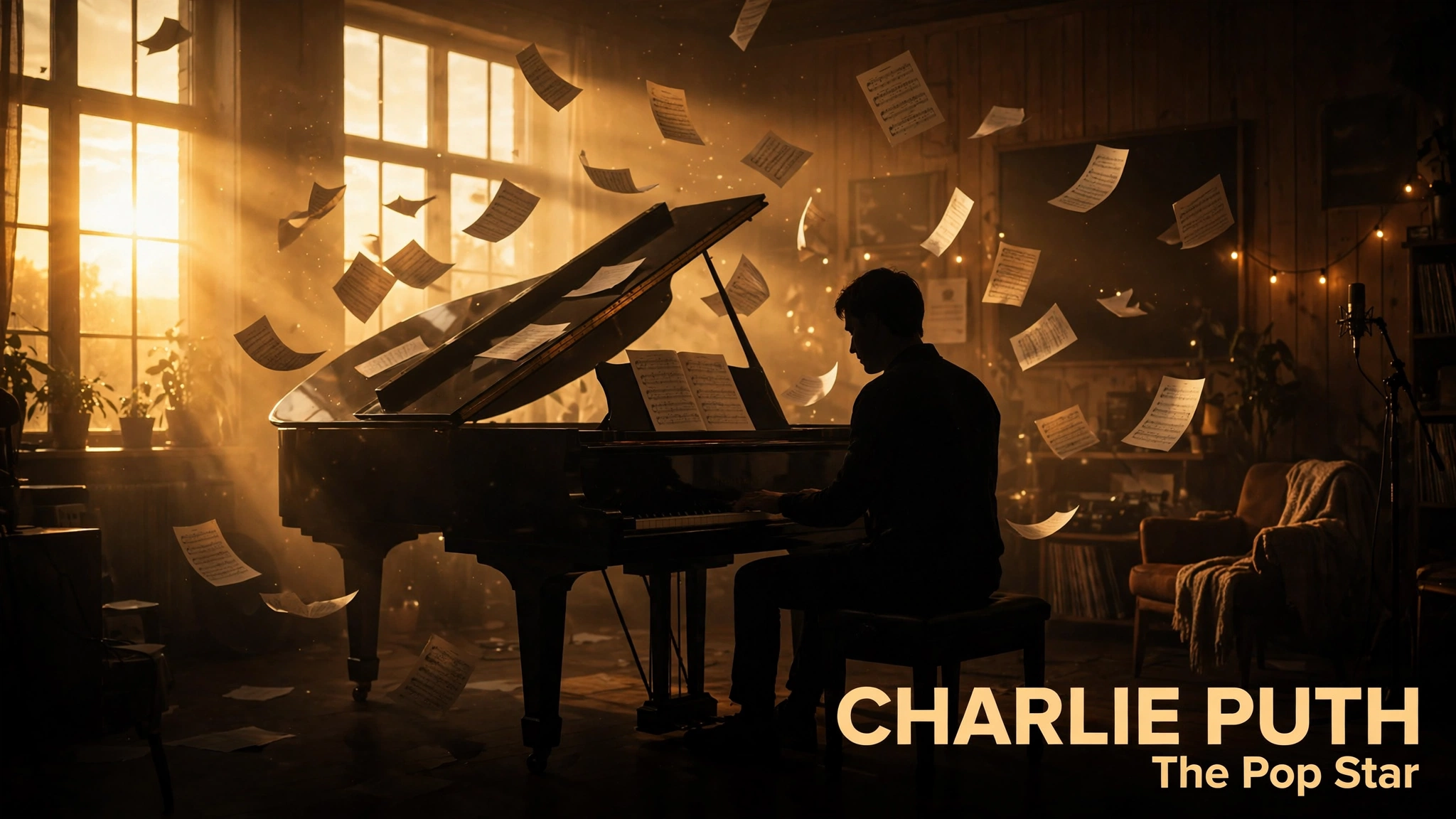
The piano is where Charlie Puth’s story starts, and it is still where he feels most at home. He began lessons at four, was playing jazz by ten, and was earning money playing at church services by twelve, a childhood that sounds old-fashioned until you remember that he was also posting videos online as a teenager. His mother, a music teacher, gave him the training, and Berklee College of Music gave him the polish, but the real gift is his ear: perfect pitch, the ability to hear a note and name it instantly, a skill he has demonstrated in videos that leave other musicians shaking their heads. That ear shapes everything he does, from the way he writes melodies to the way he produces, because he hears music in layers, in harmonies, in tiny details that most listeners feel without noticing. It is why his songs sound so clean, so precise, and so hard to copy.
His songwriting is also a central part of his identity, a skill he learned, at Berklee, and that he has honed, through years of writing, for himself and for others, into a style that is both catchy and crafted, both commercial and artistic, and that is unmistakable, a sound that is entirely his own. He writes songs that are built on a melody, on a chord progression, and on a lyric, that are both simple and sophisticated, and that resonate with audiences, who love his music, who sing along to every word, and who feel as though they are hearing a real story, a real person, and a real emotion, not a fictional one, but a lived one, and that honesty is what makes his music so powerful, so relatable, and so lasting, a body of work that is both a diary and a work of art, both personal and universal.
Legacy: The YouTube Musician Who Became a Pop Star
Charlie Puth will be remembered as the musician who made the internet his classroom and his stage at the same time. He was posting covers before streaming made it normal, he was showing his process before TikTok made it fashionable, and he was writing hits for other stars while building his own career, a combination that very few artists manage. His catalogue runs from See You Again, one of the biggest songs of all time, to Attention, to the TikTok-built tracks of the Charlie album, and each one sounds like it was made by someone who understands music from the inside out. Young producers who watch his videos are learning from a master, whether they know it or not, and that teaching may end up mattering as much as the hits. He is a pop star who never stopped being a student of music, and a student who became a teacher, and that is a rare and valuable thing.
Charlie’s influence is quieter than most pop stars’, and it lives in studios and on phones: young producers study his videos the way music students once studied records, learning how a song is built one sound at a time. He is a teacher, a mentor, and a role model, a person who has used his platform to educate, to inspire, and to help others, to make music, and that advocacy is a part of his legacy that will be remembered, long after the songs have faded, because it is about more than songs, it is about sharing knowledge, about helping others, and about making the world a more musical, more creative place.
Charlie Puth’s future will probably be spent doing what he has always done: sitting at a piano, listening carefully, and building a song from a single sound. He has already shown the world how a hit is made, layer by layer, and that transparency has made him a teacher as much as a star. What his career proves is that craft matters, that a trained ear and a disciplined hand can still win in an industry that often rewards noise, and that a musician who understands music deeply will always find work. He is a reminder that pop music is, at its best, a craft, and that the people who master the craft are the ones who last. The boy from Rumson who played piano at four became a hitmaker, a producer, and a guide, and the next song he builds will be worth hearing.
My Take:
See You Again and the Song That Made Him a Star
When I think about Charlie Puth, I think about See You Again, not just as a song, but as a moment, a time in 2015 when a tribute, about the loss of Paul Walker, about the feeling of saying goodbye to a friend, became a global hit, reaching number one, staying there for twelve weeks, and becoming one of the best-selling singles of all time, with more than twenty million copies sold, and with a music video that has been viewed billions of times, and that made Charlie Puth a superstar, a songwriter who could write a song that was not just a hit, but a cultural moment, a tribute, and a piece of music that would be remembered, long after the charts had changed, and long after the film had faded, because it was about loss, about friendship, and about the feeling of saying goodbye, to someone you love, and that is a universal experience, one that everyone has had, and one that the song captured, perfectly, in its lyrics, in its melody, and in its emotion. I remember hearing See You Again for the first time, in a cinema, at the end of Furious 7, with its opening, It’s been a long day without you, my friend, and I’ll tell you all about it when I see you again, and thinking that this was a song that was going to be huge, because it was honest, because it was relatable, and because it captured a feeling that many people have had, the feeling of losing someone, of missing them, and of hoping to see them again, one day, in a better place, and that honesty, that relatability, is what makes the song so powerful, so lasting, and so beloved, more than nine years after it was released.
What impresses me most about See You Again is its simplicity. The song is built on a simple piano melody, a beautiful vocal, and a heartfelt lyric, and it does not try to be more than it is, it does not add unnecessary production, it does not chase a trend, it simply is, a tribute, a goodbye, and a promise, and that simplicity is its strength, a sign of a songwriter who trusts his material, who trusts his voice, and who trusts the audience to listen, to pay attention, and to feel. The song’s lyrics, with their message of hope, of reunion, and of the promise to see each other again, are both specific and universal, and they make the listener feel as though they are hearing a real story, a real person, and a real pain, not a fictional one, but a lived one, and that honesty is what makes the song so powerful, so relatable, and so lasting. See You Again is not just a hit; it is a classic, a song that will be played for years to come, whenever people need to be reminded that loss hurts, that friendship matters, and that hope is real, and that music can help, can heal, and can make you feel less alone.
I also think about the music video for See You Again, with its montage of Paul Walker, from the Fast and Furious films, and about the way the video became as famous as the song, a work of art that was both a tribute and a pop video, and that showcased Charlie as a visual artist, a person who thinks about every aspect of his work, from the sound to the visuals to the fashion, and who creates a experience that is immersive, that is total, and that is unforgettable. The video is a perfect complement to the song, a visual representation of its themes, and it shows Charlie as a performer, a storyteller, and a musician, a person who can do it all, and who does it with a charm, a humour, and a talent that are unmistakable. See You Again is not just a song; it is a world, a film, and a feeling, all at once, and that completeness is why it became a hit, and why it will be remembered.
One more thing about See You Again stays with me, and it is the way the song’s success was driven by the audience, by the fans, by the people who heard it, who loved it, and who shared it, rather than by radio or by a label, and that is a sign of a new era in music, an era in which the audience, not the industry, decides what is a hit, and in which artists like Charlie, who understand the internet, who understand social media, and who connect directly with their fans, can build a career, a fanbase, and a legacy, without waiting for permission, without conforming, and without compromising. See You Again is a fan-driven hit, a proof that the audience matters, and that a songwriter who listens to his fans, who respects them, will be rewarded with their loyalty, and with their love, and that is a lesson worth learning, for any artist, in any era, that the fans are the most important part of a career, and that without them, there is no career at all.
Attention and the Pop Song That Defined an Era
Attention, Charlie Puth’s funk-influenced pop song, released in 2017, is in my opinion one of the best pop songs of the last decade, not just because it was a hit, but because it was clever, because it was groovy, because it was about a relationship, about the desire for attention, and about the games people play, in love, and because it did so in a way that was both personal and universal, that resonated with millions of people, who recognised something of themselves in its lyrics, in its story, and in its emotion. The song, with its opening, You’ve been runnin’ round, runnin’ round, runnin’ round throwin’ that dirt all on my name, became an anthem, a declaration, and a statement of self-respect, a song that told listeners they deserved better, that they should not settle for someone who only wants attention, and that they should know their worth, and that message, that empowerment, is a powerful thing, and one that has helped many of Charlie’s fans, who have spoken about the song as a favourite, as a reminder that they are worthy, and that they should not accept less than they deserve, in love, in life, and in any relationship.
What I admire most about Attention is the production. The song is built on a funky bassline, a catchy melody, and Charlie’s voice, and it does not try to be more than it is, it does not add unnecessary production, it does not chase a trend, it simply is, a groovy, catchy pop song, about a relationship, and that simplicity is its strength, a sign of a songwriter who trusts his material, who trusts his voice, and who trusts the audience to listen, to pay attention, and to feel. The song’s production, with its funk influences, its 1980s feel, and its modern pop sensibility, is a perfect example of Charlie’s talent as a producer, a person who understands music, who understands the history of pop, and who can create a sound that is both retro and modern, both familiar and fresh, and that resonates with audiences of all ages, of all backgrounds, and of all experiences. Attention is a song that will be remembered, not just as a hit, but as a moment, a turning point, in pop music, a moment when a pop star made a funk song, a groovy song, and changed the sound of pop, for himself, for his fans, and for the industry, forever.
I also think about the music video for Attention, with its story, with Charlie being pursued, and about the way the video became as famous as the song, a work of art that was both a short film and a pop video, and that showcased Charlie as a visual artist, a person who thinks about every aspect of his work, from the sound to the visuals to the fashion, and who creates a experience that is immersive, that is total, and that is unforgettable. The video is a perfect complement to the song, a visual representation of its themes, and it shows Charlie as a performer, an actor, and a storyteller, a person who can do it all, and who does it with a charm, a humour, and a talent that are unmistakable. Attention is not just a song; it is a world, a film, and a feeling, all at once, and that completeness is why it became a hit, and why it will be remembered.
The TikTok Video, Light Switch, and the New Way to Make a Hit
Charlie Puth’s TikTok video, showing how he created Light Switch, from scratch, in 2022, is in my opinion one of the most important moments in recent pop music, because he was a pop star, at the top of his game, with millions of fans, with a career that was built on being perfect, on being polished, and on being a hitmaker, and he chose to share the process, to show how a song is made, layer by layer, from a single sound, to a full production, and that choice, that transparency, was brave, because it risked his mystique, it risked his image, and it risked the expectations that the industry, and the audience, had of him. He did it anyway, because he believed in it, because he wanted to be honest, and because he knew that his fans wanted to see it, that they were curious, that they wanted to learn, and that they would love the song more, if they understood how it was made, and that transparency, that willingness to share, has helped many of his fans, who have spoken about the video as a masterclass, as a lesson, and as a inspiration, to make music themselves, to produce, to write, and to share their creativity, with the world, in a way that is both entertaining and educational.
What I find most admirable about the TikTok video is the way Charlie handled it, with a humour, with a charm, and with a talent that was remarkable, given the pressure, the media coverage, and the expectations of fans who had been waiting for new music, and who were excited to see the process, to learn, and to be part of the creation, of a song, that would become a hit. He explained, he demonstrated, and he was clear about why he was doing it, about the process, about the creativity, and about the joy of making music, and that clarity, that honesty, is a part of what makes him special, a person who is not afraid to be vulnerable, to admit his process, and to tell the truth, even when the truth is difficult, and even when it means facing criticism, facing scepticism, and facing the consequences of his decision. He did it anyway, because he knew it was right, because he knew he loved it, and because he understood that a career is not worth your mystique, that fame is not worth your secrecy, and that the best thing you can do, for yourself and for your fans, is to be open, to be honest, and to be yourself, fully and unapologetically, even when that means sharing, even when that means teaching, and even when that means letting people see, how the magic is made, in the short term, for the sake of the long term.
I also think about the song Light Switch itself, with its catchy melody, its funky production, and its story, about a relationship, about the feeling of being turned on and off, and about the games people play, in love, and about the way the song became a hit, because of the video, because of the fans, and because of the process, that was shared, on TikTok, in real time, a sign of a new era in music, in which the process, not just the product, could be a hit, and in which artists could share their creativity, directly with their fans, on social media, in real time. The song is a comeback, but it is also a rebirth, a new chapter, and a sign of an artist who is not content to rest on his past successes, but who is looking forward, to new sounds, new stories, and new chapters, in a career that is still evolving, still surprising, and still entirely his own. That is a powerful thing, and it is a story worth telling, a story about a pop star who shared, who taught, and who came back, stronger, wiser, and more honest than before.
What I Take Away From His Story
When I look at Charlie Puth’s whole career, from a boy in Rumson playing piano at the age of four to a global pop star who fills arenas, what stays with me is the piano, the fact that he is one of the few pop stars who is truly a musician, who began playing at four, who was playing jazz by ten, and who has made the piano a central part of his identity, his music, and his performances. That is a rare thing, a sign of a talent that is deep, that is trained, and that is entirely his own, a talent that has made him one of the most respected pop stars of his generation, with a career that is built on talent, on hard work, and on a commitment to making music that matters. His story is not just about one artist; it is about the power of music education, about the importance of learning an instrument, and about the way that training, that discipline, and that love of music, can take you further than anyone expects, and that the best careers are built not in a moment but over a lifetime of making music that matters, music that is honest, and music that is true to who you are.
I also think his story is a reminder that perfect pitch matters, that being able to hear music with a precision that is rare, is a gift, and that audiences respond to honesty, to music that feels real, that feels like a diary, and that feels like a conversation with a friend. Charlie’s music is honest, it is vulnerable, and it is real, and that is why it resonates with millions of people, who see in him a person who is like them, who struggles with the same things they do, and who is not afraid to talk about it. That honesty is a gift, and it is one that has helped many of his fans, and that has made his music more than entertainment, but a form of healing, a way to feel less alone, and a reminder that it is okay to struggle, and that it is okay to ask for help, and that is a legacy that will be remembered, long after the songs have faded, because it is about more than music, it is about saving lives, about helping people, and about making the world a kinder, more understanding place.
Finally, I want to say that I am looking forward to what comes next for him, because he is an artist who is still growing, still learning, and still finding new ways to make music. His album Charlie, his tours, and his work as a person, as a music educator, and as a musician, all suggest a person who is not content to rest on his past successes, but who is looking forward, to the next song, the next album, the next project, and who is doing it with a curiosity and a creativity that are infectious. His story is one of the great stories in modern pop music, a story about a boy from Rumson who became a pop star, and it is a story that is still being written. I will be watching, and listening, because if his past is any guide, the next chapters will be as surprising, as heartfelt, and as compelling as the ones that came before, and that is a promise worth holding on to.
One last thought stays with me, and it is about the piano, about the boy in Rumson who began playing at the age of four, and about the dream that started it all, a dream of becoming a musician, a performer, and a storyteller, a dream that he has realised, through hard work, through talent, and through a belief in himself, that has never wavered, even when the world doubted him, even when it was difficult, and even when he wanted to give up. That piano, that dream, is the foundation of Charlie Puth’s story, a story about a boy who loved music, who taught himself to play, and who shared that love with the world, through YouTube videos, through albums, and through arenas, and that is a story that will be remembered, long after the charts have changed, and long after the awards have been won, because it is about more than music, it is about the power of a dream, and the courage to follow it, wherever it leads.
Frequently Asked Questions
How did Charlie Puth become famous?
Charlie Puth became famous by posting videos on YouTube, starting in 2009. He won a competition with a cover of Adele’s Someone Like You, appeared on The Ellen DeGeneres Show in 2011, and broke through globally with See You Again in 2015.
What is Charlie Puth’s biggest song?
His biggest song is See You Again with Wiz Khalifa, from Furious 7, which spent twelve weeks at number one and became one of the best-selling singles of all time. Attention and We Don’t Talk Anymore are also major hits.
Does Charlie Puth have perfect pitch?
Yes, Charlie Puth has perfect pitch, an ability to identify musical notes by ear. He has demonstrated it in interviews and videos, and he studied music production at Berklee College of Music.
What is the scar on Charlie Puth’s eyebrow?
Charlie Puth has a scar on his right eyebrow from being bitten by a dog as a child. It is one of his most recognisable features and he has spoken about it openly.
Is Charlie Puth married?
Charlie Puth is not married. He keeps much of his personal life private, and he has spoken about relationships in his songs, including on his album Charlie from 2022.
What are Charlie Puth’s best albums?
His best albums include Nine Track Mind from 2016, Voicenotes from 2018, and Charlie from 2022. Voicenotes features Attention and How Long.