Chase and Status: The Life Story Behind the Drum and Bass Duo
In this post
Chase and Status make drum and bass music that sounds like a London night at its loudest: fast beats, deep bass, and voices that cut through the noise with feeling. Their songs are built for big rooms, for festivals, for crowds that want to move, but they are also songs with real words about love, loss and life in the city. When their album No More Idols became a hit in 2011, it showed that drum and bass, a sound that began in London’s underground clubs, could become music for everyone.
The duo is made up of Will Kennard and Saul Milton, two friends from London who met while studying at university in Manchester. Kennard is known as Chase, and Milton is known as Status, and together they became Chase and Status. They began making music in the early 2000s, releasing tracks on small drum and bass labels, and they built their reputation slowly, one record at a time. Their sound mixed the fast energy of drum and bass with the melodies of pop, soul and hip hop, and it stood out in a scene that was often dark and hard.
Their journey has brought them number one albums, hit singles with singers like Plan B, Liam Bailey and Becky Hill, and tours around the world. Their debut album, More Than Alot, arrived in 2008. No More Idols followed in 2011, Brand New Machine in 2013, Tribe in 2017, RTRN II Jungle in 2019, and What Came Before in 2022. Through all of it, they have stayed true to drum and bass, to London, and to the belief that a fast beat can carry a real song.
Two Friends at University in Manchester
Will Kennard and Saul Milton met while they were students at university in Manchester, in the north of England. Manchester has a long history of music, from rock bands to dance clubs, and the city gave the two friends a place where they could hear many kinds of music and try their own ideas. Kennard and Milton both loved drum and bass, the fast electronic music that had grown out of London’s jungle scene, and they began to make their own tracks together in student rooms.
Drum and bass is a demanding kind of music to make. It moves at a fast speed, around 170 beats per minute, and it needs a deep bass line, sharp drums and a feeling of energy that never stops. Kennard and Milton learned how to build those tracks, how to make a bass sound that shakes a room, and how to keep a beat moving for hours. They were not trying to copy the drum and bass of the time. They were trying to add something new: melodies, singers, and songs that people could remember after the night ended.
The duo’s name, Chase and Status, came from their own nicknames. Kennard was known as Chase, and Milton was known as Status, and the name stuck. They began to release music on small labels, and DJs in London’s drum and bass scene began to play their tracks. The early records were heard in clubs, on pirate radio, and at raves, and the duo’s reputation grew little by little. People who heard them noticed the difference. Their tracks had the energy of drum and bass, but they also had the warmth of a song.
By the mid 2000s, Chase and Status were becoming known as producers to watch. They made remixes for other artists, they worked with singers, and they began to think about making a full album. They were patient, though. They did not rush. They wrote many tracks, they kept only the best ones, and they waited until they had a record they were proud of. That patience would pay off in a debut album that showed the full range of their sound.
More Than Alot and the First Album
More Than Alot, the duo’s debut album, was released in 2008, and it was a record that showed Chase and Status as more than just drum and bass producers. The album included tracks with singers, with MCs, and with live instruments, and it moved between fast dance tracks and slower, more soulful songs. It was praised by critics in the drum and bass scene, and it won the duo a loyal following.
The album’s title, More Than Alot, was a play on words, and it showed the duo’s sense of humour. The record was not just a collection of club tracks. It was a statement: drum and bass could be an album music, with songs that worked at home as well as in a club. The duo had spent years learning how to make tracks, and the album showed that learning in every song. It was a foundation, and it gave them the confidence to aim higher.
Touring for the album took them to clubs and festivals around the world, and their live shows became famous for their energy. They played as DJs, with decks and mixers, and they also worked with MCs who rapped and sang over their beats. The shows were loud, fast and joyful, and the audiences loved them. Chase and Status learned how to bring their studio sound to a large stage without losing its power, and they became known as one of the best live acts in drum and bass.
The years after the first album were busy. The duo made remixes, they worked with other artists, and they began to write songs for their second album. They were becoming known beyond the drum and bass scene, and their music was reaching people who had never been to a drum and bass night. That wider audience would be the key to their next record, which would become their biggest success.
No More Idols, Blind Faith and the Big Break
No More Idols was released in 2011, and it became the album that made Chase and Status famous. The record reached number two in Britain, and it included some of their most loved songs. End Credits, featuring Plan B, was a slow and emotional track about a relationship ending, and it became a hit. Blind Faith, featuring Liam Bailey, was a bright and soulful song about love, and it became one of their most famous tracks. Let You Go, featuring Mali, was another highlight, a song about letting someone go with grace.
The album showed the duo’s range. It had fast drum and bass tracks, slow soulful songs, and collaborations with singers and rappers from many backgrounds. Plan B, a singer and rapper from London, brought a streetwise feeling to End Credits, while Liam Bailey brought a soulful voice to Blind Faith. The album worked because the duo chose the right voice for each song, and because they never lost the energy of drum and bass, even in the slower tracks.
No More Idols was praised by critics and loved by fans, and it stayed on the charts for a long time. It showed that drum and bass could be pop music without losing its soul, and it opened the door for other drum and bass artists to reach a wider audience. The duo had made a record that was both a club album and a pop album, and it worked in both worlds. That is a hard thing to do, and Chase and Status did it with confidence.
Touring for No More Idols took them to arenas and festivals around the world, and their shows became bigger and more spectacular. They played to huge crowds, with lights, lasers and a sound that shook the room. The duo had become one of the biggest acts in British dance music, and they were enjoying the success they had worked for. But the success also brought pressure, and the next albums would show a duo trying to keep their sound fresh while staying true to drum and bass.
Brand New Machine, Tribe and the Jungle Return
Brand New Machine was released in 2013, and it was a harder and more electronic record than the one before it. The album included songs like Lost and Not Found, featuring Louis M^ttrs, Count on Me, featuring Moko, and Machine Gun, a fast and aggressive track that showed the duo’s love of pure drum and bass. The album reached the top of the charts in Britain, and it showed a duo that was not afraid to be loud, fast and direct.
Tribe, their fourth album, was released in 2017, and it was a record about community and belonging. The album included songs with singers like Shy FX, Bugzy Malone and others, and it had a warmer and more soulful sound than Brand New Machine. The title, Tribe, pointed to the idea that drum and bass is a community, a group of people who share a love of fast beats and deep bass. The album was praised for its variety, and it showed that Chase and Status could still surprise their audience after many years.
RTRN II Jungle, released in 2019, was a return to the duo’s roots. The album was a love letter to jungle, the fast and raw music that had grown out of London in the 1990s and that had given birth to drum and bass. The record was made with MCs and singers from the jungle scene, and it had a raw and energetic sound that felt like a late night in a London club. It was a reminder that Chase and Status had never forgotten where their music came from, and that they still loved the underground sound that had first inspired them.
What Came Before, their sixth album, was released in 2022, and it was a record that mixed drum and bass with house, garage and soul. The album included songs like Mixed Emotions, featuring Clementine Douglas, and Don’t Be Scared, featuring Takura. It showed a duo that was still curious, still willing to try new sounds, and still writing songs that worked on the dance floor and on the radio. The album was praised for its energy, and it showed that after twenty years, Chase and Status were still at the top of their game.
The Sound of London at Full Speed
Chase and Status make music that is unmistakably from London. The fast beats, the deep bass, the MCs, the singers: all of it comes from the city’s clubs, its pirate radio stations, and its streets. Drum and bass began in London, and Chase and Status have carried that sound around the world. Their music is a picture of a city that never stops moving, where many cultures live together and where the night is always alive with sound.
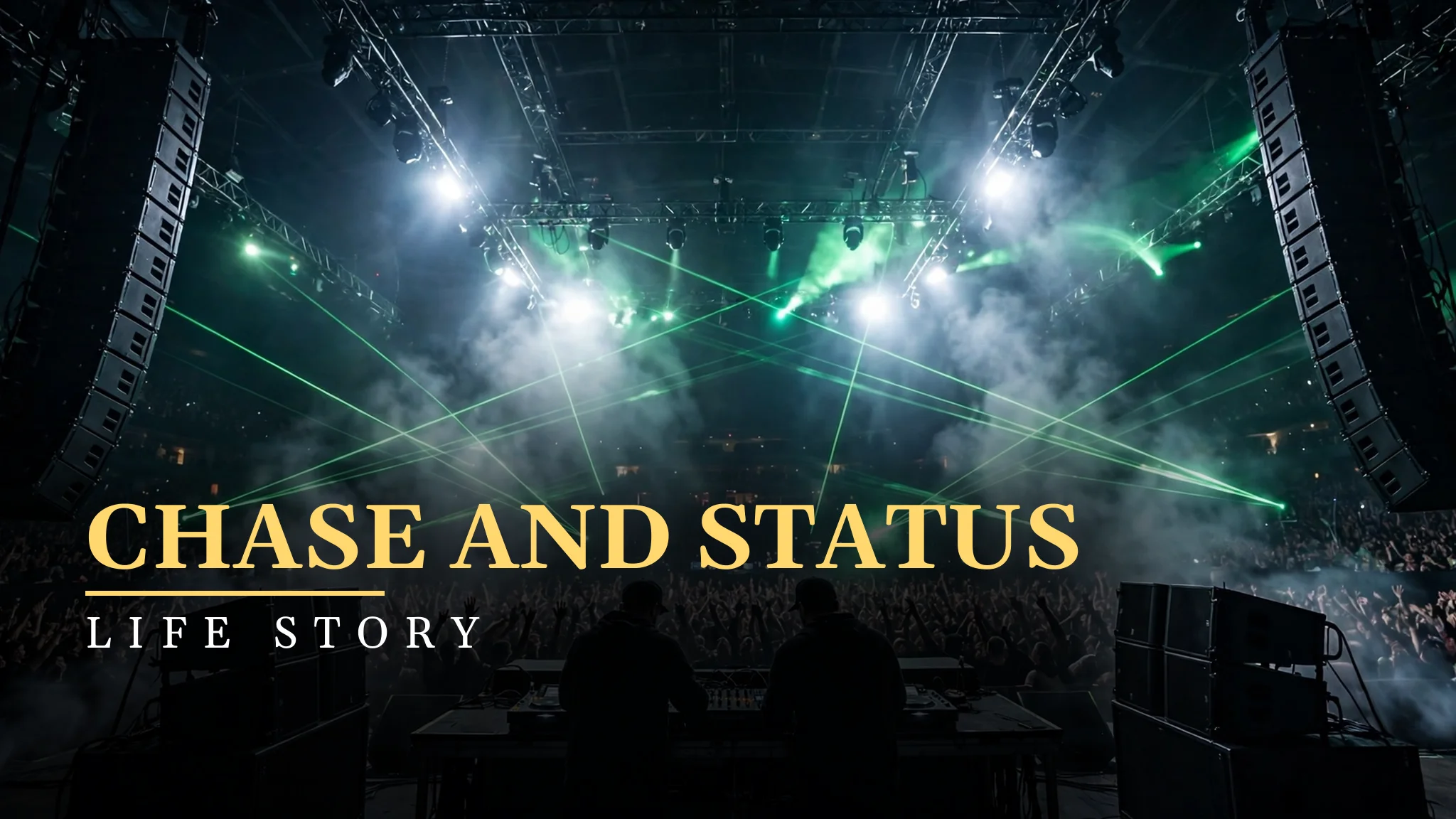
Their live shows are famous for their power. They play as DJs, with decks and mixers, and they also work with MCs who rap and sing over their beats. The shows are loud, fast and joyful, with the crowd moving together to the beat. A Chase and Status concert is not a quiet event. It is a physical experience, with the bass shaking the room and the crowd shouting along. That power is part of why their fans love them. They do not just play music. They create a feeling of being together in a loud and joyful room.
The duo’s way of working with singers is also part of their story. Like many dance acts, they work with many different voices, choosing the right singer for each song. Plan B, Liam Bailey, Becky Hill, Clementine Douglas: each one brought a different feeling to the duo’s tracks, and each song sounds different because of that voice. That way of working takes skill, because the duo must listen to a singer, understand what makes their voice special, and write a track that fits them. Chase and Status have that skill, and it is why their songs are remembered long after the night ends.
Their influence can be heard in many younger drum and bass artists who learned from them that the genre could be both underground and popular, both fast and soulful. Chase and Status showed that a drum and bass duo could have number one albums, could work with pop singers, and could still keep the energy of the club. That lesson has helped a new generation of producers to be braver about melody, about singing, and about the feeling of their music.
Still Fast, Still Together, Still London
In the years since What Came Before, Chase and Status have continued to release new music, to play festivals, and to work with new singers. They have stayed together as a duo, and they have kept their base in London. They have not tried to become a different kind of act to chase a trend. They have stayed with the sound they built at university in Manchester and in the clubs of London, while letting it grow a little with each new record. That steadiness is part of their story.
Their influence can be heard in the new wave of drum and bass that has become popular again in recent years, with young artists and young crowds discovering the fast beats and deep bass that Chase and Status have loved for twenty years. The duo have become elder statesmen of the scene, respected by the new generation and loved by the old. They are proof that a sound can last, if it is made with honesty and with care.
Looking back, the story of Chase and Status is a story of two friends who found a sound and protected it. They started at university in Manchester, they made a debut album with More Than Alot, they had a huge success with No More Idols, they returned to their jungle roots with RTRN II Jungle, and they did it all with a fast beat and a deep bass. Their songs are still played in clubs, at festivals and on the radio, and they still make people move. That is a good legacy for a duo that began with a simple idea: that drum and bass could be music for everyone.
The MCs, the Singers and the Voices in Between
Chase and Status have always worked with voices, and those voices are part of why their tracks are remembered. A drum and bass track without a voice can be exciting, but a track with a singer or an MC can be a song, and the duo have always wanted their tracks to be songs. They have worked with Plan B, Liam Bailey, Becky Hill, Clementine Douglas, Takura, and many others, and each voice brought a different feeling to the music. That way of working takes a special skill: the duo must listen to a voice, understand what makes it special, and build a track that fits it.
An MC is a different kind of voice from a singer. An MC raps, shouts, and talks over the beat, giving the crowd energy and telling them to move. A singer gives the track a melody, a feeling, and a story. Chase and Status use both, sometimes in the same track, and the result is a song that has both power and feeling. That mix is the heart of their sound: a fast beat, a deep bass, and a voice that makes the track human. Without the voice, the track would be only a beat. With it, the track becomes a song that people remember.
The duo’s live shows are built around those voices. They play as DJs, with decks and mixers, and they work with MCs who rap and sing over their beats. The MC talks to the crowd, tells them to jump, tells them to sing, and makes the room feel like a party. That energy is part of why their shows are so loved. A Chase and Status concert is not a quiet event. It is a loud and joyful room, with the crowd moving together to the beat, and the MC leading them like a friend.
Working with singers also taught the duo how to write songs. A singer needs a melody, a chorus, and words that mean something, and the duo learned how to build those things into a fast drum and bass track. That is a hard skill, because a fast beat can swallow a melody, and a deep bass can hide a voice. Chase and Status learned how to balance those things, how to let the voice sit on top of the beat, and how to make a track that works in a club and on the radio at the same time. That balance is part of why their songs have lasted.
Their collaborations have also brought their music to new audiences. A fan of Plan B who had never heard drum and bass might hear End Credits and discover a new sound. A fan of Becky Hill might hear a Chase and Status track and discover drum and bass for the first time. That is how a genre grows: one collaboration at a time, one new listener at a time, until the sound belongs to everyone. Chase and Status have done that work for twenty years, and their collaborations are part of why drum and bass is popular again today.
What I find most interesting about their voices is that they are all different, and yet they all sound like Chase and Status. Plan B sounds like Plan B, Liam Bailey sounds like Liam Bailey, and yet the tracks sound like the duo. That is the sign of a strong production style: the duo’s beats are so clear, so powerful, and so warm that any voice can sit on top of them and still sound like part of the same world. That is a rare achievement, and it is the reason their tracks are remembered long after the night ends.
Their recent festival shows have also shown how much the crowd still loves them. At a big festival, when the bass drops and the crowd jumps, the whole field moves together, and the duo play with a joy that comes from knowing the crowd is with them. That shared feeling is hard to describe, but it is the reason people go to festivals: to feel part of something larger than themselves, to dance with strangers, and to hear a song they love played loud. Chase and Status give them that feeling, night after night.
The duo’s songs have also been used in films, in adverts and on television, and each new use carries their music to people who might never have heard it otherwise. A listener who hears Blind Faith in a film may go home and listen to the whole album, and that is how a duo grows, one listener at a time. Their music travels well because it is powerful, because it is soulful, and because it is about feelings that everyone knows: love, loss, and the joy of moving together to a fast beat.
My Take:
When I listen to Chase and Status, the first thing I feel is power. Their music is fast, loud and full of bass, and it makes me want to move. But underneath that power, there is always a real song, and I think that mix is what makes them special. Blind Faith is a fast drum and bass track, but it is also a soulful song about love. End Credits is a slow and emotional track, but it is also a drum and bass song at heart. That mix of power and feeling feels honest to me, because real life is often like that: loud on the outside, tender on the inside.
I think the most admirable part of their story is their loyalty to drum and bass. Many producers who become famous leave their underground roots behind and make safer pop music. Chase and Status did not do that. They had number one albums, they worked with pop singers, but they never stopped making drum and bass. They even made an album, RTRN II Jungle, that was a love letter to the jungle sound that had first inspired them. That loyalty takes courage, because the music world often tells artists to move on. They stayed, and their staying kept the sound alive for a new generation.
I also admire their friendship. Will Kennard and Saul Milton met at university in Manchester, and they have been working together for more than twenty years. That is a long time for any duo, and it is the reason their music sounds so tight. They know each other’s strengths, they know each other’s taste, and they trust each other. When I hear their tracks, I hear that trust, and it makes the music feel like a partnership, not just a business. A duo that likes each other plays differently from a duo that is only working together for money, and the audience can hear the difference.
There is a sadness in their story, too, and it is the sadness of a genre that is sometimes treated as less serious than other music. Drum and bass is fast, loud and made for dancing, and some people think that means it cannot be serious. I think that is unfair, because it takes great skill to make a fast beat that still carries a real song. Chase and Status have that skill, and they use it with care. Their songs about love, loss and life in London are as serious as any slow ballad, and they deserve to be heard as songs, not just as club tracks.
Another thing I notice is how much their music depends on other singers and MCs. Plan B, Liam Bailey, Becky Hill, Clementine Douglas: each one brought a different voice to the duo’s tracks, and each song sounds different because of that voice. That way of working is generous, because it shares the spotlight with many people. But it also means that the duo themselves are sometimes hard to see. People remember the singer, and they forget the two friends who made the track. I think that is unfair, because Kennard and Milton are the heart of Chase and Status. Their beats are the reason the singers sound so good, and they deserve more credit than they sometimes get.
I find their album No More Idols especially moving, because it showed drum and bass becoming pop music without losing its soul. The album had fast tracks, slow tracks, soulful songs and streetwise raps, all held together by the duo’s sound. It was a record that could be played in a club and on the radio, and it worked in both places. I think that is a remarkable achievement, and it is why the album is still loved today. It proved that a genre from London’s underground could belong to everyone, if the songs were good enough.
If I have a criticism, it is only that their albums can sometimes feel uneven. Because each track has a different singer, the albums can feel like collections of singles rather than complete records. That is the price of their way of working, and I would not want them to lose it. But I do think a listener who is new to the duo can feel lost, because there is no single voice that tells you who Chase and Status are. You need to listen to many tracks before the picture becomes clear. That is not a real fault, though. It is a sign that the duo is richer than a single singer, and that richness is worth the effort.
I also think about their live shows, and how powerful they must be. A Chase and Status concert is a physical experience, with the bass shaking the room and the crowd moving together. I would love to be in that crowd, to feel the beat in my chest, and to hear Blind Faith played live, with the whole room singing along. That is a rare feeling in music, where so many shows are polished and distant. Chase and Status feel close and human, even when the music is loud, and that closeness is part of why people love them.
When I compare Chase and Status with other dance acts of their time, what stands out is their roots. They are from London, and they have never forgotten it. Their music carries the sound of the city’s clubs, its pirate radio stations, and its streets. That mix is not an accident. It is the sound of a place where many cultures live together, and the duo’s music honours that place. I think that is the clearest lesson in their story: a duo can be from somewhere specific, and still belong to the whole world, if the music is honest about where it comes from.
For a young reader, I think the lesson is about staying true to your sound. Chase and Status found drum and bass when they were young, and they have stayed with it for twenty years, even when the fashion changed. That takes patience and confidence, because the world often tells artists to move on. Their story says that if you love a sound, if you work at it with care, and if you keep finding new songs inside it, then the sound will stay alive. That is a hopeful thought, and it is one I will carry with me.
I also take a personal lesson from their partnership. Kennard and Milton have worked together for more than twenty years, and they have done it by trusting each other, by listening to each other, and by remembering that the music matters more than the ego. Many partnerships fail because one person wants all the credit, or because the two people stop listening. Their story says that a partnership can last, if both people are willing to share the work and share the praise. That is a lesson for any kind of work, not just music.
In the end, I think Chase and Status matter because they prove that fast music can also be soulful music. Their tracks make people dance, and they also make people feel. When I hear Blind Faith today, I still feel the beat, I still feel the soul, and I still feel the love that the song is about. That is a good drum and bass track, and it is a good legacy for a duo that started as two friends at university in Manchester.
One more thought stays with me, and it is about the future. I do not know what their next album will sound like, and I do not need to know. I trust that when it comes, it will sound like them: fast, deep, and full of bass and voices. That trust is something a duo earns over many years, and Chase and Status have earned it. I will keep listening, not because they are the loudest duo in the world, but because they are one of the most loyal, and loyalty in music is rarer than it should be.
I also think about what I would say to a friend who had never heard Chase and Status. I would start with Blind Faith, because it is their most soulful song, and then I would play End Credits, and then Mixed Emotions, and I would let the friend hear how the duo can be fast and slow, loud and soft, all in the same set. That is the best way to meet this duo: through the songs first, and then through the beats that hold those songs together.
There is another lesson in their story that I keep coming back to, and it is about the value of staying true to a sound. Chase and Status found drum and bass when they were young, and they have stayed with it for twenty years. That tells me that a person does not need to chase every new fashion. They can love one sound, work at it with care, and keep finding new songs inside it. That is a hopeful thought, and it is one I will carry with me into my own work.
I also wonder what their next album will sound like, and I find that I do not mind not knowing. Some duos make me want to guess, to predict, to follow every rumour. Chase and Status make me want to wait. I trust that when the record comes, it will be fast, it will be deep, and it will sound like them. That trust is a rare thing to feel about a duo, and it is the result of more than twenty years of good work. A duo that has never let me down earns the right to be waited for.
When I think about their beats, I think about how they have changed over the years. On the first album they sounded raw and energetic, as if the duo were testing the strength of their own sound. On What Came Before they sound sure and polished, as if they know exactly what their beats can do. That change is not about technique. It is about confidence, and confidence grows slowly, through years of making music, through years of playing live, through years of learning that your sound is worth hearing. I find that growth hopeful, because it shows that a duo, like a person, can become stronger with time.
I also think about the listeners who found this duo during hard times. Many people discovered Chase and Status in a club, dancing, and the songs became part of their happiest memories. Those listeners did not find the duo in a quiet room. They found them in a crowd, moving together, and the songs stayed with them when they went home. That is a special kind of success: not a hit that everyone hears at once, but a song that becomes part of a person’s life, and stays.
If I could ask the duo one question, I would ask them how they keep their sound fresh after twenty years, how they find new ideas in a genre they have loved for so long. I suspect the answer would be simple: they listen, they work with new singers, and they trust the beat. That simplicity is the heart of their story, and it is the reason their music still sounds fresh. A duo that listens to itself will always sound honest, and honesty is the rarest sound in popular music.
In the end, what I carry from Chase and Status is a feeling of power. Their music does not shout, it does not beg, and it does not try to be everything at once. It is a fast, deep sound, made by two friends who listen to each other, and it reaches people all over the world. That is enough, and it is more than enough. It is a reminder that loyal work, done with care, can still be heard, even in the noisiest of times.
I also think about the slower songs in their catalogue, the ones that do not get played in clubs as often. A song like End Credits, with its slow and emotional feeling, shows a different side of the duo, while a track like Let You Go shows their tender side. Those slower songs are just as important as the fast ones, because they show that Chase and Status can be gentle as well as powerful. A listener who only knows the loud tracks is missing half the duo, and I would tell them to listen to the slow songs too, because those songs are where the duo’s heart really lives.
There is one more thing I want to say about their loyalty, and it is that loyalty is not stubbornness. The duo’s loyalty to drum and bass is a form of love: love for a sound, love for a scene, love for the people who made it. When the bass drops and the crowd jumps, the duo are telling the audience that this sound matters, that this community matters, and that being together matters. That is a generous message, and it is one that I carry with me long after the song has ended.
Frequently Asked Questions
Who are Chase and Status?
Chase and Status are Will Kennard, known as Chase, and Saul Milton, known as Status, two friends from London who met at university in Manchester. They began making drum and bass music in the early 2000s and became one of Britain’s biggest dance acts.
What is Chase and Status’ most famous song?
Blind Faith, featuring Liam Bailey, is one of their most famous songs, a soulful drum and bass track about love from the album No More Idols. End Credits, featuring Plan B, is also well known, a slow and emotional song about a relationship ending.
What albums has Chase and Status released?
Their studio albums are More Than Alot from 2008, No More Idols from 2011, Brand New Machine from 2013, Tribe from 2017, RTRN II Jungle from 2019, and What Came Before from 2022. Each album mixes drum and bass with pop, soul and hip hop.
What kind of music do Chase and Status make?
They make drum and bass, a fast electronic music from London with deep bass lines and sharp drums, mixed with soulful singers, MCs and pop melodies. Their sound is built for clubs and festivals, but their songs also work on the radio.
Why is Plan B linked to Chase and Status?
Plan B, a singer and rapper from London, sang on End Credits, a hit song from the album No More Idols. The song became one of the duo’s most loved tracks, and it showed how drum and bass could carry a slow, emotional song.
Where are Chase and Status from?
The duo are from London, and they met while studying at university in Manchester. Their music carries the sound of London’s clubs, pirate radio stations and streets, and they have stayed true to drum and bass throughout their career.
Is Chase and Status still together and touring?
Yes, Kennard and Milton have stayed together as a duo for more than twenty years and have continued to release new music and play festivals in the years since What Came Before. Their live shows remain known for their power, bass and joyful crowds.


