Cut Eye Care Costs Smartly
In this post
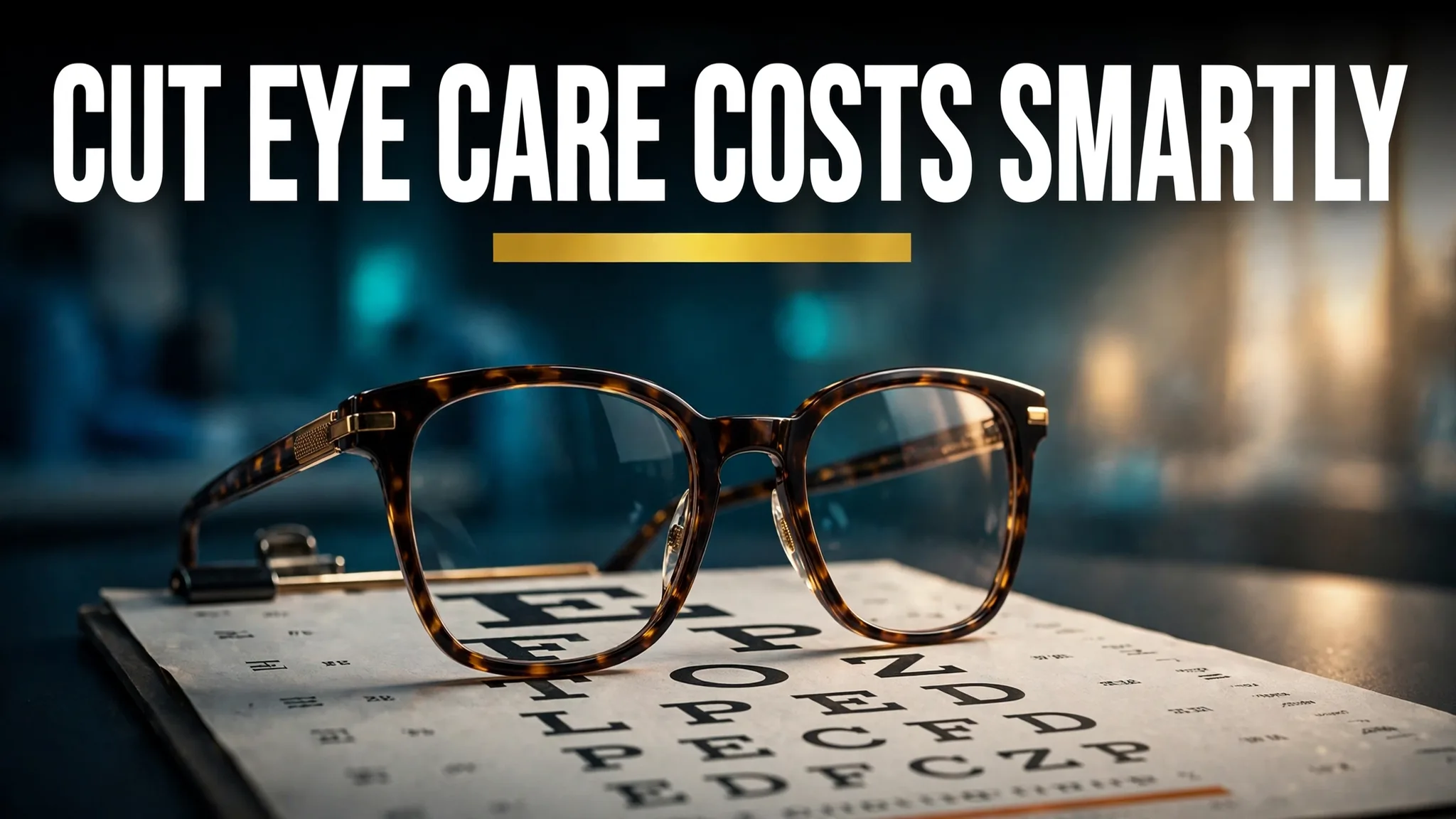
The eye chart on the wall is one of the most honest objects in medicine. It does not flatter, it does not negotiate, and it does not care how much you paid for your last pair of glasses. It simply asks, line by line, what you can actually see. And every line you miss is a small message: your eyes have changed, your glasses have not, and the headaches you blamed on work may have a much simpler cause.
Eye care costs surprise people because they arrive in pairs. First the test, then the glasses, and each one feels like a separate bill. But both can be managed with the same calm habits that manage any other household cost: test on time, compare prices, protect what you own, and stop paying twice for the same mistake. This post is about those habits.
Test on schedule, not on headaches
An eye test is the foundation of all eye care costs, because everything else depends on it: the prescription, the glasses, the decision about what can wait. An outdated prescription causes headaches, eye strain, and tiredness that people blame on screens, work, or bad sleep. New glasses made from an old prescription are money spent on the wrong answer.
Get eyes tested on the schedule an eye doctor recommends for your age and condition. Children need testing because their eyes are still developing and they rarely complain clearly. Adults who wear glasses need regular re-testing because prescriptions drift slowly, so slowly that the wearer adapts to worse vision without noticing. Older adults need it most, because some eye conditions develop silently and only a proper test finds them early.
A test on schedule also saves the cost of a second pair of glasses. Glasses bought from a fresh prescription last longer in usefulness than glasses bought from a guess, and they do not need replacing three months later when the headaches refuse to leave.
Compare prices for the same prescription
Here is a truth about glasses that surprises first-time buyers: the same prescription can carry very different prices in different shops. Frames, lenses, coatings, and shop rent all change the total. Two shops can sell glasses that correct your vision equally well, and charge amounts far apart.
For a planned pair of glasses, take the prescription and ask two or three shops for their price for the same thing: same prescription, same lens type, similar frame quality. Write the numbers down. The comparison takes one afternoon and can save a visible amount, especially for families buying glasses for more than one person.
Be careful with what the price includes. Ask whether the quoted price covers the frame, both lenses, fitting, and any coating, or whether each of those is charged separately. A low headline price that grows at the counter is not a low price. A clear, complete quote is worth more than a tempting first number.
Choose durable frames over fashionable fragile ones
Frames are where fashion quietly eats the budget. A delicate, fashionable frame looks beautiful in the shop and breaks in the third month of real life: in a bag, on a bedside table, in a child’s hands. Each replacement is a new bill for the same eyes.
Durable frames cost a little more at the counter and far less across two years. Look for frames that bend slightly without snapping, hinges that feel solid, and a fit that stays on your face without sliding. A frame that fits well also protects the lenses, because glasses that constantly slip get scratched, dropped, and sat on.
For children, this rule matters twice as much. Children break glasses the way weather breaks umbrellas: not from malice, but from life. A sturdy frame, and a spare pair if the budget allows, costs less than three fashionable replacements in a school year.
The hard case is the cheapest insurance
Most glasses do not break in accidents. They break in bags, in pockets, on car seats, and on beds where someone sat down without looking. A hard case prevents nearly all of that, and it costs less than a single lens.
The rule is simple and absolute: glasses live in the case or on the face, nowhere else. Not on the head like a hairband, where they stretch and fall. Not loose in a bag, where keys scratch the lenses. Not on a table edge, where one elbow ends the story. Teach this rule to every glasses wearer in the family, especially children, and the breakage bill quietly disappears.
In my view, a hard case is the cheapest insurance a glasses wearer will ever buy, and the only one that works every single day without a monthly payment.
Clean lenses properly too. Rinse with water first to remove dust, then wipe with a soft cloth. Dry-wiping a dusty lens grinds tiny scratches into it, and scratched lenses are replaced long before their time. A scratched lens is not a fashion problem. It is a vision problem that forces an early, avoidable purchase.
Rest tired eyes during long screen hours
Screens are part of modern life, and eye strain from screens is part of the modern eye care bill: headaches, dry eyes, and glasses bought for strain that rest would have eased. The eyes were not built for eight unbroken hours at one distance. They need change.
The simplest habit is also the oldest: look away regularly. Every twenty minutes or so, look at something far away for twenty seconds and let the eyes relax. Blink fully, because screen work makes people blink less, and dry eyes follow. Keep the screen at a comfortable distance, with light that does not glare across it, and sit so the neck is not bent sharply downward.
These habits cost nothing, and they protect both comfort and glasses. Strained eyes lead to rushed prescriptions and unnecessary purchases. Rested eyes give a truer test result, which gives truer glasses, which last longer.
What smart saving never means
Smart eye saving never means buying someone else’s glasses, guessing a prescription, or ordering glasses from a number remembered from years ago. Eyes change, and a wrong prescription causes headaches, strain, and sometimes accidents. It also never means ignoring warning signs to save a visit.
For eye pain, sudden vision changes, flashes of light, a dark shadow across vision, or any eye injury, see an eye doctor promptly. These are not saving opportunities. They are emergencies, and early treatment protects sight itself, which no amount of saving can buy back.
Also, beware of extremely cheap glasses sold without a proper test or a proper shop. A bargain that damages vision is not a bargain. Real savings come from a fresh prescription, a fair price, and glasses protected well enough to last.
More ways to save
Common questions
How often should I get my eyes tested?
Follow an eye doctor’s advice for your age and condition, but test on schedule rather than waiting for headaches. Prescriptions drift slowly, and people adapt to worse vision without noticing, so a scheduled test catches changes before they cause strain or a wasted pair of glasses.
Why do glasses prices differ so much between shops?
Frames, lenses, coatings, and shop rent all change the total, so the same prescription can carry very different prices. Ask two or three shops for a complete quote for the same prescription and lens type, and check whether fitting and coatings are included or charged separately.
How can I make my glasses last longer?
Keep them in a hard case whenever they are not on your face, and never leave them loose in a bag or on a table edge. Rinse lenses with water before wiping, so dust does not scratch them. Most breakage is careless rather than accidental, and a case prevents nearly all of it.
Do I need expensive frames for good vision?
No. Vision comes from the lenses and the prescription, not the price of the frame. A durable, well-fitting frame protects the lenses and lasts longer than a delicate fashionable one, so it usually costs less across two years even if it costs a little more at the counter.
When should I see an eye doctor urgently?
For eye pain, sudden vision changes, flashes of light, a dark shadow across vision, or any eye injury, see an eye doctor promptly. These are not saving opportunities. Early treatment protects sight itself, and delay can cost far more than a visit.