Deyvis Orosco: The Life Story Behind the Peruvian Cumbia Star
In this post
- Growing Up in a Cumbia Family
- Grupo Néctar and the Sound of Peruvian Cumbia
- Tragedy in 2007 and a Life Changed Forever
- Rebuilding Grupo Néctar and Finding His Own Voice
- Hits, Concerts, and the King of Peruvian Cumbia
- Family, Memory, and Keeping His Father’s Legacy Alive
- What His Story Means for Peruvian Music
- My Take:
Deyvis Orosco is one of the most popular cumbia singers in Peru, and his story is a story of music, family, and loss. He was born in Lima in 1986, and he grew up in the world of Peruvian cumbia, because his father, Johnny Orosco, was the founder of Grupo Néctar, one of the most famous cumbia groups in Peru. Deyvis learned music from his father, and he sang with the group from a young age. Then, in 2007, his father died suddenly in a road accident in Argentina, along with other members of the group, and Deyvis had to decide what to do. He chose to carry on, to rebuild Grupo Néctar, and to keep his father’s music alive. That decision made him a star, and it made him a symbol of resilience in Peruvian music.
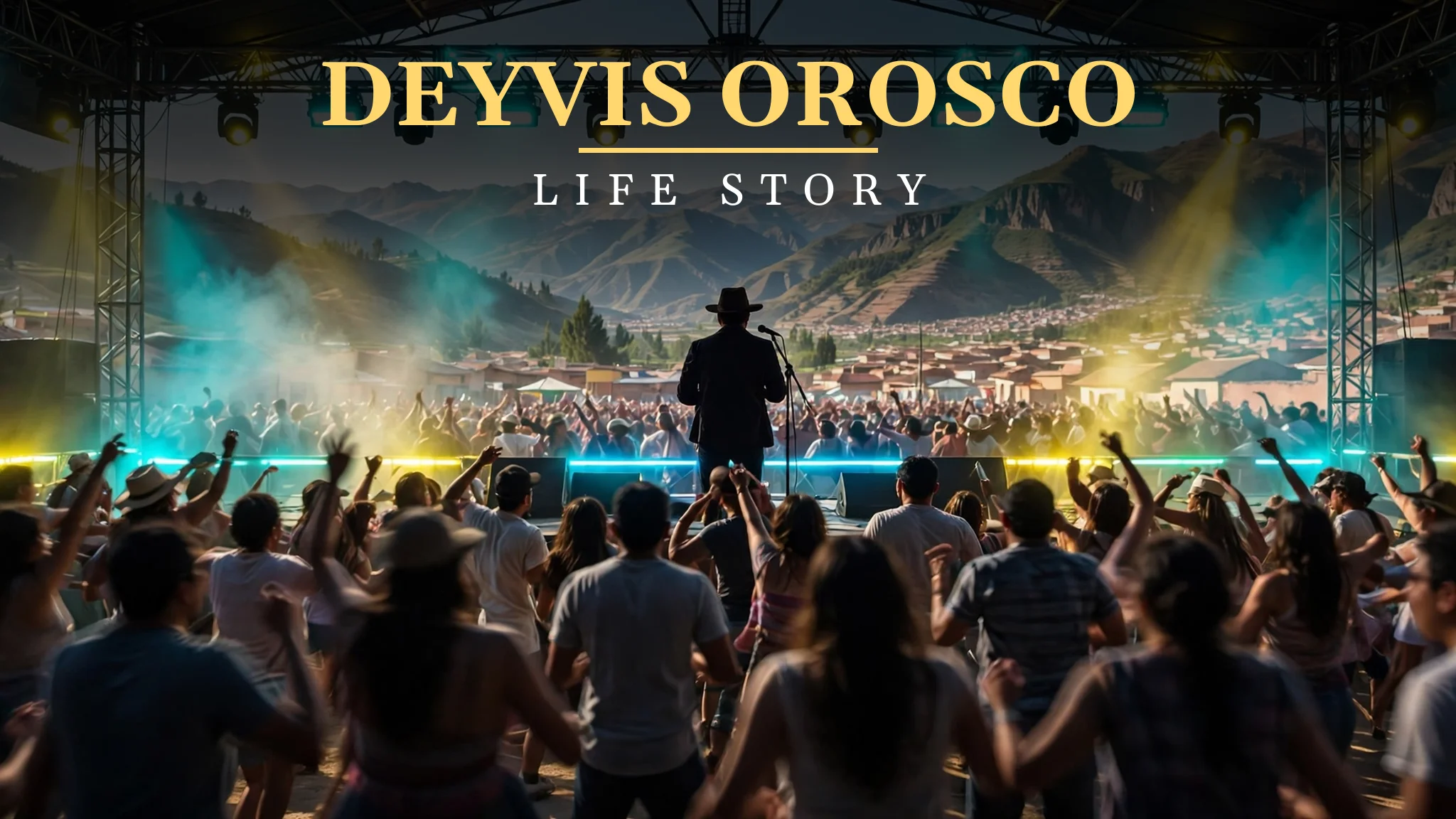
His songs, including No te creas tan importante and El arbolito, became hits, and they were played on the radio, at parties, and at concerts all over Peru. He became known for his voice, for his energy on stage, and for his ability to make a crowd dance. Cumbia is music for dancing, and Deyvis understands that better than almost anyone. His concerts are loud, joyful, and full of life, and people leave them feeling happy. He is not only a singer. He is the keeper of a family legacy, and he carries it with pride.
What makes his story moving is the way he turned tragedy into strength. He lost his father when he was only twenty-one years old, and he could have given up. Instead he took over the group, he rebuilt it, and he made it successful again. That takes a special kind of courage, and it is why his fans love him so much. This is the story of a young man from Lima who inherited a great musical legacy, and who made it his own.
Growing Up in a Cumbia Family
Deyvis Orosco was born on 8 January 1986 in Lima, Peru. He grew up in a family where music was everything, because his father, Johnny Orosco, was a musician and the founder of Grupo Néctar. The group played cumbia, a style of music that came from Colombia and that became hugely popular in Peru, and it was one of the most loved groups in the country. Deyvis grew up hearing cumbia at home, at rehearsals, and at concerts, and he learned to love it from a young age. Music was not a hobby. It was the family business, and it was a way of life.
As a boy, he watched his father perform, and he learned how to sing, how to handle a stage, and how to connect with an audience. He was not a shy child, and he enjoyed being around music. He sang with the group when he was young, and he began to understand the rhythms and the feeling of cumbia. He learned that cumbia is music for dancing, and that a good cumbia singer has to make people want to move. That lesson stayed with him, and it became the centre of his career.
His childhood was happy, but it was also shaped by the hard work of a musician’s life. His father travelled a lot, performed in many places, and worked hard to make the group successful. Deyvis saw that hard work, and he learned that success in music does not come easily. It takes practice, it takes travel, and it takes a willingness to perform night after night. He was learning those lessons while he was still a boy, and they would serve him well later in his life.
By the time he was a teenager, Deyvis was already a part of Grupo Néctar, singing and performing with his father. He was not only the son of the founder. He was a singer in his own right, with a good voice and a strong stage presence. He was learning his craft, and he was building a reputation. He did not know that his life was about to change in a terrible way, and that he would soon have to carry the group on his own. But the years he spent learning from his father had prepared him, even if he did not know it yet.
Grupo Néctar and the Sound of Peruvian Cumbia
Grupo Néctar was founded by Johnny Orosco, and it became one of the most important cumbia groups in Peru. The group played a style of cumbia that was joyful, danceable, and full of energy, and it became popular with audiences all over the country. Its songs were played on the radio, at parties, and at festivals, and people danced to them everywhere. The group was a big part of Peruvian popular culture, and Johnny Orosco was its leader, its voice, and its heart.
Deyvis grew up inside that group, and he learned its music from the inside. He knew the songs, he knew the rhythms, and he knew the audience. He sang with his father, and he learned how to lead a crowd, how to keep the energy high, and how to make a concert feel like a celebration. Cumbia is not quiet music. It is loud, it is fast, and it is made for dancing, and Deyvis learned to perform it with the same joy that his father had. He was becoming a cumbia singer in the truest sense, and he was proud of it.
The group travelled widely, performing in Peru and in other countries, including Argentina, where cumbia was also popular. Those travels taught Deyvis about the wider world of Latin American music, and they showed him that cumbia was loved far beyond Peru. He saw audiences in other countries dancing to his father’s songs, and he understood that the music had a power that crossed borders. That understanding would help him later, when he took over the group and had to perform in many different places.
By the mid-2000s, Deyvis was an established part of Grupo Néctar, and he was seen as the future of the group. His father was still the leader, but Deyvis was learning, and he was ready to take on more responsibility. He was a young man with a bright future, and he was part of a family that had built something special in Peruvian music. That future was about to be tested in the hardest way possible, and he would have to prove that he could carry the legacy on his own.
Tragedy in 2007 and a Life Changed Forever
In 2007, tragedy struck Grupo Néctar. Johnny Orosco and other members of the group died in a road accident in Argentina, while they were travelling for a performance. The news shocked Peru, and it was met with grief across the country. Johnny Orosco was a beloved figure in Peruvian music, and his death was a huge loss. For Deyvis, it was not only a professional loss. It was the loss of his father, his teacher, and the person who had guided his whole life. He was only twenty-one years old, and he had to face a grief that most people do not face until much later in life.
The accident left the group in ruins, and many people thought that Grupo Néctar was finished. The founder was gone, several members were gone, and the future looked dark. Deyvis had to decide what to do. He could have walked away from music, and nobody would have blamed him. He had lost his father, and the pain must have been enormous. But he chose a different path. He chose to rebuild the group, to keep his father’s music alive, and to carry on the legacy that Johnny Orosco had built. That decision took a courage that is hard to describe.
Rebuilding was not easy. He had to find new musicians, to rehearse, to perform, and to convince audiences that Grupo Néctar was still alive. He had to do it while he was grieving, and while he was still very young. He did it because he believed in the music, and because he believed that his father’s work should not be forgotten. He sang the old songs, he learned new ones, and he slowly built the group back up. It was a slow and painful process, but he did not give up.
The tragedy of 2007 is the turning point of Deyvis Orosco’s story, and it is the reason why his fans respect him so much. He did not only inherit a group. He saved it, and he did it at a time when he was grieving for his father. That is a remarkable thing, and it shows a strength of character that goes beyond music. He turned his pain into a mission, and he made his father’s legacy his own. That is why his story is not only about cumbia. It is about love, loss, and resilience.
Rebuilding Grupo Néctar and Finding His Own Voice
After the tragedy, Deyvis worked hard to rebuild Grupo Néctar, and he slowly brought it back to life. He recruited new musicians, he rehearsed, and he performed in concerts across Peru. At first, it was difficult, because audiences missed his father, and they compared Deyvis to him. But Deyvis did not try to be his father. He sang in his own voice, with his own style, and he honoured his father’s music while also making it his own. That balance was important, and it helped the group to find a new identity.
He also began to record new songs, and to build a solo reputation alongside his work with the group. His song No te creas tan importante became a hit, and it showed that he was not only the keeper of his father’s legacy. He was a star in his own right, with his own songs and his own voice. The song was about a person who thinks they are more important than they are, and it was sung with a confidence and a humour that audiences loved. It became one of his signature songs, and it is still one of the most popular cumbia songs in Peru.
Other songs followed, including El arbolito, and each one added to his fame. He became known as a cumbia singer who could make people dance, and who could also tell a story with his songs. His concerts became popular again, and Grupo Néctar was once more a major name in Peruvian cumbia. He had done what many people thought was impossible: he had brought the group back from tragedy, and he had made it successful again. That is a great achievement, and it is one that he should be proud of.
His rebuilding of the group also showed his leadership. He was young, but he was able to lead musicians, to make decisions, and to keep a group together through hard times. That is not easy, and it takes a special kind of person. He did it because he believed in the music, and because he loved his father. He was not doing it for fame or for money. He was doing it for love, and that love gave him the strength to keep going when it would have been easier to stop.
Hits, Concerts, and the King of Peruvian Cumbia
As Grupo Néctar grew again, Deyvis became one of the most popular cumbia singers in Peru. His concerts were known for their energy, their joy, and their connection with the audience. He sang his hits, he danced, and he made every show feel like a party. Cumbia is music for dancing, and he understood that better than almost anyone. His concerts were not quiet or formal. They were loud, happy, and full of life, and people left them feeling better than when they arrived. That is a gift, and it is one of the reasons why he became so popular.
He also performed in other countries, taking Peruvian cumbia to audiences in Argentina, Chile, and other Latin American countries. His music travelled well, because cumbia is loved across the region, and because his performances were so full of energy. He became an ambassador for Peruvian cumbia, and he showed the world that Peru had a rich and joyful musical tradition. That is an important role, and it is one that he has taken seriously.
His success also brought him recognition, and he was praised by other musicians and by critics. He was seen as one of the leading voices of a new generation of Peruvian cumbia, a singer who was keeping the music alive and giving it a fresh energy. He had taken a group that had been broken by tragedy, and he had made it strong again. That is a story that resonates with many Peruvians, because it is a story about resilience, about family, and about the power of music to heal. He also performed at festivals and at large public events, where thousands of people danced to his music. Those big concerts showed how popular he had become, and how much his fans loved him. He sang the old songs of Grupo Néctar, and he sang his new songs, and the audience sang along to both. That is a sign of a true star: when the audience knows your songs by heart, and they sing them with you. Deyvis had reached that level, and he had done it through hard work and through love for his music.
Despite his fame, he has continued to work hard, releasing new music, performing in concerts, and keeping Grupo Néctar alive. He is still young, and his career is still growing, and he has many years ahead of him. That is an exciting thing for his fans, because it means that there is more music to come, more concerts to enjoy, and more of his energy to experience. He is a star, and his story is still being written, with new chapters still to come.
Family, Memory, and Keeping His Father’s Legacy Alive
Deyvis Orosco’s story is, at its heart, a story about family. He learned music from his father, he sang with his father, and he lost his father when he was very young. He has spent his career keeping his father’s memory alive, through the music of Grupo Néctar, and through his own songs. He speaks about his father with love and with respect, and he has said that everything he does is for him. That is a beautiful thing, and it is one of the reasons why his fans love him so much. He is not only a singer. He is a son who honours his father.
He has also built his own family, and he has spoken about the importance of being a father himself. He understands, in a deep way, what it means to lose a parent, and what it means to be a parent. That understanding gives his music a depth that goes beyond dancing and parties. His songs are joyful, but they are also rooted in a real life, with real love and real loss. That is why they connect so deeply with his audience. People hear the joy, but they also hear the heart behind it.
He has kept the memory of Grupo Néctar alive, not only through his own performances, but through the way he talks about the group and its history. He tells the story of his father, and of the other members who died, and he makes sure that they are not forgotten. That is an important act of memory, and it shows that he understands that music is not only about the present. It is also about the past, and about the people who made it. He is a keeper of that memory, and he takes that role seriously.
His legacy is still being built, but it is already clear. He is a singer who saved a great Peruvian group, who made it successful again, and who gave Peruvian cumbia a new life. He is also a son who honoured his father, and a man who turned tragedy into strength. That is a powerful legacy, and it is one that will be remembered in Peru for a long time. His story is not only about music. It is about love, loss, and the courage to keep going.
What His Story Means for Peruvian Music
Deyvis Orosco’s story matters for Peruvian music because he saved one of its most important groups, and he kept cumbia alive for a new generation. Grupo Néctar could have ended in 2007, and Peruvian cumbia would have lost one of its great names. Deyvis made sure that did not happen, and he did it at a time when he was grieving and when he was very young. That is a remarkable achievement, and it is one that the Peruvian music world will always be grateful for. He did not only save a group. He saved a part of Peruvian culture.
His success also shows that a young person can take on a great responsibility, and can succeed. He was twenty-one when his father died, and he had to lead a group, to make decisions, and to perform in front of audiences who were grieving. He did it, and he did it well. That is a hopeful message for young people in Peru, especially for young people who have lost a parent. It tells them that they can carry on, that they can honour the person they lost, and that they can build a future from their pain. That is a powerful lesson, and it is one that Deyvis’s life teaches clearly.
His music also matters because it brings joy to millions of people. Cumbia is music for dancing, for parties, and for celebrations, and Deyvis’s concerts are a celebration of life. In a country that has faced hard times, that joy is important. It gives people a reason to dance, to smile, and to forget their troubles for a while. That is a gift, and it is one that Deyvis gives generously, night after night, in concert after concert. He is not only a singer. He is a bringer of joy, and that is a beautiful thing to be.
Today, Deyvis Orosco is one of the most popular cumbia singers in Peru, and his music is loved by millions of people. His story is a story of talent, of hard work, of loss, and of resilience. It is also a story that is still being written, because he is still young, and he still has much more to give. His fans are waiting to see what he does next, and they are confident that it will be exciting. That is the mark of a true star: people cannot wait to see what you do next.
My Take:
When I think about Deyvis Orosco, the first thing I feel is sadness, because his story begins with a terrible loss. He lost his father when he was only twenty-one years old, in a road accident far from home, and he lost other members of the group at the same time. I try to imagine what that must have felt like, to be so young and to lose the person who had taught you everything, and I think it must have been unbearable. He could have given up, and nobody would have blamed him. Instead he chose to carry on, and that choice is the heart of his story. It is a choice that takes a courage I am not sure I would have, and it is why I admire him so much.
I also think about what it means to inherit a legacy, and about how heavy that can be. Deyvis did not only inherit a group. He inherited a name, a sound, and a responsibility. People expected him to be like his father, and they compared him to his father, and that must have been hard. He did not try to be his father. He sang in his own voice, and he made the group his own, while still honouring the music his father had created. That balance is difficult, and I think he handled it beautifully. He showed that you can respect the past without being trapped by it, and that you can build something new from something old. That is a lesson for anyone who has inherited a family business, or a family tradition.
What I admire most about him is his resilience. He was grieving, he was young, and the group was in ruins, but he rebuilt it. He found new musicians, he rehearsed, he performed, and he slowly brought Grupo Néctar back to life. That is not a small thing. It is a huge achievement, and it took years of hard work. I think about how easy it would have been to walk away, and how hard it was to stay. He stayed, and he worked, and he succeeded. That is a story of strength, and it is one that I think we should all remember when we face our own hard times. It is possible to keep going, even when everything seems broken.
I also think about cumbia itself, and about how it is music for joy. It is music for dancing, for parties, and for celebrations, and Deyvis understands that better than almost anyone. His concerts are a celebration, and they make people happy. I think that is an important thing, especially in a country that has faced hard times. People need joy, and they need music that makes them dance. He gives them that, and he does it with a sincerity that is hard to fake. I think that is a real gift, and it is one that should be valued more than it is. Joy is not a small thing. It is a necessity, and he provides it.
His songs are another thing that I think about, especially No te creas tan importante. It is a song about a person who thinks they are more important than they are, and it is sung with a confidence and a humour that audiences love. I think that is why it became such a hit. It told a truth that many people recognised, and it told it with a smile. Deyvis did not sing it with anger. He sang it with a lightness that made people laugh and dance. That is a skill, and it is one that not every singer has. He can take a serious message and make it joyful, and that is a rare talent.
I also think about the way he has honoured his father, and about how that honour is a part of his career. He speaks about his father with love, and he keeps his father’s music alive, and he makes sure that the other members who died are not forgotten. That is a beautiful thing, and it is one that shows a deep respect for the past. I think that is a lesson for all of us: we should remember the people who came before us, and we should honour their work. Deyvis does that, not only in words, but in his music, night after night. That is a living memorial, and it is more powerful than any statue.
When I think about his age, I think about how young he was when he took on such a great responsibility. He was twenty-one, an age when most young people are still figuring out their lives, and he was leading a famous group, making decisions, and performing in front of large audiences. That is a lot to ask of a young person, and he handled it with a maturity that is rare. I think that shows a strength of character that was there even before the tragedy, a strength that his father must have seen in him. He was ready, even though he did not know it, and he proved it when it mattered most.
I also think about the fans who stayed with Grupo Néctar after the tragedy, and about what the group meant to them. They had loved Johnny Orosco, and they grieved for him, but they also loved the music, and they wanted it to continue. Deyvis gave them that, and he gave them a reason to keep dancing. That is a gift to his audience, and it is one that they have repaid with loyalty. His concerts are full of people who have followed the group for years, and who have watched Deyvis grow from a young singer into a star. That loyalty is a beautiful thing, and it is one that he has earned.
There is another side of his story that I want to mention, and it is the way he has kept cumbia alive for a new generation. Cumbia has been popular for decades, but it needs new voices to keep it fresh. Deyvis is one of those voices, and he has given cumbia a modern energy that young people love. He has shown them that cumbia is not only their parents’ music. It is their music too, and it can be exciting and new. That is an important contribution, and it is one that the Peruvian music world values highly. He is not only a singer. He is a bridge between generations, and that is a special role.
I also think about the hard work behind his success, and about how easy it is to forget it. People see a star on stage, and they think that success came easily. But Deyvis worked for years, rehearsing, performing, and rebuilding a group from nothing. He did not become famous overnight. He earned it, step by step, and that is why his success has lasted. I think that is a lesson for anyone who dreams of success: it takes time, it takes work, and it takes patience. There are no shortcuts, and the people who last are the ones who put in the effort. He did, and he is still here.
If I could meet him, I would ask him about his father, and about what he remembers most about singing with him. I wonder if he has a favourite memory, a concert or a rehearsal that stayed with him. I think that is often the case with people who have lost a parent. They hold on to small moments, and those moments become precious. I would also ask him what it felt like to step on stage for the first time after the tragedy, and how he found the strength to sing. I think his answer would tell me a lot about courage, and about love, and about the power of music to heal.
I also want to say something about the way he performs, and about how it makes people feel. I have watched videos of his concerts, and I have seen the joy on the faces of his audience. They are dancing, they are singing along, and they are happy. That is a beautiful thing to see, and it is a reminder of what music is for. Music is not only about notes and words. It is about bringing people together, and about making them feel alive. Deyvis does that, and he does it better than almost anyone in Peruvian cumbia today. That is a gift, and it is one that I think we should celebrate.
When I think about his future, I think about how much he still has to give. He is still in his thirties, and he has already achieved so much. What will he do in his forties, in his fifties? I think he will keep growing, keep learning, and keep making music. I hope he does, because Peruvian cumbia needs him, and his fans need him. I also hope that he continues to honour his father’s legacy, because it is a legacy worth honouring. He is not only a star. He is a keeper of a tradition, and that is a role that will only become more important as he gets older.
I also think about the people who listen to his music, and about what it means to them. His songs are about love, about life, and about dancing, and those are the things that matter to ordinary people. When a person hears his music at a party, they forget their troubles for a while, and they dance. That is a powerful thing, and it is one of the reasons why his music matters. It is not only entertainment. It is a source of joy, and it tells people that life is worth celebrating, even when it is hard. I think that is a beautiful thing, and it is one that I admire deeply.
There is another lesson in his story, and it is about the value of family. Deyvis learned music from his father, he sang with his father, and he has spent his career honouring his father. That is a story about love, and about the bond between a father and a son. I think that is a universal story, and it is one that many people can relate to. We all have people we love, and we all want to honour them. Deyvis did it through music, and he did it beautifully. That is a lesson for all of us: honour the people you love, and do it in the way that matters most to you.
I also think about the way he has used his fame, and about how he has stayed grounded. He is a star, but he has not forgotten where he came from, and he has not forgotten his father. He is himself, on stage and off, and that honesty is refreshing. I think that is a lesson for young stars everywhere: you do not have to change who you are to be loved. You have to be yourself, and to do your work well, and the rest will follow. He did that, and he was rewarded for it. That is a hopeful message, and it is one that I want to remember.
Finally, I think his story is a reminder that tragedy does not have to be the end. It can be a beginning, if we have the courage to keep going. Deyvis lost his father, and he could have given up. Instead he rebuilt, he sang, and he made something new from something broken. That is a powerful message, and it is one that I think we all need to hear. Life will break our hearts, and it will take people we love, but we can still go on, and we can still make something beautiful. Deyvis Orosco did that, and his music is the proof. That is why his story is worth telling, and why I think it will be remembered for a long time.
Frequently Asked Questions
Who is Deyvis Orosco?
Deyvis Orosco is a Peruvian cumbia singer from Lima, known as the leader of Grupo Néctar. He is the son of Johnny Orosco, the founder of the group, and he rebuilt the group after his father’s death in 2007.
When was Deyvis Orosco born?
He was born on 8 January 1986 in Lima, Peru. He grew up in a family where cumbia music was a way of life, and he began singing with Grupo Néctar when he was young.
Who was Johnny Orosco?
Johnny Orosco was Deyvis’s father and the founder of Grupo Néctar, one of the most famous cumbia groups in Peru. He died in a road accident in Argentina in 2007, along with other members of the group, and Deyvis took over the group after his death.
What happened to Grupo Néctar in 2007?
In 2007, Johnny Orosco and other members of Grupo Néctar died in a road accident in Argentina while travelling for a performance. The group was left in ruins, but Deyvis rebuilt it, recruited new musicians, and made it successful again.
What are Deyvis Orosco’s most famous songs?
His most famous songs include No te creas tan importante and El arbolito. These songs became hits in Peru, and they are known for their joyful energy and their danceable cumbia rhythms.
Is Deyvis Orosco still performing today?
Yes, he continues to perform in concerts in Peru and in other Latin American countries, to release new music, and to lead Grupo Néctar. He remains one of the most popular cumbia singers in Peru.
Why is Deyvis Orosco important for Peruvian music?
He is important because he saved Grupo Néctar after a tragedy and kept Peruvian cumbia alive for a new generation. His story of resilience, family and music has made him a beloved figure in Peru.


