Divididos: The Life Story Behind Argentina's Power Trio
In this post
- The End of Sumo and a Painful New Start
- 40 Dibujos and the First Records
- La Era de la Boludez and the Big Breakthrough
- The Power Trio Sound and the Long Road
- Later Albums, Stadiums, and a Place in History
- The Songs That Became Anthems
- Changes, Losses, and the Strength to Carry On
- The Fans, the Festivals, and the Nights That Never End
- A Band That Belongs to Argentina
- My Take:
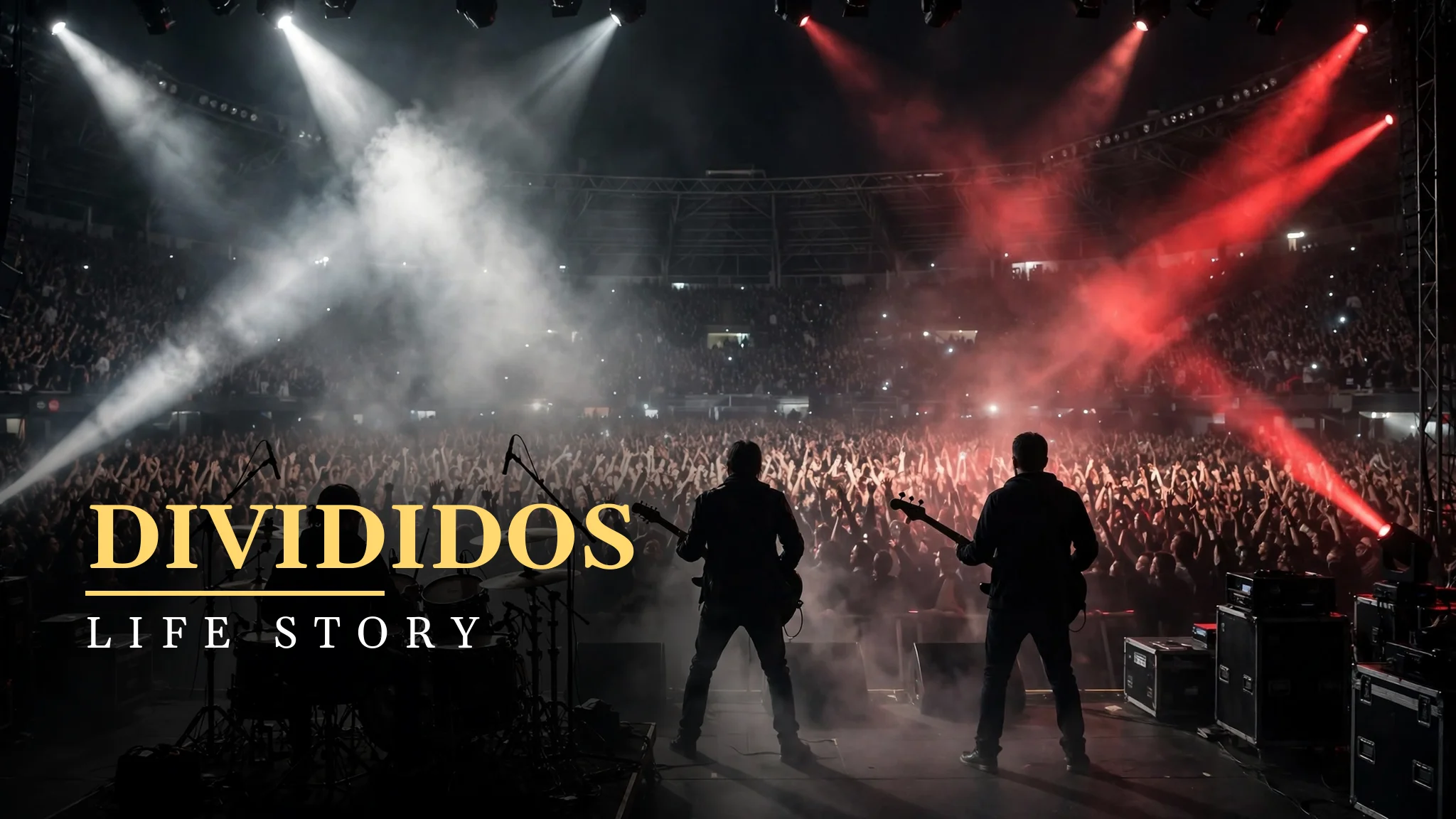
Divididos are a band that should not have existed, and that is exactly why they matter. They were born out of loss, out of the sudden end of another band, and out of a decision by two musicians to keep playing when it would have been easier to stop. For more than thirty-five years, they have been one of the loudest, hardest, and most loved rock bands in Argentina. They are known as La Aplanadora del Rock, the steamroller of rock, and the name fits. When Divididos play, the sound is huge, the crowd is huge, and the feeling is that nothing can stand in their way.
The band was formed by Ricardo Mollo and Diego Arnedo, two musicians who had played together in Sumo, one of the most important bands in Argentine rock history. When Sumo’s singer, Luca Prodan, died in 1987, the band came to an end, and Mollo and Arnedo had to decide what to do next. They could have gone their separate ways. Instead, they formed a new band, and they built it from the ground up. That decision, made in grief, became one of the great stories of Latin American rock.
Divididos have never been a band that chased fashion. They have played the same kind of powerful, honest rock for decades, and they have done it with a trio: guitar, bass, and drums. Three people, no more, making a sound that fills stadiums. Their songs, including “¿Qué ves?”, “El 38”, and “Spaghetti del rock”, are part of the everyday language of Argentine rock fans. This is the story of how a band born from loss became a steamroller that never stopped.
The End of Sumo and a Painful New Start
To understand Divididos, you have to understand Sumo. Sumo was formed in the early 1980s by Luca Prodan, an Italian-born singer who had come to Argentina and brought with him a wild, original energy. The band mixed rock, reggae, and punk, and it became one of the most loved bands in the country. Ricardo Mollo played guitar in Sumo, and Diego Arnedo played bass, and together with the other members they created a sound that was unlike anything else in Argentina. Sumo’s concerts were legendary, and their songs became anthems for a generation.
Luca Prodan died in December 1987, and his death ended Sumo. It was a shock to Argentine rock, and it left the surviving members with a painful question: what now? Mollo and Arnedo were musicians, and music was their life, but the band that had defined them was gone. They could have stopped, and many people would have understood. Instead, they decided to keep playing, and they formed a new band. They called it Divididos, which means divided, a name that spoke of the split that had created them.
The early days were not easy. A new band has to prove itself, and Divididos had to prove that they were more than the remains of Sumo. They had to find their own sound, their own songs, and their own audience. Mollo took on the role of singer as well as guitarist, which was new for him, and Arnedo’s bass became the foundation of the band’s sound. They worked hard, they rehearsed, and they played wherever they could. Slowly, people began to listen.
The name Divididos was honest. The band was divided from its past, and its members were divided in their grief. But the name also became a promise. They would not try to be Sumo again. They would be something new, built from the same roots but growing in a different direction. That honesty, in the name and in the music, is what won them their first fans.
40 Dibujos and the First Records
Divididos released their first album, “40 dibujos ahí en el piso”, in 1989, two years after the end of Sumo. The album was a statement. It showed that Mollo and Arnedo could write songs, that they could play with power, and that they had a sound of their own. The album did not try to copy Sumo. It was harder, more direct, and built around the trio of guitar, bass, and drums. Fans of Argentine rock listened, and they heard something real.
The band’s early line-up included a drummer, and the trio format became their identity. A trio is a difficult thing to carry. With only three instruments, there is nowhere to hide. Every note matters, and every player has to be strong. Mollo’s guitar had to fill the space, Arnedo’s bass had to be melodic as well as rhythmic, and the drums had to drive everything forward. Divididos made that format work, and they made it sound huge. Their concerts became known for their power, and their reputation grew by word of mouth.
In 1991, they released their second album, “Acariciando lo áspero”, which means stroking the rough, and it was a step forward. The songs were stronger, the sound was heavier, and the band was more confident. The album included songs that became part of their live shows for years, and it confirmed that Divididos were not a one-album band. They were here to stay, and they were getting better.
Those early years were also a time of change in the band. Drummers came and went, as they often do in rock bands, and Mollo and Arnedo had to keep the band together through those changes. They did it because they believed in the music, and because they had already been through the hardest thing a band can go through, the loss of a singer and a friend. After that, a change of drummer was a problem they could solve.
La Era de la Boludez and the Big Breakthrough
The band’s breakthrough came with their third album, “La era de la boludez”, released in 1993. The title, which can be translated as the age of silliness, was a comment on the times, and the album was full of strong songs. It included “¿Qué ves?”, a song that became one of the band’s signature pieces, and “El 38”, another song that fans still sing at concerts. The album sold well, and it brought Divididos to a much wider audience.
“¿Qué ves?” is a song that asks a simple question: what do you see? It is a song about looking at the world and seeing what is really there, and it became an anthem for listeners who felt that the world around them was not what it seemed. The song’s riff is powerful, and Mollo’s voice carries it with a directness that fans love. It is the kind of song that works in a stadium, with thousands of people singing along, and it has been a part of Divididos concerts ever since.
The success of “La era de la boludez” changed the band’s life. They began to play bigger venues, they appeared on television, and they became one of the leading rock bands in Argentina. They were no longer the band that came after Sumo. They were Divididos, and they had their own name, their own songs, and their own fans. The album also established their nickname, La Aplanadora del Rock, which fans and journalists used to describe their huge, steamroller sound.
In the years that followed, Divididos released more albums, including “Otro le travaladna” in 1995 and “Gol de mujer” in 1998. Each album added new songs to their live shows, and each one showed that the band was still growing. They were not a band that made one great album and then faded. They were a band that kept working, kept writing, and kept playing, year after year.
The Power Trio Sound and the Long Road
What makes Divididos special is their sound. A power trio is a band with only three members, and it is a format that demands a great deal from each player. Mollo’s guitar is the voice of the band, playing riffs that are simple, strong, and unforgettable. Arnedo’s bass is not only a rhythm instrument. It plays melodies, it fills the space, and it gives the band its depth. The drums, played by different musicians over the years, drive the music forward with power and precision. Together, the three create a sound that is bigger than three people should be able to make.
The band’s live shows are the heart of their career. Divididos are a live band, and their concerts are known for their energy and their length. They play for hours, they play the old songs and the new songs, and they connect with the audience in a way that few bands can. Their fans are loyal, and they follow the band from city to city, singing every word. The concerts are a shared experience, a night of loud music and shared feeling, and they are the reason the band has lasted so long.
In 2004, Catriel Ciavarella became the band’s drummer, and the line-up became stable. Mollo, Arnedo, and Ciavarella have been together ever since, and that stability has given the band a strength that is rare in rock music. Three musicians who know each other well, who trust each other, and who have played together for twenty years can do things that a new band cannot. They can take risks, they can stretch a song, and they can play with a confidence that only comes from time.
Divididos have also stayed independent in their spirit. They have worked with record companies, but they have always made their own decisions about their music. They have not chased trends, and they have not changed their sound to please the fashion of the moment. They play the rock they believe in, and their audience has stayed with them because of that honesty. In a music business that changes fast, that kind of steadiness is rare.
Later Albums, Stadiums, and a Place in History
In the 2000s and 2010s, Divididos continued to release albums and to play to huge audiences. Albums such as “Vengo del placard de otro” in 2002, “Amapola del 66” in 2010, and “Haciendo cosas raras” in 2018 showed that the band was still writing, still recording, and still relevant. They also released live albums, because their concerts were such an important part of who they were, and those live recordings captured the power of the band on stage.
The band has played in stadiums and in festivals across Argentina and Latin America, and their concerts have become events. They have played for tens of thousands of people, and they have done it with the same trio format that they started with. There is something impressive about that. A band with three members, playing loud rock, filling a stadium, and holding the crowd for hours, is a rare thing. Divididos do it again and again, and they do it well.
They have also been recognised with awards and honours, and they are widely regarded as one of the greatest rock bands in Argentine history. Their influence can be heard in younger bands, who learned from their sound, their songs, and their attitude. They showed that a band could be born from loss, could survive for decades, and could stay true to itself. That is a legacy that matters.
Today, Divididos are still active, still touring, and still playing to full houses. Ricardo Mollo and Diego Arnedo have been playing together for more than forty years, from Sumo to Divididos, and their partnership is one of the longest in Argentine rock. They have seen the music business change, they have seen bands come and go, and they are still there, playing loud, playing honest, and playing for the people who have followed them from the beginning.
The Songs That Became Anthems
Divididos have written many songs, but a few of them have become more than songs. They have become anthems, pieces of music that people sing together at concerts, at gatherings, and in moments of joy and of protest. “¿Qué ves?” is one of them, and “El 38” is another. “Spaghetti del rock” is a third, a song that talks about rock music itself with humour and with pride. These songs are not only popular. They are part of the shared language of Argentine rock fans, and they are sung by people who were not born when the songs were written.
What makes a song an anthem is not only the melody. It is the feeling that the song belongs to everyone who sings it. When thousands of people in a stadium sing “¿Qué ves?” together, they are not only listening to a band. They are saying something together, about the world they see and the world they want. That is a powerful thing, and it is why Divididos concerts feel different from other concerts. The audience is not passive. It is part of the music, and the band knows it.
The band’s songs also show their range. Some are hard and fast, built for a loud night. Others are slower and more thoughtful, built around a melody that stays in the mind. Some are funny, and some are serious. What they share is honesty. Mollo writes about what he sees, about the country, about life, and about rock itself, and he writes in plain words that anyone can understand. That plainness is a strength. It means the songs can be sung by anyone, and they can be understood by anyone.
Over the years, new generations have discovered these songs, and they have made them their own. A teenager who hears “¿Qué ves?” for the first time today hears it as a new song, not as an old one, because the question it asks is still fresh. That is the mark of a great song. It does not age. It stays alive, because it speaks to something that does not change.
Changes, Losses, and the Strength to Carry On
Like every long-lived band, Divididos have faced changes and losses. Drummers have come and gone, and each change meant finding a new person, teaching them the songs, and rebuilding the trust that a trio needs. Mollo and Arnedo have also faced personal losses, and they have faced the changing music business, which has made it harder for rock bands to earn a living. Through all of it, they have kept playing, and they have kept the band alive.
One of the hardest things for any band is to stay together when the world changes around it. Styles change, audiences change, and the money changes. Many bands break up because they cannot agree on what to do next, or because they are tired. Divididos have survived because Mollo and Arnedo have a partnership that is built on more than music. They have known each other since Sumo, they have been through grief together, and they trust each other. That trust is the foundation of the band, and it is why the band has lasted.
The death of Luca Prodan is still part of their story, even after all these years. Mollo and Arnedo do not hide it, and they do not forget it. They have spoken about him with respect, and they have kept his memory alive in their music. Sumo’s songs are still played, and Sumo’s spirit is still felt in Divididos, not as a copy, but as a root. A tree does not forget its roots, and Divididos have never forgotten theirs.
The band has also had to deal with the simple fact of getting older. Rock is often seen as a young person’s music, and a band that plays loud rock for thirty-five years has to prove, night after night, that it still has the energy. Divididos prove it every time they play. They play with the same fire they had as young men, and their audiences, who have grown older with them, feel that fire too. Age has not made them quieter. It has made them deeper.
The Fans, the Festivals, and the Nights That Never End
A Divididos concert is a special thing, and the fans are the reason why. Their fans are known for their loyalty, for their singing, and for their willingness to travel long distances to see the band. At festivals, Divididos are often the band that closes the night, because they can hold a huge crowd and send everyone home happy. At their own concerts, they play for hours, and the crowd sings every word. It is a shared experience, and it is one of the great nights out in Argentine music.
The band has played at the most important festivals in Argentina, and they have played in stadiums that hold tens of thousands of people. They have also played in smaller places, in towns and cities where rock bands rarely go, because they believe that music should reach everyone. That willingness to play anywhere, for anyone, is part of why their fans love them. They are not a band that only plays for the big cities. They play for the whole country.
Their live albums capture some of that magic, but no recording can fully capture a night with Divididos. The sound, the lights, the crowd, and the feeling of being part of something big are things that have to be experienced. Fans who have been to a Divididos concert remember it for years, and they tell their friends about it. That word of mouth has built the band’s audience more than any advertisement ever could.
Today, the band’s concerts bring together people of all ages. Older fans bring their children, and the children learn the songs. That is how a band becomes a tradition, and Divididos have become one. They are not only a rock band. They are a part of Argentine life, a night out, a shared memory, and a sound that has been there for more than a generation.
A Band That Belongs to Argentina
Divididos belong to Argentina in a way that few bands do. Their music is played in every province, their concerts bring together people from every walk of life, and their songs are part of the shared memory of the country. They are not a band for one city or one class. They are a band for everyone who loves loud, honest rock, and that audience is large. When they play, the crowd is a picture of Argentina itself: young and old, from the city and from the towns, all singing the same words.
Their long career has also made them a bridge between generations. Parents who saw Sumo in the 1980s now bring their children to Divididos concerts, and the children learn the songs. Grandparents who heard “¿Qué ves?” on the radio now hear their grandchildren singing it. That kind of continuity is rare in music, and it is precious. It means the band is not only making music for today. It is making music that will be heard tomorrow, by people who are not yet born.
The band’s story is also a story about Argentine rock itself. Argentine rock began as a small scene, it grew into a national movement, and it became one of the great rock traditions of the Spanish-speaking world. Divididos have been part of that story for more than thirty-five years, and they have helped to write it. They showed that Argentine rock could be loud, could be honest, and could last. That is a contribution that goes beyond any single album or any single concert.
My Take:
I think Divididos are a band that teaches a lesson about starting again. I have thought a lot about their story, because it begins with a loss that would have ended most bands. Luca Prodan died, Sumo ended, and Mollo and Arnedo were left with grief and with a question. They could have stopped, and no one would have blamed them. They did not stop. They formed a new band, and they built it from nothing. That decision, made in a painful time, is the heart of their story, and I admire it more than any single song.
What I admire most is their honesty. They did not pretend that Sumo had not ended. They called themselves Divididos, divided, and they owned the split. That is a brave thing to do. Most bands would have tried to hide the past, or to pretend that nothing had changed. Divididos put the change in their name, and then they went to work. I think that honesty is why their fans trusted them. People can tell when a band is being real, and Divididos have always been real.
I also think about their sound, and I find it impressive in a simple way. Three people, a guitar, a bass, and drums, making a sound that fills a stadium. That is not easy. It takes great players, and it takes trust. Mollo and Arnedo have played together for decades, and you can hear that trust in the music. They do not get in each other’s way. They leave space, and they fill it, and the result is a sound that is both huge and clear. I think that is a model for any kind of teamwork. When people know each other well and trust each other, they can do more with less.
There is also something I respect about the way they have stayed themselves. Rock music changes fast. New styles come and go, and many bands change their sound to keep up. Divididos did not. They played the rock they believed in, year after year, and their audience stayed with them. That takes confidence, and it takes patience. It is easy to chase a trend. It is hard to stay true to your own sound and to trust that people will come to you. Divididos did that, and they were right.
I also think about their songs as anthems, and I find that idea moving. A song becomes an anthem when it stops belonging to the band and starts belonging to the people. “¿Qué ves?” belongs to everyone who has sung it in a stadium, at a gathering, or in a car with friends. That is a rare achievement. Many bands write good songs, but few write songs that become part of a country’s voice. Divididos did, and they did it without trying to be anthemic. They simply wrote honestly, and the people took the songs and made them their own.
There is also something I respect about the way they have handled change. Drummers left, the music business changed, and the world changed, but Mollo and Arnedo kept going. That takes a kind of strength that is easy to overlook. It is not the strength of a loud guitar. It is the strength of two people who trust each other and who refuse to give up. I think that trust is the real secret of Divididos. It is not only musical. It is personal, and it has lasted for more than forty years.
I do not want to pretend that their music is for everyone. It is loud, it is hard, and it is not gentle. Some people will not like it, and that is fine. But I think even people who do not like hard rock can respect what Divididos did. They turned grief into music, they turned a trio into a stadium band, and they turned a career into a lifetime. That is an achievement, whatever kind of music you like.
The song “¿Qué ves?” stays with me, because it asks a question that is worth asking. What do you see when you look at the world? Do you see what is really there, or do you see what you are told to see? I think that question is at the heart of rock music, and it is at the heart of Divididos. They have always looked at the world clearly, and they have always said what they saw. That is a valuable thing, and it is a thing that does not go out of fashion.
I also think about the fans, because a band is not only the musicians. It is also the people who sing along, who travel to the concerts, and who keep the songs alive. Divididos fans are loyal in a way that is rare, and they have followed the band for decades. That loyalty is not an accident. It is earned, night after night, by a band that gives everything on stage. When a band plays with that kind of commitment, the audience feels it, and they give it back. That exchange is what live music is about, and Divididos understand it better than most.
I think about the nights they have played, the festivals, the stadiums, and the small towns, and I am struck by how much of Argentina they have reached. They did not only play in Buenos Aires. They played everywhere, for everyone, and they built an audience that covers the whole country. That matters, because it means their music is not a city thing. It is a national thing. A band that plays for the whole country becomes part of the country, and Divididos have become that.
There is a sadness in their story too, and it is the sadness of loss. Luca Prodan died young, and Sumo ended, and nothing can bring that back. But I think Divididos turned that sadness into something useful. They did not let the loss end the music. They let it start new music. That is a hard thing to do, and it is a brave thing to do. Grief can stop a person, or it can move a person, and Divididos chose to move. I think that choice is worth remembering.
If I had to choose one lesson from their story, it would be about carrying on. Life brings losses, and work brings endings, and the easy thing is to stop. Divididos show that stopping is not the only choice. You can start again, you can build something new from what is left, and you can make it last. That is not only a lesson for musicians. It is a lesson for anyone who has lost something and wondered what comes next. The answer, in Divididos’ case, was to pick up the guitar, pick up the bass, and play.
I also think about what it means to play in a trio for so long. Three people, no more, making a huge sound, night after night, for decades. That takes a kind of closeness that is rare. Mollo, Arnedo, and Ciavarella know each other the way old friends know each other. They know when to play and when to leave space. They know when to push and when to hold back. That kind of understanding cannot be bought. It can only be built, over years, by playing together. I think that is a beautiful thing, and it is a model for any team.
In the end, I think Divididos deserve their nickname, La Aplanadora del Rock. They are a steamroller, not because they crush things, but because they keep moving, steadily, powerfully, and without stopping. They have been moving for more than thirty-five years, and they are still moving. I hope they keep moving for many years more, because Argentine rock needs bands like them: bands that are honest, bands that are loud, and bands that never forget where they came from.
I also think about how Divididos belong to the whole country, and I find that important. They are not a band for one city or one group. They play everywhere, and their audience comes from everywhere. That is rare, and it is valuable. A band that belongs to a whole country becomes part of that country’s life, and Divididos have become that. When people in different provinces sing the same song, they are sharing something, and sharing is what music is for.
I think about the way they bring generations together, and I find it hopeful. Parents bring their children to the concerts, and the children learn the songs. That is how music survives. It is not only recorded and stored. It is sung, and it is passed on, from one person to another, in a crowd, on a night out. Divididos have been part of that passing on for decades, and they will be part of it for decades more, because their songs are strong enough to be passed on.
There is also something I respect about their independence. They have worked with record companies, but they have always made their own decisions. They have not changed their sound to chase a trend, and they have not softened their music to please everyone. That independence has cost them something, because it means they are not always the most fashionable band. But it has given them something larger, which is the trust of their audience. People trust a band that does not lie to them, and Divididos have never lied.
I also think about the simple fact that they are still playing, still loud, still full of energy, after more than thirty-five years. That is not easy. Many bands burn out, or break up, or fade away. Divididos have kept going, and they have kept going at full volume. That takes health, discipline, and love of the work. It takes a belief that the music still matters, and that the audience still matters. They have that belief, and it shows every time they play.
I wonder what Luca Prodan would think if he could see Divididos today. I think he would be proud, because his bandmates did not stop when he died. They kept the music alive, and they built something new from what was left. That is the best tribute a musician can receive. It is not a statue or a speech. It is the sound of the music continuing, played by the people who loved him, for the people who loved him. Divididos are that tribute, and they play it every night.
I also think about the trio format, and about how much they do with so little. Three people, three instruments, and a sound that fills a stadium. That is a lesson in itself. You do not need a huge band to make a huge sound. You need three people who trust each other, who know their instruments, and who give everything. Divididos prove that, night after night, and I think that lesson applies far beyond music. A small team that trusts each other can do more than a large team that does not.
If I could go to one Divididos concert, I would want to be in the crowd when they play “¿Qué ves?”, with thousands of people singing the same words, and the guitars ringing out over the noise. I think that moment would tell me everything I need to know about the band. It is not about the lights, or the stage, or the fame. It is about a song, a crowd, and a feeling that everyone in the room is part of the same thing. That is what Divididos do best, and that is why they matter.
In the end, I think Divididos deserve their nickname, La Aplanadora del Rock. They are a steamroller, not because they crush things, but because they keep moving, steadily, powerfully, and without stopping. They have been moving for more than thirty-five years, and they are still moving. I hope they keep moving for many years more, because Argentine rock needs bands like them: bands that are honest, bands that are loud, and bands that never forget where they came from.
Frequently Asked Questions
How did Divididos start?
Divididos were formed in 1988 by Ricardo Mollo and Diego Arnedo after the end of Sumo, following the death of Sumo’s singer Luca Prodan in 1987. Mollo and Arnedo had played in Sumo together and decided to keep making music as a new band.
Why are Divididos called La Aplanadora del Rock?
They are called La Aplanadora del Rock, which means the steamroller of rock, because of their huge, powerful live sound. As a trio of guitar, bass and drums, they fill stadiums with a heavy sound that fans and journalists compared to a steamroller.
Who are the members of Divididos?
The band is built around Ricardo Mollo on guitar and vocals and Diego Arnedo on bass, who have played together since Sumo. Catriel Ciavarella has been their drummer since 2004, giving the band a stable line-up for two decades.
What is Divididos’ most famous song?
“¿Qué ves?” from the 1993 album “La era de la boludez” is one of their best-known songs, along with “El 38” from the same album. Both are still sung by crowds at their concerts today.
What was Divididos’ first album?
Their first album was “40 dibujos ahí en el piso”, released in 1989. It established their trio sound and showed that Mollo and Arnedo could build a band of their own after Sumo.
Are Divididos still playing today?
Yes, Divididos are still active, touring and playing to large audiences in Argentina and Latin America. Mollo, Arnedo and Ciavarella continue to perform together as a trio, more than thirty-five years after the band was formed.


