Dorothy Dandridge: The Life Story Behind Hollywood's Trailblazing Star
In this post
Dorothy Dandridge had a beauty that stopped people in their tracks, and a talent that made Hollywood take notice at a time when it barely knew what to do with a Black leading lady. She could sing, she could dance, and she could act, and she did all three with a grace that seemed natural and unforced. Yet her life was short, and much of it was shaped by doors that opened only a little, and then closed again.
She was born in Cleveland, Ohio, and she was performing before she was old enough to understand what a career was. Her mother was a performer, and Dorothy and her sister were put on stage as children, travelling from town to town and learning the hard rules of show business early. She grew up in the world of vaudeville and nightclubs, where applause came quickly and work could disappear just as fast.
What makes her story matter is the night she became the first Black woman to be nominated for the Academy Award for Best Actress. That nomination, for her role in Carmen Jones in 1954, was a moment of history, and it showed what was possible. It also showed how lonely that history could be, because after the nomination, the great leading roles did not follow in the way they should have. This is the story of a gifted woman who reached the top of her profession and found that the top was still a narrow and lonely place.
A Child of the Stage in Cleveland
Dorothy Jean Dandridge was born on 9 November 1922 in Cleveland, Ohio. Her mother, Ruby Dandridge, was an actress and entertainer, and her father left the family when Dorothy was young. Ruby raised her daughters on her own, and she brought them into the world she knew best, the world of performance. Dorothy and her older sister, Vivian, began performing together as children, and they soon became known as the Dandridge Sisters.
The sisters sang and danced in vaudeville shows, in theatres, and in nightclubs. They travelled a great deal, and Dorothy learned to live out of a suitcase, to practise in small rooms, and to perform for audiences who did not always treat Black children with kindness. She was talented, but she was also a child, and the life of a child performer is never simple. She missed the ordinary routines of school and home, and she learned early that her family’s income depended on her work.
As the sisters grew older, they began to work with other performers, and Dorothy’s voice and looks began to draw special attention. She was slim, graceful, and striking, and she moved with a natural ease on stage. People who saw her perform remembered her. She was not only a singer in a group. She was a young woman with a presence that suggested she could carry a show on her own, if she was ever given the chance.
Her mother was strict and ambitious for her daughters, and Dorothy’s childhood was shaped by that ambition. She was pushed to practise, to be perfect, and to keep going even when she was tired. That discipline helped her later, when she had to learn lines, songs, and dances quickly. But it also meant that her early years were more about work than about play, and that sense of pressure stayed with her for much of her life.
The Dandridge Sisters and the Nightclub Years
In the 1930s, the Dandridge Sisters became a known act in American entertainment. They performed in New York, in Los Angeles, and in other cities, and they worked with well-known bands and performers. Dorothy was still a teenager, but she was already a professional, and she understood the rhythms of a show: the rehearsal, the waiting, the moment the curtain went up, and the long journey to the next town.
She also began to appear in films during this period, though her parts were small. She appeared in a short film as a child, and later she had small roles in Hollywood films. These roles did not show what she could do, but they gave her experience in front of a camera. She learned how to stand, how to move, and how to let the camera find her face. She was building a set of skills, even if no one had yet given her a part that used them all.
In the early 1940s, she began to perform as a solo singer in nightclubs. She sang in New York and in other cities, and she developed a style that was smooth, warm, and controlled. She did not shout her songs. She let them unfold slowly, and she used her voice to tell a story. Audiences liked her, and club owners began to book her on her own, not only as part of a sister act. It was a step towards the independence she had always wanted.
Her personal life was also changing. She married the dancer Harold Nicholas in 1942, and the marriage brought both joy and difficulty. Their daughter, Harolyn, was born with severe developmental problems, and Dorothy spent much of her life worrying about her daughter’s care. The marriage did not last, and Dorothy later married a restaurant owner, Jack Denison, but that marriage also ended. She was a woman who wanted love and a stable home, but her career and her family worries made a settled life hard to find.
Carmen Jones and the Oscar Nomination
The turning point in Dorothy Dandridge’s career came in 1954, when she was cast as Carmen in Carmen Jones, a film version of the opera Carmen, set in the American South and performed by an all-Black cast. The role was perfect for her. Carmen is bold, beautiful, and free, and she lives by her own rules. Dorothy played her with a confidence and a fire that audiences had not seen from her before. She sang, she danced, and she held the screen in every scene.
The film was a success, and Dorothy’s performance was praised by critics. When the Academy Award nominations were announced, she was nominated for Best Actress, the first Black woman ever to receive that nomination. It was a historic moment, and it was reported in newspapers across America. For a brief time, it seemed as if Hollywood had finally recognised a Black leading lady, and as if new doors were about to open.
The nomination changed her life, but it did not change Hollywood as much as people hoped. She was offered more work, but the roles were often similar, or they were not as strong as Carmen. She appeared in Island in the Sun in 1957, a film about race and love in the Caribbean, and in Tamango in 1958, and in Porgy and Bess in 1959, where she played Bess opposite Sidney Poitier. These were important films, and her work in them was respected, but none of them gave her the same kind of leading role that white actresses of her generation received again and again.
She was also aware of the limits placed on her by the studios. She was not offered the romantic leads, the comedies, or the dramas that would have shown her full range. She was often cast as a singer, or as a woman defined by her beauty, rather than as a character with a full inner life. She tried to choose her work carefully, and she turned down parts she felt were insulting, but turning down work meant losing money, and she needed money to support herself and her daughter.
Fame Without Security
After Carmen Jones, Dorothy Dandridge was famous, but fame did not bring her security. She performed in nightclubs in Las Vegas and in Europe, and she was admired wherever she went. In Europe, she found audiences who treated her with more respect than she sometimes received at home, and she enjoyed performing there. But the work was tiring, and the money was not always enough to cover her costs.
She had invested in property and in other ventures, and some of those investments did not work out well. She trusted people who did not always act in her best interests, and she lost money. She also spent a great deal on her daughter’s care, and on the costs of keeping a home and a career going at the same time. By the early 1960s, she was in financial trouble, and she was taking work that she might not have chosen if she had been in a stronger position.
Her health also began to suffer. She was under great stress, and she was tired from years of travel and performance. She continued to work, because work was what she knew, and because she hoped that another strong role would come. She appeared in films such as The Decks Ran Red and Malaga, but they were not the films that would change her career. She was still a star in the eyes of many people, but the industry around her had moved on, and the parts were getting smaller.
In her personal life, she was lonely. She had been married twice, and both marriages had ended. She had a daughter who needed constant care, and she carried the weight of that responsibility alone for much of the time. She had friends in the entertainment world, but she also had long periods when she felt isolated. The glamour of her public image did not match the worry of her private life, and that gap grew wider as the years passed.
A Sudden End at Forty-Two
Dorothy Dandridge died on 8 September 1965 in Los Angeles, at the age of forty-two. Her death was sudden, and it shocked the people who knew her. She had been working, she had been planning new projects, and she had not given up on her career. The news spread quickly, and newspapers wrote about the loss of a woman who had been a trailblazer, and who had died far too young.
The cause of her death was reported as an accidental overdose of medication, and her body was also found to have suffered a blood clot. The details were painful for her family and friends, and they were discussed in the press in ways that were not always kind. What was clear was that a gifted performer, who had once stood on the edge of a new era in Hollywood, had died before that era had fully arrived.
In the years after her death, her reputation grew. People began to look back at Carmen Jones and to understand what her Oscar nomination had meant. She became a symbol of both talent and lost opportunity, and her name was spoken with respect by younger Black actresses who saw her as a pioneer. A film about her life was made many years later, and it brought her story to a new generation who had not seen her perform.
She is buried in Los Angeles, and her grave has become a place where fans leave flowers and notes. They come because they remember her beauty, her voice, and her courage, and because they feel that her story should not be forgotten. She was a woman who reached a height that no Black woman had reached before in Hollywood, and she did it with grace, even when the world around her did not know how to honour what she had done.
What Her Story Still Teaches
Dorothy Dandridge is remembered today as a trailblazer, and that word is used so often that it can lose its meaning. In her case, it means something real. She was the first Black woman to be nominated for the Academy Award for Best Actress, and she did it in a time when Black women were rarely given leading roles at all. She opened a door, and she held it open with her talent, even though the industry did not rush through it behind her.
Her influence can be seen in the careers of actresses who came after her, from Diahann Carroll to Halle Berry, who became the first Black woman to win the Best Actress Oscar many years later. Berry spoke about Dandridge when she won, and she thanked the women who had come before her. That moment showed how long the line was, and how much had been carried by a few women who had done the hard work first.
Her story is also a reminder that fame is not the same as security. She was famous, she was admired, and she was still struggling to pay her bills and to care for her daughter. That truth is important, because it shows that a single nomination, or a single successful film, is not enough to change a system. Real change takes more than one person’s talent. It takes time, it takes support, and it takes a willingness to offer real roles, real pay, and real respect.
The Films That Keep Her Alive
Dorothy Dandridge made only a small number of films, and that fact makes each one matter more. Carmen Jones is the film that defines her, but her other films also show different sides of her talent, and they are worth watching today, not only as history, but as performances. In Island in the Sun, she played a woman caught between love and the rules of a society that judged her by the colour of her skin, and she played the role with a quiet dignity that made the film feel honest, even when the story itself was limited by the times. In Porgy and Bess, she played Bess, a woman who is loved, who is lost, and who is trying to find a way to live, and she brought a warmth and a sadness to the role that made Bess feel like a real person, not only a character in an opera.
Her singing in those films is also important, because her voice was dubbed in Carmen Jones and in Porgy and Bess, a common practice at the time, and that fact has sometimes hidden her own talent as a singer. She was a singer in her own right, with a smooth and warm voice that she used in nightclubs for many years, and her film performances should be seen alongside her singing, not apart from it. She was a complete performer, and the films only show part of what she could do. To understand her fully, a person needs to listen to her recordings and to imagine her on a nightclub stage, singing directly to an audience that loved her.
In the years after her death, her reputation grew, and a new generation of actresses began to speak about her as a pioneer. Halle Berry, when she won the Academy Award for Best Actress in 2002 for Monster’s Ball, spoke about Dorothy Dandridge and about the women who had come before her, and she said that her win was for them as well as for herself. That moment was powerful, because it showed how long the line was, from Dorothy’s nomination in 1954 to Halle’s win in 2002, almost fifty years later. Dorothy had opened a door, and it had taken half a century for another Black woman to walk through it and to win the prize. That is a long time, and it tells us how much work was still to be done.
A television film about her life, Introducing Dorothy Dandridge, was made in 1999, with Halle Berry playing Dorothy, and it brought her story to millions of people who had never seen her films. The film showed her beauty, her talent, and her sadness, and it helped a new generation understand what she had faced. It was not a perfect film, but it was an honest attempt to tell a story that had been forgotten by many people, and it reminded audiences that Dorothy Dandridge was more than a name in a history book. She was a real woman, with a real life, and a real gift that deserved to be remembered.
Today, her films are shown in festivals, in film schools, and on television, and they are studied by people who want to understand the history of Black performers in Hollywood. Carmen Jones is still the most important of them, because it is the film that earned her the Oscar nomination, and because it shows her at her best, bold and beautiful and free. But her other films also matter, because they show a woman who kept working, who kept trying, and who kept bringing her talent to every role, even when the roles were not as good as she deserved. Her filmography is short, but it is precious, and it is worth watching with care and with respect.
A Legacy Carried by Those Who Came After
Dorothy Dandridge’s legacy is not only in her films. It is in the actresses who came after her, who spoke her name, who studied her performances, and who carried her story forward when Hollywood had almost forgotten it. Diahann Carroll, who became the first Black woman to star in her own television series, spoke about Dorothy as a pioneer, and Halle Berry, who won the Oscar in 2002, spoke about her on the night she won, saying that her win was for Dorothy and for the women who had come before her. Those moments, when a new star thanks an old one, are powerful, because they show that a career is not only about one person. It is about a line, a chain of women who pass courage and talent from one generation to the next.
Her story is also taught in film schools, in history classes, and in books about Hollywood, where students learn about the racism she faced, about the limits placed on her, and about the talent that shone through despite those limits. They watch Carmen Jones, they listen to her sing, and they ask why she was not given more leading roles, why her career slowed down, and what could have been different if Hollywood had been fairer. Those questions are important, because they help students understand that talent alone is not enough, and that systems need to change, not only individuals. Her life is a lesson in both talent and injustice, and it is a lesson that should be taught, not forgotten.
Today, her grave in Los Angeles is visited by fans who leave flowers, who write notes, and who remember her beauty, her voice, and her courage. They come because they feel that her story should not be forgotten, and because they want to honour a woman who reached a height no Black woman had reached before, and who did it with grace. Her legacy is also in the film about her life, in the books written about her, and in the performances of actresses who cite her as an inspiration. She died young, but her influence has lasted for more than sixty years, and it continues to grow as new generations discover her work.
My Take:
I think Dorothy Dandridge’s story is one of the saddest I have come across, and I do not say that lightly. It is sad not because she failed, but because she succeeded and the success did not protect her. She did the hardest thing in Hollywood, she became a leading lady when almost no one who looked like her had done it before, and she did it so well that the whole industry had to notice. And then, after that moment, the work did not follow in the way it should have. I keep returning to that gap between the nomination and what came after, because it tells me more about Hollywood than any single film ever could.
What stays with me is how young she was when she started. She was a child performer, travelling with her sister, singing for audiences who did not always see her as a child. I think about what that does to a person. You learn to perform before you learn to rest. You learn to smile before you learn to say that you are tired. I believe that early training gave her the discipline to become a great performer, but I also believe it took something from her, a sense of a normal childhood that she never really had. She spent her life working for other people, and when she finally had a chance to work for herself, the industry was not ready.
Carmen Jones is the centre of her story for me. I have not seen the film in a cinema, but I can imagine what it must have felt like in 1954 to watch a Black woman own the screen in that way. Carmen is not a quiet character. She is bold, she is free, and she does what she wants. Dorothy played her with a confidence that must have felt new and thrilling. I think the nomination was not only about acting. It was about a woman showing that a Black leading lady could carry a film, could draw an audience, and could be the centre of the story. That is a powerful thing to prove, and she proved it.
But I also feel angry when I think about what happened next. She should have been offered the best scripts in Hollywood. She should have been given comedies, dramas, romances, and films that let her show every part of her talent. Instead, she was given a handful of roles that repeated the same idea, and she was left to sing in nightclubs to pay her bills. I do not think this was because she was not good enough. I think it was because the people who made the decisions could not imagine a Black woman as a regular leading lady. That failure was theirs, not hers, and it cost her a career that should have lasted much longer.
Her daughter Harolyn is a part of her story that I cannot stop thinking about. Dorothy was a mother who carried a heavy worry for her whole adult life. Her daughter needed care that was costly and constant, and Dorothy tried to provide it while also trying to keep her career alive. I think that pressure must have been enormous. It is one thing to worry about your next role. It is another thing to worry about your next role and about the child who depends on you for everything. I admire her for not giving up on either task, even when both were pulling her in different directions.
I also think about the money troubles, and I feel a real sympathy for her. She trusted people, she made investments, and some of those choices went wrong. It is easy to look back and say she should have been more careful, but she was a performer, not a businesswoman, and she was working in a world where Black performers were often paid less and advised badly. I do not blame her for the financial problems. I blame a system that gave her fame without giving her the support and the fair pay that should have come with it.
Her death at forty-two is the hardest part of the story to sit with. She was still young, she was still talented, and she was still hoping for better work. She died suddenly, and the details were messy and sad. I do not want to focus on the details. I want to focus on the loss. We lost a woman who could have given us many more years of great performances. We lost a pioneer who could have mentored younger actresses and shown them how to navigate a difficult industry. That loss is not only personal. It is a loss for everyone who loves film.
What I learn from her is that being first is not enough. She was first, and she paid a high price for it. Being first means you have no map, no one ahead of you to show you the way, and no one to warn you about the traps. She walked that road alone, and she did it with grace. I think we should honour that by remembering her not only as a beautiful face, but as a brave worker who kept going when the work was unfair and the rewards were uncertain.
I also learn from her that we should be careful about how we celebrate breakthroughs. A nomination is a wonderful thing, but it is not the same as change. Change is when the next woman gets the role, and the woman after her, and the woman after that. Dorothy’s nomination was a breakthrough, but the change that should have followed it came very slowly. I think we should celebrate her, and we should also ask why the change took so long, and what we can do to make sure it does not take so long again.
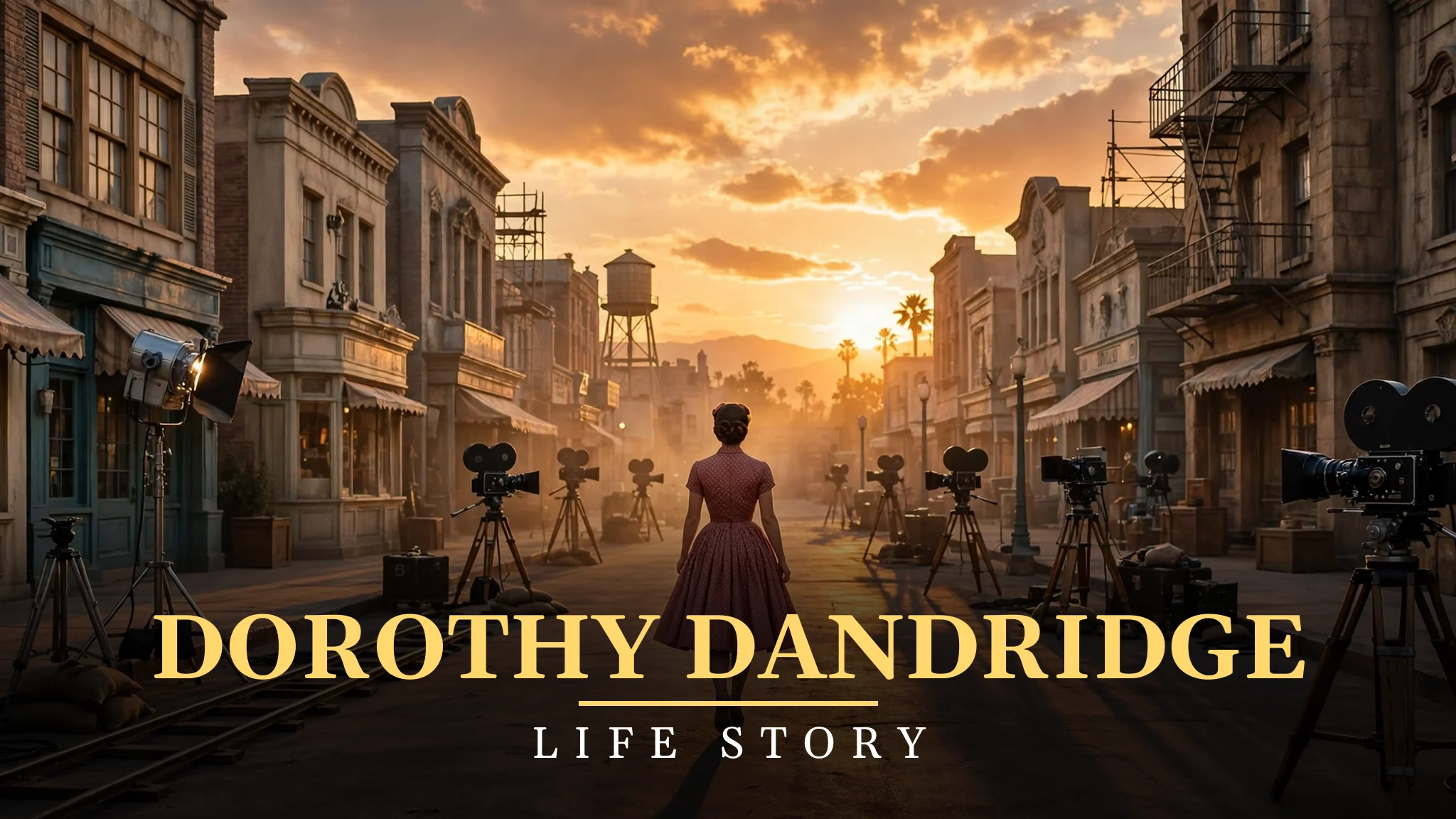
When I think of Dorothy Dandridge now, I think of a woman walking down a street in old Hollywood, with cameras around her and the sun setting behind her. She is going towards her work, and she is carrying herself with pride. She does not know what the future will bring, but she is going forward anyway. That image stays with me, because it captures both her beauty and her courage. She went forward, even when the road was narrow, and she left a mark that is still visible today.
I hope people who read her story will watch Carmen Jones, and I hope they will listen to her sing, and I hope they will remember that she was more than a nomination. She was a mother, a sister, a singer, a dancer, and an actress who gave everything she had to her work. She deserved a longer life and a fairer career, and the fact that she did not get them makes her story more important, not less. We remember her because she was great, and we remember her because the world was not great to her, and both of those truths matter.
I also think about the silence around her after her death, and how long it took for Hollywood to properly honour her. She died in 1965, and for many years her name was known mainly to film historians and to older audiences who remembered Carmen Jones. It was only later, when younger actresses began to speak about her, that her story came back into public view. I think that delay is sad, because it means that a whole generation grew up without knowing her name, without seeing her films, and without understanding what she had done. We should not wait fifty years to honour a pioneer. We should honour her while her work is still fresh, and while the people who knew her can still tell us about her.
Another part of her story that stays with me is her relationship with her sister Vivian, and with her mother Ruby. She performed with her sister as a child, and she was pushed by her mother to succeed, and those early relationships shaped her in ways that are hard to untangle. I think about how complicated it must have been to be a child performer, to be loved and pushed at the same time, and to grow up in a world where your family’s income depended on your work. She carried that pressure for her whole life, and it made her strong, but it also made her tired. I wish she had been given more time to rest, more time to be a person apart from her work, and more time to enjoy the success she had earned.
I also think about what her life tells us about mental health and about asking for help. She was under enormous stress, she was lonely, and she was struggling with money and with her daughter’s care, and she did not always have the support she needed. In her time, people did not talk openly about stress or about needing help, especially not stars, who were expected to be glamorous and happy at all times. I think we have learned since then that it is okay to ask for help, and that a star can be tired, sad, or overwhelmed, and still be a great performer. I wish she had lived in a time when that kind of honesty was easier, and when help was easier to find.
When I think of Dorothy now, I do not only think of Carmen Jones. I think of a young girl singing with her sister, of a woman walking onto a film set with hope, and of a mother worrying about her daughter at night. I think of a whole person, not only a nomination, and I think that whole person deserves to be remembered. Her life was short, but it was full, and it was important, and I am glad that people are still learning about her today, still watching her films, and still speaking her name with respect.
I also think about the fans who visit her grave, and about what that tells us about how we remember people. She died in 1965, and more than sixty years later, people still leave flowers, still write notes, and still remember her name. That is a powerful kind of legacy, one that is not built on awards or on money, but on the feeling that a person mattered, and that their story should not be forgotten. I hope that more people will visit her films, will watch Carmen Jones, and will learn her name, so that her legacy grows even stronger in the years to come.
I also want to say something about the importance of teaching her story in schools, in film classes, and in history books. Her life is a lesson in talent, in racism, in courage, and in loss, and it is a lesson that young people need to hear, especially young Black girls who want to be actresses and who need to know that someone like them once stood on that stage, even when the world was unfair. She is a role model, not only because she succeeded, but because she kept going when success did not protect her. That is a lesson worth teaching, and worth remembering.
I also think about the way Dorothy’s story is told in schools and in film history, and how important it is to tell it honestly, without making her into a simple symbol. She was not only a trailblazer. She was a mother, a sister, a singer, and a woman who made mistakes, who trusted the wrong people, and who struggled with money. Those human details do not make her less important. They make her more real, and they make her story more useful, because they show that pioneers are not perfect people. They are real people who do extraordinary things while also living ordinary, difficult lives. I think we should tell her story that way, with all of its complexity, so that young people can see themselves in her, not only as a star, but as a person.
I also want to remember her voice, not only her face, because her singing was a central part of who she was. She sang in nightclubs, she sang with her sister, and she sang in films, and her voice was smooth, warm, and controlled. It was not a loud voice, and it was not a showy voice, but it was a voice that could tell a story, and that could make an audience feel something real. When I think of her, I try to imagine her singing in a small club, with a band behind her, and an audience listening quietly, because that is where she learned her craft, and that is where she was most herself. Her films are important, but her singing is also important, and it deserves to be remembered alongside her acting.
Frequently Asked Questions
What made Dorothy Dandridge’s Oscar nomination historic?
Her nomination for Best Actress for Carmen Jones in 1954 made her the first Black woman ever nominated in that category. It was a major moment in Hollywood history, because Black women had rarely been given leading film roles before. The nomination showed that a Black actress could carry a major film and earn the industry’s highest honour.
How did Dorothy Dandridge start performing as a child?
She began performing with her older sister Vivian as the Dandridge Sisters, a singing and dancing act that travelled in vaudeville and nightclubs. Their mother, Ruby Dandridge, was also a performer and guided their early careers. Dorothy learned stage craft very young, and she later moved into solo nightclub singing and film work.
Which films are Dorothy Dandridge best known for besides Carmen Jones?
She is also known for Island in the Sun in 1957, Tamango in 1958, and Porgy and Bess in 1959, where she played Bess opposite Sidney Poitier. These films kept her visible after Carmen Jones, though none gave her the same kind of leading role. Her work in them is still praised by film historians today.
Did Dorothy Dandridge have children?
Yes, she had a daughter named Harolyn with her first husband, dancer Harold Nicholas. Harolyn was born with severe developmental problems and needed constant care throughout her life. Dorothy spent a great deal of time and money on her daughter’s care, and that responsibility shaped many of her choices.
Why did Dorothy Dandridge’s film career slow down after Carmen Jones?
After her Oscar nomination, she was offered work, but the leading roles that white actresses received did not follow in the same way. Many of the parts offered to her were limited or repeated the same idea. She also faced financial problems and turned down roles she felt were insulting, which made steady work harder to find.
How old was Dorothy Dandridge when she died?
Dorothy Dandridge was born on 9 November 1922 and died on 8 September 1965 in Los Angeles, at the age of forty-two. Her death was sudden and was reported as an accidental overdose of medication, with a blood clot also found. She was still working and hoping for new roles at the time of her death.


