Electric Scooters: Are They Worth Buying in 2027
In this post
- Cost: Purchase, Running and Total Ownership
- Range, Speed, Hills and Real-World Performance
- Safety: Helmet, Brakes, Visibility and Riding Habits
- Laws, Where You Can Ride, and Insurance
- Scooter, Bike, Car or Public Transport: Honest Comparison
- Choosing a Model and Maintaining It
- Charging, Storage and Winter Care
- Renting First: A Smart Test Before Buying
- My Take:
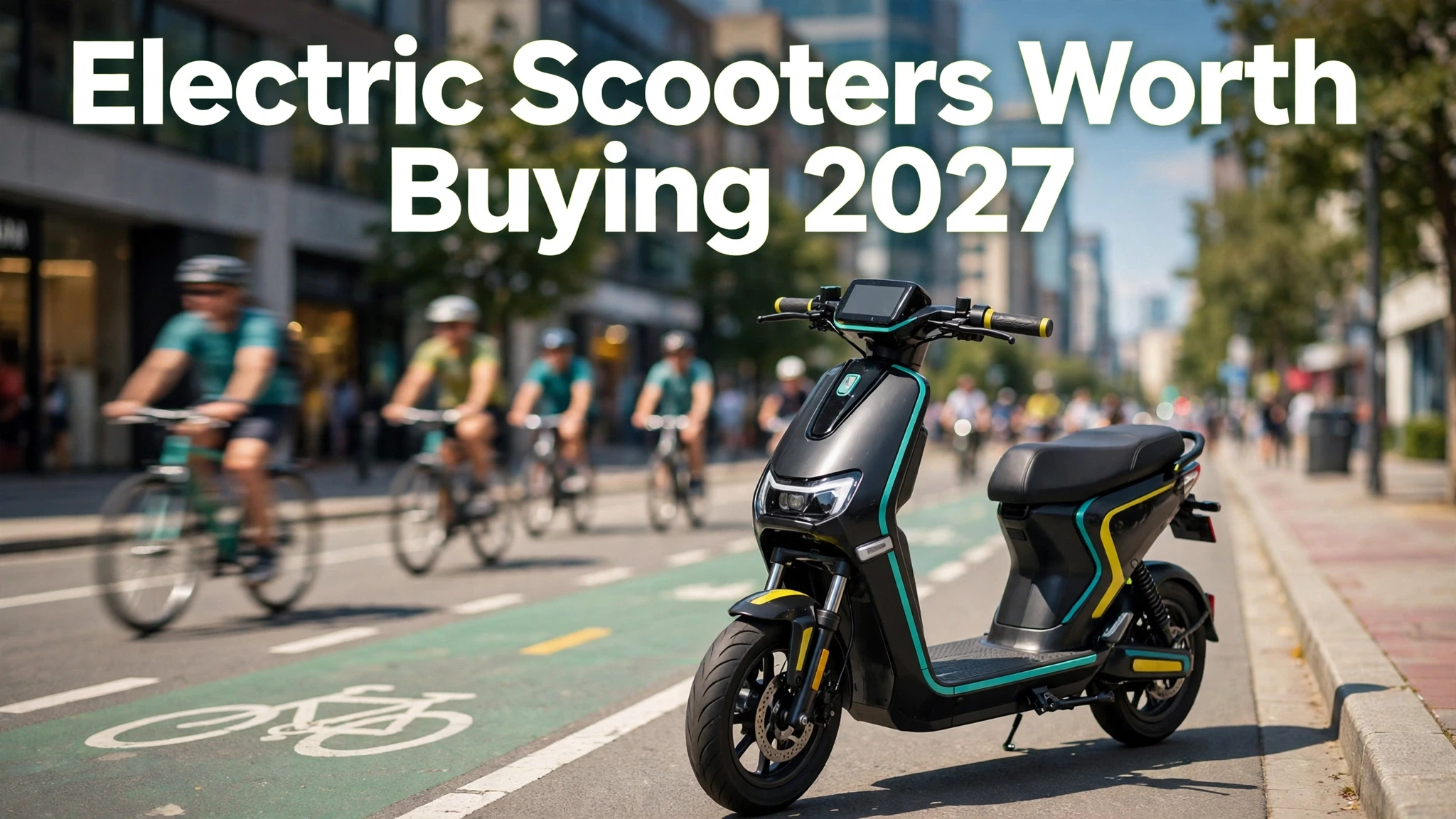
Electric scooters promise a simple deal: skip traffic, skip parking stress, and glide to work, school, or the station for a fraction of the cost of a car. For many city commuters, that promise is real. For others, an e-scooter becomes an expensive toy that gathers dust after the novelty fades, because range, weather, hills, laws, or safety concerns get in the way. In 2027, e-scooters are more capable, more regulated, and more varied than ever, with models for short flat commutes, longer mixed journeys, and even seated cargo use. This guide helps you decide honestly whether one is worth buying for your life, and if so, which type fits your route, budget, and local rules.
The key question is not whether e-scooters are good in general, but whether they fit your specific journey. A flat three-kilometre commute on a bike lane is very different from a hilly ten-kilometre journey in rain, on busy roads, with a laptop and groceries. Measure your real route, check your local laws, and test ride if possible before buying. A scooter that fits your route will save time and money daily. A scooter that does not will disappoint quickly, no matter how good its reviews are.
Cost: Purchase, Running and Total Ownership
Purchase price is the most visible cost, but not the only one. Entry-level commuter scooters are relatively affordable, mid-range models cost more for better range, suspension, and build quality, and premium models cost significantly more for speed, range, and durability. Beyond purchase, budget for a good helmet, a strong lock, lights if not included, and possibly a second charger for work. Tyres, brake pads, and batteries wear over time, and replacement batteries can be expensive, so check battery replacement cost and availability before buying. A cheap scooter with an unavailable battery may become waste after a few years.
Running costs are usually low compared with cars. Electricity for charging is inexpensive for most scooters, because batteries are small. There is no petrol, and servicing is simpler than for a car or motorcycle, though not free. Compare this with your current transport: bus or train fares, car fuel, parking, insurance, and maintenance. For a daily commuter who replaces several bus or car trips a week, an e-scooter can pay for itself over one to two years, depending on price and usage. For an occasional rider who uses it once a month, rental scooters or public transport may be cheaper overall, because you avoid purchase, storage, and maintenance costs.
Resale value also matters. Well-known brands with good parts support usually hold value better than unknown brands with no service network. Keep the original charger, box, and purchase receipt if possible, and maintain the scooter: clean it, check tyre pressure, and store the battery correctly. A scooter that looks cared for and has a healthy battery will sell more easily. If you are unsure about long-term use, consider renting for a month first, where available, to test your real usage before committing to a purchase.
Range, Speed, Hills and Real-World Performance
Advertised range is measured in ideal conditions: a light rider, flat ground, moderate speed, warm weather, and no wind. Real range is usually 60 to 80 percent of the advertised figure, and sometimes less in cold weather, on hills, with a heavier rider, or at top speed. If your commute is ten kilometres each way, do not buy a scooter advertised at exactly twenty kilometres of range, because you may run out before returning, especially in winter. Choose a scooter with a comfortable margin, ideally enough for a return journey plus a reserve, or plan to charge at work.
Speed limits differ by country and city, and many scooters are limited to comply with local laws. A scooter that can physically go faster may still be illegal to ride at that speed on public roads or bike lanes in your area. Check your local speed limit, power limit, and road rules before choosing a model based on top speed. For city commuting, steady acceleration, good brakes, and stability at moderate speed matter more than extreme top speed. A scooter that accelerates smoothly and stops confidently in wet conditions is safer and more pleasant than a faster scooter with weak brakes.
Hills are a common surprise. A scooter that feels strong on flat ground may slow dramatically on a steep hill, especially with a heavier rider or a low battery. Motor power, measured in watts, and torque matter here, but so do rider weight and hill gradient. If your route includes steep hills, look for a model with a stronger motor and good hill-climbing reviews from riders of similar weight. Test ride on a hill if possible, or ask local riders about performance on your specific route. Suspension also matters: pneumatic tyres and suspension absorb bumps and make longer rides comfortable, while solid tyres need less maintenance but give a harsher ride on rough roads.
Safety: Helmet, Brakes, Visibility and Riding Habits
Safety is the most important part of e-scooter ownership, because riders are vulnerable in traffic. Always wear a helmet, even for short trips and even where it is not legally required. A bicycle helmet is better than no helmet, but a helmet rated for higher speeds or with more coverage may offer better protection depending on your scooter and local guidance. Wear bright or reflective clothing at night, use lights, and make yourself visible to drivers. Many accidents happen because a driver did not see a small, quiet scooter, especially at junctions and driveways.
Brakes deserve close attention. Good scooters offer dual braking, such as a disc brake plus electronic braking, which gives a backup if one system fails. Test brakes at low speed in a safe area before riding in traffic. Learn to brake smoothly with both brakes where applicable, shift weight slightly back, and avoid sudden braking on wet or loose surfaces, which can cause skidding. Check brakes, tyres, and folding mechanisms regularly, because a loose folding joint or worn tyre can cause a sudden failure. If anything feels loose, wobbly, or unusual, stop riding and get it checked.
Riding habits matter as much as equipment. Ride at a speed appropriate for the surface and traffic, slow down at junctions, pedestrian crossings, and blind corners, and never ride while using a phone or wearing headphones that block traffic sounds. Do not ride with a passenger unless the scooter is designed and legally allowed for two people, because extra weight affects braking and balance. Do not ride after drinking alcohol or taking impairing substances. These rules sound obvious, but many serious e-scooter injuries involve speed, alcohol, lack of helmet, or riding in unsafe places. A careful rider with a modest scooter is safer than a reckless rider with a premium one.
Laws, Where You Can Ride, and Insurance
E-scooter laws vary dramatically by country, state, and city, and they change often. Some places allow private e-scooters on roads and bike lanes with speed and power limits. Others allow only rental scooters in trial areas, or ban private scooters on public roads entirely. Some places require registration, insurance, a driving licence, or a minimum age. Some ban scooters from pavements, parks, or pedestrian zones. Never assume that a scooter sold in a shop is automatically legal to ride everywhere in your area. Check your local transport authority or police guidance for your exact location before riding on public roads.
Where you can ride shapes value. If your city has a connected network of bike lanes, an e-scooter can be a joy. If you must ride on busy roads with fast traffic and no bike lane, the same scooter can feel stressful and dangerous. If your route includes a train, check whether scooters are allowed on board and whether folding size and weight matter. A heavy scooter that is hard to carry up stairs or onto a train may be impractical for mixed commuting, even if its range is excellent. A lighter, folding scooter may be better for train-plus-scooter journeys, despite shorter range.
Insurance and liability are worth checking. In some places, third-party insurance is required or strongly recommended. In others, home insurance may not cover e-scooter accidents or theft. Check what is available in your area, what it covers, and what it excludes. Even where insurance is not required, consider whether you could afford to pay for damage or injury if an accident happens. A lock is also essential: e-scooters are attractive to thieves, so use a strong lock, lock through the frame where possible, and store the scooter indoors overnight if you can. Record the serial number and keep photos for insurance or police reports.
Scooter, Bike, Car or Public Transport: Honest Comparison
An e-scooter beats a car for short city trips on cost, parking, and traffic, but it loses on weather protection, carrying capacity, and safety in heavy traffic. An e-bike often beats an e-scooter for longer distances, hills, and carrying groceries or a child seat where allowed, because larger wheels and a seated position are more stable and comfortable. A regular bicycle is cheaper to run and offers exercise, but requires more effort on hills and in heat. Public transport is better for long distances, bad weather, and reading or working during travel, but it follows fixed routes and timetables.
The best choice depends on your journey pattern. For a flat, short commute with good bike lanes, an e-scooter is often ideal. For a hilly, longer commute, an e-bike may be better. For a mixed journey with train travel, a folding e-scooter or folding bike may win. For a family shop or school run, a car or cargo bike may be necessary. Many people find a combination works best: e-scooter for the last part of a journey, public transport for the main part, and walking for short trips. Do not buy a scooter to replace all transport; buy it to solve one frequent, annoying journey well.
Weather is a practical factor many buyers underestimate. Rain makes braking distances longer, reduces visibility, and soaks clothes and bags. Cold reduces battery range. Heat and sun require water and sun protection. Snow, ice, and strong wind make scooter riding dangerous and often impractical. If your climate has long wet or cold seasons, you will need a backup transport option for many days. A scooter that is only usable in perfect weather may still be worthwhile if you use it often in good weather, but do not count it as a complete car replacement unless your climate and route allow year-round riding.
Choosing a Model and Maintaining It
When choosing a model, prioritise safety and reliability over top speed. Look for a sturdy frame, good brakes, pneumatic tyres or good suspension for your roads, water resistance for rain, and a battery with a realistic range margin for your commute. Check weight if you need to carry it, folding size if you use trains, and display readability in sunlight. Read independent reviews that test range, braking, and hill climbing with riders of different weights, not only manufacturer claims. Check parts availability and local service options, because a scooter with no local support can become unusable after a minor fault.
Maintenance is simple but regular. Check tyre pressure weekly if you have pneumatic tyres, inspect brakes and bolts monthly, clean the scooter after wet rides, and keep software updated where applicable. Store the battery at moderate charge if you will not ride for weeks, and avoid leaving it fully empty or fully charged for months, because both can harm battery health. Charge with the original charger, in a dry place, away from flammable materials, and do not charge overnight unattended if the maker advises against it. If the battery swells, smells unusual, or gets very hot, stop using it and seek professional advice immediately, because damaged lithium batteries can be dangerous.
Before buying, make a simple checklist: my route distance and hills, my local laws and allowed roads, my storage and carrying needs, my budget including helmet and lock, and my backup transport for bad weather. If a scooter passes all five, it is likely worth buying. If it fails two or more, consider renting, an e-bike, or public transport instead. A good purchase should make a frequent journey easier, not create a new set of problems.
Charging, Storage and Winter Care
Charging habits affect battery life more than most riders realise. Lithium batteries prefer moderate temperatures and partial charges for daily use, rather than always charging to one hundred percent and draining to zero. For daily commuting, charging to around eighty to ninety percent is often enough, and it can extend battery life, although you should follow your maker’s guidance and occasionally charge fully for longer trips or for battery calibration if recommended. Avoid charging immediately after a ride in extreme heat or cold; let the battery return to a moderate temperature first. Use the original charger, charge on a hard, non-flammable surface, and do not cover the charger or battery while charging.
Storage also matters. If you will not ride for weeks, store the scooter indoors, dry, and at moderate temperature, with the battery at a partial charge, often around forty to sixty percent, rather than empty or full, unless the maker advises otherwise. Check the battery every few weeks during long storage and top it up if it falls very low, because a deeply discharged lithium battery can become unusable. Clean the scooter before storage, dry it fully, and protect it from dust. In winter, cold reduces range and can make tyres harder, so allow extra time, ride more gently, and store the scooter indoors overnight where possible. A little seasonal care can add years to a scooter’s useful life.
Renting First: A Smart Test Before Buying
Renting a scooter for a week or a month, where available, is one of the smartest steps before buying. Rental scooters let you test your real route, including hills, traffic, weather, and storage, without committing to purchase, maintenance, and resale. Pay attention to practical details during the rental: how long the battery lasts on your route, how comfortable the ride feels on your roads, how easy the scooter is to carry and store, and whether you actually choose it over other transport on busy or rainy days. If you use it almost daily and enjoy it, buying a similar model makes sense. If you use it rarely or avoid it in bad weather, you have saved the cost of a purchase.
Renting also teaches you about local rules and infrastructure. You will learn which lanes are safe, where parking is allowed, and how drivers and pedestrians react to scooters in your area. That local knowledge is valuable even if you later buy a different model. Compare rental costs over a month with purchase costs over a year, including helmet, lock, and maintenance, to see which is cheaper for your usage level. For occasional riders, rental may remain cheaper and simpler indefinitely, because it avoids storage, charging, and repair responsibilities. For daily riders, purchase usually wins, but only after a rental trial confirms daily use.
My Take:
My honest answer is: yes, for the right person and the right route, an e-scooter is absolutely worth buying in 2027. For a city commuter with a short to medium flat route, good bike lanes, and a safe place to store and charge, a scooter can save money, time, and daily stress. It turns a frustrating bus wait or a parking hunt into a short, enjoyable ride. I have seen that daily convenience change how people feel about commuting, and that feeling matters. A tool you enjoy using is a tool you will actually use, and that is where value comes from.
But I would not recommend a scooter as a universal solution. If your route is long, hilly, busy, or exposed to harsh weather most of the year, or if your local laws ban private scooters on the roads you need, then the same purchase becomes a disappointment. I think buyers should be especially honest about safety and storage. A scooter without a helmet, a good lock, and indoor storage is an incomplete purchase. And a scooter ridden without respect for pedestrians, drivers, and local rules harms the reputation of all riders and invites stricter bans.
My final advice is to test before you buy. Rent a similar model for a week, ride your actual commute in normal weather, carry your actual bag, and see how you feel at the end of the week. If you find yourself choosing the scooter over other options, buy a reliable mid-range model with good brakes and a realistic range margin, not the cheapest or the fastest. If you find yourself avoiding it on rainy days, hills, or busy roads, save your money for a transport option that fits your life better. Worth is not a property of the scooter alone; it is the match between the scooter, your route, and your habits.
I also think cities and riders share responsibility for making e-scooters work well. Cities need safe lanes, clear parking areas, and consistent rules, so riders are not forced onto pavements or into fast traffic. Riders need to park considerately, not blocking pavements, doorways, or access for wheelchair users, and to ride at speeds appropriate for shared paths. When scooters are parked carelessly or ridden recklessly, public support falls, and stricter bans follow. When riders behave well and cities provide good infrastructure, scooters become a normal, accepted part of transport. That social contract matters as much as any motor or battery specification, because it decides whether scooters remain available in your city.
Another angle is the environmental claim. E-scooters are often marketed as green, but their true impact depends on what trips they replace, how long they last, and how batteries are recycled. Replacing car trips with scooter trips usually reduces emissions and congestion, especially for short journeys. Replacing walking or cycling trips with scooter trips may increase emissions and reduce exercise, even if the scooter itself is electric. Manufacturing, shipping, and battery disposal also have impacts. To maximise environmental benefit, use a scooter to replace car trips, maintain it for a long life, and recycle batteries through proper channels rather than throwing them away. A long-lived scooter used daily is far greener than a cheap scooter replaced every year.
I also want to address the temptation to modify scooters for higher speed. Removing speed limiters may seem exciting, but it can make a scooter illegal, unsafe, and uninsured, and it increases stopping distance and injury risk dramatically. Brakes, tyres, and frames are designed for intended speeds; exceeding them stresses components beyond their design. If you need higher speed for your journey, you probably need a different vehicle, such as an e-bike or a motorcycle where licensed and appropriate, not a modified scooter. Ride within the law and the design limits, and you protect yourself, other road users, and the future of scooters in your area.
Finally, I return to the personal test: does a scooter make your life genuinely easier, week after week? The answer is not in a specification sheet, but in your calendar. If you ride in rain and shine, save time on a frequent route, and still enjoy the ride after the novelty fades, then it was worth buying. If you find excuses to avoid it, struggle with storage, or feel unsafe on your route, then it was not the right tool, and that is useful knowledge, not failure. Transport is personal, and the best vehicle is the one that fits your route, your city, and your habits. Choose with honesty, ride with care, and let daily use, not marketing, decide whether an e-scooter earns its place in your life.
One last note on buying timing: prices, models, and laws change, so a scooter that is illegal or impractical today may become viable next year, and vice versa. Before buying, check current local rules, not rules from a year ago, and check whether your city plans new lanes, parking, or rental schemes that could affect your decision. A short wait for clearer rules or better infrastructure can save money and frustration. When you do buy, keep your receipt, serial number, and local rule summary together, so you can prove ownership and compliance if asked. Good preparation turns a fun gadget into a reliable daily tool.
I also think potential buyers should consider the social and family impact of a scooter. If you share a home, where will the scooter be stored and charged? Will charging cables create trip hazards? Will family members need to move it to access a hallway or lift? These practical questions matter more than top speed, because a scooter that blocks a shared space will cause daily friction, even if it rides beautifully. Discuss storage before buying, measure doorways and lift sizes, and check whether your building allows scooters indoors or requires outdoor storage. A scooter that fits your home life, not only your commute, is far more likely to be used happily for years.
Another consideration is the learning curve for new riders. Even experienced cyclists need time to adjust to small wheels, standing balance, and braking on a scooter. Practise in a quiet car park or empty path before riding in traffic, learn to brake smoothly, and practise turning, stopping, and stepping off safely. Wear a helmet from the very first ride, not only after you feel confident, because beginners are most likely to fall. If you feel nervous in traffic after several practice sessions, that feeling is useful information: your route may need a safer lane, a different time of day, or a different vehicle. Confidence should come from practice and safe infrastructure, not from ignoring risk.
Finally, I would return to a simple decision rule: buy a scooter if it solves a frequent problem, fits your route and laws, and can be stored and charged safely at home. Rent if you are unsure, ride occasionally, or want to test a route first. Choose another vehicle if your route is long, hilly, unsafe, or illegal for scooters. There is no shame in any of those choices, because the goal is not to own a scooter, but to travel safely, affordably, and enjoyably. Make the decision with real route evidence, not with advertising, and you will be happy with the result, whether that result is a purchase, a rental habit, or a different transport choice altogether.
Frequently Asked Questions
Are electric scooters worth buying in 2027?
For short to medium city commutes with good bike lanes and legal riding areas, yes, they can save time and money. For long, hilly, or heavily trafficked routes, an e-bike or public transport may be better.
How far can an electric scooter really go?
Real range is usually 60 to 80 percent of advertised range, less in cold weather, on hills, or at top speed. Choose a model with a comfortable margin over your return journey.
Do I need a licence or insurance for an e-scooter?
It depends on your country and city. Some places require registration, insurance, or a licence, while others restrict private scooters entirely. Check local transport authority guidance before riding publicly.
Is it safe to ride an electric scooter in traffic?
It can be safe with a helmet, good brakes, lights, visible clothing, and careful riding on suitable roads or bike lanes, but riders are vulnerable, so avoid busy fast roads without bike lanes where possible.
How much does it cost to run an electric scooter?
Electricity is usually cheap, but budget for a helmet, lock, tyres, brake pads, and eventual battery replacement. For frequent commuters, total cost is often much lower than car ownership.
Can I take an electric scooter on a train?
It depends on the train operator, folding size, and weight. Check operator rules before relying on train-plus-scooter commuting, and choose a lighter folding model if needed.