Faye Dunaway: The Life Story Behind the Bonnie and Clyde Star
In this post
- A Florida Girl With Big Dreams
- Broadway, Hollywood, and a First Break
- Bonnie and Clyde and a New Kind of Star
- The Thomas Crown Affair, Chinatown, and Peak Stardom
- Network and the Oscar
- Mommie Dearest and a Controversial Turn
- Later Work, Stage, and a Life Still Going
- What Cool Really Means on Screen
- My Take:
Faye Dunaway was cool, she was beautiful, and she was dangerous, in the best sense of the word. She played Bonnie Parker in Bonnie and Clyde, a woman who robs banks, who loves a man who robs banks, and who dies in a hail of bullets, and she made Bonnie feel real, glamorous, and tragic, all at the same time. She played a private detective’s client in Chinatown, a woman with a secret, and a secret that destroys her. She played a television executive in Network, a woman who will do anything for ratings, and she won an Academy Award for it. She was one of the defining stars of 1970s cinema, and she was one of the most talented actresses of her generation.
She came from Florida, she studied acting, she worked on stage, and she came to Hollywood with a talent that was real and a spirit that was strong. She was not a sweet girl next door. She was a complex, intelligent woman, who played complex, intelligent women, and who did it with a style that was entirely her own. She was also a difficult star, by her own admission and by the accounts of others, a perfectionist who demanded the best from herself and from everyone around her. That perfectionism made her great, and it also made her life harder.
Later in life, she faced a changing Hollywood, she faced a famous, controversial film in Mommie Dearest, and she faced the slow fading of the kind of film that had made her famous. She is still alive today, in her eighties, and she is still remembered as Bonnie, as Evelyn Mulwray, and as Diana Christensen, three very different women, all played by the same actress, all played with a cool, dangerous beauty. This is the story of a Florida girl who became a star, and of what that stardom meant.
A Florida Girl With Big Dreams
Faye Dunaway was born Dorothy Faye Dunaway on 14 January 1941 in Bascom, Florida, a small town in the Florida Panhandle. Her father was a career officer in the United States Army, and her mother was a homemaker, and the family moved around a great deal, as army families do. Faye grew up in different places, she went to different schools, and she learned to adapt, to make new friends, and to be independent. She was a lively girl, she was pretty, and she liked to perform. She took part in school plays, she read widely, and she dreamed of a life on stage.
As a young girl, she was not a Hollywood child. She was an army brat, who moved from base to base, and who learned to be strong, to be disciplined, and to stand up for herself. She went to school, she studied, and she prepared herself for a career in acting. She attended the University of Florida, and then Boston University, where she studied theatre, and she learned the craft of acting. She was a good student, and she was a hard worker, and she was ready to begin her career. She was in her early twenties, and she was about to become an actress, first on stage, and then in films.
She moved to New York, she worked on Broadway, and she appeared in plays in the early 1960s. She was beautiful, she was talented, and she was noticed by Hollywood. She was not a star who had been handed success. She was a woman who had worked, studied, and learned her craft, one play at a time, one role at a time. That work would help her in Hollywood, where she would need to be tough, to be professional, and to keep going when things were hard.
The Florida childhood mattered because it gave her a foundation. She had learned to move, to adapt, and to be independent, and she had learned to dream big, even in a small town. She was a girl from Bascom, Florida, who wanted to be a star, and she became one, through hard work and talent, not only through beauty. That is a story worth remembering, and it is a story that still matters to young people today who come from small towns and dream of a bigger life.
Broadway, Hollywood, and a First Break
Faye Dunaway began her career on Broadway, where she appeared in plays in the early 1960s, including A Man for All Seasons, a famous play about Sir Thomas More. She was a talented stage actress, and she was noticed by Hollywood. She was offered film roles, and she accepted, moving to California to begin a film career. She was in her mid-twenties, and she was ready to work in films, but she was also young, and she had a lot to learn.
Her first films included The Happening in 1967, and Hurry Sundown in 1967, and she played supporting roles that gave her a chance to act, but she was still waiting for her breakthrough. She worked steadily, she earned her living, and she learned her craft. She was a working actress, not a star, and she was patient, but she was also ambitious, and she wanted more. She knew she had talent, and she wanted to show it, but Hollywood did not always give her the chance. She kept working, she kept learning, and she kept waiting, because she believed that her time would come.
Her breakthrough came in 1967, with Bonnie and Clyde, a film directed by Arthur Penn, and co-starring Warren Beatty as Clyde Barrow. Faye played Bonnie Parker, and she played her with a cool, glamorous, and tragic beauty that made audiences fall in love with her, even though Bonnie was a criminal. The film was a hit, and it changed American cinema, because it showed violence, sex, and crime in a new, honest way, and because it made its criminals sympathetic, human, and stylish. Faye was at the centre of it, and she became a star overnight.
The film was controversial, and it was praised, and it was criticised, but it was also a huge success, and it made Faye Dunaway one of the most famous actresses in the world. She was nominated for an Academy Award for Best Actress for her performance, and it was a well-deserved honour. She had worked for years, she had taken small parts, and now she had been recognised as a serious actress. The nomination changed her career, and it gave her more choices, and more respect in Hollywood.
Bonnie and Clyde and a New Kind of Star
Bonnie and Clyde in 1967 is one of the most important films in American cinema, and Faye Dunaway’s performance as Bonnie Parker is one of its greatest strengths. She played Bonnie as a bored, restless young woman in Texas during the Great Depression, who meets Clyde Barrow, falls in love with him, and joins him in a life of crime. She is glamorous, she is funny, she is sad, and she is dangerous, all at the same time. She wears a beret, she carries a gun, and she smiles at the camera, and audiences love her, even though they know that her story will end in death.
The film was directed by Arthur Penn, and it was produced by Warren Beatty, who played Clyde. Beatty and Dunaway had a difficult working relationship, and they argued on set, but that tension made the film better, because Bonnie and Clyde are themselves a tense, passionate couple, who love each other and fight with each other. Faye played Bonnie with a cool, modern style that was different from the sweet, innocent heroines of earlier Hollywood. She was a new kind of star, a woman who was sexy, smart, and dangerous, and who did not apologise for it.
The film was a hit, and it won Academy Awards, including Best Supporting Actress for Estelle Parsons, and Best Cinematography. Faye was nominated for Best Actress, but she did not win. She was disappointed, but she knew that the film had changed her career, and that she was now a star. She had come from Florida to Hollywood, and she had played a role that would be remembered for generations. That is a remarkable achievement, and it is one that she earned through hard work and talent.
Bonnie and Clyde is an important part of her story because it shows her at her best. She was beautiful, she was talented, and she was a star. She had found a role that suited her perfectly, a woman who was glamorous, tragic, and free, and she had made it her own. She had earned her place, and she had done it through hard work and talent, not only through beauty. That is a fitting achievement, and it is one that she deserved.
The Thomas Crown Affair, Chinatown, and Peak Stardom
After Bonnie and Clyde, Faye Dunaway became one of the most popular actresses in Hollywood. She starred in The Thomas Crown Affair in 1968, a stylish film about a wealthy businessman who robs a bank for fun, and a beautiful insurance investigator, played by Faye, who tries to catch him. The film was a hit, and it showed that Faye could play a glamorous, intelligent woman, who was a match for a powerful man. She was elegant, she was cool, and she was a star.
She also starred in Three Days of the Condor in 1975, a thriller with Robert Redford, in which she played a woman who is caught up in a conspiracy, and who helps Redford’s character to survive. The film was a hit, and it showed that Faye could play a thriller, a romance, and a drama, all at the same time. She was versatile, she was skilled, and she was beautiful, and she made each film better by being in it.
Her greatest dramatic role came in Chinatown in 1974, directed by Roman Polanski, and co-starring Jack Nicholson. She played Evelyn Mulwray, a wealthy, mysterious woman who hires a private detective, played by Nicholson, to follow her husband, and who is hiding a terrible secret about her father, her sister, and her own past. Faye played Evelyn with a cool, fragile beauty that made audiences feel sympathy for her, even though she was lying, and even though her secret was shocking. The film is now regarded as one of the greatest films ever made, and Faye’s performance in it is one of her best. She was nominated for an Academy Award for Best Actress for her performance, and it was a well-deserved honour.
She was at the peak of her career, and she was one of the most popular actresses in Hollywood. She had starred in Bonnie and Clyde, The Thomas Crown Affair, Chinatown, and Three Days of the Condor, four very different films, all of which are now regarded as classics. She had come a long way from Florida, and she had earned her place. She was a star, and she knew it, but she was also a perfectionist, and she demanded the best from herself and from everyone around her. That perfectionism made her great, and it also made her difficult to work with, and it would become a central part of her story.
Network and the Oscar
In 1976, Faye Dunaway starred in Network, a film directed by Sidney Lumet, and written by Paddy Chayefsky, about a television network that will do anything for ratings, even if it means exploiting a mentally ill news anchor, played by Peter Finch. Faye played Diana Christensen, a ruthless, ambitious television executive who sees the anchor’s breakdown as an opportunity for ratings, and who will stop at nothing to keep the show on the air. She played Diana with a cold, driven intensity that shocked audiences, because she was so beautiful, and so ruthless, and so willing to sacrifice everything for success. The film was a hit, and it won Academy Awards, including Best Actor for Peter Finch, Best Actress for Faye Dunaway, and Best Supporting Actress for Beatrice Straight.
Faye won the Academy Award for Best Actress for Network, and it was a well-deserved honour. She had been nominated twice before, for Bonnie and Clyde and for Chinatown, and she had waited for almost ten years for the award. The Oscar recognised her talent, and it showed that Hollywood respected her as one of the best actresses of her generation. She was proud of the award, and she should have been. It was a reward for years of hard work, and it was a sign that she had reached the top of her profession.
Network is an important part of her story because it shows her at her most powerful, and at her most frightening. Diana Christensen is not a sympathetic character. She is a woman who cares more about ratings than about people, and who will use anyone to get what she wants. Faye played her without softening her, without making her likable, and without apologising for her. That is a brave choice, and it is a choice that few actresses would make, because it is risky to play an unlikable woman. Faye made it, and she won an Oscar for it. That is a sign of a great actress, and it is a sign of a woman who was not afraid to be unlikable, to be ruthless, and to be true to a character.
The film is also a powerful statement about television, about media, and about the way that ratings can corrupt even the best intentions. Faye’s performance in it is one of the best in film history, and it is still watched today by people who think about media, about power, and about the cost of success. She had won her Oscar, and she had earned her place as one of the greatest actresses of her time.
Mommie Dearest and a Controversial Turn
In 1981, Faye Dunaway starred in Mommie Dearest, a film based on a book by Christina Crawford, the adopted daughter of the actress Joan Crawford, in which Christina wrote about her mother’s cruelty, alcoholism, and abuse. Faye played Joan Crawford, and she played her with a fierce, over-the-top intensity that became famous, and infamous, in Hollywood. The film was a critical failure, and it was a commercial success, but it became a cult film, known for its campy, exaggerated performance, and for its famous line, No wire hangers, ever, which Faye delivered with a wild, terrifying energy.
The film damaged Faye’s career, because many people in Hollywood thought that her performance was too much, too campy, and too embarrassing, and they did not take her seriously as an actress after it. Faye herself has said that she regrets making the film, and that she did not realise how it would be received. She was a perfectionist, and she gave everything she had to the role, but the film was not what she expected, and it hurt her reputation. It is a sad part of her story, because she was a great actress, and she deserved better than to be remembered for a single, controversial film.
She kept working after Mommie Dearest, but she worked less in major films, and she appeared in smaller films, on television, and on stage. She was still a talented actress, and she still gave good performances, but the big, leading roles in major Hollywood films became rarer. She faced a changing Hollywood, in which the kind of film that had made her famous was fading, and in which younger actresses were taking the leading roles. She handled it with grace, and she kept working, but the loss of that central place must have been painful.
Her personal life also faced difficulties. She married Peter Wolf, the lead singer of the J. Geils Band, in 1974, and the marriage ended in divorce in 1979. She later married Terry O’Neill, a photographer, in 1983, and the marriage ended in divorce in 1987. They had a son, Liam, and Faye loved him deeply, and tried to be a good mother, even while she was building her career. She was a wife, a mother, and a star, and she tried to balance all three, even when it was hard.
Later Work, Stage, and a Life Still Going
In her later years, Faye Dunaway worked on stage, on television, and in films, and she was welcomed as a star from Hollywood’s golden age of the 1970s. She appeared in guest roles, she worked in theatre, and she was honoured for her work. She was proud of her career, and she was grateful for the loyalty of her fans. She lived in California, and she spent time with her family, and she looked back on her career with pride, and with some regret, especially about Mommie Dearest.
She is still alive today, in her eighties, and she is still remembered as Bonnie Parker, as Evelyn Mulwray, and as Diana Christensen, three very different women, all played by the same actress, all played with a cool, dangerous beauty. Her films are still shown today, and they still give pleasure to people who like the great films of the 1960s and 1970s. She is remembered as one of the defining stars of 1970s cinema, and as a woman who worked hard for every step she took.
Her later work matters because it shows that she did not give up, even after a difficult film, even after a changing Hollywood, and even after personal difficulties. She kept working, kept acting, and kept going, because she loved to act, and because she believed in her talent. That is a quiet kind of strength, and it is a strength that deserves respect. She was not a star who retired quietly. She was a star who kept working, and who kept trying, long after most stars would have stopped.
What Cool Really Means on Screen
Faye Dunaway’s coolness was not only about being calm. It was about being in control, about thinking clearly, and about not showing fear, even when she was afraid. She played Bonnie, Evelyn, and Diana, three women who are cool on the outside, and who are full of feeling on the inside, and she made audiences believe in both sides. That is a difficult thing to do, because coolness can easily look cold, and feeling can easily look messy. Faye balanced both, and she made it look easy. That is a talent, and it is a talent that should be respected.
She also showed that coolness can be a form of strength. She was a woman who did not need to shout, or to make a scene, to be powerful. She could be quiet, she could be still, and she could be dangerous, all at the same time. That is a different kind of power, and it is a kind that is easy to miss, because it does not make a noise. But it is real, and it matters. Faye Dunaway proved that a quiet, cool woman can be strong, can be successful, and can be respected.
Her life also shows that coolness does not mean a perfect life. She faced difficult marriages, she faced a controversial film, and she faced a changing Hollywood, and she did it with grace and with courage. She was not perfect, and her life was not perfect, but she faced it with style. That is the most important part of her story, and it is the part that should be remembered. Coolness is not about being perfect. It is about facing imperfection with dignity.
My Take:
When I think about Faye Dunaway, I think first about coolness, and about how rare true coolness is. Coolness is not only about being calm. It is about being in control, about thinking clearly, and about not showing fear, even when you are afraid. Faye had that coolness in her acting, and she had it in her life. She played Bonnie Parker, Evelyn Mulwray, and Diana Christensen, three women who are cool on the outside, and full of feeling on the inside, and she made audiences believe in both sides. That is a beautiful thing, and it is a thing I admire deeply, because coolness is hard to learn, and hard to keep, especially in a world that often rewards loudness and drama.
I admire her talent most of all. She was nominated for three Academy Awards, for Bonnie and Clyde, Chinatown, and Network, and she won once, for Network. Those are three very different roles, a bank robber, a mysterious widow, and a ruthless television executive, and she played all three with skill and with depth. She was not only a beautiful face. She was a serious, talented actress, who earned her Oscar through hard work and skill. She also starred in The Thomas Crown Affair and Three Days of the Condor, and she showed that she could be glamorous, intelligent, and versatile, all at the same time. That is a sign of a great actress, and it is a sign of a woman who kept learning, kept growing, and kept working.
What makes me sad about her story is Mommie Dearest, and the way that film damaged her career. She gave everything she had to the role of Joan Crawford, she was a perfectionist, and she tried her best, but the film was received as campy, exaggerated, and embarrassing, and many people in Hollywood did not take her seriously after it. I feel sad for her, because she was a great actress, and she deserved better than to be remembered for a single, controversial film. I admire the way she kept working after it, and the way she kept trying, even when the big roles became rarer. That is a quiet kind of strength, and it is a strength that deserves respect.
I also feel sad about the way she was sometimes called difficult. She was a perfectionist, she demanded the best from herself and from everyone around her, and some people called her difficult because of it. I think that is unfair, because she was not difficult for the sake of being difficult. She was difficult because she cared about her work, and because she wanted a good performance. She fought for her roles, and she fought for the truth in her acting. That is not difficulty. That is professionalism, and it deserves respect, not criticism.
I think about her work in Bonnie and Clyde, and I smile when I remember it. She played Bonnie Parker, a bored, restless young woman who robs banks, who loves Clyde Barrow, and who dies in a hail of bullets, and she played her with a cool, glamorous, and tragic beauty that made audiences fall in love with her, even though Bonnie was a criminal. I think about the young people who watched that film and saw Bonnie, and who thought about freedom, about love, and about the cost of a life of crime. That is a powerful film, and Faye’s performance in it is one of its greatest strengths.
I think about her work in Chinatown, and I admire it too. She played Evelyn Mulwray, a wealthy, mysterious woman with a terrible secret, and she played her with a cool, fragile beauty that made audiences feel sympathy for her, even though she was lying. The film is now regarded as one of the greatest ever made, and Faye’s performance in it is one of her best. I think about the people who watch that film and see Evelyn, and who think about secrets, about family, and about how the past can destroy the present. That is a thoughtful film, and Faye told it beautifully.
Her work in Network is the part of her story that I admire most after Bonnie and Clyde and Chinatown. She played Diana Christensen, a ruthless television executive who will do anything for ratings, and she played her without softening her, without making her likable, and without apologising for her. That is a brave choice, and it is a choice that few actresses would make, because it is risky to play an unlikable woman. Faye made it, and she won an Oscar for it. That is a sign of a great actress, and it is a sign of a woman who was not afraid to be unlikable, to be ruthless, and to be true to a character.
If I could ask her one question, I would ask her how she kept her cool when Hollywood was often uncool. She faced a difficult working relationship with Warren Beatty, she faced a controversial film, she faced divorce, and she faced a changing Hollywood, but she kept her cool, kept working, and kept acting. I think she would say that coolness is a choice, and that professionalism is a choice, and that we can choose to be cool even when life is hard. That is good advice, and it is advice that comes from a life lived with courage.
In the end, I feel both admiration and sadness when I think about Faye Dunaway. Admiration for her coolness, her talent, her Oscar, and her defining roles in 1970s cinema. Sadness for Mommie Dearest, for the way she was sometimes called difficult, and for a life that, like all lives, had its share of pain. Both feelings are true, and both belong in her story. She was not only a cool star on screen. She was a woman who worked hard, loved her son, and gave powerful, honest performances. That is the Faye Dunaway I want to remember.
I also learn from her that perfectionism can be both a gift and a burden. She demanded the best from herself, and that made her great, but it also made her life harder, because perfection is impossible, and trying to be perfect can be exhausting. She shows us that we should aim for excellence, but we should also be kind to ourselves when we fall short. That is a lesson for all of us, because we all want to do our best, and we all need to learn to accept that our best is enough, even when it is not perfect.
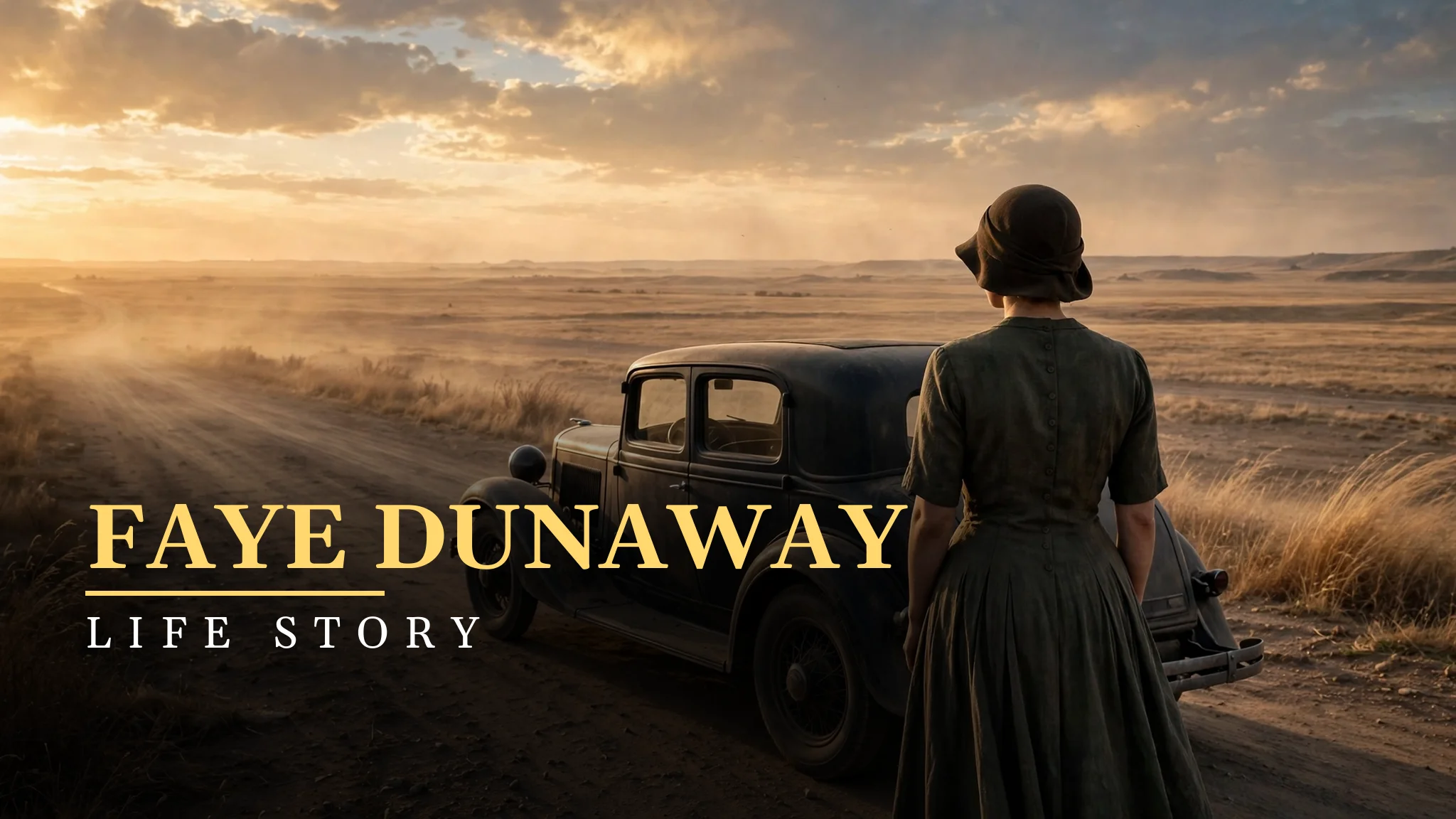
I think her legacy is a good one, and I think it is worth remembering. She showed the world that a woman could be cool, beautiful, and dangerous, and that a dramatic actress could be one of the best in Hollywood. Her films are still shown today, and they still give pleasure to people who like the great films of the 1960s and 1970s. She gave joy, and pain, and truth, to millions of people, and she did it with coolness. That is a life worth celebrating, and it is a life worth telling. When I think of Faye Dunaway, I think of a woman in a dark dress beside a dusty car on a golden plain, cool, beautiful, and free, and I smile, because that image is beautiful, and it will last.
I also think about the young women today who are cool, who are intelligent, and who dream of a life in acting. Faye Dunaway proves that it is possible, and that hard work, talent, and coolness can change a life. She proves that you do not need to be sweet and quiet to be a star. You need to be true, to be brave, and to keep going. That is a message of hope, and it is a message that still matters. I hope that young women who read about Faye Dunaway will feel that hope, and will believe in themselves, as she believed in herself.
I keep thinking about the way she played Evelyn Mulwray in Chinatown, because that role captures everything I admire about Faye. She played a wealthy, mysterious woman with a terrible secret, and she played her with a cool, fragile beauty that made audiences feel sympathy for her, even though she was lying. The film is now regarded as one of the greatest ever made, and Faye’s performance in it is one of her best. I think about the people who watch that film and see Evelyn, and who think about secrets, about family, and about how the past can destroy the present. That is a thoughtful film, and Faye told it beautifully, with a quiet, controlled power that is hard to match.
I also think about her perfectionism, and about how it was both a gift and a burden. She demanded the best from herself, and that made her great, but it also made her life harder, because perfection is impossible, and trying to be perfect can be exhausting. She shows us that we should aim for excellence, but we should also be kind to ourselves when we fall short. That is a lesson for all of us, because we all want to do our best, and we all need to learn to accept that our best is enough, even when it is not perfect. Faye’s story teaches us that, through her successes, and through her struggles with a film that did not work out as she hoped.
There is another part of her story that stays with me, and it is her love for her son Liam. She was a mother, and she tried to be a good mother, even while she was building her career, even while she was facing divorce, and even while she was dealing with a changing Hollywood. She loved Liam deeply, and she tried to give him a normal life, away from the glare of the cameras. That love matters, and it is the most important part of her story as a mother. She did not give up on her son, and she did not give up on herself, and that is a quiet kind of strength that deserves respect.
I wonder what she would say to a young actress today who is cool, who is intelligent, and who is being told to be warmer, to be sweeter, and to be less dangerous. I think she would smile, and she would say, be true, be brave, and keep going. I think she would tell that young actress to work hard, to be professional, and to refuse to pretend to be someone she is not. That is good advice, and it is advice that comes from a life lived with coolness, talent, and courage.
I also think about the way she played Vicki Anderson in The Thomas Crown Affair, because that role shows her at her most glamorous and most intelligent. She played an insurance investigator who tries to catch a wealthy businessman who robs a bank for fun, and she played her with elegance, with coolness, and with a sharp mind that matched his. The film is stylish, romantic, and fun, and Faye’s performance in it is one of her best. I think about the people who watch that film and see Vicki, and who think about style, about intelligence, and about the game of cat and mouse between two clever people. That is a delightful film, and Faye made it work with her cool, confident performance.
Finally, I think about her as a woman who defined 1970s cinema, and who is still remembered today for three great roles, Bonnie, Evelyn, and Diana. Those roles are very different, a bank robber, a mysterious widow, and a ruthless executive, and she played all three with skill and with depth. She was not only a beautiful face. She was a serious, talented actress, who earned her Oscar through hard work and skill. That is a legacy worth remembering, and it is a legacy that still matters, because it shows that a woman can be cool, beautiful, and dangerous, and that she can be one of the best actresses of her generation.
Frequently Asked Questions
What is Faye Dunaway best known for?
She is best known as Bonnie Parker in Bonnie and Clyde from 1967, as Evelyn Mulwray in Chinatown from 1974, and as Diana Christensen in Network from 1976, for which she won an Academy Award.
Did Faye Dunaway win an Academy Award?
Yes, she won the Academy Award for Best Actress for Network in 1976, after being nominated for Bonnie and Clyde in 1967 and for Chinatown in 1974, a total of three nominations.
Where was Faye Dunaway born?
She was born Dorothy Faye Dunaway on 14 January 1941 in Bascom, Florida, where her father was a career officer in the United States Army, and the family moved around a great deal.
What happened with Mommie Dearest?
She played Joan Crawford in Mommie Dearest in 1981, a film based on Christina Crawford’s book about her mother, and the film became a controversial cult hit that damaged Faye’s reputation in Hollywood.
Is Faye Dunaway still alive?
Yes, she is still alive in her eighties, after a long career in films, on stage, and on television, and she is remembered as one of the defining stars of 1970s cinema.
What other films is Faye Dunaway known for?
She is known for The Thomas Crown Affair from 1968 and Three Days of the Condor from 1975, as well as Bonnie and Clyde, Chinatown, and Network, all of which are now regarded as classics.


