Felicity Kendall: The Life Story Behind the Good Life Star
In this post
Felicity Kendall is one of those actresses whose face makes British viewers smile before she has said a word. For millions of people, she will always be Barbara Good, the bright and cheerful woman in The Good Life who gave up a comfortable office life to grow vegetables, keep goats, and live in a way that was simple and free. She played Barbara with warmth, with humour, and with a kind of sunny energy that made the whole idea of a self-sufficient life look joyful rather than hard. The show was a huge hit in the 1970s, and it is still loved today, but Felicity Kendall’s career is much longer and much richer than one sitcom.
She was born in England in 1946, and she came from a family where acting was part of everyday life. Her father was an actor, and she grew up around theatres, rehearsals, and the busy world of people who make their living on a stage. She learned early that acting is not only about fame. It is about hard work, about learning lines, about turning up on time, and about giving the audience your best, night after night. That early lesson stayed with her, and it shaped a career that has lasted for more than sixty years, across television, film, and the stage.
What makes her story worth telling is the quiet way she built that career. She did not chase scandal, she did not try to become a Hollywood star, and she did not let one famous role stop her from doing other work. She played serious parts in the theatre, she played a detective in a garden, she played mothers and wives and strong women in many different dramas, and she kept returning to the stage, where she feels most at home. This is the story of a girl from a theatre family who became one of Britain’s most loved television stars, and who kept working with grace and skill for a whole lifetime.
A Theatre Childhood in the Midlands
Felicity Ann Kendall was born on 25 September 1946 in Olton, in Warwickshire, in the English Midlands. Her father, Geoffrey Kendall, was an actor and theatre manager, and her mother, Laura, was also connected to the theatre world. The family lived a life that was shaped by the stage. Her father ran a theatre company, and Felicity grew up watching actors rehearse, watching sets being built, and learning that a theatre is a place where many different people work together to make something special for an audience. It was not a glamorous childhood in the way that people imagine. It was a working childhood, full of long days, travel, and the practical business of putting on a show.
As a small child, she began to appear on stage herself. She was not pushed into acting by her parents in a hard or unkind way. She was simply part of a family where acting was normal, and where a child who could learn lines and stand on a stage was given a chance to do so. She learned to speak clearly, to stand tall, and to look at an audience without fear. Those early experiences gave her a confidence that many young actors take years to find. She knew what a stage felt like, she knew what a rehearsal room felt like, and she knew that acting was work, not magic.
When she was older, she went to school in England, and she continued to act. She was a bright and lively girl, and she enjoyed the energy of performing. She did not have an easy path laid out for her, though. Being the daughter of an actor does not guarantee success, and it can sometimes make life harder, because people expect you to be good and they watch you more closely. Felicity had to prove herself, just as any other young actress had to do. She took small parts, she learned from older actors, and she built her skills one job at a time.
The theatre world of the 1950s and 1960s was a busy and demanding place. There were many small theatres across Britain, and young actors learned their craft by working in them, playing many different parts in a short time. Felicity did that kind of work, and it taught her how to be versatile. She could play a young girl in one play, a serious woman in the next, and a comic character in the one after that. That versatility would become one of the most important parts of her career. She was never only one kind of actress. She could do many things, and she did them well.
Learning the Craft on Stage and Screen
In her late teens and early twenties, Felicity Kendall began to work more seriously as a professional actress. She appeared in theatre productions across Britain, and she began to take small roles on television as well. Television in the 1960s was growing fast, and there were many opportunities for young actors who could work quickly and reliably. Felicity was both. She learned her lines, she listened to directors, and she gave honest performances that audiences could believe in. She did not try to be a star. She tried to be good, and that was enough to keep her working.
One of the most important parts of her early career was her work in the theatre, where she played a wide range of roles in classic plays and in new writing. The stage taught her discipline. In the theatre, you cannot stop and start again. You have to keep going, even if you forget a line or if something goes wrong. You have to trust the other actors, and you have to trust yourself. Felicity learned to do that, and it made her a strong and reliable performer. Directors liked working with her, because they knew she would be prepared, she would be professional, and she would give the audience a real performance.
She also began to appear in films, taking supporting roles that let her show her range. Film work is different from stage work. The camera is close, and it sees everything, so an actor has to be natural and honest in a different way. Felicity learned to adjust her acting for the camera, to be quieter and more detailed, and to let small changes in her face tell the story. That skill would help her a great deal when she moved into television comedy, where the camera is close and the audience can see every smile and every raised eyebrow.
During these years, she married the theatre director Michael Rudman in 1968. The marriage lasted for many years, and they had a son, Charley, who later became an actor himself. Her family life was important to her, and she tried to balance work and home in a way that many working mothers understand. Acting is not a nine-to-five job. It means long hours, travel, and time away from home, and Felicity had to make choices about which jobs to take and which to turn down. She chose carefully, and she kept her family at the centre of her life, even as her career grew.
Barbara Good and The Good Life
In 1975, Felicity Kendall was cast as Barbara Good in The Good Life, the BBC sitcom created by John Esmonde and Bob Larbey. The show told the story of Tom and Barbara Good, a couple in their forties who decide to give up their comfortable suburban life and become self-sufficient. They grow their own food, keep animals, and try to live without buying things from shops. Their neighbours, Jerry and Margo Leadbetter, played by Paul Eddington and Penelope Keith, are horrified by the mess and the noise, and the comedy comes from the clash between the two couples. Felicity played Barbara opposite Richard Briers as Tom, and the two of them made a perfect pair.
Barbara Good was a joyful character. She was kind, she was practical, she was full of energy, and she believed in the life she and Tom had chosen. She wore dungarees, she worked in the garden, she cooked, she looked after the animals, and she laughed a lot. Felicity played her with a warmth that made audiences love her. She did not play Barbara as a joke. She played her as a real woman who had made a brave choice, and who was happy with that choice, even when things went wrong. That honesty is what made the character work. Viewers could see themselves in Barbara, or they could see the life they wished they had.
The Good Life ran from 1975 to 1978, and it became one of the most loved sitcoms in British television history. It was watched by millions of people, it won awards, and it is still repeated today. For Felicity, it was a turning point. She became a household name, and she became associated with a certain kind of British life: a life that was simple, green, and full of common sense. She has spoken about the show with great affection over the years, and she has said that she is proud of it. She knows that many people will always think of her as Barbara Good, and she has never tried to hide from that.
The show also showed her skill as a comic actress. Comedy is hard, because it looks easy when it is done well, and it looks terrible when it is done badly. Felicity made it look easy. She had perfect timing, she knew how to react to Richard Briers, and she knew how to make a small moment funny without trying too hard. She could be funny with a look, with a pause, or with a single line delivered in just the right way. That kind of comedy comes from years of stage work, and from a deep understanding of how people really talk and laugh.
After the Good Life: A Wide and Serious Career
After The Good Life ended, Felicity Kendall could have spent the rest of her career playing the same kind of cheerful wife in sitcoms. She did not do that. She chose a wide range of work, and she returned to the theatre, where she played serious and demanding roles. She appeared in plays by Shakespeare, by Chekhov, and by modern writers, and she showed audiences that she was a serious actress, not only a television star. The stage gave her the chance to play women who were complex, troubled, and strong, and she took those chances with enthusiasm.
On television, she took on a very different kind of role in The Mistress, a drama series in the 1980s in which she played a woman having an affair with a married man. The part was a long way from Barbara Good, and it showed that she could play a woman who was not perfect, who made difficult choices, and who lived with the results. Audiences were surprised, but they were also impressed. She was not afraid to play a character who might be judged by viewers, and she played her with honesty and care. That willingness to take risks is one of the reasons her career has lasted so long.
In the 1990s and 2000s, she continued to work in television, film, and theatre. She appeared in dramas, in comedies, and in a range of guest roles that let her show different sides of her talent. She was in demand because she was reliable, because she was versatile, and because audiences trusted her. When Felicity Kendall appeared in a programme, viewers knew that they would see a good performance, delivered with skill and with warmth. That trust is hard to earn, and it is even harder to keep for fifty years, but she has kept it.
She also became known for her work in the theatre in London’s West End, where she played leading roles in major productions. The West End is the centre of British theatre, and to play a leading role there is a sign that an actress is respected by her peers. Felicity played there many times, and she was praised by critics for her performances. She has said that the stage is where she feels most alive, because the audience is there in the room with you, and you can feel their response. That feeling is different from television, where the audience is far away, and she has always loved it.
Rosemary and Thyme and a New Audience
In 2003, Felicity Kendall took on a new television role that brought her to a fresh audience. She played Rosemary Boxer in Rosemary and Thyme, a gentle detective series in which she and Pam Ferris, as Laura Thyme, solved murders while working as gardeners. The two women travelled to beautiful gardens and country houses, they met interesting people, and they found themselves in the middle of mysteries that needed solving. The show was warm, charming, and very British, and it was a hit with viewers who liked a quiet and clever detective story.
Rosemary was a plant expert who had lost her job and was starting again, and Laura was a former policewoman who had also faced hard times. Together, they made a good team. Felicity played Rosemary with intelligence and warmth, and she showed that she could lead a drama series as well as a comedy. The show ran for three series, and it was sold to many countries, where it found new audiences. For many viewers outside Britain, Rosemary and Thyme was their first introduction to Felicity Kendall, and they loved her in it.
The success of Rosemary and Thyme showed something important about Felicity’s career. She was in her late fifties when the show began, and many actresses of that age find that the good parts stop coming. Felicity found a leading role that was written for a woman of her age, and she made the most of it. She proved that an older woman can be the centre of a television series, that she can be clever and funny and interesting, and that audiences will watch her. That matters, because it opened doors for other actresses as well.
During these years, she also continued to work on stage, and she appeared in a number of well-received productions. She played in plays that toured Britain, and she worked with some of the best directors and actors in the country. She was not chasing fame. She was doing the work she loved, and she was doing it well. She has always been clear that acting is a job, and that the job is to serve the play, the writer, and the audience. That attitude has kept her grounded, and it has kept her working.
Honours, Family, and Later Work
Felicity Kendall has received many honours for her work in acting. She was appointed a CBE in 2021 for her services to drama, a recognition of a career that has lasted for more than six decades. She has also received awards and nominations for her stage and television work, and she is widely respected by other actors. These honours are important, but they are not the reason she acts. She acts because she loves the work, because she loves the theatre, and because she loves telling stories that matter to people.
Her personal life has been lived mostly out of the public eye. Her marriage to Michael Rudman ended in divorce. She has kept her private life private, and she has spoken about her family with care and with respect. Her son Charley followed his parents into acting, and she has spoken with pride about his work. She has also spoken about the importance of family, and about the way that a life in the theatre can be both joyful and demanding for the people around you.
In later life, she has continued to act, choosing roles that interest her and working with people she respects. She has appeared in television dramas, in films, and on stage, and she has shown no sign of slowing down. She has also been involved in charity work, and she has used her public profile to support causes she believes in. She is known for her kindness, for her professionalism, and for her ability to make everyone around her feel at ease. Younger actors who work with her often say that she is generous, that she listens, and that she helps them to do their best work.
She lives in London, and she enjoys a life that is busy but not frantic. She gardens, she reads, she spends time with her family, and she continues to take on new challenges. She has said that she still gets nervous before a first night in the theatre, and that she still feels the excitement of a new role. That excitement is what keeps her going. She is not an actress who is looking back at a famous past. She is an actress who is still looking forward, still learning, and still enjoying the work.
A Quiet Star Who Lasted
Felicity Kendall’s career is a story of quiet success. She did not become famous through scandal or through a single lucky break. She became famous by working hard, by being good at her job, and by choosing work that she believed in. She played Barbara Good, and she played that part so well that it became a part of British culture. She then spent the next forty years proving that she could do much more than that, and she did it without fuss and without noise.
She has shown that an actress can have a long career if she is willing to work in the theatre as well as on television, if she is willing to play serious parts as well as comic ones, and if she is willing to take risks. She has shown that a woman can be a star in her fifties and sixties, and that audiences will follow her if the work is good. She has shown that kindness and professionalism matter, and that a reputation built on hard work lasts longer than a reputation built on fame alone.
Her story is also a story about Britain. The Good Life was about a Britain that was changing, about people who wanted a simpler life, and about the humour that comes from trying to do something different. Rosemary and Thyme was about gardens, about country houses, and about a Britain that is beautiful and full of history. Felicity Kendall has been part of that story for a long time, and she has helped to tell it with warmth and with skill. She is a part of British television history, and she is still making that history today.
My Take:
When I think about Felicity Kendall, I think about warmth. I do not mean warmth as a small or soft thing. I mean the kind of warmth that makes a room feel safe, that makes people relax, and that makes a story feel true. I see that warmth in Barbara Good, and I see it in Rosemary Boxer, and I see it in the way other actors talk about working with her. I think that warmth is not an act. I think it is part of who she is, and I think it is the reason she has lasted so long. Audiences can tell when an actor is kind, and they can tell when an actor is only pretending to be kind. Felicity Kendall does not pretend. She is warm, and people feel it.
I love The Good Life, and I think it is one of the best sitcoms Britain has ever made, but I also think it is easy to take it for granted. People remember the goats, the vegetables, and the funny arguments with Margo, and they forget how hard it is to make a show like that work. The idea could have been dull. A couple who grow their own food could have been boring, or it could have been preachy, or it could have been a joke that wore thin after a few episodes. It was none of those things, because the actors made it human. Felicity made Barbara a real person, not a symbol. She was tired sometimes, she was annoyed sometimes, she was happy sometimes, and she was always trying her best. I think that is why the show still works today. It is not about self-sufficiency. It is about a marriage, about a friendship, and about two people who have chosen a life together. Felicity understood that, and she played it with great skill.
What I admire most about her is the way she refused to be trapped by Barbara Good. I have seen many actors who play one famous part and then spend the rest of their lives trying to escape it, or trying to repeat it, and they end up unhappy. Felicity did something different. She accepted Barbara, she was proud of her, and she moved on. She played serious parts on stage, she played a woman in a difficult affair in The Mistress, she played a detective in a garden in Rosemary and Thyme, and she kept doing new work. She did not run away from Barbara, and she did not cling to her. She let Barbara be one part of a long career, and that is a wise way to live. I think it takes confidence to do that, and I think it takes a clear sense of who you are.
I also think about her childhood in the theatre, and about what it must have been like to grow up in a family where acting was work, not a dream. I imagine a small girl watching her father run a theatre company, seeing the long hours, the problems, the joy when a show worked, and the worry when it did not. I think that gave her a realistic view of acting. She did not think that acting would make her rich or famous overnight. She thought it was a job, and she learned to do that job well. That realistic view has helped her, because it has kept her from being disappointed when fame did not come quickly, and it has kept her from being shocked when fame did come. She knew that acting is work, and she has always been willing to do the work.
There is something I find sad in her story, and it is the sadness of how hard it is for women in acting to keep working as they get older. Felicity has kept working, and she has done it well, but I know that many actresses of her generation did not get the same chances. They were given small parts, or they were forgotten, or they were told that audiences did not want to see older women. Felicity found good parts, but she had to fight for them, and she had to be willing to go back to the stage, where older women are often given better roles. I think that is unfair, and I think it is a problem in television and film that still exists today. I admire Felicity for finding a way through it, but I also feel sad that she had to find a way through it at all.
I respect her work on stage more than I can say in a few words. Television is important, and it reaches millions of people, but the stage is where an actor really learns their craft. Felicity has spent a large part of her life on stage, playing Shakespeare, Chekhov, and modern writers, and she has done it with skill and with courage. I think about what it must feel like to stand on a stage in front of hundreds of people, night after night, and to give a performance that is fresh each time. It is hard, it is tiring, and it is also wonderful. I think Felicity loves that feeling, and I think it is why she keeps returning to the theatre. She is not an actress who only wants to be on television. She is an actress who wants to act, wherever the work is best.
I also think about Rosemary and Thyme, and about why that show mattered. It was a gentle show, and some people might say it was too gentle, or too slow, or too old-fashioned. I disagree. I think there is a place for gentle television, for shows that are kind, that are beautiful to look at, and that tell a good story without shouting. Felicity and Pam Ferris made a lovely pair in that show, and they showed that two older women could be the centre of a detective series, could be clever, could be funny, and could be interesting. I think that mattered, because it showed television makers that audiences will watch older women, if the story is good. I wish there were more shows like that, and I wish more actresses were given the chance to lead them.
When I compare Felicity with other actresses of her generation, I see a woman who chose a steady path. She did not try to be a Hollywood star, she did not try to be the most famous actress in Britain, and she did not try to shock people. She tried to be good, and she tried to be useful, and she tried to enjoy her work. That steady path has given her a long career, a good reputation, and a life that seems calm and happy. I think there is a lesson in that for young actors. You do not have to be the loudest person in the room. You do not have to chase every big role. You can build a career slowly, one good job at a time, and you can end up with something that lasts.
I think the lesson of her life is about balance. She balanced work and family, she balanced television and theatre, she balanced comedy and drama, and she balanced fame and privacy. Balance is hard, and it is not glamorous, but it is what makes a life work over a long time. Felicity has balanced her life well, and I admire her for it. She has not burned out, she has not disappeared, and she has not become bitter. She has kept working, she has kept learning, and she has kept being kind to the people around her. That is a good life, and it is a good career, and I think it deserves to be celebrated.
I also think about the way she works with other actors, because the stories people tell about her are always about generosity. Richard Briers, Pam Ferris, and many stage actors have spoken about how easy she is to work with, how she listens, and how she helps a scene work even when she is not the centre of it. I think that generosity is a skill, and it is not a small one. Some actors try to take every scene for themselves, and the work suffers. Felicity gives the scene to the play, and the play becomes better. I admire that, because it shows that she cares more about the story than about herself, and that is the mark of a real professional.
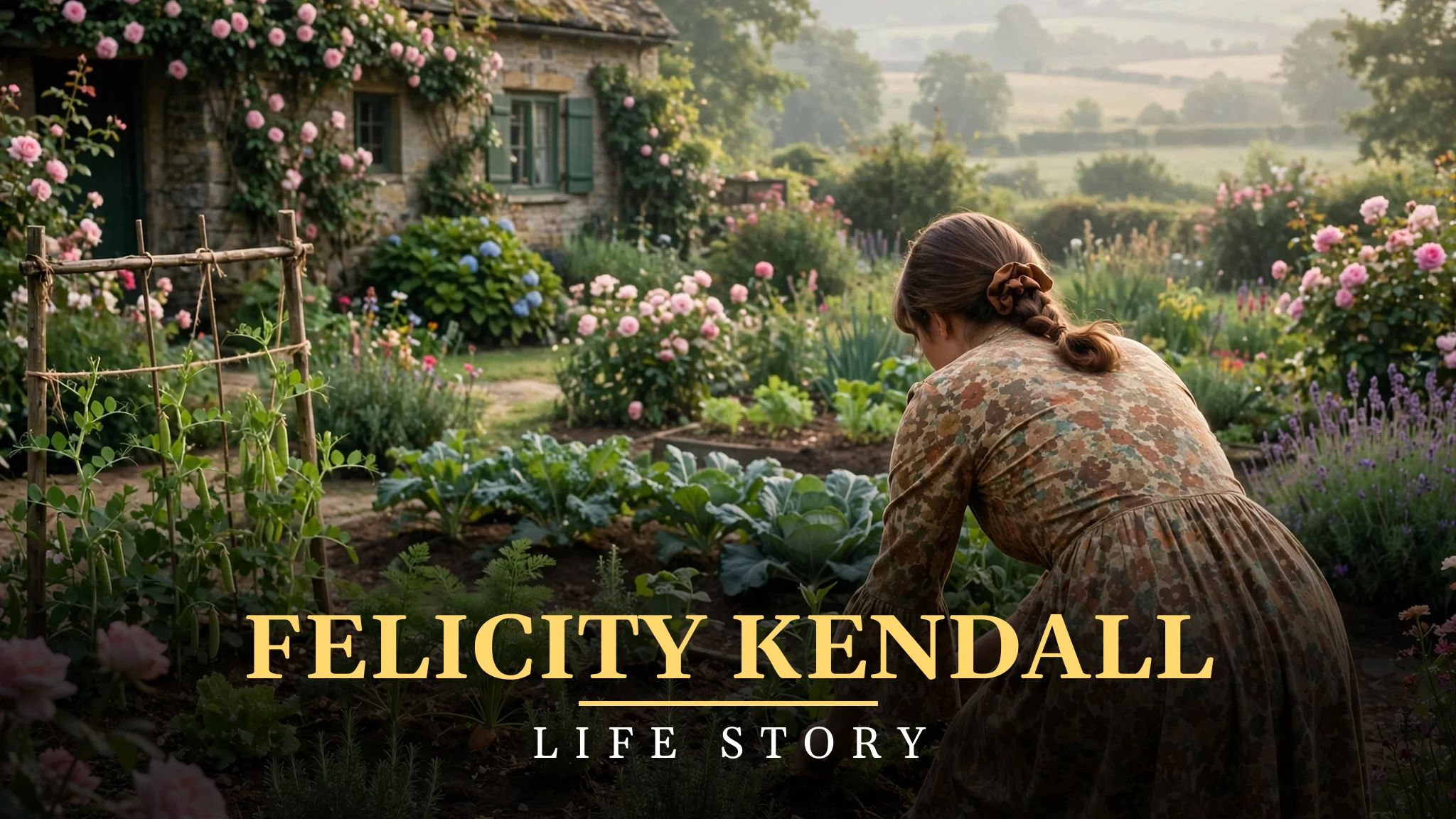
Another thing that stays with me is her love of gardens, which is not only a part of Rosemary and Thyme but also a part of her real life. Gardening is slow work. You plant something, you wait, you look after it, and you do not see the result for months or years. I think Felicity understands that kind of patience, because her career has been built in the same way. She did not rush, she did not try to force success, and she let her work grow slowly, one role at a time. I find that comforting, because it tells me that a good life is not built in a hurry. It is built by doing small things well, day after day, until they add up to something beautiful.
I also respect the way she has spoken about getting older, because she has done it without bitterness and without pretending. She has taken roles for older women, she has played mothers and grandmothers and women who have lived a full life, and she has given those women dignity. I think that matters for viewers who are getting older themselves, because they need to see themselves on screen as real people, not as jokes or as background figures. Felicity has helped to do that, and I think younger viewers should notice it too, because they will be older one day, and they will want the same respect.
There is one more lesson I take from her, and it is about the theatre. She could have left the stage behind when television made her famous, and many actors do. She did not. She kept going back to the theatre, to plays by Shakespeare and Chekhov, to new writing, and to work that was hard and demanding. I think that choice kept her honest as an actress, because the stage does not let you hide. You have to be there, in the room, with the audience, and you have to earn their attention every night. I think that discipline is what makes her television work so good, and I think it is why she is still respected by other actors today.
In the end, I think Felicity Kendall teaches us that a star does not have to be loud to be loved. She can be warm, she can be kind, she can be professional, and she can be good at her job, and people will love her for it. Barbara Good is loved because Felicity played her with warmth and with truth. Rosemary Boxer is loved for the same reason. The stage roles she has played are loved because she gave them everything she had. I will remember her as an actress who made British television warmer, funnier, and more human, and I think that is a wonderful thing to be remembered for.
I also think about the gardens in Rosemary and Thyme, and about why that show felt so calm and so kind. It was not a loud show, and it was not a fast show, but it was a show that made people feel at home. Felicity played Rosemary as a woman who knew about plants, who knew about people, and who was not afraid to ask questions. I think that calm way of acting is hard to do, because it looks easy, and it is easy to make it look dull. Felicity made it look warm, and she made it look interesting, and I think that is a skill that comes from many years on stage, where you learn how to hold an audience without shouting.
I think about her father, Geoffrey Kendall, and about what it must have been like to grow up in a theatre family. I imagine a small girl watching rehearsals, seeing actors learn their lines, and learning that a theatre is a place of hard work, not just of glamour. I think that gave her a realistic view of acting, and it kept her from being disappointed when fame did not come quickly. She knew that acting was work, and she was willing to do the work, and that is why she is still working today, more than sixty years after she began.
Frequently Asked Questions
Which part made Felicity Kendall a household name in Britain?
She became a household name as Barbara Good in The Good Life, the BBC sitcom that ran from 1975 to 1978. She played Barbara opposite Richard Briers as Tom Good, a couple who gave up office life to live self-sufficiently in Surbiton.
When and where was Felicity Kendall born?
She was born on 25 September 1946 in Olton, Warwickshire. Her father, Geoffrey Kendall, was an actor and theatre manager, so she grew up around theatres and rehearsals from a very young age.
What was Rosemary and Thyme about?
Rosemary and Thyme was a detective series that began in 2003, in which Felicity played Rosemary Boxer, a gardener who solved murders with her friend Laura Thyme, played by Pam Ferris. The two women worked in beautiful gardens and country houses while they investigated crimes.
Did Felicity Kendall work mostly on stage or on television?
She worked in both, and she has always said that the stage is very important to her. She played leading roles in the West End and in theatres across Britain, as well as taking major television roles in The Good Life, The Mistress, and Rosemary and Thyme.
Was Felicity Kendall honoured for her acting?
Yes, she was appointed a CBE in 2021 for her services to drama. The honour recognised a career that had lasted for more than sixty years across stage, television, and film.
Who was Felicity Kendall married to?
She was married to the theatre director Michael Rudman from 1968, and they had a son, Charley, who also became an actor. She has kept much of her later family life private.
What other famous sitcom role did Felicity Kendall turn down or avoid being trapped by?
After The Good Life she deliberately chose very different work, including serious stage roles and the drama The Mistress, rather than repeating Barbara Good in sitcom after sitcom. That choice helped her build a much wider career.


