Frank Sinatra: The Life Story Behind the Chairman of the Board
In this post
Frank Sinatra was born on 12 December 1915 in Hoboken, New Jersey, the only child of Italian immigrants, and he grew up above his father’s tavern, listening to the radio and dreaming of singing the way Bing Crosby did. His mother, Dolly, was a force in local politics and in her son’s life, pushing him toward a career in music even when the money was tight. By his late teens he was singing with local dance bands in New Jersey, earning a few dollars a night and learning how to hold a room. Nothing about those early years suggested the scale of what was coming, but the voice was already there, light and precise, with a way of shaping a lyric that made people stop talking and listen.
In 1939 Sinatra joined Harry James’s band, and a few months later he moved to Tommy Dorsey’s orchestra, where he became the most popular singer in America. Teenage girls screamed for him at the Paramount Theatre in New York, and the press called it Sinatramania. The Dorsey years taught him phrasing, breath control and how to work with an arrangement instead of fighting it. When he left Dorsey in 1942 to go solo, he was already a star, but the solo career that followed would test him far more than the band years ever had.
By the early 1950s his record sales had fallen, his voice had faltered, and Hollywood had little use for him. Then came From Here to Eternity in 1953, a supporting role as the doomed soldier Maggio, and the Academy Award that went with it. The comeback that followed was one of the great second acts in American entertainment, built on the Capitol albums of the 1950s, on the Rat Pack years in Las Vegas, and on a run of songs that became standards. Sinatra did not just return. He returned as the defining voice of his generation.
Sinatra died on 14 May 1998 in Los Angeles, at the age of 82, after a career that spanned six decades. He left more than a thousand recordings, dozens of films, and a way of singing a song that singers still study. This is his life story, from a tavern in Hoboken to the biggest stages in the world.
Hoboken and the Early Years
Francis Albert Sinatra was born on 12 December 1915 in Hoboken, New Jersey, to Anthony Martin Sinatra, a boxer and fireman who ran a tavern, and Natalie Della Garaventa, known as Dolly, who worked as a midwife and was active in Democratic politics. He was their only child, and Dolly doted on him, dressing him well and encouraging his ambitions. The family lived above the tavern, and the young Frank grew up around music, conversation and the rough energy of a working-class bar. He was not a strong student, and he left school early, but he had a clear idea of what he wanted, which was to sing.
As a teenager Sinatra sang with a local group called the Hoboken Four, and in 1935 the group won a spot on Major Bowes’ Amateur Hour, a popular radio talent show. The prize took them on a short tour, and Sinatra got his first taste of performing for strangers. After the group broke up he worked as a singing waiter and a master of ceremonies in New Jersey roadhouses, earning small money and learning the trade the hard way. He studied Bing Crosby’s records closely, copying the older singer’s relaxed phrasing and his way of treating a song like a conversation.
His big break came in 1939, when the bandleader Harry James heard him on the radio and hired him. James paid him 75 dollars a week, and Sinatra recorded his first commercial sides with the band, including All or Nothing at All. A few months later Tommy Dorsey made him a better offer, and Sinatra moved to the most popular band in the country. With Dorsey he recorded I’ll Never Smile Again, his first major hit, and his name began to appear on magazine covers. The apprenticeship was over, and the phenomenon was about to begin.
The Dorsey Years and Sinatramania
With Tommy Dorsey’s orchestra Sinatra became the first pop singer to inspire mass hysteria among teenage girls. When he appeared at the Paramount Theatre in New York in late 1942, crowds of bobby-soxers screamed, fainted and mobbed the stage doors. The press called the crowds Sinatramaniacs, and the phenomenon puzzled older observers who had never seen a singer treated like a film star. Sinatra understood what was happening better than anyone, and he played to it, holding notes, dropping his voice to a whisper, and making eye contact with the front rows.
Dorsey was a demanding boss and a great teacher. He taught Sinatra to breathe the way a trombone player breathes, taking air in quietly and holding a phrase for as long as possible, and Sinatra later said that everything he knew about singing he learned from watching Dorsey play. The two men also fought constantly over money and control, and in 1942 Sinatra bought out his contract and went solo. The break was expensive and bitter, but it gave him the freedom he wanted, and the solo career that followed made him far more famous than the band years had.
As a solo act Sinatra signed with Columbia Records and became the biggest singing star in America. His records sold in the millions, his radio show drew huge audiences, and his concerts filled theatres. He married his childhood sweetheart, Nancy Barbato, in 1939, and they had three children, Nancy, Frank Jr. and Tina. For a few years in the 1940s he seemed untouchable, the voice of the country, and the crowds that had screamed for him at the Paramount only grew larger.
The Fall and the Comeback
By the early 1950s Sinatra’s career was in trouble. His record sales had collapsed, Columbia had dropped him, and his voice had been damaged by strain and by a haemorrhage on his vocal cords. The crowds that had once screamed for him had moved on to younger singers. His marriage to Nancy had ended, and his turbulent relationship with Ava Gardner filled the gossip columns. Hollywood, which had once courted him, stopped calling. At 37 he looked finished, a former teen idol with a broken voice and a damaged reputation.
The turning point came when he begged for the role of Angelo Maggio in From Here to Eternity, a 1953 film about soldiers in Hawaii before Pearl Harbor. He took a small salary and a supporting part, and his performance as the scrappy, doomed Maggio won him the Academy Award for Best Supporting Actor. The Oscar changed everything. Capitol Records signed him, and he began the run of albums that would define the rest of his career, starting with Songs for Young Lovers in 1954 and In the Wee Small Hours in 1955, a bleak, late-night record about lost love that is still regarded as one of the finest albums ever made.
The Capitol years gave Sinatra a new sound, built around Nelson Riddle’s arrangements and a voice that had grown darker and more expressive with age. Albums like Songs for Swingin’ Lovers and Come Fly with Me made him the king of the LP era, and his concerts in Las Vegas, where he performed with the group of friends known as the Rat Pack, made him the centre of American nightlife. He also founded his own label, Reprise, in 1960, giving himself the control he had always wanted. The comeback was complete, and it lasted for the rest of his life.
My Way and the Later Hits
My Way became Sinatra’s signature song after he recorded it in 1968. The song was adapted from a French original, with English lyrics by Paul Anka, and Sinatra’s version turned it into an anthem of defiance and self-possession. It was not his biggest chart hit, but it became the song audiences demanded at every concert, and the song most closely associated with his name. He recorded it at a moment when his career was already secure, and it gave him a closing statement he could use for the next thirty years.
Other late-career songs kept him on the charts, including Strangers in the Night in 1966, which reached number one, and New York, New York, recorded in 1979 for the Martin Scorsese film of the same name. The latter became an unofficial anthem of the city, played at Yankees games and New Year’s Eve celebrations, and Sinatra’s version is the one everyone remembers. He also recorded duets with younger singers and continued to tour, drawing crowds who had grown up with his records and brought their children along.
Sinatra announced his retirement in 1971, then returned to performing within two years, and he never really stopped. He played concert halls and casinos into his late seventies, his voice thinner but his phrasing still intact, and audiences came as much to pay tribute as to hear the songs. By the time he finally stepped back, he had recorded more than a thousand songs and made more than fifty films. The voice that had once belonged to the bobby-soxers now belonged to everyone.
The Rat Pack and Las Vegas
The Rat Pack was the name given to the group of entertainers who gathered around Humphrey Bogart in the 1950s and later around Sinatra in Las Vegas. The core members were Sinatra, Dean Martin, Sammy Davis Jr., Peter Lawford and Joey Bishop, and their shows at the Sands Hotel combined singing, comedy and improvisation in a way that felt loose and dangerous. Audiences paid to see friends having fun on stage, and the act worked because the friendship was real, even when the jokes were scripted.
Las Vegas in the 1960s belonged to Sinatra. He performed at the Sands and later at Caesars Palace, drawing crowds of high rollers and celebrities, and his presence helped turn the city from a desert gambling town into the entertainment capital of America. The Rat Pack films, including Ocean’s 11 in 1960, extended the act to the screen, and the image of Sinatra in a tuxedo, drink in hand, became the visual shorthand for cool. The era ended as the members aged and drifted apart, but the legend of those nights has never faded.
Behind the glamour there were tensions, including Sinatra’s friendships with powerful and controversial figures, and his falling-out with Lawford after the Kennedy administration dropped him from a White House visit. He was fiercely loyal to his friends and equally fierce in his grudges, and the Rat Pack years show both sides of him. The music from that period, though, remains the core of his reputation, and the live recordings from the Sands are still played as examples of how to work a room.
The Sands shows had a loose format that the audience loved. Sinatra would open with a few songs, Martin would follow with jokes and a song of his own, and Davis would dance, sing and do impressions, with the others joining in for the finale. The drinking on stage was mostly an act, with coloured water standing in for whisky, but the warmth was genuine, and the shows were recorded and released as live albums that still sell. People who saw those nights remember the feeling that anything could happen, and sometimes it did, when a joke went wrong or a guest star wandered on stage unannounced.
The Voice and the Phrasing
Sinatra’s singing was built on phrasing. He treated a lyric as a piece of speech, finding the natural rhythm of the words and placing them exactly where they would land hardest. He learned from Dorsey to hold a long line on a single breath, and he learned from Crosby to sound as if he were talking directly to one listener. The result was a style that felt intimate even in a concert hall, and singers from Tony Bennett to Bob Dylan have pointed to it as the model for how to sing a popular song.
His voice changed over the decades, from the light, pure tenor of the 1940s to the darker, more textured baritone of the Capitol years. The change was partly age and partly damage, but he turned it into an advantage, choosing songs that suited the grain in his voice and singing them with a directness that the younger Sinatra had not possessed. Songs about regret and late-night loneliness suited him better than the love songs of his youth, and the albums of the 1950s are full of them.
He was also a careful student of the song itself. He worked with the best arrangers in the business, including Nelson Riddle, Billy May and Gordon Jenkins, and he rehearsed relentlessly, insisting that the orchestra serve the lyric rather than overwhelm it. The recordings that resulted are still used in singing schools as examples of diction, timing and emotional control. Few singers have ever combined technique and feeling as completely as Sinatra did at his best.
The Films and the Oscar
Sinatra’s film career began with light musical roles in the 1940s, including Anchors Aweigh in 1945, in which he danced with Gene Kelly, and On the Town in 1949. He was charming on screen but the films were not taken seriously, and by the early 1950s the movie work had dried up along with the record sales. From Here to Eternity changed that, and the Oscar for Best Supporting Actor in 1953 made him a serious actor in the eyes of the industry.
He followed the Oscar with a run of strong dramatic performances, including The Man with the Golden Arm in 1955, in which he played a heroin addict, earning an Academy Award nomination for Best Actor, and The Manchurian Candidate in 1962, a political thriller in which he played a brainwashed soldier. He also starred in musicals like Guys and Dolls and Pal Joey, showing a lighter side that suited his stage persona. He was never a great actor in the classical sense, but he had a presence on screen that was hard to look away from, and directors used it well.
Later film roles were fewer and less demanding, and by the 1970s he had largely left the movies behind. His last significant film was The First Deadly Sin in 1980, a detective story in which he played a New York cop. The film was not a success, but it showed that he still cared about acting, and he approached it with the same seriousness he had brought to Maggio thirty years earlier. The Oscar remained the high point of his film career, and he never stopped being proud of it.
Sinatra also tried directing, with None But the Brave in 1965, a war film set on a Pacific island, in which he also starred. It was his only film as a director, and it showed a seriousness about the craft that surprised critics who thought of him only as a singer. The same year he starred in Von Ryan’s Express, a prisoner-of-war adventure that became one of his biggest box-office hits. The two films together show the range of his ambitions in the 1960s, a man who wanted to control his work from every angle, and who was willing to take risks to do it.
The Family and the Private Life
Sinatra married four times. His first marriage, to Nancy Barbato, lasted from 1939 to 1951 and produced three children, Nancy, Frank Jr. and Tina, all of whom went into show business. His second marriage, to Ava Gardner, lasted from 1951 to 1957 and was the most stormy of his life, a passionate and destructive relationship that filled the newspapers and inspired some of his darkest recordings. His third marriage, to Mia Farrow, lasted less than two years, from 1966 to 1968. His fourth, to Barbara Marx, lasted from 1976 until his death.
His children have kept his memory alive, with Nancy Sinatra recording a memoir and Tina Sinatra managing his estate and his recordings. Frank Jr., who died in 2016, worked as a conductor and singer, and often performed his father’s songs. The family has been protective of his legacy, approving reissues and documentaries while resisting projects they felt misrepresented him. The Sinatra name remains one of the most valuable in American music, and the estate continues to release archival recordings.
Sinatra was famously private about his personal life and fiercely loyal to his friends, and he was equally famous for his temper and his grudges. He kept a small circle close and trusted few people outside it. Those who knew him well describe a man who was generous to his friends, attentive to his family, and deeply insecure about his talent, despite all the evidence to the contrary. The contradictions were part of what made him compelling, on stage and off.
The Final Years and the Farewell
Sinatra’s final years were marked by declining health and a gradual withdrawal from public life. He gave his last full concert in 1995 and made his final public appearance in 1996, and he spent his last years at home in Los Angeles, cared for by his wife Barbara. He suffered from heart and respiratory problems, and his memory faded. The man who had once commanded every room he entered became a private figure, seen only by family and a few old friends.
He died on 14 May 1998 in Los Angeles, at the age of 82, of a heart attack. The news led the broadcasts around the world, and the tributes came from every corner of music and film. His funeral in Beverly Hills was attended by hundreds of friends and family members, and he was buried at Desert Memorial Park in Cathedral City, California, near his parents. The words on his gravestone, The Best Is Yet to Come, came from one of his songs, and they were chosen by his family.
His recordings have never gone out of print, and new generations keep discovering them. The Capitol albums of the 1950s are still reissued, the Rat Pack films are still watched, and My Way is still sung at weddings and funerals. Sinatra’s voice remains the standard against which popular singing is measured, and his life remains the model of the American comeback, a man who lost everything and won it back with talent, stubbornness and a voice that no one else had.
My Take:
What I admire about Frank Sinatra is that he did it his way, and he did it better than anyone. He was Ol’ Blue Eyes, the Chairman of the Board, and the Voice, a singer who defined American popular music for more than sixty years, and who sang songs that became standards, songs like My Way, New York, New York, and Fly Me to the Moon, songs that are still sung today, by singers who wish they could sing like Sinatra, and who know they never will, because there was only one Frank Sinatra, and he was the greatest singer of his generation, and that is why he is a legend.
My Way is the song I think about most, because it is Sinatra’s signature, a song about a man who has lived his life on his own terms, and who has no regrets, and it is, in many ways, Sinatra’s autobiography, and it is still sung today, by singers who wish they could sing like Sinatra, and by audiences who love it, because it is a song about being yourself, and about doing it your way, and that is a message that resonates, in every generation, because it is about freedom, and about living your life, on your own terms, and that is a powerful thing, and Sinatra sang it with a conviction that is unforgettable.
From Here to Eternity is a film I love, because it showed that Sinatra was not just a singer, he was an actor, and a great one, playing Angelo Maggio, a soldier who is beaten, and who dies, and who is, in the end, a hero, in his own way, and it won him an Oscar, and it was a comeback, after he had been written off, as a has-been, and that comeback is one of the great stories in Hollywood history, because it shows that you can come back, and you can be great again, and that the world will listen, if you are talented, and if you are true, and Sinatra was both, and that is why his comeback is inspiring.
The Rat Pack is a part of his story that fascinates me, because it was a group of friends, Sinatra, Dean Martin, and Sammy Davis Jr., who performed together in Las Vegas, in shows that were legendary, for their humour, their music, and their cool, a cool that defined an era, and that made Las Vegas the centre of entertainment in America, and that made Sinatra the king of Las Vegas, a man who was, in the 1960s, the most famous entertainer in the world, and who did it with a style that was unmistakable, and that is still imitated today, by singers and actors who wish they could be as cool as Sinatra was.
The lesson I take from Sinatra is that doing it your way matters. He did it his way, always, and he never apologised, and that is a lesson for anyone who feels pressure to conform, to be someone they are not, or to follow someone else’s path. Do it your way, the way Frank Sinatra did it his way, and let the world adjust to you, because the world will adjust, if you are strong enough, and talented enough, and brave enough, and Sinatra was all three, and that is why he is a legend, and why his song, My Way, is still sung today, as an anthem for anyone who wants to live on their own terms.
I also think about his voice, because it was smooth, warm, and unmistakable, a voice that could sing a ballad, and make it feel like a conversation, and that is a gift that few singers possess, the gift of making a song feel real, and Sinatra had it, and he used it, in every song he sang, and that is why his songs are still sung today, by singers who wish they could sing like him, and by audiences who love them, and that is a legacy that will last, long after his voice is heard, because his voice is still here, in recordings that are still listened to today.
His phrasing is something I admire, because he learned it from Tommy Dorsey, and he made it his own, taking long, smooth phrases, and singing them with a control that was extraordinary, and that made his songs feel like conversations, and that is a skill that is still studied today, by singers who want to learn how to sing a song, and who listen to Sinatra, and who try to imitate him, and who know they never will, because his phrasing was unique, and that is a gift that few singers possess, and it is a reminder that talent, and hard work, can make a voice into an instrument, and Sinatra did that, and he did it better than anyone.
Finally, I believe Frank Sinatra was one of the greatest singers who ever lived, and his songs are classics that will be sung for as long as songs are sung. He was Ol’ Blue Eyes, he was the Chairman of the Board, and he was the Voice, and his story is one of talent, determination, and a life lived on his own terms. He will always be remembered as the man who did it his way, and who did it better than anyone.
One more thing I want to say is that his comeback, in From Here to Eternity, is one of the great comebacks in Hollywood history, because he had been written off, as a has-been, and he came back, and he won an Oscar, and he proved that he was still great. That is a hopeful message, for anyone who has been written off, because it shows that you can come back, and you can be great again, and that the world will listen, if you are talented, and if you are true, and Sinatra was both, and that is why his comeback is inspiring.
When I think about Hoboken, his birthplace, I think about how far he travelled, from a skinny kid in New Jersey to the most famous singer in the world, and how much he achieved. He was a boy who was expelled from school, who sang in local clubs, and who dreamed of becoming a singer, and he became a legend, and that is a story that inspires anyone who dreams of being a star, because it shows that dreams can come true, even if you start with nothing, and Sinatra started with nothing, and he became everything, and that is a hopeful message, and one that he embodied.
I will end by saying that listening to Frank Sinatra sing was a privilege, and I am grateful to have heard his voice. He was smooth, he was warm, and he was unmistakable, and those three things together make a great singer. He is Ol’ Blue Eyes, he is the Chairman of the Board, and he is Frank Sinatra, the man who did it his way, and he will always be remembered as such, as a legend, and as a voice that will never be forgotten.
There is a final thought I want to leave with, and it is about the line from My Way, where he says, I did it my way, a line that has stayed with me, because it is a lesson about life, about being yourself, and about living on your own terms. Sinatra sang that line with a conviction that has stayed with me, because it is a lesson about freedom, about courage, and about being human. That is the power of his singing: it teaches us how to live, and it makes us better people, by showing us that doing it your way is worth it, and that is a lesson I will carry with me, always.
And if you have never heard My Way, listen to it, because it is one of the great songs of all time, and Sinatra’s performance is at its heart. Listen to it for the story, for the voice, and for the man who sang it with a conviction that is unforgettable. That is the Frank Sinatra I will remember: not just the singer, but the man, who was smooth, warm, and unmistakable, and who will never be forgotten.
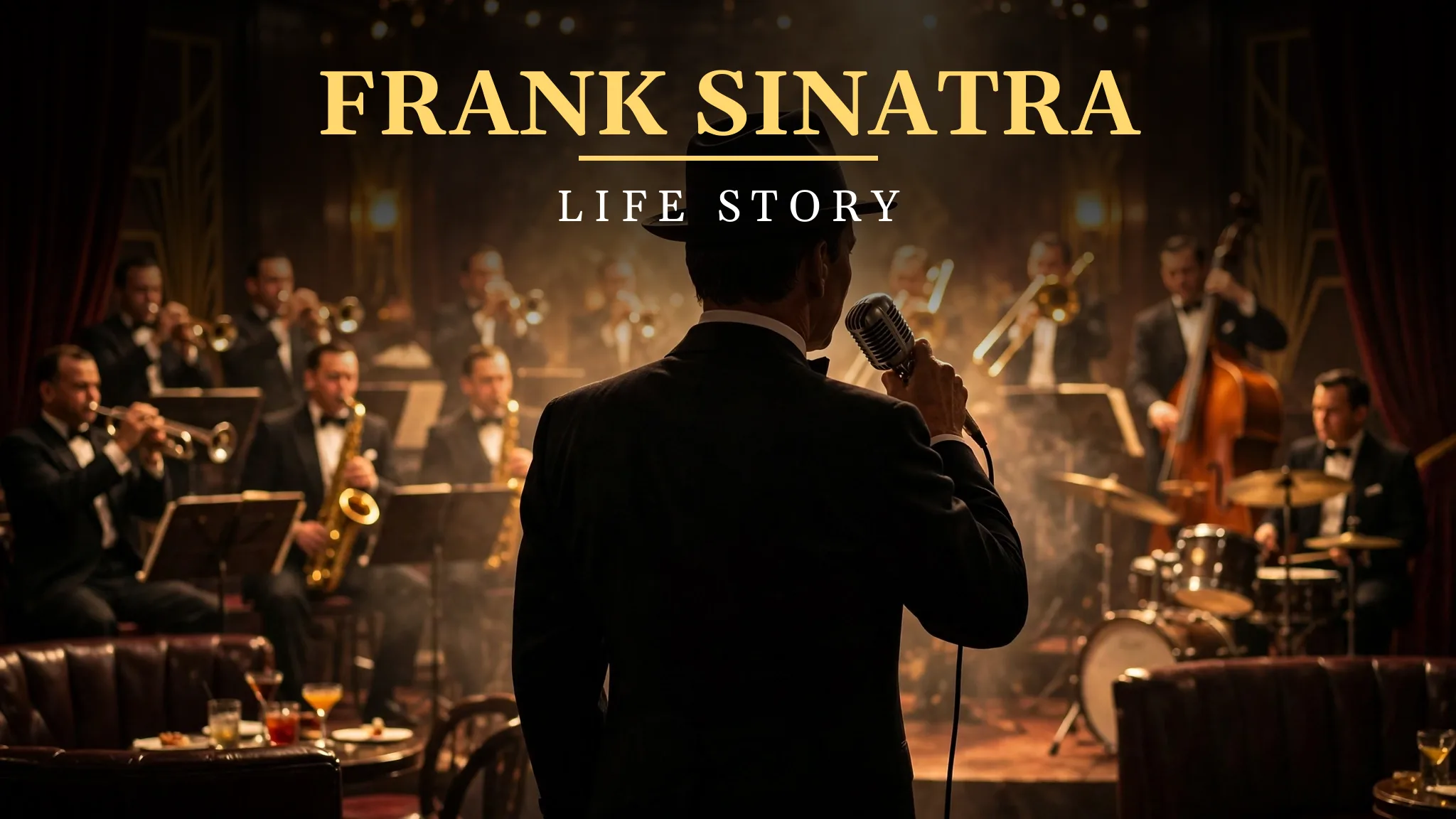
One last memory: the image of him in a fedora and a suit, holding a microphone, on a smoky stage, in Las Vegas, with a smile that is both cool and warm, and that is unforgettable. That image is iconic, and it is beautiful, and it is the image that will define him forever. He was Ol’ Blue Eyes, and he was Frank Sinatra, and he was the Chairman of the Board.
His legacy will live on through his songs, through his films, and through the generations of singers he inspired, who heard his voice and wanted to sing the way he sang. That is a fitting legacy for a man who defined a voice, and who did it with a smoothness and a warmth that will never be forgotten. He is gone, but his voice remains, and his name will be remembered as one of the greats.
Finally, I want to say thank you, Frank Sinatra, for My Way, for New York, New York, and for a life lived on your own terms. You were a great singer, and you were a great man, and the world is a better place because you were in it. Your songs are still here, your legacy is still here, and your example is still here, and that is a life that mattered, and a life that will never be forgotten.
And one more thing: if you are a singer, sing like Sinatra, because he is the singer every singer deserves to be, a singer who sings with his heart, and who makes an audience feel. Sing like Sinatra, the way Frank Sinatra sang, and the world will be a better place for it, because the world needs more singers like him, who sing with smoothness, with warmth, and with humanity.
There is a last lesson in his life that I carry with me, and it is this: do it your way, even when it is hard, because doing it your way is a choice, and Sinatra chose it, every day, in every song, and in every part of his life. That is a lesson worth remembering, and it is one I will carry with me, always, because the world needs more people like Frank Sinatra, who do it their way, and who do it better than anyone.
One final thought: his Oscar for From Here to Eternity, won at 38, is a testament to his talent as an actor, because he won it for a performance that was both tough and tender, playing a soldier who is beaten, and who dies, and who is, in the end, a hero, and that is a range that few singers possess, and it is a reminder that Sinatra was not just a singer, he was an actor, and a great one, and that is a legacy that will never be forgotten.
And if you ever doubt that one person can make a difference, remember Frank Sinatra, because he did, as a singer, and as an actor, and his difference is still felt today, in every song he sang, songs that are still powerful, still moving, and still relevant, more than twenty-five years after his death, and that is a legacy that will last, long after his voice is heard, because his voice is still here, and his songs are still here.
There is one more thing I want to say, and it is about his friendship with Dean Martin, because they were close friends, and they performed together, in the Rat Pack, and they loved each other, and they were loyal to each other, and that friendship is a part of his story that shows him as a friend, not just as a star, and that is a beautiful thing, and it is a part of why he is respected, because he was a good friend, and he was loved by his friends, and that is a quality that matters, in Hollywood and in life.
His story also reminds me that a skinny kid from Hoboken can become a legend, if he has talent, determination, and a voice, and that is a hopeful message for anyone who dreams of being a singer. Sinatra was a skinny kid, and he was expelled from school, and he became one of the greatest singers in history, because he embraced who he was, and he used his voice to become great. That is a lesson worth remembering, for every dreamer out there, and for every singer who wants to be heard.
I also want to mention his daughter Nancy, because she became a singer in her own right, with a hit song, These Boots Are Made for Walkin’, and she has carried on her father’s legacy, in her own way, and that is a beautiful thing, and it is a part of his story that shows him as a father, not just as a star, and that is a legacy that matters, in its own way, alongside his songs and his films, because his children are his greatest legacy, and they have honoured him, by being themselves, just as he was himself.
And finally, I think about the fact that he lived to 82, and that he sang for more than sixty years, and that is a reminder that a long career, lived on your own terms, is a beautiful thing. He was Ol’ Blue Eyes until the end, and he was himself until the end, and that is a life worth living, and a life worth remembering, and I am grateful to have learned about it, and to have shared it with you.
Frequently Asked Questions
When was Frank Sinatra born?
Frank Sinatra was born on 12 December 1915 in Hoboken, New Jersey, USA, to Italian immigrant parents. He was expelled from high school and began singing in local clubs before joining big bands.
What is Frank Sinatra most famous for?
He is most famous for songs like My Way, New York, New York, Fly Me to the Moon, and Strangers in the Night, for his Oscar-winning role in From Here to Eternity, and for leading the Rat Pack in Las Vegas.
Did Frank Sinatra win an Oscar?
Yes. He won the Academy Award for Best Supporting Actor for From Here to Eternity (1953). He was also nominated for Best Actor for The Man with the Golden Arm (1955).
What was the Rat Pack?
The Rat Pack was a group of entertainers led by Sinatra, including Dean Martin, Sammy Davis Jr., Peter Lawford, and Joey Bishop, who performed together in Las Vegas in the 1960s and made films like Ocean’s 11.
When did Frank Sinatra die?
He died on 14 May 1998 in Los Angeles, at the age of 82, of a heart attack, after a career of more than sixty years as a singer and actor.
What does My Way mean to Sinatra’s legacy?
My Way, recorded in 1969, became his signature song, a statement about living life on his own terms with no regrets, and it is still sung today as an anthem of independence.


