Gerardo Ortiz: The Life Story Behind Mexico's Corrido Star
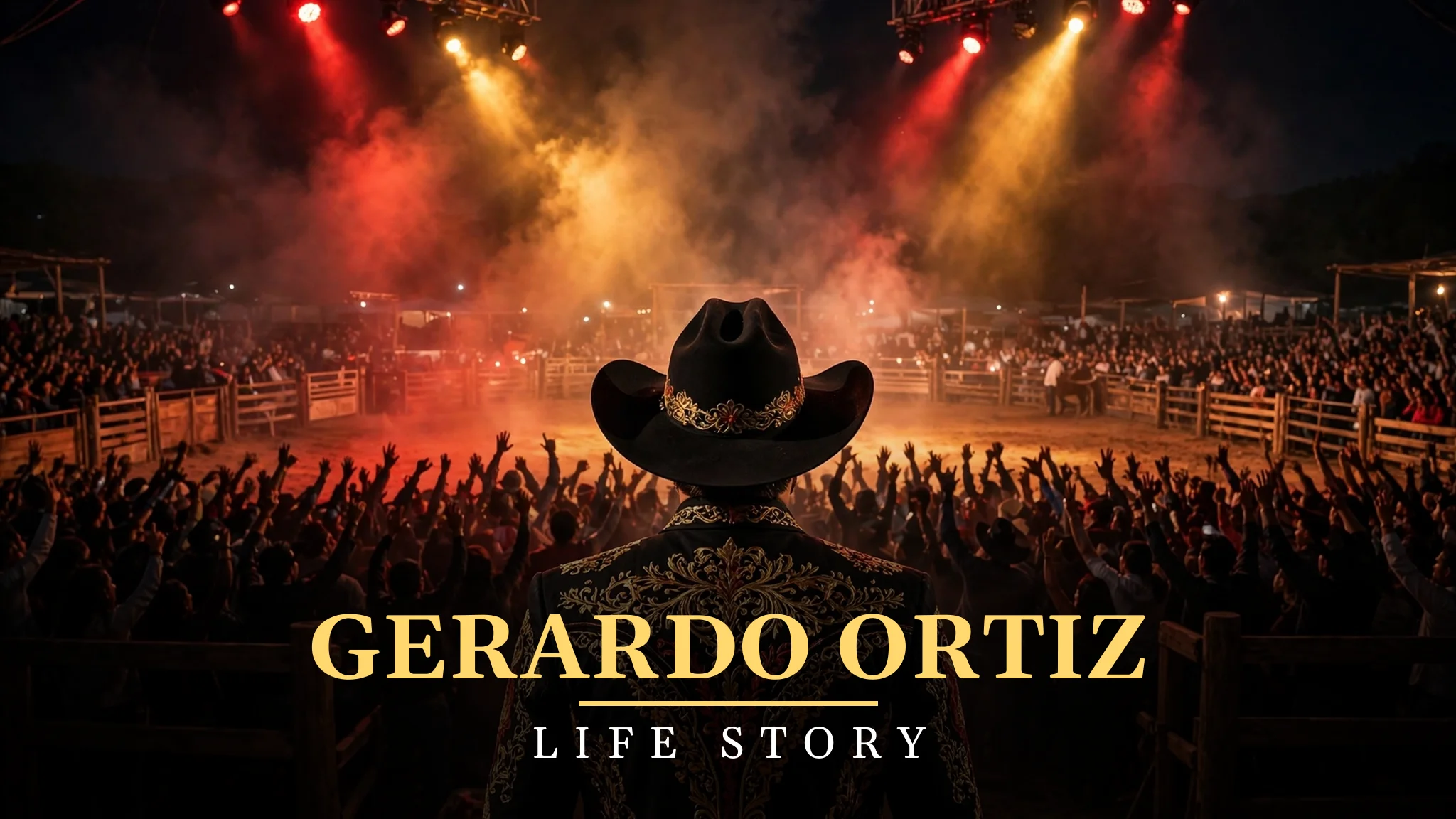
In this post
- Growing Up Between Pasadena and Culiacan
- First Albums and the Rise of a Corrido Voice
- Damaso, Fuiste Mia, and Songs That Became Hits
- Fame, Pressure, and Legal Questions
- Family, Fans, and a Career That Continues
- What His Story Means for Regional Mexican Music
- Awards, Tours, and a Voice That Fills Stadiums
- The Corrido Tradition and a Modern Voice
- My Take:
Gerardo Ortiz is one of the most popular corrido singers of his generation, a young man who was born in the United States, raised in Sinaloa, and who became a star by singing the stories of the north, stories about life, about love, about loss, and about the world of the corrido. He was born in Pasadena, California, he grew up in Culiacan, Sinaloa, and he learned music as a boy, singing at family parties, at local events, and in small venues where people knew his name. He did not become a star in one day. He became a star by recording album after album, by touring, and by building an audience that loved his voice, his songs, and his style.
His most famous songs, including Damaso, El Primer Ministro, and Fuiste Mia, are among the best known corridos and romantic songs in Mexican music, and they are played at parties, on the radio, and on streaming services across Mexico and the United States. He sings with a clear and strong voice, and he plays with a band that includes accordion, tuba, and guitars, the sound of modern norteno and banda music. He is a singer who has sold millions of records, who has won awards, and who has filled stadiums, and who is still one of the most talked about singers in regional Mexican music.
What makes his story interesting is the mix of success and controversy, because corrido music is often about difficult subjects, and because a singer of corridos is often judged for the stories he sings. Gerardo Ortiz has faced praise and criticism, he has faced legal questions in recent years, and he has kept singing through it all. This is the story of how a boy from Culiacan became a corrido star, and how he has lived with fame, with success, and with the hard questions that come with it.
Growing Up Between Pasadena and Culiacan
Gerardo Ortiz Medina was born on 5 October 1989 in Pasadena, California, in the United States, and he grew up in Culiacan, Sinaloa, a city in the north west of Mexico known for its music, its food, and its strong regional culture. His family moved between the United States and Mexico, and Gerardo learned early that he belonged to two places, and that he carried both of them in his heart. He went to school in Culiacan, he spent time with his family, and he sang whenever he had the chance, at home, at parties, and at local events.
As a boy, he listened to the music of Sinaloa, to corridos, to banda, and to norteno, and he learned the songs that were played in his home and in his city. He liked to sing, and he had a clear and strong voice, and people who heard him could tell that he had talent. His family supported him, and they encouraged him to keep singing, even though they knew that a career in music is never easy. He began to perform at small events, and he learned how to stand in front of an audience, how to hold a microphone, and how to make people listen.
Culiacan shaped him, because it is a city where music is part of daily life, where banda and corrido are played in the streets, in cars, and at parties, and where a young singer can learn by listening. Gerardo grew up in that world, and he carried it with him for his whole career. He has often spoken about Culiacan with pride, and his fans there feel that he belongs to them, and that his success is a success for their city. He is a singer who still talks about Sinaloa, and who still remembers where he started.
His childhood was also a time of learning how to be a musician, how to practice, and how to work hard. He did not have a famous family, and he did not have a short cut. He had a voice, a love for music, and a willingness to work, and that was enough to start. He began to record, and he began to build a name for himself, one song at a time, in a music world that is competitive and hard.
First Albums and the Rise of a Corrido Voice
Gerardo Ortiz released his first albums in the late 2000s and early 2010s, including Ni Hoy Ni Manana in 2010, and he began to build an audience in Mexico and in the United States. His music was corrido and norteno, with songs about life in Sinaloa, about love, and about the stories that people in the north tell. He sang with a clear voice, and his band played with energy, and his records were played on the radio, in cars, and at parties. He was a young singer, and he was learning how to make an album, how to choose songs, and how to tour.
In 2011, he released Entre Dios y el Diablo, an album that showed a more confident and mature side of his music, and in 2012 he released El Primer Ministro, an album that became a major success. The title song, El Primer Ministro, became one of his best known records, a corrido with a strong melody and a story that captured the imagination of his audience. The album sold well, it was played on streaming services, and it made him one of the leading corrido singers of his generation. He was no longer only a promising young singer. He was a star.
He followed those albums with Archivos de Mi Vida in 2013, and with Hoy Mas Fuerte in 2015, records that showed his range, from corridos to romantic songs, and that gave his fans new music to love. He worked with good producers, he learned how to make a polished record, and he built a catalogue of songs that are still played today. He toured in Mexico and the United States, playing for large crowds, and he became known for his live shows, which were energetic, loud, and full of feeling.
The early years of his career were busy, with tours, with recordings, and with fame that grew fast. He was a young man, and he was learning how to handle that fame, how to handle the press, and how to keep his voice strong through long tours. That learning took time, and it took patience, but he kept going, and he kept growing, and his audience grew with him. He had found his voice, and he had found his audience, and he was ready for the next chapter.
Damaso, Fuiste Mia, and Songs That Became Hits
One of Gerardo Ortiz’s most famous songs is Damaso, a corrido that tells a story in the classic style of the genre, with a strong melody, a clear voice, and a narrative that listeners remember. The song became a hit, it was played on the radio, and it was sung by fans at concerts, and it showed that Gerardo could sing a corrido with the same skill as the great singers who came before him. It is still one of his signature songs, and it is still one of the most loved corridos in modern Mexican music.
Another well known song is Fuiste Mia, a romantic song about a lost love, which showed a different side of his voice, softer, sadder, and more tender. The song became popular with listeners who loved his corridos but who also loved a good love song, and it showed that he could sing about many kinds of feeling, not only about the stories of the corrido. He also recorded Eres Una Nina and Quien Se Anima, songs that became popular with his fans, and that showed the range of his music, from danceable banda to slow and romantic ballads.
His albums from this period were successful, they won awards, and they were nominated for major prizes, including Latin Grammy nominations, and that recognition helped him reach a wider audience. He was praised by critics for his voice, for his songwriting, and for his ability to make a modern corrido that still felt true to the tradition. He was not only a singer. He was a songwriter, and he wrote songs that told stories, and that is a skill that is central to the corrido.
His concerts during these years were large, with thousands of fans singing every word, dancing, and cheering. He performed in Mexico, in the United States, and in other countries, and he became one of the most popular regional Mexican singers of his time. His fans loved his energy, his voice, and his style, and they followed his music with great loyalty. That loyalty has stayed with him, even through hard times, and it is a sign of a real connection between a singer and his audience.
Fame, Pressure, and Legal Questions
Gerardo Ortiz’s career has not been without controversy, because corrido music often tells stories about difficult subjects, and because a singer of corridos is often judged for the stories he sings. He has faced criticism in the press, and he has faced questions about his music, about his concerts, and about his life. He has also faced legal questions in the United States in recent years, which have been widely reported, and which have added a difficult chapter to his story. Those questions are serious, and they are still part of how the public sees him, and they are a reminder that fame can bring hard problems as well as success.
He has continued to sing, to record, and to perform, even as those questions have been discussed, and he has tried to focus on his music and on his fans. That is not easy, because a singer who is in the news for legal reasons can find it hard to get work, to tour, and to release new music. Gerardo has kept going, and he has kept his audience, and that persistence is part of his story. It shows that his fans still love his songs, and that they still want to hear him sing, even when his life is difficult.
His story is also a story about the corrido itself, because the corrido is a form of music that has always told stories about real life, about people on the border, about love, about loss, and about the world as it is. A corrido singer is a storyteller, and Gerardo Ortiz is a storyteller who has sung about the world he grew up in. That world is not always easy, and it is not always safe, and his songs reflect that. Some people love that honesty, and some people criticise it, and both reactions are part of the life of a corrido singer.
He has spoken about his music, about his family, and about his desire to keep singing, and he has tried to move forward with his career. Whether he will be able to do that, and how his story will end, is still to be seen, because his career is still going, and his life is still being written. What is clear is that his songs have already become part of the history of regional Mexican music, and that they will be listened to for many years, whatever happens next.
Family, Fans, and a Career That Continues
Gerardo Ortiz has a family, and he has spoken about the importance of his children and of his home, and about wanting to be a good father, even as he works as a singer. That family life is private, and he has tried to keep much of it out of the public eye, but it is part of who he is, and it is part of why he keeps working. He wants to provide for his family, and he wants to give them a good life, and that is a motivation that many working parents understand.
His fans have stayed loyal to him, even through hard times, and they continue to stream his songs, to attend his concerts, and to sing his words. That loyalty is a sign of a real connection, and it is one that he has built over many years, by singing songs that mean something to his audience, and by performing with energy and with feeling. His fans in Sinaloa, in Mexico, and in the United States feel that he belongs to them, and that his music is their music.
He continues to record, to release new songs, and to work on new projects, and he shows no sign of stopping, even though his career has had difficult chapters. He is still young, and he has many years of singing ahead of him, if he is able to keep working. His voice is still strong, and his songs are still popular, and his audience is still there, waiting for new music.
In the end, his story is still being written, because he is still a young singer, and because his life has had both great success and great difficulty. He has already achieved more than most singers ever achieve, and he has done it by singing the music of his home, by telling stories, and by working hard for many years. That is a remarkable achievement, and it is one that will be remembered in regional Mexican music.
What His Story Means for Regional Mexican Music
Gerardo Ortiz matters to regional Mexican music because he is one of the most popular corrido singers of his generation, and because his songs have become part of the sound of modern Sinaloa. He showed that a young singer could make corridos that were modern, polished, and popular, and that could still feel true to the tradition of the genre. He did not need to copy the old singers. He made his own sound, and his audience followed him.
He also matters because he was born in the United States and raised in Mexico, and because his life shows the mix of cultures that many Mexican Americans live with. He sings in Spanish, he sings about Sinaloa, and he performs in both countries, and that bridge between Mexico and the United States is part of who he is. His fans on both sides of the border hear their own life in his songs, and that is a powerful thing.
His career also shows the challenges of corrido music, because a corrido singer is often judged for the stories he sings, and because fame in that world can bring hard questions. His story is a reminder that music is not only about entertainment. It is also about real life, about difficult subjects, and about the choices that a singer makes. That is a lesson for any young artist who wants to sing corridos, and who needs to understand what that choice means.
In the end, his story is a story about a boy from Culiacan who became a star, who sang songs that millions of people loved, and who has lived with both success and difficulty. That is a human story, and it is one that will be told for many years in regional Mexican music.
Awards, Tours, and a Voice That Fills Stadiums
Gerardo Ortiz has won awards for his music, and he has been nominated for Latin Grammy Awards, and those honours show that the music world respects his voice, his songwriting, and his ability to make a modern corrido that still feels true to the tradition. He has also sold millions of records, and he has filled stadiums in Mexico and in the United States, with concerts that are loud, energetic, and full of feeling, and with fans who sing every word, dance, and cheer. That success is a sign of a singer who has connected with his audience, and who has built a career that is real, not only a moment of fame.
His tours have taken him to many cities, in Mexico, in the United States, and in other countries, and he has played for audiences who love his corridos, his romantic songs, and his live shows. He has worked with other artists, he has recorded duets, and he has shown that he is willing to try new things, while staying true to his own sound. That willingness to grow is part of why his fans love him, because they know that he is not content to repeat himself, and that he is always trying to make his music better.
Other musicians respect him, because they know how hard it is to sing a corrido well, to tell a story in a song, and to perform live for a large crowd, and because they know that Gerardo does all of those things with care. He has collaborated with singers from many genres, and he has shown that his voice can work in different styles, from corrido to banda to romantic pop. That range is rare, and it is a sign of a singer who is always learning, always growing, and always willing to try something new.
His place in regional Mexican music is secure, because his songs are now part of the sound of modern Sinaloa, and because they are played at parties, on the radio, and on streaming services, by millions of listeners. He has not been overtaken by the next trend, because he has never followed a trend. He has followed his own ideas, his own home, and his own voice, and his fans have followed him, because they trust him, and because they love his songs.
The Corrido Tradition and a Modern Voice
Gerardo Ortiz sings in the tradition of the corrido, an old form of Mexican music that tells stories in song, about real people, about real events, and about life on the border, and he has carried that tradition into the modern world, with a modern band, with modern production, and with a modern audience. The corrido has been part of Mexican life for more than a hundred years, and it has always been a way for people to remember, to celebrate, and to mourn, and Gerardo has kept that tradition alive, by singing stories that his audience recognises, and by making those stories feel new, even though the form is old.
He has also shown that a corrido singer can sing about many kinds of life, not only about dramatic stories, but about love, about family, and about the everyday feelings that everyone knows. His romantic songs, like Fuiste Mia, show a softer side of his voice, and they show that he can sing about heartbreak as well as about the stories of the corrido. That range is important, because it gives his audience more than one kind of song, and it shows that he is a singer, not only a storyteller, and that he can move his listeners in many different ways.
His place in the corrido tradition is secure, because his songs are now part of the sound of modern Sinaloa, and because they are played by younger singers, who learn from his records, and who see him as a model. He has taught by example, by singing, and by showing that a good corrido needs a clear voice, a good story, and a melody that stays in the mind. That is a lesson that will be passed on, and it is part of why his music will be listened to for many years, whatever happens next in his life.
My Take:
When I think about Gerardo Ortiz, the first thing I think about is his voice, because it is clear, strong, and full of feeling, and because it suits the corrido so well. A corrido needs a voice that can tell a story, that can make the listener believe in the characters, and that can carry a melody over a loud band. Gerardo has that voice, and he uses it well. When he sings Damaso, I hear a storyteller, not only a singer, and I think that is why his songs have become so popular. He does not just sing notes. He tells a story, and he makes you listen to the end.
I admire him because he came from Culiacan, and he built a career by singing the music of his home. He did not try to be a pop star from Mexico City, and he did not try to copy another singer. He sang corridos, he sang about Sinaloa, and he made that music his own. That takes courage, because corrido music is not always respected by the wider music world, and because a corrido singer is often judged for the stories he sings. Gerardo took that risk, and he built a large audience, and that is a real achievement.
What I like most about his music is its energy. His concerts are loud, his band is strong, and his fans sing every word, and that energy is infectious. When I imagine a Gerardo Ortiz concert, I see thousands of people dancing, singing, and cheering, and I see a singer who is giving everything he has to his audience. That is a good thing, because a live show should be a celebration, and Gerardo’s shows are a celebration of the music of the north. I like that, and I think his fans love it too.
I also think about the romantic side of his music, because it shows a different part of him. When he sings Fuiste Mia, I hear a softer and sadder voice, a voice that knows what it feels like to lose someone you love. That song is not a corrido about a story. It is a love song, and it is a good one, because it is honest and because it is simple. I think that range, from corrido to love song, is part of what makes him a good singer, and it is part of why his audience is so wide. He can sing for a party, and he can sing for a quiet moment, and both feel true.
His legal questions are a hard part of his story, and I do not want to pretend that they do not matter. They do matter, and they are serious, and they have changed the way many people see him. I think it is important to be honest about that, and to say that a singer who faces legal problems has to deal with the consequences, whatever they are. At the same time, I think it is important to separate the music from the man, and to listen to the songs on their own, because the songs have meant a great deal to many people. That is a difficult balance, and I do not have an easy answer for it. I think his fans are also trying to find that balance, and that is part of why his story is so complicated.
I think about his family, and about how much they must mean to him. He is a father, and he talks about his children, and about wanting to give them a good life. That is a motivation that many parents understand, and it is a good one. I hope that his children grow up happy and healthy, and I hope that they know that their father worked hard for them. Family matters more than fame, and I think Gerardo knows that, even when his life is difficult.
If I have a criticism, it is that I sometimes wish his music was more varied, and that he would write more songs about the everyday life of his fans, not only about the dramatic stories of the corrido. His corridos are good, but they are not the only stories worth telling, and I think he has the talent to tell other stories too. He has shown that he can sing a love song well, and I would love to hear him sing more songs like Fuiste Mia, songs that are personal, honest, and about real feelings. That would show a new side of him, and it would give his fans a new reason to listen.
I also think about what his success means for young singers in Sinaloa. He shows them that a boy from Culiacan can become a star, that he can fill stadiums, and that he can be heard in Mexico and in the United States. That is a powerful message, and it is one that has already inspired many young musicians. I think that is a good thing, because it opens the door to people who would never have had a chance before. The corrido can be a door, and Gerardo has walked through it, and he has left it open for others.
What I learn from Gerardo Ortiz is that a career can be built on storytelling, and that a good story, told well, can reach millions of people. I learn that a singer needs a clear voice, good songs, and the ability to perform live, and that those things matter more than any other part of fame. I learn that fame can bring hard problems, and that a singer has to be ready for those problems, and has to deal with them honestly. Those are good lessons, and they apply to many parts of life, not only to music.
I also learn that it is possible to be both a corrido singer and a romantic singer, and to do both well, if you take both seriously. Gerardo has sung corridos, and he has sung love songs, and both have been popular, because he sings them with feeling. That range is a sign of a real singer, and it is one that I admire. A singer who can only sing one kind of song will soon be forgotten. A singer who can sing many kinds of songs will keep finding new fans.
I think about his fans in the United States, and about how much his music means to Mexican families who live far from home. For those families, his songs are a link to Sinaloa, to the north, and to the life they left behind. When they hear his voice, they think about home, about family, and about the people they love. That is a beautiful thing, and it is a sign of music that matters. Gerardo is not only singing to a crowd in front of him. He is singing to people in kitchens and cars all over the United States, and his voice keeps them close to their roots.
Another thing I notice is how much he has grown as a performer. He started in small venues, and he became a stadium singer, and each step was harder than the last. That growth tells me that he is a serious artist, and that he cares about his craft, not only about his fame. I like that, because a singer who stops growing will soon be forgotten, while a singer who keeps growing will keep finding new fans. Gerardo has kept growing, and I am curious to see what he will do next.
I also think about Culiacan, and about how much his home city has shaped him. He grew up in a city where music is part of daily life, and he carries that music with him in his songs. He has not tried to hide where he comes from, and he has not tried to pretend that he was born somewhere else. I think that honesty makes his fans love him more, because many of his fans also come from Sinaloa, and they see themselves in him. They see a boy from Culiacan who became a star, and they feel proud.
If I think about his future, I feel uncertain, because his legal questions are serious, and because they may affect his ability to work. I hope that he is able to deal with those questions honestly, and that he is able to keep making music, because his voice is still strong, and his songs are still popular. I also hope that he takes time to be with his family, because family matters more than any stage, and because his children need their father. That is my honest feeling, and I think it is a fair one.
What I learn from his story, in the end, is that success and difficulty can live side by side, and that a singer can have both a great career and a hard life. Gerardo Ortiz has had both, and he has kept singing through both. When I hear his voice, I hear a man who knows who he is, who knows where he comes from, and who knows what he wants to sing, and that is a rare and good thing in music, even when the rest of his story is complicated.
I want to add one more thought, about the corrido, because it is part of who he is. The corrido is an old form of music, a story sung to a melody, and it has been part of Mexican life for more than a hundred years. Gerardo has carried that tradition into the modern world, with a modern band, with modern production, and with a modern audience. I like that, because it shows that an old form can still be alive, and that a young singer can keep it alive by singing it well. He has done that, and I respect him for it.
In the end, I think Gerardo Ortiz is a singer who deserves to be heard, because his voice is strong, his songs are popular, and his story is real. I like his music, I like his energy, and I like the way he sings a story. I hope he is able to keep singing, and I hope his fans keep listening, because his songs have meant a great deal to many people, and they deserve to be heard for many years to come.
I think about the awards he has won, and about what they really mean. An award is a prize, and it is nice to win one, but the real prize is the love of the audience, and Gerardo has that in a way that few singers do. His fans stream his songs millions of times, they sing them at concerts, and they teach them to their friends, and that is a kind of award that no jury can give. I think he understands that, and I think that is why he keeps making music, even when his life is difficult, because he cares about the song, not only about the prize, and that is a good thing.
I also think about his live shows, and about how powerful they must be. A stadium full of fans, singing Damaso, with a loud band, with lights, and with a singer who is giving everything he has, is a different kind of magic from a studio record. It is loud, it is joyful, and it makes the audience feel as if they are part of something large. Gerardo’s concerts are like that, and I think that is why his fans love them so much. They do not go to hear a record. They go to be part of a celebration, and to sing with a singer they love, in a room full of people who feel the same way.
I think about the corrido tradition, and about how old it is, and how important it is to keep it alive. A corrido is a story sung to a melody, and it has been part of Mexican life for more than a hundred years, and it is a way for people to remember, to celebrate, and to mourn. Gerardo has carried that tradition into the modern world, with a modern band, and with a modern audience, and I respect him for that, because an old form can easily die if no young singer sings it. He has sung it, and he has kept it alive, and that is a real service to Mexican music, even when the stories he sings are difficult, and even when people disagree about them.
Frequently Asked Questions
When and where was Gerardo Ortiz born?
Gerardo Ortiz was born on 5 October 1989 in Pasadena, California, and he grew up in Culiacan, Sinaloa, a city in the north west of Mexico. He learned music as a boy, singing at family parties and local events in Sinaloa.
What is Gerardo Ortiz’s most famous song?
Many people would name Damaso or El Primer Ministro as his most famous songs, because they became major hits in corrido music. Other well known songs include Fuiste Mia, Eres Una Nina, and Quien Se Anima, which show his range from corrido to romantic song.
When did Gerardo Ortiz release his first albums?
He released his first albums in the late 2000s and early 2010s, including Ni Hoy Ni Manana in 2010, Entre Dios y el Diablo in 2011, and El Primer Ministro in 2012. Those albums built his audience in Mexico and in the United States.
What kind of music does Gerardo Ortiz sing?
He sings corridos and regional Mexican music, with a modern norteno and banda sound, including accordion, tuba, and guitars. His songs tell stories about life in Sinaloa, about love, and about the world of the corrido, as well as romantic songs about lost love.
Has Gerardo Ortiz faced legal questions?
Yes, he has faced legal questions in the United States in recent years, which have been widely reported in the press. Those questions are a serious and difficult chapter in his story, and they have affected how many people see his career.
Is Gerardo Ortiz still making music today?
Yes, he continues to record and perform, and his songs remain popular on streaming services and on the radio in Mexico and the United States. He remains one of the most talked about corrido singers of his generation, with a loyal audience.


