Gillian Armstrong: The Life Story Behind the My Brilliant Career Director
In this post
Gillian Armstrong is one of the most important directors Australia has ever produced, and she is also one of the most quietly determined. She made her name with My Brilliant Career, a film about a young woman in the Australian bush who wants to be a writer, and who refuses to let marriage or society decide her life. That story, of a woman who wants more than the world offers her, has been at the heart of Armstrong’s work ever since, from Little Women to Oscar and Lucinda to Charlotte Gray.
She was one of the first women in Australia to direct a feature film, and she did it at a time when almost all directors were men, when film sets were not welcoming to women, and when many people thought a woman could not lead a large crew. She proved them wrong, not by shouting, but by making films that were beautiful, thoughtful, and successful, in Australia and in Hollywood. She has spent more than fifty years doing that work, and she has opened doors for many women who came after her.
This is the story of a Melbourne girl who loved film, who studied at a new film school, who made a short film that won awards, and who became a director the world respected. It is a story of patience, of courage, and of a woman who told women’s stories when few others were telling them, and who told them with care, with humour, and with a deep sense of truth.
A Melbourne Childhood and a Love of Film
Gillian Armstrong was born on 18 December 1950 in Melbourne, Australia, and she grew up in the city in the 1950s and 1960s. Melbourne in those years was a city of trams, of old theatres, of libraries, and of a strong love of the arts, and Armstrong grew up inside that world. She went to school in Melbourne, and she was a bright girl who liked to read, to watch films, and to think about stories. She was not a child who wanted to be famous. She was a child who wanted to understand people, and who wanted to tell their stories.
As a teenager, Armstrong began to think about film as a career. She watched films from many countries, and she was drawn to films that told the truth about women’s lives, about families, and about the choices people make. She also loved Australian stories, and she felt that Australian film should show the country as it really was, not as a copy of Hollywood. That feeling would later shape her work, from her first short films to her later features in America and in Britain.
She studied art and design, and she began to learn about photography, about painting, and about the visual language of film. She was interested in how a picture could tell a story, how light could change a mood, and how a face on screen could show a whole life. She did not have a clear path to becoming a director, because there were very few women directors in Australia at that time, and there were few role models to follow. But she had talent, and she had determination, and she was willing to work hard to learn her craft.
When she was a young woman, Armstrong applied to the Australian Film, Television and Radio School, known as AFTRS, which had just opened in Sydney. The school was new, and it was looking for students who were passionate about film, and Armstrong was one of them. She was accepted, and she moved to Sydney to study, where she met other young filmmakers who would become important in Australian cinema. It was the start of a career that would last for more than fifty years.
Armstrong’s time at film school taught her a lesson that stayed with her for her whole career: that a director must learn every part of filmmaking, from the camera to the editing room to the sound, and that a good film is made by understanding how all of those parts work together, not by shouting orders from a chair. She learned to listen to her crew, to trust her actors, and to take the time to get a scene right, even when the budget was small and the schedule was tight. Those lessons, learned as a student in Sydney, became the foundation of her style, a style that is calm, careful, and deeply respectful of the people she works with, and that allows her actors to give performances that feel true, because they feel safe, listened to, and valued.
Film School and the First Short Films
At AFTRS, Armstrong studied directing, and she learned how to work with a camera, how to work with actors, and how to build a film from an idea to a finished work. She was one of the few women in her class, and she had to prove herself every day, not only to her teachers, but also to her fellow students, many of whom had never worked with a woman director before. She did not complain about this. She worked hard, she made good films, and she let her work speak for her.
Her student films showed her gift for telling stories about women and about Australian life. She made a short film called Gretel in 1973, and she made other short works that were shown at film festivals. Her graduation film, One Hundred a Day, was made in 1973, and it told the story of a woman who works in a factory and who dreams of a better life. The film was praised for its honesty, for its eye for detail, and for its care with ordinary people. It showed that Armstrong could take a small story and make it feel large and true.
In 1976, she made a short film called Smokes and Lollies, about a group of teenage girls who go to a dance, and about the hopes and fears of young women in Australia. The film was a success, and it was shown at festivals around the world. It also showed Armstrong’s gift for working with young actors, for listening to the way teenagers really speak, and for showing their lives without judging them. That gift would later make Little Women and My Brilliant Career so powerful.
By the late 1970s, Armstrong was ready to make a feature film. She had learned her craft, she had made short films that had won praise, and she had a clear idea of the kind of film she wanted to make. She wanted to make a film about a young Australian woman who wanted to be a writer, a woman who was brave, funny, and determined, and who would not let the world tell her what to do. That film was My Brilliant Career, and it would change her life.
My Brilliant Career and a Breakthrough
My Brilliant Career was released in 1979, and it was based on the famous novel by Miles Franklin, published in 1901. The film tells the story of Sybylla Melvyn, a young woman who lives on a farm in the Australian bush, who wants to be a writer, and who refuses to marry a rich young man, even though marriage would give her a comfortable life. Sybylla was played by Judy Davis, in a performance that made her famous, and the film also starred Sam Neill as the young man who loves her.
The film was a huge success in Australia and around the world. It was shown at the Cannes Film Festival, it won awards, and it made Armstrong one of the most talked about directors in the world. People loved the film for its beauty, for its story, and for its heroine, a young woman who was not afraid to say no to a life she did not want. It was a film about Australia, about the bush, about a woman’s dreams, and it spoke to audiences in many countries, because the dream of a better life is a dream that everyone understands.
My Brilliant Career also made Armstrong a pioneer. She was the first Australian woman to direct a feature film in many years, and she showed that a woman could direct a large and successful film, with a big cast, a big crew, and a story that mattered. She did not make a fuss about being a woman director. She simply made a good film, and she let the film prove what she could do. That quiet confidence inspired many young women who wanted to work in film, and it opened a door that had been closed for a long time.
The film also began a long partnership between Armstrong and Judy Davis, who would work together again in later years. Davis was a strong and talented actor, and Armstrong knew how to bring out the best in her. Together, they created a Sybylla who was funny, stubborn, and full of life, a character who has stayed in the minds of audiences for more than forty years.
Hollywood, Mrs Soffel, and High Tide
After My Brilliant Career, Armstrong was invited to work in Hollywood, and she made Starstruck in 1982, a musical comedy set in Sydney, about a young woman who wants to be a singer. The film was fun, bright, and full of music, and it showed that Armstrong could make a light and joyful film as well as a serious one. She followed it with Mrs Soffel in 1984, a film set in America in 1901, starring Diane Keaton and Mel Gibson, about a prison warden’s wife who falls in love with a prisoner. The film was a drama, and it showed Armstrong’s gift for telling a story about love, about prison, and about the choices people make when they are trapped.
In 1987, Armstrong made High Tide, a film about a woman who works as a backup singer and who meets a young girl who may be her daughter. The film starred Judy Davis, and it was praised for its performances and for its story about mothers, daughters, and the pain of leaving a child behind. The film won awards, and it showed that Armstrong was still interested in women’s lives, in families, and in the hard choices that women have to make.
During these years, Armstrong worked in both Australia and America, and she learned how to make films in different countries, with different crews, and with different kinds of stories. She was not a director who stayed in one place. She travelled, she learned, and she brought what she had learned back to each new film. She also faced the challenges that all women directors faced in Hollywood, where there were few women in charge, and where a woman had to work harder to be taken seriously. She met those challenges with patience and with good work.
She also made films for television, and she worked on documentaries, always looking for stories that mattered to her. She was interested in the lives of ordinary people, in the stories that are often ignored, and in the voices that are often not heard. That interest would shape her later work, from Little Women to her documentary about the costume designer Orry-Kelly.
Little Women also showed Armstrong’s gift for working with a large cast of young actors, because the film starred Winona Ryder, Kirsten Dunst, Claire Danes, and Susan Sarandon, and each of them gave a performance that felt real, warm, and true to the novel. Armstrong gave them room to be themselves, she listened to them, and she helped them to find the sisters they were playing, not by shouting orders, but by creating a safe place where they could try, could fail, and could grow. That generosity, that patience, and that respect for actors, is one of the reasons her films feel so alive, and it is why actors love working with her, again and again, across many years and many different films.
Little Women, Oscar and Lucinda, and Charlotte Gray
In 1994, Armstrong directed Little Women, based on the famous novel by Louisa May Alcott, about four sisters growing up in America during the Civil War. The film starred Winona Ryder as Jo March, a young woman who wants to be a writer, and it also starred Susan Sarandon, Kirsten Dunst, and Claire Danes. The film was a huge success, and it is still one of the most loved versions of the story ever made. It showed Armstrong’s gift for telling a story about sisters, about family, and about a woman who wants to be an artist.
Little Women was a film that many directors would have made in a safe and simple way, but Armstrong made it with care, with warmth, and with a deep understanding of the novel. She showed the March sisters as real girls, with real hopes and real fears, and she showed Jo as a young woman who was brave, funny, and determined, much like Sybylla in My Brilliant Career. The film was a box office hit, and it made Armstrong one of the most successful directors of the year.
In 1997, Armstrong made Oscar and Lucinda, based on the novel by Peter Carey, about a man and a woman in nineteenth century Australia who share a love of gambling and who build a glass church in the bush. The film starred Ralph Fiennes and Cate Blanchett, and it was beautiful to look at, with stunning images of the Australian landscape. The film was praised for its ambition and for its performances, and it showed Armstrong’s love of Australian stories, even when she was working with international stars.
In 2001, Armstrong made Charlotte Gray, based on the novel by Sebastian Faulks, about a young Scottish woman who joins the resistance in France during the Second World War. The film starred Cate Blanchett, and it told a story about courage, about love, and about the price of war. The film was not as successful as Little Women, but it showed Armstrong’s willingness to take on difficult subjects, and to tell stories about women in wartime, a subject that is often ignored in film.
Later Films and a Life of Teaching
After Charlotte Gray, Armstrong made Death Defying Acts in 2007, a film about the magician Harry Houdini, starring Guy Pearce and Catherine Zeta-Jones. The film was a romantic drama, set in Edinburgh in the 1920s, and it told the story of a woman who claims she can contact the dead. The film was not a large success, but it showed Armstrong’s continued interest in stories about love, about magic, and about the line between truth and illusion.
In 2015, Armstrong made a documentary called Women He’s Undressed, about Orry-Kelly, an Australian costume designer who worked in Hollywood in the 1930s and 1940s and who won three Academy Awards. The film was a labour of love, and it told the story of a gay Australian man who had to hide his life in Hollywood, and who created some of the most beautiful costumes in film history. The documentary was praised for its warmth, for its research, and for its celebration of a man who had been forgotten by history.
Armstrong has also worked as a teacher and as a mentor, helping young filmmakers to learn their craft. She has taught at film schools, she has spoken at festivals, and she has supported women who want to direct. She knows how hard it is to be a woman in film, and she wants to make the path easier for those who come after her. That work, quiet and often unseen, is one of the most important parts of her career.
She lives in Sydney, she is married, and she has children, and she has kept her private life out of the press. She is not a celebrity in the usual sense. She is a director, a teacher, and a storyteller, and she prefers to let her films speak for her. She has made films for more than fifty years, and she is still respected as one of the great directors of Australian cinema.
Documentaries, Teaching, and Helping New Filmmakers
Beyond her feature films, Gillian Armstrong has spent a great deal of time making documentaries, teaching young filmmakers, and helping women who want to direct, and that work, quiet and often unseen, is one of the most important parts of her career. She made Women He’s Undressed in 2015, a documentary about Orry-Kelly, an Australian costume designer who worked in Hollywood and won three Academy Awards, and who had to hide his life as a gay man in a time when it was not safe to be open. The film was a labour of love, researched with great care, and it told the story of a man who had been forgotten by history, even though his work had dressed some of the most famous stars in Hollywood. Armstrong brought him back to life, with warmth, with humour, and with a deep respect for his talent.
She has also taught at film schools, spoken at festivals, and mentored young directors, especially young women, who face the same challenges she faced when she started. She knows how hard it is to be a woman on a film set, to be the only woman in the room, and to have to prove yourself again and again, and she wants to make that path easier for those who come after her. She does not do this work for fame or for money. She does it because she believes that stories matter, that women’s stories matter, and that the next generation of filmmakers deserves a chance to tell them.
Armstrong has also worked on short films and on television documentaries about Australian life, about families, and about the people who are often ignored by mainstream film. She is interested in ordinary people, in the stories that are not glamorous, and in the voices that are not heard, and she brings the same care to a documentary as she brings to a feature film. That care, that patience, and that love of people, is the heart of her work, whether she is directing a large Hollywood film or a small documentary about a costume designer who lived a long time ago.
Her teaching and mentoring will last even longer than her films, because the young filmmakers she has helped will go on to make their own films, to teach others, and to open doors for the next generation in turn. That is a legacy that cannot be measured in awards or in box office numbers, but it can be felt in the work of many Australian directors today, who owe a debt to Armstrong, even if they do not know it. She opened a door in 1979, and she has kept it open ever since, with patience, with generosity, and with a quiet determination that is as powerful as any film she has made.
My Take:
When I think about Gillian Armstrong, the first thing I admire is her quiet courage. She did not shout about being a woman director. She did not make speeches about how hard it was. She simply made good films, again and again, until the world had to listen. That is a powerful kind of courage, because it does not ask for praise. It asks for work, and it trusts that the work will speak. I admire that, and I think it is a lesson for anyone who feels that the world is not listening to them. Do the work, do it well, and do it again, and the world will have to pay attention.
I also admire the way she tells women’s stories. My Brilliant Career is about a young woman who says no to a comfortable marriage because she wants to be a writer. Little Women is about a young woman who says no to a life that does not fit her, because she wants to be an artist. These are not small stories. They are stories about freedom, about choice, and about the right of a woman to decide her own life. Armstrong tells them with care, with humour, and with a deep respect for her characters. She does not make her heroines perfect. She makes them real, stubborn, funny, and brave, and that is why audiences love them.
What I find most moving in her story is the way she opened a door for other women. When she made My Brilliant Career in 1979, there were almost no women directing feature films in Australia. Today, there are many, and they owe a debt to Armstrong, even if they do not know it. She showed that a woman could lead a large crew, could work with big stars, and could make a film that was both artistic and successful. That is a gift that goes beyond her own films. It is a gift to every young woman who wants to pick up a camera and tell a story.
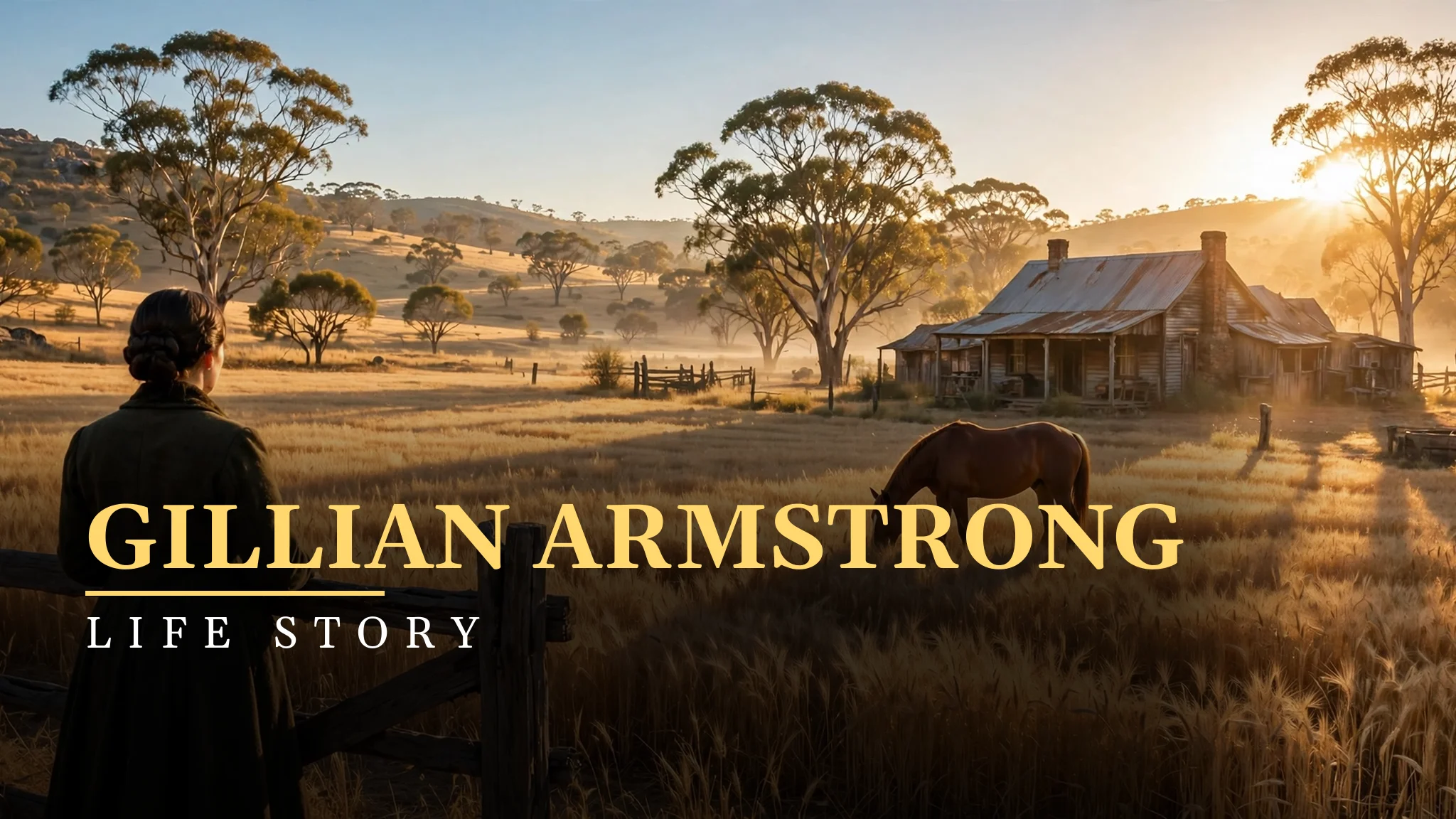
I think about the Australian bush in her films, and about how beautifully she shows it. The wide fields, the dry grass, the old farmhouses, the light that seems to come from everywhere at once: Armstrong shows Australia as a place of beauty and of hardship, a place where people must be strong to survive, and where dreams must be fought for. That is a true picture of Australia, and it is a picture that the world has learned from her films. She does not show Australia as a postcard. She shows it as a home, with all its light and all its pain.
I feel sad that women directors still have to work harder than men to be taken seriously, even today, more than forty years after My Brilliant Career. Armstrong proved herself again and again, and yet she still had to fight for each new film, for each new chance. That is not fair, and it is a reminder that the world changes slowly, even when talented people show the way. I hope that young women who read her story will see that the fight is worth it, and that the work they do will make the path easier for the next person.
I also think about her partnership with Judy Davis, because it is one of the great partnerships in Australian film. Davis is a strong and fearless actor, and Armstrong knew how to give her room to be herself. Together, they created characters who were unforgettable, from Sybylla to the mother in High Tide. That partnership tells me something about Armstrong as a director. She does not try to control her actors. She listens to them, she trusts them, and she lets them bring their own truth to the role. That is a generous way to direct, and it is why her films feel so alive.
For a young reader, I think the lesson of Gillian Armstrong is to tell the story that only you can tell, and to tell it with care. Do not try to copy someone else. Find the story that matters to you, whether it is about a girl in the bush, about four sisters, or about a costume designer who was forgotten by history, and tell it as well as you can. Work hard, learn your craft, and do not give up when people tell you that you cannot do it. Armstrong was told many times that a woman could not direct, and she proved them wrong, film by film.
I also think her story teaches us about the value of patience. She did not become famous overnight. She studied, she made short films, she worked in television, and she built her career slowly, step by step. That patience is rare, and it is beautiful. In a world where everyone wants to be famous quickly, Armstrong shows that a long and careful career, built on good work, is worth more than a quick success. Her films have lasted, because they were made with time, with thought, and with love.
When I look at the whole of her career, I see a woman who has told stories about women, about Australia, and about the human heart, for more than fifty years. She has made films that have won awards, films that have made money, and films that have changed lives. She has also taught, mentored, and supported others, and that work will last even longer than her films. That is a full and generous life, and it is one that deserves to be remembered.
I will remember her as a Melbourne girl who loved film, who studied hard, who made a film about a brave young woman, and who became a brave woman herself. She did not shout, she did not boast, and she did not give up. She worked, she told stories, and she opened doors. That is the best kind of success, and it is the kind that lasts, because it is built on truth, on care, and on a deep love of people.
I keep thinking about Sybylla, the heroine of My Brilliant Career, because she is still a powerful figure today. She says no to a rich husband, she says yes to her own dreams, and she is willing to be poor and alone rather than live a life that is not hers. That is a brave choice, and it is a choice that many young women still face today. Armstrong understood that, and she made a film that honoured that choice. That is why the film still matters, and why Armstrong still matters, more than forty years after it was first shown.
In the end, I believe Gillian Armstrong teaches us that a film can change the world, not by shouting, but by telling a true story well. Her films have changed the way people see Australian women, Australian life, and Australian cinema, and they have done it with beauty, with humour, and with heart. That is a legacy to be proud of, and it is one that will live on in the films she made, and in the filmmakers she inspired.
I think about the women in Armstrong’s films, because they are not the kind of women that Hollywood usually shows. Sybylla in My Brilliant Career is stubborn, funny, and unwilling to marry for money. Jo March in Little Women is brave, ambitious, and unwilling to live a life that does not fit her. The women in High Tide and in Charlotte Gray are complicated, sad, and strong, all at the same time. Armstrong shows women as they really are, not as perfect heroines, and not as victims, but as people with dreams, with faults, and with a right to choose their own lives. That is a powerful thing to show, and it is why her films have lasted, because they tell the truth about women’s lives in a way that few other directors have done.
I also think about the Australian bush in her films, because she shows it as a place of beauty and of hardship, a place where the light is bright, the land is wide, and the people must be strong to survive. In My Brilliant Career, the bush is not a postcard. It is a home, with dust, with heat, with hard work, and with dreams that must be fought for. Armstrong understands that, because she grew up in Australia, and she knows that the land shapes the people who live on it. That understanding gives her films a sense of place that is rare, and it is why audiences in other countries can feel Australia, even if they have never been there.
I wonder about the challenges she faced as a woman director in the 1970s, when there were almost no women directing feature films, and when film sets were often unwelcoming to women. She had to prove herself every day, to her crew, to her producers, and to the press, and she did it without complaining, without making a fuss, and without losing her sense of humour. That is a quiet kind of courage, and it is one that I admire deeply, because it shows that you do not need to shout to be heard. You need to do good work, again and again, until the world has no choice but to listen.
I think about her work with Judy Davis, because their partnership is one of the great partnerships in Australian film, and it shows what can happen when a director and an actor trust each other completely. Davis is a strong and fearless actor, and Armstrong knew how to give her room to be herself, to take risks, and to find the truth in a character. Together, they created Sybylla, a character who has stayed in the minds of audiences for more than forty years, and who still inspires young women today. That is a legacy that no award can measure, but it can be felt in every young woman who watches My Brilliant Career and thinks, I can be like her, I can say no, and I can follow my dreams.
I also think about Little Women, and about why it is still loved, because it is a film about sisters, about family, and about a young woman who wants to be a writer, and those are themes that speak to people in every generation, in every country. Armstrong made the film with great care, with warmth, and with a deep understanding of the novel, and she showed the March sisters as real girls, with real hopes and real fears, not as perfect characters from a book. That is why the film still works, and why it is still watched by families today, more than thirty years after it was made.
I think about the documentary Women He’s Undressed, because it shows a different side of Armstrong, a director who is interested in hidden stories, in people who have been forgotten, and in the beauty of a life lived in the shadows. Orry-Kelly was a gay Australian man who worked in Hollywood, who won three Oscars, and who had to hide who he was, and Armstrong told his story with love, with research, and with a sense of justice. That film is a reminder that history is full of people who deserve to be remembered, and that a good director can bring them back to life, even after they have been forgotten.
In the end, I believe Gillian Armstrong will be remembered as a pioneer, a storyteller, and a teacher, a woman who opened doors for others, who told women’s stories with care, and who made films that have lasted for more than fifty years. Her work is not loud, and it is not flashy, but it is true, and it is beautiful, and it has changed the way people see Australian women, Australian life, and Australian cinema. That is a legacy to be proud of, and it is one that will live on in her films, and in the filmmakers she inspired, for many years to come.
Frequently Asked Questions
Why is My Brilliant Career so important in Australian film history?
My Brilliant Career from 1979 was based on the novel by Miles Franklin and told the story of Sybylla Melvyn, a young woman in the bush who wants to be a writer. The film made Gillian Armstrong famous, it was shown at Cannes, and it proved that a woman could direct a large and successful Australian feature film.
What is Little Women about in Gillian Armstrong’s version?
Little Women from 1994 is based on the novel by Louisa May Alcott and follows four sisters growing up in America during the Civil War. Armstrong’s version starred Winona Ryder as Jo March, a young woman who wants to be a writer, and it became one of the most loved film versions of the story ever made.
Was Gillian Armstrong one of the first women to direct a feature film in Australia?
Yes, Armstrong was one of the first Australian women to direct a feature film, and My Brilliant Career in 1979 was a breakthrough for women in Australian cinema. She studied at the Australian Film, Television and Radio School, and her success opened doors for many women directors who came after her.
What other films did Gillian Armstrong direct in Hollywood?
After My Brilliant Career, Armstrong directed Starstruck in 1982, Mrs Soffel in 1984, High Tide in 1987, Little Women in 1994, Oscar and Lucinda in 1997, Charlotte Gray in 2001, and Death Defying Acts in 2007. She worked in both Australia and America, and she made films in many different genres.
Who did Gillian Armstrong work with most often as an actor?
Armstrong worked most often with Judy Davis, who played Sybylla in My Brilliant Career and starred in High Tide. Davis was a strong and talented actor, and their partnership created some of the most memorable female characters in Australian film history.
What is Women He’s Undressed about?
Women He’s Undressed from 2015 is a documentary by Armstrong about Orry-Kelly, an Australian costume designer who worked in Hollywood and won three Academy Awards. The film tells the story of a gay Australian man who had to hide his life in Hollywood, and it celebrates his beautiful work in film.
Is Gillian Armstrong still working in film today?
Armstrong has worked in film for more than fifty years, and she has also taught and mentored young filmmakers at film schools and festivals. She lives in Sydney, and she is still respected as one of the great directors of Australian cinema, even though she makes fewer films than she once did.


