Halit Ergenç: The Life Story Behind the Magnificent Century Star
In this post
- Istanbul, an Actor’s Son, and a Childhood on Stage
- Studying, Singing, and the Musical Stage
- Television, Binbir Gece, and Becoming Onur
- Magnificent Century and Sultan Suleiman
- After the Sultan: Films, Series, and New Roles
- Family, Marriage, and a Private Life
- A Sultan on Screen, a Gentleman Off It
- Theatre, Voice, and the Craft Behind the Sultan
- My Take:
Halit Ergenç is the actor who brought Sultan Suleiman the Magnificent to life for millions of viewers around the world, a sultan who was powerful, romantic, and human, and who made a Turkish historical drama into a global phenomenon. He played the role with a calm authority, with a deep voice, and with eyes that could be tender one moment and commanding the next, and audiences in more than fifty countries fell in love with him.
He was born in Istanbul, the son of an actor, and he grew up in the world of the theatre, learning to sing, to dance, and to perform, before he became a television star. He worked in musicals, he sang, he acted on stage, and he built his career slowly, one role at a time, until he became one of the most respected and most loved actors in Turkey.
What makes his story worth telling is how he turned a historical role into a living person, and how he carried a long-running series on his shoulders, week after week, for years, without losing the quality of his work. He is not a star who became famous overnight. He is a working actor, a singer, a husband, and a father, who has built a long career on talent, on discipline, and on a deep respect for his craft.
This is the story of a boy from Istanbul who grew up in the theatre, became a musical star, and then became Sultan Suleiman, one of the most famous characters in the history of Turkish television, and a man whose face is known in homes around the world.
Istanbul, an Actor’s Son, and a Childhood on Stage
Halit Ergenç was born on 30 April 1970 in Istanbul, Turkey, the son of Sait Ergenç, a respected Turkish actor, and he grew up in a home where theatre, film, and music were part of everyday life. His father worked in the theatre, and the young Halit spent time backstage, watching actors prepare, listening to rehearsals, and learning that acting was not magic, but hard work, with lines to learn, with costumes to wear, and with a discipline that had to be practised every day.
As a boy, he was drawn to performing, and he showed a talent for singing, for dancing, and for acting, with a strong voice and a natural presence that made people watch him. He took part in school plays, he sang, and he learned to move on stage, and his family encouraged him, because they understood the world of the theatre, and they knew that a talented child needed support, not pressure. He was a happy child, with a love for the arts that grew stronger as he got older.
He went to school in Istanbul, and he studied, but his heart was in the theatre, and he knew from an early age that he wanted to perform. He was not a boy who wanted a safe job in an office. He wanted to sing, to act, and to be on stage, and he was willing to work hard to make that happen. His father’s example showed him that a life in acting was possible, but also that it was hard, and that it demanded dedication.
The Istanbul of his youth was a lively city, with theatres, with music, and with a growing television industry, and a young person with talent could find a stage, even a small one, if he looked hard enough. Halit found those stages, in school, in youth theatre, and in musicals, and he learned what it felt like to perform for a crowd, to make people laugh, and to make them cry. Those early stages were his school, and they taught him more than any classroom could.
His father’s influence stayed with him, not only as a teacher, but as a reminder that acting is a serious profession, one that requires respect for the text, for the audience, and for the other actors. He learned that lesson young, and it became the foundation of a career that has lasted for decades, on stage, on television, and in film.
Studying, Singing, and the Musical Stage
After finishing school, Ergenç studied at Istanbul Technical University, where he studied naval architecture for a time, but his heart was not in engineering, and he soon turned to what he loved, to acting, to singing, and to the stage. He studied opera and musical theatre, and he learned to use his voice, to sing, and to perform in musicals, which are among the hardest forms of theatre, because they ask an actor to sing, to dance, and to act, all at the same time.
He worked in musicals in Istanbul, including productions of famous shows, and he earned a reputation as a talented singer and actor, with a strong voice, a good stage presence, and a discipline that directors valued. Musicals taught him stamina, because a musical actor must be ready every night, must sing live, and must dance, and must do it all with energy, and that training stayed with him when he moved to television, where long hours and hard work are also part of the job.
He also worked as a singer, performing in concerts and in shows, and he became known for his voice, which is deep, warm, and powerful, and which suits both musical theatre and dramatic acting. He was not just an actor who could sing a little. He was a singer who could act, and that combination made him stand out in a crowded field, and it gave him opportunities that other actors did not have.
In those early years, he learned the business of performing, how to audition, how to rehearse, and how to handle the ups and downs of a career in the arts, and he did it with patience, because he knew that a career is built over years, not overnight. He took small roles, he worked in the theatre, and he kept learning, and that steady work became the foundation of his later fame.
By the late 1990s and early 2000s, he was a respected figure in Turkish theatre and musicals, with a name that directors knew, and with a talent that audiences appreciated. He was still not a television star, but he was a professional, and he was ready for the chance that would change his life, when television came calling.
Television, Binbir Gece, and Becoming Onur
In the 2000s, Ergenç began to work in television, and in 2006 he was cast in the series Binbir Gece, which means One Thousand and One Nights, as Onur Aksal, a successful businessman who falls in love with a woman named Şehrazat, played by Bergüzar Korel, who would later become his wife. The series was a huge success in Turkey, and it made Ergenç a household name, because Onur was a complex character, a man who was strong and successful, but also vulnerable, and who had to learn to love and to trust.
Binbir Gece ran for three seasons, and it was watched by millions of people, not only in Turkey, but in many other countries, where it was dubbed and shown on television, and it made Ergenç famous across the Middle East, the Balkans, and Latin America. He played Onur with a calm authority, with a deep voice, and with a way of looking at Şehrazat that made audiences believe in their love, and that is a hard thing to do, week after week, for years.
The series also changed his personal life, because he fell in love with Bergüzar Korel, his co-star, and they married in 2009, becoming one of the most loved couples in Turkish show business. Their love story, which began on screen and continued in real life, made them even more popular, and audiences followed their marriage, their children, and their work with great interest and affection.
After Binbir Gece, Ergenç was a star, and he could choose his roles, but he did not rush. He took time, he chose carefully, and he waited for a role that would challenge him, and that would be worthy of his talent. He worked in film, he worked in theatre, and he kept his reputation as a serious actor, not just a television star, and that patience paid off, when the biggest role of his life came along.
Binbir Gece remains one of the most loved Turkish series of all time, and Onur remains one of Ergenç’s most remembered characters, a man who was both a businessman and a lover, both strong and tender, and who showed that Ergenç could carry a long-running series on his shoulders, with grace and with skill.
Magnificent Century and Sultan Suleiman
In 2011, Ergenç was cast as Sultan Suleiman the Magnificent in the historical drama Muhteşem Yüzyıl, known in English as Magnificent Century, a series about the Ottoman Empire in the sixteenth century, about the sultan, his wife Hürrem, his court, and his empire. It was a huge production, with lavish costumes, with grand sets, and with a large cast, and it became one of the most successful Turkish series ever made, shown in more than fifty countries, and watched by hundreds of millions of people.
Ergenç played Suleiman for four seasons, from 2011 to 2014, and he made the sultan into a living person, not a statue, a man who was powerful and wise, but also a husband, a father, and a poet, who loved, who doubted, and who made mistakes. He played the role with a dignity that suited a sultan, and with a warmth that made the audience care about him, even when he made hard decisions, and that balance is what made the series so loved.
The series was a phenomenon, and it changed Turkish television, proving that a historical drama could be a global hit, and that Turkish actors, Turkish stories, and Turkish history could speak to audiences everywhere. Ergenç became a global star, recognised in many countries, and his face, in a sultan’s turban and robe, became an image known around the world. He handled that fame with calm, and with a professionalism that earned him respect.
Playing Suleiman was hard work, with long hours, with heavy costumes, with complex dialogue, and with the pressure of playing a real historical figure whom many people revere. Ergenç prepared carefully, he studied the history, he worked with the director, and he gave the role his full attention, week after week, for years, and that dedication showed on screen, in every scene, in every look, and in every word.
When the series ended, Ergenç had become one of the most famous Turkish actors in the world, and Suleiman had become his defining role, a role that will be remembered for as long as people watch Turkish television. It was a role that only a few actors could have played, and he played it with a skill that made it look easy, which is the mark of a great actor.
After the Sultan: Films, Series, and New Roles
After Magnificent Century, Ergenç continued to work in television and film, taking on new roles that showed his range, including the series Vatanım Sensin, known in English as Wounded Love, in which he played a Turkish officer during the war of independence, a very different kind of hero from a sultan, a man who fought for his country, and who loved his family. The series was a success, and it showed that he could play a soldier, a father, and a patriot, with the same skill he had brought to Suleiman.
He also appeared in the series Babil, and in films, and he returned to the theatre when he could, because the stage remained his first love, and he never forgot the training he had received there. He was not a star who chased the biggest pay. He chose work that interested him, and he gave each role his full attention, whether it was a leading part or a smaller one, and that is the mark of a serious actor.
He also worked as a host and as a presenter, and he became a familiar face on Turkish television, not only as an actor, but as a person, with a warm, calm, and intelligent manner that viewers liked. He was not a loud celebrity. He was a professional, and he conducted himself with dignity, which is a rare thing in a world where many stars seek attention for its own sake.
In recent years, he has continued to act, to sing, and to work, and he remains one of the most respected actors in Turkey, a man whose name is associated with quality, with hard work, and with a long and successful career. He is in his fifties, and he is still at the top, still choosing roles, and still giving performances that audiences love.
His career after Suleiman proves that he was not a one-role actor. He was a versatile performer, who could play a sultan, a soldier, a businessman, and a lover, and make each one feel real, and that range is what has kept him relevant for so many years.
Family, Marriage, and a Private Life
Ergenç is married to Bergüzar Korel, the actress he met on Binbir Gece, and they married in 2009, becoming one of the most admired couples in Turkish show business. They have three children together, two sons, Ali and Han, and a daughter, Leyla, born in 2021, and they have built a family life that is warm, private, and grounded, away from the spotlight, even though they are both famous.
He has spoken about how much his family means to him, and how being a husband and a father changed his life, giving him a new sense of purpose, and a reason to work hard, not only for himself, but for his children. He is a devoted father, and he has said that his children are the most important part of his life, and he acts as if he believes it, by keeping them out of the press, and by protecting their privacy.
He and Bergüzar have worked together, and they have supported each other’s careers, which is a rare and happy thing for two actors, and their marriage has lasted for many years, through the pressures of fame, through long hours on set, and through the challenges of raising children in the public eye. They are a couple who have made it work, and that is a achievement in itself, in a world where many celebrity marriages fail.
Off screen, he is a quiet man, a husband, a father, and a neighbour, who lives in Istanbul, who goes to the theatre, and who enjoys a normal life when he is not working. He does not seek publicity, and he does not share much about his private life, and that privacy is a choice he has made, to protect his family, and to keep his work and his home separate.
For people in Turkey, he is not just a star. He is a family man, a husband, and a father, and that makes him even more loved, because audiences see in him a person they can respect, not only for his acting, but for the way he lives his life.
A Sultan on Screen, a Gentleman Off It
Looking back, Halit Ergenç’s career is a story of a boy from Istanbul who grew up in the theatre, learned to sing and to act, and became one of the most famous actors in Turkey, through hard work, through talent, and through a deep respect for his craft. He did not become famous overnight. He studied, he worked in musicals, he took small roles, and he waited for the right part, and when it came, he was ready.
His legacy is clear. He gave the world Sultan Suleiman, a character who will be remembered for as long as people watch Turkish television, he gave audiences Onur, a modern hero, and he gave Turkish theatre and television a standard of quality that other actors aspire to. He showed that a Turkish actor could be a global star, without losing his dignity, and without forgetting where he came from.
Young actors in Turkey look up to him, not only because he is famous, but because he is a professional, because he works hard, and because he treats his craft with respect. He did not become a star and then stop. He kept going, and he kept growing, and that is a lesson that lasts.
He remains, in the end, a man from Istanbul, a son of an actor, who became a sultan on screen, and a gentleman off it, and who never forgot the theatre where he learned his craft. His story is a reminder that a long career is built on talent, on discipline, and on a love for the work, and that is a story worth telling.
Today, when people watch Magnificent Century, they still see him, calm, powerful, and human, and they feel that they are in the presence of a real sultan, and a real actor. That is the best tribute an actor can receive, that his work still lives, and that it still touches people, years after it was made.
Theatre, Voice, and the Craft Behind the Sultan
Ergenç has never left the theatre, even after becoming a television star, and he returns to the stage whenever he can, because the stage is where he learned his craft, where he learned to sing, to act, and to be ready every night, without a second take, and that training, in musicals and in plays, gave him a discipline that television actors who never worked on stage often lack, a discipline of voice, of body, and of timing, that shows in every performance, on screen and off it.
He is also a singer, with a deep, warm voice, that suits both musical theatre and dramatic acting, and he has performed in concerts, in musicals, and on television, singing with a skill that surprises audiences who only know him as Suleiman, and that voice, trained in opera and in musical theatre, is a part of his power as an actor, because it carries emotion, authority, and warmth, without shouting, and it makes people listen, even when he speaks quietly.
His preparation for a role is careful and serious, and he studies the history, the character, and the text, before he steps on set, and he works with directors, with writers, and with other actors, to understand the person he is playing, and that preparation, which comes from his theatre training, is why his performances feel so solid, so believable, and so consistent, even in a long-running series, with hundreds of episodes, where many actors would grow tired, or careless.
He has also worked as a presenter and as a host, and he has shown that he can carry a live show, with real people, with real emotions, and with no script to hide behind, and that skill, of hosting, is a different one from acting, and it requires a calm, an intelligence, and a warmth, that Ergenç has, and that audiences trust, and that is why he has become a familiar face in Turkish homes, not only as an actor, but as a person.
He has mentored young actors, sharing what he learned from his father, from the theatre, and from his own career, and he has done it with patience, and with a belief that acting is a craft, not a trick, and that it must be learned, practised, and respected, and that lesson, passed on to a new generation, is a part of his legacy, even if it is not as visible as his roles on screen, because it lives in the work of others, who learned from him.
He has received awards in Turkey for his acting, including honours for Magnificent Century, and for his theatre work, and he is regarded as one of the most respected actors in the country, a man whose name is associated with quality, with hard work, and with a long and successful career, and those awards, though they are not the reason he acts, are a recognition of a lifetime of work, and a sign of the respect he has earned, from his peers, and from his audience.
Today, he continues to act, to sing, and to work, and he remains a living example of a professional actor, a man who learned his craft in the theatre, who became a star on television, and who never forgot where he started, and whose story is a reminder that a long career is built on talent, on discipline, and on a love for the work, and that is a story worth telling, for young actors, and for audiences, for a long time to come.
My Take:
I think the first thing I feel about Halit Ergenç is respect for his calm, because he played a sultan, a man with absolute power, and he did it without shouting, without showing off, and without making the character into a caricature. He played Suleiman as a human being, a husband, a father, and a poet, who happened to be a sultan, and that choice made the character feel real. I admire that restraint, because it is easy to play a king as a loud tyrant. It is hard to play him as a man.
I admire his training most of all, because he came from the musical theatre, where an actor must sing, dance, and act, all at the same time, and that training gave him a discipline that shows in his television work. He does not rush a scene, he does not overact, and he trusts his voice, his body, and his timing. That is the mark of a stage actor, and it is why his performances feel so solid, even in a long-running series with hundreds of episodes.
What moves me about his story is the way he grew up in the theatre, as the son of an actor, watching his father work, learning that acting is hard work, not magic, and then following in his father’s footsteps, but making his own name. That is a beautiful story, a son who honours his father by doing the same work, and by doing it well, and I find it warm, because it shows that a family tradition can be a gift, not a burden.
I also think about Binbir Gece, and about the way he fell in love with Bergüzar Korel on set, and married her, and built a family with her, because it is a love story that began on screen and continued in real life, and that is a rare and happy thing. Many actors play lovers and then go their separate ways. Halit and Bergüzar stayed together, and they raised children, and they supported each other’s work, and that tells me something important about his character. He is a man who commits, on screen and off it.
His role as Suleiman also stays with me, because it was a huge responsibility, to play a real historical figure whom millions of people revere, and to do it for four years, week after week, without losing the quality. He prepared, he studied, and he gave the role his full attention, and that dedication showed. I think that is a lesson for any actor, that a great role is not a gift. It is a responsibility, and it must be earned, day after day.
There is a sadness in his story too, and it is the sadness of a man who played a sultan, and who knows that power, even in a drama, comes with a price, with loneliness, with difficult choices, and with loss. Suleiman lost people he loved, he made mistakes, and he lived with the consequences, and Ergenç played that sadness with honesty. I think that honesty is what made audiences love him, because they saw a man, not a monument.
For a young actor, I think the lesson is to learn the craft properly, in the theatre, before chasing fame on television, because Ergenç studied, he sang, he danced, and he worked on stage for years, and that training saved him when he had to carry a long series. Talent without training is fragile. Training makes a person strong enough to survive long hours, hard roles, and the pressure of fame, and his story proves it.
I also learn from him that a star should be a gentleman, calm, private, and respectful, because he does not seek publicity, he does not share his family life online, and he does not make a show of himself. He works, he goes home, and he lives his life, and that quiet approach has helped him keep a long career without scandal, and without burnout. In a noisy world, that calm is a strength.
Another thing I notice is how he handled fame after Magnificent Century, when he became known in more than fifty countries, and how he did not let it change him. He did not become arrogant, and he did not chase more fame. He chose new roles carefully, he returned to the theatre, and he kept his family at the centre of his life. That is a mature way to handle success, and I respect it.
I think about his family too, and about his three children, and about the way he speaks of them with love, because it shows that he understands what matters. A career is important, but a family is more important, and he has kept that balance, even when his work took him away for long hours. That is a hard balance to keep, and I admire him for keeping it.
For a reader who has never seen Magnificent Century, I would say to watch it, not only for the costumes and the palaces, but for Ergenç’s performance, for the way he plays a sultan as a man, with love, with doubt, and with dignity, because that performance is a masterclass in acting, and it is why the series became a global hit.
In the end, I think Halit Ergenç teaches us that a great actor is not the loudest person in the room, but the calmest, the most prepared, and the most honest, and that a long career is built on talent, on discipline, and on respect for the work. He did not become famous overnight. He became famous by working hard, year after year, and by giving every role his best, and that is a legacy I would be proud of.
I keep thinking about his theatre training, because it explains so much about his television work, and about why he is so calm on camera, and why he never overacts, and I believe that a theatre actor learns something that a purely television actor does not, which is how to fill a hall with a voice, how to hold an audience for two hours without a cut, and how to trust the text, and those lessons stayed with Ergenç, even when he was acting for a camera that was only a few feet away, in a palace set, in a heavy costume.
I also think about his voice, and about how a voice can be a career in itself, because his voice is deep, warm, and powerful, and it suits musical theatre, dramatic acting, and hosting, and it is a voice that makes people listen, and trust, and that trust is a valuable thing, in a world where many voices shout, and few voices are calm, and I would listen to him read a story, or sing a song, and I mean that as a compliment, because a good voice is a gift, and he has used it well.
His preparation for Suleiman also deserves more thought, because playing a real historical figure, whom millions of people revere, is a huge responsibility, and he prepared carefully, studying the history, working with the director, and giving the role his full attention, week after week, for four years, and that dedication showed on screen, in every scene, and it is a lesson for any actor, that a great role is not a gift, but a responsibility, and it must be earned, day after day, with hard work.
I think about his father, Sait Ergenç, and about what it means to follow a parent into the same profession, and to make your own name, without living in his shadow, and I find that story warm, because it shows a son who honours his father, by doing the same work, and by doing it well, and a father who must have been proud, to see his son become Sultan Suleiman, and to know that his own work, in the theatre, had led to this, and that is a beautiful family story, about art passed from one generation to the next.
Another thought that stays with me is about his marriage to Bergüzar Korel, and about how they met on Binbir Gece, and fell in love, and built a family, because it is a love story that began on screen, and continued in real life, and that is a rare and happy thing, and it tells me something about his character, that he is a man who commits, on screen and off it, and who keeps his promises, and who builds a life, not just a career, and that is a quality I admire in any person.
I also reflect on the global success of Magnificent Century, and on what it meant for Turkish television, because it proved that a historical drama from Turkey could be watched in more than fifty countries, and could be loved by audiences who had never been to Istanbul, and Ergenç was at the centre of that change, as Suleiman, and he carried it with dignity, and with professionalism, and that is a legacy that goes beyond his own career, because it opened doors for other Turkish series, and other Turkish actors, around the world.
There is a lesson here about calm, and it is a lesson I want to remember, because Ergenç is calm, in his acting, in his interviews, and in his life, and that calm is a strength, in a noisy world, where many stars shout, and seek attention, and he does not, he works, he goes home, and he lives his life, and that quiet approach has helped him keep a long career, without scandal, and without burnout, and I think more stars should learn from him, that calm is not weakness, but power.
I think about his children, Ali, Han, and Leyla, and about the way he speaks of them with love, and about how being a father changed him, giving him a new sense of purpose, and I realise that a career is important, but a family is more important, and he has kept that balance, even when his work took him away for long hours, and that is a hard balance to keep, and I admire him for keeping it, for many years, with grace, and with love.
His work as a host also matters to me, because hosting a quiz show is a different skill from acting, and it requires a live audience, real people, and real emotions, and he does it with the same professionalism, and the same respect for the audience, that he brings to his acting, and that willingness to try new things, to learn a new skill, even when he is already a star, is a sign of a person who is not afraid to grow, and who is still learning, even in his fifties.
I also think about the future, and about young actors in Turkey, who look up to him, as an example of a professional, who learned his craft in the theatre, who became a star on television, and who never forgot where he started, and I hope they learn from him, not only about acting, but about discipline, about respect, and about the importance of preparation, because those are the qualities that make a long career, and that make an actor a legend, not just a star for a few years.
In the end, I think the extra chapter of his life, the theatre, the voice, and the craft, makes his story richer, because it shows a man who is not only Sultan Suleiman, but a complete actor, with a training, with a voice, and with a life in the theatre, and that completeness is what makes his career last, and what makes it worth telling, again and again, for audiences who love his work.
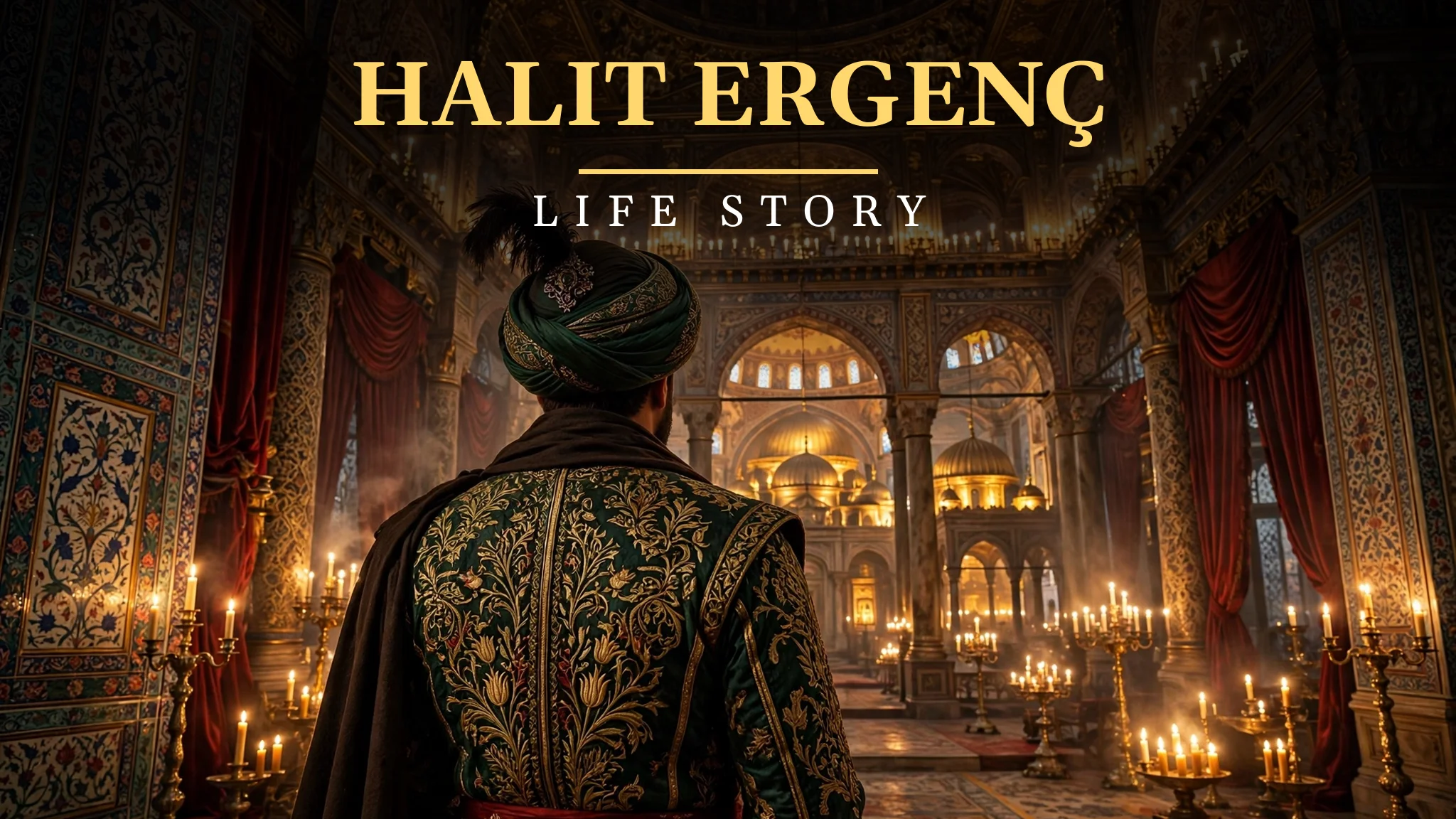
Finally, I return to the image of the palace hall, with its candles, its domes, and its tiles, because that image captures his story, a man in a sultan’s robe, in a grand hall, with history around him, and with a calm dignity, and I hope that image stays with readers, as a picture of an actor who brought a sultan to life, with honesty, and with grace, and who will be remembered, for as long as people watch Turkish television.
I also think about the simple dignity of his performances, and about how he plays a sultan, a soldier, and a businessman, each one different, yet each one with the same calm, and the same respect for the character, and I realise that this dignity is a choice, to play a person, not a caricature, and to trust the audience to see the human being, behind the costume, and behind the title, and that choice is what makes his work last, and what makes audiences trust him, role after role, year after year.
And I think about his father, and about the theatre where he grew up, watching actors prepare, listening to rehearsals, and learning that acting is hard work, not magic, and I realise that this early lesson, learned as a boy, backstage, is the foundation of his whole career, because he never forgot that acting is a craft, that it must be learned, practised, and respected, and that is why he is still a great actor, in his fifties, when many stars have faded, because he built his career on craft, not on fame.
Frequently Asked Questions
When and where was Halit Ergenç born?
Halit Ergenç was born on 30 April 1970 in Istanbul, Turkey, the son of the actor Sait Ergenç. He grew up in the world of the theatre, and he studied musical theatre, learning to sing, dance, and act.
Who did Halit Ergenç play in Binbir Gece?
He played Onur Aksal, a successful businessman who falls in love with Şehrazat, played by Bergüzar Korel, in the series Binbir Gece, which ran from 2006. The role made him a household name, and he later married Korel in real life.
Who did Halit Ergenç play in Magnificent Century?
He played Sultan Suleiman the Magnificent in Muhteşem Yüzyıl, known in English as Magnificent Century, from 2011 to 2014. The series was shown in more than fifty countries and made him a global star.
Is Halit Ergenç married?
Yes, he is married to the actress Bergüzar Korel, whom he met on Binbir Gece, and they married in 2009. They have three children together, two sons, Ali and Han, and a daughter, Leyla, born in 2021.
What did Halit Ergenç do after Magnificent Century?
He continued to act in television and film, including the series Vatanım Sensin, in which he played a Turkish officer during the war of independence, and Babil, and he returned to the theatre when he could.
Did Halit Ergenç work in musicals?
Yes, he trained in musical theatre and worked in musicals in Istanbul before becoming a television star. That training, in singing, dancing, and acting, gave him the discipline and stamina that shaped his later work.


