Harriet Walter: The Life Story Behind the Distinguished Stage Star
In this post
Harriet Walter is one of those actors whose name may not shout from a poster, yet whose work has shaped British theatre and screen for more than fifty years. She is the kind of performer directors trust with the hardest parts, the roles that need intelligence, patience and a voice that can fill a theatre without ever sounding loud. Audiences who know her from television may think of her as a sharp and elegant presence, often playing women of power and poise, but her real home has always been the stage, where she has played Shakespeare heroines, queens and mothers with a depth that critics have praised again and again.
She was born in London into a family where acting was already part of life, and she grew up knowing that the theatre was not a fantasy but a craft that demanded study and hard work. She did not rush into fame. She trained, she joined companies, she learned her trade in rehearsal rooms and in small parts before she took on the great roles. That slow and steady path gave her a career that has lasted through changing fashions in film and television, because her skill never depended on being young or fashionable. It depended on understanding people and on bringing their feelings to life in a way that felt honest.
What makes her story worth telling is the balance she has kept between the stage and the screen, between serious classical work and popular television, and between a public career and a private life that she has guarded with care. She became a Dame, she wrote books about acting, and she kept working into her seventies with the same energy she had as a young woman. This is the story of how a London girl with theatre in her blood became one of the most respected actors of her generation, and how she did it without ever losing her own voice.
A London Childhood With Theatre in the Family
Harriet Mary Walter was born on 24 September 1950 in London, England. Her father was a doctor, and her mother came from a family with strong links to the theatre. Her uncle was the actor Christopher Lee, a man whose long career in film made him known around the world, and the family connection meant that acting was never a distant or mysterious world for Harriet. It was something real people did, with rehearsals and hard days and the joy of a good performance, and that early closeness to the work gave her a practical view of it from the start.
She grew up in London in the years after the Second World War, when the city was rebuilding and the theatre was full of life. She went to school in the city and showed an early interest in books, words and performance. She was not a child who wanted to be famous for the sake of fame. She liked stories, she liked language, and she liked the feeling of stepping into another person’s life for a time. Her family encouraged her to read and to think, and that love of words would later make her one of the finest interpreters of Shakespeare on the British stage.
As a young woman she decided to train as an actor, and she went to the London Academy of Music and Dramatic Art, known as LAMDA. There she learned the basics of voice, movement and text, and she learned how to work with other actors as part of a company rather than alone. Training at LAMDA was demanding, and it taught her discipline. She learned that a great performance does not come from one sudden moment of inspiration, but from weeks of careful work, from knowing the words so well that they feel natural, and from listening to the people on stage with her.
Those early years mattered because they set the pattern for everything that followed. Harriet Walter did not look for a short cut. She built her skill slowly, and she chose work that would teach her more. The London of her childhood, the family link to the theatre, and the training at LAMDA all gave her a strong base, and when she left drama school she was ready to join the world of professional theatre with a clear sense of what acting meant to her.
Learning the Craft in Repertory and the RSC
After drama school, Walter began her professional career in repertory theatre, the system in which actors play many different parts in a season and learn to work fast. She appeared in productions around Britain, taking on roles that stretched her and taught her how to hold an audience. Repertory work is hard, with short rehearsal times and a new play every few weeks, but it gives a young actor a wide range of experience, and Walter used those years to grow in confidence and skill.
Her great break in the theatre came when she joined the Royal Shakespeare Company, the RSC, one of the most respected theatre companies in the world. At the RSC she played many of Shakespeare’s great women, and she became known for her clear voice, her intelligence and her ability to show the inner life of a character. She played roles in plays such as Much Ado About Nothing, Twelfth Night, and All’s Well That Ends Well, and she worked with leading directors who pushed her to go deeper into the text. The RSC years gave her a reputation as a serious classical actor, and audiences began to trust that a production with Harriet Walter in it would be worth seeing.
She also worked at the Royal National Theatre, another of Britain’s great companies, and she moved between the two with ease. Her stage work in this period was not about star billing. It was about the company, the play and the story, and she was happy to be part of an ensemble when the part demanded it. That willingness to serve the play, rather than to serve herself, is one of the reasons directors kept asking her back. She was reliable, she was prepared, and she brought a fresh and thoughtful reading to every role she took on.
By the end of her early years in the theatre, Walter had built a name that meant quality. She was not yet a household face on television, but within the theatre world she was already respected. She had learned how to play comedy and tragedy, how to lead a cast and how to support one, and how to make old words sound new. That foundation would carry her through a career that moved between stage and screen for the next five decades.
Working in a company also taught her how to listen, and listening is a skill that many actors never learn. On stage she learned to watch the other actors, to take in what they were doing, and to answer it in a true way, rather than waiting for her own turn to speak. That habit made her a generous partner on stage, and it is one of the reasons other actors liked working with her. She understood that a play is a shared thing, and that the best performances come when everyone in the room is paying attention to each other.
Screen Work and a Wider Audience
Walter’s work on screen began with television and film parts that grew steadily in size. She appeared in British television dramas and in films, often playing intelligent and strong-minded women. One of her early film roles was in the film The Good Father, and she later appeared in Sense and Sensibility in 1995, playing Fanny Dashwood, a sharp and selfish character who stands in the way of the heroines. The film was a great success, directed by Ang Lee and written by Emma Thompson, and it brought Walter to a much wider audience around the world.
She also appeared in films such as The Young Victoria, Atonement, and Star Wars: The Force Awakens, in which she played Dr Kalonia, a small but memorable part in one of the biggest films ever made. Each of these roles showed a different side of her. In period drama she could be cold and correct, in modern drama she could be warm and funny, and in a science fiction film she could bring gravity to a brief scene. She never tried to steal a film. She made her character real, and that was enough to make people remember her.
On television she took on a wide range of parts, from period drama to modern series. She appeared in Downton Abbey in a guest role, and she later became known to a new generation for her work in the series Succession, where she played Lady Caroline Collingwood, the mother of the Roy children. The part was small in screen time but large in effect, because her character’s coldness and charm helped to explain the damage in the family. Viewers who had never seen her on stage suddenly knew her face and her voice, and they understood why she was so respected.
Her screen career shows how a stage actor can move into film and television without losing what makes her special. She did not change her style to fit the camera. She brought the same care, the same clear speech and the same thoughtfulness to a television studio that she brought to a theatre. That is why her screen performances feel solid and true, even when she has only a few scenes to make her mark.
Mary Stuart, Awards, and the Peak of the Stage
One of the high points of Walter’s stage career came with her performance in Mary Stuart, Friedrich Schiller’s play about Mary, Queen of Scots, and Elizabeth I. She played Mary opposite Janet McTeer as Elizabeth, and the production was a great success in London and later on Broadway in New York. The two actors were praised for their power and their clarity, and the play showed how two strong women could hold a stage together without one overshadowing the other. It was the kind of work that reminded audiences why live theatre still matters.
She won major awards for her stage work, including the Laurence Olivier Award for Best Actress, one of the highest honours in British theatre. She was also nominated for other Olivier Awards and for a Tony Award for her work on Broadway. These honours were not given for one lucky performance. They were the result of years of steady work, and they confirmed what theatre audiences had known for a long time: Harriet Walter was one of the finest stage actors of her generation.
During these years she also began to write about acting. Her book Other People’s Shoes, published in 2003, looked at the lives of Shakespeare’s women from the inside, drawing on her own experience of playing them. She followed it with Facing It, a book about her own life and about the deaths of people close to her. Writing gave her another way to think about her craft, and it showed a different side of her mind: reflective, honest and willing to look at the hard parts of a life in the theatre.
The peak of her stage career was not one single night. It was a long period in which she could choose the roles she wanted, work with the best directors, and play the great parts of classical theatre. She had earned that freedom by decades of work, and she used it well. She took on roles that were difficult, she played women who were complicated, and she kept her standards high even when easier work was on offer.
Loss, Honesty, and a Life Beyond the Stage
Walter’s private life has had its share of sorrow, and she has spoken about it with a rare honesty. She was in a long relationship with the actor Peter Blythe, who died in 2004, and she later married the actor Guy Paul in 2011. Guy Paul died in 2015, and Walter wrote about grief and about the loss of people she loved in her books and in interviews. She did not hide the pain, and she did not turn it into a story for attention. She wrote about it because it was part of her life, and because other people who have lost someone might find comfort in knowing they are not alone.
She has also spoken about the pressures on women in acting, about age, and about the way older women are often given smaller and less interesting parts. She has argued that older women have rich inner lives and deserve roles that show that, and her own career has proved the point. She has kept playing complex women into her seventies, and she has shown that an actor does not stop being interesting when she stops being young.
Her decision to write about her own life was a brave one, because actors are often expected to keep their private lives hidden. Walter chose to be open about grief, about love, and about the work of acting, and that openness has made her writing valued by readers who may never have seen her on stage. She has shown that a life in the theatre is not only about applause. It is also about the people you love, the losses you carry, and the way you keep going.
Through these hard years she kept working, and her work did not become bitter or tired. If anything, it became deeper. The experience of loss gave her performances a new weight, and audiences could feel it. She brought to her later roles a sense of a life fully lived, with joy and sorrow both present, and that is one of the reasons her later work has been so moving.
Succession, Later Roles, and a Damehood
In her later years Walter reached a new and wider audience through television. Her role as Lady Caroline Collingwood in Succession, the hit series about a rich and damaged media family, introduced her to viewers around the world who had never been to the theatre. Her character appears in only a few episodes, but her presence is felt throughout the series, because she is the mother whose coldness helps to explain her children’s behaviour. Walter played her with a calm and elegant cruelty that made the part unforgettable.
She also appeared in the series Killing Eve, in the film The Last Duel, and in other recent productions, always bringing the same care to a small part that she brought to a leading role. She worked in the series Ted Lasso in a guest role, and she continued to return to the stage when a part called to her. Her later career shows a performer who is still curious, still willing to try new kinds of work, and still able to surprise an audience.
In 2011 she was made a Dame Commander of the Order of the British Empire, a DBE, for her services to drama. The honour recognised a lifetime of work on stage and screen, and it placed her among the most honoured actors in Britain. She accepted it with grace, and she continued to work as she always had, choosing roles that interested her and giving her best to each one. A title did not change her. It simply marked what the theatre world had known for years.
Her later years have also included teaching and speaking about acting, and she has become a mentor figure for younger actors. She has shown them that a career can be built on skill and patience, that classical theatre still matters, and that an actor can have a long and full working life. Her example is a quiet one, but it is a strong one, and many younger performers look to her as proof that the work itself is the reward.
A Legacy Built on Craft and Courage
Harriet Walter’s legacy is not measured in one famous film or one hit television show. It is measured in the many productions she has been part of, the many young actors she has inspired, and the many audiences who have left a theatre feeling that they understood a character better because she played her. She has been a leading light of the Royal Shakespeare Company and the National Theatre, and she has helped to keep classical theatre alive for new generations.
Her books have added to that legacy, because they give readers a way into the minds of Shakespeare’s women and into the life of an actor. They are not celebrity memoirs full of gossip. They are thoughtful and honest books about work, love and loss, and they will be read long after the productions they describe have closed. In that way she has left something lasting that does not depend on a stage or a screen.
She is also remembered for her courage in speaking about age and about grief, and for her refusal to accept small and dull roles for older women. She has shown that a woman in her seventies can be powerful, funny, complex and central to a story, and that has opened doors for others. Her career is a reminder that talent does not fade with age, and that experience can make an actor better rather than weaker.
Today Harriet Walter stands as one of the great British actors of her time, a Dame, a writer, and a stage star whose work has touched audiences in theatres, cinemas and living rooms around the world. Her story is one of patience, craft and courage, and it shows that a long career built on real skill can be more lasting than a short burst of fame. She did the work, she did it well, and she kept doing it, and that is a legacy any actor would be proud to leave.
Her influence can also be seen in the way younger actors now talk about the theatre. Many of them speak of her as an example of how to build a life in acting without losing yourself, and how to keep learning even after you have won awards. She has shown that the work does not end when the applause ends, and that the next rehearsal, the next book, and the next role are all part of the same long journey.
My Take:
When I think about Harriet Walter, the first thing I feel is respect for a person who chose the hard road and stayed on it. I have seen many actors chase fame, and I have seen how fast that kind of fame can fade. Walter did the opposite. She went to drama school, she worked in repertory theatre, she joined the Royal Shakespeare Company, and she built her skill one role at a time. I admire that kind of patience, because it is not easy to do in a world that wants everything at once. She did not need to be famous at twenty. She needed to be good, and she kept working until the world caught up with her.
I think her stage work is the heart of her story, and I feel sad that many people will never see it. Television and film are easy to watch at home, but a stage performance happens once, in a room, with real people breathing the same air as the actors. Walter’s Mary Stuart, her Shakespeare heroines, and her work at the National Theatre were the kind of performances that stay in a person’s memory for years. I wish more people could have seen them, because they show what acting can be when it is done with care and with intelligence. I feel that we lose something when we only know an actor from a television screen, and Walter is a good example of that loss.
I admire the way she played Lady Caroline in Succession, because it would have been easy to make that character a simple villain. Walter did not do that. She played her as a woman who is charming, calm and cold all at once, and that made her far more frightening than a shouting monster would have been. I watched those scenes and I understood the Roy children better, because I could see where their damage came from. That is what a great actor does. She does not just play her own part. She helps the whole story make sense, and she does it in a few short scenes.
I also think about her books, and I admire her honesty in them. Many actors write books that tell funny stories about famous people, and those books are soon forgotten. Walter wrote about Shakespeare’s women as if they were real people, and she wrote about grief as if it were something we all have to face. I find that brave, because it is easier to hide behind a role than to write about your own life. She did not hide. She told the truth about losing people she loved, and she did it in a way that helps other people. That is a different kind of acting, and it takes a different kind of courage.
What saddens me in her story is the loss she has known. She lost Peter Blythe, and then she lost Guy Paul, and those losses are the kind that change a person for ever. I do not think fame or awards can make that kind of pain smaller. I respect the way she kept working after those losses, and I respect the way she wrote about them without turning them into a show. She kept going, and her work became deeper because of what she had lived through. That is a hard lesson, and it is one that I think about when I look at my own life and the losses I have known.
I think her stand on age is one of the most important parts of her story. She has said, in her own way, that older women are not finished, and that they deserve real roles. I agree with her, and I think the world of film and television is poorer when it only shows young faces. Walter in her seventies is more interesting than many young actors, because she has lived, she has lost, she has loved, and she has learned. When I see her on screen now, I see a face that tells a story, and I want to hear that story. I wish more writers would give older women the parts they deserve.
I also admire her link to Christopher Lee, not because it made her career easy, but because it shows how theatre can run through a family. She did not trade on his name. She made her own name, in her own way, and she earned her Damehood by her own work. I think that is important, because it would have been easy for people to say she had an advantage. She did have a family link, but she also had the talent and the discipline to make the most of it. A famous uncle can open a door, but only hard work can keep you in the room, and Walter stayed in the room for fifty years.
I think about what young actors can learn from her. They can learn that training matters, that repertory theatre matters, and that playing many small parts can teach you more than one big part. They can learn that Shakespeare is not old and dead, but alive and full of feeling, if you read it with care. They can learn that a career is not made in one year, but over a lifetime, and that the best work often comes later, when you have lived a little. I hope young actors look at her career and feel less afraid of taking the slow road, because the slow road can lead to a place that is strong and lasting.
I also feel that her story teaches us about the value of the theatre itself. In a time when so much entertainment is fast and loud, Walter’s work is quiet and deep. She reminds us that a play can make us think, that a single voice on a stage can change how we feel about a character, and that a good story told well is still one of the best things in life. I think we need that reminder, because it is easy to forget how powerful a simple stage and a good actor can be.
When I look at her later television work, I feel glad that a new audience has found her. Succession brought her to people who may never go to the theatre, and that is a good thing. It shows that great acting can reach people anywhere, and that a stage actor can be just as powerful on a small screen. I hope those new viewers will go and find her stage work, and her books, and learn more about her. I hope they will see that there is a whole career behind those few scenes, and that the career is worth knowing.
I think her Damehood was well deserved, but I also think it does not tell the whole story. A title is a nice thing, but the real honour is the respect of other actors and the love of audiences who have seen her work. Walter has both of those things, and they are harder to earn than a title. She earned them by showing up, by learning her lines, by listening to her fellow actors, and by giving her best to every part, whether it was a queen on stage or a mother on television.
I also think about her writing, and I wish more actors would write like she does. Her books are not full of gossip. They are full of thought. They show how an actor thinks about a character, how she finds the feelings in old words, and how she lives with the hard parts of life. I think that kind of writing helps all of us, not just actors, because it shows how to look at a person with care and how to understand why they do what they do. That is a skill we all need, in our own lives and in our work.
In the end, I think Harriet Walter’s story is about staying true to the work. She did not chase fame, she did not chase money, and she did not chase the easy roles. She chased good work, and she found it, again and again, for more than fifty years. She lost people she loved, she faced the limits of age in a hard business, and she kept going. I admire her for that, and I think her life is a lesson for anyone who wants to do something well: learn your craft, be patient, be honest, and keep doing the work even when no one is watching. That is how a real career is made, and that is how a real legacy is left.
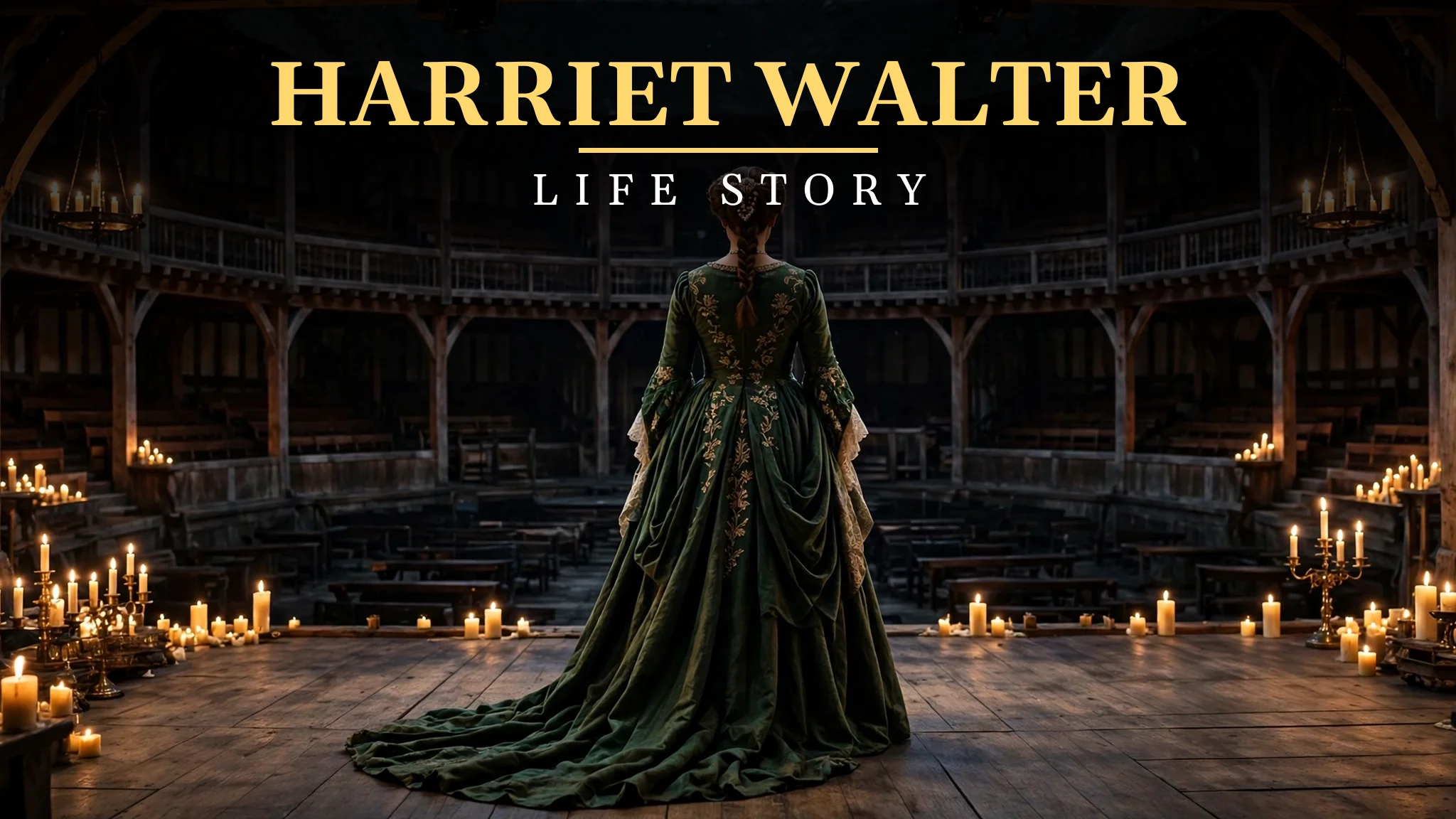
One more thought stays with me, and it is about the quiet power of her voice. I have heard many loud actors, and I have forgotten most of them. Walter’s voice is clear and calm, and it stays with you. It is the voice of a person who has read the words, understood them, and made them her own. I think that is the best kind of acting, and the best kind of life: not loud, not showy, but true. When I think of her standing on a candlelit stage, in a green dress, facing an old theatre, I think of a person who belongs there, and who has earned her place there by a lifetime of honest work.
I also think about how hard it must have been to keep choosing the stage when television paid more and reached more people. The theatre is cold in winter, the pay is often low, and the audience is small compared with a television audience. Walter kept choosing it anyway, because she loved the work itself. I admire that choice, because it tells me she was not working for the size of the crowd. She was working for the truth of the play, and for the feeling of being in a room where a story is told live. That kind of love for the work is rare, and it is the reason her career has lasted so long.
Another thing I keep coming back to is her refusal to play small. She did not accept the idea that a woman of a certain age should sit quietly in the corner of a story. She played queens, mothers, and women of power, and she played them as full people with minds of their own. I think that matters for every woman who watches her, because it shows that a life does not get smaller as you get older. It can get wider, deeper, and more interesting, if you keep learning and keep working.
I also feel that her story is a warning against judging an actor by one role. If you only know her as Lady Caroline, you miss the Shakespeare heroines, the books, and the fifty years of stage work. If you only know her from a film, you miss the voice that filled a theatre. I think we should look at a whole career, not just the most famous part of it, because the whole career tells the truth about a person. Walter’s whole career tells me she is patient, brave, honest, and deeply skilled, and that is a far better picture than any single role could give.
Finally, I think her life shows that grief does not have to end a career, and that work can be a way through sorrow. She lost people she loved, and she kept working, kept writing, and kept acting. She did not pretend the pain was not there. She carried it with her, and she let it make her work deeper. I find that moving, because it is a lesson for all of us: we cannot stop loss from coming, but we can choose what we do after it comes, and Walter chose to keep creating, kept helping others through her writing, and kept standing on stage with grace. That choice, made again and again over many years, is what I will remember most about her.
Frequently Asked Questions
How did Harriet Walter first become known as a stage actor?
She trained at LAMDA and then worked in repertory theatre before joining the Royal Shakespeare Company, where her performances in Shakespeare plays built her reputation as a serious classical actor.
Which part brought Harriet Walter to a new television audience late in life?
She played Lady Caroline Collingwood, the mother of the Roy children, in the series Succession, a small but powerful role that introduced her to viewers around the world.
What did Harriet Walter play in Sense and Sensibility?
She played Fanny Dashwood, the sharp and selfish sister-in-law who makes life hard for Elinor and Marianne Dashwood in the 1995 film directed by Ang Lee.
Has Harriet Walter written books about acting?
Yes, she wrote Other People’s Shoes about Shakespeare’s women and Facing It about her own life and grief, both praised for their honesty and clear thinking about the craft.
Why was Harriet Walter made a Dame?
She was made a Dame Commander of the Order of the British Empire in 2011 for her services to drama, recognising a lifetime of work on stage and screen.
Was Harriet Walter related to Christopher Lee?
Yes, Christopher Lee was her uncle, and she grew up in a family where theatre and film were part of everyday life, though she built her own career through training and hard work.
What was her acclaimed stage role in Mary Stuart?
She played Mary, Queen of Scots, opposite Janet McTeer as Elizabeth I, in a production that was a great success in London and later on Broadway.


