Hideki Matsuyama: The Life Story Behind Japan's Golf Pioneer
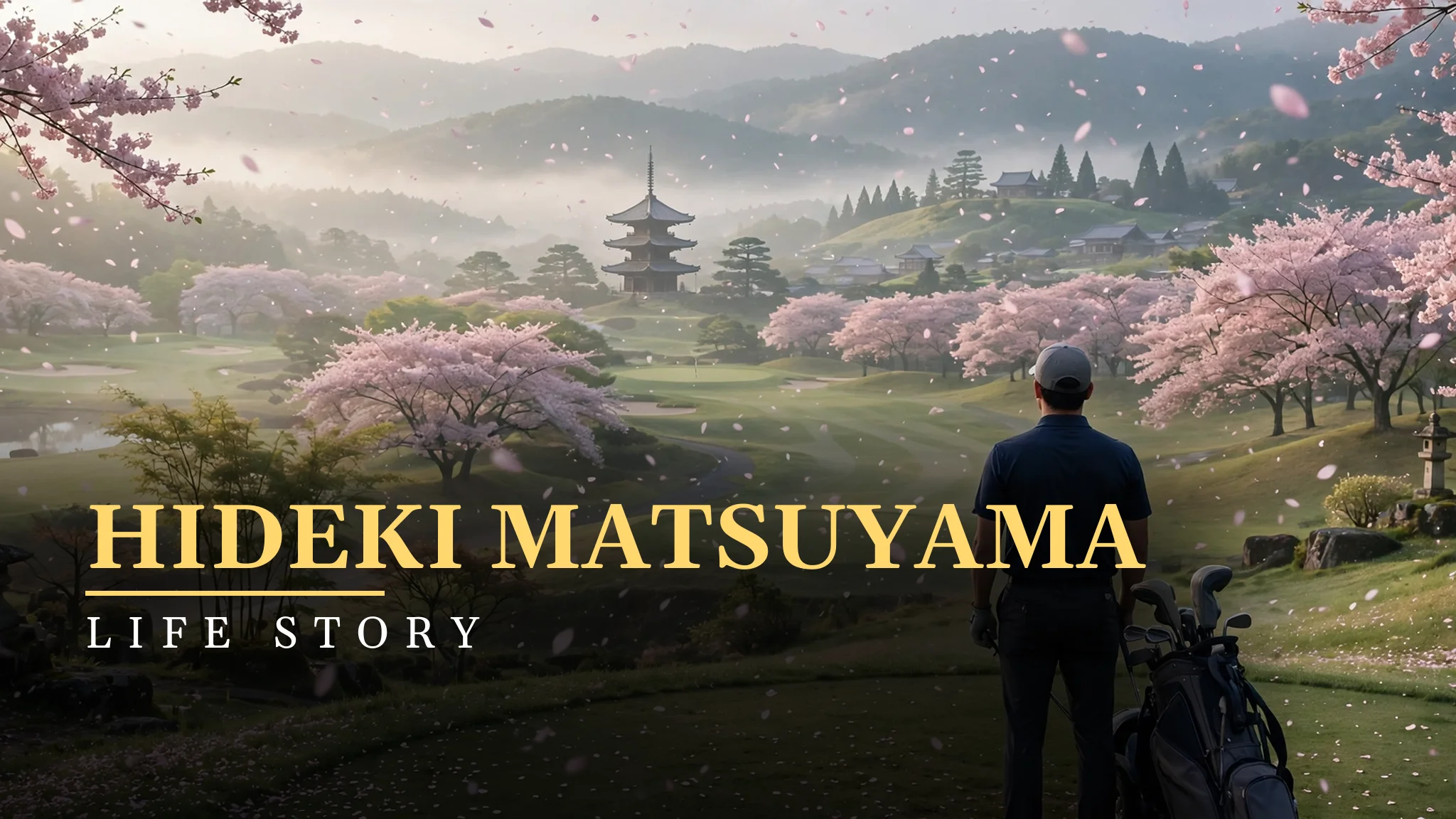
In this post
- A Four-Year-Old in Matsuyama Who Loved Golf
- Turning Professional and Winning in America
- The 2021 Masters and Japan’s First Green Jacket
- Olympic Bronze, More Wins, and a Record Round
- What a Quiet Pioneer Gives to Japan
- The Presidents Cup, the Swing, and a Golfer Who Represents Asia
- Injuries, a Record Round, and a Golfer Who Keeps Winning
- My Take:
Hideki Matsuyama is a quiet man in a loud sport. He does not talk much, he does not show off, he does not celebrate loudly, and he does not seek attention. He plays golf, he plays it very well, and then he goes home, and that is enough for him. But in April 2021, at the Masters in Augusta, Georgia, his quiet game made a very loud noise in Japan, because he became the first Japanese man ever to win a major championship, and the first Japanese man ever to wear the green jacket. It was a moment that millions of people in Japan had waited for, for decades, and it was a moment that a quiet man from Ehime, on the island of Shikoku, gave to his country, with a calm and a grace that made it even more special.
He was born in Matsuyama, a city in Ehime, and he started playing golf when he was four years old, taught by his father, and he grew up loving the game, and working at it, day after day, year after year. He went to university in Sendai, at Tohoku Fukushi University, and he won the Asia-Pacific Amateur Championship twice, and he played in the Masters as an amateur, and he was the low amateur in 2011, and people in Japan began to say that he might be the one, the golfer who would finally win a major for Japan. He turned professional in 2013, and he won in Japan, and he won in America, and he became one of the best players in the world, and in 2021, he did what no Japanese man had done before.
His story is a story about patience, about quiet work, and about a man who does not need to shout to be great. He is a private man, and he keeps his family life private, and he does not talk about himself much, and that makes him a difficult golfer to write about, because there is not much drama to tell. But there is a great deal of golf to tell, and a great deal of history, and a great deal of pride, and those are enough. He is Japan’s golf pioneer, and he is still playing, and still winning, and his story is still being written.
A Four-Year-Old in Matsuyama Who Loved Golf
Hideki Matsuyama was born on 25 February 1992 in Matsuyama, a city in Ehime Prefecture, on the island of Shikoku, in Japan. His father, Mikio Matsuyama, was a keen golfer, and he took his young son to the golf course, and Hideki started playing when he was only four years old. It was a very young age to start, and it was a sign of how much his father loved the game, and how much he wanted his son to love it too. Hideki did love it, and he played whenever he could, and he practised, and he improved, and he became a good junior golfer, and then a great one.
He went to school in Matsuyama, and he played junior golf in Japan, and he won titles, and he was selected for Japanese national teams, and people in Japanese golf began to notice him. He was a quiet boy, and a serious one, and he did not talk much, but on the course, he was focused, and he played with a precision that surprised older players. He had a swing that was strong and repeatable, and he had a short game that was already good, and he had a mind that was calm, even when the pressure was great. He was a boy who loved golf, and who worked at it, and who did not need to be told to practise, because he wanted to practise.
He went to university in Sendai, at Tohoku Fukushi University, a school known for its golf programme, and he played college golf there, and he became one of the best amateur golfers in the world. He won the Asia-Pacific Amateur Championship in 2010 and again in 2011, a tournament that gives the winner a place in the Masters, and he played in the Masters in 2011, as an amateur, and he finished as the low amateur, the best amateur in the field, at the age of nineteen. It was a remarkable achievement, and it showed that he could compete with the best professionals in the world, even as a student.
The year 2011 was also the year of the great earthquake and tsunami in Japan, in March, a disaster that killed many people and that shook the country. Matsuyama was a student in Sendai, close to the disaster, and his university was damaged, and his life was disrupted, and he had to deal with a terrible event, as a young man, far from home. He has spoken about that time rarely, and with great respect, and he has said that it taught him about life, and about what matters, and that it made him stronger. It is a part of his story that is often overlooked, but that matters, because it shows that he is not only a golfer, but a man who has lived through a hard time, and who has come through it with grace.
Turning Professional and Winning in America
Matsuyama turned professional in April 2013, after finishing his university studies, and he won his first professional tournament in Japan, and he played in America, on the PGA Tour, and he won his first PGA Tour event in June 2014, at the Memorial Tournament in Ohio, Jack Nicklaus’s tournament, in a playoff, at the age of twenty-two. It was a wonderful win, in a tournament hosted by one of the greatest golfers ever, and it showed that Matsuyama could win in America, against the best players in the world. He was now a PGA Tour winner, and he was on his way to the top.
He won again in America, in 2016, at the Waste Management Phoenix Open, and he won it again in 2017, and he won the WGC-HSBC Champions in China in 2016, and the WGC-Bridgestone Invitational in America in 2017, and he became one of the best players in the world, reaching the world number two ranking in 2017. He was twenty-five years old, and he was the best Japanese golfer ever, and he was a star in Japan, and a respected player in America. He played in the Presidents Cup for the International team, and he was a leader of the team, and he was admired for his calm manner and his superb ball striking.
He is known for his ball striking, for the way he hits the ball, with a pause at the top of his swing that is unique, and that makes his swing easy to recognise. He hits the ball far, and he hits it straight, and he hits his irons with a precision that is among the best in golf. He is also known for his putting, which has sometimes been his weakness, and which he has worked on for years, practising for hours, trying to improve. He is a golfer who is honest about his weaknesses, and who works on them, and who does not give up, even when the work is hard.
He is a private man, and he keeps his family life private. He married his wife, Mei, in January 2017, in a ceremony that was kept secret for some months, and they had a daughter later that year, a fact that was also kept private for a time. He has said that he wants to keep his family out of the public eye, and that he wants to protect them, and that is a reasonable wish, and it is one that most people respect. He is a father, and a husband, and a golfer, and he keeps those parts of his life separate, and he does it with a quiet dignity that is very Japanese, and very admirable.
The 2021 Masters and Japan’s First Green Jacket
The Masters in April 2021 was the greatest week of Matsuyama’s life, and one of the greatest weeks in Japanese sporting history. He played brilliantly all week at Augusta, and on Saturday, he made a wonderful round, with birdies and an eagle, and he took a four-shot lead into the final round. On Sunday, he played steadily, and he held his nerve, even when the pressure came, and he won by one shot, becoming the first Japanese man ever to win the Masters, and the first Japanese man ever to win a major championship. It was a historic win, and it was watched by millions of people in Japan, who stayed up through the night to see it, and who celebrated when he won.
He did not celebrate loudly. He bowed to the course, he smiled quietly, and he accepted the green jacket with grace, and he spoke in Japanese and in English, and he thanked his team, and his family, and his country. It was a quiet celebration, but it was a joyful one, and it meant a great deal to Japan, a country that loves golf, and that had waited for a major champion for a long time. Japanese golfers had come close before, and had never won, and Matsuyama changed that, in one Sunday in April, with a calm and a precision that was his trademark.
The win also had a beautiful moment after the final round, when his caddie, Shota Hayafuji, bowed to the eighteenth green at Augusta, in a gesture of respect for the course, and for the game. The picture of Hayafuji bowing became famous around the world, and it showed the respect that Japanese golfers have for the game, and for the courses they play on. It was a moment of grace, and it was a moment that people remembered, even more than the win itself, because it showed the character of the man and his team.
Matsuyama’s win was also a win for Asia, and for golf in Asia, and it showed that a golfer from Japan could win the biggest tournament in the world. He became a hero in Japan, and he was welcomed home as one, and he has carried that honour with humility ever since. He does not boast about it. He simply says that he was lucky to be the one, and that he hopes other Japanese golfers will win majors too. That is a humble way to be a champion, and it is a Japanese way, and it is one that people respect.
Olympic Bronze, More Wins, and a Record Round
After his Masters win, Matsuyama kept playing, and he kept winning. He won the ZOZO Championship in Japan in 2021, in front of his home crowd, and he won the Sony Open in Hawaii in 2022, in a playoff, and he won the Genesis Invitational in Los Angeles in 2024, and the FedEx St Jude Championship in 2024, and the Sentry tournament in Hawaii in January 2025, where he shot a record score of thirty-five under par, the lowest score in PGA Tour history in relation to par. It was a remarkable round, and a remarkable tournament, and it showed that his game was still at its best, even after his Masters win, and even after injuries that had troubled him.
He also won a bronze medal at the Olympic Games in Paris in 2024, finishing third in the men’s golf tournament, behind Scottie Scheffler of America and Tommy Fleetwood of England. It was a wonderful achievement, to win an Olympic medal for Japan, and to do it in Paris, in front of a global audience, and he wore the bronze medal with pride. He had also played in the Olympics in Tokyo in 2021, in his home country, and he had finished fourth, just missing a medal, and the bronze in Paris was a reward for his patience, and for his hard work, and for his love of playing for Japan.
He has had injuries, including trouble with his neck and his wrist, and he has missed tournaments, and he has played in pain, and he has worked hard to come back. He is a golfer who does not complain, and who does not make excuses, and who simply works, and plays, and wins, when he is fit. He is now in his early thirties, and he has won eleven times on the PGA Tour, and he is Japan’s greatest golfer, and one of the best golfers in the world. His story is still being written, and the next chapter could be another major, or another win, or another Olympic medal, and golf fans in Japan, and around the world, hope it is a good one.
He remains a quiet man, and a private man, and a man who loves golf, and who plays it with a calm and a precision that are his trademark. He is a pioneer for Japan, and for Asia, and he has opened doors for young Japanese golfers who dream of winning a major, and who now know that it is possible, because Matsuyama did it. That is a fine legacy, and it is one that will last, long after his playing career is over.
What a Quiet Pioneer Gives to Japan
Matsuyama’s story teaches us about quiet strength, and about the value of working without shouting. He does not talk much, he does not show off, and he does not seek attention, but he works hard, and he wins, and his wins speak for themselves. That is a lesson for anyone who is quiet, and who feels that they need to be loud to succeed. You do not need to be loud. You can be quiet, and you can work, and you can win, and Matsuyama is proof of that. He is a quiet man, and he is a great golfer, and those two things go together in his story.
He also teaches us about patience, and about waiting for the right moment. Japan waited for a major champion for decades, and Matsuyama was the man who finally won it, at the age of twenty-nine, after years of trying. He did not win it by luck. He won it by playing well, by holding his nerve, and by believing that he could do it. That is a story that gives hope to anyone who is waiting for something good to happen. Good things can happen, if you keep working and keep believing, and Matsuyama is proof of that.
His respect for the game, shown by his caddie’s bow at Augusta, also teaches us about manners, and about honouring the places we play, and the people we play with. Golf is a game of manners, and Matsuyama plays it with manners, and that is a fine thing. He bows, he thanks, he respects, and he does it without fuss, and that is a Japanese value, and a human value, and it is one I admire.
The Presidents Cup, the Swing, and a Golfer Who Represents Asia
Matsuyama has played in the Presidents Cup for the International team many times, and he has been a leader of the team, and a mentor to younger players, and he has been respected for his calm manner, and for his superb ball striking. The Presidents Cup is a team event, where the International team, made up of players from outside America and Europe, plays against the United States, and it is a difficult event, because America has won most of the time, but Matsuyama has played in it with pride, and with passion, and he has won points, and he has supported his teammates, and he has shown that he cares about playing for something larger than himself. He is a team player, in a sport that is mostly individual, and that makes him a valuable member of any team, and a popular figure among his teammates, and among fans in Asia, and around the world.
His swing is one of the most recognisable in golf, with a pause at the top, a moment of stillness, before he swings down, and hits the ball with power, and with precision. It is a unique swing, and it is a swing that coaches admire, because it is strong, and repeatable, and it has carried him to the top of the world, and kept him there, for more than a decade. He hits the ball far, and he hits it straight, and he hits his irons with a precision that is among the best in golf, and he is known as one of the best ball strikers in the world, a golfer who can hit the ball where he wants it to go, even under pressure, and even on the hardest courses. That skill is a large part of why he has won so much, and why he is respected by other golfers, who know how hard it is to hit the ball as well as Matsuyama does.
He is also a golfer who represents Asia, and Japan, on the world stage, and who carries the hopes of millions of people in Japan, and in Asia, wherever he plays. He does not talk about that pressure much, but it is there, and he handles it with a calm, and a grace, that are admirable. He is a pioneer, not only for Japan, but for Asia, and he has opened doors for young golfers in Japan, and in Asia, who dream of winning a major, and who now know that it is possible, because Matsuyama did it. That is a fine legacy, and it is one that will last, long after his playing career is over, because the young players he inspires are now coming through, and they carry his example with them.
Injuries, a Record Round, and a Golfer Who Keeps Winning
Matsuyama has had injuries, including trouble with his neck, and his wrist, and his back, and he has missed tournaments, and he has played in pain, and he has worked hard to come back, and he has done it with a quiet discipline, and without complaint, and without making excuses. He is a golfer who does not talk about his injuries much, and who does not use them as an excuse, and who simply works, and plays, and wins, when he is fit, and when he is healthy. That is a admirable way to handle injury, and it is a lesson for anyone who has had to deal with pain, and with a body that lets them down. You work, you recover, and you come back, and you do not complain, and Matsuyama does that, and he is respected for it.
In January 2025, at the Sentry tournament in Hawaii, he shot a record score of thirty-five under par, the lowest score in PGA Tour history in relation to par, over four rounds, and he won the tournament by three shots, and he showed that his game was still at its best, even after his Masters win, and even after injuries, and even at the age of thirty-two. It was a remarkable performance, and it was a reminder that Matsuyama is not a one-major wonder, but a player who can win, again and again, in different places, and in different conditions, and who is still one of the best golfers in the world. He won the Genesis Invitational in 2024, and the FedEx St Jude Championship in 2024, and the Sentry in 2025, and he is still winning, and still competing, and still a threat in every tournament he plays in.
He remains a quiet man, and a private man, and a man who loves golf, and who plays it with a calm and a precision that are his trademark. He is Japan’s greatest golfer, and one of the best golfers in the world, and his story is still being written, and the next chapter could be another major, or another win, or another Olympic medal, and golf fans in Japan, and around the world, hope it is a good one, because Hideki Matsuyama at his best is a joy to watch, and a credit to the game, and a pioneer who has changed golf in Japan, and in Asia, forever.
My Take:
I think Hideki Matsuyama is the golfer in this group who teaches the most about quiet strength, and I mean that as a high compliment. He does not shout, he does not show off, he does not seek attention, and he does not talk about himself much. He simply plays golf, and he plays it very well, and his golf speaks for him. I think that is a brave way to live, in a world that often rewards the loudest person in the room. Matsuyama is not loud, and he does not need to be, because his work is loud enough. His Masters win in 2021 was a loud moment, even though he celebrated quietly, because it was heard all over Japan, and all over the world. That is a powerful lesson: you do not have to shout to be heard. You can work quietly, and your work will be heard.
What I admire most about him is his patience, and his ability to wait. Japan waited for a major champion for decades, and Matsuyama waited for his moment for years, and when it came, in April 2021, he was ready. He played brilliantly on Saturday, he held his nerve on Sunday, and he won by one shot, and he became a hero. That is a story about being ready when the chance comes, and about not wasting the chance when it arrives. I think about that in my own life, and about the chances I have had, and whether I was ready for them. Matsuyama was ready, and he took his chance, and that is a lesson I want to remember: work, wait, and be ready, because the chance will come, and when it does, you must take it.
His caddie’s bow at Augusta is a moment I think about a lot, because it was a small gesture, and it meant a great deal. After the win, Shota Hayafuji bowed to the eighteenth green, in respect for the course, and for the game, and the picture became famous around the world. It was a moment of grace, and of manners, and of humility, and it showed the character of Matsuyama and his team. I think that is a beautiful thing, and it is a reminder that how you win matters as much as whether you win. Matsuyama won with grace, and his caddie showed grace, and that is a fine way to be a champion. I want to remember that the next time I win something, in my own small way: win with grace, and thank the place, and the people, who made it possible.
I also think about his privacy, and about the way he keeps his family out of the public eye. He married Mei, and they had a daughter, and he kept those facts private for a time, because he wanted to protect his family. I respect that. In a world where famous people share everything, Matsuyama shares very little, and that is his right, and it is a wise choice. Family is private, and it should be protected, and he protects his, with a quiet dignity that I admire. He is a father, and a husband, and a golfer, and he keeps those parts of his life separate, and he does it well, and I think that is a good example for anyone who is famous, or who wants to be famous. Protect what matters, and share what you choose to share, and do not let the world take what you do not want to give.
The earthquake in 2011 also stays in my mind, because it was a terrible event, and Matsuyama was a student in Sendai, close to it, and his life was disrupted, and he had to deal with it as a young man. He has spoken about it rarely, and with great respect, and he has said that it taught him about life, and about what matters. I think that is a true and honest thing to say. A disaster teaches you what matters, and what does not, and it makes you stronger, if you let it. Matsuyama let it make him stronger, and he went on to become a champion, and that is a story about resilience, and about the human spirit, and it is one I respect deeply.
If I had to pick one lesson from his life, it would be to work quietly, to be patient, and to be ready. Work quietly, without shouting, be patient, without giving up, and be ready, when the chance comes. Matsuyama did all three, and he won the Masters, and he became Japan’s first major champion. That is a fine legacy, and it is one that young golfers in Japan, and around the world, can learn from. You do not have to be loud to be great. You can be quiet, and you can work, and you can win, and Matsuyama is proof of that.
In the end, I think Hideki Matsuyama will be remembered as Japan’s golf pioneer, as the first Japanese man to win a major, and as a quiet man who played the game with grace. That is a remarkable legacy, and it is one he earned, not by luck, but by work, by patience, and by a swing that was built to last. I hope he wins another major, I hope he stays healthy, and I hope young Japanese golfers follow in his footsteps, because he has shown them that it is possible. The quiet boy from Matsuyama who started golf at four years old has become a hero, and he did it by being himself, and by working hard, and that is a fine thing to have done.
I will finish by saying that his story reminds me to be quiet when I need to be quiet, to work when I need to work, and to respect the game, and the people, and the places, that make my life possible. Matsuyama bows, he thanks, he respects, and he wins, and those four things go together in his story. I want to carry a little of that with me, in my own life, and I hope other people do too. The cherry blossom golfer from Japan is a champion, and a gentleman, and a pioneer, and he is a man worth remembering.
I keep thinking about his record round at the Sentry in 2025, when he shot thirty-five under par, the lowest score in PGA Tour history, and about what it must have felt like to play four rounds of golf, and to make birdie after birdie, and to know that you were making history, even as you were playing. That is a wonderful feeling, and it is a reminder that a golfer can still surprise the world, even after winning a Masters, and even after injuries, and even at the age of thirty-two. Matsuyama surprised the world again, in Hawaii, in January, and he did it quietly, as he does everything, with a calm, and a precision, and a smile. I think about that when I feel that my best days are behind me, and I wonder whether I can still do something special. Matsuyama shows me that I can, and that a person can still make history, even after they have already made it once before.
There is another part of his story that stays with me, and it is his swing, with its pause at the top, a moment of stillness, before he swings down. That pause is unique, and it is a symbol of his patience, and his calm, and his belief that you do not have to rush. You can pause, you can think, and then you can act, with power, and with precision. I think about that in my own life, and about how often I rush, and how often I act without thinking, and I want to learn to pause, like Matsuyama, and to think, before I act. A pause is not a weakness. It is a strength, if you use it well, and Matsuyama uses it well, every time he swings, and every time he plays.
I also think about his injuries, and about the way he handles them, without complaint, and without making excuses. He has had trouble with his neck, and his wrist, and his back, and he has missed tournaments, and he has played in pain, and he has worked hard to come back, and he has done it quietly, and with discipline. That is a admirable way to handle pain, and it is a lesson for anyone who has had to deal with a body that lets them down. You work, you recover, and you come back, and you do not complain, and Matsuyama does that, and he is respected for it, by other golfers, and by fans, and by me.
Finally, I think about Japan, and about the millions of people who stayed up through the night in April 2021, to watch him win the Masters, and who celebrated when he won, and who felt proud, because a Japanese man had finally won a major. That is a powerful thing, to give a whole country a reason to celebrate, and to feel proud, and Matsuyama did it, quietly, and with grace, and he did it for Japan, and for Asia, and for golf. I hope young Japanese golfers read his story, and believe that they can win a major too, because Matsuyama proved that they can, and that is a gift that will last, long after his playing career is over, in the young players who follow in his footsteps, and who dream of wearing a green jacket, just as he did. I also think about the way Matsuyama represents Japan, and Asia, on the world stage, and about the pressure that comes with that, and how he handles it, with a calm, and a grace, that are admirable. He does not talk about pressure much, but it is there, in every tournament, in every round, because millions of people in Japan are watching, and hoping, and believing, and he carries their hopes with him, wherever he plays. That is a heavy burden, and he carries it lightly, by playing his game, and by being himself, and by not letting the pressure change him. I think about that when I feel pressure, in my own life, and when I feel that people are watching, and expecting, and I want to be like Matsuyama: calm, focused, and true to myself, even when the pressure is great, and even when the whole world is watching.
There is something else I want to say, about the way he started golf at four years old, and about how a father’s love can shape a child’s life, in ways that last forever. His father Mikio took him to the course, when he was only four, and he taught him to play, and he gave him a game that would become his life, and his career, and his legacy. That is a wonderful gift, for a father to give a son, and it is a gift that Matsuyama has honoured, by playing well, and by winning, and by representing Japan with pride. I think about my own father, and about what he gave me, and I am grateful, because a parent’s gift, given early, and given with love, can last a lifetime, and can change a life, just as Mikio’s gift changed Hideki’s life, from a small boy in Matsuyama, to a Masters champion, in Augusta.
I think about the earthquake in 2011, too, and about how it affected him, as a student in Sendai, close to the disaster, and how it taught him about life, and about what matters, and how it made him stronger, and more grateful, for the simple things, like health, and family, and safety. That is a hard lesson to learn, and it is a lesson that many people learn, in different ways, through hard times, and through loss, and Matsuyama learned it young, and he carried it with him, into his golf, and into his life, and it made him a better man, and a better golfer, because he understood that golf is a game, and that life is larger than a game, and that what matters most is family, and health, and the people you love.
Finally, I want to say that I hope Matsuyama wins another major, because he is a golfer who can win one, when he is playing well, and because a second major would be a fitting reward for a career that has already been historic, and for a man who has given so much to Japan, and to Asia, and to golf. He is still in his early thirties, and he still has time, and he still has the talent, and the calm, and the belief, and I believe he will win again, if his body allows it, and if his putting holds up. I will be watching, and rooting for him, because Hideki Matsuyama is a quiet champion, and a gentleman, and a pioneer, and golf is better when he is playing well, and winning, in his own way, with grace, and with a bow, and with a smile.
Frequently Asked Questions
When did Hideki Matsuyama win the Masters?
He won the Masters in April 2021, becoming the first Japanese man ever to win a major championship. He led by four shots after Saturday, held his nerve on Sunday, and won by one shot, wearing the green jacket as Japan’s first champion.
Where was Hideki Matsuyama born and when did he start golf?
He was born on 25 February 1992 in Matsuyama, Ehime, Japan, and he started playing golf when he was only four years old, taught by his father Mikio. He later studied at Tohoku Fukushi University in Sendai and won the Asia-Pacific Amateur Championship twice.
What was Hideki Matsuyama’s caddie famous for at Augusta?
After the 2021 Masters win, his caddie Shota Hayafuji bowed to the eighteenth green at Augusta, in a gesture of respect for the course and the game. The picture became famous around the world and showed the grace and manners of Matsuyama’s team.
How many times has Hideki Matsuyama won on the PGA Tour?
He has won eleven times on the PGA Tour, including the Memorial Tournament in 2014, the Phoenix Open in 2016 and 2017, the Genesis Invitational in 2024, and the Sentry in 2025, where he shot a record thirty-five under par.
Did Hideki Matsuyama win an Olympic medal?
Yes, he won a bronze medal at the Paris Olympics in 2024, finishing third behind Scottie Scheffler and Tommy Fleetwood. He had also played in the Tokyo Olympics in 2021, finishing fourth, just missing a medal in his home country.
Why is Hideki Matsuyama so private about his family?
He married his wife Mei in 2017 and they had a daughter later that year, facts he kept private for some months to protect his family from public attention. He has said he wants to keep his family life separate from his golf career, and most people respect that choice.


