How Do VAR Decisions Work? Explained Simply
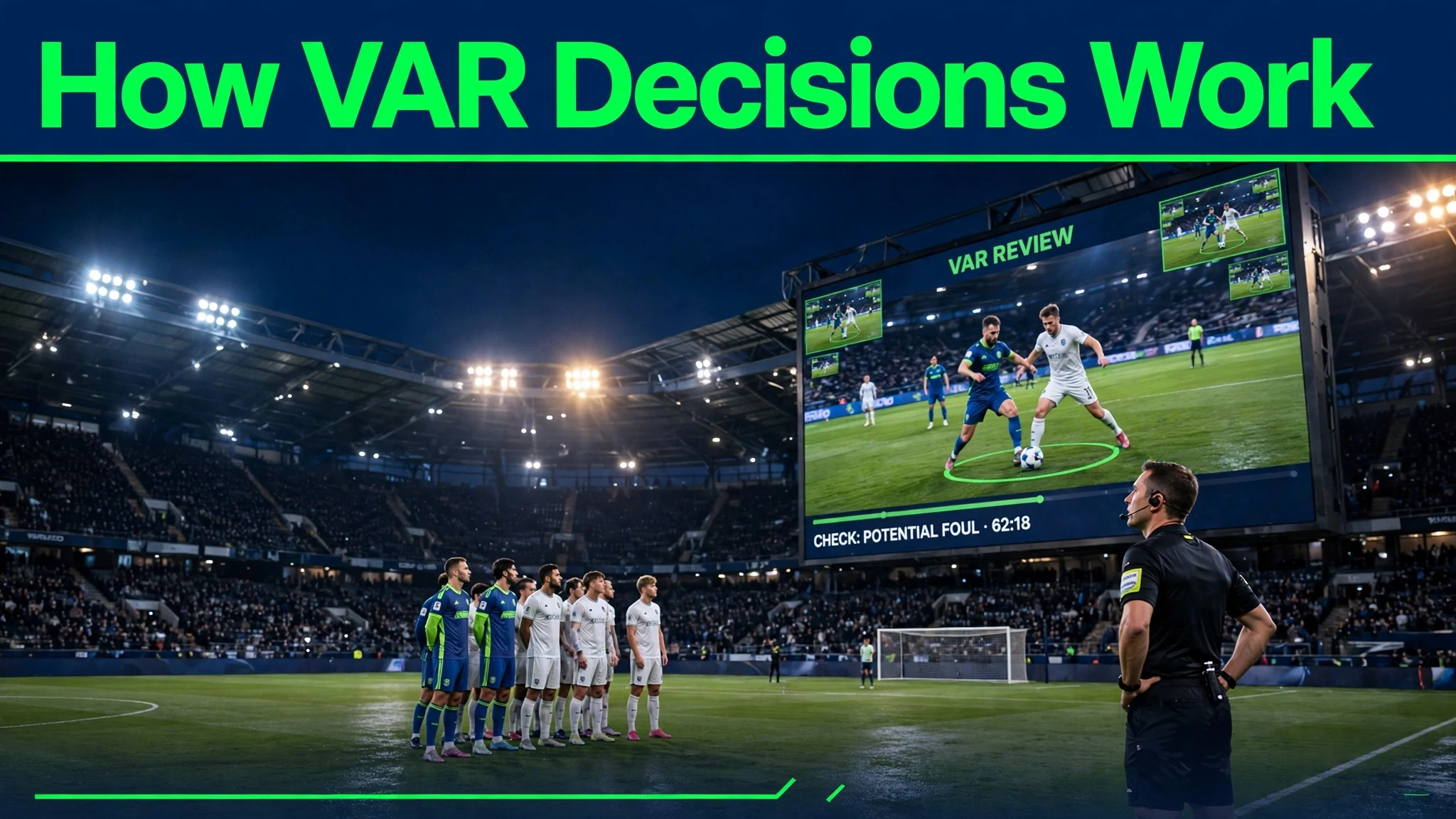
In this post
VAR, the Video Assistant Referee, is the most argued-about invention in modern football. Fans in the stadium wait in silence while a decision is checked, players stand with their hands on their hips, and a goal that was celebrated a moment ago can be taken away by a line drawn on a screen. Some people love it because it corrects clear mistakes, and others hate it because it interrupts the game and still produces arguments. Both sides have a point.
This guide explains VAR in plain language, without taking sides. It covers what VAR can and cannot check, who makes the decision, how a review actually happens, what clear and obvious means, and why offside decisions are the most controversial of all. It also explains the differences between leagues, the limits of the technology, and why, even with cameras everywhere, football still produces decisions that divide a room.
What VAR Is and What It Is Not
The plain description runs the same way: vAR is a team of video officials who watch the match on screens and help the on-field referee with key decisions. Nobody can promise a guaranteed result in how VAR decisions work, and a pundit who does deserves a raised eyebrow, yet the pattern around a VAR check is steady enough to trust. Keep your hopes about how VAR decisions work honest, measure the result for a VAR check with one plain number you can genuinely see, and tweak after a short trial instead of holding out for a flawless day that never quite turns up.
A common mistake is to overlook vAR does not referee the match, and the on-field referee remains in charge of the final decision. It is easy to overlook the clear and obvious test in how VAR decisions work, while the big goals and the loud crowds grab every glance, quiet protocol quietly banks the fairness, and the fix for how VAR decisions work is simple and cheap: put the clear and obvious test on a pocket card, glance at it before every match, and ask a fellow fan to spot the gaps.
Look closely at vAR can only intervene in four areas, which are goals, penalties, direct red cards, and mistaken identity, and the same fingerprint turns up in nearly every sharp VAR story, however different the league, which points straight at how VAR decisions work. Borrow the thinking behind a proven explainer for how VAR decisions work, steal the logic, bend it around your evenings and your screen, and keep only the bits that survive a heated derby night.
The timing thread runs through this limit too, and a free kick, a corner, or a yellow card, except in limited cases, cannot be changed by VAR. Done too early in how VAR decisions work, it feels like fussing over nothing, and too late it feels like patching a leak, so hold the middle line and move once you know enough about a VAR check to move, yet before the whistle crowds your thinking. Pencil a date in for a VAR check, even a scribbled one, and hold that date as a promise you made to how VAR decisions work rather than a cloudy wish.
The Four Situations VAR Can Check
What surprises many people about goals are checked for offside, handball, and fouls in the build-up, because a goal must be legal to stand is how deeply it leans on tiny daily habits instead of one grand choice, and a few honest minutes with a VAR check before each match, a scribbled note, or one quiet word about how VAR decisions work can matter more than any heroic call, and those tiny habits stack up across the weeks. Start with the habit itself around how VAR decisions work, keep it small enough to repeat on a tired evening, and let the bigger payoff for a VAR check follow from steady weekly repetition.
Finally, remember that penalty decisions, both given and not given, can be reviewed when a clear error may have happened is a starting point to test against your own eyes, not gospel. When a call suits a VAR check, keep it, polish it slowly, and when it rubs wrong against how VAR decisions work, tweak the call, never bin the thinking behind it. The fans who squeeze most from how VAR decisions work are rarely the fans who tick every box, but the ones who watch a VAR check, learn from the opening try and sharpen the next one.
Direct red card incidents can be checked, while a second yellow card cannot be reviewed in most competitions. That matters more in how VAR decisions work than fans admit, because one small call here steers everything after it for a VAR check, and a wrong call here is repaid later, quietly, in wasted evenings and dented belief. The sharp move in how VAR decisions work is to try it on one honest replay, watch what the footage actually shows with a VAR check, and only then go all in, never on a headline or one loud tip.
Start with this: Mistaken identity, when the wrong player is punished, is the rarest but simplest type of VAR intervention. In how VAR decisions work, it seldom looks showy, and it turns up in plain moments, a replay, a deadline, a call made tired, and those plain moments are where the payoff for a VAR check is truly settled. Viewers who stop here in how VAR decisions work, write down what they expect from a VAR check, and stack it against what actually happens seven days later, and they pick up sense far quicker than people who just press on.
How a Review Actually Happens
The VAR team watches every incident live, and alerts the referee if they spot a possible clear error — and it earns its place because it feeds straight into the fairness most fans actually want, not a side note. When this part of how VAR decisions work is handled well, several other parts of a VAR check grow lighter together, and when it goes wrong, even a tidy plan starts to wobble. So treat the clear and obvious test as a foundation for how VAR decisions work, never as garnish, and hand it the hours it deserves before you press on.
Consider the referee can accept the VAR’s advice, or go to the pitchside monitor to watch the replay themselves. At first, the clear and obvious test can sound like a minor detail in how VAR decisions work, the sort of thing you would skip past, yet time after time it is the hinge a solid call swings on or snaps at. The sound approach in how VAR decisions work is to pin it down: name the precise angle, the precise person, or the precise number behind a VAR check, and strip out the fog where trouble hides.
One point that keeps coming up is at the monitor, the referee sees the incident from several angles and in slow motion, then makes the final call. Experienced people talk about the clear and obvious test in how VAR decisions work not for fashion, but because they have watched matches unravel without it, and newcomers usually learn its worth only after a wrong call. Shape your view for how VAR decisions work around the clear and obvious test from the first whistle, and you dodge the usual regret, which is spotting too late that the plain step was the vital one.
Think of the check like this, and the whole process is meant to be quick, though in practice a difficult decision can take several minutes. Picture a VAR check a month ahead, not only tonight, and ask whether the call still looks wise in how VAR decisions work once the buzz dies down and the routine settles in, that longer look reshapes plenty of calls in how VAR decisions work, because it splits a choice that thrills today from one that serves a VAR check over the months, and it keeps you off a flashy shortcut that bills you later.
Clear and Obvious: The Key Phrase
The widely shared reading points the same way: vAR is meant to intervene only for a clear and obvious error, not for a close call that could go either way. No one can guarantee the result of a VAR check, and a person who promises one in how VAR decisions work deserves a raised eyebrow, yet the pattern holds steady enough to trust. Stay straight about what how VAR decisions work can deliver, check a VAR check with one plain number you can genuinely watch, and tweak after a short trial instead of holding out for a flawless day that simply never comes around.
A common mistake is to overlook the phrase is deliberately vague, because football does not want every decision re-refereed from a screen. People miss it easily in how VAR decisions work, because the loud and exciting parts of a VAR check steal every glance, while the quiet slice does the hidden graft. The cheap, quick repair for a VAR check is a short checklist: review the clear and obvious test before each derby, and ask one fellow fan whether you have skipped anything, because fresh eyes catch what excitement misses in how VAR decisions work.
Look closely at in practice, different leagues apply the standard differently, which is why the same incident can be treated differently, and the same fingerprint shows up in nearly every sharp VAR story, however different the league looks, which tells you plenty about how VAR decisions work. Never lift somebody else’s exact schedule for how VAR decisions work, but borrow the logic instead, then bend it around your evenings, your screen and your weekends, because a schedule that fights your life will not survive the week.
The timing thread runs through this one too, and a decision that looks clear in slow motion can look less clear at full speed, and that difference matters. In how VAR decisions work, rushing in can feel like fussing, and dragging your feet can feel like patching leaks, so hold the middle: move when you know enough about a VAR check, yet before the window shuts and the call is made for you. Put a date on the calendar for how VAR decisions work, even a scribbled one, and hold that date as a genuine promise, never a hazy wish for a VAR check.
Offside and the Lines on the Screen
What surprises many people about offside is checked by drawing lines from the attacker and the defender, using the frame when the ball was played is how deeply it leans on tiny daily habits instead of one grand choice, and when it comes to how VAR decisions work, a pocket card, two quiet minutes, or one steady word before the whistle often beats any grand gesture, and doing those tiny things week after week is how they harden into a genuine habit. Begin with the habit itself: keep it small enough to repeat during a match, and trust that the bigger result in how VAR decisions work will rise from patient weekly repetition.
Finally, remember that a player is offside if any part of their body that can score is ahead of the second-last defender is a starting point to test against your own eyes, not gospel. When a call suits how VAR decisions work, keep it, polish it slowly, and when it rubs wrong against how VAR decisions work, the richest rewards land with the fans who watch closely, learn from the opening try with a VAR check, and sharpen the second one, never to the fans who tick every box.
The technology is precise, but the frame chosen and the point on the body can change the result by centimetres. In how VAR decisions work, this counts for more than most fans credit, because one small call about a VAR check steers what comes after, and a wrong call here is repaid later, quietly, in wasted evenings and dented belief. Try it on one honest replay first, and when it comes to how VAR decisions work, watch what the footage actually shows, and only then go all in on a VAR check, instead of picking by a headline or one loud tip.
Start with this: Semi-automated offside technology, used in some competitions, uses cameras and sensors to make the call faster and more consistent. It rarely arrives with drama in how VAR decisions work, and it usually turns up in plain moments, a replay, a deadline, a call made tired, and those plain moments are where the payoff for a VAR check is really decided. In how VAR decisions work, the quickest learners pause, jot down what they expect, and stack it against the real outcome seven days later, instead of simply pressing on.
Handball, Fouls and the Grey Areas
Handball decisions depend on whether the arm was in a natural position and whether the player gained an advantage — and it earns its place because it feeds straight into the fairness most fans actually want, not a side note. Handle this part of how VAR decisions work and several other parts grow lighter together, yet handle it badly and even a tidy plan for a VAR check starts to wobble. Treat this part of how VAR decisions work as the base, never as garnish, and hand a VAR check proper time before moving on.
Consider a foul in the penalty area is judged by the same standard as elsewhere, though the consequence is far greater. It can seem a tiny footnote in how VAR decisions work, yet time after time it is the hinge a solid call swings on or snaps at a VAR check working well and a VAR check weathers the first real test, or falls apart when it is put through its paces in how VAR decisions work by naming the precise step, the precise person, or the precise number behind, and strip out the fog where trouble hides in a VAR check.
One point that keeps coming up is slow motion can make a normal challenge look violent, which is why referees are told to consider the speed of the incident. People with experience in how VAR decisions work keep coming back to this point because they have seen matches unravel without it, and newcomers usually learn its worth only after a wrong call. Build a VAR check and newcomers usually learn the same lesson only after a wrong call. So start a VAR check from the first whistle, and you dodge the usual regret most people in how VAR decisions work describe which is spotting too late that the plain step was the vital one.
Think of the grey areas this way: these grey areas are the reason VAR has not ended arguments, because the rules themselves leave room for judgement. Picture the scene a month ahead in how VAR decisions work, not just tonight, and ask whether the call still looks wise once the buzz dies down and the routine settles in. That longer look reshapes plenty of calls about how VAR decisions work, because it splits a choice that thrills today from one that serves a VAR check over the months, and it keeps you off a flashy shortcut that bills you later.
Why VAR Feels Different in Each League
The honest picture points the same way: different leagues use VAR with different thresholds, different communication, and different technology. A guaranteed result in how VAR decisions work is a promise no honest pundit can make, so be wary of anyone selling one, even though the pattern for a VAR check is steady enough to trust. Stay straight with yourself about a VAR check, with one plain number you can genuinely watch during a match, and tweak after a short trial instead of holding out for a flawless moment in how VAR decisions work that simply never shows up.
A common mistake is to overlook some leagues show replays in the stadium, while others leave fans waiting without explanation, which increases frustration. The mistake is easy in how VAR decisions work, because the exciting parts of a VAR check steal every glance, while the quiet slice does the hidden graft. Keep the fix simple in how VAR decisions work: write the clear and obvious test on a pocket card, glance at it before every match, and ask a fellow fan whether you have skipped anything, because fresh eyes catch what excitement hides.
Look closely at the Premier League, for example, has used VAR differently from UEFA competitions, which confuses fans who watch both, and that same thread runs through nearly every sharp VAR story, however different the league, which says a lot about how VAR decisions work. Take the logic behind a proven explainer for how VAR decisions work, steal the principle, bend it around your evenings, your screen and your weekends, and keep only the bits that suit your time and your wallet, because a schedule that fights your life will not survive the week.
The timing question hides inside this change: football’s lawmakers continue to adjust the guidance, so the VAR you see today may not be the VAR you see in two years. Going too soon can feel pointless in how VAR decisions work; and dragging your feet can feel like patching leaks, so hold the middle: move once a VAR check is plain enough to call, yet before the whistle crowds your thinking. Pencil a date in for how VAR decisions work, even a rough one, and hold that date as a genuine promise, never a hazy wish for a VAR check rather than a woolly daydream.
Will VAR Get Better, and How
What surprises many people about semi-automated offside and better cameras are already making some decisions faster and clearer is how deeply it leans on tiny daily habits instead of one grand choice. A scribbled note, two quiet minutes, or a calm word with a friend can shift a VAR check more than any heroic call ever could, and when it comes to how VAR decisions work, those tiny habits stack up across the weeks and quietly steer the whole outcome. Start with the habit itself, keep it small enough to repeat on a tired evening, and let a VAR check grow from that steady repetition, instead of chasing one big result in how VAR decisions work all at once.
Finally, remember that announcing the referee’s reasoning to the crowd, as in some trials, helps fans understand a decision even when they disagree is a starting point to test against your own eyes, not gospel. Keep the part of how VAR decisions work that suits, polish it slowly, and tweak only the details that rub wrong, never binning the thinking behind a VAR check. The best results in how VAR decisions work come to people who watch a VAR check closely, learn from the opening try and sharpen the next one, never the fans who tick every box.
The long-term aim is a system that is fast, accurate, and transparent, though that aim is still some way off. Most people underrate this part of how VAR decisions work, yet one small call here steers everything after it for a VAR check, and a wrong call here is repaid later, quietly, in wasted evenings and dented belief. In how VAR decisions work, the sharp move is to try it on one honest replay, watch what the footage actually shows for a VAR check, and only then go all in, never on a headline or one loud tip.
Start with this: Whatever changes, the final decision will remain a human one, because football is a human game played at human speed. And it usually turns up in plain moments, not grand ones, because in how VAR decisions work, a replay, a deadline, or a call made tired, and those plain moments settle a VAR check more than any heroic call does. Pause here, jot down what you hope for from a VAR check in how VAR decisions work, and stack it against what actually happens seven days later, because that habit teaches you far quicker than just pressing on.
My Take:
There is a cost to ignoring vAR as a helper, not a replacement, because the on-field referee remains in charge of the final decision that rarely shows up as a single bill; it shows up as a series of small irritations around how VAR decisions work, each one minor on its own, that together steal time and patience. People often blame themselves for those irritations in how VAR decisions work, when the real cause was a choice about a VAR check made without enough information. A better approach in how VAR decisions work is to check this point about a VAR check before you commit, while walking away is still free and easy.
What I value most in how VAR decisions work is not the biggest feature but the way the four situations VAR can check, which are far narrower than most fans realise is handled, because that is what you live with every day. A strong result in how VAR decisions work covers several small weaknesses elsewhere, while a weak result in a VAR check exposes them all, and no amount of talk can change that balance. So I would rather give how VAR decisions work a little more time, or wait a little longer, for the approach that treats a VAR check properly.
I would also warn anyone considering how VAR decisions work not to trust a single glowing review on the pitchside monitor, where the referee watches the replay and makes the final call. Reviews about how VAR decisions work are useful, but they are snapshots, and the most honest picture of a VAR check comes from several sources over time, including people who changed their mind. Look for the pattern across those voices in how VAR decisions work, not the loudest single opinion about a VAR check, and trust the pattern more than the promise.
Another point I keep returning to is that clear and obvious as the key phrase, which is deliberately vague and applied differently in each league is not fixed; it changes as how VAR decisions work changes, and as your own situation changes too. What worked a year ago in how VAR decisions work may not work now, and what works for someone else may not work for you, so the right move is to revisit a VAR check honestly rather than defending an old choice. I respect people who change their mind about how VAR decisions work when the facts change far more than people who stay loyal to a decision about a VAR check that no longer fits.
My final thought on how VAR decisions work is that offside as the most controversial area, where a line drawn on a screen can decide a goal by centimetres is where good judgement shows. It is easy to be impressed by something new in how VAR decisions work, and much harder to judge a VAR check calmly, to weigh what it gives against what it costs, and to admit when it is not right for you. If you can do that in how VAR decisions work, slowly, honestly, and without pressure from anyone else, you will make a better choice about a VAR check than most people, and you will feel better about it a year from now.
In the end, I think the test for how VAR decisions work is simple: does semi-automated offside technology, which promises faster and more consistent decisions make your life easier in a way you can actually feel, or does it only sound good when someone explains it? If you can feel the difference that how VAR decisions work makes in a real week, trust that feeling. If you cannot feel it in how VAR decisions work, wait, ask more questions, and do not let urgency or a good-looking offer decide for you, because a good choice made next month beats a rushed choice about a VAR check made today.
My honest view on handball as a grey area, where the rules themselves leave room for judgement is that it tells you more about the real quality of how VAR decisions work than any headline or advertisement ever will. I have watched people choose well in how VAR decisions work and feel calm about it months later, and I have watched people ignore a VAR check and pay for that choice in small, daily frustrations. That is why I would rather spend extra time on this one point in how VAR decisions work than rush past it toward something that looks more exciting but matters less for a VAR check in the long run.
I keep coming back to slow motion as a distorting lens, which can make a normal challenge look violent because it is the part of how VAR decisions work that people talk about after the novelty fades. They do not talk about first impressions of how VAR decisions work; they talk about whether this part of a VAR check held up on ordinary days, under ordinary pressure, and whether they would make the same choice again. If the answer is yes in how VAR decisions work, the choice was probably sound, and if the answer is no, no extra detail about a VAR check can rescue it.
Here is where I would push back a little: too many guides treat the difference between leagues, which confuses fans who watch both the Premier League and UEFA competitions as a footnote to how VAR decisions work, when in my view it belongs near the top of the list. The reason is simple: when this part of how VAR decisions work goes wrong, it colours everything else about a VAR check, and when it goes right, it quietly makes the rest of the experience feel easy. So I would test this first in a real situation in how VAR decisions work, and walk away if the test feels wrong, even when the option in front of me looks generous.
One thing I have learned about how VAR decisions work is that the stadium experience, where fans wait without explanation while a decision is checked rewards patience in a way that shortcuts never do. A rushed decision about how VAR decisions work usually looks fine for a week and then starts to cost time, money, or confidence, while a patient decision about a VAR check feels slow at first and then pays back steadily. I would rather wait a week and choose well in how VAR decisions work than choose in an afternoon and spend months fixing a VAR check.
I also think the trial of announcing the referee’s reasoning, which helps fans understand even when they disagree reveals the priorities of the people behind how VAR decisions work. When they get this right in how VAR decisions work, it usually means they thought about the person involved, not only about the result, and when they get it wrong about a VAR check, it usually means the opposite. That is a useful test in how VAR decisions work, because it is hard to fake: you can dress up a weak choice, but you cannot fake careful thinking about the details of a VAR check that actually affect someone’s day.
If I had to give one piece of advice about how VAR decisions work, it would be this: do not decide on the simple truth that the final decision will remain human, because football is a human game alone, in isolation, and do not decide on it in a hurry. Compare two or three real ways of explaining a VAR decision for how VAR decisions work, write down the difference in plain words, and ask what each one looks like after six months of ordinary use. The option in how VAR decisions work that still looks good after six months is usually the right one for a VAR check, even if it was not the cheapest or the flashiest on day one.
Frequently Asked Questions
What does VAR stand for?
VAR stands for Video Assistant Referee. It is a team of video officials who watch the match on screens and help the on-field referee with key decisions, though the referee on the pitch makes the final call.
What can VAR check in football?
VAR can only intervene in four areas: goals, penalty decisions, direct red card incidents, and mistaken identity. It cannot review most free kicks, corners, or yellow cards.
How does a VAR review work?
The VAR team watches incidents live and alerts the referee if they spot a possible clear error. The referee can accept the advice or go to the pitchside monitor to watch replays from several angles before making the final decision.
Why does VAR take so long sometimes?
A difficult decision, especially an offside call or a complex foul, requires checking several angles and frames. The process is meant to be quick, but accuracy matters more than speed, and some incidents genuinely take minutes to resolve.
Why is VAR controversial for offside?
Offside is checked by drawing lines from the attacker and defender, and a goal can be ruled out by centimetres. Fans argue that such tiny margins go against the spirit of the game, even when the technology is accurate.
Does VAR make football fairer?
VAR corrects many clear mistakes, such as goals that should not have stood or penalties that were missed, which makes the game fairer in those cases. It does not end arguments, because many decisions still involve judgement, and different leagues apply the standard differently.