How to Get Upgraded on Flights in 2027
In this post
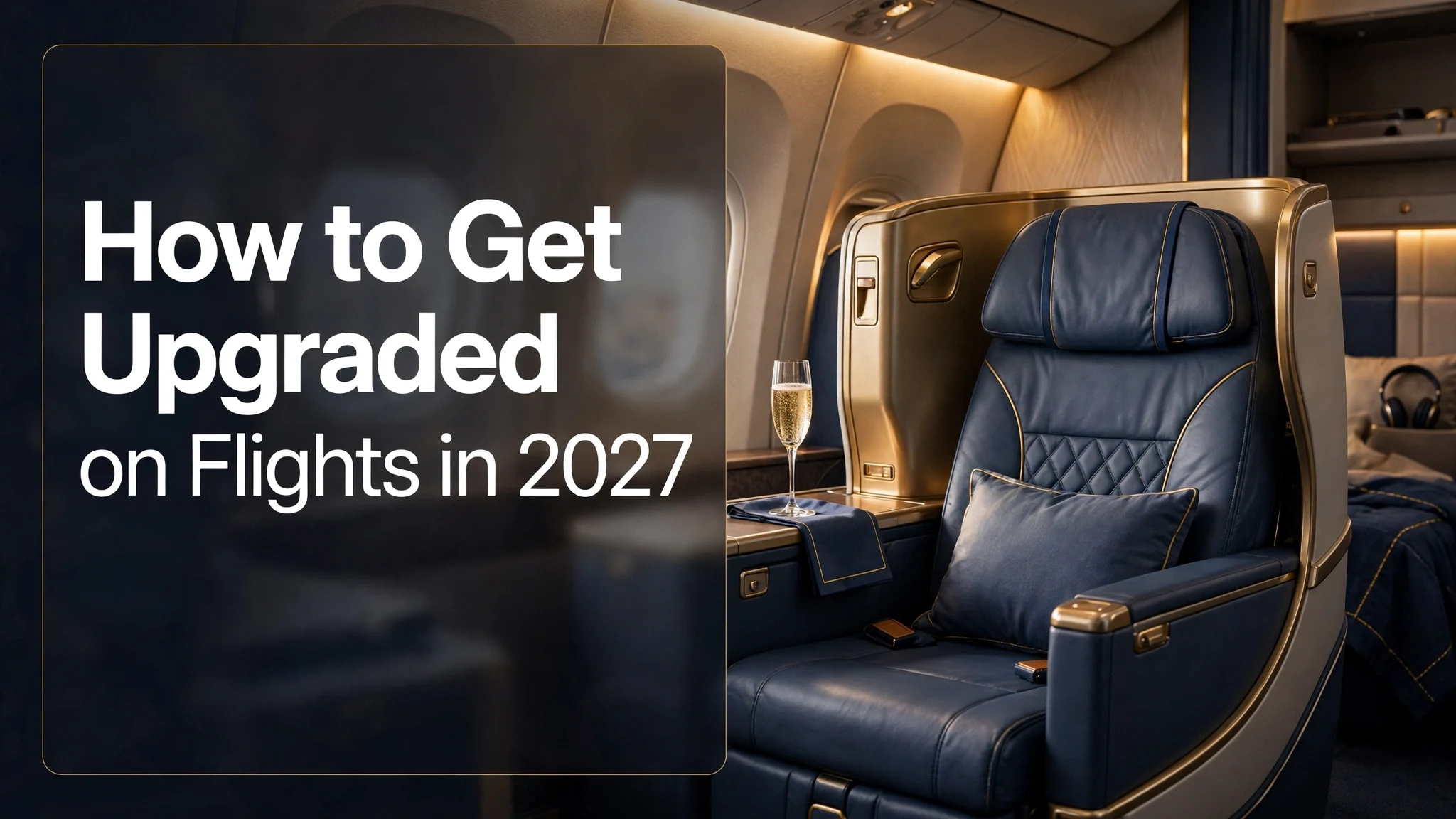
Getting upgraded on a flight feels like winning a small lottery. One moment you are in economy, with little legroom and a small meal, and the next you are in business class, with a lie-flat bed, good food, and space to breathe. It does happen, but it does not happen by luck alone. Upgrades go to travellers who understand how airlines work, who are loyal, who book well, and who ask in the right way at the right time.
This guide explains how upgrades work in 2027, from loyalty programmes and bidding to timing, dressing, and asking. It is honest about what works, what does not, and what is a myth. It will not guarantee you an upgrade, because no guide can, but it will give you the best chance.
How Upgrades Actually Work
Upgrades are not random. They are given according to rules, and understanding those rules helps you.
In practice, Airlines upgrade passengers when a cabin is full, or when they need to move people to make room. If economy is full and business has empty seats, the airline may upgrade some economy passengers. That upgrade is not a gift; it is a way of solving a problem, by moving people to where there is space. So an upgrade is often a practical decision, not a reward, and it happens when the airline needs it. The polite ask at check-in is the upgrade hunter’s quiet tool, and once I understood that, a free upgrade stopped looking like luck and started looking like a system with rules.
Look closer and Airlines also upgrade loyal passengers, as a reward for flying with them often. Loyalty programme members with high status are first in line for upgrades. That status is earned by flying a lot, or by spending a lot, with the same airline. So loyalty is the main route to upgrades, and it is a system, not a secret. An upgrade is not a favour; the loyalty, the timing, and the money work together, and the way loyalty rewards frequent flyers proves the system is designed, not random.
The key point is that Airlines also sell upgrades, through bidding, at check-in, or at the gate. Those paid upgrades are a way for the airline to fill empty business seats and make money. A paid upgrade is often cheaper than buying a business ticket outright. So upgrades are also a product, and they can be bought, not just given, which is an important option to know about. Up close, getting upgraded looks less like a trick and more like understanding a system, where loyalty, timing, and a polite request each move the odds a little.
Loyalty: The Most Reliable Route to Upgrades
Joining a loyalty programme and flying with one airline is the most reliable way to get upgraded.
What makes this work is that Join the loyalty programme of the airline you fly most, and use it every time you fly. That builds your status, which is the key to upgrades. Status is earned by flights or by spending, and it has levels, from basic to top tier. So loyalty is a long-term investment, and it pays off over time, not on your first flight. People chase upgrade myths and miss the point, yet the loyalty programme, the quiet Tuesday flight, and the paid bid are what actually move you forward in the cabin.
Step back for a moment and Fly with one airline or one alliance, rather than spreading your flights across many airlines. That concentration builds status faster, because all your flights count towards one programme. An alliance, such as Star Alliance or Oneworld, lets you earn status across many airlines. So focus is better than spreading, and a single loyalty programme is more powerful than several small ones. One upgrade packs loyalty, timing, manners, and money into a single request, and the traveller spends their effort so carefully that a bid at check-in can buy business class for less.
The surprising part is that Use a credit card linked to the airline, if it makes sense for you, to earn extra miles. That can help you reach status faster, or earn miles for a free upgrade. But do not spend money you would not otherwise spend, just to earn miles. So a credit card is a tool, not a shortcut, and it should be used carefully, with your budget in mind. Link the loyalty to the timing to the bid, and the separate routes to an upgrade join into one realistic plan for the next flight.
Bidding and Paying for Upgrades
Many airlines let you bid for an upgrade, or buy one at check-in, and that can be good value.
In practice, Bidding means you offer a price for an upgrade, and the airline accepts the highest bids if there are seats. You bid after you book, usually online, and you find out if you won before the flight. A bid that is too low will not win, while a bid that is too high may cost more than the upgrade is worth. So bidding is a gamble, and it needs a sensible price, based on the flight length and the value of the upgrade. The polite ask at check-in is the upgrade hunter’s quiet tool, and once I understood that, a free upgrade stopped looking like luck and started looking like a system with rules.
Look closer and Buying an upgrade at check-in or at the gate can also be good value, especially on a long flight. Airlines often offer upgrades at a discount close to departure, to fill empty seats. That offer may appear when you check in online, or at the airport. So check for upgrade offers at every stage, from booking to boarding, because the price can change. An upgrade is not a favour; the loyalty, the timing, and the money work together, and the way loyalty rewards frequent flyers proves the system is designed, not random.
The key point is that A paid upgrade is often worth it on a long flight, where a lie-flat bed and good food make a big difference. On a short flight, an upgrade may not be worth the cost, because you will not use the bed or the food. That value depends on the flight length and on how much you value comfort. So decide based on the flight, not on the idea of an upgrade, and a long flight is usually the best value. Up close, getting upgraded looks less like a trick and more like understanding a system, where loyalty, timing, and a polite request each move the odds a little.
Timing and Booking: When Upgrades Are Most Likely
Upgrades are more likely on some flights than on others, and booking well can help.
What makes this work is that Fly on less busy days, such as Tuesdays and Wednesdays, when business class is less full. On busy Monday morning flights, business class is often full with business travellers. A quieter flight gives you a better chance of an upgrade, because there are empty seats. So timing is a factor, and a flexible traveller who can fly on a quiet day has a better chance. People chase upgrade myths and miss the point, yet the loyalty programme, the quiet Tuesday flight, and the paid bid are what actually move you forward in the cabin.
Step back for a moment and Book early, and book a flexible ticket if you can, because flexible tickets are higher priority for upgrades. A cheap, non-flexible ticket is lower priority than a more expensive, flexible one. That priority is part of the airline’s upgrade rules, and it is worth knowing. So the ticket you buy affects your upgrade chance, and a slightly more expensive ticket may be a better investment. One upgrade packs loyalty, timing, manners, and money into a single request, and the traveller spends their effort so carefully that a bid at check-in can buy business class for less.
The surprising part is that Travel alone, if you can, because it is easier to upgrade one person than two or more. An airline is more likely to upgrade a single traveller than a family, because there is often only one empty seat. That is a practical point, and it is why solo travellers get upgraded more often. So travelling alone is an advantage for upgrades, and it is one of the few times that being alone helps. Link the loyalty to the timing to the bid, and the separate routes to an upgrade join into one realistic plan for the next flight.
Dress, Manners, and Asking the Right Way
How you look and how you ask can help, although they are not a guarantee.
In practice, Dress smartly, not formally, but neatly and cleanly. An airline is more likely to upgrade a passenger who looks presentable, because they represent the airline in a premium cabin. That does not mean a suit and tie; it means clean clothes, good shoes, and a tidy appearance. So dressing well is a small, practical step, and it costs nothing, yet it can help. The polite ask at check-in is the upgrade hunter’s quiet tool, and once I understood that, a free upgrade stopped looking like luck and started looking like a system with rules.
Look closer and Be polite and friendly to the crew, and ask about upgrades in a calm, respectful way. A polite question at check-in or at the gate is better than a demand. The crew are more likely to help a passenger who is kind and understanding. So manners matter, and they are a form of travel skill, not just good behaviour. An upgrade is not a favour; the loyalty, the timing, and the money work together, and the way loyalty rewards frequent flyers proves the system is designed, not random.
The key point is that Do not expect an upgrade, and do not demand one, because that can backfire. Upgrades are a bonus, not a right, and demanding one can annoy the crew. A calm, polite request is the best approach, and if the answer is no, accept it gracefully. So the right way to ask is to ask once, politely, and then accept the answer, whatever it is. Up close, getting upgraded looks less like a trick and more like understanding a system, where loyalty, timing, and a polite request each move the odds a little.
Myths About Upgrades: What Does Not Work
Many upgrade tips are myths, and believing them can waste your time or embarrass you.
What makes this work is that The myth that a honeymoon or a birthday will get you an upgrade is mostly false. Airlines do not upgrade passengers because it is their honeymoon, unless there is a seat available and you are high priority. Mentioning a special occasion may get you a nice note or a drink, but it rarely gets you a seat. So a special occasion is not a ticket to an upgrade, and it should not be relied on. People chase upgrade myths and miss the point, yet the loyalty programme, the quiet Tuesday flight, and the paid bid are what actually move you forward in the cabin.
Step back for a moment and The myth that being nice to the crew will always get you an upgrade is also false. Being nice helps, but it does not override the upgrade rules. The crew cannot upgrade you if there is no seat, or if you are not high enough priority. So kindness is good, but it is not a magic key, and it should be practised for its own sake, not as a trick. One upgrade packs loyalty, timing, manners, and money into a single request, and the traveller spends their effort so carefully that a bid at check-in can buy business class for less.
The surprising part is that The myth that booking a certain seat or arriving early will get you an upgrade is also false. Arriving early does not improve your upgrade chance, and it may not help at all. The upgrade list is decided by status and ticket type, not by arrival time. So the myths are appealing, but they are not how upgrades work, and the real rules are about loyalty, timing, and paying. Link the loyalty to the timing to the bid, and the separate routes to an upgrade join into one realistic plan for the next flight.
A Realistic Plan for Your Next Flight in 2027
Put it together: join a programme, book well, check for paid upgrades, and ask politely.
In practice, Join a loyalty programme now, and start building status, even if you fly only a few times a year. That status will help you in the future, and it costs nothing to join. Use the same airline when you can, and keep your miles in one place. So the first step is simple and free, and it is the foundation of any upgrade plan. The polite ask at check-in is the upgrade hunter’s quiet tool, and once I understood that, a free upgrade stopped looking like luck and started looking like a system with rules.
Look closer and When you book your next flight, check for upgrade bids and paid upgrades, and decide if they are worth it. A paid upgrade on a long flight can be good value, and a bid can be a smart way to get business class for less. Compare the price to the value of the comfort, and decide based on the flight. So the second step is to check, not to assume, and to make a decision based on price and value. An upgrade is not a favour; the loyalty, the timing, and the money work together, and the way loyalty rewards frequent flyers proves the system is designed, not random.
The key point is that On the day, dress well, be polite, and ask once, if there is a chance. Then enjoy your flight, whether you are upgraded or not. An upgrade is a bonus, and a good flight in economy is still a good flight. So the final step is to enjoy the trip, and to remember that the destination matters more than the seat. Up close, getting upgraded looks less like a trick and more like understanding a system, where loyalty, timing, and a polite request each move the odds a little.
My Take:
I have never been upgraded for free, and I am not ashamed to say so. I have paid for an upgrade once, on a long flight, and it was worth it. I have also flown in economy many times, and I have enjoyed those flights too. This guide is not a promise that you will be upgraded. It is an honest look at how upgrades work, what helps, what does not, and how to give yourself the best chance without believing in myths. If it helps you get an upgrade, great. If it does not, you will still have a better flight, because you will understand the system.
I think loyalty is the most honest route to upgrades. It is not a trick; it is a system, and it rewards people who fly with one airline often. That is fair, and it is the route I would follow if I flew often enough to build status. Loyalty is the route I keep coming back to, because it is not a trick, it is a system, and it rewards people who fly with one airline often. Upgrades are no longer a mystery to me; they are a set of rules, and I find myself thinking about those rules whenever I book a flight.
The paid upgrade idea is the one I would use most. Bidding or buying an upgrade at check-in is a clear, honest way to get business class for less. It is not free, but it is transparent, and it lets you decide if the comfort is worth the price. For me, the honest test for getting upgraded on flights in 2027 is simple. I have stopped being impressed by clever upgrade talk; I only keep advice that would change what I actually do at check-in. I trust upgrade advice when it lets me predict the cabin, like knowing a quiet Tuesday is more likely to bring an upgrade than a busy Monday, and this guide kept predicting well. An upgrade detail of that kind is one I would share with a friend flying long-haul, so the bid at check-in becomes a clear, honest way to fly business for less.
I also like the timing advice, because it is practical. Flying on a quiet Tuesday is more likely to get you an upgrade than flying on a busy Monday. That is a small change that can make a difference, and it is a good example of how timing matters in travel. Understanding upgrades took me longer than a myth, because loyalty, bidding, timing, and manners all have to be weighed, and they do not all matter equally. For me, learning about getting upgraded on flights in 2027 was not one dramatic moment. A loyalty tier here, a bid there, a Tuesday flight in between, and the separate facts gradually added up to a plan I could actually follow. I ask simple upgrade questions without embarrassment now, because wondering how bidding works took me to loyalty, timing, and the real price of a better seat.
The myths section is the part I am most proud of, because it corrects ideas that many people believe. A honeymoon does not get you an upgrade, and being nice does not override the rules. Correcting a myth is useful, even if it is disappointing, because it saves people from wasting time on a trick that does not work. If a friend asked about upgrades, I would tell them to join one loyalty programme and stick to it, because scattered flying earns nothing anywhere. Ask what a honeymoon really buys, who gains from a paid bid, and what a busy Monday costs, and the upgrade myths fall apart one by one. My old view of upgrades was a lucky break for charming travellers, and the rule-based system that replaced it is calmer and far more useful to me.
If I could choose one upgrade, I would choose a long overnight flight. A lie-flat bed on a night flight means you arrive rested, which is worth more than a lie-flat bed on a short day flight. That is a value judgment, and it is the kind of judgment this guide is trying to help you make. Learning about upgrades has made me slower to believe travel myths, because a honeymoon does not get you an upgrade, and being polite alone does not either. The more I learn about upgrades, the less I trust a single clever trick, and that scepticism feels like a useful habit. A flight upgrade rewards travellers who look twice every time. What I would carry from this is a single image: a lie-flat bed on a night flight, and arriving rested, which is worth more than the seat itself.
The lesson I take from upgrades is about understanding systems. Upgrades are not random; they follow rules about loyalty, timing, and money. I think many things in life work that way: they look like luck, but they are really systems, and understanding the system gives you a better chance. If I could keep one upgrade lesson, it would be understanding systems, because upgrades are not random, they follow rules about loyalty, timing, and money. Trying to explain upgrades without the guide showed me where I was still hazy, above all about how bidding actually works at check-in.
Going back to the opening section about how upgrades actually work, I saw how a single fact, that an upgrade is a system, shapes everything that follows. The famous myths are less telling than the loyalty section, because loyalty is the most reliable route, and the myths are mostly stories that do not work. Loyalty, of all things, turned out to be the hero, and that surprises me because it is the slowest, least glamorous route to a better seat.
The loyalty section changed how I talk about upgrades, because it gave me a system to describe instead of a trick to hope for. My upgrade conversations now start with loyalty, move through bidding and timing, and finish with manners, in that order. Loyalty first, manners last: that sequence lets the listener see the system before hearing my own preference. It also lets the listener argue for a different strategy, and an upgrade discussion that welcomes that argument beats one that demands a single trick.
Bidding and paying, read last, gave the whole piece a shape I had missed in the earlier sections. Systems kept appearing in different guises, in the loyalty, in the bidding, and in the timing, until the whole upgrade felt like a single, understandable set of rules. Systems are a habit of thought that matters beyond flying, so I will keep this guide and consult it again before I book my next flight. I will choose a quiet Tuesday for my next long flight, and I expect that small choice to change how the whole journey feels.
Frequently Asked Questions
How can I get a free upgrade on a flight?
The most reliable way is through loyalty status with the airline, by flying often with one airline or alliance. Upgrades are also given when economy is full and business has empty seats, with high-status passengers first.
Can I bid for a flight upgrade?
Yes, many airlines let you bid for an upgrade after booking. You offer a price, and the airline accepts the highest bids if seats are available. Bid a sensible price based on flight length and value.
Does dressing well help you get upgraded?
It can help a little, because airlines prefer presentable passengers in premium cabins, but it does not override loyalty and ticket priority. Dress neatly, be polite, and ask once, but do not expect a guarantee.
Is it worth paying for a flight upgrade?
On a long flight, a paid upgrade is often worth it for a lie-flat bed, good food, and space. On a short flight, it may not be worth the cost. Decide based on flight length and how much you value comfort.
Do honeymoons get flight upgrades?
Rarely. Airlines do not usually upgrade passengers for a honeymoon or birthday alone. You may get a nice note or a drink, but an upgrade depends on status, ticket type, and seat availability.
When is the best time to ask for an upgrade?
Ask politely at check-in or at the gate, once, if you think there may be availability. Do not demand an upgrade, and accept the answer gracefully. The upgrade list is usually decided before boarding.