How to Start a Newsletter in 2027 From Zero
In this post
- Pick a Promise, Not Just a Topic
- Choose a Platform That Lets You Start Free and Grow
- Write Issues People Actually Open and Finish
- Get Your First 100 Subscribers Honestly
- Keep Readers, Learn From Numbers and Stay Regular
- When and How a Newsletter Can Earn Money
- Growing Through Other Newsletters and Communities
- What to Do When You Run Out of Ideas
- My Take:
A newsletter is one of the most powerful things a writer can build in 2027, because it is a direct line to readers who chose to hear from you, without an algorithm deciding whether they see your work. Social media can hide your posts, search can change its rules, but an email arrives in the inbox of a person who asked for it, and that relationship is yours, not rented from a platform.
Starting a newsletter from zero feels daunting, because you have no subscribers, no reputation, and no idea what to write, but every large newsletter started exactly there, with a first issue sent to a handful of people. The secret is not a clever tool or a perfect design; it is a clear promise, a regular rhythm, and writing that is genuinely useful or enjoyable to the person who opens it.
This guide takes you from zero to a newsletter people look forward to, step by step. It covers choosing a topic, picking a platform, writing your first issues, and growing your list honestly, without buying subscribers or tricking anyone into signing up.
Pick a Promise, Not Just a Topic
A newsletter needs a promise that a reader can understand in one sentence, because that promise is what makes them subscribe and what makes them open the next issue. A promise is more specific than a topic: not just cooking, but one simple weeknight dinner every Friday; not just money, but one practical saving idea every Tuesday; not just books, but three interesting books every Sunday. The reader should know exactly what they will get, when they will get it, and why it is worth their time.
Your promise should be something you can keep for a year, because a newsletter is a commitment and readers notice when it stops. Choose a rhythm you can maintain, whether that is weekly, fortnightly, or monthly, and choose a format you enjoy writing, because you will be writing it many times. A short, useful weekly email that you enjoy writing will beat a long, ambitious one that you dread and abandon after a month.
Test your promise by writing it down and reading it as a stranger would: would you subscribe to this? Would you open it next week? If the answer is not a clear yes, make the promise more specific, more useful, or more enjoyable, until it is. A clear promise is the foundation of a newsletter, and everything else, from the platform to the design, is secondary to it.
Choose a Platform That Lets You Start Free and Grow
You do not need an expensive platform to start a newsletter, and the best choice for a beginner is usually a platform that is free at the start, easy to use, and lets you grow without forcing you to move later. Substack is popular because it is free, simple, and has built-in discovery, so readers can find your newsletter through the platform itself. Beehiiv is another strong choice, with good tools for growth and monetisation, while ConvertKit and Mailchimp suit writers who want more control over their list and their design.
The platform matters less than the writing, so do not spend weeks comparing features. Choose one that lets you write, send, and see who opened your email, and start publishing, because you can always move your list later, and your subscribers belong to you, not to the platform. Check that the platform lets you export your subscriber list, because that freedom is essential, and avoid any platform that locks your list away.
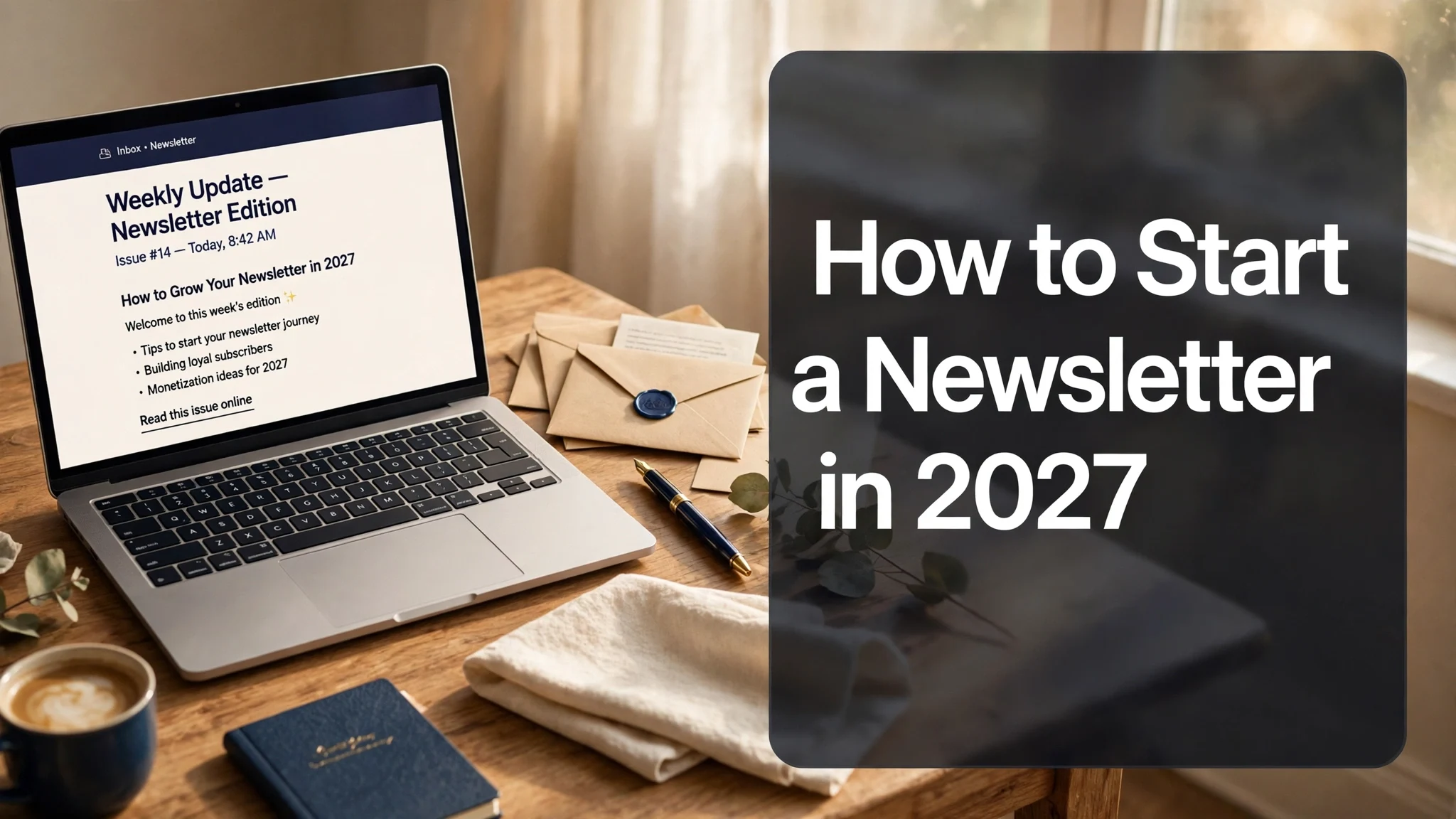
Keep the design simple: a clean template, a readable font, and your name at the top are enough. Readers subscribe for the writing, not for the design, and a newsletter that is easy to read on a phone will be opened more often than one that is beautiful but hard to read. Test your first issue by sending it to yourself and opening it on your phone, and if it is easy to read, it is good enough to send.
Write Issues People Actually Open and Finish
The subject line decides whether your email is opened, so write it as a clear, honest promise of what is inside, not as a trick or a mystery. A subject line that says what the reader will learn, or that asks a question they care about, will be opened more often than one that is clever but vague. Avoid clickbait, because a reader who feels tricked will not open the next issue, and trust, once lost, is hard to regain.
Start the issue with the most useful or interesting part, because readers decide in seconds whether to keep reading. Do not begin with a long introduction about your week unless your readers care about your week; begin with the idea, the story, or the tip that made you want to write the issue. Use short paragraphs, clear headings, and a friendly tone, as if you are writing to one person, because that is how a newsletter should feel: personal, direct, and human.
End with a clear next step: a question for the reader, a link to read more, or a simple action they can take. A newsletter that ends with a question will get replies, and replies are the most valuable thing a newsletter can earn, because they tell you what your readers think and they build a relationship. Write for the reader, not for yourself, and the newsletter will grow.
Get Your First 100 Subscribers Honestly
Your first subscribers will come from people you already know and from places where your topic is discussed, so tell friends, share your newsletter where your readers already gather, and ask people who enjoy your writing to subscribe. Put a signup form on your blog or website, add a link to your social media profiles, and mention the newsletter at the end of your posts, because a reader who enjoyed your writing is the most likely person to subscribe.
Offer something useful in exchange for an email address, such as a short guide, a checklist, or a sample issue, because a reader needs a reason to give you their email. The offer should be genuinely useful and related to your newsletter, not a trick to collect addresses, because a subscriber who joined for a free gift and never opens your emails is not a real subscriber. Quality matters more than quantity, and a hundred readers who open every issue are worth more than a thousand who never open any.
Never buy subscribers, never add people without their permission, and never trick anyone into signing up, because those practices will damage your reputation, harm your deliverability, and fill your list with people who do not want your emails. Grow slowly and honestly, and let each subscriber be a person who chose to hear from you, because that choice is what makes a newsletter valuable.
Keep Readers, Learn From Numbers and Stay Regular
Keeping subscribers is as important as gaining them, and the best way to keep them is to send what you promised, when you promised it, and to respect their inbox. Do not send too often, do not send emails that are only selling something, and do not disappear for months and then return without explanation. A regular rhythm builds trust, and trust is what makes a reader open the next issue instead of unsubscribing.
Learn from the numbers, but do not obsess over them: the open rate tells you whether your subject lines work, the click rate tells you whether your content is interesting, and the unsubscribe rate tells you whether you are sending too much or the wrong thing. If the open rate falls, try a clearer subject line; if clicks fall, try more useful links; if unsubscribes rise, ask yourself whether you have kept your promise. Use the numbers as a guide, not as a judgement, and keep improving one thing at a time.
Write to your readers as people, not as numbers, and reply to their emails when they write back. A newsletter that feels like a conversation will be opened, read, and shared, while one that feels like a broadcast will be ignored. Ask questions, share your own experience, and let your personality show, because the writer is the reason a reader subscribes to a newsletter rather than to a website.
When and How a Newsletter Can Earn Money
A newsletter can earn money, but it should not be your first goal, because a newsletter with few readers will earn very little and the effort to monetise it may put off the readers you have. Focus first on writing well, growing honestly, and building trust, and the money will follow when the audience is ready. A newsletter with a thousand loyal readers can earn more than one with ten thousand who never open it, because loyalty is what advertisers and buyers pay for.
The main ways a newsletter earns are paid subscriptions, where readers pay for extra content; sponsorships, where a company pays to be featured; and affiliate links or product recommendations, where you earn a commission. Paid subscriptions work best when the free newsletter is already excellent and readers ask for more, while sponsorships work best when the sponsor fits your topic and your readers. Choose the method that fits your audience, and be transparent about it, because readers who trust you will support you, and readers who feel sold to will leave.
Start with one method, test it, and listen to your readers, because a newsletter that earns money while keeping its readers is a success, while one that earns money by losing them is a failure. The goal is a newsletter that helps readers, earns the writer a fair income, and lasts for years, and that goal is reached by writing well, not by chasing money.
Growing Through Other Newsletters and Communities
One of the best ways to grow a newsletter is through other newsletters, because a recommendation from a writer your readers already trust is far more powerful than an advertisement. Find newsletters in your topic or in a related topic, read them, and build a genuine relationship with the writer, by replying to their issues, sharing their work, and offering to recommend each other. A cross-promotion, where two writers recommend each other’s newsletters, can bring dozens of new subscribers who are already interested in your topic, because they came from a source they trust.
Communities are another powerful source of subscribers: forums, groups, and online spaces where your readers gather are places where a helpful answer, with a link to your newsletter when it truly helps, will bring readers who want more. Do not spam these communities with links; instead, be helpful, answer questions, and let people discover your newsletter naturally, because a subscriber who found you through your helpfulness is far more likely to open your emails than one who clicked an advertisement.
Guest writing is also valuable: write a guest issue for another newsletter, or invite another writer to write for yours, because it introduces your writing to a new audience and gives your own readers something fresh. Choose partners whose audience overlaps with yours but is not identical, so both newsletters gain readers who are genuinely interested, and be generous in the exchange, because generosity builds relationships that last far longer than a single promotion.
What to Do When You Run Out of Ideas
Every newsletter writer runs out of ideas, and it is not a sign of failure; it is a sign that you need to listen more and write less from your own head. Ask your readers what they want, read their replies and their questions, and use those questions as the next issue, because a question from a real reader is the best idea a writer can have. Your readers will tell you what they need if you ask them, and the answers will keep your newsletter full for months.
Look at what is happening in your topic: news, new tools, new books, and new questions that people are asking, and write about the one that interests you most. A newsletter that responds to the world feels alive, while one that only repeats the writer’s old ideas feels stale, so stay curious, read widely, and let the world give you ideas. Keep a list of ideas as they come to you, even half-formed ones, because a list of twenty rough ideas is a month of newsletters waiting to be written.
When you are truly stuck, write about something small and personal: a mistake you made, a lesson you learned, or a question you are thinking about, because readers love honesty and they relate to a writer who admits they do not have all the answers. A personal issue, written simply and honestly, will often get more replies than a polished, researched one, because it feels human. Do not fear the blank page; fear the newsletter that stops, because a short, honest issue is always better than no issue at all.
My Take:
My honest view is that a newsletter is the most honest form of publishing on the internet today, because it is a direct agreement between a writer and a reader, with no algorithm in between. A reader who gives you their email address is saying they trust you with their attention, and that trust is more valuable than a thousand followers who never see your posts. Treat that trust with care, write as if you are writing to one person, and the newsletter will become something real.
I also believe the promise matters more than the platform, because readers subscribe to a promise, not to a tool. A newsletter that promises one useful idea every week and delivers it will grow, while a newsletter on the best platform with no clear promise will not. Write your promise in one sentence, make it specific, and keep it, because keeping a promise is the whole job of a newsletter writer, and breaking it is the fastest way to lose readers.
Another point I keep returning to is the first hundred subscribers, because they are the hardest to get and the most important to keep. They are the people who believed in your newsletter before it was popular, and they will tell you what works, what does not, and what they want next. Treat them like gold, reply to their emails, ask them questions, and let them shape the newsletter, because a newsletter built with its first readers will grow far better than one built in isolation.
I would also say that regularity is more important than length, because a short email sent every week builds a habit, while a long email sent irregularly does not. Readers forget a newsletter that disappears for a month, and they unsubscribe from one that arrives too often, so find a rhythm you can keep and protect it. A weekly email that you enjoy writing is the right rhythm for most people, and it is better than a daily email that exhausts you or a monthly one that is forgotten.
My honest view is that subject lines should be honest, because a reader who opens an email and finds something different from what the subject promised will not open the next one. Clever subject lines that trick people into opening are a short-term win and a long-term loss, while clear, honest subject lines build a habit of opening. Write the subject as if you are telling a friend what is inside, because that is what it is, and honesty will earn you more opens over time than any trick.
I also believe you should never buy subscribers, because a bought list is not an audience; it is a list of people who never asked to hear from you, and they will not open, will not click, and will mark your emails as spam. That damage follows you, because email providers notice when your emails are ignored or marked as spam, and your real subscribers will stop receiving your emails as a result. Grow slowly, grow honestly, and let every subscriber be a person who chose you, because that choice is the foundation of everything.
Another point I keep returning to is the reply, because the most valuable thing a newsletter can earn is not an open or a click; it is a reply from a reader who cares enough to write back. Replies tell you what your readers think, they build a relationship, and they make the newsletter feel like a conversation rather than a broadcast. End your issues with a question, invite replies, and answer them, because a newsletter with replies is alive, while one without them is just a broadcast.
I would also say that monetisation should wait, because a newsletter that tries to earn money before it has readers will earn very little and may lose the readers it has. Write well, grow honestly, and build trust for months before you ask anyone to pay, because a reader who has enjoyed your free newsletter for a year is far more likely to pay for more than one who was asked to pay in the first week. Patience is not a delay; it is the strategy.
My honest view is that a newsletter is a long project, and the writers who succeed are the ones who enjoy the writing itself, not only the growth. If you enjoy writing to your readers, learning from their replies, and improving each issue, the newsletter will grow, and the growth will feel like a reward. If you only enjoy the numbers, the work will feel like a chore, and you will stop. Write for the joy of it, and let the numbers follow.
Finally, I believe a newsletter is worth starting because it is yours in a way that no social media account ever will be. Your list, your writing, and your relationship with your readers belong to you, and they cannot be taken away by an algorithm change or a platform decision. Start today, with a clear promise, a simple platform, and a first issue written for one reader, and keep going, because the newsletters that last are not the ones that started perfectly; they are the ones that started and did not stop.
My honest view is that running out of ideas is not a problem; it is an invitation to listen, and the writers who listen never run out of things to say. Your readers are full of questions, your topic is full of changes, and your own life is full of lessons, and any one of those is an issue waiting to be written. The writers who stop are usually the ones who tried to invent ideas in isolation, while the ones who keep going are those who asked, who read, and who paid attention to the world around them. Keep a list, ask your readers, and write about what is real, because a newsletter built on real questions and real curiosity will never run dry.
I would also say that a newsletter grows one reader at a time, and that slow growth is not a failure; it is the way trust is built. A subscriber who joined because a friend recommended your writing, or because they read a post you wrote and wanted more, is worth far more than a hundred who arrived through an advertisement and never opened an issue. Celebrate each new subscriber, write for the readers you have rather than the ones you wish you had, and let the list grow the way a garden grows: slowly, steadily, and with care, because a garden tended daily will always outlast one planted in a hurry.
Frequently Asked Questions
What is the best platform to start a newsletter in 2027?
Substack is popular for beginners because it is free, simple, and has built-in discovery, while Beehiiv offers strong growth and monetisation tools. ConvertKit and Mailchimp suit writers who want more control, so choose the platform that fits your goals and lets you export your list.
How often should I send a newsletter?
Weekly is a good rhythm for most newsletters, because it is frequent enough to build a habit and rare enough to maintain. Fortnightly or monthly can work if your content takes longer to create, but choose a rhythm you can keep for a year.
How do I get my first newsletter subscribers?
Tell people you know, share the newsletter where your readers gather, add a signup form to your blog or website, and offer a useful free guide in exchange for an email. Your first subscribers are the people who already enjoy your writing, so start with them.
Do I need a blog to start a newsletter?
No, you do not need a blog to start a newsletter, though a blog can help you find readers. A newsletter can stand alone, and many successful newsletters have no blog at all, because the email itself is the publication.
Can I make money from a newsletter?
Yes, a newsletter can earn through paid subscriptions, sponsorships, and affiliate recommendations, but it needs a loyal audience first. Focus on writing well and growing honestly, and monetise only when readers ask for more or when the audience is large enough to support it.
Should I buy email subscribers to grow faster?
No, you should never buy subscribers, because they did not choose to hear from you, they will not open your emails, and they can harm your deliverability. Grow slowly and honestly, because a small list of readers who open every issue is worth more than a large list that ignores you.