How to Train for a Triathlon: A Beginner's Guide 2027
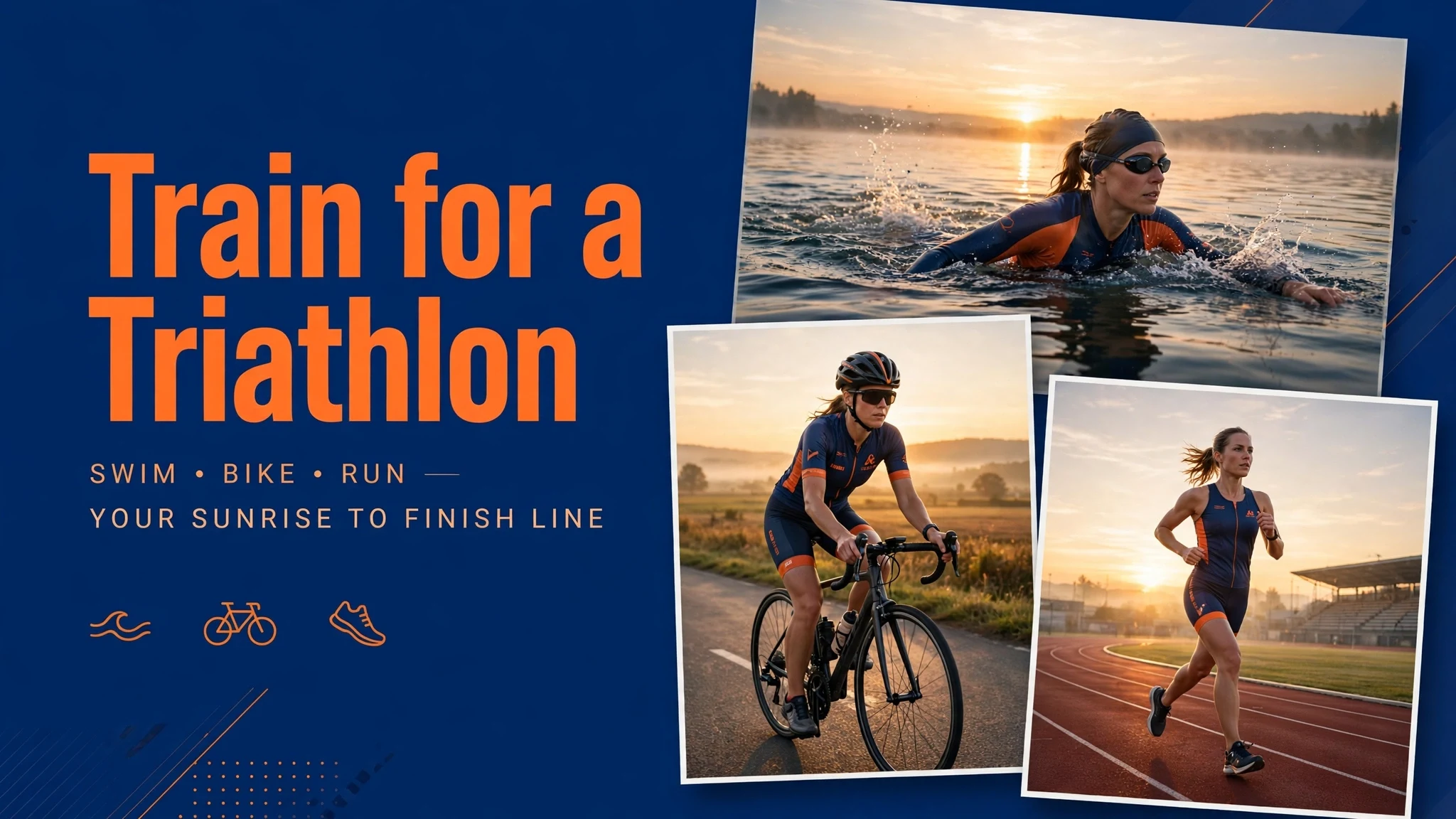
In this post
A triathlon sounds like a race for superhumans, but most people who finish their first one are ordinary people who trained patiently for a few months. A sprint triathlon, the shortest common distance, involves a short swim, a bike ride, and a run, each of which is manageable on its own. The challenge is putting them together, and the reward is the feeling of crossing a finish line after three sports in one morning.
This guide is written for a complete beginner who can swim a little, ride a bike, and jog, but has never done all three in one day. It explains the distances, the training in each sport, the transitions that beginners fear most, the equipment you actually need, and a simple twelve-week plan that builds fitness without exhausting you. It also covers race day, nutrition, and the mistakes that turn a first triathlon into a miserable experience.
What a Triathlon Actually Involves
The shape of the race itself looks like this: a sprint triathlon usually means about a 750 metre swim, a 20 kilometre bike ride, and a 5 kilometre run, though distances vary. Experienced people talk about the transitions between swim, bike and run in training for a triathlon as a beginner because they have watched racers lose minutes fumbling with shoes and helmets, and newcomers tend to learn that lesson the hard way. So shape your approach to training for a triathlon as a beginner around the transitions between swim, bike and run from the opening week, and you dodge the classic beginner regret, which is finding out on race morning that the changeover mattered more than the swimming.
Picture the whole journey in one frame: longer races exist, but a sprint is the sensible first target for almost every beginner. Picture your first triathlon six weeks down the road, not only this afternoon, and judge whether the plan still holds up in training for a triathlon as a beginner once the early buzz wears off and weekly sessions feel ordinary. That wider lens reshapes plenty of calls in training for a triathlon as a beginner, since it sorts a plan that merely sounds fun from one that survives contact with your first triathlon week after week, and it keeps you off the shortcut that looks tempting now and stings later.
Every coach I have read says the same thing about this: the three sports happen one after another, with transitions in between where you change equipment. Nobody can promise a guaranteed result in training for a triathlon as a beginner, and a coach who does is selling confidence he cannot deliver, yet the broad picture around your first triathlon holds steady enough to plan around. Keep your hopes about training for a triathlon as a beginner honest, measure the result for your first triathlon with one plain number you can watch yourself, and tweak things after a fortnight of trying instead of waiting for an ideal morning that never turns up.
A common mistake is to overlook the total time for a beginner is often between ninety minutes and two hours, which is a long but achievable morning. It is easy to overlook the transitions between swim, bike and run in training for a triathlon as a beginner, because the swim and the bike steal every glance, while the changeover quietly decides your morning. The remedy in training for a triathlon as a beginner is simple and cheap: put the transitions between swim, bike and run onto one pocket card, glance at it before race morning, and run it past a club mate, because a fresh glance spots the gap your own excitement missed.
Choosing Your First Race
Look closely at a pool-based sprint triathlon is the easiest first race, because the swim is calm and controlled, and you will spot the same thread running through nearly every sensible write-up on the topic, however different the stories look at first glance. That thread tells you something about training for a triathlon as a beginner. Rather than lifting somebody else’s precise routine for training for a triathlon as a beginner, borrow the thinking underneath it, bend it around your diary and your wallet, and hold onto only the bits that slot into your week, because a schedule that fights your life will fall apart by Friday.
There is one more quiet question tucked inside a local race with a friendly reputation is better than a famous one, because the atmosphere will be welcoming. Done too early in training for a triathlon as a beginner, it can seem pointless, and left too late it turns into firefighting, so the middle road tends to pay off: move once you understand enough about your first triathlon to act, yet ahead of the moment when deadline panic starts calling the shots. Circle a date for your first triathlon, rough edges and all, and treat that date as a firm promise to training for a triathlon as a beginner rather than an empty hope.
What surprises many people about check the course, especially the bike route, so you know whether it is flat or hilly is how far it rests on tiny repeated choices instead of one grand call. Ten quiet minutes spent on your first triathlon before race week, one scribbled reminder, or a single relaxed chat about training for a triathlon as a beginner can swing the outcome further than any single bold stroke, and those tiny repeats pile up across the coming weeks. Start the routine itself around training for a triathlon as a beginner, keep it plain enough to redo on a hectic morning, and let the wider payoff for your first triathlon stem from repeating it time after time.
Finally, remember that enter early, because a date on the calendar is the best motivation to train consistently is not a law to obey without thinking; it is a pointer to check against your own week. Where it suits your first triathlon, hold onto it and polish it; where it clashes with training for a triathlon as a beginner, tweak the details while keeping the thinking underneath it. The racers who come out best in training for a triathlon as a beginner are rarely the ones who tick every box flawlessly, but the ones who watch your first triathlon, take notes from the first go, and sharpen the next one.
Swimming: From Fear to Confidence
Many beginners fear the swim most, so practising in a pool twice a week is the best cure. That matters more in training for a triathlon as a beginner than newcomers usually guess, because one modest call here steers whatever comes next for your first triathlon, and a wrong call here tends to bill you later, silently, in drained hours or dented belief. The sensible next step in training for a triathlon as a beginner is to try the idea out on one short, genuine session first, and watch what truly unfolds for your first triathlon, and only then go all in, instead of judging by one glossy write-up or a lone suggestion.
Start with this: Breathing every two strokes and keeping your head down are the two skills that matter most. In training for a triathlon as a beginner, this seldom arrives with fireworks, and it turns up in plain moments, a chat with a mate, a work deadline, or a call made while tired, and those plain moments are where the outcome for your first triathlon gets settled for real. Racers who stop and think here in training for a triathlon as a beginner, write down what they expect from your first triathlon, and stack it against what actually happens seven days on pick things up far quicker than racers who just press on.
Open-water swimming feels different, so practise in a lake or the sea at least once before race day if your race is open water — and it earns a closer look because it ties straight into the finish most readers truly want, not some side note. Once this slice of training for a triathlon as a beginner runs smoothly, a handful of other pieces of your first triathlon loosen up together, and when it goes badly, even a solid schedule starts wobbling. So handle the transitions between swim, bike and run as a foundation for training for a triathlon as a beginner, not as a final flourish, and set aside real hours for it before pressing ahead.
Consider a wetsuit can help with warmth and buoyancy, and many races allow or require one. At first, the transitions between swim, bike and run can sound like a minor detail in training for a triathlon as a beginner, the sort of thing you would brush past when rushed, yet on the day it is often the hinge where a sound schedule stays whole or snaps at the first snag. The sharpest route in training for a triathlon as a beginner is to pin it down: spell out the precise move, the precise helper, or the precise figure tied to your first triathlon, and strip out the fog where trouble likes to lurk.
Cycling: The Longest Part of the Race
Ask any finisher where the race is truly won and they will say the bike is the longest part of a sprint triathlon, so it deserves the most training time. People with experience in training for a triathlon as a beginner circle back to this again and again because they have watched your first triathlon pay for skipping it, and newcomers tend to pick up the same lesson only by tripping over it themselves. Shape your first triathlon around this idea from week one, and you sidestep the regret so many racers in training for a triathlon as a beginner mention, which is waking up too late to the fact that the plain step counted most.
Here is a plainer way to frame the choice: a road bike or a hybrid bike is fine for a first race, and you do not need an expensive triathlon bike. Fast-forward the picture six weeks ahead in training for a triathlon as a beginner, not only this morning, and weigh whether the call still stands once the first thrill has cooled and the weekly grind has settled in. Gazing further down the road shifts plenty of calls about training for a triathlon as a beginner, since it parts a call that merely feels sweet today from one that holds up for your first triathlon across the months, and it steers you away from the flashy shortcut that bills you later.
Coaches who have seen hundreds of first-timers agree on this: practise riding after swimming, because your legs will feel strange at first, and that feeling passes with practice. No one can promise the outcome of your first triathlon, and a person who promises one in training for a triathlon as a beginner deserves a raised eyebrow, yet the broad trend holds firm enough to lean on. Stay straight about what training for a triathlon as a beginner can deliver, check your first triathlon against one plain yardstick you can watch with your own eyes, and tinker after a fortnight of testing instead of holding out for an ideal morning that never turns up.
A common mistake is to overlook a helmet is compulsory, and a basic repair kit is a sensible precaution on race day. People miss it easily in training for a triathlon as a beginner, because the noisy, thrilling slices of your first triathlon hog every glance, while this hushed slice quietly carries the morning. A plain, low-cost remedy for your first triathlon is a short checklist: review the transitions between swim, bike and run ahead of race morning, and run it past one trusted mate to see whether you skipped anything, because a fresh pair of eyes notices what excitement blurs in training for a triathlon as a beginner.
Running Off the Bike: The Strange Legs
Look closely at running after cycling feels odd, because your legs are used to pedalling, not running, and this is normal, and you will find the same thread woven through nearly every solid write-up on the topic, even where the stories seem poles apart. That thread says plenty about training for a triathlon as a beginner. Do not lift somebody else’s precise routine for training for a triathlon as a beginner, but borrow the reasoning beneath it instead, then mould it around your diary, your wallet, and your routines, because a plan that ignores your life will crumble before Sunday.
Timing quietly hides inside short brick sessions, where you cycle and then run immediately, teach your body to make the change. In training for a triathlon as a beginner, jumping in too soon can seem pointless and waiting too long turns into patching leaks, so aim for the centre: move when you hold enough knowledge about your first triathlon, yet ahead of the point where delay makes the call for you. Pencil a date in for training for a triathlon as a beginner, rough sketch or not, and treat that date as a genuine pledge instead of a hazy wish about your first triathlon.
What surprises many people about start the run slowly, even if you feel good, because the first kilometre is the hardest part is how deeply it leans on tiny daily repeats rather than one sweeping call. In the world of training for a triathlon as a beginner, a touch of groundwork, one scribbled line, or a quiet word at the right instant often counts for more than a showy leap, and redoing those tiny steps week after week is what welds them into a true routine. Begin with the routine itself, and size it small enough to redo on race day, and trust that the bigger result in training for a triathlon as a beginner will grow from that steady rhythm.
Finally, remember that most runners find their legs return after a few minutes, and the run becomes comfortable again is not a command to swallow whole; it is a hint to measure against your own life. Where a step suits training for a triathlon as a beginner, keep it and polish it gently, and where it jars, adjust the details instead of binning the whole notion. Across training for a triathlon as a beginner, the strongest finishes belong to racers who stay alert, take lessons from the opening try with your first triathlon, and sharpen the next one, not to racers who tick every instruction flawlessly.
Transitions: The Fourth Discipline
The transition is the area where you change from swim to bike and from bike to run, and it is often called the fourth discipline. In training for a triathlon as a beginner, this counts for more than newcomers suspect, because one modest call about your first triathlon steers what follows, and a misstep here tends to charge you later, silently, in squandered hours or shaken belief. Trial the idea on one short, genuine outing first, in the world of training for a triathlon as a beginner, watch what truly happens, and only then pledge yourself fully to your first triathlon, instead of judging by one bold headline or a lone tip.
Start with this: Lay out your equipment in order, so you do not waste time searching for your shoes or helmet. It rarely arrives with drama in training for a triathlon as a beginner, and it mostly turns up in unremarkable moments, a chat, a deadline, or a call made under strain, and those moments are where your first triathlon is really decided. In training for a triathlon as a beginner, the quickest learners are racers who pause, jot down what they expect, and set it beside what truly happens seven days later, instead of merely pressing on.
Practise the transition at home, because a calm change saves minutes and reduces stress — and it merits a hard look because it plugs straight into the finish most readers genuinely want, not a footnote. Get this slice of training for a triathlon as a beginner right, and a clutch of other pieces loosen up together, but fluff it, and even a sound schedule for your first triathlon starts wobbling. Treat this slice of training for a triathlon as a beginner as bedrock, not a final flourish, and hand your first triathlon proper time before moving on.
Consider a towel, a drink, and a small snack in transition are useful, though you should keep the setup simple. It can seem a tiny matter in training for a triathlon as a beginner, simple to brush aside on a hectic day, yet time after time it proves to be the line between your first triathlon working well and your first triathlon unravelling under the first genuine strain. Pin it down in training for a triathlon as a beginner by spelling out the precise move, the precise helper, or the precise figure at play, and clear away the haze where trouble hides in your first triathlon.
A Simple Twelve-Week Plan
One point that keeps coming up is weeks one to four build a base, with two sessions in each sport per week, all at an easy pace. Those who know training for a triathlon as a beginner keep raising it, after watching the harm when it gets skipped, not to sound clever, and people new to your first triathlon tend to learn it the hard way, through one early slip. Begin training for a triathlon as a beginner keeping this point front and centre, and you escape the usual regret of finding out too late that the step you dropped was the one your first triathlon needed most.
Try picturing it this way: weeks five to eight add a little intensity, with one faster session in each sport and a longer bike ride. Look a month ahead in training for a triathlon as a beginner, beyond today, and ask whether the plan for your first triathlon still feels wise once the buzz has worn off and routine has settled in. A wider lens on training for a triathlon as a beginner shifts the call, since it sorts what feels pleasant right now from what truly serves your first triathlon down the line, and it holds you back from hunting a fast payoff that ends up costing extra.
The scant reports available all lean the same way: weeks nine to eleven include brick sessions and a practice race, so race day feels familiar. A guaranteed result in training for a triathlon as a beginner is a thing nobody can honestly guarantee, so doubt anyone who offers one, even though the shape for your first triathlon holds steady enough to steer you. Stay straight with yourself about your first triathlon, weigh it by one plain test you can repeat on race day, then adjust after a brief test instead of holding out for a flawless opening in training for a triathlon as a beginner that never happens.
A common mistake is to overlook week twelve is a taper, with shorter and easier sessions, so you arrive fresh and ready. The mistake is easy in training for a triathlon as a beginner, because the exciting parts of your first triathlon grab all the attention, while this calmer part quietly carries the load unseen. Keep the remedy plain in training for a triathlon as a beginner: write the transitions between swim, bike and run on one short checklist, go over it before you settle anything, and run it past a trusted friend to see whether you skipped something, since fresh eyes spot what excitement conceals.
Race Day, Food and Recovery
Look closely at eat a familiar breakfast, arrive early, and walk through the transition area before the race starts, and you will spot it in nearly every strong example of this subject, even when those examples seem wholly unlike each other on the outside. That small clue tells you a lot about training for a triathlon as a beginner. Take the thinking behind a solid method for training for a triathlon as a beginner rather than the method on its own, bend it around your own hours, money, and routines, and hold on to the bits that suit your week, since a routine that ignores your life will fade within days.
There is one more timing question tucked inside drink water regularly, and eat a small snack on the bike if the race lasts more than ninety minutes. Too soon, and the step feels pointless in training for a triathlon as a beginner; too late, and it reads as repair work, so hold the middle ground and move once your first triathlon is plain enough to call, yet before strain turns a calm call into a hurried one. Pick a date, even a loose one, for the next step in training for a triathlon as a beginner, and hold it as a firm promise to your first triathlon rather than a thin hope.
What surprises many people about after the race, walk, stretch, drink, and eat, and enjoy the medal, because you have earned it is how far it rests on tiny routines, not one grand call. One brief note, a few minutes of thought, or a quiet word can move your first triathlon far more than any showy move ever could, and when it comes to training for a triathlon as a beginner those calm routines pile up until they form the whole outcome. Nail the tiny routine first, keep it light enough to repeat on a hectic day, and let your first triathlon build from that steady rhythm instead of hunting a grand result in training for a triathlon as a beginner all at once.
Finally, remember that rest for a few days after the race, then decide whether you want a longer distance or another sprint is no fixed rule to obey without question; it is a steer to check against your own life. Hold on to the part of training for a triathlon as a beginner that suits, polish it bit by bit, and alter only the bits that do not suit, instead of dropping the thinking behind your first triathlon. The best results in training for a triathlon as a beginner come to people who watch your first triathlon with care, take lessons from the first try, and do the second one better, rather than to people who obey every tip exactly.
My Take:
I would also warn anyone considering training for a triathlon not to trust a single glowing review on the sprint triathlon as the sensible first target, because each part is manageable on its own. Reviews about training for a triathlon as a beginner are useful, but they are snapshots, and the most honest picture of your first triathlon comes from several sources over time, including people who changed their mind. Look for the pattern across those voices in training for a triathlon as a beginner, not the loudest single opinion about your first triathlon, and trust the pattern more than the promise.
Another point I keep returning to is that the pool-based first race, which is calmer and more welcoming than an open-water start is not fixed; it changes as training for a triathlon changes, and as your own situation changes too. What worked a year ago in training for a triathlon as a beginner may not work now, and what works for someone else may not work for you, so the right move is to revisit your first triathlon honestly rather than defending an old choice. I respect people who change their mind about training for a triathlon as a beginner when the facts change far more than people who stay loyal to a decision about your first triathlon that no longer fits.
My final thought on training for a triathlon is that the swim as the part beginners fear most, and the twice-weekly pool practice that cures that fear is where good judgement shows. It is easy to be impressed by something new in training for a triathlon as a beginner, and much harder to judge your first triathlon calmly, to weigh what it gives against what it costs, and to admit when it is not right for you. If you can do that in training for a triathlon as a beginner, slowly, honestly, and without pressure from anyone else, you will make a better choice about your first triathlon than most people, and you will feel better about it a year from now.
In the end, I think the test for training for a triathlon is simple: does the bike as the longest part of the race, which deserves the most training time make your life easier in a way you can actually feel, or does it only sound good when someone explains it? If you can feel the difference that training for a triathlon as a beginner makes in a real week, trust that feeling. If you cannot feel it in training for a triathlon as a beginner, wait, ask more questions, and do not let urgency or a good-looking offer decide for you, because a good choice made next month beats a rushed choice about your first triathlon made today.
My honest view on the strange legs after cycling, which are normal and which brick sessions teach your body to handle is that it tells you more about the real quality of training for a triathlon than any headline or advertisement ever will. I have watched people choose well in training for a triathlon as a beginner and feel calm about it months later, and I have watched people ignore your first triathlon and pay for that choice in small, daily frustrations. That is why I would rather spend extra time on this one point in training for a triathlon as a beginner than rush past it toward something that looks more exciting but matters less for your first triathlon in the long run.
I keep coming back to the transition as the fourth discipline, where a calm change saves minutes and reduces stress because it is the part of training for a triathlon that people talk about after the novelty fades. They do not talk about first impressions of training for a triathlon as a beginner; they talk about whether this part of your first triathlon held up on ordinary days, under ordinary pressure, and whether they would make the same choice again. If the answer is yes in training for a triathlon as a beginner, the choice was probably sound, and if the answer is no, no extra detail about your first triathlon can rescue it.
Here is where I would push back a little: too many guides treat the twelve-week plan, which builds a base before adding intensity as a footnote to training for a triathlon, when in my view it belongs near the top of the list. The reason is simple: when this part of training for a triathlon as a beginner goes wrong, it colours everything else about your first triathlon, and when it goes right, it quietly makes the rest of the experience feel easy. So I would test this first in a real situation in training for a triathlon as a beginner, and walk away if the test feels wrong, even when the option in front of me looks generous.
One thing I have learned about training for a triathlon is that the taper in the final week, which lets you arrive fresh rather than tired rewards patience in a way that shortcuts never do. A rushed decision about training for a triathlon as a beginner usually looks fine for a week and then starts to cost time, money, or confidence, while a patient decision about your first triathlon feels slow at first and then pays back steadily. I would rather wait a week and choose well in training for a triathlon as a beginner than choose in an afternoon and spend months fixing your first triathlon.
I also think the familiar breakfast on race day, which is not the morning to try something new reveals the priorities of the people behind training for a triathlon. When they get this right in training for a triathlon as a beginner, it usually means they thought about the person involved, not only about the result, and when they get it wrong about your first triathlon, it usually means the opposite. That is a useful test in training for a triathlon as a beginner, because it is hard to fake: you can dress up a weak choice, but you cannot fake careful thinking about the details of your first triathlon that actually affect someone’s day.
If I had to give one piece of advice about training for a triathlon, it would be this: do not decide on the practice race in training, which makes race day feel familiar instead of frightening alone, in isolation, and do not decide on it in a hurry. Compare two or three real ways to train for your first race for training for a triathlon as a beginner, write down the difference in plain words, and ask what each one looks like after six months of ordinary use. The option in training for a triathlon as a beginner that still looks good after six months is usually the right one for your first triathlon, even if it was not the cheapest or the flashiest on day one.
There is a cost to ignoring the medal at the finish, which matters more than the time for a first triathlon that rarely shows up as a single bill; it shows up as a series of small irritations around training for a triathlon, each one minor on its own, that together steal time and patience. People often blame themselves for those irritations in training for a triathlon as a beginner, when the real cause was a choice about your first triathlon made without enough information. A better approach in training for a triathlon as a beginner is to check this point about your first triathlon before you commit, while walking away is still free and easy.
What I value most in training for a triathlon is not the biggest feature but the way the rest after the race, which is part of the achievement rather than a sign of weakness is handled, because that is what you live with every day. A strong result in training for a triathlon as a beginner covers several small weaknesses elsewhere, while a weak result in your first triathlon exposes them all, and no amount of talk can change that balance. So I would rather give training for a triathlon as a beginner a little more time, or wait a little longer, for the approach that treats your first triathlon properly.
Frequently Asked Questions
How long does it take to train for a first triathlon?
Twelve weeks is a common and realistic time for a beginner who can already swim a little, ride a bike, and jog. The plan builds a base first, then adds intensity, and finishes with a taper week so you arrive fresh.
What distance is a sprint triathlon?
A sprint triathlon usually means about a 750 metre swim, a 20 kilometre bike ride, and a 5 kilometre run, though exact distances vary by race. It is the shortest common triathlon distance and the best first target.
Do I need an expensive bike for a triathlon?
No. A road bike or a hybrid bike is fine for a first triathlon, and you do not need an expensive triathlon bike. A helmet is compulsory, and a basic repair kit is a sensible precaution.
How do I train for the swim if I am not a strong swimmer?
Practise in a pool twice a week, focusing on breathing every two strokes and keeping your head down. If your race is in open water, practise there at least once before race day, and consider a few lessons from a coach.
What is a brick session in triathlon training?
A brick session is a training session where you do two sports back to back, usually cycling followed immediately by running. It teaches your body to handle the strange feeling of running off the bike.
What should I eat on triathlon race day?
Eat a familiar breakfast that you have tried in training, drink water regularly, and eat a small snack on the bike if the race lasts more than ninety minutes. Race day is not the time to try new food or drink.