How to Visit the Grand Canyon in 2027: A Simple Guide
In this post
- South Rim or North Rim: Which One Should You Choose
- When to Go: Seasons, Weather and Crowds
- The Best Viewpoints Along the South Rim
- Hiking Into the Canyon: What Beginners Must Know
- Where to Stay, Eat and How to Get Around
- Staying Safe in the Heat, the Sun and the Heights
- Sunrise and Sunset: The Canyon’s Best Hours
- Visiting With Children or Older Travellers
- My Take:
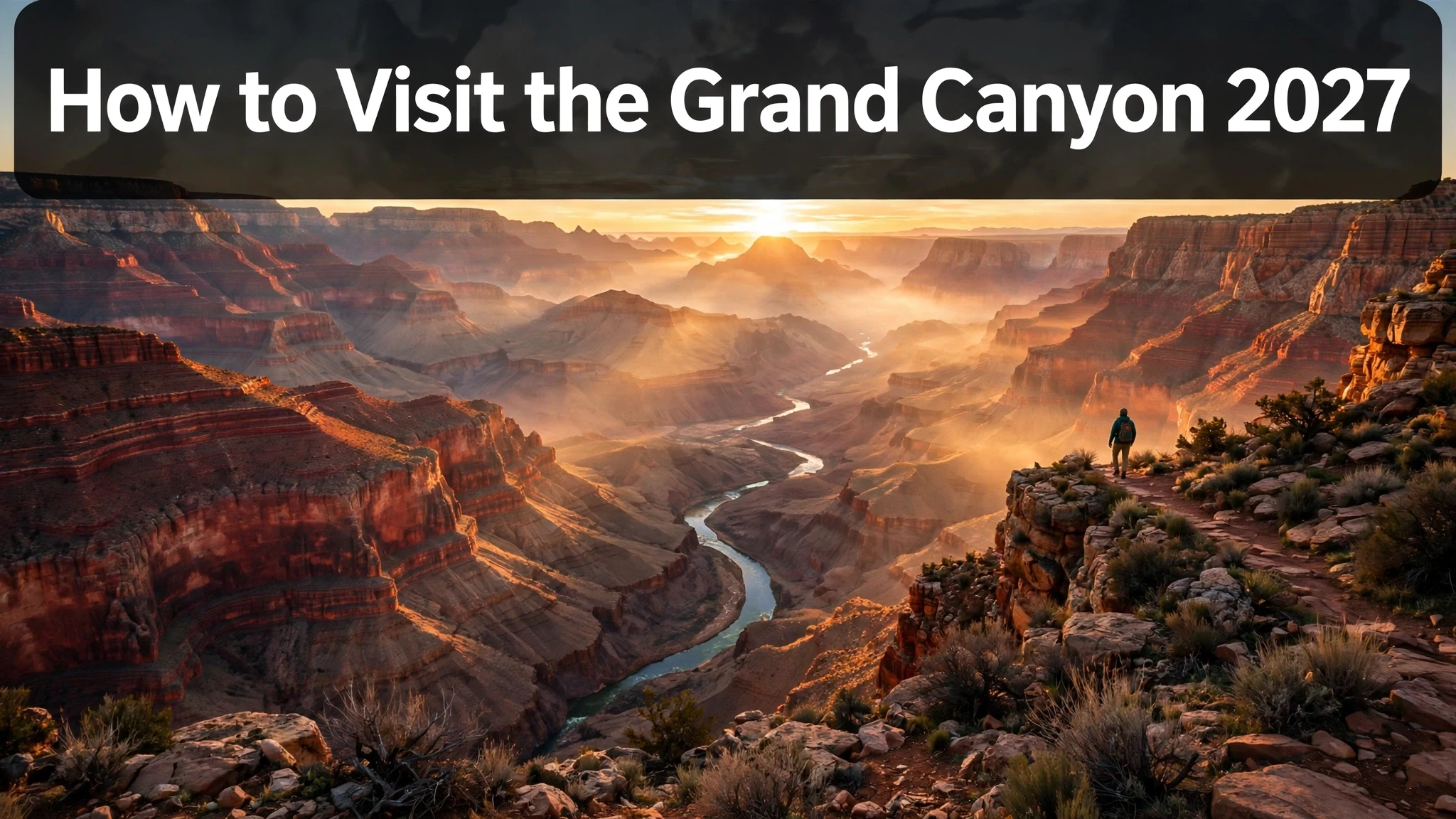
The Grand Canyon is one of those places that photographs cannot prepare you for, because the scale is too large for a picture to hold. Standing at the rim for the first time, looking across a gorge that is a mile deep and many miles wide, with layers of rock that record hundreds of millions of years, is a moment that stops even experienced travellers in their tracks. It is one of the most visited natural wonders in the world, and it deserves to be visited well.
Most first-time visitors go to the South Rim, which is open all year and has the most viewpoints, walks, and services, while the North Rim is quieter, higher, and open only in the warmer months. Choosing between them, deciding when to go, and knowing how to walk safely in the heat are the three decisions that shape the trip, and this guide works through each of them simply.
The canyon is a desert, and it is also a high-altitude place, so the weather, the sun, and the effort of walking need respect. Check current conditions, road closures, and shuttle information on the National Park Service website before you travel, because the park changes with the seasons and some areas close in winter. With a little planning, a first visit can be safe, comfortable, and unforgettable.
South Rim or North Rim: Which One Should You Choose
The South Rim is the choice for almost every first-time visitor, because it is open all year, it is easy to reach from Flagstaff, Phoenix, and Las Vegas, and it has the most viewpoints, trails, lodges, and shuttle buses. The South Rim sits at about 2,100 metres, and its rim trail is mostly flat and paved, so you can walk along the edge for miles, stopping at viewpoints, without any climbing. It is also the busiest part of the park, especially in summer, so expect crowds at the most famous viewpoints.
The North Rim is higher, cooler, and far quieter, and it feels like a different park: pine forests, meadows, and a rim that looks across to the South Rim in the distance. It is open only from mid-May to mid-October, and it is a longer drive from most cities, which is why far fewer people visit it. If you want solitude, cooler temperatures, and a wilder feel, the North Rim is wonderful, but it has fewer services and fewer viewpoints, so it suits a second visit or a visitor who prefers quiet to convenience.
For a first visit, choose the South Rim unless you have a specific reason to go north, such as a summer trip when you want cooler air or a desire to avoid crowds. You can always visit the North Rim another time, and the South Rim will give you the classic Grand Canyon experience that most people dream of, with the most viewpoints and the easiest walking.
When to Go: Seasons, Weather and Crowds
Spring and autumn are the best times to visit the Grand Canyon, with mild temperatures, clear skies, and fewer crowds than summer. March to May and September to November offer comfortable walking weather on the rim, though the inner canyon can still be hot, and the light in spring and autumn is beautiful for photographs. These seasons are the best balance of weather and crowds for most visitors.
Summer is the busiest and the hottest time, with temperatures on the rim often high and temperatures at the bottom of the canyon far higher, sometimes dangerously so. Summer brings thunderstorms in the afternoon, which can be dramatic and dangerous, with lightning and flash floods, so check the forecast and be ready to leave exposed viewpoints. If you visit in summer, start early, drink water constantly, and avoid hiking into the canyon in the middle of the day.
Winter is quiet and beautiful, with snow on the rim and far fewer visitors, but the weather is cold and some roads and trails can be icy. The South Rim remains open, and a winter visit can be magical, with the canyon dusted in snow and the light low and golden. Dress warmly, wear shoes with good grip, and check road conditions before you drive, because mountain roads can close in snow.
The Best Viewpoints Along the South Rim
Mather Point, near the visitor centre, is the first viewpoint most visitors see, and it is a good introduction, with a wide view across the canyon. It is also the most crowded, so visit early in the morning or late in the afternoon, when the light is better and the crowds are thinner. Yavapai Point, a short walk away, has a geology museum and a wonderful view, and it is a good place to learn about the layers of rock you are looking at.
Hopi Point and Mohave Point, on the western part of the rim, are famous for sunset, when the light turns the canyon red and orange and the shadows grow long. The free shuttle bus runs to these points, and arriving an hour before sunset will give you time to find a good spot. Desert View, at the eastern end of the park, has a watchtower and a view that includes the Colorado River, and it is worth the drive for a different perspective.
Walk the Rim Trail between viewpoints rather than driving everywhere, because the trail is mostly flat and paved, and the views change with every step. The section between the visitor centre and the village is easy and popular, while the western section is quieter. Take your time, sit on a bench, and look, because the canyon rewards slow looking more than hurried photographs.
Hiking Into the Canyon: What Beginners Must Know
Hiking into the Grand Canyon is one of the great experiences in the world, but it is also one of the most demanding, and the park warns every year that the hike down is easy and the hike up is hard. The Bright Angel Trail, which starts near the village, is the most popular and the best maintained, with water stations and resthouses, and a short walk down to the first tunnel gives you a taste of the inner canyon without a long climb back. The South Kaibab Trail is steeper and has no water, but it offers extraordinary views from the start.
Never attempt to hike to the river and back in a single day, because the distance and the climb are far greater than most visitors realise, and the heat at the bottom can be dangerous. Rangers rescue hundreds of hikers every year who underestimated the climb, ran out of water, or hiked in the hottest part of the day. If you want to reach the river, plan an overnight stay at Phantom Ranch or a campground, and book far in advance, because permits and beds sell out months ahead.
For a safe and enjoyable hike, start early, carry more water than you think you need, wear a hat and sunscreen, eat salty snacks, and turn back when you have used a third of your water or when you feel tired. The rule is simple: it takes twice as long to climb out as it did to walk down, so plan your time accordingly and be back at the rim well before dark.
Where to Stay, Eat and How to Get Around
Staying inside the park is the best option if you can book early, because the lodges on the South Rim, such as El Tovar, Bright Angel Lodge, and Maswik Lodge, are steps from the rim and let you see sunrise and sunset without driving. They book up months in advance, especially for spring and autumn, so reserve as early as you can. If the park lodges are full, the town of Tusayan, just outside the south entrance, has hotels and restaurants, and Flagstaff, about an hour away, has more choice and lower prices.
Food inside the park is limited and can be expensive, so bring snacks and water, and consider eating a proper breakfast before you enter the park. The lodges have restaurants, and the village has a café and a grocery store, but the choice is small, and in summer the restaurants are busy. A packed lunch eaten at a viewpoint is one of the best meals you can have at the canyon, and it costs far less than a restaurant meal.
The free shuttle buses are the best way to move around the South Rim, because private cars are not allowed on some rim roads, and the shuttles run frequently between viewpoints. Park your car once and use the shuttle, which saves time and stress, and check the shuttle map and timetable at the visitor centre. In winter, some shuttle routes do not run, so check the current schedule before you plan your day.
Staying Safe in the Heat, the Sun and the Heights
The Grand Canyon is a desert, and the sun is strong, even on a cool day, because the air is thin and dry at altitude. Wear a wide-brimmed hat, sunglasses, and sunscreen, and reapply sunscreen often, because sunburn happens quickly and quietly. Drink water before you feel thirsty, and carry more water than you think you need, because there is no water on many trails and the dry air dehydrates you without you noticing.
Altitude affects some visitors, with headaches, dizziness, or tiredness, especially if you arrive from sea level and hike the same day. Take it easy on the first day, walk slowly, drink water, and avoid alcohol until you have adjusted. If you feel unwell, rest, drink water, and seek help from a ranger if symptoms persist, because altitude sickness can become serious.
Stay behind the barriers and fences at viewpoints, and do not climb on rocks near the edge, because falls from the rim are the leading cause of death in the park and they happen every year. The edge is not a place for photographs that risk your life, and the best photographs are taken from behind the barrier, where you are safe. Keep children close, hold their hands near the edge, and do not let them climb on walls or rocks.
Sunrise and Sunset: The Canyon’s Best Hours
Sunrise at the Grand Canyon is a quiet, almost sacred experience, because the park is empty, the air is cool, and the light arrives slowly, turning the cliffs from dark purple to pink, then gold, then red, as the sun rises over the rim. Arrive at your viewpoint at least thirty minutes before sunrise, bring a warm layer and a hot drink, and find a spot away from the main crowd, because the best sunrise is watched in silence, not in a queue. Mather Point and Yavapai Point are good for sunrise, but a quieter spot along the Rim Trail can be even better, because the canyon belongs to you in those early minutes.
Sunset is the most popular time at the canyon, and for good reason: the light grows warmer and longer, the shadows deepen, and the colours become richer with every minute, until the whole canyon glows red and orange and then fades to purple. Hopi Point and Mohave Point are famous for sunset, and they fill up an hour before, so arrive early, bring a jacket, and stay after the sun has set, because the colours after sunset, when the sky turns pink and the canyon darkens, are often the most beautiful of all.
Night at the Grand Canyon is a wonder of its own, because the park is far from city lights and the sky is full of stars, with the Milky Way visible on a clear, moonless night. Stay after sunset, let your eyes adjust, and look up, because a sky full of stars above a canyon a mile deep is a reminder of how small and how lucky we are. Bring a warm layer, a red torch if you have one, and patience, because the stars appear slowly and the best of them come when you have been still for a while.
Visiting With Children or Older Travellers
The Grand Canyon is a wonderful place for children, if you plan for their needs and their energy, because the rim trail is flat and paved, the viewpoints are exciting, and the Junior Ranger programme gives children a booklet, activities, and a badge that makes the visit feel like an adventure. Keep walks short, bring snacks and water, and let children choose a viewpoint or a trail, because a child who feels part of the trip will enjoy it far more than one who is dragged along. Hold children’s hands near the edge, keep them behind barriers, and do not let them climb on rocks, because the edge is dangerous and children do not always understand that.
Older travellers can enjoy the canyon fully, because the rim trail is accessible, the shuttle buses are free and frequent, and many viewpoints are a short, flat walk from the bus stop. Take your time, rest often, and choose the viewpoints that are closest to the shuttle stops, such as Mather Point and Yavapai Point, rather than the longer walks. Bring a hat, sunscreen, and water, and avoid hiking into the canyon in hot weather, because the climb back is demanding at any age and especially so for older visitors.
For both children and older travellers, the key is to plan a slower day: one or two viewpoints in the morning, a long lunch, a rest in the afternoon, and a sunset viewpoint in the evening. A slower day is not a lesser day; it is a day that lets you enjoy the canyon without exhaustion, and the memories from a relaxed visit are better than those from a rushed one. The canyon will still be there tomorrow, and it rewards those who take their time.
My Take:
My honest view is that the Grand Canyon should be visited slowly, because its scale only reveals itself when you stop and look. Visitors who rush from viewpoint to viewpoint, taking photographs and moving on, see the canyon but do not feel it, while those who sit on a bench, watch the light change, and let the size of the place sink in come away changed. The canyon is not a sight to collect; it is a place to spend time in, and an hour of quiet looking is worth more than a day of hurried photographs.
I also believe the South Rim is the right choice for a first visit, and I say that because it gives you the classic experience with the least difficulty. The rim trail is flat, the viewpoints are many, the shuttles are free, and the services are close at hand, so you can enjoy the canyon without worrying about logistics. The North Rim is wonderful, but it is a longer journey and a quieter experience, and it is better saved for a second visit, when you already know what the canyon is and want to see it from a different side.
Another point I keep returning to is the heat, because it is the danger that visitors underestimate most. The rim feels pleasant, the air is dry, and the walk down looks easy, so people set off without enough water and without a plan, and then the climb back in the afternoon heat becomes a serious problem. The park’s warning is simple and true: going down is optional, coming back up is mandatory, and the climb takes twice as long as the descent. Respect that warning, carry water, and turn back early, because the canyon will still be there tomorrow.
I would also say that sunrise and sunset are the two moments that make a Grand Canyon trip unforgettable, and they are free. The light at dawn turns the canyon pink and gold, and the light at sunset turns it red and orange, and the shadows grow long and the colours deepen with every minute. Arrive an hour early, find a quiet spot, and watch, because the change is gradual and beautiful, and a photograph taken in the middle of the day will never capture it. Stay for sunset, and get up for sunrise, because those are the hours the canyon belongs to you.
My honest view is that a short hike into the canyon, even for an hour, changes the whole visit, because from the rim you are looking at the canyon, and from inside you are part of it. Walking down the Bright Angel Trail to the first tunnel, looking back up at the rim, and feeling the temperature rise as you descend gives you a sense of the canyon’s depth that no viewpoint can. You do not need to hike to the river; a short, careful walk down and back is enough to understand the place in a completely different way.
I also believe staying inside the park, if you can book it, is worth the effort, because it lets you see the canyon at the hours when day visitors have left. The rim at dawn, when the park is quiet and the light is soft, and at dusk, when the crowds have gone and the stars come out, is a different place from the rim at midday. A lodge by the rim is not just a bed; it is access to the canyon’s best hours, and those hours are the ones you will remember.
Another point I keep returning to is the shuttle bus, because it is the smartest way to see the South Rim and many visitors ignore it. Driving between viewpoints wastes time, fuel, and patience, while the shuttle runs frequently, drops you at the best points, and lets you walk the trail between stops. Park the car once, use the shuttle, and walk, because that is how the park was designed to be seen, and it is how you will see the most with the least stress.
I would also say that the Grand Canyon teaches humility, because it is a place that makes human life feel small and brief. The rocks are hundreds of millions of years old, the river has carved the canyon over millions of years, and a human life is a tiny moment against that scale. Standing at the rim and understanding that is not frightening; it is calming, and it puts the worries of daily life into perspective. That feeling is the real gift of the canyon, and it is why people return.
My honest view is that you should bring water, a hat, and sunscreen, and then forget about everything else and look. The canyon does not need equipment or expertise; it needs attention, and attention is free. Sit, watch the light, listen to the wind, and let the place speak, because the Grand Canyon has been speaking for millions of years, and a visitor who listens will hear something worth remembering.
Finally, I believe a Grand Canyon trip is a reminder that the natural world is still larger and more beautiful than anything we have built, and that is worth protecting. The park exists because people chose to preserve it, and visiting it respectfully, staying on trails, carrying out your rubbish, and following the rangers’ advice is part of that preservation. Leave the canyon as you found it, take only photographs and memories, and let the next visitor have the same experience you had.
My honest view is that the Grand Canyon is best seen at the edges of the day, at sunrise and sunset, and a visitor who only sees it at midday has missed its soul. The midday canyon is impressive, but it is flat, bright, and crowded, while the canyon at dawn and dusk is alive, with colours that change every minute and a silence that makes the scale feel real. I would tell any first-time visitor to get up early once and to stay late once, because those two hours will be the ones they remember, and they cost nothing. The canyon does not charge for its best moments; it only asks you to be there when they happen, and that is a fair price for something so beautiful.
Frequently Asked Questions
Is the South Rim or North Rim better for a first visit?
The South Rim is better for most first-time visitors, because it is open all year, easy to reach, and has the most viewpoints, trails, lodges and shuttle buses. The North Rim is quieter and cooler but open only from mid-May to mid-October and has fewer services.
How many days do I need at the Grand Canyon?
Two days is a good first visit: one day for the viewpoints and the Rim Trail, and a second day for a short hike into the canyon and a sunrise or sunset. One day is enough for the main viewpoints, but you will miss the quieter hours.
Can I hike to the bottom of the Grand Canyon in one day?
You should not hike to the river and back in one day, because the climb out is long, steep, and hot, and rangers rescue many hikers who try it. Plan an overnight stay at Phantom Ranch or a campground, booked far in advance, if you want to reach the bottom.
When is the best time to visit the Grand Canyon?
Spring and autumn are the best times, with mild temperatures and fewer crowds. Summer is hot and busy, with afternoon thunderstorms, while winter is quiet and beautiful but cold, with possible snow and ice on the rim.
Do I need a ticket to visit the Grand Canyon?
You need a park entrance pass, which you can buy at the entrance or online, and it is valid for several days. Some lodges, tours, and Phantom Ranch stays need separate bookings far in advance, so check the National Park Service website before you travel.
Is the Grand Canyon safe for children?
Yes, the Grand Canyon is safe for children if you hold their hands near the edge, keep them behind barriers, and choose easy walks such as the Rim Trail. Do not let children climb on rocks near the edge, and avoid hiking into the canyon with young children in hot weather.