How United Nations Works Simply
In this post
The United Nations is the largest international organisation that exists. It was founded in 1945, after the Second World War, when 51 countries committed themselves to maintaining international peace and security, building friendly relations between nations, and promoting social progress and human rights. Today it has 193 member states. Almost every country on Earth belongs to it. But what does it actually do, who runs it, and why can one country block the whole organisation with a single word? This post explains the UN in simple words, room by room.
Born From War, Built For Peace
The UN was created because the world had just lived through the most destructive war in history, and its founders wanted a place where countries would talk before they fought. The organisation’s founding document is the UN Charter, a treaty that sets out what the UN is for and how it works. The Charter created six principal organs, which are the UN’s main bodies, and gave each of them a different job.
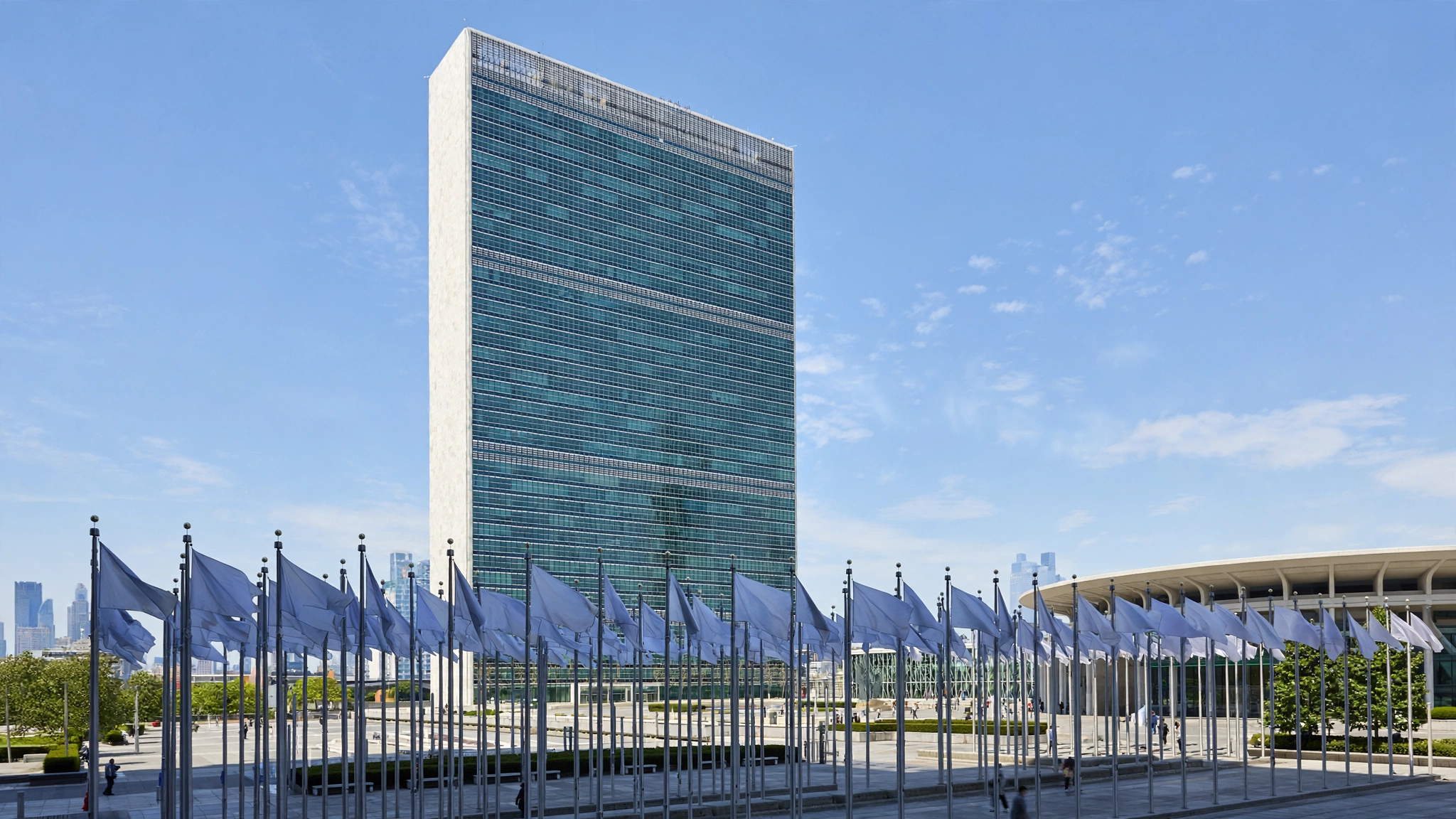
The UN’s headquarters stand in New York City, with a second major centre in Geneva, Switzerland. Its work is much wider than the meetings most people see on television. It runs peacekeeping missions, delivers food and shelter in emergencies, runs health and education programmes through specialised agencies such as the World Health Organization and UNESCO, and sets the rules for everything from air travel to postal services. The political heart of the UN, though, is in two rooms in New York: the General Assembly and the Security Council.
193 Members, One Vote Each In The Assembly
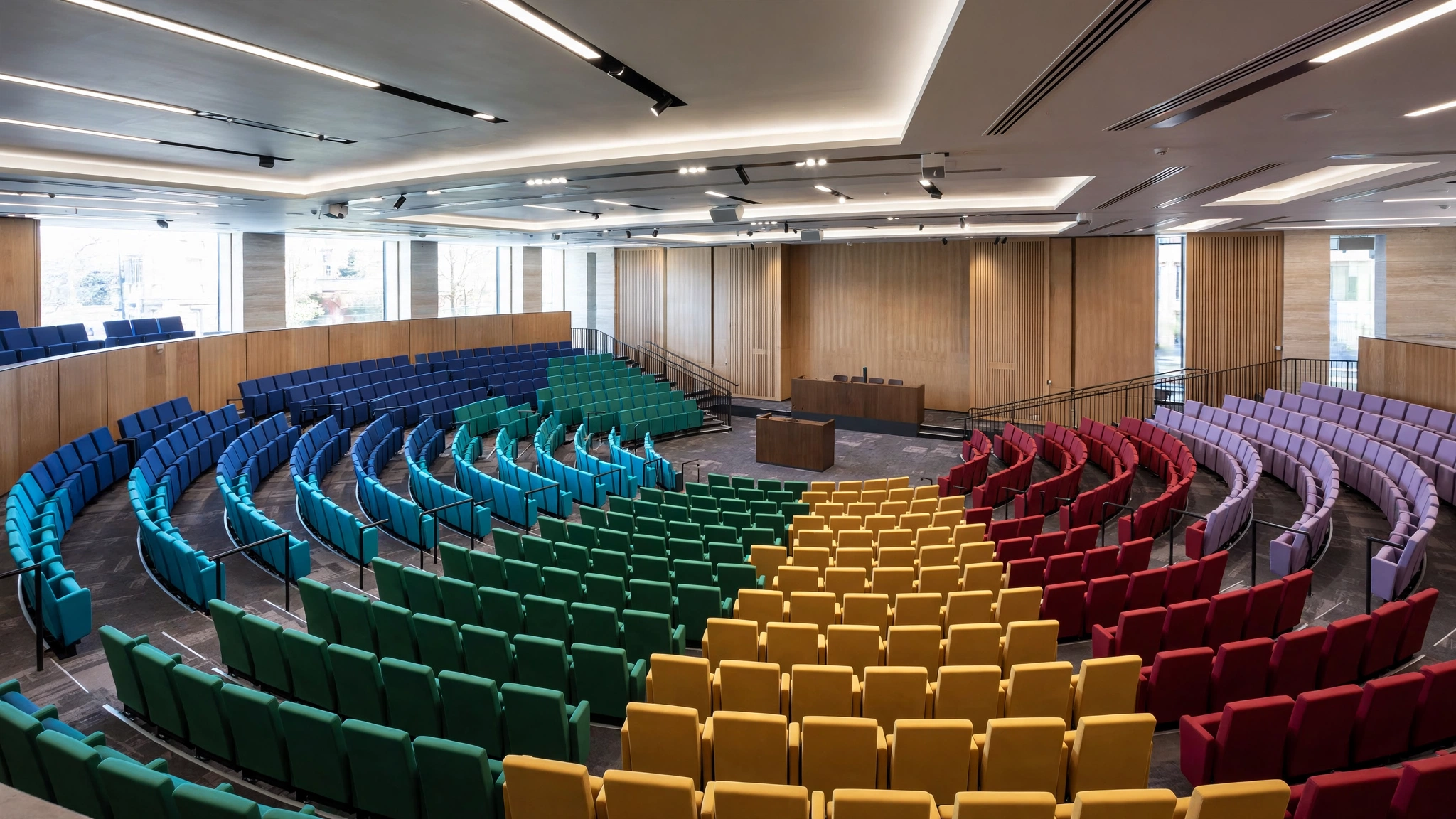
The General Assembly is the UN’s main deliberative body. It consists of all United Nations member states, and each country has one vote, whether it is large or small. It meets in regular session once a year, and it oversees the UN budget, appoints the non-permanent members of the Security Council, receives reports from other parts of the UN, and makes recommendations in the form of General Assembly resolutions.
The Assembly can discuss any matter within the Charter, and it elects the Secretary-General on the Security Council’s recommendation, admits new members following a Security Council proposal, and elects the judges of the International Court of Justice. Its resolutions are recommendations, not laws. They carry political weight, and they can shape what the world thinks is acceptable, but they do not bind member states the way a Security Council decision can. The Assembly has no veto. Every member’s vote counts the same, which is why small countries value it so highly.
The Security Council And The Veto
The Security Council is charged with maintaining international peace and security. Its powers include establishing peacekeeping operations, imposing international sanctions, and authorising military action, exercised through Security Council resolutions. Unlike the Assembly, the Council can adopt compulsory resolutions that bind all member states.
The Council has 15 members: five permanent members with veto power — China, France, Russia, the United Kingdom and the United States — and ten elected members who serve two-year terms. On substantive matters, a resolution needs nine votes in favour, but a negative vote by any permanent member blocks it. That blocking power is the veto. It means that any one of the five permanent members can stop the Council from acting, even if the other fourteen members all agree. The veto does not apply to the General Assembly, which is one reason countries turn to the Assembly when the Council is blocked.
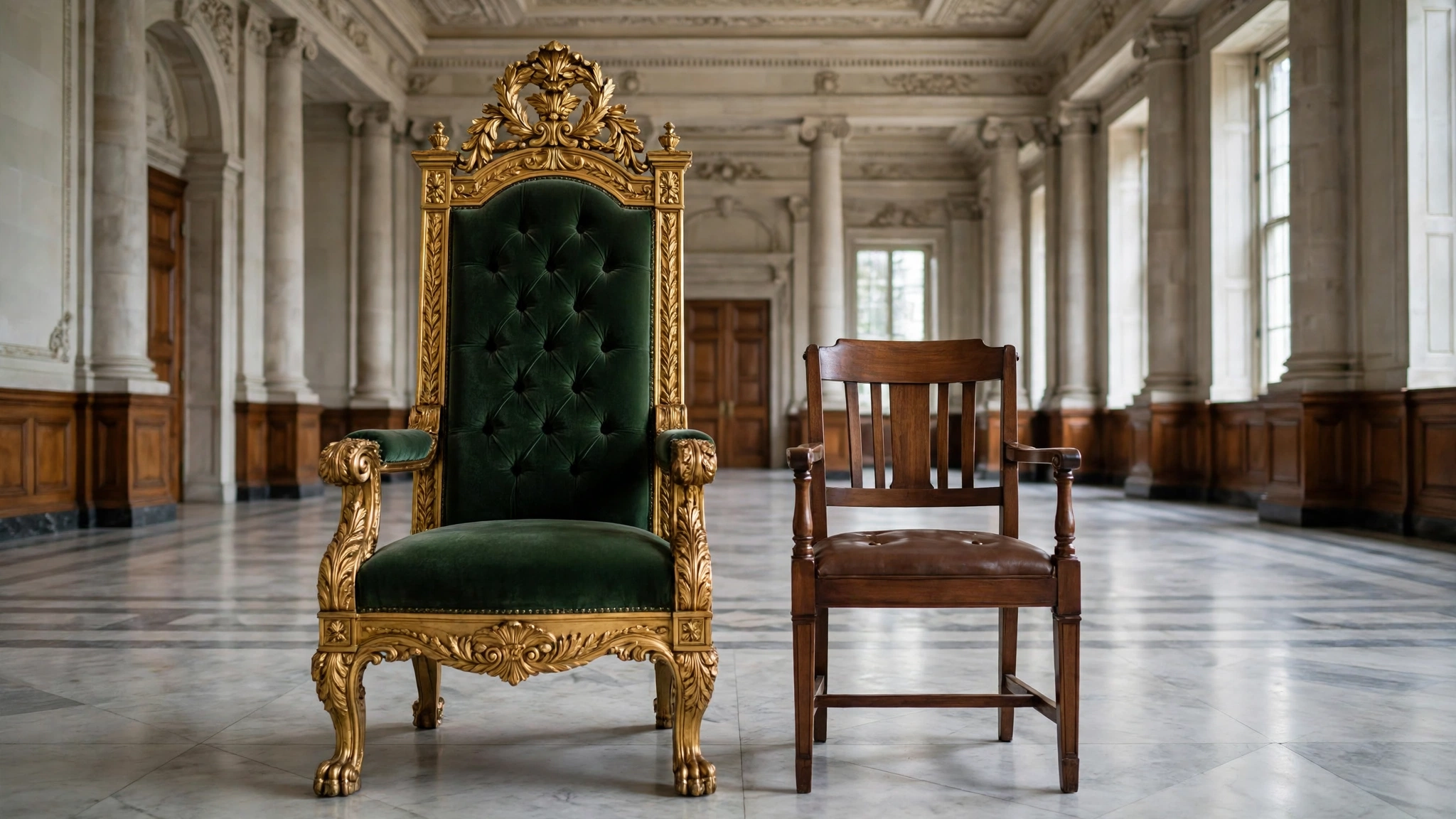
The five permanent members were the major victorious powers of the Second World War, and the structure has barely changed since 1945, even though the world has changed enormously. That is the UN’s most argued-about feature. Supporters say the veto keeps the great powers inside the system, because a system that could order them around would simply be ignored. Critics say it lets one country paralyse the whole organisation on the issues that matter most.
The Other Four Principal Organs
Beyond the Assembly and the Council, the Charter created four more principal organs. The Economic and Social Council, known as ECOSOC, coordinates the economic, social and related work of the UN’s specialised agencies, and has 54 members serving staggered three-year terms. The Trusteeship Council was designed to supervise trust territories, former colonies and mandates, but it has been inactive since 1994, when Palau, the last trust territory, became independent.
The International Court of Justice, based in the Peace Palace in The Hague in the Netherlands, is the UN’s principal judicial organ. It settles legal disputes submitted to it by states and gives advisory opinions on legal questions. Its fifteen judges are elected for nine-year terms. The Secretariat, headed by the Secretary-General, is the UN’s administrative organ. It provides the studies, information and facilities the other bodies need, carries out tasks directed by the Council, the Assembly and ECOSOC, and is led by a Secretary-General elected for a five-year mandate, who is the UN’s foremost representative.
The Secretary-General: The World’s Top Diplomat
The Secretary-General is the most visible person in the UN system. The Charter says the Secretary-General is elected by the General Assembly, following a proposal by the Security Council, for a five-year term. The Secretary-General leads the Secretariat, a staff of international civil servants working worldwide, and is expected to act for the UN as a whole, not for any one country. The Charter says staff must not seek or receive instructions from any authority other than the UN, and member countries must respect the international character of the Secretariat.
In practice, the Secretary-General’s power is the power of persuasion. The Secretary-General has no army and no budget of their own to command. What the office has is a platform: the ability to speak to the world, to visit trouble spots, to appoint envoys, and to bring issues to the Security Council’s attention. The best Secretaries-General have used that platform to mediate conflicts that nobody else could touch. The weakest moments of the office come when the great powers disagree and the platform is all the Secretary-General has.
What The UN Does Beyond New York
Most of the UN’s daily work happens far from the Council chamber, through funds, programmes and specialised agencies. The UN Development Programme works on poverty and development, UNICEF works for children, the World Food Programme delivers food in emergencies, the UN refugee agency UNHCR protects refugees, and the World Health Organization coordinates global health work. These bodies are financed largely through voluntary contributions, not through the UN’s regular budget, and each has its own head and governing board.
The UN also sets shared goals for the whole world. In September 2015, the General Assembly approved the 2030 Agenda for Sustainable Development, with 17 Sustainable Development Goals and 169 targets to be met by 2030, covering poverty, hunger, health, education, gender equality, clean water, energy, climate action and more. The goals are not laws. They are promises that countries made to each other, and the UN tracks progress towards them. They show the UN at its broadest: not a world government, but a framework in which countries agree on common aims and report on how far they have got.
Peacekeeping: Soldiers In Blue Helmets
Peacekeeping is the UN’s best-known field activity. The Security Council establishes peacekeeping operations, and member states contribute soldiers and police, who wear blue helmets and serve under UN command. Peacekeepers monitor ceasefires, protect civilians, help disarm fighters, and support elections and rebuilding after wars. They can only deploy with the consent of the countries involved, except where the Security Council authorises stronger action, and they are supposed to be impartial between the parties to a conflict.
Peacekeeping is also where the UN’s limits show most clearly. Missions depend on member states to provide troops, equipment and money, and they depend on the Security Council to agree on what the mission should do. When the Council is divided, missions can be given vague mandates and too few resources. When it agrees, peacekeeping has helped countries move from war to uneasy peace, and in some cases to stable democracy. It is slow, dangerous work, and it rarely makes headlines when it succeeds.
What The UN Cannot Do
The UN is not a world government, and the Charter does not give it the power to act as one. It cannot tax, it cannot raise its own army, and it cannot force a country to accept a decision it has voted against, except through Security Council resolutions that bind members under the Charter. Even those resolutions depend on member states to carry them out. The UN has no police force of its own to enforce them.
That is why the UN often looks weak in a crisis. When the great powers agree, it can act with real force. When they disagree, the veto stops the Council, and the Assembly can only recommend. The UN’s founders accepted that bargain deliberately. They believed a flawed forum where every country had a seat was better than no forum at all, and that keeping the great powers talking inside the system was worth the cost of frequent deadlock. Whether that bargain still works is the argument that runs through every debate about reforming the UN.
Why The UN Still Matters
For all its limits, the UN does three things no other body does. It gives every country, large and small, a seat and a vote in the Assembly. It provides the only forum where the Security Council can make decisions that bind all members on peace and security. And it runs the programmes and agencies that feed, shelter, vaccinate and educate millions of people who would otherwise be left alone with their crises. Countries complain about the UN constantly, and they keep coming back to it, because there is no other table where everyone is invited.
The simple way to remember how it works is this. The Assembly talks. The Council decides, when it can. The Court judges. The Secretariat runs the machine. The Secretary-General speaks for the whole. And the veto means that on the hardest questions, the UN can only move as fast as its five most powerful members allow.
Frequently Asked Questions
How does the United Nations work in simple words?
The United Nations works through six main organs created by its Charter. The General Assembly, where all 193 member states sit with one vote each, discusses issues and makes recommendations. The Security Council, with 15 members, takes decisions on peace and security that can bind all members, but any of its five permanent members can block a decision with a veto. The International Court of Justice settles legal disputes, the Economic and Social Council coordinates economic and social work, the Secretariat runs the organisation day to day under the Secretary-General, and the Trusteeship Council has been inactive since 1994.
How many countries are members of the United Nations?
The United Nations has 193 member states. It was founded in 1945 by 51 countries, and membership has grown as new countries became independent and joined. Almost every country in the world is a member. A small number of places, such as the Holy See and the State of Palestine, take part as non-member observer states rather than full members. In the General Assembly, each member state has one vote, whatever its size or population.
What is the UN Security Council veto?
The veto is the power of each of the five permanent members of the Security Council — China, France, Russia, the United Kingdom and the United States — to block a substantive resolution by voting against it. A resolution needs nine votes in favour, but a negative vote from any permanent member stops it, even if the other fourteen members agree. The veto does not apply in the General Assembly. Supporters say it keeps the great powers inside the UN system, while critics say it lets one country paralyse the organisation on the most important questions.
Who leads the United Nations?
The United Nations is led day to day by the Secretary-General, who heads the Secretariat and is the UN’s foremost representative. The Secretary-General is elected by the General Assembly, following a proposal by the Security Council, for a five-year mandate. The Secretary-General has no army and no independent budget, so the power of the office is the power of persuasion: speaking to the world, mediating conflicts, appointing envoys, and bringing issues to the Security Council. The staff of the Secretariat are international civil servants who must not take instructions from any single country.
Can the United Nations force a country to do something?
Only in a limited way. Security Council resolutions on peace and security are binding on all member states under the Charter, and the Council can impose sanctions and authorise military action. But the UN has no army or police force of its own, so it depends on member states to carry out its decisions. General Assembly resolutions are recommendations, not laws. When the permanent members of the Security Council disagree, the veto can block action entirely, which is why the UN often looks powerless in a crisis even though it remains the only forum where all countries sit together.
Sources
- Ferrovial — What is the United Nations and who are the members?: https://www.ferrovial.com/en/resources/united-nations/
- Wikipedia — United Nations System: https://en.wikipedia.org/wiki/United_Nations_System