How US Supreme Court Works
In this post
- The Highest Court In The Land
- What The Court Actually Does
- The Courts Below The Supreme Court
- A Flood Of Requests, A Trickle Of Cases
- How A Case Reaches The Court
- The Rule Of Four
- What Happens When The Court Decides
- Precedent: Why One Case Controls Many
- Who Sits On The Court
- Why The Court Matters In Daily Life
- How To Follow The Court Without A Law Degree
- You may also like
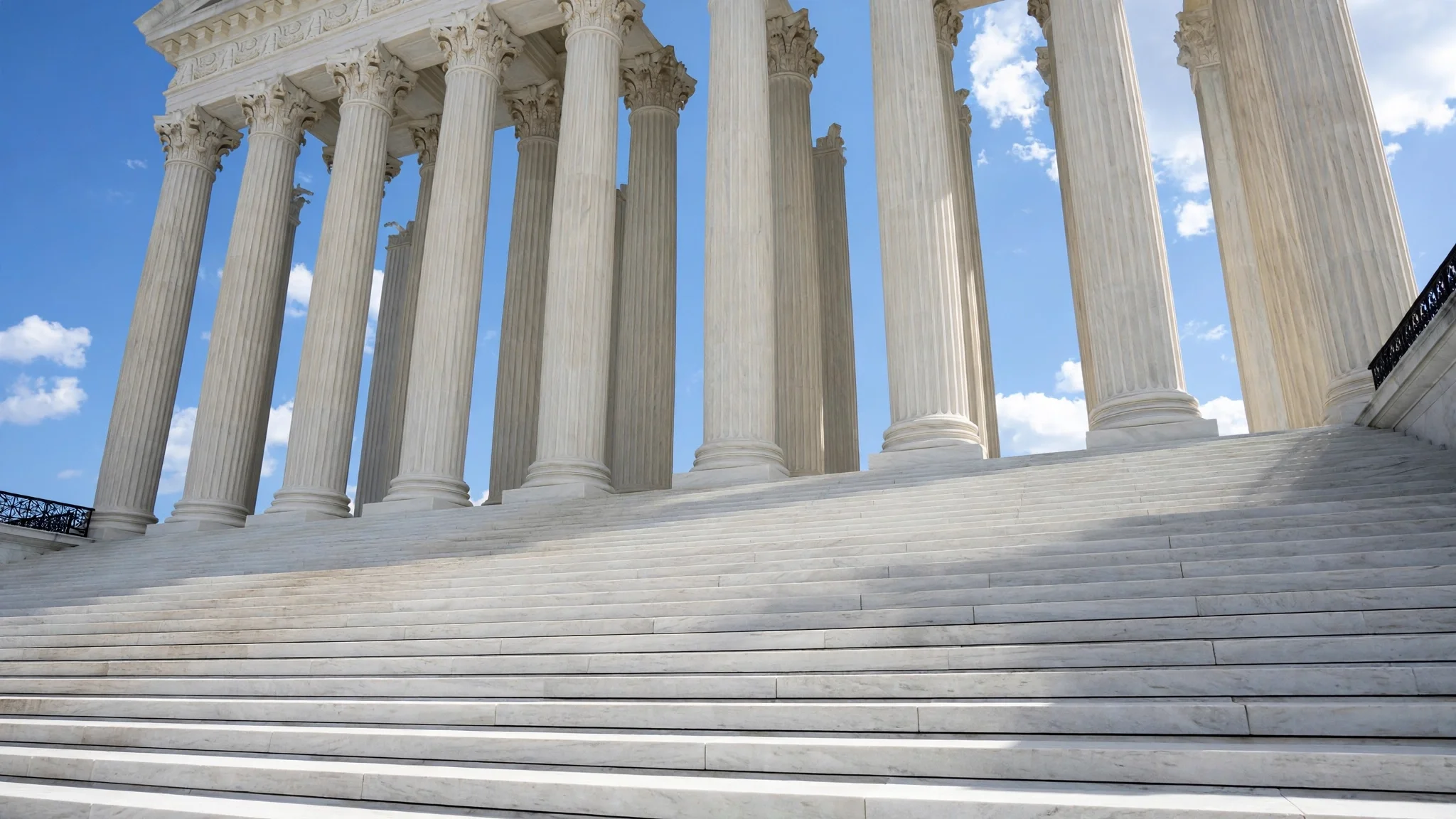
Nine people sit in a marble building in Washington, DC, and their decisions bind more than 330 million Americans. They do not pass laws. They do not command armies. They do not run for election. Yet when they rule on the meaning of the Constitution, every court, every state and every citizen must follow. That is the United States Supreme Court, often called the highest court in the land.
This post explains what the Court does, how a case reaches it, and why it hears so few cases while mattering so much. The facts come from the University of Texas Permian Basin’s guide to the Court, drawing on official court sources.
The Highest Court In The Land
The Supreme Court sits at the top of the American justice system. Below it are the lower federal courts, and beside it are the courts of the fifty states. When the Supreme Court speaks on a question of federal law or the Constitution, its word is final, unless a constitutional amendment overturns it, or the Court itself later reverses its decision in a future case.
That finality is the Court’s great power and its great responsibility. A ruling does not only settle one dispute between two parties. It sets a precedent, a rule that lower courts must follow in similar cases. A single decision can therefore shape the law for the whole country, for decades, long after the original case is forgotten.
What The Court Actually Does
At its core, the Supreme Court’s role is to interpret the United States Constitution and to ensure that federal and state laws align with it. Its decisions affect how laws are applied nationwide, shaping issues such as voting rights, criminal sentencing, and the balance of power between state and federal governments.
In simple terms, the Court does four things. It interprets the Constitution. It resolves disputes involving federal law. It reviews decisions from lower courts. And it sets legal precedents that guide future cases. Because its rulings apply across the country, the Court plays a critical role in keeping the justice system consistent, so that the same law does not mean different things in different states.
The Courts Below The Supreme Court
To understand the Supreme Court, it helps to see the ladder below it. The federal court system has two main levels beneath the Court. At the bottom are the United States District Courts, the trial-level courts where federal cases begin. There are 94 district courts across the country, where judges hear cases involving federal law, often with juries present. Most federal cases start here, with evidence, witnesses and a verdict.
Above the district courts are the United States Courts of Appeals, also known as circuit courts. These courts review district court decisions to determine whether the law was applied correctly. Appellate courts do not use juries. Instead, panels of judges evaluate legal arguments and issue rulings. A case that loses at trial may be appealed to a circuit court, and a case that loses there may ask the Supreme Court to step in.
A Flood Of Requests, A Trickle Of Cases
Each year, the Supreme Court receives around 10,000 petitions, yet it only agrees to hear about 70 to 80 cases. When the Court declines a case, the lower court’s ruling usually stands, which makes the Supreme Court the final word in many disputes even without hearing them.
The numbers are striking. The Court accepts fewer than 1 percent of the requests it receives. That selectiveness is deliberate. The Court is not meant to correct every mistake in every case. It is meant to decide the questions that matter most: questions where lower courts disagree, questions about the meaning of the Constitution, and questions whose answers will affect the whole country.
How A Case Reaches The Court
After a case moves through the lower courts, a party may ask the Supreme Court to review it by filing a writ of certiorari. The name is Latin, and the idea is simple: it is a formal request asking the Court to call up the record of the case and look at it. The Court is not required to accept these requests, and in fact it refuses almost all of them.
Most cases start in a district court. If the outcome is appealed, the case moves to a Court of Appeals. From there, the losing party can file the writ. The justices then decide whether the case is significant enough to hear. The journey from a trial courtroom to the Supreme Court can take years, and most cases never complete it.
The Rule Of Four
The decision to hear a case is made by the justices themselves, using a rule called the rule of four. If at least four of the nine justices agree that a case is significant, the Court will review it. Four votes are enough. The other five justices may disagree, but the case is still heard.
The rule of four matters because it stops a small majority from shutting out important questions. A case that four justices find troubling or important will be heard, even if five would rather leave the lower court’s ruling alone. The rule protects minority views inside the Court, and it ensures that difficult questions get a full hearing rather than being buried by a vote.
What Happens When The Court Decides
Once the Court agrees to hear a case, both sides file written arguments, and outside groups may file their own briefs explaining why the issue matters to them. The justices then hear oral arguments, in which lawyers answer questions from the bench. After argument, the justices meet in private, discuss the case, and vote.
The majority’s decision becomes the ruling of the Court. One justice writes the main opinion, explaining the reasoning. Other justices may write concurring opinions, agreeing with the result for different reasons, or dissenting opinions, explaining why they disagree. Those dissents matter, because a dissent today can become the majority view in a future case, when the Court revisits the question.
Precedent: Why One Case Controls Many
When the Supreme Court decides a case, lower courts must follow its reasoning in similar cases. That is precedent, and it is what gives the Court its lasting influence. A ruling on voting rights, for example, does not only decide one election dispute. It tells every lower court how to handle similar disputes in the future.
Precedent is also why the Court is cautious about overturning its own past decisions. Stability in the law helps people plan their lives and businesses, knowing that the rules will not change overnight. Yet the Court does sometimes reverse itself, when it concludes that an earlier decision was wrong, or that times have changed so much that the old rule no longer fits. A ruling is final, but it is not frozen forever.
Who Sits On The Court
The Court has nine justices. They are appointed by the president and confirmed by the Senate, and they serve for life, or until they choose to retire. Lifetime service is meant to free justices from political pressure. A justice who never needs to run for re-election can, in theory, decide cases on the law alone, without worrying about the next campaign.
That independence is also why appointments are so fiercely contested. A new justice may serve for thirty years or more, shaping the law long after the president who appointed them has left office. The balance of the Court, the mix of views among its nine members, can decide the direction of American law for a generation.
Why The Court Matters In Daily Life
The Court’s work can seem distant, wrapped in Latin phrases and marble columns. Its effects are not distant at all. Its rulings influence civil rights, federal authority, voting laws, business regulations, criminal justice and many other parts of daily life. A decision about how police may search a home, how districts may be drawn, or how a federal agency may act, reaches into ordinary routines in every state.
Understanding the Court’s role is therefore essential for anyone interested in law, public policy, criminal justice, government or constitutional rights. The Court does not make the news every day, but when it does, its decisions often matter more, and last longer, than the headlines of any single week.
How To Follow The Court Without A Law Degree
Readers do not need legal training to follow the Court. Three questions are enough for most cases. First, what question is the Court being asked to decide? Second, what did the lower courts say, and why did they disagree? Third, what rule will the decision set for future cases like this one?
If you can answer those three questions, you can understand most Supreme Court news. The names and the legal language matter less than the rule the case will leave behind. And when the Court declines a case, remember the other lesson of this post: declining is also a decision, because the lower court’s ruling then stands as the final word.
You may also like
Frequently Asked Questions
How does the US Supreme Court work?
The Supreme Court sits at the top of the American justice system, interpreting the Constitution, resolving disputes over federal law, reviewing lower court decisions, and setting precedents that guide future cases across the whole country. Most cases reach it after starting in one of the 94 district courts, moving to a Court of Appeals, and then arriving through a writ of certiorari, a formal request for review. The justices use the rule of four, under which four of the nine justices must agree a case is significant for it to be heard, and the Court’s decision is then final unless a constitutional amendment overturns it or the Court later reverses itself.
How many cases does the Supreme Court hear each year?
The Court receives around 10,000 petitions each year but agrees to hear only about 70 to 80 cases, accepting fewer than 1 percent of requests. When it declines a case, the lower court’s ruling usually stands, which makes the Court the final word in many disputes even without a hearing. The justices focus on cases that could have a broad legal or constitutional impact, especially where lower courts disagree or where the meaning of the Constitution is at stake.
What is the rule of four in the Supreme Court?
The rule of four is the method the justices use to decide which cases to hear: if at least four of the nine justices agree that a case is significant, the Court will review it, even if the other five would prefer not to. The rule protects minority views inside the Court and ensures that difficult or important questions receive a full hearing rather than being set aside by a small majority. It applies to petitions for a writ of certiorari, the formal request by which a losing party asks the Court to review a lower court decision.
Can Supreme Court decisions be overturned?
Supreme Court rulings are final and binding, but they can be overturned in two ways: by a constitutional amendment that changes the Constitution itself, or if the Court later reverses its own earlier decision in a future case. The Court is cautious about reversing precedent, because stability helps people and lower courts rely on settled law, yet it does sometimes conclude that an earlier ruling was wrong or no longer fits changed times. Until one of those two things happens, the Court’s ruling controls every lower court in the country.
What is the difference between district courts and courts of appeals?
District courts are trial-level courts where federal cases begin, with 94 courts across the country hearing cases involving federal law, often with juries, evidence and witnesses. Courts of Appeals, also called circuit courts, sit above them and review district court decisions to determine whether the law was applied correctly, using panels of judges and no juries. A case that loses in a district court can be appealed to a circuit court, and a case that loses there can ask the Supreme Court to review it, though the Court accepts fewer than 1 percent of such requests.
Sources
- University of Texas Permian Basin — https://online.utpb.edu/about/articles/criminal-justice/what-does-the-us-supreme-court-really-do/