Hurricane Simon Slams Mexico's Pacific Coast: 5 Dead as Storms Batter the Shore
Hurricane Simon and the remnants of Tropical Storm Rachel swept across Mexico's Pacific coast, killing at least 5 people. What really happened on the coast.
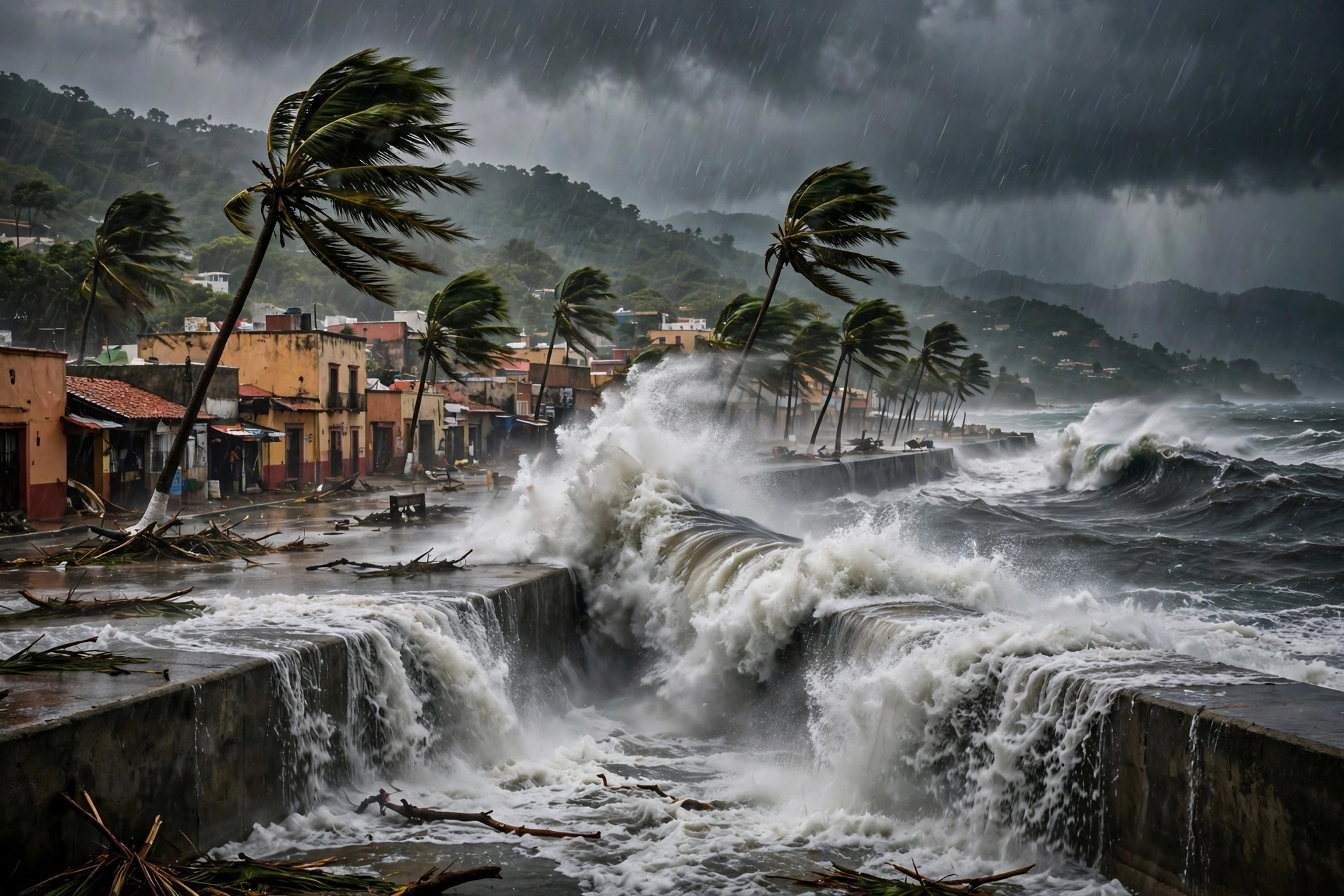
The Pacific coast of Mexico has just lived through days of fear. Two powerful weather systems — Hurricane Simon and Tropical Storm Rachel — swept across the region one after another, flooding streets, tearing down trees and electricity poles, blocking roads and filling homes with water. At least five people have lost their lives, families have been rescued by helicopter, and hundreds of thousands of people along the coast are still watching the sky, because the danger is not fully over yet.
It is the kind of week that reminds everyone how small human beings are in front of the ocean and the wind. Famous beach cities that usually appear in holiday photos — Puerto Vallarta, Acapulco, Mazatlán — suddenly appeared in emergency headlines instead. This is what happened, and what may still be coming.
Five Lives Lost to Two Storms
The human cost of this double storm has been heartbreaking. Hurricane Simon claimed the life of a 71-year-old man in Chilpancingo, the capital of the southern state of Guerrero, who died when a wall collapsed on him, Governor Evelyn Salgado confirmed during the daily presidential press conference.
Tropical Storm Rachel brought its own tragedy further north. In Baja California, four members of one family — including two children — were found dead on the outskirts of the city of Ensenada, the state prosecutor’s office reported. Baja California’s governor said a minor had also been found dead after Rachel’s flooding in recent days and that around ten people were unaccounted for at one point. Prosecutors later said five people remained missing, while security forces used helicopters to rescue 32 people from the floods, and more than 50 people were being looked after in temporary shelters. Search teams continued working as waters slowly went down, and officials warned that final numbers could still change.
A Giant Named Simon
Simon was no ordinary storm. It formed on October 7 from an area of low pressure south of Mexico and grew into a major hurricane — at its peak a Category 4 storm with sustained winds reaching about 250 kilometres per hour, one of the strongest systems of an extremely active 2026 Pacific hurricane season.
As it moved slowly along the coast over the weekend and into Monday, October 12, its outer bands lashed coastal communities with severe wind and heavy rain. Forecasters at the US National Hurricane Center had feared a direct, devastating strike. In the end, the storm changed course, stayed mostly offshore, and began to weaken as it rubbed against Mexico’s mountains, dropping to Category 2 strength. It was a mercy — but even a weakened Simon was strong enough to cause serious damage.
In Guerrero, the storm uprooted trees and electricity poles, blocked roads and flooded homes, including in the famous port city of Acapulco. Heavy rain caused landslides and power cuts around Acapulco and Chilpancingo. The damage spread across a long stretch of coastline, with authorities reporting destruction in five states: Guerrero, Michoacán, Colima, Jalisco and Nayarit.
One of the strangest scenes came from Puerto Vallarta, the tourist jewel that had been expected to take the storm’s full force. After a night of fear, the city woke up on Monday to clear skies and even a rainbow, while navy personnel patrolled the boardwalk and powerful waves still crashed against the shore. Shops began removing the wooden panels from their windows, though the city’s international airport suspended operations until Tuesday morning as a precaution.
The Danger Is Not Over Yet
Anyone hoping the story ended on Monday received a warning instead. Mexico’s national civil protection coordinator, Laura Velázquez, said the official forecast expected Simon to come ashore near Mazatlán, in Sinaloa state, around Wednesday night — weakened, most likely as a Category 1 hurricane, but still dangerous. The National Hurricane Center warned that rainfall of 5 to 10 inches (about 13 to 25 centimetres) over west-central Mexico in the coming days could trigger life-threatening floods and mudslides. Officials also warned of waves up to five metres high in some coastal areas, with Sinaloa and Nayarit placed on alert.
This is the cruel pattern of hurricanes: the wind makes the headlines, but the water does most of the killing. Rivers and streams in Michoacán and Colima had already flooded nearby communities. Saturated hillsides can give way hours or even days after the rain stops, burying roads and homes under mud. That is why rescue brigades, the armed forces, the National Guard and the Navy have been deployed with heavy machinery to clear blocked roads and reach cut-off towns — and why officials keep telling people to stay alert even where the sky has turned blue.
Why This Coast Is So Vulnerable
Mexico’s Pacific coast sits in one of the world’s great hurricane nurseries. Every year, warm ocean water off the coast feeds tropical storms that spin northward along the shoreline. This year, the danger has been supercharged: the El Niño phenomenon has raised Pacific water temperatures, and the AFP news agency reported that this warming is fuelling a more intense hurricane season in the region. Simon was the twenty-first named storm of the season — an extraordinary number that tells its own story.
Geography makes the risk worse. Much of the coast is backed by steep mountains, so when a storm squeezes days of rain against those slopes, the water rushes down all at once — turning streams into torrents and hillsides into landslides. Coastal cities like Acapulco, still carrying painful memories of past hurricane disasters, know this danger well. Homes built on hillsides and near riverbeds face the worst of it, and they are often the homes of the poorest families.
Help Reaches the Coast, Road by Road
The response has been a race against water and mud. Authorities deployed brigades with heavy machinery, backed by the Armed Forces, the National Guard and the Navy, to push fallen trees and debris off highways and reopen roads that landslides had buried. In Baja California, where Rachel’s floods hit hardest, helicopters lifted 32 people to safety, and officials set up temporary shelters that were caring for more than 50 people whose homes were under water. Soldiers and rescue workers went street by street through flooded neighbourhoods, checking for anyone trapped and helping families carry what they could save to higher ground.
Ordinary residents, meanwhile, have learned to live in two minds. In Puerto Vallarta, people removed the wooden boards from shop windows and went back to exercising along the seafront promenade under a clear sky — yet many told reporters they would stay on alert, because nobody could say for certain whether Simon would drift away, fall apart, or turn back toward the coast. That uncertainty is the daily reality of hurricane country: blue sky in the morning does not guarantee a safe night, and every family along the shore keeps one eye on the forecast and one bag packed by the door. Schools, ports and airports across the region adjusted their plans day by day, waiting for the official word that this long storm was finally finished.
Frequently Asked Questions
How many people died in Hurricane Simon and Tropical Storm Rachel?
At least five people have died in total, according to Mexican authorities and news agency reports — one man killed by Hurricane Simon in Guerrero, and four members of a family, including two children, killed by Tropical Storm Rachel’s flooding in Baja California.
Did Hurricane Simon make landfall in Mexico?
Not directly at its strongest. Simon stayed mostly offshore as it moved along the coast, weakening from its Category 4 peak. However, forecasters expected it to come ashore near Mazatlán, Sinaloa, around Wednesday night as a weaker Category 1 hurricane.
Which areas were damaged?
Authorities reported damage across Guerrero, Michoacán, Colima, Jalisco and Nayarit, including flooded homes in Acapulco, fallen trees and power poles, blocked roads and landslides. Puerto Vallarta was largely spared the worst but closed its airport as a precaution.
Why is the Pacific hurricane season so strong this year?
The El Niño phenomenon has warmed Pacific waters, giving storms extra energy. Hurricane Simon was the twenty-first named storm of an extremely active 2026 season.
Picking Up the Pieces
In the coming days, Mexico’s coast will move from emergency to recovery — clearing roads, restoring power, reopening airports and counting the cost of flooded homes and ruined businesses. But with Simon still threatening one more landfall and the ground soaked from days of rain, the people of the Pacific coast know better than to relax. Their week of storms is not finished yet, and neither is the season.