Inti-Illimani: The Life Story Behind the Chilean Folk Band
In this post
- Students With Andean Instruments in Santiago
- The Sound of the Andes Reaches the World
- Fifteen Years of Exile in Italy
- Returning Home to a Changed Chile
- A Split, and Two Bands Carrying One Name
- The Music That Still Belongs to the Andes
- The Instruments and the Sound
- The Exile Albums and the World Stage
- My Take:
Inti-Illimani is a name that carries the sound of the Andes. Say it slowly, and you can almost hear the panpipes, the low voice of the quena flute, the strumming of the charango, and the deep rhythm of the bombo drum. For more than fifty years, this Chilean band has carried the folk music of the Andean highlands to concert halls all over the world, from Santiago to Rome, from Paris to Tokyo. They did not do it by making the music easier or more commercial. They did it by playing it with skill, with seriousness, and with love, and by trusting that audiences everywhere would recognise something true in it.
The band was formed in 1967 by a group of students at the Technical University of the State in Santiago. They were young men studying engineering and other subjects, but they shared a love for the folk music of the Andes, the music of the Aymara and Quechua peoples, of the villages high in the mountains of Chile, Bolivia, and Peru. They gave themselves a name from the Aymara language: Inti, the sun, and Illimani, a great mountain in Bolivia. The sun of Illimani. It was a name that said where their music came from, and what it was for: light, height, and the old world of the mountains.
What makes their story remarkable is not only the music. It is the journey. In 1973, when the military coup overthrew the government of Salvador Allende, Inti-Illimani were on tour in Europe, and they could not go home. They spent fifteen years in exile in Italy, far from Chile, far from their families, singing in a language that many of their audiences did not understand, and yet building a following that grew year by year. They became the musical voice of a Chile that was not allowed to speak for itself. When they finally returned home, they found a country that had changed, and a new generation that had learned their songs in secret.
This is the story of a band that began as a student group, became the sound of a political movement, survived exile, and kept playing into old age. It is a story about music as a home, about how a group of young men with Andean instruments found a way to carry their country with them wherever they went, and about how a song can keep a nation alive when its people are scattered across the world.
Students With Andean Instruments in Santiago
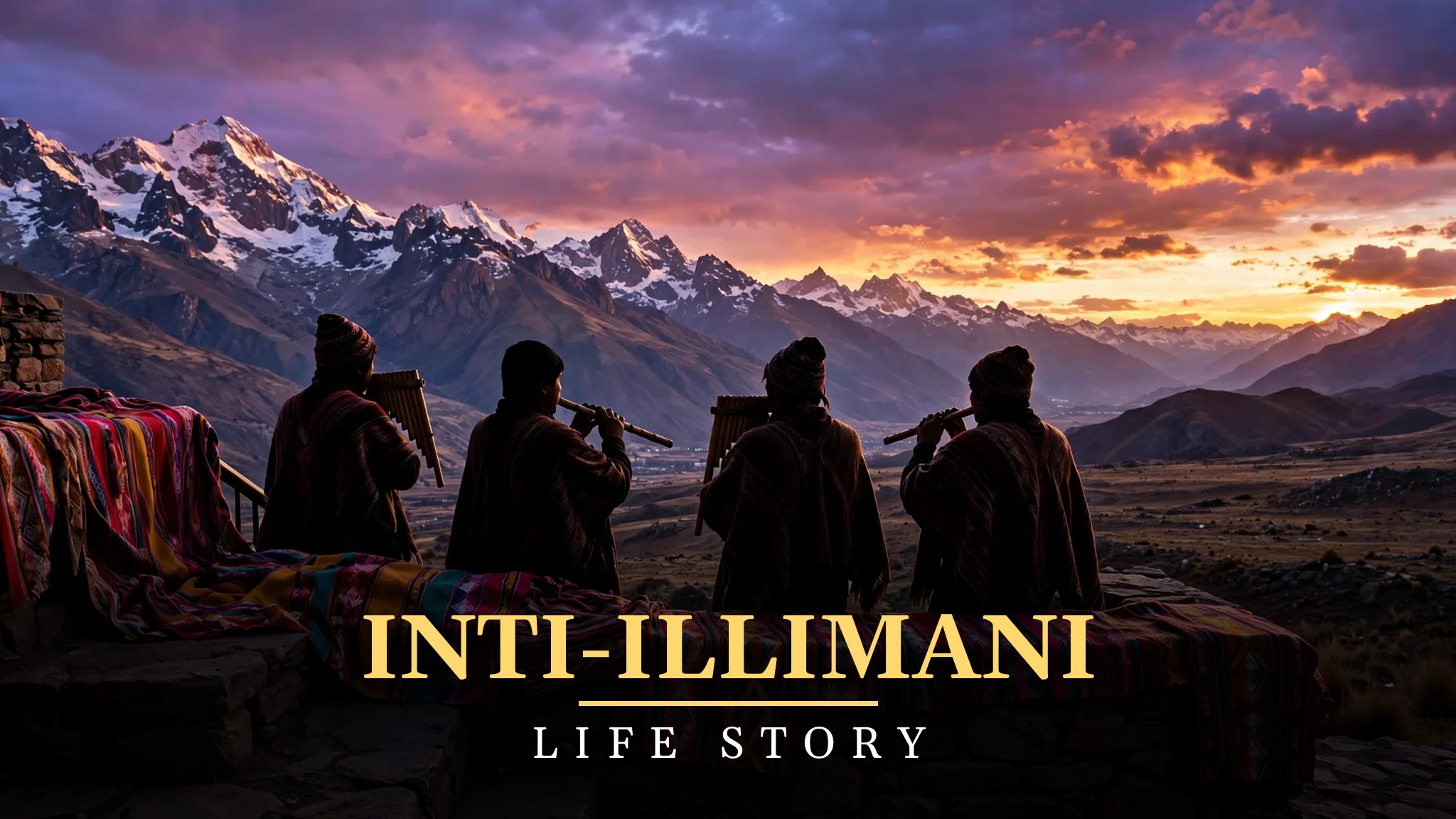
Inti-Illimani began in 1967 at the Technical University of the State in Santiago, where a group of students decided to form a folk group. The leader of that first group was Jorge Coulón, and the others were young men like Horacio Salinas, Horacio Durán, and Max Berrú. They were not professional musicians. They were students, and their instruments were the traditional instruments of the Andes: the quena, a wooden flute with a haunting sound; the zampoña, the panpipes that give Andean music its bright, floating melody; the charango, a small ten-stringed instrument with a high, cheerful voice; and the bombo, a large drum that keeps the rhythm deep and steady.
Chile in the late 1960s was full of folk music. The Nueva Canción movement was growing, and singers like Violeta Parra and Víctor Jara had shown that Chilean folk music could be both beautiful and serious. But Inti-Illimani were different from a solo singer with a guitar. They were a group, and their sound was the sound of many instruments playing together, of voices in harmony, of a tradition that came from the highlands rather than from the city. They played the music of the Aymara and Quechua peoples, and they also played the music of the Chilean countryside, and they did it with a care and a precision that impressed everyone who heard them.
The band’s early years were spent learning, rehearsing, and playing in small venues in Santiago. They performed at universities, at folk clubs, and at political events, and their reputation grew steadily. They were serious students of the music they played. They did not treat Andean folk music as a decoration. They studied its rhythms, its scales, its history, and they tried to play it as well as the village musicians who had kept it alive for centuries. That respect for the tradition was part of what made them special. They were not using folk music. They were serving it.
By the end of the 1960s, Inti-Illimani were known across Chile as one of the best folk groups in the country. They had released records, they had toured, and they had become part of the cultural life of the left-wing movement that was growing in Chile. Their music was joyful and serious at the same time, and it spoke to people who felt that Chile should be proud of its indigenous roots, not ashamed of them. The band’s name itself was a statement of that pride. It was a name in an indigenous language, for a mountain that stood in another country, and it said that the Andes were one world, not many.
The members of the band were young, and they were idealistic. They believed that music could help to change a country, and they were willing to put their work at the service of that belief. They did not yet know how hard that belief would be tested, or how far from home their music would take them.
The Sound of the Andes Reaches the World
In the early 1970s, Inti-Illimani’s reputation spread beyond Chile. They toured in Latin America and in Europe, and audiences who had never heard Andean music before were struck by its beauty. The sound was unlike anything in European folk music. The panpipes floated above the rhythm, the quena sang like a human voice, and the harmonies of the singers gave the songs a warmth that needed no translation. People who did not speak a word of Spanish could still feel what the music meant, because the feeling was in the sound itself.
The band also became closely associated with the political movement that brought Salvador Allende to the presidency in 1970. Their songs were played at rallies, at workers’ meetings, and at cultural events, and they became part of the soundtrack of a Chile that was trying to build a fairer society. One song in particular became famous around the world: “El pueblo unido jamás será vencido”, the people united will never be defeated. The song was written by the composer Sergio Ortega with words by the group Quilapayún, and Inti-Illimani’s performances of it helped to carry it across the world. It became an anthem, sung in many languages, at demonstrations and gatherings far from Chile.
Another song that travelled widely was “Venceremos”, we shall overcome, which was also associated with the Allende years. These songs were not only political slogans. They were well-made pieces of music, with strong melodies and careful arrangements, and that was why they lasted. A slogan is forgotten when the moment passes. A good song stays in the memory, and it can be sung again in a different time and a different place.
The band’s success in those years was built on hard work. They rehearsed constantly, they refined their arrangements, and they learned to play together as a single unit. A folk group of six or seven musicians has to listen to each other all the time, and Inti-Illimani learned that listening so well that their performances sounded effortless. Audiences saw a group that smiled, that moved together, that played with joy, and that joy was infectious. It was the joy of musicians who loved what they were doing, and who believed in what their music stood for.
By 1973, they were one of the best-known folk groups in Latin America, and they were on tour in Europe when the history of Chile changed forever. They had left home as musicians on a tour. They would not be able to return for fifteen years.
Fifteen Years of Exile in Italy
In September 1973, while Inti-Illimani were in Europe, the military coup overthrew the government of Salvador Allende. The band were in Italy at the time, and the new military government in Chile made it clear that they were not welcome to return. They were exiles, and they would remain exiles for fifteen years, until the dictatorship began to loosen its grip in the late 1980s.
Exile is a hard life, even for musicians who are welcomed abroad. The members of Inti-Illimani lived in Italy, mainly in Rome, and they had to build a new life in a foreign country, in a foreign language, far from their families and their friends. Some of them had wives and children in Chile whom they could not see. They missed the food, the streets, the mountains, and the everyday life of Santiago. The music became their home, the one thing they could carry with them, and they played it with a new intensity, because it was the closest thing they had to Chile itself.
Italy welcomed them warmly. Italian audiences loved their music, and the band found a second home in the Italian left, in the festivals, the theatres, and the cultural centres of Rome and other cities. They recorded albums, they toured across Europe, and they became known far beyond the world of Chilean exiles. Their concerts were not only for Chileans. They were for Italians, for Germans, for French audiences, for anyone who loved folk music and who cared about the fate of Chile. The band sang in Spanish, and the audiences listened, and the music crossed the language barrier because it was honest and beautiful.
During the exile years, the band also changed and grew. New members joined, and the sound developed. They recorded some of their best-known albums in Italy, and they worked with Italian musicians and with other exiled Chilean artists. They also became a symbol. When people in Europe thought of Chile under the dictatorship, they thought of two things: the suffering of the Chilean people, and the music of Inti-Illimani. The band carried that responsibility with seriousness, and they never treated their concerts as a mere performance. Every concert was also a statement that Chile was still alive, and that its culture could not be destroyed by a military government.
The long exile also tested the band’s unity. Fifteen years is a long time, and people change, and groups change. There were disagreements, as there are in any group that lives and works together for so long, but the band held together, because the music and the cause were stronger than the disagreements. They were not only colleagues. They were exiles together, and that shared experience bound them in a way that nothing else could.
Returning Home to a Changed Chile
In 1988, after fifteen years away, Inti-Illimani were finally allowed to return to Chile. The dictatorship was weakening, and the country was moving towards a vote that would decide its future. The band’s return was a moment of great emotion, for the musicians and for the Chileans who had waited for them. They played concerts in Santiago, and the audiences were full of people who had learned their songs in secret, who had listened to their records in hiding, and who had taught the words to their children. The concerts were not only musical events. They were homecomings, and they were acts of public memory.
The Chile they returned to was not the Chile they had left. The country had changed in fifteen years. A new generation had grown up under the dictatorship, and the economy, the cities, and the culture had all moved on. The band had to find their place in this new Chile, and that was not easy. They were heroes to many people, but they were also men who had been away for a long time, and they had to learn to live in a country that had suffered and changed without them. They did it with the same patience that had carried them through exile, by playing, by listening, and by working with younger musicians.
In the years after their return, Inti-Illimani continued to record and to tour, both in Chile and abroad. They played at festivals, at universities, and in concert halls, and their audiences now included both the people who had loved them in the 1960s and a new generation who had discovered them through their parents’ records. The band’s music had not gone out of date, because it was rooted in a tradition that was older than any political moment, and it spoke to a Chile that was still trying to understand its own history.
The band also became part of the democratic Chile that followed the dictatorship. They played at official events, they were honoured by the state, and they were recognised as one of the great cultural institutions of the country. That recognition was important, because it said publicly what their audiences had always known: that their music was not a marginal thing, but a central part of Chilean culture, and that the years of exile had not diminished it.
A Split, and Two Bands Carrying One Name
In the 2000s, after more than thirty years together, Inti-Illimani went through a painful split. Disagreements among the members, which had built up over many years, led to a division, and the band separated into two groups, both using the name Inti-Illimani. One group, led by Jorge Coulón, continued as Inti-Illimani, and the other, formed by Horacio Salinas and other members, became known as Inti-Illimani Histórico. The split was the subject of legal disputes, and it saddened many fans, who had loved the band as a single family for decades.
The split is a reminder that a band is a human group, not only a name, and that human groups can break, even after a long and shared history. The members of Inti-Illimani had lived through exile together, had played thousands of concerts together, and had shared a cause that bound them. But time, age, and different ideas about the future of the music eventually pulled them apart. Both groups continued to play the music of Inti-Illimani, and both groups found audiences, but the unity that had been the band’s strength was gone.
For the fans, the split was hard to accept, because Inti-Illimani had meant something more than music. The band had been a symbol of a Chile that stood together, and the sight of it divided was painful. But the music itself did not divide. The songs remained the same, and they were still sung by both groups, and by the audiences who had loved them for so long. In a sense, the split proved how strong the music was. It could survive even the breaking of the band that had made it famous.
Both groups have continued to perform and to record in the years since the split, and both have kept the Andean folk tradition alive in Chile and abroad. The story of Inti-Illimani is now a story with two branches, and each branch carries part of the original band’s history. It is not the ending that anyone would have chosen, but it is an honest ending, and it reflects the real life of a group that lived through extraordinary times.
The Music That Still Belongs to the Andes
More than fifty years after they were formed, the music of Inti-Illimani is still played, still taught, and still loved. The songs they recorded in the 1960s and 1970s are now part of the folk heritage of Chile, and young musicians still learn to play the quena and the zampoña by listening to their records. Their concerts, whether by one group or the other, still draw audiences who know the words by heart, and who sing along in Spanish, even in countries where Spanish is not spoken.
The band’s legacy is not only musical. It is also a legacy of dignity. Inti-Illimani showed that the folk music of the indigenous peoples of the Andes was not a curiosity for tourists, but a great art, worthy of the world’s concert halls. They showed that a group of students could become ambassadors for a whole culture, and that music could carry a nation’s identity across the world when its people could not travel themselves. They also showed that exile, however long and painful, does not have to destroy a group. It can deepen its music, and it can give its songs a new meaning.
For a new listener, the best place to start is with the sound itself. Listen to the panpipes, to the flute, to the voices in harmony, and to the rhythm of the drum. You do not need to know the history to feel the beauty of the music. But once you know the history, the music gains a new depth, because you understand that it was played in exile, in a foreign country, by men who missed their home, and that it was played on their return, for a people who had waited fifteen years to hear it live. That is a story that no other band can tell, and it is why Inti-Illimani will be remembered long after the last note of their last concert has faded.
The Instruments and the Sound
The sound of Inti-Illimani is worth describing in detail, because it is unlike the sound of any other band. At its centre are the instruments of the Andes, each with its own voice. The quena is a wooden flute, played with the breath, and its sound is haunting, like a human voice singing far away. The zampoña, the panpipes, is a set of bamboo tubes, and its sound is bright and floating, like birds over a mountain valley. The charango is a small instrument with ten strings, and its sound is high, cheerful, and quick, like laughter. The bombo is a large drum, played with a stick, and its sound is deep and steady, like a heartbeat, and it holds the whole band together.
When these instruments play together, with voices in harmony, the result is a sound that is both ancient and alive. It is the sound of the highlands, of villages, of festivals, and of a people who have played this music for centuries. Inti-Illimani did not invent this sound. They learned it, they studied it, and they played it with a care and a precision that honoured the musicians who had kept it alive before them. They also added their own arrangements, their own harmonies, and their own sense of drama, and in doing so they made the old music new, without losing its soul.
The band’s voices are also part of the sound. They sing in harmony, in Spanish, and their voices are warm, clear, and full of feeling. They do not shout. They sing, and the audience listens, because the singing is honest and because the harmonies are beautiful. A listener who does not speak Spanish can still feel the music, because the feeling is in the sound itself, in the flutes, in the drums, and in the voices, and that is why Inti-Illimani could play in Italy, in France, in Germany, and in Japan, and be understood, even when the words were not.
The Exile Albums and the World Stage
During their fifteen years in Italy, Inti-Illimani recorded some of their best-known albums, and they played on some of the world’s great stages, and those years deserve a closer look, because they show how a band in exile can grow, rather than fade. In Rome, they were welcomed by Italian audiences, by festivals, and by the cultural life of the city, and they recorded albums that were heard across Europe. Their concerts were not only for Chileans in exile. They were for Italians, for Germans, for French audiences, and for anyone who loved folk music, and the band learned to play for those audiences, to speak to them through music, even when the words were in Spanish.
The exile albums also show a band that was developing, that was adding new members, new sounds, and new arrangements, while keeping the Andean folk tradition at the centre. They worked with Italian musicians, they learned new ways of recording, and they refined their sound, until it was as polished as it was heartfelt. The result was a body of work that is still listened to today, by people who were not born when the band were in exile, and who hear in those records a sound that is both old and new, both Chilean and universal.
Their world tours in those years also mattered, because they carried the name of Chile to places where Chile was otherwise known only through the news of the dictatorship. When Inti-Illimani played in a concert hall in Europe, the audience heard a Chile that was beautiful, that was musical, and that was alive, and that hearing changed the way they thought about the country. The band were ambassadors, not only for their music, but for their people, and they carried that responsibility with a seriousness that never left them.
My Take:
I think Inti-Illimani is one of the most moving stories in all of music, and I say that as someone who has thought hard about what music is actually for. Most bands want to be famous. Most bands want to sell records and fill stadiums. Inti-Illimani wanted those things too, I am sure, but they wanted something else more: they wanted to carry the music of their people, and to keep it alive when their country was trying to forget it, or when their country was not allowed to remember it. That is a different kind of ambition, and I admire it enormously.
What strikes me first is the choice of instruments. They could have picked up electric guitars and played rock music, like so many young men in the 1960s. Instead, they picked up the quena, the zampoña, and the charango, instruments that came from the mountains, from villages, from people who had been looked down on for centuries. That choice was a statement. It said: our roots matter. The music of the indigenous peoples of the Andes is not backward or primitive. It is beautiful, it is complex, and it deserves to be heard in the best concert halls in the world. I think that is a brave choice, and a wise one, because it gave the band a sound that no one else had, and it gave their music a depth that pop music rarely achieves.
The exile is the heart of the story for me. Fifteen years is a very long time to be away from home. I try to imagine what it would feel like to leave your country for a tour and then be told that you cannot come back, that your home is closed to you, that your family is on the other side of an ocean and you cannot reach them. Most of us would give up. We would find a new life, learn a new language, and slowly forget the old songs. Inti-Illimani did the opposite. They played the old songs harder, they played them in more places, and they made the world listen to them. That is not only a musical achievement. It is a human achievement, a refusal to be broken.
I also think about what it must have felt like to return to Chile after fifteen years. You come home, but home has changed. The streets are different. The people are older. A whole generation has grown up without you. And yet, when you play, the audience sings along, because they learned your songs in secret, in their homes, in hiding. That must be one of the most emotional moments any musician can experience, and it tells me something important about music: it can keep a people together even when they are apart. A song learned by heart is a kind of home, and it cannot be taken away by a government or by distance.
The split in the 2000s saddens me, and I will not pretend otherwise. I understand that groups break up, that people disagree, that time changes everyone. But Inti-Illimani were not only a band. They were a symbol of unity, of a Chile that stood together, and seeing them split into two groups with the same name felt like a loss. I do not blame anyone, because I do not know the details, and because the details belong to the musicians themselves. But I think the split is a reminder that even the strongest groups are made of human beings, and human beings are fragile. The music survived, and that matters, but the unity did not, and that is a real loss.
Even so, I think the story of Inti-Illimani is ultimately a hopeful one. Their music is still played. Young people still learn the quena and the zampoña. Their songs are still sung at gatherings in Chile and in many other countries. The band showed that a culture cannot be killed by a coup, by exile, or by a ban. It can be carried in a suitcase, in a memory, in a voice, and it can be planted again in a new place, and it can grow. That is a hopeful message, not only for Chile, but for any people who have been scattered, or silenced, or told that their culture does not matter.
If you have never heard them, I would say: listen to “El pueblo unido jamás será vencido” first, not because it is their only song, but because it is the song that carried their name across the world. Then listen to their instrumental pieces, and hear the panpipes and the flute, and let the sound of the Andes reach you. You do not need to speak Spanish. You only need to listen, and to feel the mountains, the sun, and the long road home. That is what Inti-Illimani gave to the world, and it is a gift that is still there, waiting for anyone who is willing to hear it.
I finish with this thought, because it is the one I keep returning to. Inti-Illimani began as students, and they became exiles, and they became legends, and they did it all by playing the music of their own people with honesty and with love. They did not invent a new sound to chase fame. They took an old sound, they played it as well as they possibly could, and they trusted that the world would listen. The world did listen, and it is still listening. That is the best kind of success, and it is the kind that lasts.
I also think about the instruments, and about what they mean. The quena, the zampoña, the charango, and the bombo are not just instruments. They are the voice of a people, of the Aymara and Quechua peoples, who have played this music for centuries, in the highlands, in the villages, and at festivals. When Inti-Illimani played those instruments in concert halls in Europe, they were not only making music. They were saying: this music matters, this people matters, and this tradition deserves to be heard in the best halls in the world. I think that is a powerful statement, and I admire the band for making it, year after year, in exile and at home.
There is another thing I think about, and it is the question of what exile does to music. Fifteen years is a long time to be away from home, and most bands would have broken up, or would have changed their sound, or would have forgotten the old songs. Inti-Illimani did the opposite. They played the old songs harder, they played them in more places, and they made the world listen to them. I think exile deepened their music, because when you are far from home, you think about home more clearly, and you play the music of home with more feeling. Their exile years were painful, but they were also creative, and their best work came from that pain, and from that longing.
I think about the return, too, and about what it must have felt like to play in Santiago again, after fifteen years, for an audience that had learned your songs in secret. That must be one of the most emotional moments any musician can experience, and it tells me something important about music: it can keep a people together, even when they are apart. A song learned by heart is a kind of home, and it cannot be taken away by a government, or by distance, or by time. Inti-Illimani’s songs were that kind of home, for Chileans in exile, and for Chileans at home, and they still are.
The split saddens me, and I have thought about it a lot, because it is a reminder that even the strongest groups are made of human beings, and human beings can break. I do not blame anyone, because I do not know the details, and because the details belong to the musicians themselves. But I think the split is a lesson, too: that unity is precious, that it has to be cared for, and that it can be lost, even after decades of working together. The music survived, and that matters, but the unity did not, and that is a real loss, and I think we should be honest about it.
I also think about what Inti-Illimani means for young musicians today, in Chile and in other countries. They showed that a folk tradition, an old music, can be a living music, that it can be played in concert halls, that it can be loved by young people, and that it can change with the times, without losing its soul. Young musicians who play the quena and the zampoña today are following a path that Inti-Illimani opened, and they are doing it because the band showed them that it was possible. That is a legacy that matters, and it is one that will last.
If you have never heard them, I would say: listen to the instruments first, to the panpipes, to the flute, and to the drum, and let the sound of the Andes reach you. Then listen to the voices, to the harmonies, and to the words, and you will hear a band that is honest, that is skilled, and that is full of love for the music they play. You do not need to speak Spanish. You only need to listen, and to feel the mountains, the sun, and the long road home. That is what Inti-Illimani gave to the world, and it is a gift that is still there.
I finish with this thought, because it is the one I keep returning to. Inti-Illimani began as students, and they became exiles, and they became legends, and they did it all by playing the music of their own people, with honesty and with love. They did not invent a new sound to chase fame. They took an old sound, they played it as well as they possibly could, and they trusted that the world would listen. The world did listen, and it is still listening, and that is the best kind of success, and it is the kind that lasts, because it is built on something real, on a tradition, on a people, and on a love that does not fade.
I also think about the young musicians who learn the quena and the zampoña today, by listening to Inti-Illimani’s records, and about what that means for the future of Andean music. A tradition survives only if young people learn it, and Inti-Illimani made that learning possible, by recording the music, by playing it in concert halls, and by showing that it was beautiful, complex, and worthy of respect. Young people in Chile, in Bolivia, and in Peru still learn those instruments, and they do it because Inti-Illimani showed them that it was worth learning, and that the music of their grandparents could be the music of their own generation, too.
I think about the name, too, Inti-Illimani, the sun of Illimani, and about how a name can be a statement. It is a name in an indigenous language, for a mountain in another country, and it says that the Andes are one world, not many, and that the music of the highlands belongs to all of its peoples. That is a generous idea, and it is one that the band lived by, in their music, in their exile, and in their return, and it is part of why their story matters, not only for Chile, but for the whole of the Andes, and for anyone who believes that a culture is stronger when it is shared.
I also think about the band’s name, and about how it carries the mountains with it, wherever the band goes. Inti, the sun, and Illimani, the mountain, are not just words. They are a promise, a promise that the music will always come from the Andes, and that it will always carry the light of the sun, and the height of the mountains. That promise has been kept, for more than fifty years, through exile, through return, and through change, and it is part of why the band’s music feels so enduring, so rooted, and so true. A name can be a compass, and Inti-Illimani’s name has been theirs, guiding them home, again and again.
I think about the audiences, too, and about the people who have sung along to “El pueblo unido” in many languages, in many countries, and in many years. A song that is sung in a language you do not speak, by people you have never met, in a place you have never been, is a strange and beautiful thing, and it is a proof that music can cross borders, in a way that politics cannot. Inti-Illimani’s songs crossed those borders, because they were honest, because they were beautiful, and because they spoke about a hope that is universal: the hope that people, united, will never be defeated.
Frequently Asked Questions
When was Inti-Illimani formed?
Inti-Illimani was formed in 1967 by students at the Technical University of the State in Santiago, Chile. The group began as a student folk ensemble playing traditional Andean instruments, and it grew into one of the most famous folk bands in Latin America.
What does the name Inti-Illimani mean?
The name comes from the Aymara language. Inti means the sun, and Illimani is the name of a great mountain in Bolivia. Together the name means the sun of Illimani, and it reflects the band’s roots in the music of the Andean highlands.
Why did Inti-Illimani live in exile in Italy?
The band were on tour in Europe when the military coup of September 1973 overthrew the government of Salvador Allende. They could not return to Chile, and they lived in exile in Italy for fifteen years, until they were allowed to return in 1988.
What is Inti-Illimani’s most famous song?
Their most famous song is “El pueblo unido jamás será vencido”, the people united will never be defeated. It became an anthem sung around the world, and Inti-Illimani’s performances helped to carry it far beyond Chile.
Why are there two groups called Inti-Illimani today?
After more than thirty years together, the band split in the 2000s following disagreements among the members. One group continued as Inti-Illimani, led by Jorge Coulón, and the other became known as Inti-Illimani Histórico. Both groups perform the band’s music.
What instruments does Inti-Illimani play?
The band plays traditional Andean instruments, including the quena flute, the zampoña panpipes, the charango, a small ten-stringed instrument, and the bombo drum. These instruments give their music its distinctive highland sound.


