Is Brown Rice Better Than White Rice
In this post
- What Brown and White Rice Actually Are
- Fibre: The Biggest Real Difference
- Energy, Fullness and Blood Sugar
- Vitamins and Minerals: What Polishing Removes
- Taste, Cooking Time and Cost
- Which Rice Suits Which Person and Which Meal
- Common Mistakes People Make About Rice
- How to Switch Without a Struggle
- Brown Rice, White Rice and the Rest of Your Day
- Storing Rice and Avoiding Waste
- My Take:
Rice sits on the table in more homes than almost any other food. It is cheap, it fills a plate, it goes with lentils, vegetables, meat, eggs and curry, and most people have eaten it since childhood without ever stopping to ask what kind it is. Then one day someone says brown rice is healthier, and the question starts: is brown rice really better than white rice, or is it just a fashion? The honest answer is that brown rice does have some real advantages, but white rice is not a bad food either. They are the same grain, prepared in different ways, and the difference between them is smaller than many people claim, yet big enough to matter if you eat rice every day.
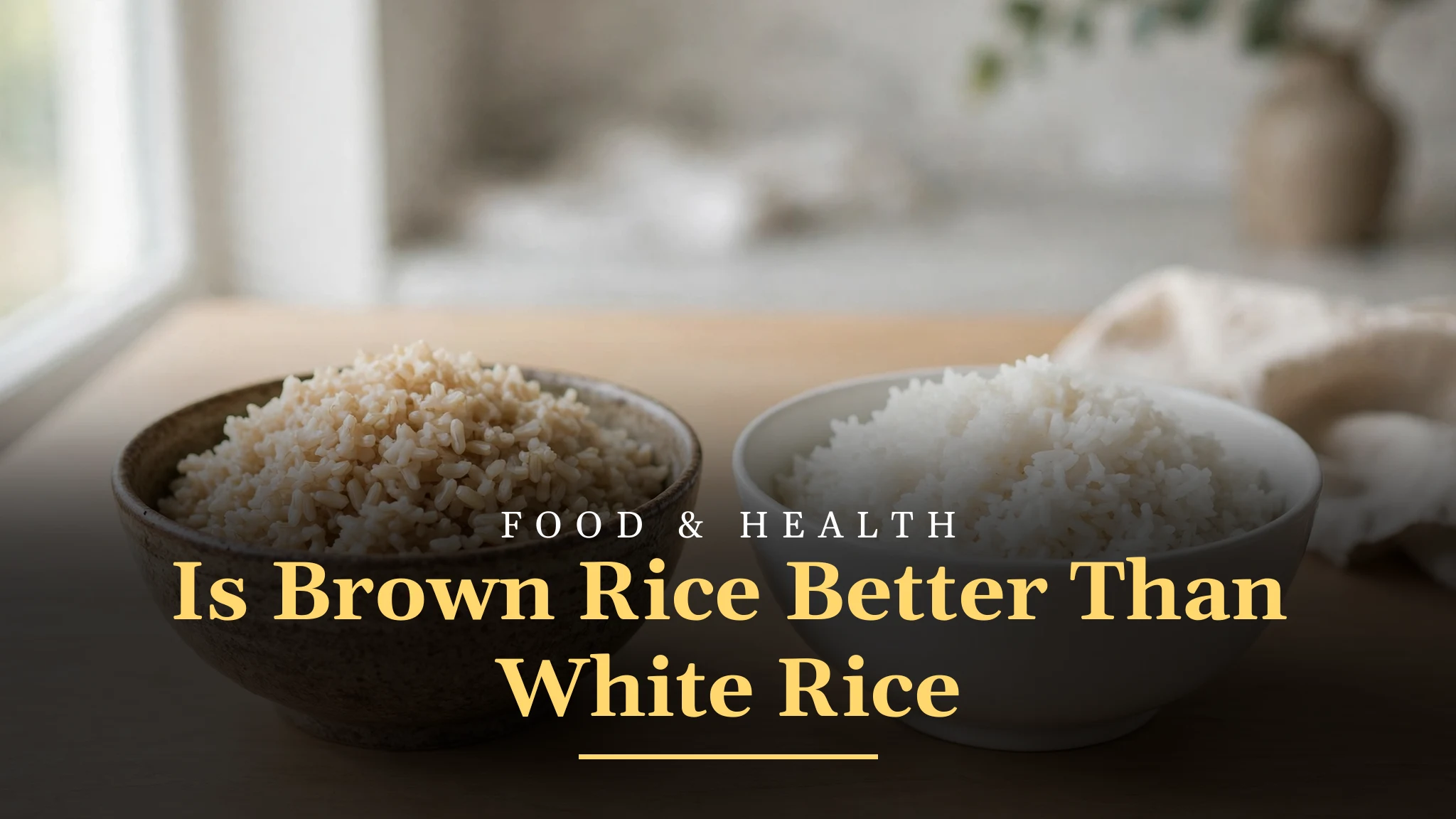
To understand the choice, you need to know what happens to rice before it reaches your kitchen. Rice grows as a grain with several layers. The outer husk is removed first, because it is too hard to eat. What is left is brown rice: the whole grain, with its bran layer and its germ still in place. White rice goes one step further. The bran and germ are polished away, leaving only the soft white centre. That polishing changes the look, the taste, the cooking time and the nutrition, all at once. It is not a chemical trick or a factory invention. It is simply a choice between keeping the whole grain or keeping only its softest part.
What Brown and White Rice Actually Are
Brown rice is the whole grain. Its light brown colour comes from the bran, a thin outer layer that is rich in fibre. Inside the bran sits the germ, the small part of the grain that would grow into a new plant, and it carries healthy fats, vitamins and minerals. When you eat brown rice, you eat all of these parts together. That is why it looks darker, feels chewier and takes longer to cook. The grain is tougher, so water needs more time to soften it, usually about forty to forty-five minutes on the stove, compared with fifteen to twenty minutes for white rice.
White rice is the same grain with the bran and germ removed. What remains is the endosperm, the starchy centre that gives you energy. It is white, smooth and soft, and it cooks quickly into fluffy grains that are easy to chew. Because the outer layers are gone, it also keeps longer on the shelf and is less likely to go stale, which is one reason shops and restaurants prefer it. In many countries white rice is also enriched, which means some vitamins, such as certain B vitamins and iron, are added back after polishing. That helps, but it does not replace everything that was removed, especially the fibre.
The difference in the kitchen is easy to feel. Brown rice needs more water and more patience. If you cook it the same way as white rice, it will come out hard in the middle. It also has a nutty taste that some people love and others find strange at first, especially if they grew up on white rice. White rice, on the other hand, is mild and plain. It takes the flavour of whatever you serve with it, whether that is a spicy curry or a simple plate of lentils. Neither taste is wrong. Taste is personal, and it often depends on what you ate as a child.
Fibre: The Biggest Real Difference
Fibre is the part of plant food your body cannot digest, and it is where brown rice wins most clearly. A cup of cooked brown rice gives you about three to four grams of fibre, while the same cup of white rice gives you less than one gram. That may sound like a small gap, but it adds up. If you eat rice twice a day, the extra fibre from brown rice over a week is meaningful, and fibre does several useful jobs in your body.
First, fibre slows down digestion. When you eat brown rice, your stomach empties more slowly, so you feel full for longer. That matters at lunch, when a plate of white rice can leave you hungry again within two hours, while the same amount of brown rice often keeps you satisfied until the next meal. Feeling full is not only about comfort. It helps you avoid extra snacks between meals, and over time that can make a real difference to how much you eat in a day.
Second, fibre feeds the good bacteria in your gut. These bacteria help with digestion and support your general health, and they need fibre to thrive. A diet with very little fibre starves them, while a diet with regular whole grains gives them steady food. Brown rice is not the richest source of fibre in the world — beans, lentils and vegetables give you far more — but as a daily staple it contributes a useful amount, and that contribution counts precisely because you eat rice so often.
Third, fibre helps your digestion stay regular. It adds bulk to your stool and helps food move through your gut at a steady pace. People who eat a lot of white rice and very few vegetables sometimes find their digestion sluggish, and brown rice can help a little, though it is not a cure on its own. Water matters just as much. Fibre without enough water can make you feel bloated, so if you switch to brown rice, drink water through the day as well.
Energy, Fullness and Blood Sugar
Both brown and white rice give you energy, and the calorie difference between them is small. A cup of cooked brown rice has roughly 215 calories, while a cup of cooked white rice has roughly 205 calories. That gap is so small that it makes no real difference on its own. What matters more is how quickly that energy enters your blood, and how long it keeps you full.
White rice digests fast. Its starch is easy for your body to break down, because there is no bran to slow the process. That means it gives you quick energy, which can be useful after hard physical work or when you are very hungry and need food fast. But quick energy also fades quickly. Your blood sugar rises faster after white rice, and it can fall again sooner, which is why you may feel sleepy or hungry a couple of hours after a big plate of white rice.
Brown rice digests more slowly, because its fibre and bran get in the way of quick digestion. Your blood sugar rises more gently, and the energy lasts longer. For most people this is a small but real advantage, especially at lunch on a working day, when you want steady energy for the afternoon rather than a quick rise and a quick fall. It is not a dramatic difference. Brown rice will not keep you full all day on its own. But paired with lentils, beans, vegetables or yoghurt, it makes a meal that satisfies you for longer than the same meal with white rice.
For people who watch their blood sugar, this slower digestion is worth knowing about. Brown rice is generally a better choice than white rice, because it raises blood sugar more gradually. That does not mean white rice is forbidden. Portion size matters just as much as the type of rice. A small plate of white rice with plenty of vegetables and lentils can be gentler on blood sugar than a huge plate of brown rice eaten on its own. The whole meal matters, not just the rice, and anyone managing blood sugar should think in terms of the full plate and talk to their own health professional about portions that suit them.
Vitamins and Minerals: What Polishing Removes
When the bran and germ are polished away to make white rice, several nutrients go with them. Brown rice keeps more magnesium, a mineral that helps muscles work normally and supports steady energy. It keeps more manganese, which your body uses in small amounts for everyday jobs, and more of the B vitamins, especially B1 and B3, which help your body turn food into energy. It also keeps small amounts of healthy fats from the germ, which white rice has almost none of.
White rice is not empty, though. It still gives you energy and some B vitamins, and enriched white rice has iron and B vitamins added back, which closes part of the gap. If you eat a varied diet with vegetables, lentils, meat or eggs, you will get magnesium and B vitamins from those foods anyway, so the loss from white rice is not a disaster. The nutrient gap matters most for people who eat a lot of rice and very little else. In that case, brown rice adds nutrients that the rest of the plate may not provide.
It is also worth being honest about scale. Brown rice is better than white rice in nutrients, but it is not a superfood. A cup of brown rice does not give you as much magnesium as a handful of nuts, or as many vitamins as a plate of green vegetables. Its advantage is that you eat it often, in large amounts, so small differences add up over weeks and months. Think of it as a small improvement repeated every day, not a single big change.
Taste, Cooking Time and Cost
Taste decides what people actually eat, and this is where white rice often wins. White rice is soft, mild and familiar. Children eat it without complaint, older people find it easy to chew, and it suits almost every dish. Brown rice is chewier and nuttier, and its texture can feel strange if you are used to soft white grains. Some people grow to like it within a week or two, especially when it is served with a strong curry or lentils that soften its flavour. Others never warm to it, and that is fine too. A food you dislike is a food you will not eat, however healthy it is.
Cooking time is the other practical difference. Brown rice takes about twice as long as white rice, and it needs more water. That matters on a busy evening, when dinner needs to be ready quickly, or when fuel costs money. There are ways to make it easier. Soaking brown rice for half an hour before cooking shortens the time a little. Cooking a large pot and keeping the extra in the fridge for the next day saves time later, because cooked brown rice keeps well for two or three days. A pressure cooker also cuts the time sharply. But none of these change the basic fact: white rice is faster and simpler.
Cost is usually close. In many markets brown rice costs a little more than white rice, because it is sold in smaller amounts and does not keep as long on the shelf. The price gap is rarely large, but for a family that buys rice by the sack every month, even a small difference adds up. If brown rice is much more expensive where you live, mixing the two is a sensible middle step. Half brown and half white rice gives you some extra fibre and nutrients while keeping the cost and the taste closer to what your family likes.
Which Rice Suits Which Person and Which Meal
There is no single right answer for everyone, because people eat rice in different ways. If you eat rice once or twice a day, every day, and your meals are often just rice with a little curry, brown rice is a sensible upgrade. It adds fibre and nutrients to a diet that may not have much variety, and it keeps you full for longer. If you are trying to feel full without eating more food overall, brown rice helps a little, though portion size and the foods you eat with it matter far more.
If you eat rice only a few times a week, and your other meals already include whole grains, lentils, vegetables and fruit, the difference between brown and white rice is much smaller. Your diet already gives you the fibre and nutrients that brown rice would add, so choosing white rice for taste is not a problem. Enjoying your food matters, and white rice eaten as part of a varied diet is a perfectly reasonable choice.
Some people suit white rice better for a time. Young children, older people with weak teeth or sensitive stomachs, and people recovering from a stomach upset often find white rice easier to digest. Its softness is a real advantage then, and there is no need to force brown rice on someone who finds it hard to chew or heavy in the stomach. Likewise, after very hard physical work, when you need quick energy and your stomach is empty, white rice is a quick and gentle source of fuel. Brown rice is not better in every situation. It is better in most everyday situations, and white rice is better in a few specific ones.
Common Mistakes People Make About Rice
The first mistake is thinking that brown rice alone will fix a poor diet. It will not. If the rest of your plate is fried food, sweet drinks and very little vegetables, switching the rice will change almost nothing. The whole meal matters. Brown rice helps most when it is part of a plate that already has vegetables, lentils or beans, and a reasonable portion size. On its own, it is a small step, not a solution.
The second mistake is eating a huge portion and thinking the type of rice makes it healthy. A mountain of brown rice is still a mountain of starchy food, and it still gives you a large amount of energy. Portion size is the part people forget. A normal serving is about one cup of cooked rice, roughly the size of a fist, with the rest of the plate filled by vegetables and protein foods. That plate, whether the rice is brown or white, is a far healthier meal than a plate piled high with rice alone.
The third mistake is cooking brown rice badly and then deciding it tastes awful. Brown rice cooked with too little water comes out hard and dry, and brown rice cooked without salt or served plain can taste dull. It needs enough water, enough time, and a flavoursome dish beside it. Try it with a well-spiced curry or lentils first, not on its own. Many people who dislike brown rice the first time like it the second time, when it is cooked properly and served with food they enjoy.
How to Switch Without a Struggle
If you want to try brown rice, do not change everything at once. Start by mixing half brown and half white rice in the same pot. The flavour and texture stay familiar, and your stomach gets used to the extra fibre gradually. After a week or two, try three quarters brown and one quarter white. By then most people have adjusted, and the nutty taste feels normal rather than strange. If your family resists, serve brown rice on some days and white rice on others, rather than forcing a change nobody wants.
Soak the rice before cooking if you have time. Rinse it well, then leave it in water for twenty to thirty minutes. It cooks a little faster and comes out softer. Use about two cups of water for each cup of brown rice, and let it rest for ten minutes after cooking, with the lid on, before you serve it. That rest lets the steam finish the job, and the grains come out softer and less sticky. Store any leftover cooked rice in the fridge and use it within two or three days, reheating it well before eating.
Think about the whole plate as you switch. Brown rice goes well with lentils, beans, chickpeas, vegetables and yoghurt, because those foods add protein and more fibre, and they turn a plate of rice into a proper meal. A plate of brown rice with a large serving of vegetables and a modest portion of lentils will keep you full far longer than a plate of white rice with a small amount of curry. The rice is one part of the meal, and the rest of the plate decides how satisfying and nourishing that meal really is.
Brown Rice, White Rice and the Rest of Your Day
Rice is not eaten on its own. It is eaten at breakfast, lunch and dinner, with different foods at each meal, and the type of rice you choose can change how each of those meals feels. At breakfast, rice is less common in many homes, but where it is eaten, brown rice can give you a slower start to the day, with energy that lasts until lunch. A small bowl of brown rice with vegetables or an egg is a filling breakfast, though it takes time to cook in the morning, which is why many people cook it the night before and reheat it. White rice is quicker in the morning, and for a rushed breakfast that speed can matter more than the extra fibre.
At lunch, the difference is clearest, because lunch is the meal that has to carry you through the afternoon. A plate of white rice with curry can leave you full at one o’clock and sleepy by three, while the same plate with brown rice often leaves you steadier, with energy that fades more slowly. That is not a rule for every person, and a heavy lunch of any kind can make you sleepy, but the slower digestion of brown rice gives you a better chance of a productive afternoon. If you work with your hands, outdoors, or on your feet all day, that steady energy is worth having.
At dinner, the choice matters less, because you are going to sleep soon after, and the energy from either rice will be used slowly through the night. Some people prefer white rice at dinner because it feels lighter and easier on the stomach before bed, and that is a reasonable preference. Brown rice at dinner is also fine, especially if it is served in a modest portion with plenty of vegetables. The evening meal is a good time to try brown rice for the first time, because there is usually more time to cook it properly, and a new taste is easier to accept when you are relaxed at home rather than rushed at work.
Leftovers are another practical point. Cooked brown rice keeps well in the fridge for two or three days, and it reheats well with a splash of water. That makes it useful for packed lunches, because you can cook a large pot on Sunday and use it through the week. White rice also keeps, but it dries out faster and can go hard in the fridge, so it needs more water when you reheat it. Either way, leftover rice should be cooled quickly, kept in a covered container, and reheated until it is steaming hot all the way through before you eat it. Never leave cooked rice sitting at room temperature for hours, because that is when it is most likely to cause stomach trouble.
Storing Rice and Avoiding Waste
How you store rice matters more than most people think, because rice is bought in bulk and kept for weeks. Uncooked brown rice should be kept in a sealed container in a cool, dry place, and used within a few months, because the oils in its germ can turn stale if it sits too long in heat. If your kitchen is very warm, keeping brown rice in a cooler spot, or buying smaller bags more often, will keep it fresh. Uncooked white rice is far more forgiving. It keeps for many months in a dry container, and that long shelf life is one reason it is the safer choice for families who buy a large sack and use it slowly over the season.
Cooked rice needs more care than uncooked rice, whatever type it is. Cool it quickly after cooking, within an hour if you can, and put it in the fridge in a covered container. Eat it within two or three days, and reheat it until it is steaming hot all the way through. Do not reheat the same rice more than once, and do not leave it sitting on the counter overnight. These habits are simple, but they protect you from stomach trouble, and they also stop waste, because rice that is stored properly is rice you can use for another meal instead of throwing away.
My Take:
If you ask me whether brown rice is better than white rice, my answer is yes, but only by a small margin, and I think that honest answer is more useful than a dramatic one. Brown rice keeps its fibre, its magnesium and its B vitamins, and it digests more slowly, so it keeps you full for longer and raises your blood sugar more gently. Those are real advantages, and if you eat rice every day, they add up over time. But white rice is not a bad food. It is the same grain with its outer layers removed, and it still gives you energy, it is easy to digest, and it is part of a varied diet for millions of healthy people. Anyone who tells you white rice is poison is exaggerating, and anyone who tells you brown rice will change your health on its own is exaggerating too.
I think the reason this question gets asked so often is that people want a simple rule, and rice is one of the few foods where a simple rule almost works. Brown rice is the whole grain, white rice is the polished grain, and the whole grain is better. That is a clear, true statement, and it is easy to remember. But real life is not as simple as that rule. A family that cannot afford brown rice, or a child who will not eat it, or an older person who finds it hard to chew, is not eating badly by choosing white rice. The rule is a guide, not a law, and the best choice is the one your family will actually eat, day after day, as part of meals that include vegetables and lentils.
For me, the strongest argument for brown rice is not its vitamins. It is its fibre, and the way fibre changes how a meal feels. I have seen how a plate of white rice can leave a person hungry again within two hours, reaching for biscuits or a sweet drink to fill the gap. A plate of brown rice with lentils and vegetables lasts longer, and that longer feeling of fullness is worth more than any vitamin chart. Hunger is what drives extra eating, and anything that keeps you satisfied for longer, without extra calories, is genuinely useful. That is why I would recommend brown rice to anyone who eats rice daily and often feels hungry soon after lunch.
I also think we should be honest about what brown rice cannot do. It will not help you much if the rest of your diet is poor. Switching from white rice to brown rice while still eating fried food every day, drinking sweet drinks and skipping vegetables will change almost nothing about your health. I say that plainly because I do not want anyone to feel they have fixed their diet by changing one ingredient. The rice is one part of the plate. The vegetables, the lentils, the portion size and the drinks beside it matter just as much, and in many cases they matter more. Brown rice is a good step, but it is only one step.
Cost and cooking time are real obstacles, and I do not think they should be ignored. Brown rice takes twice as long to cook, and in many places it costs a little more. For a busy family, or a family watching every rupee, those are not small details. That is why I like the mixed approach. Half brown and half white rice gives you much of the benefit without changing the taste or the cost too much, and it is a change most families can keep. A perfect diet that nobody follows is worth less than a good diet that a family actually eats. I would rather see a family eat mixed rice every day than eat brown rice for a week and give up because it was too much trouble.
Taste is the part people are shy about admitting, but it matters more than any nutrition table. If you grew up on white rice, brown rice tastes strange at first. It is chewier, nuttier and heavier, and some people simply do not like it. I think that is a fair reason to be careful about switching, especially with children. Children should enjoy their food, and forcing a food they dislike can put them off trying new things altogether. A better approach is to try brown rice with a dish they already love, in a small amount, and let them get used to it slowly. If they never like it, that is not a failure. White rice with plenty of vegetables and lentils is still a good meal.
There is also the question of digestion, and here white rice has a genuine advantage that is often forgotten. White rice is soft and easy on the stomach. For a young child, an older person, or someone recovering from a stomach upset, that softness is exactly what they need. Brown rice, with its fibre, can feel heavy and cause bloating if your stomach is not used to it. I would never tell someone with a sensitive stomach to force themselves to eat brown rice. Food should suit the person eating it, not the other way round. Brown rice is better for most healthy adults, and white rice is better for some people some of the time, and both statements can be true at once.
When it comes to blood sugar, I think brown rice is the better everyday choice, but I want to say this carefully, because it is easy to overstate. Brown rice raises blood sugar more slowly than white rice, and that is a real help for people who watch their blood sugar. But the portion on the plate matters at least as much. A small serving of white rice with a large serving of vegetables and lentils can be gentler than a huge serving of brown rice eaten alone. If you are managing blood sugar, do not rely on the colour of your rice to do the work. Look at the whole plate, keep portions sensible, and talk to your own health professional about what suits you. General information in an article can never replace that personal advice.
My own view is that the best way to think about rice is as a daily habit, not a single decision. One plate of brown rice will not change your health. A hundred plates of brown rice, eaten instead of white rice, with vegetables and lentils beside them, will make a small but real difference. That is how healthy eating actually works: not through dramatic changes, but through small improvements repeated every day. Brown rice is a good example of that kind of change. It is not exciting, it is not expensive, and it does not promise miracles. It is simply a slightly better version of a food you already eat, and that is exactly the kind of change that lasts.
I also want to say something about the way brown rice is sold to people, because I think it is often oversold. You will see it described as a superfood, a weight-loss food, or a cure for this and that. It is none of those things. It is a whole grain with more fibre and a few more nutrients than its polished cousin. That is all, and that is enough. When a food is oversold, people expect too much from it, and when they do not get a miracle, they stop trusting good advice. I prefer the plain truth: brown rice is a modest improvement, and modest improvements, repeated daily, are what protect your health over years.
If a friend asked me what to do, I would tell them to try the mix first. Cook half brown and half white rice, serve it with a curry or lentils they already enjoy, and see how it feels. If they like it, move to more brown rice over a few weeks. If they do not like it, keep the mix, or keep white rice and add fibre in other ways, through lentils, beans and vegetables. There is more than one way to eat well, and rice is only one ingredient in a much bigger picture. The friend who eats white rice with a plate full of vegetables is eating better than the friend who eats brown rice with almost no vegetables at all.
I also think about the family table when I think about rice, because rice is rarely a food one person eats alone. It is a family food, cooked in one pot and shared by everyone. That makes the choice harder, because what suits a working adult may not suit a small child or an older parent. A family does not need to agree on one rice for everyone. It is perfectly sensible to cook white rice for the children and brown rice for the adults, or to cook a mixed pot that everyone can eat. The goal is a meal the whole family enjoys, not a rule that makes dinner a struggle. If the mixed pot is what keeps the peace and still adds fibre, then the mixed pot is the right answer for that family.
Shopping is another part of the story that is easy to forget. Brown rice does not keep as long as white rice, because the germ contains oils that can go stale over time. Buy it in amounts you will use within a few months, keep it in a cool, dry place in a sealed container, and check it before cooking if it has been sitting for a long while. White rice keeps for much longer, which is why it is the safer choice for a large sack bought once and used slowly. These are small kitchen facts, but they matter to a family that buys food carefully and does not want to waste it.
Looking at the long term, I believe the value of brown rice is in its repetition. One bowl will not change anything. A hundred bowls, eaten as part of meals that also include vegetables, lentils and protein, will add up to a real difference in fibre and nutrients. That is how most healthy eating works, and it is why I am suspicious of any food that promises a quick result. Brown rice promises nothing quick. It promises a small improvement, repeated daily, and that is a promise it can keep. I would rather trust a small, honest improvement than a large, dramatic claim.
Finally, I want to say that enjoying your food is part of eating well, and it is a part that is often left out of health advice. Rice is a comfort food for millions of people. It is the taste of home, of family meals, of childhood. If brown rice ruins that comfort for you, then the health gain is not worth the loss. Food should bring people together, not make them anxious at the table. Try brown rice, give it a fair chance with good cooking and good company on the plate, and if you like it, keep it. If you do not, eat white rice with a clear conscience, and add your fibre and nutrients from the vegetables and lentils beside it. That, in the end, is what a sensible diet looks like.
One more thing I have learned is that people change their rice habits more easily when they change one meal at a time. Trying to switch every meal at once is a lot to ask of a family, and it often ends in arguments at the table. Changing only lunch, for example, and keeping white rice at dinner, lets everyone adjust slowly and lets the cook learn how to make brown rice well. Once lunch feels normal, dinner can follow, or it can stay as it is. There is no prize for changing everything at once, and there is no failure in changing only part of it. A partial change that lasts is worth far more than a complete change that lasts a week.
I also think it is worth remembering that rice is only one grain among many. Oats, barley, millet and whole wheat all give you fibre and nutrients, and a diet that rotates between them is richer than a diet that eats the same rice every day, even if that rice is brown. If brown rice is expensive or hard to find where you live, do not worry about it. Eat white rice, and add variety in other ways, through lentils, beans, vegetables and other grains. The goal is a varied diet, not a perfect rice, and variety can come from many places.
So here is my final view, in plain words. Brown rice is better than white rice, by a small but real margin, because it keeps its fibre and more of its nutrients, and it keeps you full for longer. If you eat rice every day, that margin is worth having. But white rice is not a bad food, and it is the right choice for some people and some meals. Do not feel guilty about eating it, and do not expect brown rice to fix a diet on its own. Eat the rice you enjoy, keep portions sensible, fill the rest of your plate with vegetables and lentils, and let the small improvement of brown rice do its quiet work over time. In my view, that is the sensible way to answer this question, and it is the answer I would stand by.
Frequently Asked Questions
Is is brown rice better than white rice something I should think about every day?
Brown rice is generally the better everyday choice because it keeps its fibre and more nutrients, and it keeps you full for longer than white rice. But white rice is not a bad food, and if you eat a varied diet with vegetables, lentils and other whole grains, the difference matters less. Think about it when rice is a daily staple for you, and do not worry about it when rice is only an occasional food.
How long does it take to notice anything from is brown rice better than white rice?
Most people notice the difference in fullness within a few days, because brown rice digests more slowly and keeps you satisfied for longer after a meal. Other benefits, like extra fibre and nutrients, build up quietly over weeks rather than appearing in a day. Give it at least two weeks of regular eating before you judge whether it suits you.
Can is brown rice better than white rice fit into a busy workday?
Yes, with a little planning. Brown rice takes longer to cook, so cook a large pot in advance and keep the extra in the fridge for two or three days, or soak it before cooking to shorten the time. A pressure cooker also helps. Mixing half brown and half white rice keeps the cooking time and taste closer to what your family is used to.
What is the simplest way to start with is brown rice better than white rice?
Start by mixing half brown and half white rice in the same pot, and serve it with a curry or lentils you already enjoy. That keeps the taste familiar while your stomach gets used to the extra fibre. After a week or two, try more brown rice if you like it. If you do not like it, keep the mix, or keep white rice and add fibre through lentils, beans and vegetables instead.
Does is brown rice better than white rice work the same way for everyone?
No. Most healthy adults do well with brown rice, but young children, older people with weak teeth, and people with sensitive stomachs often find white rice easier to chew and digest. People who watch their blood sugar usually benefit more from brown rice, but portion size and the rest of the plate matter just as much. The right choice depends on your age, your digestion and what else you eat.
What should I do if is brown rice better than white rice does not suit me?
If brown rice feels heavy, causes bloating, or you simply do not like the taste, do not force it. Go back to white rice, or keep a half-and-half mix, and get your fibre from lentils, beans, vegetables and fruit instead. A food you dislike is a food you will not eat, and a varied diet with white rice is still a good diet. If stomach discomfort continues, speak to a health professional.
Sources
- NHS — Eat Well
- World Health Organization — Nutrition
- Centers for Disease Control and Prevention — Nutrition
- Healthline — Nutrition
- Mayo Clinic — Nutrition and Healthy Eating
This article is general information only. It is not medical advice and it does not diagnose, treat, or cure anything. For personal concerns, speak to a qualified health professional.


