Ivete Sangalo: The Life Story Behind Brazil's Party Queen
In this post
- Juazeiro, Bahia and the Sound of Axé
- Banda Eva and the Six Years That Made Her
- Going Solo in 1999 and the First Albums
- Sorte Grande, Poeira and the Football Anthem
- The Maracanã Concert and the Live Albums
- Carnival, the Trio Elétrico and the Queen of Salvador
- Madison Square Garden, Rock in Rio and the World Stage
- The Voice Brasil and Television
- Family, Motherhood and the Woman Behind the Star
- Later Albums, Collaborations and the Continuing Career
- The Voice of Brazil’s Biggest Party
- My Take:
Ivete Maria Dias de Sangalo was born on 27 May 1972 in Juazeiro, a city in the state of Bahia, in the north-east of Brazil, and she grew up in a region where music is not a pastime but a way of life. Bahia is the heart of Afro-Brazilian culture, the home of samba, of carnival, and of axé music, the fast, joyful, percussive sound that fills the streets of Salvador every February. Juazeiro sits on the São Francisco river, far from the coast, and it is a city of heat, of markets, and of music played loudly and openly. Ivete Sangalo was born into that sound, and she has carried it with her ever since, from the small stages of Bahia to the Maracanã stadium in Rio de Janeiro, to Madison Square Garden in New York, and to television screens across Brazil, where she is known, simply and affectionately, as Ivete.
Her career is one of the great success stories of Brazilian music. She became the lead singer of Banda Eva in 1993, one of the most popular axé bands in Brazil, and she led the group for six years before going solo in 1999. As a solo artist, she has released a string of hit albums, including the live record recorded at the Maracanã in 2007, which became one of the best-selling live albums in Brazilian history. Her songs, from Sorte Grande to Festa to Flor do Reggae, are sung at carnivals, at parties, and at football matches across Brazil, and her concerts are famous for their energy, their length, and the joy they generate. She has also been a coach on The Voice Brasil, a television star, and a queen of the Salvador carnival, leading the trio elétrico through streets packed with millions of revellers. This is the story of a girl from Juazeiro who became the voice of Brazil’s biggest party.
Juazeiro, Bahia and the Sound of Axé
Juazeiro is a city on the banks of the São Francisco river, in the interior of Bahia, and it is a long way from the beaches of Salvador, both in distance and in atmosphere. It is a hot, dry city, built around the river and around trade, and its music is the music of the Brazilian north-east: forró, samba, and the sounds that drift up from the coast. Ivete Sangalo grew up there in a musical family, singing from a young age, and she was drawn to the stage early. She sang at school, she sang at local events, and she developed a voice that was powerful, warm and instantly recognisable. Bahia’s musical tradition is one of the richest in Brazil, and it gave her a foundation that no amount of training could have provided: a sense of rhythm, a love of performance, and an understanding that music is for dancing, for celebrating, and for bringing people together.
Axé music, the sound that would define her career, was born in Salvador in the 1980s, a mixture of samba, reggae, Caribbean rhythms and pop, played by bands on moving trucks, known as trios elétricos, during carnival. It is fast, loud, joyful music, designed to make thousands of people dance in the street, and it requires a singer with enormous energy and a voice that can cut through the noise of a crowd. Ivete Sangalo had both, and she learned the music by living it, by singing in Bahia, by going to carnival, and by understanding that axé is not only a style. It is a way of being Brazilian, a celebration of the country’s African heritage, and a refusal to be quiet. That understanding has stayed with her throughout her career, and it is why her music feels authentic in a way that a manufactured pop star’s never could.
Banda Eva and the Six Years That Made Her
In 1993, Ivete Sangalo became the lead singer of Banda Eva, one of the most popular axé bands in Brazil, and the six years she spent with the group were the making of her career. Banda Eva had been founded in Salvador, and it was already successful when she joined, but her voice and her stage presence took the band to a new level. She toured Brazil with the group, she recorded albums, and she learned how to lead a band, how to work a crowd, and how to survive the relentless schedule of a popular Brazilian act, with shows almost every night, long journeys, and little rest. The experience was a hard education, and it taught her everything she needed to know about being a professional singer.
The band years also gave her a repertoire and a reputation. Audiences across Brazil knew her voice, they knew the songs, and they knew that a Banda Eva show was a guarantee of a good night. When she left the band in 1999 to go solo, it was a risk, because she was leaving a secure, successful group for an uncertain future as a solo artist. Many singers who leave a popular band fail on their own, and the industry is full of examples. Ivete Sangalo did not fail. She took the audience with her, because the audience had come to love her voice, and they followed it wherever it went. The six years with Banda Eva were the apprenticeship, and the solo career was the reward.
Going Solo in 1999 and the First Albums
Ivete Sangalo’s solo career began in 1999, with her self-titled debut album, and it was an immediate success. The record showed a singer who was ready to stand on her own, with songs that mixed axé with pop, with samba, and with the romantic ballads that Brazilian audiences love. She followed it with Beat Beleza in 2000 and Festa in 2001, and each album added to her reputation, with songs that became hits on radio and in carnival. Festa, in particular, became one of her signature songs, a joyful, infectious track that is still played at parties and at carnival more than twenty years later. The early solo albums established her as a star in her own right, not only as the former singer of Banda Eva.
The transition from band singer to solo star is one of the hardest in music, and Ivete Sangalo managed it by understanding what her audience wanted and by giving it to them without compromising her own style. She did not try to reinvent herself as a pop star. She stayed rooted in axé, in Bahia, and in the sound that had made her famous, and she built on it, adding new influences, new collaborators, and new songs. That loyalty to her roots is one of the reasons her solo career has lasted so long. She did not abandon the music that made her. She carried it with her, and she let it grow, album by album, until it became the sound of a generation.
Sorte Grande, Poeira and the Football Anthem
One of Ivete Sangalo’s most famous songs is Sorte Grande, released in 2003, which is also known by its opening word, Poeira, meaning dust. The song is a joyful, driving axé track, and it became a phenomenon in Brazil, played at carnival, at parties, and, most famously, by football fans. In 2004, the song was adopted by supporters of the Brazilian national team, and it became an unofficial anthem, sung in stadiums and in streets during matches. That adoption was a sign of how deeply her music had entered Brazilian life. A song that is sung by football fans is not only a hit. It is part of the national culture, and Sorte Grande became exactly that, a song that belongs to Brazil as much as to Ivete Sangalo.
The song’s success also showed her ability to write, or to choose, songs that connect with ordinary people. Sorte Grande is not a complicated song. It is a simple, joyful celebration, and its simplicity is its strength. It does not require a listener to understand anything about music. It requires only that they feel the rhythm and join in, and millions of Brazilians did. The song remains one of her most requested tracks at concerts, and it is still played at carnival, more than twenty years after its release. That longevity is rare for a pop song, and it is a sign that Sorte Grande captured something real about the Brazilian spirit: a love of celebration, a love of music, and a refusal to be defeated by hardship.
The Maracanã Concert and the Live Albums
In 2007, Ivete Sangalo recorded a live album at the Maracanã stadium in Rio de Janeiro, one of the most famous football stadiums in the world, and the concert became a landmark in Brazilian music. The album, released as Multishow Ao Vivo: Ivete no Maracanã, captured a performance in front of tens of thousands of fans, with a set that mixed her greatest hits with new songs, and with a stage show that was spectacular in scale. The record became one of the best-selling live albums in Brazilian history, and the DVD of the concert was watched by millions. It was a statement of her status: she was no longer only a carnival singer. She was a stadium artist, capable of filling the largest venue in Brazil.
The Maracanã concert also showed her skill as a live performer. A stadium show is a different challenge from a carnival parade or a club gig, because the audience is far away, the sound has to carry, and the performer has to hold the attention of tens of thousands of people for hours. Ivete Sangalo did it with ease, moving across the stage, talking to the crowd, and singing with a power that filled the stadium. Her live albums, including the earlier MTV Ao Vivo from 2004, are the best introduction to her work, because they capture the energy that is the heart of her music. On record, she is good. Live, she is extraordinary, and the Maracanã album is the proof.
Carnival, the Trio Elétrico and the Queen of Salvador
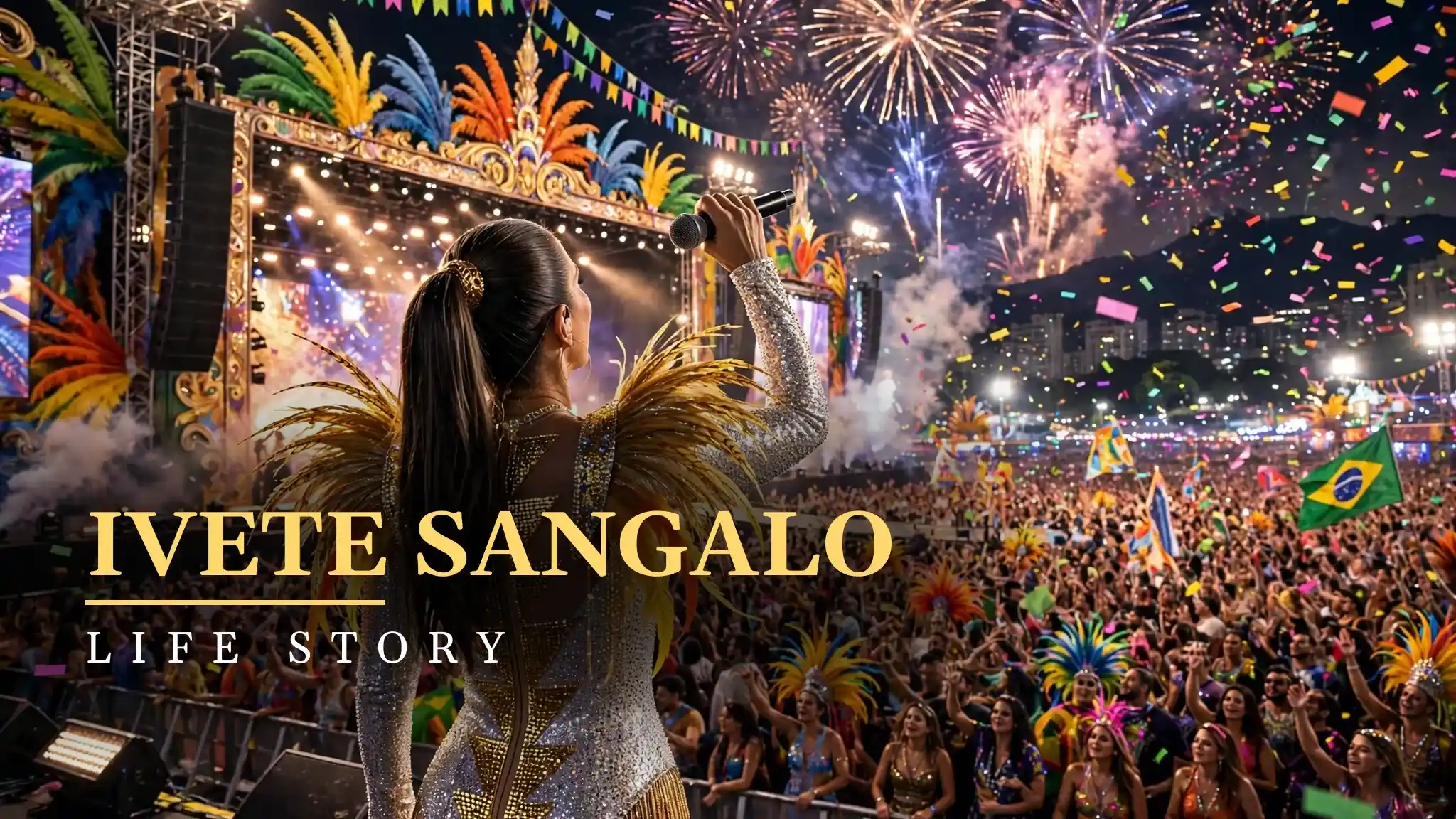
Carnival in Salvador is the largest street party in the world, with millions of people dancing in the streets for days, following the trios elétricos, the trucks carrying bands and singers through the city. Ivete Sangalo is the queen of that carnival, the singer most associated with it, and her performances there are legendary. She leads her trio through the streets, singing for hours, dancing, and interacting with the crowd, and the energy of those performances is unlike anything else in music. Carnival is not a concert. It is a communal celebration, and the singer is not a star on a stage. She is a participant, a leader, and a neighbour, all at once, and Ivete Sangalo understands that instinctively.
Her role in carnival is also a cultural one. She represents Bahia, she represents axé, and she represents the African heritage of Brazilian music, and her presence at carnival is a reminder of where the music comes from. She has performed at carnival for decades, and each year she draws enormous crowds, with fans following her trio for hours through the streets of Salvador. That loyalty is not bought. It is earned, year after year, by showing up, by singing, and by giving the crowd everything she has. Carnival is the heart of her career, and it is the reason she is loved in Brazil in a way that few other singers are. She is not only a pop star. She is a part of the country’s biggest celebration.
Madison Square Garden, Rock in Rio and the World Stage
Ivete Sangalo’s fame is not limited to Brazil. She has performed at Rock in Rio, one of the largest music festivals in the world, and in 2010 she performed at Madison Square Garden in New York, a venue that is a milestone for any artist. The New York concert was a significant event, because it showed that a Brazilian singer, singing in Portuguese, could fill one of the most famous halls in America. The audience was a mixture of Brazilians living abroad and Americans who had discovered her music, and the show was a triumph, with Ivete Sangalo performing with the same energy she brings to a stadium in Brazil. It was a reminder that music does not need translation when it is joyful enough.
The international performances also showed her ambition. She did not want to be only a Brazilian star. She wanted to take Brazilian music to the world, and she did, performing in Europe, in North America, and in Latin America, and introducing audiences to axé, to samba, and to the sound of Bahia. Her international career is smaller than her Brazilian career, and that is natural, because her music is rooted in a specific place and a specific language. But the fact that she has performed at Madison Square Garden, at Rock in Rio, and at festivals around the world is a sign of her status. She is not only Brazil’s party queen. She is an ambassador for Brazilian music, and she carries that role with pride.
The Voice Brasil and Television
In addition to her music, Ivete Sangalo has become a television star in Brazil, most notably as a coach on The Voice Brasil, the Brazilian version of the international singing competition. As a coach, she was warm, funny and encouraging, and she became one of the most popular figures on the show, with viewers tuning in as much for her personality as for the contestants. Her role on the programme showed a different side of her: not the stadium performer, but the mentor, the experienced singer who could help young artists find their voice. She took the job seriously, and the contestants she coached benefited from her experience, her ear, and her generosity.
Television has also given her a wider audience in Brazil, reaching people who might never go to a concert or buy an album. She has hosted programmes, she has appeared as a guest on talk shows, and she has become a familiar face in Brazilian homes, not only as a singer but as a personality. That familiarity is part of her appeal. She is not a distant star. She is a person who appears on television, who laughs, who talks, and who seems like someone you might know. That accessibility is rare for a star of her size, and it is one reason she is so well loved. She is famous, but she is also approachable, and the combination is powerful.
Family, Motherhood and the Woman Behind the Star
Ivete Sangalo’s personal life has been lived largely in public, and she has handled it with a openness that is characteristic of her. She has a son, Marcelo, born in 2009, and twin daughters, Marina and Helena, born in 2018, and she has spoken about motherhood with a candour that many Brazilian women have found inspiring. She married the nutritionist Daniel Cady in 2011, and the family lives in Salvador, close to her roots. She has spoken about the challenges of balancing a career as demanding as hers with family life, about the joy of her children, and about the importance of being present for them, even when the work takes her away. That honesty has made her a figure that many mothers admire, not only as a singer but as a woman.
Her family life is also a reminder that her career is not only about fame. It is about a woman who has built a life, a family, and a career, all at the same time, and who has done so without losing her sense of herself. She is a singer, a mother, a wife, and a public figure, and she manages those roles with a grace that is easy to admire and hard to achieve. The fact that she has done so while remaining one of the most popular singers in Brazil is a testament to her energy, her organisation, and her determination. She is not only a star. She is a person, and her life, like her music, is full, joyful and hard-won.
Later Albums, Collaborations and the Continuing Career
Ivete Sangalo has continued to release music throughout her career, with albums that show her willingness to experiment and to collaborate. She has worked with artists from Brazil and from abroad, she has recorded duets, and she has explored new sounds, from pop to reggae to samba, without ever losing the axé core of her music. Her later albums, including Real Fantasia in 2012 and Onda Boa in 2022, show a singer who is still curious, still energetic, and still capable of making music that connects with audiences. She has also continued to tour, to perform at carnival, and to appear on television, and her schedule remains as demanding as ever.
The continuing career is itself an achievement. Many singers who become famous in their twenties fade by their forties, but Ivete Sangalo, now in her fifties, is still one of the most popular performers in Brazil, still filling stadiums, still leading carnival, and still making music that matters. That longevity is the result of talent, of hard work, and of a connection with her audience that has never been broken. She has never taken her fans for granted, and they have never taken her for granted either. The relationship is mutual, and it is the foundation of a career that has lasted for more than thirty years and that shows no sign of ending.
The Voice of Brazil’s Biggest Party
Ivete Sangalo’s place in Brazilian culture is secure. She is the queen of axé, the queen of Salvador carnival, and one of the most popular singers in the history of Brazilian music. Her songs are part of the national soundtrack, her concerts are legendary, and her voice is one of the most recognisable in the country. She has sold millions of records, she has filled the Maracanã, she has performed at Madison Square Garden, and she has done it all while staying rooted in Bahia, in the music she grew up with, and in the joy that defines her art. She is not a star who happens to be Brazilian. She is a Brazilian star, and the distinction matters.
Her legacy will include Sorte Grande, Festa, the Maracanã album, and the carnival performances that have defined a generation, but it will also include something less tangible: the joy she has brought to millions of people. In a country that has known hardship, inequality and political turmoil, Ivete Sangalo’s music has been a source of celebration, a reminder that life can be joyful, and a reason to dance. That is a significant legacy, and it is one that will last long after the charts have forgotten the details. She is, in the end, the voice of Brazil’s biggest party, and the party is still going.
My Take:
When I think about Ivete Sangalo, the first thing that comes to mind is the joy. Her music is joyful in a way that few artists achieve, and it is a joy that feels real rather than performed. When she sings Festa or Sorte Grande, the happiness in her voice is not an act. It is the sound of a person who loves what she does, who loves the music, and who loves the crowd in front of her. That joy is contagious, and it is why her concerts are so powerful. An audience that hears joy in a singer’s voice will feel it themselves, and Ivete Sangalo’s audiences feel it, in stadiums, at carnival, and in their own homes. That is a rare gift, and it is the foundation of her whole career.
The second thing is the voice itself, because it is a remarkable instrument. It is powerful, warm, and capable of cutting through the noise of a carnival crowd, yet it is also capable of tenderness, of singing a ballad with a softness that surprises people who only know the party songs. That range, from a shout to a whisper, is what makes her a great singer rather than only a loud one. She can fill the Maracanã, and she can sing a quiet song to a small room, and both performances are convincing. A voice that can do both is rare, and it is one reason she has lasted so long. She is not limited to one kind of song, and she is not limited to one kind of stage.
Banda Eva is the part of her story that deserves more attention, because it is where she learned her craft. Six years as the lead singer of a popular axé band is a hard education, with nightly shows, long journeys, and little rest, and it taught her everything she needed to know about being a professional. She learned to lead a band, to work a crowd, and to sing night after night without losing her voice or her energy. That training is visible in everything she has done since. Her solo career did not come out of nowhere. It came out of six years of work, and the work shows. She is a professional in the best sense of the word, and her professionalism is part of why her concerts are so reliable.
Sorte Grande is the song I would point to if someone asked me to explain her appeal in a single track. It is simple, joyful, and impossible not to dance to, and it became an anthem for Brazilian football fans, which is the highest compliment a Brazilian song can receive. A song that is sung in stadiums is not only a hit. It is part of the national culture, and Sorte Grande became exactly that. The song’s longevity, more than twenty years after its release, is a sign that it captured something real about Brazil: a love of celebration, a love of music, and a refusal to be defeated. It is a song that belongs to the country as much as to the singer, and that is a rare achievement.
The Maracanã concert is the performance I would show to anyone who doubts her, because it is a landmark. Filling the Maracanã, the most famous stadium in Brazil, is a test that very few singers pass, and Ivete Sangalo passed it with ease. The live album from that night is one of the best-selling live records in Brazilian history, and it captures a performer at the height of her powers, singing to tens of thousands of people with a confidence and a joy that are extraordinary. A stadium show is a difficult thing to do well, because the audience is far away and the performer has to reach them across a vast space. Ivete Sangalo reached them, and the recording is the proof.
Carnival is the heart of her career, and it is worth describing for readers who have never experienced it. Salvador carnival is the largest street party in the world, with millions of people dancing behind the trios elétricos, and Ivete Sangalo is its queen. She leads her trio through the streets for hours, singing, dancing, and talking to the crowd, and the energy of those performances is unlike anything else in music. Carnival is not a concert. It is a communal celebration, and the singer is a participant as much as a star. Ivete Sangalo understands that, and it is why her carnival performances are legendary. She does not perform at the crowd. She performs with them, and the difference is visible.
Her role on The Voice Brasil is another part of her career that deserves praise, because it shows her as a mentor rather than only as a star. As a coach, she was warm, encouraging, and generous with her experience, and she helped young singers find their voices. That generosity is characteristic of her, and it is part of why she is so well liked within the Brazilian music industry. She is not a star who guards her position. She is a performer who shares what she knows, and who believes that the success of others does not diminish her own. That attitude is rare, and it is one of the most admirable things about her.
Her family life is the part of her story that I find most touching, because it shows a woman balancing a career of extraordinary demands with the ordinary joys of motherhood. She has a son and twin daughters, and she has spoken about them with a candour that many Brazilian women have found inspiring. She has not hidden her family, and she has not used it for publicity either. She has simply lived her life, openly and honestly, and that openness is part of why she is trusted. In a world where celebrities often present a polished, artificial image, Ivete Sangalo’s honesty about her life, her children, and her challenges is refreshing, and it is one reason her fans feel a personal connection to her.
For a new listener, I would suggest a simple path. Start with Sorte Grande and Festa, then listen to the Maracanã live album, then watch a video of her carnival performance, and then listen to Flor do Reggae. That order takes you from the hits to the live show to the carnival to the ballad, and it shows the full range of what she can do. If you only have time for one song, make it Sorte Grande, because it is the essential one, and if you only have time for one performance, make it the Maracanã concert, because it is the most impressive.
One more thought: Ivete Sangalo’s career is a useful answer to anyone who thinks that pop music is only for the young. She became famous in her twenties, and she is still one of the most popular singers in Brazil in her fifties, filling stadiums, leading carnival, and making music that matters. That longevity is not an accident. It is the result of talent, of hard work, and of a connection with her audience that has never been broken. She has never taken her fans for granted, and they have never taken her for granted either. The relationship is mutual, and it is the foundation of a career that has lasted for more than thirty years.
Finally, I would say this: Ivete Sangalo matters not only for what she has sung but for what she represents. She represents Bahia, she represents axé, and she represents the African heritage of Brazilian music, and she does so with a joy that is infectious and a professionalism that is exemplary. She is a reminder that music can be a celebration, that a concert can be a party, and that a singer can be both a star and a neighbour. That is a rare combination, and it is why, after more than thirty years, she is still the queen of Brazil’s biggest party.
There is a last detail that stays with me, which is the way she talks about Bahia. She does not talk about it as a place she left. She talks about it as home, as the source of her music, and as the place she returns to, again and again. That loyalty to home is the thread that runs through her whole career, from Juazeiro to Banda Eva to the Maracanã, and it is why her music feels authentic. She did not become famous by leaving Bahia behind. She became famous by carrying Bahia with her, and the world came to listen.
Her international performances also deserve a final word, because they show an artist who is proud of her music and who wants to share it. Madison Square Garden in 2010 was a milestone, not only for her but for Brazilian music, because it proved that a singer performing in Portuguese could fill one of the most famous halls in America. That is a significant achievement, and it is a sign of the global appeal of Brazilian music. Ivete Sangalo is an ambassador for that music, and she carries the role with a joy that is impossible to fake.
The duets and collaborations in her career are another thread worth following, because they show a singer who enjoys working with others. She has recorded with artists from Brazil and from abroad, and each collaboration has added something to her music. That willingness to share the stage is characteristic of her, and it is part of why other artists enjoy working with her. She does not need to dominate a song. She is happy to share it, and the song is better for it. That generosity is a hallmark of her career, and it is one reason her music has stayed fresh.
Her voice, as it has aged, is another thing worth noting. Many singers lose power as they get older, but Ivete Sangalo’s voice has grown richer, warmer, and more expressive, and her recent performances show a singer in full command of her instrument. That is the result of care, of technique, and of a lifetime of singing, and it is a reminder that a voice, like a wine, can improve with age if it is looked after. She looks after hers, and it shows, in every note she sings.
One more practical note: if you want to understand Brazilian carnival, watch Ivete Sangalo. Her performances are the best introduction to the music, the energy, and the joy of Salvador carnival, and they show why millions of people travel to Bahia every February. Carnival is not only a party. It is a cultural event, and Ivete Sangalo is its most famous voice. Watching her lead a trio through the streets is the closest most people will come to understanding what carnival means to Brazil, and it is an experience worth having, even on video.
Looking ahead, the question is what she will do next, and the answer is likely to be more of the same: more music, more carnival, more concerts, and more joy. She is not an artist who reinvents herself every few years. She is an artist who knows what she does, who does it brilliantly, and who will keep doing it for as long as her voice and her energy allow. That consistency is not a limitation. It is a strength, and it is why her fans trust her. They know what they will get, and what they will get is a great night, every time.
One more thing worth saying is how her concerts feel to the people who attend them. Fans describe them as celebrations rather than shows, nights when a whole stadium sings together, dances together, and forgets its troubles for a few hours. That feeling is the real product of her career, more than any record or award, and it is why people return to her concerts again and again. A singer who can give that feeling to tens of thousands of strangers is doing something rare and valuable.
Frequently Asked Questions
When was Ivete Sangalo born?
Ivete Sangalo was born on 27 May 1972 in Juazeiro, in the state of Bahia, Brazil. She grew up in the north-east of the country, the home of axé music.
What is Ivete Sangalo’s most famous song?
Her most famous song is Sorte Grande, also known as Poeira, released in 2003. It became an unofficial anthem for Brazilian football fans and is still sung at carnival.
Was Ivete Sangalo in a band?
Yes. She was the lead singer of Banda Eva, one of Brazil’s most popular axé bands, from 1993 to 1999, before leaving to start her solo career.
Did Ivete Sangalo perform at the Maracanã?
Yes. In 2007 she recorded a live album at the Maracanã stadium in Rio de Janeiro, which became one of the best-selling live albums in Brazilian history.
What is Ivete Sangalo’s role in carnival?
She is known as the queen of Salvador carnival, leading her trio elétrico through the streets of the city during the festival, which is the largest street party in the world.
Was Ivete Sangalo a coach on The Voice Brasil?
Yes. She was a coach on The Voice Brasil, where she was known for her warmth, her humour, and her generosity as a mentor to young singers.


