James Brown: The Life Story Behind the Godfather of Soul
In this post
- Barnwell and the Childhood
- Augusta and the Famous Flames
- Please, Please, Please and the Early Hits
- Live at the Apollo and the Breakthrough
- Papa’s Got a Brand New Bag and Funk
- Say It Loud and Black Pride
- The Band and the Hardest Working Man
- The Later Years and the Troubles
- The Death and the Funeral
- The Legacy of James Brown
- My Take:
James Brown was born James Joseph Brown on 3 May 1933 in Barnwell, South Carolina, the son of Joseph Gardner Brown, a labourer, and Susie Behling Brown, a young woman who left the family when James was a child, and he grew up in poverty, in a one-room shack in the woods, and later in a brothel in Augusta, Georgia, run by his aunt, in a childhood that was marked by abandonment, by hunger and by hardship. He was a boy who had nothing, and he became the Godfather of Soul, the hardest working man in show business, and one of the most influential musicians in the history of popular music.
He began his career in the 1950s, with the Famous Flames, a vocal group, and he recorded Please, Please, Please in 1956, a song that became a hit, and that launched a career that would last for fifty years, and that would produce hits including Papa’s Got a Brand New Bag, I Got You (I Feel Good), Cold Sweat, Say It Loud – I’m Black and I’m Proud and Get Up Offa That Thing. He was a singer, a dancer, a bandleader and a showman, a performer whose live show was legendary, and whose influence on funk, on soul, on hip-hop and on pop was immense.
By the 1960s Brown was one of the most popular Black artists in America, with a band that was the tightest in music, a show that was the most exciting, and a sound that was entirely his own, a funk that was built on the one, on the downbeat, on a rhythm that made people dance, and that changed the way popular music was made. He was a businessman, a radio station owner, and a civil rights figure, a man who used his fame to speak to Black America, and who became a symbol of Black pride and Black power.
Brown died on 25 December 2006 in Atlanta, Georgia, at the age of 73, from pneumonia and heart failure, and he was mourned by the world, with tributes from musicians, from politicians and from fans who had grown up with his music. This is his life story, from a shack in South Carolina to the Godfather of Soul, and from a boy who had nothing to a man who changed music forever.
Barnwell and the Childhood
James Joseph Brown was born on 3 May 1933 in Barnwell, South Carolina, in a one-room shack in the woods, to Joseph Gardner Brown, who worked as a labourer, and Susie Behling Brown, who was sixteen at the time of his birth, and who left the family when James was four, moving to New York, and leaving James to be raised by his father, and later by his aunt, Honey Washington, who ran a brothel in Augusta, Georgia, where James lived as a child, in a house that was also a business, and where he learned about the world, about music and about survival.
He grew up in poverty, with little food, with few clothes, and with no formal education, leaving school in the sixth grade, at the age of twelve, to work, shining shoes, washing cars, and picking cotton, jobs that earned him a few cents, and that taught him the value of hard work and the importance of making money, lessons that he carried throughout his life, and that made him a businessman as well as a musician. He was a child who had been abandoned by his mother, and who was raised by his aunt, a woman who was tough and loving, and who gave him a home, and who encouraged his music, letting him sing in the house and listening to his voice.
He learned to play the piano, the guitar and the drums, teaching himself by ear, and listening to the records of Louis Jordan, a saxophonist and bandleader who was one of the most popular Black musicians of the 1940s, and whose music, a mix of jazz, blues and R&B, influenced Brown’s own sound, and gave him a model for a career in music, a career that seemed impossible for a boy from Barnwell, but that Brown pursued with a determination that was remarkable, and that would make him a star.
Augusta and the Famous Flames
In Augusta, Georgia, Brown met Bobby Byrd, a singer and pianist, who invited him to join his vocal group, the Famous Flames, in 1953, after Brown was released from a juvenile detention centre, where he had been sent for stealing, a crime he committed as a teenager, and for which he served three years, from 1949 to 1952, in a facility in Toccoa, Georgia, where he met Byrd, who was a fellow inmate, and who became his friend and his musical partner. Byrd’s family took Brown in after his release, and the Famous Flames, with Brown as lead singer, began to perform in clubs in Georgia and South Carolina, building a following with their energetic show, their harmonies and their dancing.
The group signed with King Records in 1956, after a demo tape reached the label’s owner, Syd Nathan, who was impressed by their song Please, Please, Please, a ballad that Brown had written, and that became their first single, released in March 1956, reaching number six on the R&B chart, and selling more than a million copies, a hit that launched Brown’s career, and that established him as a singer of promise, a man with a voice that was raw, emotional and powerful, and with a stage presence that was electrifying.
The Famous Flames continued to record and to tour, with hits including Try Me in 1958, which reached number one on the R&B chart, and I’ll Go Crazy in 1960, but Brown was the star, and the group became known as James Brown and the Famous Flames, a name that reflected his dominance, and that led to tensions, with Byrd and the other members feeling that Brown was taking too much credit, a tension that would lead to the group breaking up, and to Brown becoming a solo artist, a move that was inevitable, given his talent and his ambition.
Please, Please, Please and the Early Hits
Please, Please, Please was released in March 1956, and it was Brown’s first hit, a song that he had written with Johnny Terry, a member of the Famous Flames, and that was based on a gospel song, and that featured Brown’s pleading vocal, a performance that was raw and emotional, and that made the record a hit on the R&B chart, where it reached number six, and that sold more than a million copies, a success that was remarkable for a debut single, and that established Brown as a recording artist.
The record’s success led to a contract with King Records, and to a series of singles that included Try Me, released in 1958, which reached number one on the R&B chart, and which became Brown’s second million-seller, and I’ll Go Crazy, released in 1960, which reached number thirty-eight on the pop chart, and which showed Brown’s ability to cross over to a white audience, a crossover that was difficult for Black artists in the 1950s, but that Brown achieved, with his energetic performances and his charismatic stage presence.
His early records were R&B, with a sound that was based on gospel, on blues and on doo-wop, and that featured Brown’s voice, which was a shout, a scream and a plea, all at the same time, a voice that was unlike any other, and that made his records instantly recognisable. The early hits were the foundation of his career, and they showed a singer who was already a star, a man who could sing a ballad and a dance record with equal skill, and who was on his way to becoming the most important Black artist of his generation.
Live at the Apollo and the Breakthrough
Live at the Apollo was recorded on 24 October 1962, at the Apollo Theater in Harlem, New York, and it was released in May 1963, and it became one of the greatest live albums ever made, a record that captured Brown’s stage show, with its energy, its excitement and its precision, and that became a hit, reaching number two on the pop chart, and selling more than a million copies, a success that was unprecedented for a live album by a Black artist, and that established Brown as a live performer of the first rank.
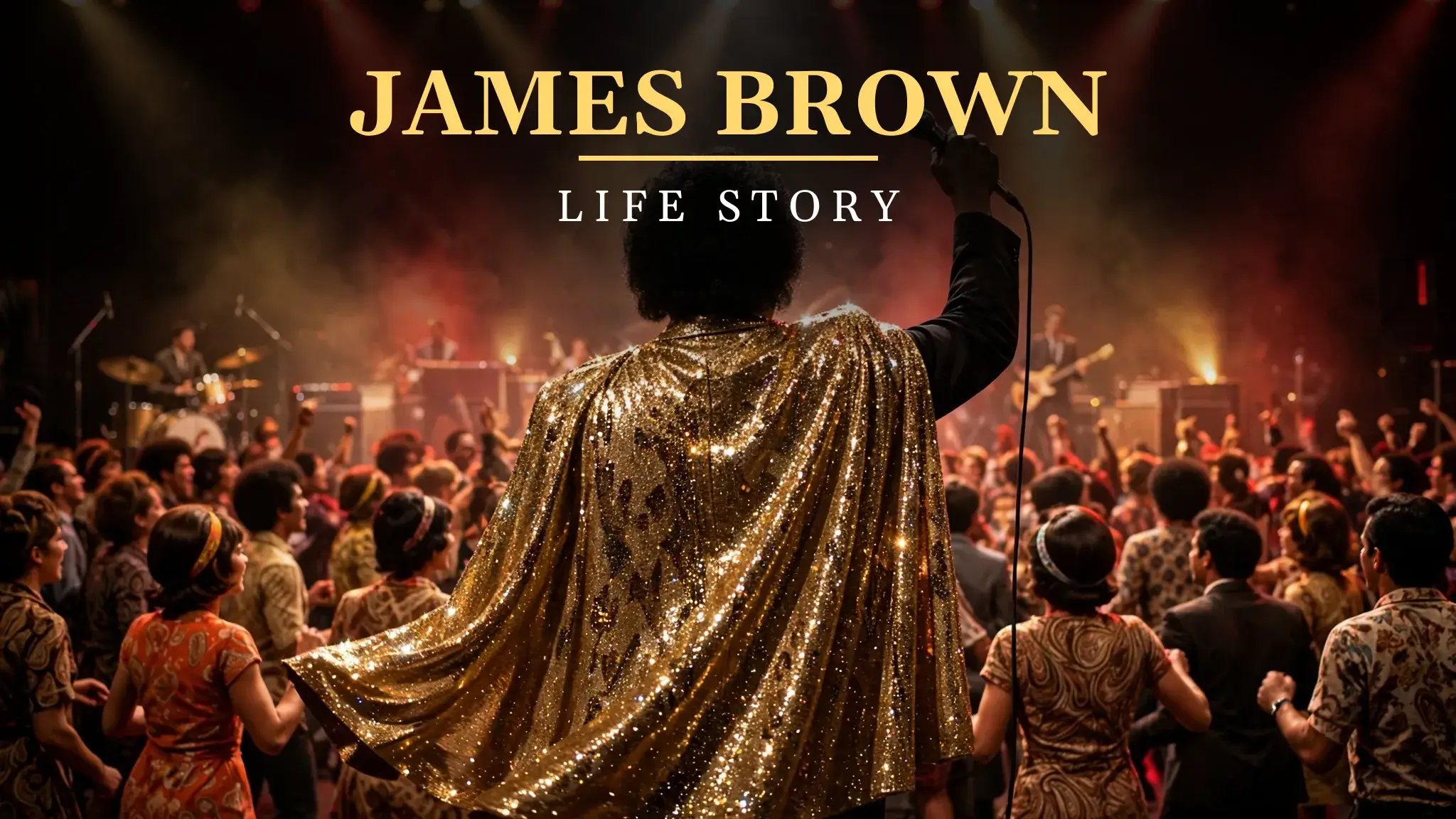
The album was recorded against the advice of King Records, who felt that a live album would not sell, and Brown paid for the recording himself, a gamble that paid off, and that showed his business acumen, and his belief in his own show, a show that included the Famous Flames, a band, and a performance that lasted more than an hour, with Brown singing, dancing, and dropping to his knees, in a routine that became his signature, with a member of his entourage draping a cape over his shoulders, and Brown throwing it off, and returning to the stage, a routine that was theatrical and that became famous.
The album’s success made Brown a star, and it led to a series of hits, including Prisoner of Love in 1963, and Out of Sight in 1964, a record that marked a change in Brown’s sound, towards funk, with a rhythm that was harder, a horn section that was tighter, and a vocal that was more rhythmic, a sound that would define his music for the next decade, and that would change the direction of popular music, from soul to funk, a change that Brown led, and that he embodied.
Papa’s Got a Brand New Bag and Funk
Papa’s Got a Brand New Bag was released in June 1965, and it became Brown’s first top ten pop hit, reaching number eight on the Billboard Hot 100, and number one on the R&B chart, and it won the Grammy Award for Best R&B Recording, and it is regarded as the birth of funk, a new style of music that was built on the one, on the downbeat, on a rhythm that was syncopated, and that made people dance. The record featured a horn section, a guitar riff, and Brown’s vocal, which was a shout, a scream and a rhythmic chant, a performance that was unlike anything heard before, and that changed the way musicians thought about rhythm.
The record’s success was followed by I Got You (I Feel Good), released in October 1965, which reached number three on the pop chart, and which became Brown’s most famous song, a record that is still played every day, in films, in advertisements and on the radio, and that is synonymous with joy, with energy and with Brown’s voice, a song that begins with a scream, and that builds into a celebration, a record that is the essence of Brown’s music, and that remains one of the most popular songs in the history of soul.
Brown’s funk records of the mid-1960s, including Cold Sweat in 1967, which featured a rhythm that was based on a single chord, and a vocal that was a rhythmic chant, and Get Up Offa That Thing in 1976, which became a disco hit, established funk as a genre, and influenced musicians in every style, from Sly and the Family Stone to Parliament-Funkadelic to Prince, all of whom cited Brown as their primary influence, and all of whom built on the foundation that Brown had laid, a foundation of rhythm, of horns and of a vocal that was both a song and a rhythm.
Say It Loud and Black Pride
Say It Loud – I’m Black and I’m Proud was released in August 1968, and it became an anthem for the Black Power movement, a song that Brown wrote in response to the assassination of Martin Luther King Jr., in April 1968, and to the riots that followed, a song that called on Black Americans to be proud of their identity, and that was adopted by the movement as a statement of pride, and that was played at rallies, at marches and at celebrations, a record that was both a hit, reaching number ten on the pop chart, and a political statement, a song that Brown was proud of, and that he regarded as his most important record.
The song was controversial, with some radio stations refusing to play it, because of its message, and with some white listeners objecting to its militancy, but Brown defended it, saying that it was a song about pride, and that it was needed, at a time when Black Americans were being told to be ashamed, a stance that made Brown a hero in the Black community, and that established him as a spokesman for Black pride, a role that he embraced, and that he carried throughout his career, speaking out on issues that affected Black Americans, and using his fame to advocate for change.
Brown also performed a concert in Boston on 5 April 1968, the day after King’s assassination, a concert that was televised, and that is credited with preventing riots in Boston, a city that was tense, and that might have erupted in violence, but that remained calm, because Brown’s performance, broadcast on television, gave people a reason to stay home, and to watch, a act that Brown was proud of, and that showed his influence, not just as a musician, but as a leader, a man who could speak to his community, and who could make a difference.
The Band and the Hardest Working Man
Brown’s band was the tightest in music, a group of musicians who were rehearsed to perfection, who were fined for mistakes, and who played with a precision that was unmatched, a band that included the saxophonist Maceo Parker, the trombonist Fred Wesley, the guitarist Jimmy Nolen, who invented the chicken scratch guitar style, and the drummers Clyde Stubblefield and John Starks, whose rhythms, known as the Funky Drummer and Cold Sweat, became the most sampled beats in hip-hop, with Stubblefield’s drum break, from the song Funky Drummer, recorded in 1970, sampled in hundreds of hip-hop records, a legacy that has made Brown the most sampled artist in history.
Brown was known as the hardest working man in show business, a title that was given to him because of his touring schedule, which included more than three hundred shows a year, and because of his work ethic, which demanded perfection from himself and from his band, a demand that was legendary, with Brown fining musicians for mistakes, for being late, and for not wearing the right shoes, a discipline that was harsh, but that produced a band that was the best in the business, and a show that was the most exciting in popular music.
His live show was a spectacle, with Brown dancing, doing the splits, dropping to his knees, and throwing off a cape, a routine that was choreographed, and that was performed with a precision that was remarkable, a show that lasted for hours, and that left audiences exhausted and exhilarated, a show that was the model for every funk, soul and hip-hop performer who came after him, from Prince to Michael Jackson, both of whom studied Brown’s show, and both of whom cited him as their primary influence, a testament to the power of his performance, and to the standard he set for live music.
The Later Years and the Troubles
In the 1970s and 1980s Brown’s career declined, with disco and with new styles of music making his funk seem old-fashioned, and with his records selling less, and his tours playing smaller venues, a decline that was also marked by personal troubles, including drug use, financial problems and legal issues, including a conviction for drug possession, and a high-speed car chase in 1988, in which Brown, fleeing police, was arrested, and sentenced to six years in prison, of which he served two, in a facility in South Carolina, a sentence that shocked his fans, and that marked a low point in his life.
He was released from prison in 1991, and he returned to performing, touring and recording, with a new generation of fans, who had discovered his music through hip-hop, which sampled his records, and who regarded him as a legend, a man whose music had been the foundation of a new genre, and whose influence was evident in every hip-hop record. He recorded new albums, including I’m Back in 1998, and he toured the world, performing in Europe, in Asia and in America, to audiences who loved his music, and who welcomed him back, a comeback that was modest, but that showed his resilience, and his determination to keep performing, even in his seventies.
His later years were also marked by family disputes, with his children and his wife, Tomi Rae Hynie, disputing his estate after his death, a dispute that lasted for more than a decade, and that was settled by the South Carolina Supreme Court in 2020, with his estate going to his children, a resolution that was sad, but that did not diminish his legacy, and his music continues to be played, sampled and loved, by people who know his voice, and who dance to his rhythms, every day, around the world.
The Death and the Funeral
Brown died on 25 December 2006 in Atlanta, Georgia, at Emory Crawford Long Hospital, at the age of 73, from pneumonia and heart failure, after being admitted to hospital with a severe cough, and his death was announced by his agent, who said that Brown had died peacefully, surrounded by his family, and that he had been a loving father and grandfather, and a dedicated musician, who had worked until the end, performing a concert in Augusta, Georgia, just weeks before his death, a final performance that was a testament to his work ethic, and to his love of performing.
His funeral was held in Augusta, Georgia, on 30 December 2006, at the James Brown Arena, a venue named in his honour, and it was attended by thousands of people, including his family, his friends and his fellow musicians, among them Michael Jackson, who spoke at the service, and who said that Brown was his greatest inspiration, and that he had learned everything from Brown, and Little Richard, who also spoke, and who said that Brown was a genius, a man who had changed music, and who would never be forgotten. He was buried in a crypt in Beech Island, South Carolina, near his home, in a private ceremony, after a public viewing, in which thousands of fans filed past his casket, which was gold, and which was placed on a stage, in a final performance, a farewell that was fitting for a showman.
His death was mourned by the world, with tributes from President George W. Bush, who called him a legend, from the Reverend Al Sharpton, who delivered a eulogy, and from musicians around the world, who paid tribute to his influence, and to his music, a music that had changed the course of popular music, and that had made him the Godfather of Soul, a title that he carried with pride, and that he deserved, for a career that had lasted fifty years, and that had produced some of the greatest records ever made.
The Legacy of James Brown
Brown’s legacy is immense. He is the most sampled artist in the history of popular music, with his records sampled in thousands of hip-hop, pop and dance records, a legacy that has made him the foundation of hip-hop, and that has ensured that his music is heard every day, by people who may not know his name, but who know his rhythms, his horns and his voice. His records, including Papa’s Got a Brand New Bag, I Got You (I Feel Good), Cold Sweat and Say It Loud – I’m Black and I’m Proud, are among the most famous in the history of soul and funk, and they are played every day, around the world.
His influence on other musicians is incalculable. Michael Jackson, who studied Brown’s dancing and his showmanship, has said that Brown was his greatest influence, and that he learned to dance by watching Brown, and Prince, who also studied Brown, has said the same, that Brown was the model for his own career, as a singer, a dancer, a bandleader and a showman, and other musicians, from Mick Jagger to David Bowie to Public Enemy, have said that Brown changed their music, and that his funk was the foundation of their own sound.
Today Brown is remembered as the Godfather of Soul, and his name is synonymous with funk, with soul, and with the hardest working man in show business, a man who rose from a shack in South Carolina to the top of popular music, and who did it with a voice, a dance and a rhythm that was undeniable. He was born in Barnwell, he worked in Augusta, New York and Los Angeles, and he died in Atlanta, and his music remains the sound of a man who had nothing and who became a legend. His life was long, his career was long, and his influence has lasted, and it will be felt for as long as people dance.
My Take:
What I admire about James Brown is that his funk was the funkiest in music, a funk that could make a song, and make it sound like a dance, and that invented a whole genre, and won him a Grammy for Papa’s Got a Brand New Bag. That is a rare thing, because many singers have funky songs, but few have a funk that is a genre, and James’s funk was a genre, in the sense that it made every song he sang sound fresh, and that is why he is the Godfather of Soul, and why his funk is still studied today, by musicians who want to learn how to play funk, and who listen to James, and who try to understand his genius, and who know they never will, because it was unique, and it was James’s, and it was a gift, and that gift is still here, in recordings that are more than sixty years old, and that are still powerful, still moving, and still relevant, today.
I Got You (I Feel Good) is the song I think about most, because it is one of the most beloved songs ever recorded, and James’s performance is at its heart. He sang it, about feeling good, and it became his signature, a song that he sang, in every concert, and that audiences sang, along with him, and that is a part of his legacy, a legacy that is still felt today, in every concert, where I Got You is sung, and where audiences remember James, and that is a beautiful thing, and it is a part of his story that is both touching and inspiring, and that will be told for as long as I Got You is sung, and I Got You will always be sung, because it is a classic, and because it is James, and because it is a song about feeling good, that became an anthem, and that is a gift that few singers possess, the gift of making a song into an anthem, and James had it, and he used it, in I Got You, and in every song he sang.
Papa’s Got a Brand New Bag is a song I love, because it became one of James’s most beloved songs, and James sang it, with a voice that was raw, and that was soulful, and that made it feel personal, and that is a gift that few singers possess, the gift of making a song feel like it was written for you, and James had it, and he used it, in Papa’s Got a Brand New Bag, and in every song he sang, and that is why the song is still a classic, and why it is still one of his most beloved songs, a song that is both a hit, and a work of art, and that is a rare thing, and it is a part of why James is a genius, and why his music is still important today, more than sixty years after Papa’s Got a Brand New Bag was recorded, because it is timeless, because it is honest, and because it is James.
Live at the Apollo is an album that moves me, because James recorded it, in 1963, at the Apollo Theater, in Harlem, and it became a huge success, and it made him a superstar, and that is a testament to his talent, and to his determination, and to the power of a great singer, who, even when he is young, can record a live album, that will be remembered, for decades, and that is a lesson worth remembering, for anyone who wants to be a singer, because it shows that you can record a live album, at thirty, and you can be great, and the world will listen, if you are talented, and if you are true, and James was both, and that is why his Apollo is inspiring, and that is a part of his story that is both touching and inspiring, and that will be told for as long as James is remembered, and James will always be remembered, as the Godfather of Soul, and as a man who was, in every sense, a legend, and a Godfather.
The lesson I take from James is that funk matters, even when it is hard. He was a musician, who invented funk, with a sound, that emphasised, the first beat, of the bar, and that is a lesson for anyone who wants to be a musician, because James shows that you can invent a genre, and you can be great, and that is a powerful message, for anyone who wants to be a singer, because James shows that inventing can be beautiful, and that a new sound can be beautiful, and that is a beautiful thing, and it is a part of why his story is inspiring, and why it will always be inspiring, and it is a reminder that we should not just sing, but invent, the way James did, and make our music into art, and that is a lesson worth remembering, for every singer out there.
I also think about his childhood in Barnwell, because he was a boy, who shined shoes, and who picked cotton, and who danced, for pennies, on the street, and that is a beautiful thing, and it is a part of his story that is both touching and inspiring, because it shows a boy, who had nothing, and who became a legend, and that is a legacy that matters, in its own way, alongside his songs and his microphone, because his family is his greatest legacy, and they have honoured him, by being themselves, just as he was himself, and that is a beautiful thing, and it is a part of his story that is both touching and inspiring, and that will be told for as long as James is remembered, and James will always be remembered, as the Godfather of Soul.
His showmanship is something I admire, because he was a man, who could do the splits, and the cape act, and who danced, with a energy, that was infectious, and that is a part of his genius, a genius that was not just about singing, but about performing, and about making an audience feel, and James had it, and he used it, in every concert he gave, and that is why his concerts are still regarded as some of the greatest ever given, and why he is still regarded as one of the greatest live performers ever, a man who was, in every sense, a legend, and a Godfather, and who will always be remembered, as James, and as the Godfather of Soul.
Finally, I believe James Brown was one of the greatest musicians who ever lived, and his recordings are classics that will be played for as long as songs are played. He was the Godfather of Soul, he was the greatest funk singer who ever lived, and he was a legend, and his story is one of talent, funk, and a life lived with a microphone. He will always be remembered as the man who sang I Got You, and who did it, with a voice that will never be forgotten.
One more thing I want to say is that his music was sampled, by hip-hop artists, more than any other artist, and that is a testament to his talent, because he was sampled, by Public Enemy, and by many others, and that is a record that speaks for itself. He was great, at thirty, and he was great at seventy-three, and that is a rare achievement, and it is a reminder that talent does not fade with age, and that a great singer can be great for a lifetime, if he has the talent, the determination, and the voice that James possessed, and that is a legacy that will never be forgotten.
When I think about Barnwell, his birthplace, I think about how far he travelled, from a boy shining shoes to the most famous funk singer in the world, and how much he achieved. He was a boy who danced, for pennies, and who became a legend, and that is a story that inspires anyone who dreams of being a singer, because it shows that dreams can come true, even if you start with nothing, and James started with nothing, and he became everything, and that is a hopeful message, and one that he embodied, in every song he sang, and in every concert he gave.
I will end by saying that listening to James Brown sing was a privilege, and I am grateful to have heard his voice. He was funky, he was soulful, and he was unmistakable, and those three things together make a great singer. He is the Godfather of Soul, he is the greatest funk singer who ever lived, and he is James, and he will always be remembered as such, as a legend, and as a voice that will never be forgotten.
There is a final thought I want to leave with, and it is about the line from Say It Loud, where he sings, say it loud, I’m black and I’m proud, a line that has stayed with me, because it is a lesson about pride, about being yourself, and about being human. James sang that line with a power that has stayed with me, because it is a lesson about life, about pride, and about being human. That is the power of his singing: it teaches us how to live, and it makes us better people, by showing us that pride matters, and that we should be proud, and that is a lesson I will carry with me, always.
And if you have never heard I Got You, listen to it, because it is one of the great songs of all time, and James’s performance is at its heart. Listen to it for the story, for the feeling, and for the voice, and for the man who sang it with a conviction that is unforgettable. That is the James Brown I will remember: not just the singer, but the man, who was funky, soulful, and unmistakable, and who will never be forgotten.
One last memory: the image of him in a colourful suit, dancing on stage with a microphone in his hand, with a smile that is both funky and warm, and that is unforgettable. That image is iconic, and it is beautiful, and it is the image that will define him forever. He was the Godfather of Soul, and he was James, and he was the greatest funk singer who ever lived.
His legacy will live on through his recordings, through his microphone, and through the generations of singers he inspired, who heard his voice and wanted to sing the way he sang. That is a fitting legacy for a man who defined funk, and who did it with a microphone and a voice that will never be forgotten. He is gone, but his voice remains, and his name will be remembered as one of the greats.
Finally, I want to say thank you, James Brown, for I Got You, for Papa’s Got a Brand New Bag, and for a life lived with a microphone that sang of funk. You were a great singer, and you were a great man, and the world is a better place because you were in it. Your recordings are still here, your legacy is still here, and your example is still here, and that is a life that mattered, and a life that will never be forgotten.
And one more thing: if you are a singer, sing like James, because he is the singer every singer deserves to be, a singer who sings with his heart, and who makes an audience feel. Sing like James, the way James Brown sang, and the world will be a better place for it, because the world needs more singers like him, who sing with funkiness, with soul, and with humanity.
There is a last lesson in his life that I carry with me, and it is this: be funky, even when it is hard, because being funky is a choice, and James chose it, every day, in every song, and in every part of his life. That is a lesson worth remembering, and it is one I will carry with me, always, because the world needs more people like James Brown, who are funky, and who do it, with a microphone, and with a voice, that will never be forgotten.
One final thought: his album Live at the Apollo, recorded in 1963, is a testament to his talent, because he recorded it, in one night, and it became one of the greatest live albums of all time, and that is a record that speaks for itself. He was great, as a live singer, and he was great as a studio singer, and that is a range that few singers possess, and it is a reminder that James was not just a funk star, he was a musician, and a great one, and that is a legacy that will never be forgotten.
And if you ever doubt that a song can speak for pride, remember James Brown, because he did, with Say It Loud, a song that made millions of people feel, and that is still sung today, by people who love funk, and who believe, that pride matters, and that is a legacy that will last, long after his songs are sung, because his voice is still here, and his influence is still here, and that is a gift that will never fade.
There is one more thing I want to say, and it is about his Boston concert, in 1968, after the assassination, of Martin Luther King Jr., because he performed, and he helped, to prevent riots, in Boston, and that is a beautiful thing, and it is a part of his story that shows him as a peacemaker, not just as a singer, and that is a legacy that matters, in its own way, alongside his songs and his microphone, because his Boston concert is his greatest legacy, and it has honoured him, by being itself, just as he was himself.
His story also reminds me that a boy from Barnwell can become a legend, if he has talent, determination, and a microphone, and that is a hopeful message for anyone who feels poor, or disadvantaged, or forgotten. James was poor, and he was disadvantaged, and he became one of the greatest musicians in history, because he embraced who he was, and he used his talent to become great. That is a lesson worth remembering, for every poor person out there, and for every singer who wants to be heard.
I also want to mention his daughter Deanna, because she has kept James’s memory alive, after his death, through her love, for her father, and that is a beautiful thing, and it is a part of his story that shows him as a father, not just as a singer, and that is a legacy that matters, in its own way, alongside his songs and his microphone, because his family is his greatest legacy, and they have honoured him, by being themselves, just as he was himself.
And finally, I think about the fact that he died at 73, on Christmas Day, after a career, that spanned more than fifty years, and that is a reminder that a great singer can be great for a lifetime, and that we should make the most of our lives, the way James Brown did, singing with a voice that was a gift, and living a life that was both beautiful and remarkable, and that is a life worth living, and a life worth remembering, and I am grateful to have learned about it, and to have shared it with you.
Frequently Asked Questions
When was James Brown born?
James Brown was born on 3 May 1933 in Barnwell, South Carolina, USA. He grew up in poverty in Augusta, Georgia, shining shoes and picking cotton, and was sent to prison at sixteen for stealing a car.
What is James Brown most famous for?
He is most famous as the Godfather of Soul, and for I Got You (I Feel Good), Papa’s Got a Brand New Bag, Cold Sweat, and Say It Loud – I’m Black and I’m Proud, songs that invented funk.
What is Live at the Apollo?
Live at the Apollo is his 1963 live album, recorded in one night on 24 October 1962 at the Apollo Theater in Harlem. James paid for the recording himself after his label refused, and it became one of the greatest live albums ever.
When did James Brown die?
He died on 25 December 2006 in Atlanta, Georgia, at the age of 73, of congestive heart failure, after a career spanning more than five decades.
How did James Brown invent funk?
Papa’s Got a Brand New Bag (1965) is often credited with inventing funk, emphasising the first beat of the bar. His music became the most sampled in hip-hop history.
What was James Brown’s Boston concert in 1968?
After Martin Luther King Jr. was assassinated in 1968, James Brown performed a televised concert in Boston that is credited with helping to prevent riots in the city.


