Joe Arroyo: The Life Story Behind the Colombian Salsa Legend
In this post
Joe Arroyo was one of the greatest voices in the history of Colombian music, a singer whose songs are still played at every party in the Caribbean and whose life was as dramatic as the music he sang. He was known as “El Joe”, and his voice carried the joy, the pain, and the pride of the Afro-Colombian coast. When he sang “La Rebelión”, with its story of an enslaved African who refused to accept his chains, he was not only singing a song. He was telling the history of his people, and he was doing it with a rhythm that made the whole world dance.
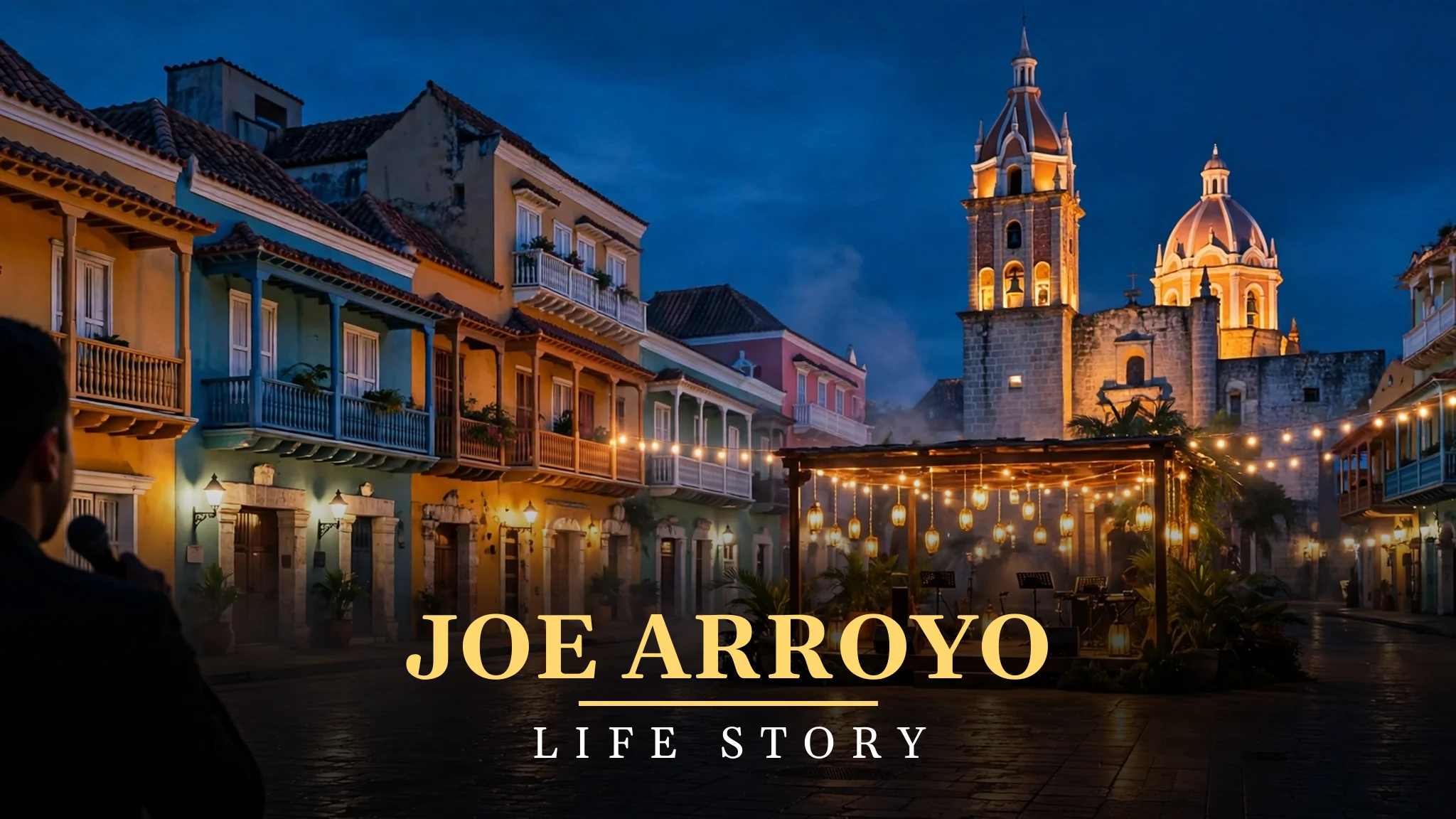
His full name was Álvaro José Arroyo González, and he was born in Cartagena, Colombia, on 1 November 1955. Cartagena is a port city on the Caribbean coast, famous for its colonial walls, its colourful streets, and its music, and Joe grew up in that world, surrounded by drums, by dancing, and by songs that carried the history of African people in Colombia. He began singing as a child, and by the time he was a teenager, people in Cartagena already knew that his voice was special.
What makes his story worth telling is the scale of it. He rose from a poor neighbourhood in Cartagena to become one of the most famous salsa singers in Latin America, he sang with the great bands of his time, he created a sound of his own called “Joesón”, and he lived a life full of triumph and struggle. He died in 2011, but his music has never left the dance floor. This is the story of how a boy from Cartagena became a legend, and how his songs became part of the soul of Colombia.
There is a wider story here too, about the Afro-Colombian coast and the music that its people created from a history of slavery, resistance, and survival. Joe Arroyo is one of the clearest voices of that history, a singer who took the pain of his people and turned it into songs that made the whole world dance. Understanding Joe means understanding that larger story, and this article tells it from the beginning, from his childhood in Cartagena to his death in Barranquilla in 2011, and to the legacy he left behind.
Childhood in Cartagena
Cartagena in the 1950s and 1960s was a city of music. It was a port, and ports bring people, sounds, and rhythms from many places. Joe Arroyo grew up in a working-class neighbourhood, in a home where money was tight but music was rich. He heard the drums of the Afro-Colombian coast, the cumbia and the champeta of the Caribbean, and the salsa that was arriving from Cuba and Puerto Rico. He absorbed all of it, and it became part of his voice.
As a child, he sang in the street, at home, and wherever people would listen. He had a natural gift, a voice that was strong, warm, and full of feeling, and people noticed it early. He was not a child who had to be pushed to sing. He sang because he loved it, and because it was the most natural thing in the world for him to do. His family supported him, and the neighbourhood supported him, because in Cartagena a child who can sing is a treasure.
He also learned the history of his people through music. The songs of the Caribbean coast carry stories of slavery, of resistance, and of survival, and Joe learned those stories by hearing them sung. That knowledge would later shape his most famous song, “La Rebelión”, which tells the story of an enslaved African in Cartagena who rebels against his master. Joe did not learn that history from a book. He learned it from the music around him, and he carried it with him for the rest of his life.
His childhood was not easy. He grew up poor, and he had to work hard from a young age. But the music gave him a way out, and it gave him a dream. He dreamed of becoming a singer, of leaving Cartagena and singing for the world, and he held on to that dream even when life was hard. That dream would carry him to Barranquilla, to Medellín, and to stages across Latin America.
The port of Cartagena shaped Joe’s music in a way that is worth understanding, because a port is a place where sounds meet. Ships brought records from Cuba, from Puerto Rico, from New York, and from Africa, and those records were played in the bars and on the streets of the city. A child growing up in Cartagena heard many kinds of music, and he learned to love them all, but he also learned to hear the African roots that ran through them. The drums of the coast, the call and response of the singers, and the rhythm of the dance all came from Africa, carried across the sea by enslaved people and kept alive by their children. Joe grew up inside that living history, and it became the foundation of his voice. When he sang, he was not only singing a song. He was singing a history that had survived the crossing of the ocean, and that survival gave his voice a depth that few singers could match.
First Steps: Fruko and the Big Bands
Joe Arroyo’s first big break came when he was still a teenager, and it came in Barranquilla, the other great music city of the Colombian Caribbean. He was discovered by the bandleader Fruko, whose full name was Julio Ernesto Estrada, and who was one of the most important figures in Colombian salsa. Fruko invited Joe to sing with his band, Fruko y sus Tesos, and Joe accepted. It was the start of a professional career that would last for more than forty years.
With Fruko, Joe learned how a professional salsa band works. He learned to sing in front of a large orchestra, to follow an arrangement, and to perform for audiences who expected the best. He also learned the discipline of a touring musician, with long nights, travel, and rehearsals. Fruko was a demanding leader, but he recognised Joe’s talent, and he gave him the chance to shine. Joe’s voice, with its power and its feeling, stood out even in a band full of good singers.
He also sang with The Latin Brothers, another important band of the time, and he recorded songs that began to make his name known in Colombia. These early years were a kind of school for Joe. He was learning his craft, he was building a reputation, and he was preparing for the day when he would lead his own band. He was not yet a star, but he was on the way, and people in the music world were beginning to talk about the young singer from Cartagena with the extraordinary voice.
The experience with Fruko also taught Joe about the music business, about contracts, about money, and about the importance of protecting his own interests. It was not always an easy lesson, and Joe would later have difficult moments with managers and with the business side of music. But the early years gave him the knowledge he needed to survive in a hard world, and they gave him the confidence to believe that he could lead his own band one day.
Fruko’s band was also a school for stagecraft, because a salsa band does not only play music. It performs, and a singer has to learn how to hold a stage, how to talk to an audience, and how to make a large room feel like a small party. Joe learned those skills with Fruko, watching how the bandleader worked a crowd and how a singer could use his voice to lift an audience. He was a quick learner, and he soon developed his own way of performing, with a warmth and a humour that made audiences love him. He was not a distant star. He was a man from the neighbourhood who had made it to the stage, and he performed like it, with a directness and a joy that made people feel that he was singing to them personally.
La Rebelión and the Sound of Joesón
The turning point in Joe Arroyo’s career came in 1986, when he released “La Rebelión”, a song that became one of the most famous salsa songs in history. The song tells the story of an enslaved African in Cartagena in the 1600s who is punished by his master and who rebels, and it is sung with a power and a feeling that make the history come alive. The song’s rhythm is irresistible, its brass is bright, and Joe’s voice carries the story with a passion that few singers could match. It is a song that makes people dance, and it is also a song that makes people think.
“La Rebelión” was more than a hit. It was a statement about the history of Afro-Colombian people, and it gave that history a place on the dance floor. Joe was proud of his African roots, and he wanted his music to honour them. The song did that, and it did it in a way that reached millions of people who might never have read a history book. It is still played today, at parties, at festivals, and in clubs, and it is still one of the most loved songs in Latin music.
Around the same time, Joe created his own sound, which he called “Joesón”. It was a mix of salsa, cumbia, champeta, and the other rhythms of the Caribbean coast, with his own voice and his own feeling at the centre. Joesón was not a copy of Puerto Rican salsa. It was a Colombian sound, with the flavour of Cartagena and Barranquilla, and it showed that Joe was not only a singer. He was a creator, a man who could take the music he had learned and turn it into something new.
His other famous songs from this period, including “En Barranquilla Me Quedo”, a love song to the city that had given him his break, and “Rebelión” and “La Noche”, confirmed his place as one of the great salsa singers of Latin America. He was no longer a singer in someone else’s band. He was El Joe, a star in his own right, with his own band, La Verdad, and his own sound.
The story of La Rebelión is set in Cartagena in the 1600s, when enslaved Africans were brought to the city to work, and it tells of a man who is punished for being late and who rises up against his master. The song’s famous opening, with its drums and its brass, creates a feeling of tension and of release, and Joe’s voice carries the story with a passion that makes the listener feel the injustice and the courage of the man in the song. It is a remarkable achievement to tell a story of slavery in a dance song, and to make that song a hit, but Joe did it, because he understood that a dance floor is also a place where people learn, where they feel, and where they remember. The song has been played for decades, and each time it plays, it tells that history again, to a new generation of dancers who may never have heard it in a classroom.
Fame, Struggle, and the Price of Success
Fame brought Joe Arroyo great success, but it also brought great struggle. He became one of the most popular singers in Colombia, filling stadiums and selling many records, but his personal life was often difficult. He struggled with health problems, including diabetes, and he faced the pressures that come with a life on the road, with long nights, travel, and the expectations of fans who wanted him to perform at his best every time.
He also had difficult moments with the music business, including disputes over money and over the rights to his songs. These are common problems for singers, especially for Black singers from poor backgrounds who do not always have the legal support they need. Joe fought for his rights, and he spoke openly about the difficulties he faced. His honesty about those struggles made him even more loved by his fans, who saw a man who was not afraid to tell the truth about his life.
His health problems grew worse over the years, and they affected his ability to perform. There were times when he could not sing as he once had, and times when he had to cancel shows. That was hard for a man whose whole life was singing, and it was hard for his fans, who wanted to hear the voice they loved. But Joe kept going, kept recording, and kept performing when he could, because music was not only his job. It was his life.
Through it all, he kept the love of his audience. Colombians, and especially Afro-Colombians, saw in Joe a man who had risen from their world and who had never forgotten it. He sang their history, he sang their joy, and he sang their pain, and they loved him for it. That love did not depend on whether he was at the top of the charts. It depended on who he was, and on what his music meant to them.
His health problems were made worse by the life of a touring singer, with its late nights, its travel, and its lack of rest, and by the fact that he did not always have the medical care he needed. Diabetes is a serious illness, and it needs regular care, good food, and rest, all of which are hard to find on the road. Joe’s story is a reminder that the music business often asks too much of its artists, and that a singer’s body is an instrument that needs care just as much as a trumpet or a drum. His fans loved him, and they wanted to see him perform, but the cost of performing was high, and in the end it was too high. That is a sad truth, and it is one that the music world should learn from, because a great voice is a treasure, and it deserves to be protected.
Later Years and the Love of a Nation
In his later years, Joe Arroyo continued to perform and to record, even as his health declined. He was honoured by his country, receiving awards and recognition for his contribution to Colombian music. He was named a cultural icon, and his songs were celebrated as part of the national heritage. That recognition mattered, because it told the world that Joe’s music was not only popular. It was important, and it was part of the story of Colombia.
He also became a symbol for Afro-Colombian people, a man who had shown that a Black singer from a poor neighbourhood in Cartagena could become a legend. Young singers in Cartagena and Barranquilla looked up to him, and they saw a path that they could follow. He had opened a door, and he had shown that the door was real. That is a powerful legacy, and it goes beyond any single song.
Joe Arroyo died on 26 July 2011, in Barranquilla, at the age of 55, after a long struggle with his health. His death was mourned across Colombia, and especially in Cartagena and Barranquilla, where people took to the streets to honour him. His funeral was a public event, with thousands of people singing his songs and celebrating his life. It was a fitting farewell for a man whose music had been a public joy for so many years.
In the years since his death, his music has only grown in importance. “La Rebelión” is still played at every party, his albums are still listened to, and new generations of Colombians are discovering his voice. He has become a legend, not only in Colombia but across Latin America, and his songs are part of the shared memory of a whole region.
The honours he received in his later years were important, because they told Joe, and they told the country, that his music was not only popular but part of the national heritage. Colombia has a rich musical history, and Joe’s place in it is now secure. His songs are studied, his recordings are preserved, and his name is spoken with respect by musicians and by fans. That recognition came late in his life, but it came, and it gave him a sense of pride in what he had achieved. He had risen from a poor neighbourhood in Cartagena to become a national icon, and that journey is one of the great stories of Colombian music, a story of talent, of hard work, and of a voice that refused to be silenced.
Legacy: The Voice of the Caribbean
Today, Joe Arroyo is remembered as one of the greatest salsa singers in history, and as the voice of the Afro-Colombian Caribbean. His songs are played at weddings, at birthdays, at festivals, and in clubs, and they are passed from parents to children as part of what it means to be from Cartagena and Barranquilla. His music has become a cultural treasure, a living piece of Colombian history that still makes people dance.
His legacy is also visible in the many singers who followed him. Young artists in Colombia learned from Joe, copying his feeling, his rhythm, and his way of telling a story in a song. Some of them went on to become stars themselves, and the Joe sound spread through them. That is how a great singer leaves his mark, not only through his own records but through the singers he inspires.
Joe Arroyo also helped to put Colombian salsa on the world map. Before him, salsa was often associated with Puerto Rico, Cuba, and New York. Joe showed that Colombia had its own salsa, with its own flavour, its own history, and its own great voices. That contribution changed how the world thought about Colombian music, and it opened doors for the generations that followed.
The story of Joe Arroyo is, in the end, a story about a voice, a voice that carried the history of a people, the joy of a city, and the pride of a nation. He sang from a poor neighbourhood in Cartagena to the biggest stages in Latin America, and he never lost the feeling that made his voice special. As long as people in Colombia want to dance, and as long as they want to remember their history, Joe Arroyo’s voice will keep sounding, and his songs will keep telling their story.
His influence on the singers who followed him is also worth noting, because a great singer does not only make records. He makes a path, and other singers walk on it. Young artists in Cartagena and Barranquilla listened to Joe, studied his phrasing, and learned how to sing with feeling, and many of them went on to build their own careers. Some of them sang with his band, La Verdad, and learned from him directly, and they carried his lessons with them when they left. That is how a musical tradition is passed on, not through books but through voices, through listening, and through the love of a singer who shows the next generation what is possible.
My Take:
When I think about Joe Arroyo, the first thing I feel is a deep respect, mixed with a sadness that his life was so hard and so short. He was a great singer, one of the greatest in the history of salsa, and he gave the world songs that will last forever. But he also lived a life full of struggle, with health problems, with money problems, and with the pressures of fame, and he died at only fifty-five. That contrast, between the joy of his music and the pain of his life, is the heart of his story, and it is what makes me think about him long after I finish reading.
The first thing I admire is his voice. It was a voice with power, with warmth, and with a feeling that cannot be taught. When he sang “La Rebelión”, you could hear the history in his voice, the story of an enslaved man who refused to accept his chains, and you could feel the anger, the pride, and the hope in every note. That is a rare gift, and it is one that few singers have. Joe had it, and he used it to tell a story that mattered, not only to him but to a whole people. I think that is the highest thing a singer can do.
I also admire his pride in his African roots. Joe was an Afro-Colombian man, and he never hid that. He celebrated it, he sang about it, and he made it the centre of his most famous song. That takes courage, especially in a country where Black people have often been pushed to the margins. Joe put his history on the dance floor, and he made the whole world dance to it. That is a powerful act, and it is one that changed how many people thought about Colombian music and about Afro-Colombian identity.
There is something else I think about, which is the price of fame. Joe became famous, but fame did not protect him from illness, from money problems, or from the hard life of a touring singer. He worked hard, he gave everything on stage, and his body paid the price. I find that sad, because it reminds me that the music business often takes more from its artists than it gives back, especially from artists who come from poor backgrounds and who do not have the support they need. Joe deserved better, and I wish his life had been easier.
I want to be honest about his struggles, because they are part of his story. He had health problems, and he had difficult moments in his personal life, and those struggles affected his career. But I do not want to define him by his struggles. I want to define him by his music, by the joy he gave to millions of people, and by the pride he gave to Afro-Colombians. His struggles were real, but his music was greater than his struggles, and it is his music that will last.
I think about Cartagena, too, and about what Joe means to the city. Cartagena is a beautiful city, with its walls, its colours, and its history, but it is also a city with a hard history, a history of slavery and of inequality. Joe carried that history in his songs, and he gave it a voice that the whole world could hear. When people think of Cartagena today, many of them think of Joe Arroyo, and they think of “La Rebelión”. That is a gift that a singer can give to a city, and it is one that Cartagena will never forget.
Another thing that stays with me is the idea of Joesón, the sound that Joe created. It was a mix of salsa, cumbia, champeta, and the rhythms of the Caribbean coast, and it showed that Joe was not only a singer. He was a creator, a man who could take the music he had learned and turn it into something new. I respect that creativity, because it is easy to copy a sound and hard to create one. Joe created, and his sound is still recognisable today, decades after he first made it.
I also reflect on what his story teaches about the importance of telling your own history. “La Rebelión” is a history lesson set to music, and it taught millions of people about a part of Colombian history that they might never have learned otherwise. That is the power of a song. It can carry history to people who would never read a book, and it can make that history feel alive. Joe understood that power, and he used it well. I think more singers should learn from him, and should use their music to tell the stories that matter.
I do wonder about what might have been, if Joe had lived longer and if his health had been better. He might have made more great songs, he might have toured more, and he might have received even more recognition. But I also know that wondering about what might have been is not the point. The point is what he did in the years he had, and what he did was extraordinary. He made songs that will last forever, he gave pride to a people, and he became a legend. That is enough for any life, even a short one.
What I feel most strongly, after thinking about Joe Arroyo, is gratitude. Gratitude for his voice, gratitude for his songs, and gratitude for the pride he gave to Afro-Colombians and to all Colombians. His music is a treasure, and it is one that I hope will be heard for generations to come. When I hear “La Rebelión”, I hear a man singing his history, and I hear a whole people singing with him. That is a beautiful thing, and it is why Joe Arroyo matters.
In the end, my take on Joe Arroyo is a simple one. He was a great singer, a proud Afro-Colombian, and a legend of salsa. He lived a hard life, he made great music, and he died too young. But his songs live on, and they will keep living as long as people in Colombia want to dance and to remember. That is the best legacy a singer can have, and Joe Arroyo has it.
I also think about the dancers, the people who have kept Joe’s music alive for decades. A song does not survive on its own. It survives because people keep playing it, keep dancing to it, and keep teaching it to their children. Joe’s songs have survived because the people of Colombia love them, and because they love what the songs mean. “La Rebelión” is not only a hit. It is a history, a protest, and a celebration, all in one song, and people keep dancing to it because it makes them feel proud, joyful, and alive. That is a rare achievement, and it is why Joe’s music will last.
There is another lesson in his story that I find important, which is about the cost of a life in music. Joe gave everything to his art, and his body paid the price. I think the music world needs to do better by its artists, especially by artists who come from poor backgrounds and who do not have the support they need. A singer’s health is not a small thing. It is the instrument, and when it breaks, the music stops. Joe’s story should remind everyone who loves music to care for the people who make it, and to remember that behind every great voice is a human being who needs rest, care, and respect.
I also reflect on the idea of home, and on how Joe’s music carries Cartagena and Barranquilla to the world. For a Colombian living abroad, hearing “En Barranquilla Me Quedo” is like receiving a letter from home, a reminder of who they are and where they belong. That is a precious gift, and it is one that Joe gave without ever leaving his own home behind. He stayed close to the Caribbean coast, he sang its songs, and he let the world come to him. I admire that rootedness, and I think it is the deepest lesson of his life.
One final thought stays with me, about the power of a song to teach history. “La Rebelión” has taught more people about slavery in Cartagena than many history books, because it makes the history feel alive. A listener who dances to it learns, without even trying, that enslaved Africans resisted, that they were brave, and that their story matters. That is the power of music, and Joe used it with great skill and great heart. I hope his songs keep teaching that lesson for many generations to come, because it is a lesson the world still needs to hear.
When I finish thinking about Joe Arroyo, I am left with a feeling of awe for a voice that could carry so much history, so much joy, and so much pain, all at once. He was a great singer, a proud Afro-Colombian, and a man who gave his life to music. His songs live on, and they will keep living as long as people want to dance and to remember. That is the best legacy a singer can have, and Joe Arroyo has it in full.
I also want to say something about the way Joe sang, because his voice itself was a lesson. He did not sing in a smooth, polished way. He sang with a raw feeling, with a cry in his voice that told you he meant every word. That rawness is hard to fake, and it is why his recordings still move people today. A listener can hear the difference between a singer who is performing a feeling and a singer who is living it, and Joe was living it. His voice carried the street, the port, and the history of his people, and that is why it still sounds fresh decades after it was recorded.
Another thing that stays with me is his courage in telling a hard story on a dance floor. Most party songs are about love or about having fun, and there is nothing wrong with that. But Joe chose to tell a story about slavery, about a man who was punished and who fought back, and he made that story into a song that people dance to. That choice took courage, because it risked making people uncomfortable. Instead, it made them think, and it made them proud. I admire that courage, and I think it shows what music can do when a singer trusts his audience to handle the truth.
I think about his fans once more, and about the love they still show him. In Cartagena and Barranquilla, his songs are not oldies. They are living music, played at every celebration, sung by young people who were not born when he died. That is the truest test of a singer. If the young still sing your songs, you are not gone. You are still here, in their voices, in their dancing, and in their pride. Joe Arroyo passes that test, and he will keep passing it for many years to come.
Finally, I come back to a simple feeling of thankfulness. Thankfulness for a voice that told a people’s history, for songs that made millions of people dance, and for a man who never forgot where he came from. Joe Arroyo gave Colombia a gift that cannot be measured in money or in awards. He gave it a sound, a story, and a pride that will last as long as his songs are played. I am grateful for that gift, and I hope it is never forgotten.
That is why I will keep listening to Joe Arroyo, and why I believe his voice will keep teaching, dancing, and inspiring long after all of us are gone, because a true voice never really leaves us.
Frequently Asked Questions
Who was Joe Arroyo?
Joe Arroyo was a Colombian salsa singer from Cartagena, born Álvaro José Arroyo González on 1 November 1955. He was one of the greatest voices in Latin music, famous for “La Rebelión” and for creating his own sound called Joesón.
What is Joe Arroyo’s most famous song?
His most famous song is “La Rebelión”, released in 1986. It tells the story of an enslaved African in Cartagena who rebels against his master, and it remains one of the most loved salsa songs in history.
Where was Joe Arroyo from?
Joe Arroyo was from Cartagena, Colombia, a port city on the Caribbean coast. He grew up in a working-class neighbourhood there, and he later lived and worked in Barranquilla, where he became famous.
When did Joe Arroyo die?
Joe Arroyo died on 26 July 2011 in Barranquilla, at the age of 55, after a long struggle with health problems, including diabetes. His death was mourned across Colombia, and thousands of people honoured him in the streets.
What is Joesón?
Joesón is the musical style that Joe Arroyo created, mixing salsa with cumbia, champeta, and other rhythms of the Colombian Caribbean coast. It was his own sound, with his voice and his feeling at the centre.
Who did Joe Arroyo sing with early in his career?
Early in his career, Joe Arroyo sang with Fruko y sus Tesos, led by the bandleader Fruko, and with The Latin Brothers. These bands gave him his first professional experience and helped him build his reputation.
What other songs is Joe Arroyo known for?
Besides “La Rebelión”, Joe Arroyo is known for songs including “En Barranquilla Me Quedo”, “La Noche”, and many other salsa and Joesón tracks that are still played at parties across Colombia and Latin America.


