Jorge Perugorría: The Life Story Behind Cuba's Acclaimed Actor
In this post
There are actors who play a role, and there are actors who become a symbol, and Jorge Perugorria belongs to the second kind. He is a Cuban actor and director, best known for his role as Diego in Fresa y Chocolate, Strawberry and Chocolate, a film that became the first Cuban film to be nominated for an Academy Award for Best Foreign Language Film, and that told a story about friendship, about tolerance, and about a Cuba that was changing. His performance as Diego, a gay artist who befriends a young communist student, was brave, tender, and unforgettable, and it made him a star in Cuba and around the world.
Jorge Perugorria was born on 13 August 1965, in Havana, Cuba. He grew up in a city where theatre, film, and music are a part of daily life, and he learned to love acting early, through school plays, through the theatre, and through the films he watched. He studied acting, he worked in theatre, and he built a career that has lasted for more than thirty years, as an actor in films and in television, and as a director who has made his own films about Cuba, about its people, and about its stories.
What makes his story worth telling is how one role, Diego, changed Cuban cinema, and how Perugorria has used that fame to tell more stories, as an actor and as a director, about a country he loves, and about people who are often overlooked. He is not a star who chased Hollywood. He is a Cuban artist who stayed in Cuba, who worked in Cuban cinema, and who made films that speak to Cubans, and to the world, about tolerance, about friendship, and about the human heart. This is the story of how a young actor from Havana became one of Cuba’s most acclaimed artists.
His work is about Cuba, about its streets, its people, and its soul, and it is made with a love that is clear, even when the stories are hard.
Havana, Theatre, and a Young Actor
Havana is a city of theatre, with old playhouses, with actors who perform for small audiences, and with a tradition of storytelling that goes back many years. Jorge Perugorria was born there in 1965, and he grew up in that world, watching plays, listening to stories, and dreaming of being on a stage himself. He was a lively child, with a talent for performance, and with a curiosity about people, about how they live, and about how they feel. That curiosity would become the heart of his acting, and it would make him a performer who could play many kinds of characters.
He studied acting in Havana, at a school where young actors learn their craft, through voice, through movement, and through the study of plays. Acting school is a demanding place, because it asks a student to be honest, to be vulnerable, and to work hard, day after day, to find a character inside himself. Perugorria learned that discipline, and he built a foundation that would support a long career, in theatre, in film, and in television. He was not a star who arrived overnight. He was a worker who learned his craft, step by step.
He began to work in theatre, performing in plays in Havana, for audiences who knew theatre well, and who expected a high standard. Theatre taught him to be present, to listen to other actors, and to hold a stage, even when the audience was small. It also taught him to be patient, because a play is built over weeks of rehearsal, and a performance is built over many nights. Those lessons stayed with him when he moved into film, where a performance is built in a different way, but with the same need for truth.
In those early years, he also worked in Cuban television, and in small film roles, learning how a camera sees an actor, and how a film performance differs from a stage performance. It was a slow start, but it was a real one, and it was built on work, on learning, and on a love for acting that did not fade, even when the roles were small. He was building a career, one play and one film at a time, and he was ready for a bigger role, when it came.
He also learned to work with Tomas Gutierrez Alea, one of Cuba’s greatest directors, and to trust a director’s vision, even when it was difficult. Alea was a master, and working with him was a school in itself, teaching Perugorria about cinema, about storytelling, and about the responsibility of a film to speak the truth. That lesson stayed with him, when he later became a director himself.
Fresa y Chocolate and a Role That Changed Everything
Fresa y Chocolate, Strawberry and Chocolate, released in 1993, was directed by Tomas Gutierrez Alea and Juan Carlos Tabio, and it told the story of Diego, a gay artist in Havana, and David, a young communist student, who become friends, despite their differences, and who learn from each other about tolerance, about art, and about life. Jorge Perugorria played Diego, and his performance was a revelation, brave, funny, tender, and full of life, and it made the film a success in Cuba and around the world.
The film was a landmark for Cuban cinema, because it talked openly about homosexuality, about tolerance, and about the need for a society to accept people who are different. In Cuba in the 1990s, those were brave subjects, and the film’s honesty made it controversial, and also made it loved. It was nominated for an Academy Award for Best Foreign Language Film, the first Cuban film to receive that honour, and it won awards at film festivals around the world. It was a triumph, and it made Perugorria a star.
His performance as Diego was the heart of the film. He played a man who is flamboyant, who loves art, who loves beauty, and who is also lonely, and who finds a friend in a young man who is very different from him. He played Diego with a warmth that made the audience love him, even when he was difficult, and with a sadness that made the audience feel his loneliness. It was a performance that required courage, because to play a gay man in Cuba in 1993 was to take a risk, and Perugorria took it, with grace and with honesty.
The film’s success changed Perugorria’s life, and it changed Cuban cinema. It showed that a Cuban film could speak to the world, and that a story about tolerance could be both popular and important. It also showed that Perugorria was an actor of great talent, who could carry a film, and who could make a character feel real, and loved. He was no longer a theatre actor from Havana. He was a film star, and his name was known around the world.
He also learned to play comedy, and to make an audience laugh, without losing the truth of a character. A comic role can easily become a caricature, but Perugorria kept his characters human, even when they were funny, and that balance is a mark of a good actor. It is why his comic performances are loved, and why they are remembered, long after the laughter has faded.
His work in international films also taught him to adapt to different directors, different languages, and different cultures, while keeping his Cuban identity. That adaptability is a skill, and it is one that Perugorria has used throughout his career, moving between Havana, Madrid, and other cities, and making films that speak to people in each place, while staying true to his home.
Guantanamera, More Films, and a Career in Cinema
After Fresa y Chocolate, Jorge Perugorria continued to work in Cuban cinema, and in international films, building a career that showed his range as an actor. He appeared in Guantanamera, released in 1995, a film by Tomas Gutierrez Alea and Juan Carlos Tabio, about a funeral procession that travels across Cuba, and about the people it meets along the way. The film was a comedy, and a road movie, and it was loved in Cuba and abroad, and it showed Perugorria in a different kind of role, as a man in a story about life, death, and the Cuban countryside.
He also appeared in Lista de Espera, Waiting List, released in 2000, a film about passengers waiting at a bus station in Cuba, and about the friendships they form while they wait. The film was a gentle comedy, and it was a portrait of Cuban life, with its humour, its patience, and its warmth. Perugorria’s performance in it showed his gift for playing ordinary people, with kindness, and with a sense of humour that made the audience feel at home.
He worked in films in Spain, in Latin America, and in other countries, and he built a reputation as a reliable and talented actor, who could play many kinds of roles, in Spanish and in other languages. He was not a Hollywood star, and he did not try to be one. He was a Cuban actor, working in Cuban and Latin American cinema, and he was proud of that, and he made films that spoke to his home, and to the world, about Cuba, about its people, and about its stories.
His film work in the 1990s and 2000s made him one of the most respected actors in Cuba, and one of the best-known Cuban actors in the world. He had a long list of films, a long list of roles, and a reputation for honesty, for hard work, and for a talent that was clear in every performance. He was building a body of work, film by film, and each film added a new layer to his story, as an actor, and as a Cuban artist.
He also learned to work with a small budget, to make the most of a location, and to find beauty in a simple street, a simple house, or a simple face. Cuban cinema is made with limited resources, and a director must be creative, must be patient, and must be willing to work with what he has. Perugorria learned that, and his films show it, in their honesty, and in their love for the places they were made.
Directing, Amor Vertical, and Telling His Own Stories
Jorge Perugorria did not only act. He also became a director, and he began to tell his own stories about Cuba, with a camera, and with a cast, and with a vision that was his own. His first major film as a director was Amor Vertical, Vertical Love, released in 1997, a romantic comedy about a young man in Havana who falls in love, and about the funny and sad things that happen to him. The film was a success in Cuba, and it showed that Perugorria could direct as well as act, and that he had a clear eye for Cuban life, with its humour, its colour, and its warmth.
Directing is a different craft from acting, and it asks a director to think about the whole film, about the story, the actors, the camera, and the music, all at once. Perugorria learned that craft by watching the directors he had worked with, by studying films, and by making his own films, step by step. He was not a director who arrived with a large budget, and with a large crew. He was a Cuban director, working with limited resources, and making films that were honest, and that were loved by audiences who recognised their own lives in them.
He continued to direct, making films that explored Cuban life, Cuban history, and Cuban humour, and he became a respected director, as well as a respected actor. His work as a director showed a different side of him, as a storyteller, and as a man who wanted to give other actors a chance to shine, just as he had been given a chance in Fresa y Chocolate. That generosity, as a director, is part of his legacy, and it is part of why he is loved in Cuban cinema.
His directing work also took him to festivals, where his films were shown, and where he was praised for his eye, his humour, and his love for Cuba. He was not a director who made films for Hollywood. He made films for Cuba, and for the world, and he made them with a clear vision, and with a clear heart. That vision, of a Cuba that is funny, sad, and full of life, is the heart of his work as a director, and it is a vision that will last.
He has also spoken about the need for young Cubans to tell their own stories, and about the importance of a cinema that is Cuban, and that speaks to Cubans, in their own language, about their own lives. That message, that a country’s cinema should belong to its people, is a central part of his work, and it is a message that will inspire young filmmakers for years to come.
His theatre work also keeps him close to young actors, who learn from watching him, and who are inspired by his example. A senior actor who returns to the stage is a teacher, even when he does not try to be one, because his presence, his discipline, and his love for the craft are lessons in themselves, for anyone who watches him work.
Later Work, Theatre, and a Life in Cuban Culture
In recent years, Jorge Perugorria has continued to act, to direct, and to work in Cuban culture, in theatre, in film, and in television, and he has remained a central figure in the artistic life of Havana. He has appeared in new films, he has directed new projects, and he has worked with young actors, helping them find their way in a difficult industry. He is a mentor, a colleague, and a friend to many in Cuban cinema, and his experience is valued by a new generation.
He has also worked in theatre, returning to the stage where he began, and performing in plays that allow him to act in a direct and immediate way, in front of a live audience. Theatre is a home for him, and it is a place where he can be close to his audience, and where he can feel the energy of a live performance. That return to theatre, after many years in film, shows that he has not forgotten his roots, and that he still loves the stage, as he did as a young man.
His work in Cuban culture goes beyond acting and directing. He has been a voice for Cuban cinema, speaking about its importance, about its challenges, and about its future, and he has helped to keep it alive, even when resources were scarce, and when the world looked elsewhere. He believes in Cuban cinema, and he has given his life to it, and that belief is part of why he is respected, not only as an artist, but as a cultural figure.
Today Jorge Perugorria is still working, still acting, and still directing, in Havana, and in other places, and he is still a beloved figure in Cuba and beyond. His career has lasted for more than thirty years, and it has survived changes in Cuba, in cinema, and in the world, and it has done so with a steady love for acting, for directing, and for the stories of his home. That survival is a mark of his talent, and of his dedication, and it is part of why his story matters.
His influence can also be seen in the actors who came after him, in young Cubans who saw Fresa y Chocolate, and who decided to become actors, because they saw a man like them, on screen, playing a brave and tender role. That influence, passed from one generation to the next, is a living legacy, and it will go on, long after Perugorria has stopped acting.
Why Jorge Perugorria Still Matters
Jorge Perugorria matters because he played Diego in Fresa y Chocolate, and because that role changed Cuban cinema, and changed the way Cuba talked about tolerance, about homosexuality, and about friendship. It was a brave role, and it was a role that required an actor who could be both funny and sad, both flamboyant and tender, and Perugorria was that actor. His performance is still remembered, still studied, and still loved, and it is a landmark in Latin American film.
He also matters because he stayed in Cuba, and because he built a career there, as an actor and as a director, when it would have been easier to leave, and to seek fame in Hollywood or in Europe. He stayed, and he made films about Cuba, for Cubans, and for the world, and that staying is a kind of loyalty, and a kind of love, that is rare in the film world. He is a Cuban artist, in the fullest sense, and his work is a record of Cuba, its people, and its soul.
His work as a director matters too, because it shows that an actor can become a storyteller, and that a storyteller can give other actors a chance to shine. His films, from Amor Vertical onwards, are a part of Cuban cinema, and they will be watched for many years, by audiences who want to see Cuba as it is, with its humour, its sadness, and its life.
Jorge Perugorria is still working, still acting, and still a beloved figure in Cuban culture. He is the actor who played Diego, the director who made Amor Vertical, and the man who has given his life to Cuban cinema. His story is a reminder that one role can change a life, and that a life given to art, in one’s own home, is a life well lived.
His films will be watched for many years, by students, by critics, and by anyone who wants to see what Cuban cinema can be, when it is made with honesty, with humour, and with love for the people it shows.
My Take:
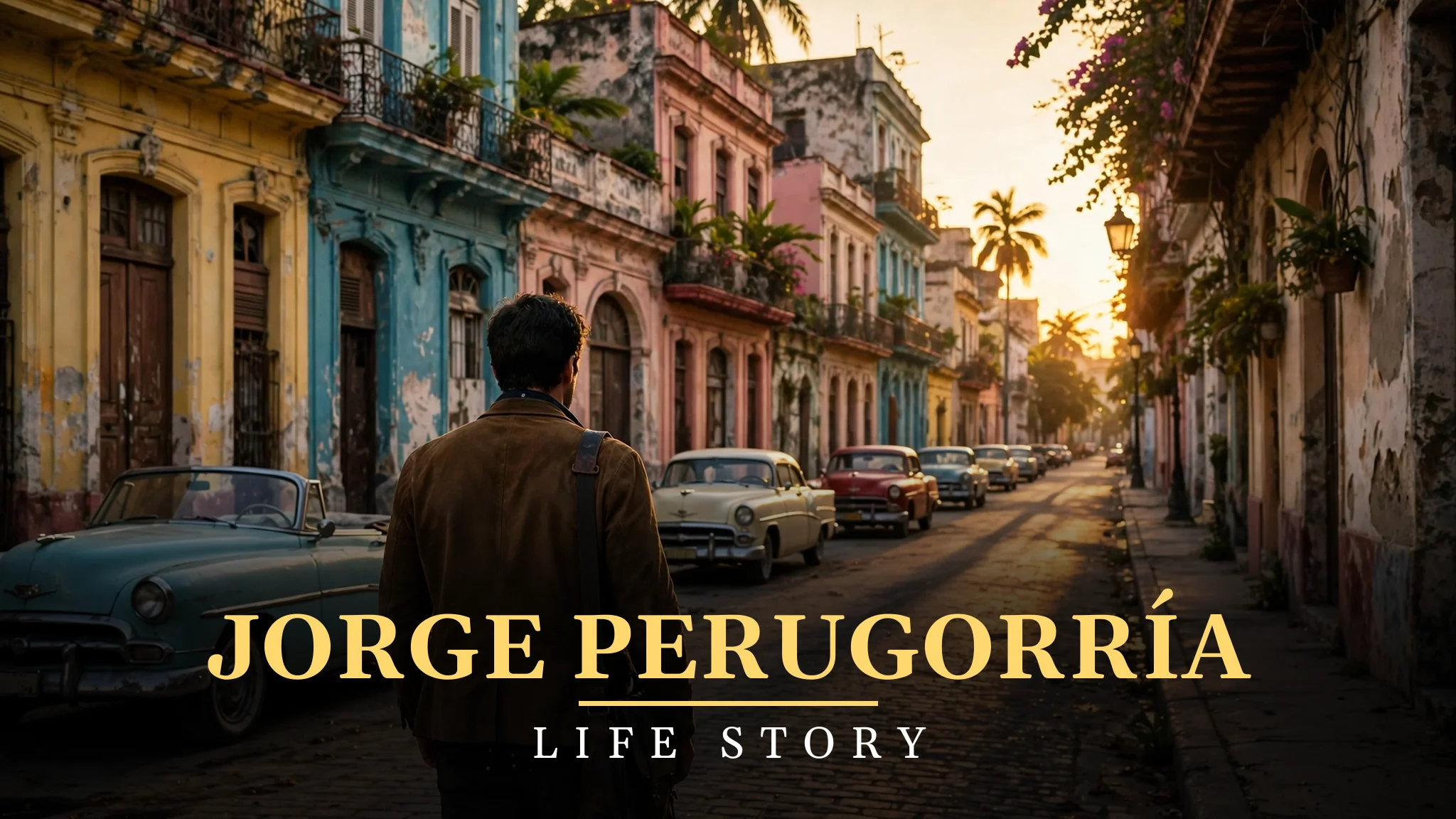
When I think about Jorge Perugorria, I think about a street in Havana at sunset, with colourful buildings, with old cars, and with a man walking, carrying a bag, and thinking about a story. That image stays with me, because Perugorria is a man of Havana, and his work is about Havana, about its streets, its people, and its soul. I admire that, because it takes a special kind of love to stay in a place, and to make art about it, when it would be easier to leave, and to seek fame elsewhere. He stayed, and he made his home his art.
I admire his courage more than anything else in this story. To play Diego in Fresa y Chocolate, in Cuba in 1993, was a brave thing to do. It was a role that asked him to be open about homosexuality, about tolerance, and about a kind of love that many people did not want to talk about, and he played it with a warmth that made the audience love Diego, even when they disagreed with him. That takes courage, and it takes a belief that art can change minds, and Perugorria had both. I respect him for it, and I think his performance changed Cuba, in a small but real way.
What moves me most is the friendship at the heart of Fresa y Chocolate, between Diego and David, two men who are very different, and who learn to respect each other. That friendship is a beautiful thing, and it is a lesson for any society, that people who disagree can still be friends, and can still learn from each other. I think about that friendship, and I feel hopeful, because it shows that tolerance is not only an idea. It is a practice, a daily choice to listen, to respect, and to love, even when it is hard. Perugorria’s performance made that lesson feel real, and I will remember it.
I also think about his work as a director, and about how he took the chance he was given, as an actor, and gave it to others, as a director. He made Amor Vertical, and other films, and he gave young actors a stage, and a story, and a chance to shine. That generosity is part of his legacy, and it is part of why he is loved in Cuban cinema. He did not only build his own career. He helped build a cinema, and he helped build a community of artists who work together, in a difficult place, with limited resources, and with a great deal of love.
There is a sadness in this story too, and it is the sadness of a Cuba that has changed, and that has faced hard times, with shortages, with emigration, and with a future that is uncertain. Perugorria has lived through those hard times, and he has made films about them, with humour, and with sadness, and I feel sympathy for him, and for all Cubans who love their home, and who worry about its future. His films do not hide that sadness, and they do not offer an easy answer. They show it, and they ask the audience to face it, with honesty, and with hope.
I have a particular respect for the way he has stayed in Cuba, when many artists have left. It would have been easy for him, after the success of Fresa y Chocolate, to move to Hollywood, or to Europe, and to seek a larger fame, and a larger salary. He did not do that. He stayed in Havana, he worked in Cuban cinema, and he made films for Cubans. That choice takes loyalty, and it takes a love for home that is stronger than a love for fame. I admire that choice, and I think it is the most important choice in his story.
I have a criticism as well, and I will say it plainly. Some of Perugorria’s later films, as an actor and as a director, have not reached the height of Fresa y Chocolate, and they can feel smaller, and less powerful, than that first great role. I think that is a common problem for an actor who has played a landmark role, and it is hard to escape its shadow. I would like to see him take on a role that is as brave as Diego, and that challenges him in a new way, because I believe he has the talent to do it. That is not a small criticism, and it is worth saying, because I believe in his talent, and I want to see it used fully.
What I learn from Perugorria is that one role can change a life, and that a life given to art, in one’s own home, is a life well lived. He played Diego, and that role changed Cuban cinema, and it changed his life, and it gave him a platform to tell more stories, as an actor and as a director. That is a lesson for any artist: a single role, a single film, can be a turning point, if you are ready for it, and if you give it your best. Perugorria was ready, and he gave it his best, and that is why we remember him.
I think about the future, and about what comes next for Perugorria, and for Cuban cinema. I do not know what will happen, and I do not want to pretend that I do. But I hope that Perugorria keeps acting, keeps directing, and keeps telling stories about Cuba, because those stories are needed, and because he is one of the few who can tell them with honesty, with humour, and with love. I hope his next film is as brave as Fresa y Chocolate, and I hope it finds an audience, in Cuba and around the world.
If I had to choose one film to explain Perugorria to a stranger, I would choose Fresa y Chocolate. It is not his only film, and it is not his most recent, but it is the most important, and the most moving. It is a film about friendship, about tolerance, and about a Cuba that is changing, and it shows Perugorria at his best, as an actor who can be funny, sad, and brave, all at once. I think that film tells you everything you need to know about him, and about why his work still matters.
I will end by saying that Jorge Perugorria’s story is a story about a young actor from Havana, a role that changed everything, and a life given to Cuban cinema. He played Diego, he directed Amor Vertical, and he stayed in Cuba, making films that speak to his home, and to the world, about tolerance, about friendship, and about the human heart. That is a remarkable achievement, and it is one that deserves to be remembered. I am glad to have learned his story, and I will remember it, every time I think about Havana, and about the actor who walked its streets, and who made its stories live.
I think about Havana again, and about the theatre where Perugorria began, with its old seats, its small stage, and its audience who knew every play. That theatre is a home for him, and it is a place where he learned to be an actor, in front of real people, with no camera to hide behind. I think that training is why his film performances feel so real, because he learned to act for a live audience, and he carried that honesty into film, where it is easy to hide, but where he did not hide.
I also think about Tomas Gutierrez Alea, and about how a great director can change an actor’s life. Alea gave Perugorria the role of Diego, and he trusted him with a character that was brave, and difficult, and important. That trust is a gift, and Perugorria honoured it, with a performance that is still remembered. I think about the relationship between a director and an actor, and about how it can be a kind of friendship, and a kind of mentorship, and I feel grateful for directors like Alea, who see talent, and who give it a chance.
There is something I find moving about the way Fresa y Chocolate talks about tolerance, not as a lecture, but as a friendship. Diego and David do not agree, and they do not become the same person, but they learn to respect each other, and to love each other as friends. That is a more powerful lesson than any speech, because it shows tolerance in action, in a daily life, in a shared meal, and in a conversation. I think that is why the film has lasted, because it does not tell the audience what to think. It shows them two men, and it lets them feel the friendship for themselves.
I wonder what Perugorria felt when he first read the script for Fresa y Chocolate, and when he realised what the role would ask of him. It must have been frightening, and also exciting, because a role like Diego comes once in a lifetime, and an actor knows it when he sees it. I think he must have felt both fear and joy, and I think he chose joy, and courage, and that choice changed his life. That is a moment worth remembering, for any artist who is offered a brave role, and who must decide whether to take it.
I also reflect on the Oscar nomination, and on what it meant for Cuba. A small island, with a small film industry, had made a film that was nominated for the highest honour in world cinema, and that nomination told the world that Cuban cinema mattered. I think about the pride that must have been felt in Havana, when the news arrived, and about the hope it gave to young filmmakers, that their work, too, could be seen by the world. That hope is a part of Perugorria’s legacy, and it is a part of why Fresa y Chocolate matters.
I think about the gay community in Cuba, and about what Diego meant to them. In a country where homosexuality was once punished, and where gay men were often hidden, Diego was a character who was open, who was proud, and who was loved by an audience. That representation mattered, and it still matters, because a character on screen can give a real person the courage to be himself. I think Perugorria understood that, and I think he is proud of it, as he should be. His performance gave a voice to people who had been silent, and that is a great gift.
I have another thought about staying in Cuba, and about how hard it is. Many artists leave, for money, for freedom, and for a larger audience, and I do not blame them. But Perugorria stayed, and he made his art in a place where resources are scarce, and where the future is uncertain, and that staying is a kind of faith. I think about that faith, and I feel respect for it, because it says that home matters, even when home is hard, and that art made at home, for home, is worth making, even if the world does not always notice it.
I also think about the future, and about what Perugorria will do next. He is still acting, still directing, and still a central figure in Cuban culture, and I hope he keeps working, and keeps telling stories, because Cuba needs its storytellers, and the world needs to hear them. I hope his next film is as brave as his first, and I hope it finds an audience, in Cuba and around the world, who will love it as they loved Fresa y Chocolate.
I want to say something about the street in the image, the cobbled street in Havana, with its colourful buildings, and its old cars, and about how that street is a character in Perugorria’s films. It is a street where people live, where they talk, where they argue, and where they love, and Perugorria has walked that street, as an actor, and as a director, for more than thirty years. That street is his home, and it is his stage, and it is a beautiful place, even with its peeling paint, and its old cars. I think that is why his films feel so real. They are made on a real street, in a real city, with real people.
Finally, I want to say that Jorge Perugorria’s story gives me hope about the power of a single performance. One role, Diego, changed a life, changed a cinema, and changed a conversation about tolerance in Cuba. That is a lot for one performance to do, and Perugorria did it, with a smile, with a warmth, and with a courage that is still remembered. I will remember that performance, and I will carry it with me, every time I think about Havana, and about the actor who made its streets live.
Frequently Asked Questions
Who is Jorge Perugorria and what is he best known for?
Jorge Perugorria is a Cuban actor and director, born in 1965 in Havana, best known for playing Diego in Fresa y Chocolate, Strawberry and Chocolate, in 1993.
What is Fresa y Chocolate about?
Fresa y Chocolate is a 1993 Cuban film about Diego, a gay artist in Havana, and David, a young communist student, who become friends and learn about tolerance and art.
Was Fresa y Chocolate nominated for an Academy Award?
Fresa y Chocolate was nominated for an Academy Award for Best Foreign Language Film, the first Cuban film to receive that honour, and it won awards at festivals around the world.
What other films has Jorge Perugorria acted in?
Jorge Perugorria has acted in Guantanamera in 1995, Lista de Espera in 2000, and many other Cuban and international films, in a career of more than thirty years.
What films has Jorge Perugorria directed?
Jorge Perugorria directed Amor Vertical, Vertical Love, in 1997, and other Cuban films, as a director as well as an actor.
Is Jorge Perugorria still working in Cuba today?
Jorge Perugorria is still acting and directing in Cuba, working in theatre, film, and television, and he remains a central figure in Cuban culture.


