Kehlani: The Life Story Behind R&B's Honest Voice
In this post
- Oakland, California: A Childhood Raised by Family
- PopLyfe, America’s Got Talent and the First Spotlight
- Cloud 19, You Should Be Here and the Breakthrough
- It Was Good Until It Wasn’t, Blue Water Road and Crash
- Motherhood, Honesty and the Life in the Songs
- Collaborations, Tours and the Live Show
- The Sound Itself and Where She Stands Now
- My Take:
Oakland, California: A Childhood Raised by Family
Kehlani Ashley Parrish was born on 24 April 1995 in Oakland, California, a city with a long history of music, activism and street life, and she grew up in a household that was shaped by loss and by love in equal measure. Her father died when she was a baby, and her mother struggled with addiction, so Kehlani was raised largely by her aunt, who took her in and gave her the stability that her early years had lacked. The aunt’s house was not a wealthy one, but it was a loving one, and the young Kehlani grew up surrounded by family, by music, and by the particular kind of Oakland toughness that comes from knowing the world is not always kind. She has spoken openly about those early years, not as a tragedy but as a fact, and the openness has become one of the defining features of her music: she writes about her life as it was, not as a storybook would tell it.
School in Oakland gave her the first stage she ever stood on, and it was a dance stage rather than a singing one. She trained as a dancer from a young age, studying ballet and modern dance at the Oakland School for the Arts, and for a time she believed that dance, not music, would be her career. A knee injury in her teens ended that dream, and the ending was a blow, because dance had been her identity, her discipline, her way of understanding the world. But the injury also opened a door: with dance closed to her, she turned to the other art she had always loved, singing, and she began to write songs with the same discipline she had brought to the studio. The dancer’s sense of timing, of movement, of a body in space, never left her, and it shows in her music, which moves with a physicality that singers without a dance background rarely achieve.
The Oakland she grew up in is present in everything she has made since. It is a city of hyphy music, of street culture, of Black and Latino communities living side by side, and the sound of her records, a mix of R&B, hip-hop and pop, carries that city’s mixture in its bones. She has spoken about the influence of the Bay Area’s music scene, about the rappers and singers she heard growing up, and about the way Oakland taught her to be direct, to say what she means, and to mean what she says. The honesty that fans love in her music is an Oakland honesty, and it was learned early, in a house where nobody pretended that life was easy.
PopLyfe, America’s Got Talent and the First Spotlight
In 2011, at sixteen, Kehlani joined a local teen pop group called PopLyfe, and the group auditioned for the television show America’s Got Talent, where they reached the final four in the show’s sixth season. The experience was a crash course in the entertainment industry: the auditions, the cameras, the judges, the live performances in front of millions of viewers, and the sudden attention that came with them. PopLyfe did not win, but the exposure gave Kehlani her first taste of a national audience, and it taught her something important about herself: she could perform under pressure, she could hold a stage, and she could sing in front of people who had never heard of her and make them listen. The group broke up not long after the show, but the lesson stayed with her, and so did the contacts, the confidence, and the knowledge that a career in music was possible.
The years after PopLyfe were difficult, and Kehlani has been candid about them. She was homeless for a time, sleeping on friends’ couches and in cars, working odd jobs and trying to keep her music alive with no money and no support. The period is not a footnote in her story, it is the foundation of it, because it taught her what she was willing to endure for her art, and it gave her songs a grounding in real life that no amount of studio polish could provide. She has spoken about stealing food, about the kindness of strangers, about the nights when she did not know where she would sleep, and the honesty of those stories is part of why her audience trusts her: she does not romanticise the hard years, she reports them, and the report is believed because it is true.
She kept writing through the hard years, and the writing became her way out. She posted songs online, she performed at small venues in the Bay Area, and she built a following one listener at a time, the way independent artists have always built one. The songs from that period, raw and direct, showed a singer who was learning to turn her life into art, and the audience that found them, small at first, was loyal, because the songs spoke to their own lives. By 2014, the following had grown enough that a record label took notice, and the next chapter of her career began with a mixtape that would change everything.
Cloud 19, You Should Be Here and the Breakthrough
Cloud 19, her debut mixtape, was released in August 2014, and it was a revelation: a short, sharp collection of R&B songs that sounded like nothing else on the radio, with a voice that was warm, direct and full of feeling, and with writing that was personal in a way that pop music rarely is. The mixtape was released for free, it circulated online, and it built her a national audience almost overnight, with critics praising its honesty, its melodies, and the confidence of a nineteen-year-old singer who sounded like she had been making records for a decade. The title, a reference to a cloud, was a clue to her sensibility: her music is dreamy and grounded at the same time, floating and rooted, and the mixtape established the sound she would build on for the next ten years.
Her second mixtape, You Should Be Here, released in April 2015, was even better, and it earned her a Grammy nomination for Best Urban Contemporary Album, a remarkable achievement for a free mixtape by an artist who had been homeless a year earlier. The mixtape featured the songs The Way, featuring Chance the Rapper, and Down for You, and it showed a singer who had grown in confidence and in craft, with songs that moved between R&B, hip-hop and pop without ever losing their centre. The Grammy nomination was a validation, but it was also a turning point: the industry, which had ignored her during the hard years, was now paying attention, and the attention brought offers, contracts, and a record deal with Atlantic Records.
The Atlantic years began with her debut studio album, SweetSexySavage, released in January 2017, a record that took the sound of the mixtapes and gave it a bigger, brighter frame. The album featured the singles Distraction, Gangsta, which had appeared on the soundtrack of the film Suicide Squad and become a hit, and Undercover, and it debuted in the top ten of the Billboard 200. The album’s title, three words that described the different sides of her personality, was a statement of intent: she was sweet, she was sexy, she was savage, and she was all three at once. The record’s success proved that the mixtape audience would follow her to a major label, and that her honesty, which had been forged in the hard years, could survive the polish of a big budget.
It Was Good Until It Wasn’t, Blue Water Road and Crash
Her second studio album, It Was Good Until It Wasn’t, was released in May 2020, in the middle of the pandemic, and it was a quieter, more reflective record than its predecessor, full of songs about love, loss, and the end of a relationship. The album featured the singles Toxic, Everybody Business and Can I, featuring Tory Lanez, and it debuted at number two on the Billboard 200, her highest chart position. The record’s mood, intimate and late-night, suited the moment: the world was locked down, and her songs, which sounded like they had been recorded in a small room at 2 a.m., felt like company. Critics praised the album’s songwriting and its vocal performances, and it confirmed that Kehlani was not a one-album artist, but a songwriter with a long career ahead of her.
Blue Water Road, released in April 2022, was a change of pace, a sunlit, open-hearted record inspired by a trip to the Dominican Republic and by the feeling of starting over. The album featured the singles Altar, Little Story and Up at Night, featuring Justin Bieber, and it showed a singer who was ready to be joyful, to write about love without apology, and to make music that sounded like a holiday. The record’s production, which mixed R&B with Caribbean and Latin influences, was a departure, and it showed her willingness to travel, literally and musically, in search of a new sound. The album was praised for its warmth and its ambition, and it gave her a new set of songs to perform on tour.
Crash, her fourth studio album, was released in June 2024, and it was her most confident record, a collection of songs that moved between R&B, pop and dance with a freedom that showed an artist fully in control of her sound. The album featured the singles After Hours and Next 2 U, and it was released after she had left Atlantic Records, giving her a new kind of independence. Crash was praised by critics for its energy and its songwriting, and it showed that a decade into her career, Kehlani was still growing, still experimenting, and still writing songs that sounded like no one else’s. The album’s title, a word that suggests both a collision and a landing, was a fitting name for a record made by an artist who had crashed, landed, and kept going.
Motherhood, Honesty and the Life in the Songs
In 2019, Kehlani gave birth to her daughter, Adeya Nomi, and motherhood changed her music in ways that are audible in every record since. The songs became more tender, more protective, more aware of the future, and the writing, which had always been personal, became personal in a new way: she was now writing not just for herself, but for her child, and the responsibility gave her songs a gravity they had not had before. She has spoken about raising Adeya, about the challenges of touring as a mother, and about the joy of watching her daughter grow up, and the openness has made her music a place where other young mothers can find company. The daughter’s name appears in her work, her presence is felt in the songs, and the family she is building is as much a part of her art as the Oakland childhood that shaped it.
Her honesty about her personal life extends beyond motherhood. She has spoken openly about her sexuality, identifying as queer, about her mental health, about her experiences with anxiety and depression, and about the work of staying well in an industry that does not always make it easy. The openness is not a strategy, it is a principle: she believes that a singer who hides her life cannot sing honestly about it, and her audience, many of whom share her experiences, has rewarded the honesty with a loyalty that is rare in pop music. The songs that result, about love in all its forms, about the difficulty of being honest with yourself, about the work of healing, are the reason her fans call her music a lifeline.
She has also been open about her politics, speaking out on issues she cares about, from the rights of Palestinians to the treatment of marginalised communities in America, and the outspokenness has cost her commercially at times, but she has refused to be silent. The stance is consistent with the Oakland upbringing: a city that taught her to speak plainly, to stand up for what she believes, and to use a platform while she has one. The music and the politics are not separate, they are the same project, a singer who believes that honesty is not just a style, it is a duty.
Collaborations, Tours and the Live Show
Kehlani’s catalogue is full of collaborations, and they show the range of her talent: she has worked with Chance the Rapper, Justin Bieber, Cardi B, Zayn, Eminem, and many more, and each collaboration shows a different side of her voice. The Way, with Chance the Rapper, was an early highlight, a song that paired her warmth with his energy, and the later collaborations, from the pop of Up at Night to the rap of Ring, with Cardi B, show a singer who can fit into any song without losing herself. The collaborations are not favours, they are trades: she brings a melody, a harmony, a feeling, and the other artist brings a new room for her to sing in, and the result is almost always better than either artist could have made alone.
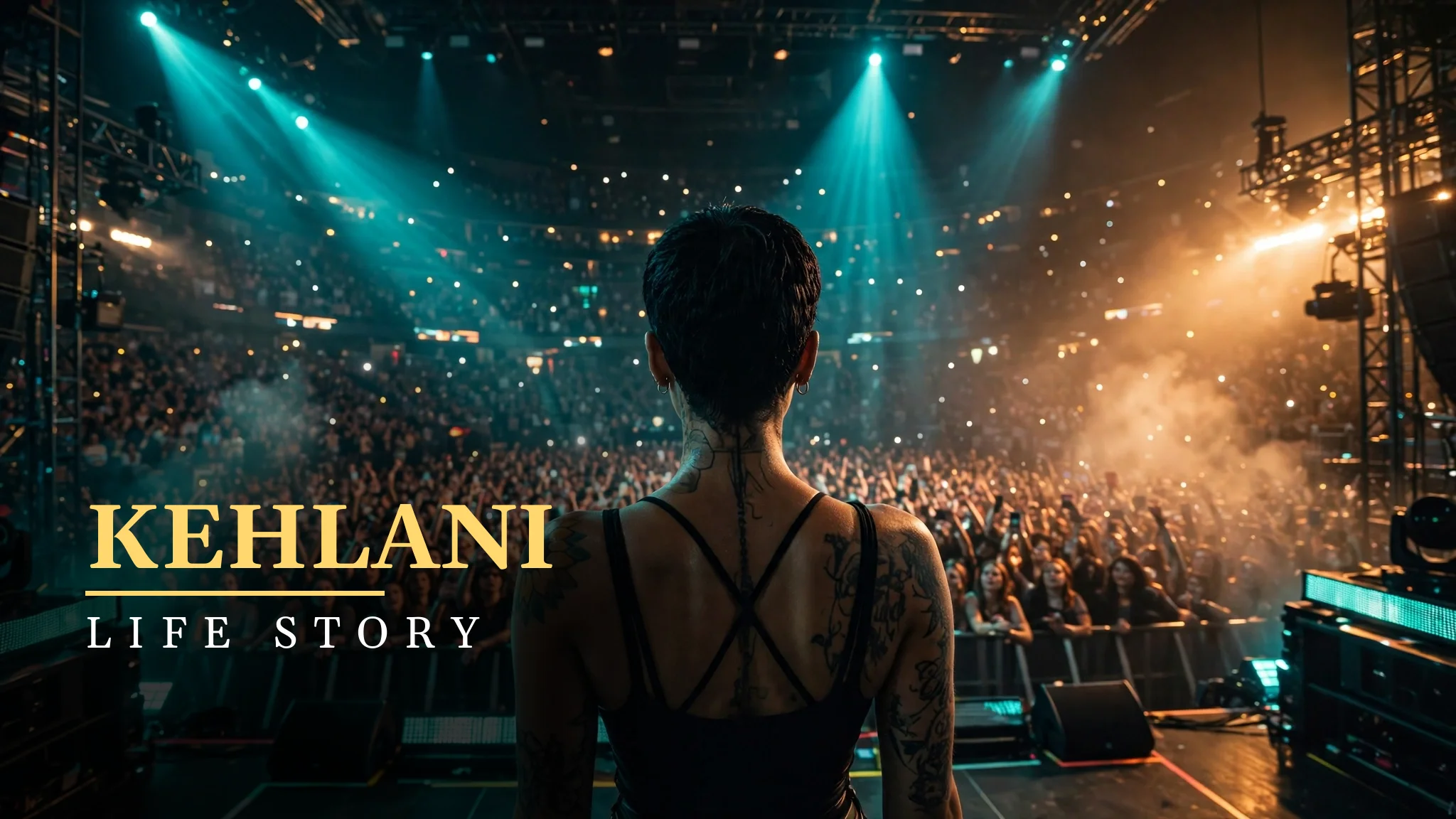
Her live shows are built around the same honesty as her records. She tours constantly, she performs with a band, she talks to the audience between songs, and she treats a concert as a conversation rather than a performance. Fans who have seen her live talk about the same thing, the feeling that she is singing directly to them, that the songs are not a show but a sharing, and that feeling is the product of a performer who learned to sing in small rooms, for small audiences, and never forgot how. The tours, from the SweetSexySavage tour to the Blue Water Road tour to the Crash tour, have taken her around the world, and the audiences have grown with her, from the Bay Area clubs to the arenas.
She has also worked as a songwriter for other artists, and her writing, which is direct, specific and musical, has been sought after by singers who want the honesty she brings to her own records. The songwriting is not a side project, it is the same project: a writer who believes that a song should say something true, and who has spent a decade proving that true songs can also be hit songs. The career, taken as a whole, is a demonstration that honesty and success are not opposites, and that a singer who tells the truth can build an audience that lasts.
The Sound Itself and Where She Stands Now
A Kehlani record is recognisable from the first note, because the voice is unlike any other in R&B. It is warm and slightly raspy, it moves with a dancer’s timing, and it has a habit of sliding between singing and speaking, between a melody and a conversation, in a way that makes the songs feel intimate, as if she is talking directly to the listener. The production, which mixes R&B with hip-hop, pop and Caribbean influences, leaves space for the voice, and the writing, which is direct and specific, gives the voice something true to say. Songs like Gangsta, Distraction, Nights Like This and After Hours show the range, from a dark, dramatic ballad to a bright, bouncing pop song, and the thread between them is the vocal, which never strains, never oversells, and never asks the listener to admire effort instead of feeling the song.
As of 2026, Kehlani is a Grammy-nominated singer with four studio albums, a catalogue of mixtapes that changed R&B, and a career that has grown from a homeless teenager in Oakland to one of the most respected voices in modern music. She has toured the world, she has collaborated with the biggest stars in pop and rap, she has become a mother, and she has done it all while refusing to hide who she is. The girl who lost dance to a knee injury and found music instead is still dancing, in her own way, through songs that move with a dancer’s grace and a singer’s heart.
She continues to record, to tour, and to write, and the next chapter of her career will be watched by an audience that has grown up with her, from the teenagers who found Cloud 19 to the adults who bought Crash. The lesson of her career is not that talent is enough, she has been honest about how hard the road was, but that honesty, properly sung, can build a career that lasts, and that a singer who tells the truth will always find an audience willing to listen. Kehlani Ashley Parrish, the girl from Oakland, is still here, still singing, and still telling the truth.
While We Wait, the mixtape she released in February 2019, is a record about waiting, and about what waiting does to a person, because it was made in a period when she was pregnant with her daughter, Adeya, and when she was, by her own account, trying to slow down, and the slowing down, which is the point, is audible in every song. The mixtape featured Nights Like This, with Ty Dolla $ign, a song about a night that goes wrong, and about the way a bad night can feel like a whole life, and Butterfly, a song about transformation, and RPG, with 6lack, a song about a relationship that is a game, and the songs, which were recorded in a hotel room in Los Angeles, according to her own telling, have an intimacy that her studio albums do not, because they were made quickly, honestly, and without the pressure of a major release, and the honesty, which is the point, is the reason the mixtape is still, years later, one of her most loved records, by fans who hear in it a woman who is about to become a mother, and who is writing about it, in real time.
Folded, the single she released in June 2025, is a song about a relationship that has run its course, and about the moment when a person decides to leave, and the leaving, which is the point, is sung with a calm that is more powerful than any shouting, because a song about a break-up that is quiet, that is measured, and that is honest, is a song that stays with the listener, long after it has ended. The single, which arrived after her album Crash, showed an artist who was still writing, still recording, and still growing, and the growing, which is the point, is the reason her career has lasted for more than a decade, because a singer who can write a song like Folded, in 2025, after ten years of hits, is a singer who has not run out of things to say, and the saying, which is the art, is still, after all these years, the reason people listen, to Kehlani, and to the life she sings about, in every record she makes.
Her live career is the part of her work that shows how far she has come, because a singer who began by posting covers on the internet is now a touring artist who fills arenas, and the filling, which is the point, is the result of years of work. The Blue Water Road Trip, her tour in support of her 2022 album Blue Water Road, took her across North America and Europe, in venues that were bigger than any she had played before, and the Crash World Tour, in 2024, took her further, to audiences who had grown up with her, from the teenagers who streamed You Should Be Here to the adults who stream Crash, and who know, when they hear her voice live, that they are hearing a person, not a recording, and the person, which is Kehlani, is the point, because a live show, properly done, is a conversation, and the conversation, which is the art, is the reason her fans return, tour after tour, year after year.
My Take:
Kehlani is the singer I trust most in modern R&B, and the reason is simple: she has never lied to me, not in a song, not in an interview, not once. The honesty is not a style, it is a fact, and it runs from Cloud 19 to Crash without a break. Listen to the mixtapes, listen to the albums, listen to the way she writes about love, about loss, about motherhood, about Oakland, and you hear a singer who is reporting her life, not performing it. I have listened to a lot of R&B in my life, and most of it is beautiful and most of it is dishonest, but Kehlani’s music is beautiful and honest, and the combination is rare enough to be precious.
Cloud 19 is the mixtape I return to most, because it is the record where her sound was invented. A nineteen-year-old singer, recently homeless, releasing a free mixtape online, and making a record that sounds like it was made by someone with a decade of experience: that is the story, and it is almost hard to believe. The songs are short, sharp, and full of feeling, and they show a writer who already understood the most important thing about songwriting, that a specific detail is worth more than a general feeling. The mixtape’s success, the way it spread from listener to listener, is the best kind of success, because it means people found it, loved it, and told their friends, and that is how classics are made.
You Should Be Here and the Grammy nomination are the chapter that makes me proudest of her, because the nomination came for a free mixtape, made by an artist who had been homeless a year earlier. The industry, which had ignored her during the hard years, was suddenly paying attention, and the attention was deserved, because the mixtape is a masterpiece: The Way, with Chance the Rapper, Down for You, and a dozen other songs that show a singer growing in confidence and in craft. The nomination did not change her, it confirmed her, and the confirmation mattered, because it told every young artist watching that a free mixtape, made with honesty, could be heard by the people who give out Grammys.
SweetSexySavage is the album that proved she could survive a major label, and I love it for that reason. The title, three words that describe three sides of her personality, is a statement of intent, and the album delivers on it: sweet songs, sexy songs, savage songs, all in one record, all sung with the same directness. Gangsta, from the Suicide Squad soundtrack, is the song that most people know, and it is a great song, dark and dramatic, but the album’s real strength is its range, the way it moves from a ballad to a dance track without ever losing its centre. The record debuted in the top ten, and it deserved to, because it is a pop-R&B album made by a singer who understands both words.
It Was Good Until It Wasn’t is the album I play when I want to be alone with a record, because it is a late-night album, a quiet album, a record about the end of a relationship that sounds like it was recorded in a small room at 2 a.m. The pandemic timing was accidental, but it suited the record: the world was locked down, and her songs, which sounded like company, felt like a gift. Toxic, Everybody Business, Can I, these are songs about love and loss that do not flinch, and the album’s success, a number-two debut, proved that an honest record about heartbreak could still top the charts. I think it is her most underrated album, and I think it will be the one that ages best.
Blue Water Road is the record that surprised me most, because it is a joyful record from a singer I associated with heartbreak. The trip to the Dominican Republic, the Caribbean influences, the sunlit production, the songs about love without apology, all of it showed a singer who was ready to be happy, and the happiness is infectious. Up at Night, with Justin Bieber, is a pop song that could have been made by anyone, but the album as a whole could only have been made by Kehlani, because the joy in it is specific, earned, and hard-won. I love the record because it proves that she is not confined to a single mood, and that a singer who has written about pain can also write about joy, and write about it just as well.
Crash is the album that shows her fully in control, and I admire it for its confidence. Released after she left Atlantic, the record moves between R&B, pop and dance with a freedom that shows an artist who no longer has to ask for permission. After Hours is a song that sounds like a night out, Next 2 U is a song that sounds like a morning after, and the album as a whole is a record by a singer who knows exactly what she is doing. The independence suits her, because she has always been an independent artist at heart, from the free mixtapes to the homeless years, and Crash is the sound of that independence, finally, fully, hers.
Motherhood is the chapter that changed her music most, and I think it is the most beautiful chapter of all. Adeya’s birth in 2019 gave her songs a new gravity, a new tenderness, a new sense of responsibility, and the records since, from It Was Good Until It Wasn’t to Crash, carry that gravity in every track. She writes now not just for herself but for her daughter, and the writing is better for it, because it has a future in it, a person to protect, a life to build. I have watched her talk about raising Adeya on tour, about the challenges and the joys, and I am struck by the honesty of it: she does not pretend that motherhood is easy, she does not pretend that touring with a child is simple, she tells the truth, and the truth is that it is hard and it is wonderful, both at once.
Her openness about her sexuality and her mental health is the other thing I admire, because it is not easy to be honest about those things in public, and she has been honest about them from the beginning. She identifies as queer, she has spoken about anxiety and depression, she has talked about the work of staying well, and the openness has made her music a place where listeners who share those experiences can find company. I think the honesty is a form of generosity: she gives her audience the truth about her life, and the audience gives her their loyalty in return, and the exchange is fair, and it is rare.
The Oakland influence is the thread that runs through everything, and I think it matters more than people realise. She is not from Los Angeles or New York, she is from a city with its own music, its own culture, its own toughness, and the Oakland in her songs, the directness, the mixture of R&B and hip-hop, the refusal to pretend, is the sound of that city. She did not leave Oakland behind when she got famous, she brought it with her, and the music is better for it, because a singer who knows where she comes from always sings with more authority than a singer who does not.
Her collaborations are a map of her taste, and I love the map. Chance the Rapper, Justin Bieber, Cardi B, Zayn, Eminem, the list is long and it is varied, and each collaboration shows a different side of her voice. The Way is the early highlight, a song that paired her warmth with Chance’s energy, and Ring, with Cardi B, is the later highlight, a song that shows two strong women trading verses with joy. The collaborations work because she brings something specific to each one, a melody, a harmony, a feeling, and the other artist brings a new room for her to sing in, and the result is better than either could have made alone.
The live show is where I think her talent is most visible, because a Kehlani concert is not a performance, it is a conversation. She talks to the audience, she tells stories between songs, she sings with a band, and she treats the room as a place to share rather than a stage to conquer. I have watched footage of her shows and been struck by the intimacy of them: a large venue that feels small, a crowd that feels like a gathering, a singer who is singing directly to each person in the room. That intimacy is the product of a performer who learned to sing in small rooms, for small audiences, and never forgot how, and it is why her fans stay loyal, tour after tour.
Her politics deserve a mention, because they are part of the honesty. She has spoken out on issues she cares about, she has used her platform, and she has paid a price for it, commercially and personally, but she has refused to be silent. I respect that, because it is easy to be honest in a song and hard to be honest in public, and she has been honest in both. The Oakland upbringing is visible here too: a city that taught her to speak plainly, to stand up, and to use a voice while she has one. The music and the politics are the same project, and the project is honesty.
If I were introducing someone to Kehlani, I would start with Cloud 19, then You Should Be Here, then Crash, because that sequence shows the arc: the mixtape, the breakthrough, the independent statement. And I would tell them to listen with headphones, late at night, because the songs reward close listening, and to watch a live performance, because the stage is where the honesty is most visible. Kehlani is a singer, a songwriter, a dancer, a mother, and a truth-teller, and the combination is rare, and the career is still growing.
There is a final thing I want to say, and it is about the hard years. She was homeless, she slept in cars, she stole food, she did not know where she would sleep, and she kept writing. That fact, more than any award or chart position, is the reason I trust her: a singer who kept writing when she had nothing is a singer who will keep writing when she has everything, and the writing will stay honest, because honesty is not a choice she made when she got famous, it is a habit she learned when she had nothing to lose. The girl from Oakland who lost dance and found music is still here, still singing, still telling the truth, and the truth is still beautiful.
And one more thought, about the future. Kehlani is thirty-one, she has four albums, a Grammy nomination, a daughter, and a career that has survived homelessness, a major label, a pandemic, and a complete change in the music business, and she is still growing. The next album, whatever it sounds like, will be worth waiting for, because she has never made a record she did not believe in, and she has never sung a song she did not mean. The Oakland girl who wrote in notebooks is now writing the story of her generation, and the story is still being written, one honest song at a time.
What I admire most about Kehlani is the voice, because it is a voice that can do many things at once: it can be soft and strong, it can be angry and tender, it can be a whisper and a shout, all in the same song, and the doing, which is the point, is the mark of a singer who understands that a voice is not just a sound, it is a person. I think about Nights Like This, about Honey, about After Hours, and about the way each song uses her voice differently, and I am struck by the range: a singer who can sing a ballad, a dance track, and a confessional, all with the same honesty, is a singer who has mastered her instrument, and the mastering, which is the point, is the reason her records are still, after ten years, worth listening to, and the listening, which is the point, is the reason she is loved, by fans who hear their own lives in her songs, and who know, when they hear her voice, that they are hearing someone who understands them.
Her songwriting is the other half of her art, because she writes about her life with a directness that is rare in pop music, and the directness, which is the point, is the reason her songs feel like diary entries, and the diary, which is the art, is the reason her fans feel that they know her. I love the way she writes about love, about heartbreak, about motherhood, and about the difficulty of being a person in public, because she does not hide behind metaphors, she says what she means, and the meaning, which is the point, is audible in every line, in every chorus, and in every bridge she writes, and the writing, which is the craft, is the reason her songs are still, years later, quoted by fans, on social media, in captions, and in conversations, and the quoting, which is the point, is a testament to a songwriter who understands that a lyric, properly written, is a gift, and the gift, which is Kehlani’s, is still being given, one song at a time.
Frequently Asked Questions
Where is Kehlani from and what is her real name?
Kehlani’s full name is Kehlani Ashley Parrish. She was born on 24 April 1995 in Oakland, California, where she was raised largely by her aunt after her father died when she was a baby and her mother struggled with addiction.
How did Kehlani become famous?
She first gained attention in 2011 as a member of the teen group PopLyfe, which reached the final four on America’s Got Talent. She then released the free mixtapes Cloud 19 in 2014 and You Should Be Here in 2015, the second of which earned a Grammy nomination for Best Urban Contemporary Album.
Was Kehlani a dancer before she was a singer?
Yes. She trained as a dancer from a young age at the Oakland School for the Arts, studying ballet and modern dance. A knee injury in her teens ended her dance career, and she turned to singing and songwriting instead. The dancer’s sense of timing still shapes her music.
What is Kehlani’s biggest song?
Her best-known song is Gangsta, which appeared on the soundtrack of the film Suicide Squad in 2016 and became a hit. Other well-known songs include Distraction, Nights Like This, The Way featuring Chance the Rapper, and After Hours from her 2024 album Crash.
How many albums has Kehlani released?
She has released four studio albums: SweetSexySavage (2017), It Was Good Until It Wasn’t (2020), Blue Water Road (2022) and Crash (2024). Before those, she released the mixtapes Cloud 19 (2014) and You Should Be Here (2015).
Does Kehlani have a child?
Yes. Her daughter Adeya Nomi was born in 2019. Kehlani has spoken openly about motherhood, about touring as a mother, and about how becoming a parent changed her songwriting, giving it a new tenderness and sense of responsibility.
What is Crash by Kehlani?
Crash is Kehlani’s fourth studio album, released in June 2024. It includes the singles After Hours and Next 2 U, and it was released after she left Atlantic Records. Critics praised it for its confidence, energy and range across R&B, pop and dance.


