Kensington: The Life Story Behind the Dutch Rock Band
In this post
- Four Friends in a City That Loves Music
- Two Albums Nobody Outside Holland Heard
- Rivals: The Night the Whole Country Learned Their Names
- Control and Time: The Sound Gets Bigger
- The Ziggo Dome: Seventeen Thousand Voices
- What a Kensington Chorus Does to a Room
- The Announcement Nobody Wanted
- Seventeen Years, Four Friends, One Catalogue
- My Take:
The Netherlands is a small country, and its biggest rock band filled its biggest room again and again. Kensington played the Ziggo Dome in Amsterdam, a hall that holds around seventeen thousand people, and sold it out repeatedly, with crowds singing every word back at the stage. For a band that started in 2005 as four friends in Utrecht, a university city in the centre of the country, that is an extraordinary distance to travel. They did not travel it quickly. They took seventeen years, five albums, and hundreds of concerts, and then, in 2022, their singer walked away, and the band said goodbye with farewell shows in the same hall they had conquered.
That ending is part of why the story matters. Kensington did not fade away, and they did not break up in anger. They stopped at the top, on their own terms, with their catalogue intact and their audience still singing. Their songs, War, Streets, Riddles, Do I Ever, are still played on Dutch radio, and they still sound like what they were: big, anthemic rock, written by four people who believed that a chorus should lift a room and that a lyric should tell the truth.
Four Friends in a City That Loves Music
Utrecht sits in the middle of the Netherlands, a city of canals, bicycles, and students, with a music scene that has always punched above its weight. In 2005, four young musicians there decided to start a band. Eloi Youssef sang and played guitar, and he had the kind of voice that could fill a room without a microphone: strong, clear, and full of feeling, with a stage presence to match. Casper Starreveld played the other guitar. Jan Haker played bass. Niles Vandenberg played drums. They were friends first and bandmates second, and that order mattered, because it gave the group a foundation that survived seventeen years of touring, recording, and pressure.
Utrecht was a good place to begin. It was a university city, full of young people who went to gigs, and it had clubs where an unknown band could play on a weeknight and learn its trade in front of a real crowd. The musicians there supported each other, and a new group could find an audience without having to fight its way through a capital city’s indifference. Kensington learned their craft on those stages, playing wherever they could, at small venues, at festivals, and at parties, and working out, night after night, what made a song connect with strangers.
They also worked on their sound, and the direction they chose was ambitious. They did not want to make small, clever indie rock. They wanted to make big rock, with large choruses, strong melodies, and a feeling of hope and energy, music that would work in a hall full of thousands of people rather than only in a club full of dozens. That is a difficult sound to build from nothing, because it demands confidence, and confidence is hard to fake in front of an audience. The band built it slowly, listening to the great rock records of the time, studying what made a song great, and writing their own material until the choruses started to lift the way they wanted them to.
They were patient, and the patience was deliberate. They did not expect to become famous overnight, and they did not try to force it. They wanted to make music they believed in, and to find an audience that loved it as much as they did. That gave them time to find their sound, and time to build a band that could last, which is exactly what they did.
Two Albums Nobody Outside Holland Heard
Kensington’s first album, Borders, arrived in 2010, five years after the band formed. That gap tells you something about them. They did not rush into a record before they were ready. They spent the years playing, writing, and learning, and when the album finally came, it showed a band with talent, with good songs, and with a sound that was already its own. It was not a huge commercial success, but it gave them a foundation, and it showed the Dutch music world that here was a group with a future.
Vultures followed in 2012, and it was a clear step forward. The record was bigger, bolder and more confident than the first, and the band were playing bigger shows and reaching more people. Their reputation as a live act was growing, and fans followed them from show to show, drawn by the energy, the songs, and the honesty of the performances. The two albums together taught the band how to work as a unit: how to write songs together, how to arrange them, and how to perform them so that a room full of strangers felt like a room full of friends.
It is worth remembering how long this part of the story lasted. From 2005 to 2014, Kensington were a hardworking Dutch band with two albums, a growing fan base, and no great fame beyond their own country. Many groups would have given up in those years, or changed their sound to chase a hit. Kensington kept going, kept touring, kept writing, and trusted that the work would eventually be rewarded. That trust was not misplaced, but it took nine years to pay off, and the pay-off, when it came, was enormous.
Rivals: The Night the Whole Country Learned Their Names
In 2014, Kensington released their third album, Rivals, and it changed everything. The record included Streets and War, two songs that became huge hits in the Netherlands, and it turned a respected live band into stars. Streets is a song about the city at night, about walking the streets and feeling alive, with a melody that stays in the head long after the song ends. War is a powerful, anthemic track, with a big chorus and a feeling of strength, a song about fighting for what you believe in, and it became one of their most famous records. Riddles, another song from this period, added to the run, and suddenly the whole country knew the band’s name.
The success of Rivals changed the band’s daily life completely. They were no longer a small band from Utrecht. They were being invited to play the biggest festivals and the biggest venues in the Netherlands, in front of tens of thousands of people, and they handled the fame with a calm, focused attitude. They knew that one hit album does not make a career, and they wanted to prove they were more than a one-album band. The next record would have to be even better, and they set about making it with the same patience they had always shown.
The album also defined their style for a wider audience. Their songs were not dark or cynical. They were about life, about love, about doubt, and about hope, written in simple, honest words and sung with real passion. That positivity was part of what made them so popular. In a music world full of irony and gloom, Kensington made songs that lifted people up, and audiences responded to that lift. A crowd that sings a chorus together is a crowd that feels something together, and Kensington understood that better than almost any Dutch band of their generation.
After Rivals, the band toured constantly, playing festivals in front of huge crowds, recording new music, and watching their audience grow. They were still young, but they were already one of the biggest bands in the Netherlands, and the whole country was watching to see what they would do next. They did not disappoint. They kept making hits, and they kept growing, and the biggest stages of their lives were still ahead of them.
Control and Time: The Sound Gets Bigger
Control arrived in 2016, and it was another large success. The album included Do I Ever, a song about doubt and love, about asking questions that have no easy answers, with a beautiful melody that touched people deeply. Sorry was another standout, a powerful and emotional song that showed a softer, more vulnerable side of the band. The record proved that Kensington could make music that was both big and personal, both anthemic and intimate, and that combination is much harder than it sounds. A stadium chorus and a quiet confession rarely live on the same album. On Control, they did.
Time followed in 2019, the band’s fifth album, and it included Uncharted and Bats. The record showed a group still growing, still trying new things, and still making music their fans loved. They were not stuck in the past, and they were not repeating Rivals. They were moving forward, willing to change and to take risks, which is the sign of a band that is alive rather than one that is running on memory. The songs were still built around Youssef’s voice and the band’s gift for melody, but the arrangements had grown more adventurous, and the lyrics had grown more reflective.
These were the years when Kensington played their biggest shows. The Ziggo Dome in Amsterdam, one of the largest venues in the Netherlands, became a regular stop, and the band sold it out again and again. Playing that hall is a dream for any Dutch band, and Kensington lived the dream repeatedly, in front of tens of thousands of fans, with big lights, big sound, and a crowd that sang along to every word. They also won awards, including Edison Awards and 3FM Awards, among the most important music honours in the Netherlands, which recognised their talent, their work, and their success.
By the end of the decade, there was no argument left. Kensington were the biggest rock band in the Netherlands, and they had earned the title through years of work, great songs, and unforgettable live shows. They had built it the slow way, and the slow way had held.
The Ziggo Dome: Seventeen Thousand Voices
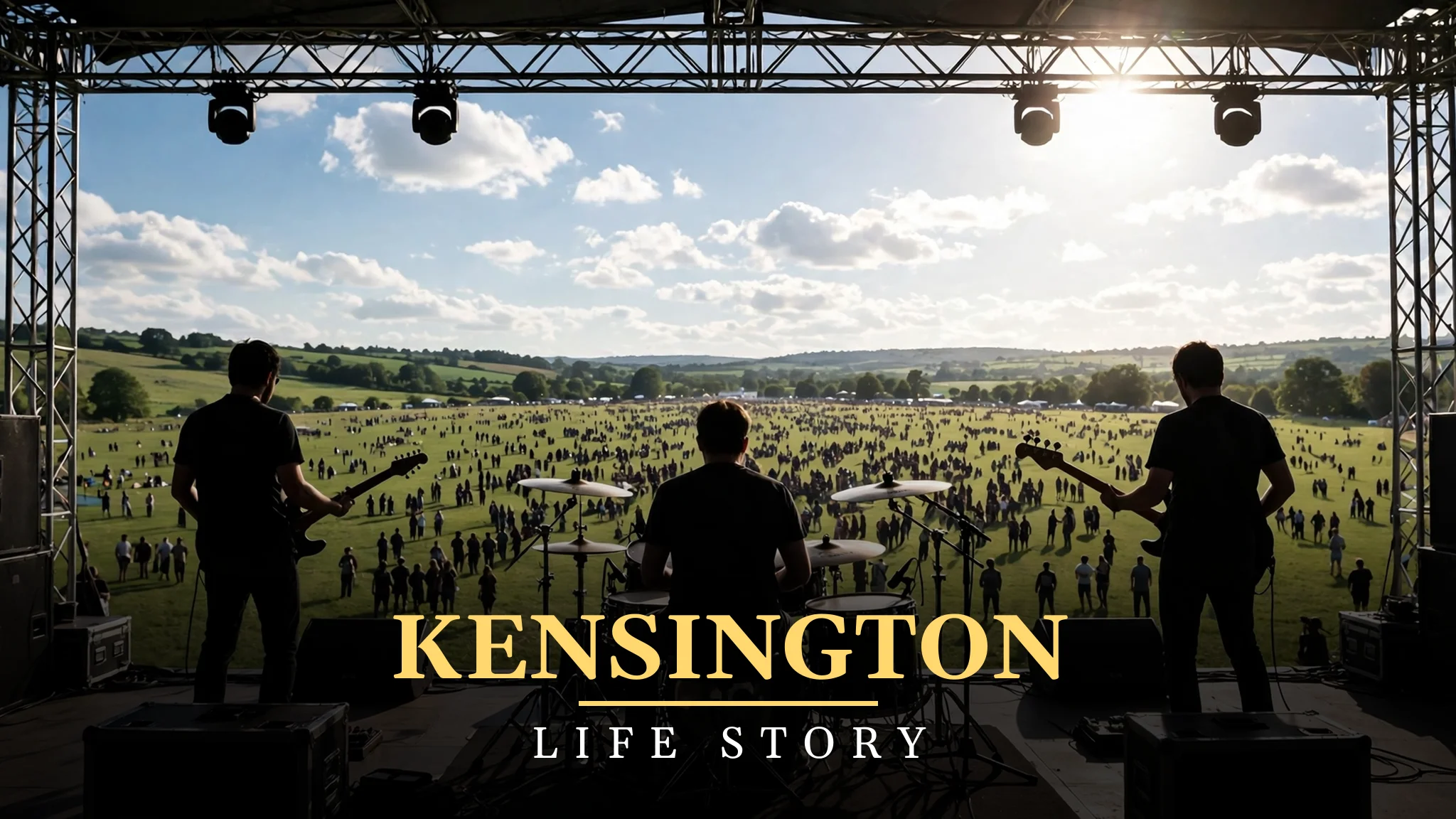
A Kensington concert at the Ziggo Dome was a particular kind of event, and it is worth describing, because it explains why the band mattered so much to Dutch audiences. The hall holds around seventeen thousand people, and when it was full, the sound of the crowd singing was a physical thing, a wave that rolled from the back rows to the stage and back again. Youssef stood at the front of it, a charismatic frontman who could hold a crowd of thousands with a gesture or a look, and behind him the band played with a tightness that comes only from years of playing together.
The shows were famous for their energy, their power, and their connection with the audience. The band played for hours, mixing the hits with new songs, and giving everything they had. The lights were dramatic, the sound was huge, and the audience felt the music in their chests. A Kensington concert was not just a show. It was an experience, a night when thousands of strangers felt like one crowd, singing the same words at the same time. That is the power of anthemic rock done well, and it is why their fans followed them around the country.
They played festivals too, across the Netherlands and Europe, and festival crowds are a different test. They are outdoors, bigger, more varied, and full of people who may not know the band. Kensington won those crowds over again and again, with their energy, their songs, and their honesty. They could play to anyone, anywhere, and make them fans, which is a rare gift, and one they earned through years of touring. The road was their home, and the stage was where they belonged.
It is easy to forget, when a band is selling out arenas, how much work stands behind it. Kensington played hundreds of shows over seventeen years, and they never lost their love of performing, even though touring is tiring and can wear a band down. They kept going because they loved the music, and because they loved their fans, and that love was visible from the stage. An audience can tell when a band wants to be there, and Kensington always wanted to be there.
What a Kensington Chorus Does to a Room
Strip away the venues and the awards, and what remains is the sound, and the sound was built around two things: Youssef’s voice, and the chorus. Youssef sang with a strength and clarity that could carry a melody over a wall of guitars, and he sang with feeling, so that a lyric about doubt or hope sounded like something he had actually lived through. The guitars around him were both heavy and melodic, and the rhythm section gave the songs a drive that pushed them forward without ever rushing them.
A Kensington song is built to lift. The verse sets up a feeling, the pre-chorus tightens it, and then the chorus opens up, and the whole room rises with it. War does this with a feeling of strength, Streets does it with a feeling of being young and alive in a city, and Do I Ever does it with a question that everyone has asked themselves. The themes are universal: life, love, doubt, hope, and the fight for what you believe in. They are written in words that are simple and honest, and they are sung with a passion that is real, which is why they connect with so many people.
The sound changed over the years, as any band’s sound should. The early albums were rawer and more direct. The later ones were bigger, more polished, and more anthemic, with a sound that could fill a stadium. But the heart of it stayed the same. It was still about big melodies, honest words, and a feeling of hope, and that thread runs through everything they made, from Borders in 2010 to Time in 2019. Fans trusted the band to be honest, and the band rewarded that trust by never faking it.
On stage, the sound came to life differently. The guitars were louder, the drums hit harder, and Youssef’s voice filled the hall. A Kensington concert was a night when the audience felt the music physically, and sang along to every word, and that shared singing is the point of anthemic rock. It turns strangers into a choir, if only for an evening, and Kensington did it better than anyone in their country.
The Announcement Nobody Wanted
In 2022, the story took a sad turn. Eloi Youssef announced that he would leave Kensington. It was a shock to the band’s fans, and to the Dutch music world, because Youssef was the voice of the group, and it was hard to imagine the band without him. He said that he wanted to do other things, to explore new directions, and to take a break from the life of a band. It was a personal decision, and it was respected by his bandmates and by his fans, even though it hurt.
The band decided to say goodbye properly, with farewell concerts at the Ziggo Dome and at other venues. Those nights were emotional, with fans singing along to every song, and the band giving everything they had. It was a farewell, but it was also a celebration, of seventeen years of music, of friendship, and of great songs. The people who were there will never forget those nights, and the band will never forget them either. Ending a band well is almost as hard as starting one, and Kensington ended theirs with grace.
The end of the band was the end of an era in Dutch rock. For seventeen years, they had been the biggest rock band in the country, and they had given their fans some of the best songs and the best shows in Dutch music. Now they were gone, but the music remained. War, Streets, Riddles and Do I Ever are still played on the radio, and they are still loved by fans all over the Netherlands. The band may be over, but the songs live on, and that is a different kind of ending from the one most bands get.
What the members will do next is a question for the future. Youssef may make solo music, and the others may start new projects, or they may come back together one day. Only time will tell. What is certain is that their time together was special, and that their music will be remembered for a long time. Four friends from Utrecht became the biggest rock band in the Netherlands, and that is a story to be proud of.
Seventeen Years, Four Friends, One Catalogue
Today, Kensington are remembered as one of the greatest rock bands the Netherlands has produced in the last twenty years, and their legacy is secure. Their songs are still played on the radio, their albums are still loved, and their live shows are still talked about as some of the best in Dutch music. They proved that a Dutch band could make world-class rock, and they opened a door for other Dutch bands who came after them.
Their legacy is also about the way they built it: slowly, one show at a time, one album at a time, one fan at a time, over seventeen years. They showed that a band can last if the members respect each other, if they love the music, and if they keep working. That is a lesson for any young band, and Kensington taught it by example, not by talking about it. They simply did the work, year after year, until the work added up to something no one could ignore.
They also showed that rock music belongs to everyone, to every age and every generation. Their fans ranged from young people who discovered them on the radio to older fans who saw them at festivals, and that breadth is a sign of great music. A great song does not belong to one decade. It belongs to all time, and War, Streets and Do I Ever belong to all time, at least in the Netherlands, where they will be sung for years to come.
Kensington may be gone, but their music is still here, and it will be here for many years. They were four friends from Utrecht who became legends, and their story is one of the great stories in Dutch rock. They played, they toured, and they made music together, and they did it because they loved each other and loved the music. That is a legacy to be proud of, and it is one the Netherlands will always remember.
My Take:
When I think about Kensington, the first thing that comes to my mind is the word anthemic. Their songs are anthems, big, powerful, and full of feeling, and they make you want to sing along, to stand up, and to feel alive. War is an anthem, Streets is an anthem, and Do I Ever is an anthem, and that is a rare gift. Not every band can write an anthem. Kensington can, and they have done it again and again. That is why they became the biggest rock band in the Netherlands, and why their fans love them so much.
I admire the band because they built their career the hard way. They did not become famous overnight. They played in small clubs, they released albums, they toured, and they built a fan base one show at a time. That forbearance offers guidance to any youthful group demanding instant success. A lasting career grows gradually, through effort, strong material, and concerts audiences want to revisit. Kensington understood that, and they never rushed. They let their career grow naturally, and it grew into something huge.
What I like most about their music is the hope in it. Their songs are not dark or cynical. They are songs about life, about love, about fighting for what you believe in, and about the feeling of being alive. That positivity is rare in rock music, where many bands sing about anger and pain, and it is part of what made Kensington special. They made music that lifted people up, and that is a wonderful thing. When I hear War, I feel strong. When I hear Streets, I feel alive. That is the power of their music.
I think about Eloi Youssef, and about his voice. He has a strong, clear voice, with a range that can move from a soft whisper to a powerful high note, and he sings with a feeling that makes every song sound like a story. He is a frontman who can hold a crowd, who can make a stadium feel small, and who can make every person in the audience feel as if he is singing to them alone. That is an uncommon talent, and it lies at the group’s core. Without Eloi’s voice, Kensington would not be Kensington, and I think every fan knows that.
I also think about the farewell concerts in 2022, and about how sad it must have been for the fans. To see a band that you love, a band that has been part of your life for seventeen years, say goodbye, is a painful thing. But the band did it the right way, with big shows, with great music, and with love for their fans. They did not just disappear. They said goodbye properly, and they thanked their fans for everything. That is a dignified ending, and I respect them for it.
There is a sadness in their story, and I do not want to hide it. Eloi left, and the band ended, and the Netherlands lost its biggest rock band. That is a loss, and it is felt by many people. But the music remains, and the songs are still played, and the memories of the concerts are still alive. That is an inheritance few groups ever attain, and one worthy of applause. Kensington may be gone, but their music is still here, and it will be here for a long time.
I think about the Ziggo Dome, and about what it must have felt like to play there, in front of tens of thousands of fans, all singing along to every word. That is a dream for any Dutch band, and Kensington lived that dream again and again. They were not just a band. They were a phenomenon, a band that could fill the biggest venue in the country, and that could make every person in the crowd feel like they were part of something special. That is an uncommon accomplishment, won across years of diligent effort.
I also think about their awards, the Edison Awards and the 3FM Awards, and about what they mean. An award is a recognition of talent, of hard work, and of success, and Kensington won many of them. But the real award is the love of the fans, and Kensington had that in abundance. Their fans followed them from show to show, from album to album, and they never let them down. That is the best award a band can have, and Kensington earned it.
If I have a small wish, it is that the members of Kensington come back together one day, or that they make new music in new ways. Eloi may make solo music, and the other members may start new projects, and that is fine. But I hope that the spirit of Kensington lives on, in whatever they do next, because their music meant a lot to a lot of people. A band like Kensington does not just disappear. It lives on in its songs, and in the hearts of its fans.
I think about the future of Dutch rock, and I believe Kensington’s legacy will inspire a new generation of bands. They showed that a Dutch band can make world-class rock music, that a band can fill the Ziggo Dome, and that a band can win awards and still stay true to its sound. That is a powerful example, and it is one that young Dutch bands will look up to for many years. Kensington opened a door, and other bands will walk through it.
In the end, what I take from Kensington is simple. Work hard, be honest, and make music that lifts people up. They were four friends from Utrecht who became the biggest rock band in the Netherlands, and they did it by working hard for seventeen years, by writing great songs, and by playing unforgettable live shows. That is not a story about luck. It tells of a group that understood its aim and never ceased pursuing it. That history seems worth holding onto, and the group worth studying.
One more thought stays with me, and it is about the word war. War is a song about fighting, about standing up, and about not giving in, and it is a song that has helped many people through hard times. When I hear it, I think about the battles we all fight, in our own lives, and about the strength we need to keep going. Kensington sang about that strength, and they gave their fans a song to fight with. That is a gift, and it is one that will last.
Listening to their records today, I perceive something beyond a mere group. I hear four friends who started something in Utrecht, a group of musicians who believed in a sound, and a community of fans who followed them for seventeen years. That is an inheritance few groups ever attain, and one worthy of applause. Kensington is a great band, and they earned that title, one album, one show, and one fan at a time.
I also think about the young bands who listen to Kensington and dream of following them. They hear War, they hear Streets, and they think that they could do it too. That inspiration is a gift, and Kensington gives it freely. They show that a dream is not just a dream. It was a design, and steady effort can turn such a design real. I hope plenty of new groups absorb that lesson from their example.
I think about the concerts, and about the feeling of being in a crowd of tens of thousands of people, all singing along to War. That is a powerful experience, and it is one that Kensington created again and again. They command that emotion expertly, and have done so for a long while. That is a rare gift, and it is one that the Dutch music world is lucky to have had.
In the end, I believe Kensington is a reminder that rock music is alive in the Netherlands, and that it can be big, anthemic, and full of hope. They proved that, and they inspired a whole generation of bands to try the same. They are legends, and their music will be loved for a long time. I am glad that they existed, and I am sad that they are gone, but I am grateful for the music they left behind.
A final reflection remains with me, and it concerns friendship. Kensington were four friends, and they stayed friends for seventeen years, through fame, through touring, and through hard times. That companionship sits at the centre of their tale, and it explains the sincerity in their sound. They were not just a band. They were companions, creating together out of mutual affection and devotion to the songs. That is a lovely reality, and the reason they will stay in my memory.
I also think about the way they treated their fans. They did not act like distant stars. They played for them, they talked to them, and they thanked them for coming. That intimacy counts, since modern listeners want to feel they know the people, not merely the tunes. Kensington gave them that feeling, and they did it for seventeen years. That is a rare thing, and it is one reason why their fans stayed loyal for so long.
Something in their approach to work earns my admiration. They played hundreds of shows, they recorded album after album, and they never stopped. That is demanding labour, of the sort that constructs an enduring career. Plenty of groups grow weary, quarrel, and split apart. Kensington kept going, because they loved what they did, and because they respected each other. That is a lesson for any young band.
I think about Casper Starreveld, Jan Haker, and Niles Vandenberg, the other members of the band, who are often forgotten when people talk about Kensington. They were the guitar, the bass, and the drums, the foundation of the sound, and without them, Kensington would not have been Kensington. They merit applause as well, and I am pleased to honour them in these lines. A band is not just a singer. It is four people, working together, and Kensington was four people who worked beautifully together.
I also think about the awards, and about what they mean. An award is a recognition of talent, of hard work, and of success, and Kensington won many of them. But the real award is the love of the fans, and Kensington had that in abundance. Their fans followed them from show to show, from album to album, and they never let them down. That is the best award a band can have, and Kensington earned it.
In the end, I believe Kensington is a band that proves that hard work pays off. They worked for seventeen years, they made great songs, and they played great shows, and they became the biggest rock band in the Netherlands. That is a story to be proud of, and it is a story that will inspire young bands for many years. They may be gone, but their music is still here, and it will be here for a long time.
One more thought stays with me, and it is about the farewell concerts. They were sad, but they were also beautiful, because they were a celebration of seventeen years of music. The fans sang, the band played, and everyone knew that it was the end, but also that it was a good end. That is the best way to say goodbye, with music, with love, and with gratitude. Kensington said goodbye that way, and I respect them for it.
Their songs will keep playing on the radio, in cars, and at festivals, and new fans will keep discovering them. That is the best legacy a band can have, and Kensington earned it with seventeen years of honest, anthemic rock music.
A final thought about Kensington, and it concerns the way they ended. Plenty of bands drag on until the audience drifts away, but these four friends stopped while the halls were still full, and said goodbye with farewell concerts at the Ziggo Dome. I respect that choice. It takes confidence to walk away from the biggest stages in your country, and it takes friendship to do it together, without bitterness. Seventeen years, five albums, and a goodbye on their own terms: that is a complete story.
Frequently Asked Questions
Where was Kensington formed and when?
Kensington was formed in 2005 in Utrecht in the Netherlands, by Eloi Youssef, Casper Starreveld, Jan Haker, and Niles Vandenberg. They were together for seventeen years.
What are Kensington’s most famous songs?
Their most famous songs include Streets, War, Riddles, Do I Ever, Sorry, and Uncharted. War and Streets, from the album Rivals in 2014, were their breakthrough hits.
Who is the singer of Kensington?
The singer was Eloi Youssef, whose powerful voice was the signature sound of the band. He announced in 2022 that he would leave the group.
What is Kensington’s most successful album?
Their album Rivals, released in 2014, was their breakthrough, and it included Streets and War. They also had success with Control in 2016 and Time in 2019.
Did Kensington play at the Ziggo Dome?
Yes, they played sold-out shows at the Ziggo Dome in Amsterdam, one of the largest venues in the Netherlands. Their live shows were famous for their energy and their connection with the audience.
Why did Kensington break up?
In 2022, Eloi Youssef announced that he would leave the band to explore new directions, and the group played farewell concerts. It was the end of an era for Dutch rock.
Is Kensington still making music?
The band ended in 2022 after their farewell concerts, but their songs, including War, Streets, and Do I Ever, are still played on Dutch radio and remain loved by fans.


